How to design shockproof devices for heavy machinery operators
The global push to digitize fleet management has finally reached the cab. Operators of excavators, loaders, and haul trucks now rely on handhelds and tablets for real-time load tracking, equipment inspections, and maintenance logging. Yet the failure rate for consumer-grade electronics in these environments approaches 80 percent within six months, not from dramatic drops onto concrete, but from the continuous micro-shock of diesel engines, hydraulic cycles, and terrain irregularity. The central tension is straightforward: the device must survive as a mass-spring system in a resonance chamber while remaining usable by a gloved operator vibrating at the same frequency. Success requires abandoning the armor-plating mentality. Shock-resistant rugged hardware is built by decoupling every internal component from the chassis stress paths that transmit cyclic loading, not by adding material to the outside.
Why Drop Test Certification Misses the Real Failure Mode
Most ruggedization efforts start with the wrong load case. MIL-STD-810 drop test certification requires surviving 26 drops from four feet onto steel and plywood, a standard that validates structural integrity against catastrophic impact. Heavy machinery cabs, however, subject electronics to 5–2000 Hz random vibration for eight-hour shifts, creating fatigue failures in solder joints and connector interfaces long before a screen cracks. Drop-resistant device design therefore represents only a baseline admission requirement; the critical engineering challenge is maintaining signal integrity through millions of micro-impacts. A device that survives the drop test but suffers connector fretting after three months of engine vibration costs the fleet more than a shattered screen, because intermittent failure is harder to diagnose than obvious breakage.
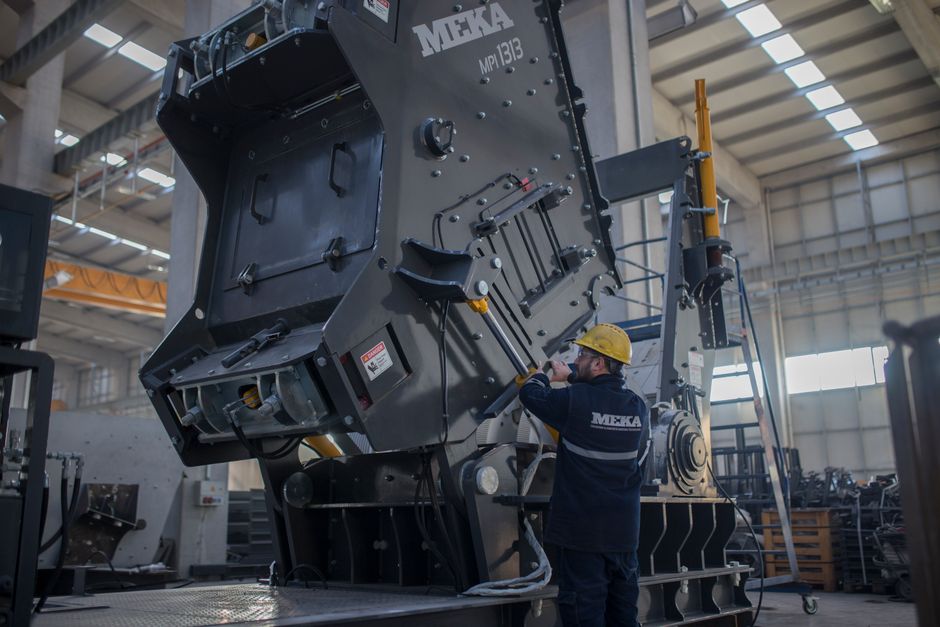
Photo by Soner Mazlum on Pexels
Floating the Electronics: Architecture and the Sealing Paradox
That misconception about single-impact survival leads directly to architectural errors. Teams often pot electronics in rigid epoxy or bolt PCBs directly to the housing, assuming stiffness equals protection. Vibration-resistant device engineering requires the opposite strategy: mounting circuit boards on elastomeric isolators that allow the housing to deform and rebound without accelerating the PCB at the same rate. This floating architecture introduces a secondary problem. Achieving IP67 ingress protection typically relies on compression gaskets that create rigid mechanical bridges between housing halves; under shock, these gaskets transmit impulse directly to sealed seams and internal frames. The solution lies in compliant sealing systems, such as liquid silicone injection or bellows-style O-ring grooves, which maintain environmental isolation while allowing microscopic differential movement. Without this compliance, your IP67 seal becomes a shock amplifier, not a barrier.
Photo by Mikhail Nilov on Pexels
Connectors and Controls During the Real Work Moment
Structural isolation adds volume and mass that compete with usability, introducing a business risk distinct from technical failure. The handheld must function when the operator, wearing 3 mm leather gloves, logs a fault code while the loader traverses uneven terrain at 15 mph. Touchscreens fail here, not from shock, but from vibration-induced input error and glove incompatibility. Physical buttons with high actuation force and tactile feedback outperform capacitive layers in this context. Standard USB-C connectors, rated for 10,000 insertion cycles, are not rated for 10,000 micro-impacts; they suffer fretting corrosion that increases resistance and creates charging intermittency. Magnetic or circular push-pull connectors eliminate the lever arm that standard rectangular ports present to vibration. Optical bonding of the display prevents delamination under cyclic flex. These choices acknowledge that the most impact-proof handheld design fails if the operator must remove the device from the cab to complete a report, breaking the workflow that digitization was meant to capture.
If you’re working through the trade-offs between IP ratings and shock isolation for fleet digitization, Bang Design has spent 25 years taking products from concept to manufactured reality across industrial, automotive, and technology sectors. Their subscription-based model provides a full-stack team, including product engineering and manufacturing expertise, without the overhead of a traditional agency. Explore their work or start a project.