Diploma: The Anti-Conglomerate Holding Company

The Anti-Conglomerate
Diploma is organized as a holding company that refuses to hold. With a market capitalization of roughly £3 billion, it comprises thirty to forty independent businesses, each maintaining its own managing director, balance sheet, and profit-and-loss statement. There is no central brand. No shared headquarters culture. No unified sales force pushing a consolidated catalog. In an era of industrial conglomerates trumpeting “synergies” and “integration,” Diploma’s structure appears almost aggressively fragmented. This is not an accident of history. It is the economic engine.
The architecture traces to a strategic pivot executed between 1998 and 2001 under Bruce Thompson, who led the company for twenty-two years. Before this period, Diploma operated as a traditional industrial group with a portfolio of unrelated manufacturing and distribution assets. Thompson recognized that the conglomerate model, centralized strategic planning, shared services, coordinated procurement, was destroying value in the specific niche Diploma occupied. He sold ten challenged businesses and reoriented the group toward a singular mission: acquiring high-quality, founder-owned distributors of mission-critical, low-cost components and leaving them alone.
These components, ydraulic seals for excavators, control systems for construction equipment, specialized consumables for medical laboratories, hare specific economic characteristics. They represent a tiny fraction of total project costs but cause disproportionate operational disruption when unavailable. A $12 O-ring can idle a $50,000 machine; a missing laboratory consumable can delay diagnostic testing. Customers fund these purchases from operating budgets rather than capital expenditure, making demand remarkably sticky during downturns. When CFOs freeze new construction capex in recessions, they still fund repairs. When hospitals delay expansion, they still purchase consumables. This dynamic provided the resilience that allowed Diploma’s seals division to survive a 21% revenue decline in 2009 and emerge with customer relationships intact.
Yet the economic logic extends beyond product characteristics. Diploma functions as a liquidity arbitrageur. It acquires private businesses directly from founders at seven to nine times EBIT, avoiding auction processes where private equity firms drive multiples into the teens. It holds these assets within a public structure that commands significantly higher valuations, capturing the spread between private industrial multiples and public market premiums. The operating improvements, professionalizing back offices, negotiating preferential supplier terms, broadening inventory, are necessary to justify the acquisition cost and sustain the ~20% return on invested capital. But the initial uplift comes from the valuation gap. Diploma is not primarily a distributor. It is a buyer of cash flows, and its product is the permanent preservation of entrepreneurial incentive.
The Mathematics of Permanent Capital
The acquisition math is ruthless in its simplicity. When Diploma pays £20 million for a business generating £3 million in EBIT, roughly a 6.7x multiple, it acquires a cash flow stream at a 15% unlevered yield. If that business grows organically at 5% annually and Diploma applies modest leverage, the returns on equity approach 20-25%. For this to work, the target must remain a going concern with its competitive advantages intact. This explains the decentralized structure. Integration, the traditional value-creation mechanism in industrial M&A, destroys the very attributes that made the target attractive. Founder-managers who built businesses on customer relationships and rapid decision-making do not function effectively as divisional heads within centralized hierarchies. They leave. Customers follow. The premium paid becomes goodwill impairment.
Diploma’s alternative is to operate as a permanent capital provider. The managing directors retain autonomy over pricing, inventory, and customer relationships. They continue to run their P&Ls as if they still own the equity, ecause, in a meaningful sense, they do. Diploma provides cheaper debt capital, administrative scale, and a liquidity event for the founder. In exchange, it captures the delta between the purchase multiple and its own trading multiple, plus the incremental margin from operational professionalization. The model requires a persistent market inefficiency: founder-owned distributors must remain willing to sell to Diploma at industrial multiples rather than financial multiples, and Diploma must maintain the reputation as a “non-destructive acquirer” that preserves the founder’s legacy, brand, and people.
This mechanism faces a temporal threat. Private equity firms have flooded the lower-middle market, driving multiples for high-quality distributors into the low double digits. Diploma has shown pragmatism, aying roughly 11.5x EBIT for Windy City Wire, a strategic asset in the controls division, ut each stretch dilutes returns. If the valuation gap narrows materially, Diploma faces an unpalatable choice: overpay and compress ROIC, or slow acquisitions and lose the growth premium that sustains its own multiple. The model depends on the continued fragmentation of industrial distribution and the persistence of founders who prioritize legacy preservation over maximum price.
Inventory as Hostage-Taking
Within the seals and controls divisions, competitive advantage manifests as a chicken-and-egg problem that Diploma has already solved. The aftermarket for industrial seals is not won on price. It is won on availability. When a hydraulic excavator fails on a construction site, the cost of downtime, idle crews, delayed contracts, penalty clauses, far exceeds the cost of the replacement seal. Diploma’s seals businesses stock tens of thousands of SKUs across North American distribution centers, enabling next-day delivery to repair shops that cannot afford to wait for consolidated shipments from distant manufacturers.
This inventory breadth creates a moat that is simultaneously capital-intensive and knowledge-intensive. A competitor cannot simply replicate the SKU count; the working capital requirements would bankrupt a new entrant before customer relationships could be established. Meanwhile, customers cannot easily switch to a cheaper competitor with thinner inventory because the risk of stockouts is existential. The working capital intensity that appears as a drag on the balance sheet, tying up capital in tens of thousands of low-velocity parts, is actually the barrier to entry. It is a form of hostage-taking: Diploma holds the parts hostage, and customers pay a ransom of loyalty.
The durability of this advantage depends on precise calibration. Insufficient inventory loses market share during supply chain disruptions; excess inventory erodes the high-teens operating margins and 20% ROIC that define the investment case. The 2009 downturn demonstrated the model’s resilience, revenues fell sharply, but the inventory position preserved customer relationships through the trough, but it also exposed cyclical vulnerability. A prolonged recession that forces asset closures rather than merely deferred maintenance would erode the installed base of machinery that generates aftermarket demand. The moat is deep, but it is dug within a cyclical industry.
The Life Sciences Prison
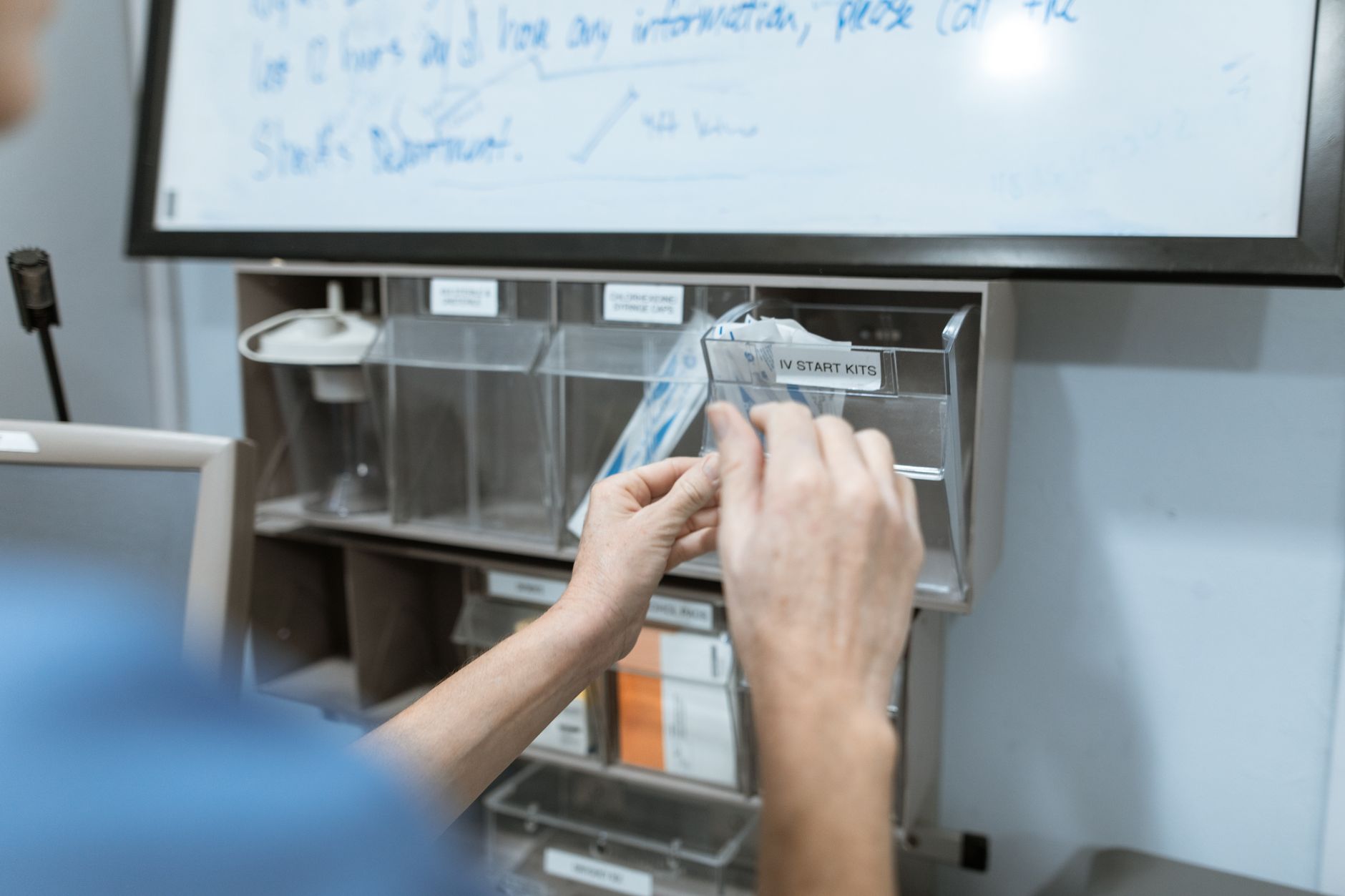
While seals and controls rely on inventory scale, the life sciences division operates through contractual exclusivity. Diploma holds long-term distribution agreements with small and mid-sized medical device manufacturers in Canada, Europe, and Australasia. These suppliers lack the scale, regulatory expertise, and geographic footprint to distribute directly into fragmented hospital systems. Diploma provides the infrastructure: relationships with hospital procurement departments, logistics networks that satisfy cold-chain requirements, and regulatory compliance capabilities that vary by jurisdiction.
This creates a different defensive structure. The switching costs for hospitals are embedded in procurement contracts and multi-decade trust relationships. For suppliers, building direct distribution would require capital expenditures and organizational capabilities disproportionate to the revenue generated in these secondary markets. The arrangement appears stable, Diploma provides essential reach; suppliers provide exclusive product access, but it carries concentration risk. If major manufacturers consolidate, or if they develop the scale to internalize distribution in Diploma’s geographies, the division’s revenue could evaporate with limited recourse. The model assumes that medical device manufacturers will perpetually prefer outsourcing to building captive infrastructure in developed markets outside the United States. This assumption held during the pandemic, when supply chain reliability became paramount, but it remains vulnerable to strategic shifts among Diploma’s supply base.
The Ingram Protocol
In 2018, Diploma’s board appointed Richard Ingram, a former president at Smith’s Group, as chief executive. Ingram lasted four months. The official statements cited “cultural misalignment,” a phrase that understates the economic significance of the departure. Ingram’s background was in centralized, process-heavy industrial conglomerates. He attempted to impose strategic planning protocols and integration frameworks appropriate for a unified corporation. He failed because Diploma is not a corporation; it is a portfolio of owner-operators who happen to report to London.
The decentralized structure is not a human-resources policy. It is a financial covenant. When Ingram tried to centralize decision-making, he triggered a mechanical rejection. Managing directors who had built their businesses on autonomy threatened to leave. The pipeline of acquisition targets, founders who specifically sought Diploma’s hands-off approach, dried up. The economic engine seized. The board acted swiftly because the alternative was the gradual dissolution of the asset. The four-month tenure stands as empirical proof that culture is not a soft variable at Diploma; it is a hard constraint on CEO selection as rigid as debt covenants.
Johnny Thompson, the current CEO, understands this constraint. A former finance director at Compass Group, he has spent three years calibrating the precise amount of centralization that the model can tolerate. His “collaboration” initiatives, cross-selling between independent businesses, shared supplier negotiations, technology platform upgrades, must be offered as opportunities rather than edicts. The decentralized culture is self-reinforcing: it attracts entrepreneurial MDs, which strengthens the acquisition pipeline, which sustains the growth rate that justifies the public market multiple. Disrupting this cycle to capture short-term synergies would be akin to killing the golden goose to improve the quarterly egg production.
The Collaboration Paradox
This creates the central strategic tension: extracting value through integration while preserving the autonomy that makes integration possible. Diploma cannot simply leave its thirty businesses in silos; that would fail to justify the parent company’s existence and leave operational value unclaimed. Yet it cannot integrate them traditionally without destroying the entrepreneurial urgency that generates returns.
The solution has been selective, almost covert, coordination. Cross-selling occurs not through mandated account management but through informal networks of MDs who recognize that another Diploma business has a product their customer needs. Supplier negotiations leverage the group’s aggregate purchasing power, but contracts remain local to preserve the MD’s relationship control. Back-office functions, IT, HR, finance, are professionalized centrally, but customer-facing operations remain fiercely independent.
This delicate balance is visible in the Windy City Wire acquisition. At roughly 11.5x EBIT, Diploma paid a premium that stretched its traditional discipline. The strategic logic relied on the ability to introduce Windy City’s cable management products to Diploma’s existing controls customer base without disrupting Windy City’s autonomous sales culture. If Thompson can execute these “soft” synergies, revenue enhancement rather than cost-cutting consolidation, he expands margins without cracking the decentralized vessel. If he pushes too hard, he risks repeating the Ingram experiment.
The Thompson Variable
Thompson’s recent admission that the group is operating at “three out of ten” suggests both significant opportunity and existential peril. There is clearly operational inefficiency within the portfolio, arehouses that could be automated, inventory systems that could be unified, purchasing leverage that could be better exploited. Yet the “three out of ten” implies a long runway of professionalization that could tempt a CEO toward centralization.
The specific risk lies in capital allocation. In the current model, each MD controls reinvestment within their domain. This ensures capital flows to customer-facing opportunities, additional inventory, expanded sales coverage, local acquisitions, but may miss group-wide economies of scale in warehousing or technology infrastructure. Thompson’s challenge is to centralize capital for infrastructure while keeping operational decisions local. He must implement ERP systems and automation without imposing the bureaucratic protocols that would drive out entrepreneurial talent.
The leadership transition also carries temporal risk. Bruce Thompson built the portfolio over two decades; Johnny Thompson has been in role for three years. The failed Ingram interregnum demonstrated how quickly cultural misalignment can destroy value. If Johnny Thompson departs or underperforms, the board must find a successor who understands that Diploma is not a company to be managed but a portfolio to be curated. This is a narrow talent pool.
The Assumption of Permanence
Beneath the operational mechanics lies a fragile long-term assumption: that the structure of industrial distribution remains static. Diploma assumes that repair shops will perpetually prioritize next-day availability over price, that medical device manufacturers will never build direct distribution in secondary markets, and that the components Diploma distributes will not be rendered obsolete by new manufacturing technologies or supply chain reshoring.
The threat is not e-commerce in the conventional sense. Amazon does not stock 40,000 seal SKUs for next-day delivery to remote construction sites. The threat is a gradual shift in customer willingness to pay for inventory breadth. If logistics technologies reduce delivery times from manufacturers, or if predictive maintenance reduces emergency repair frequency, the premium for Diploma’s inventory-heavy model compresses. Similarly, if 3D printing or localized manufacturing reduces reliance on spare parts distribution, the seals division’s moat erodes.

More immediately, the model depends on the persistence of fragmented private markets. If private equity firms continue to drive up acquisition multiples, or if Diploma’s own multiple compresses due to slowing growth, the arbitrage mechanism breaks. The group would be forced to transition from an acquisition-driven holding company to an operating company managing a static portfolio. The 20% ROIC and high-teens margins are sustainable only if the acquisition pipeline continues to provide fresh capital deployment opportunities at accretive multiples.
Diploma exists in the narrow space between organizational chaos and bureaucratic integration. It is a permanent capital vehicle that functions only as long as it resists the urge to become a unified corporation. The decentralized culture is not a management philosophy; it is the financial structure that makes the mathematics work. Johnny Thompson’s tenure is a live experiment in whether this structure can be professionalized without being centralized. If he succeeds, Diploma remains a unique arbitrage of entrepreneurial autonomy and institutional capital. If he fails, the four-month Ingram interregnum will stand as prophecy rather than exception.
The Windy City Wire acquisition represents a boundary test. At approximately 11.5 times EBIT, the transaction sat at the outer edge of Diploma’s historical discipline, a visible departure from the single-digit multiples that built the portfolio. The strategic logic required that Diploma extract value not through the traditional liquidity arbitrage, buying low and holding within a higher-multiple structure, but through operational integration of a kind the group has historically avoided. Windy City manufactured and distributed cable management systems for commercial construction, a segment adjacent to Diploma’s existing controls businesses but with distinct manufacturing capabilities and customer workflows.
The economics demanded cross-selling. Without revenue synergies introducing Windy City’s products to Diploma’s existing electrical contractor relationships, the purchase price would compress returns below the 20% ROIC threshold. This placed Johnny Thompson in the precise position Bruce Thompson had spent two decades avoiding: forcing coordination between independent businesses. The controls MDs had to be convinced, never compelled, to allocate sales bandwidth to an unfamiliar product line. Windy City’s MD had to accept that his customer relationships were no longer exclusively his own. The integration occurred not through mandate but through a painstaking alignment of incentive structures, shared commission protocols, and the subtle social pressure of the MD network.
This case illustrates the fragility of the collaboration paradox. When Diploma pays seven times EBIT, it can afford to leave the business alone. The margin of safety accommodates organic inefficiency. When it pays eleven times EBIT, the model requires active intervention, recisely the intervention that risks cultural rejection. The group has managed this transition through what might be termed “soft integration”: shared supplier contracts negotiated centrally but signed locally; inventory pooling agreements that reduce working capital intensity without consolidating warehouses; customer introductions facilitated at annual MD conferences rather than through CRM system mandates. Each of these mechanisms depends on voluntary participation. If the MDs decline to play, the premium paid becomes permanent capital impairment.
The working capital mathematics in the seals division reveal the operational tightrope. A typical seals distributor carries sixty to ninety days of inventory, often representing the largest balance sheet item. Diploma’s scale allows preferential terms, extended dating on payables, consignment arrangements with key suppliers, but the fundamental economics remain capital-intensive. Each additional SKU breadthens the competitive moat but ties up cash. The ROIC calculation is brutally sensitive: a ten-day increase in inventory days can reduce returns by two hundred basis points, shifting a business from accretive to dilutive.
During the 2009 downturn, this tension became existential. Seals revenues declined 21% as construction activity collapsed, yet Diploma maintained inventory levels. The strategic bet was that the downturn would be temporary and that market share preservation, ensuring that repair shops never faced a stockout, would justify the working capital drag. The bet paid out, but it exposed the model’s cyclical vulnerability. Unlike software or services businesses where variable costs contract with revenues, Diploma’s inventory represents fixed capital commitments. A prolonged downturn that forces permanent fleet reductions, excavators scrapped rather than repaired, would strand inventory in obsolete SKUs. The high-teens margins provide a cushion, but they cannot indefinitely offset working capital inefficiency in a shrinking market.
The life sciences division carries a different concentration risk, one embedded in the structure of exclusive distribution agreements. When Diploma signs a five-year exclusive contract to distribute a German manufacturer’s surgical instruments in Canada, it gains a revenue stream but assumes a counterparty risk. If the manufacturer is acquired by a strategic consolidator, Medtronic, Johnson & Johnson, Stryker, the new parent typically possesses existing distribution infrastructure in North America. The exclusive agreement becomes a transition services obligation, terminable at contract end or sometimes bought out for a nominal sum. Diploma’s defensibility depends on the fragmentation of its supply base persisting indefinitely.
The bear case here is specific and grounded in industry dynamics. Medical device manufacturing has consolidated aggressively over the past decade. As mid-sized manufacturers achieve scale through acquisition, they naturally internalize distribution in core markets. Diploma’s geographic diversification, its presence in Canada, Australasia, and Europe, provides some insulation, but the trend is unidirectional. Each supplier consolidation event forces Diploma to either accept margin compression to retain the relationship or lose the revenue entirely. The division’s 20% of group sales is currently high-margin and recurring, but the recurrence depends on contractual exclusivity rather than structural necessity. The switching costs for hospitals are real, but they attach to the product, not the distributor. If the product manufacturer changes distribution strategy, the hospital follows the device, not the distributor.
The cultural transmission mechanism between MDs represents an underappreciated structural advantage that most analyses miss. Diploma does not impose a corporate culture through HR manuals or training programs; it replicates itself through social contagion. When a founder sells to Diploma and remains as MD, they become embedded in a network of thirty peers who have made the same transition. The norms propagate horizontally: how to manage inventory turns, when to push back on supplier price increases, how to justify capital expenditure to the center. This peer network enforces standards more effectively than any corporate compliance function could. An underperforming MD faces not the scrutiny of a distant CFO but the quiet opprobrium of colleagues at the annual conference who view their own P&L as a matter of personal pride.

This mechanism creates durability but also fragility. As the group scales beyond forty businesses, the social cohesion that enables norm transmission dilutes. The MDs no longer know each other personally; the annual conference becomes too large for genuine peer accountability. Moreover, as the original founders age out and professional managers replace them, the entrepreneurial intensity that attracted acquisitions may attenuate. The second-generation MD, the hired manager rather than the former owner, lacks the psychological ownership that made decentralization effective. They may welcome centralization as a reduction in responsibility, creating internal pressure for the very bureaucratization that would destroy the model.
The cyclical dynamics of the controls division merit closer examination. Unlike seals, which serve the aftermarket, controls often touch new construction and infrastructure capex. When municipalities delay bridge repairs or developers pause commercial projects, demand for HVAC controls, security systems, and industrial automation contracts sharply. The 2009 experience in seals was severe; a comparable contraction in controls would be more damaging because the division lacks the installed-base cushion of aftermarket demand. Diploma has mitigated this through geographic diversification, exposure to Australian and Canadian infrastructure cycles that do not perfectly correlate with the US, but the fundamental cyclicality remains.
The current environment of infrastructure stimulus and reshoring investment creates a mirror-image risk. As construction activity surges, Diploma’s inventory-light competitors may gain share by offering faster delivery from lean stocks, while Diploma’s working capital-heavy model struggles to scale quickly without choking on receivables. The next-day availability advantage assumes stable demand patterns; in a rapid expansion, the capital required to maintain inventory breadth across an expanding revenue base strains the balance sheet. The ROIC compression comes not from the downturn but from the working capital absorption of growth itself.
Johnny Thompson’s “three out of ten” assessment implies a dangerous temptation. If the group truly operates at thirty percent of potential efficiency, the rational response is aggressive operational improvement, entralized purchasing, shared warehousing, unified ERP systems. Yet each of these improvements attacks the decentralized autonomy that constitutes the group’s competitive advantage. The temptation is structural: as Diploma grows, the inefficiencies of replication become more visible. Thirty warehouses with thirty different inventory management systems appear wasteful compared to a single optimized network. The finance director’s perspective, Thompson’s background, naturally gravitates toward consolidation.
The specific risk lies in technology investment. Diploma has increased spending on “digital capabilities,” a phrase that covers everything from e-commerce portals to warehouse automation. Implemented correctly, these tools reduce friction without removing autonomy: an MD can choose whether to use the group’s digital platform or maintain their own customer interfaces. Implemented aggressively, they become centralization vectors. When the group mandates a unified
… unified customer relationship management platform, it forces standardization of pricing protocols, discount authority thresholds, and customer interaction workflows. The managing director who previously adjusted terms within hours to secure a critical repair contract must now navigate approval queues. The latency kills the value proposition. The seal that arrives in three days because the order sat in a corporate queue is no different from the seal that arrives in three days from a distant manufacturer. The inventory advantage evaporates in the friction of process.
The Windy City Wire acquisition illustrates the mechanical difficulty of extracting value without extracting autonomy. Windy City operated in cable management for commercial construction: market adjacent to Diploma’s electrical controls businesses but with distinct customer buying cycles and technical specifications. The investment thesis required that Diploma’s existing controls managing directors introduce Windy City’s products to their contractor relationships, creating a cross-sell that would justify the elevated purchase multiple.
In practice, this meant asking an MD who had spent fifteen years building trust with electrical contractors to stake that reputation on an unfamiliar product line from a sister business they did not control. The controls MD faced an asymmetrical payoff: if the introduction succeeded, the Windy City MD captured the margin; if it failed, the controls MD suffered the relationship damage. The rational response was polite deferral, xpressing strategic enthusiasm while never actually reallocating sales bandwidth from core products.
Diploma solved this not through mandate but through structural adjustment. The group implemented a commission-sharing protocol that gave the originating MD permanent participation in the revenue stream, effectively making them a minority partner in the cross-sold account. Even then, adoption remained uneven across the portfolio. Some MDs embraced the mechanism as a low-risk revenue expansion; others viewed it as administrative complication that distracted from their core profit-and-loss accountability. The variation revealed the fundamental constraint: integration is a discretionary gift in this structure, not a managerial prerogative. When the premium paid for an asset requires collaboration that the culture cannot command, the arithmetic of the deal collapses.
The succession challenge within the operating companies compounds this tension. When Bruce Thompson acquired these businesses in the 1990s and 2000s, he bought from owner-operators in their fifties and sixties who accepted Diploma’s autonomy because it preserved their legacy and their people. Today, the first generation is aging out. The founder who stays on for five years post-acquisition eventually retires, and Diploma faces a choice: promote from within the acquired business or import professional management from outside.
Internal promotion preserves customer knowledge but often elevates functional specialists, sales directors or operations managers, who lack the founder’s entrepreneurial risk tolerance and holistic grasp of working capital management. External recruitment brings management discipline but destroys the tacit knowledge embedded in informal customer relationships. The new MD knows that a particular mining operation “runs some old Caterpillar equipment” but not that the operation specifically maintains a 1987 D8L dozer that requires a specific obsolete seal that only this distributor stocks, in quantity, because the founder understood the customer’s peculiar maintenance philosophy. That knowledge walked out with the founder.
As this generational transition accelerates across the portfolio, the variance in performance widens. Some second-generation MDs thrive, embracing the autonomy to build their own equity-like stakes in the business growth. Others retreat into conservatism, managing the business for steady cash flow rather than expansion, content to harvest the installed base rather than invest in the inventory breadth that creates competitive durability. The group average remains acceptable, the high-margin recurring revenue generates cash even without growth, but the organic growth rate that justifies the public market multiple becomes dependent on a shrinking subset of entrepreneurial MDs.
The acquisition market has shifted in ways that threaten the core mechanism. When Diploma began its programmatic acquisition strategy in the late 1990s, the lower-middle market for industrial distribution was informationally inefficient. Founders sold to Diploma because they lacked access to financial buyers and feared the cultural destruction of strategic acquirers like Danaher or Ingersoll Rand, which would impose integration playbooks and strip out the founder’s identity.
Today, private equity firms have colonized this space, offering founders not merely liquidity but the promise of a second bite, olling equity into a larger platform that will sell to a strategic buyer in three to five years at a higher multiple. This narrative often commands valuations of eleven to thirteen times EBIT, exceeding Diploma’s discipline. The founder must choose: sell to Diploma at eight times and remain MD indefinitely with operational autonomy, or sell to PE at twelve times with a contractual commitment to remain for three years followed by a second exit event that could double their proceeds.
For the founder nearing retirement, the PE option frequently prevails. Diploma’s “permanent home” narrative appeals to legacy concerns but not to financial optimization. The result is adverse selection: the businesses that come to Diploma are increasingly those that failed the PE diligence process, ower growth trajectories, customer concentration issues, or margin compression that makes the leverage model dangerous. The single-digit multiple reflects not merely Diploma’s pricing discipline but the declining quality of the remaining opportunity set.
If Diploma maintains its multiple ceiling in this environment, the acquisition pace slows, and the growth engine stalls. If it capitulates and pays PE-level multiples, the return-on-capital math becomes speculative, dependent on operational improvements that the decentralized structure may not deliver efficiently. The group is already testing this boundary with Windy City Wire; each subsequent deal at similar pricing increases the pressure to centralize operations to justify the cost, precisely the integration that would destroy the cultural premium that attracted the deal flow in the first place.
The model thus faces simultaneous pressure on input costs (acquisition multiples) and output quality (MD succession). The two pressures interact perniciously: as second-generation MDs prove less effective at organic growth, the group becomes more dependent on acquisition to maintain its growth rate, yet the acquisition market offers poorer risk-adjusted returns. Johnny Thompson’s operational improvement agenda, moving from three to ten, represents an attempt to break this constraint by extracting efficiency gains that compensate for multiple compression. But efficiency gains require standardization, and standardization requires the centralization that the model has historically rejected.
The working capital intensity that creates the competitive moat in seals also creates vulnerability to credit cycles. In the 2009 downturn, Diploma did not merely maintain inventory; it extended credit terms to distressed repair shops, accepting receivable days that strained working capital limits and converted temporary revenue decline into permanent capital absorption. Some of those receivables never converted, ankruptcies in the construction sector wiped out specific customer balances that the decentralized credit authority had approved to preserve relationships.
This reveals that the decentralized model’s responsiveness cuts both ways. The same MD who can approve an emergency shipment without corporate sign-off can also approve credit for a customer whose financial distress is obvious to a centralized risk function but invisible to the local relationship manager. The “ownership culture” that Diploma cultivates, treating the MD as the business owner, creates incentive for short-term revenue maximization over long-term capital preservation. When the cycle turns, Diploma discovers that it has traded cyclical revenue for permanent working capital impairment.
The result is a holding company permanently suspended between incompatible imperatives: it must professionalize to justify its existence, yet it must remain amateur in the original sense, rooted in love of the specific trade, the particular customer relationship, the individual machine part, to generate returns. The arbitrage of decentralization works until it doesn’t. The question is whether the transition point arrives suddenly, a catastrophic loss of a major life sciences supplier, a synchronous failure of multiple credit books in a recession, or gradually, through the accretion of professional managers who prefer the safety of process to the risk of judgment. Either way, the model contains the seeds of its own dissolution, sown in the very soil that made it bloom.