
HelloFresh: How Process Power Cuts Food Waste

In the arithmetic of food, waste is the silent tax. The United Nations estimates that traditional supply chains discard more than thirty percent of production before it reaches a consumer, poiled produce in transit, surplus rotting on shelves, impulse purchases abandoned in refrigerators. Against this baseline, HelloFresh’s operational achievement seems almost implausible: waste rates below one percent across a network delivering nine hundred million meals annually. This is not merely operational excellence in the conventional sense, nor is it a virtue-signaling sustainability metric. It is the structural foundation of a business model that achieves grocery-retailer gross margins three to four times higher than industry norms while operating a capital-intensive manufacturing and logistics footprint that would bankrupt competitors lacking equivalent demand precision.
The meal kit category, after all, is a graveyard. Blue Apron, the sector’s onetime standard-bearer, hemorrhaged customers and market value until it became a cautionary tale of unit economics gone wrong. Others have vanished entirely. Yet HelloFresh persists, profitable and expanding, serving eight million active households across fifteen markets with a consistency that suggests something other than temporary consumer novelty. The difference lies not in the concept, pre-portioned ingredients delivered weekly, but in the architecture of prediction. HelloFresh has constructed a demand-pull manufacturing system where procurement follows consumption with a lag measured in days rather than weeks, enabled by algorithms that forecast individual meal choices across a menu constrained to three hundred stock-keeping units. This is process power in its purest form: the ability to manufacture food without the buffer of inventory, transforming data into working capital efficiency at a scale no competitor has replicated.
The 300-SKU Constraint
The natural instinct in food retail is abundance. A typical grocery store stocks fifty thousand items, betting that variety captures marginal dollars even as complexity erodes margins. HelloFresh operates with roughly three hundred SKUs, refreshed weekly, from which it composes thirty to forty distinct meal options. This constraint is not a limitation to be overcome but the essential condition of the business’s economic engine.
By collapsing the SKU count by two orders of magnitude, HelloFresh converts the forecasting problem from a statistical impossibility into a soluble equation. With eight million customers generating behavioral data, the company predicts individual meal selections with sufficient accuracy to procure ingredients just-in-time, manufacture portions to order, and ship before spoilage accumulates. The result is a thirty-five percent food cost ratio, remarkable for a business handling fresh proteins and produce, paired with a fulfillment cost of another thirty-five percent, yielding contribution margins near thirty percent. Traditional grocers, burdened by storefront real estate, inventory carrying costs, and shrinkage, operate at seven to twenty percent gross margins. The gap is structural, not managerial.
Yet this advantage depends absolutely on maintaining the constraint. Each incremental SKU, an exotic spice, a specialty grain, a seasonal protein, introduces procurement complexity that linearly increases while demand predictability decays exponentially. The tension manifests weekly in the menu planning room, where culinary creativity collides with supply chain reality. Expand the menu to forty-five meals to satisfy variety-seeking customers, and inventory risk multiplies; contract it to twenty-five to maximize efficiency, and churn accelerates as households abandon the service for competitors offering broader choice. HelloFresh navigates this by optimizing at the portfolio level rather than the recipe level, balancing high-cost proteins against lower-cost carbohydrates across the weekly menu mix rather than within individual dishes. This algorithmic portfolio theory allows the appearance of variety, thirty distinct meal options, while maintaining the discipline of limited ingredient variety.
The constraint also shapes supplier relationships. HelloFresh sources ingredients in patterns that would destabilize traditional vendors: volatile, non-linear orders where pineapple might appear once every three months in unpredictable quantities. This purchasing pattern is only viable because the company’s scale justifies dedicated supply relationships, and because the forecasting algorithms minimize the variance that would otherwise force suppliers to charge scarcity premiums. Should supplier consolidation occur, or should farming operations demand minimum order commitments to manage their own capacity, the procurement cost structure would shift unfavorably. For now, the company’s demand density insulates it, but the vulnerability remains embedded in the model.
Prediction as Production
If the supply chain is the body of HelloFresh, the algorithmic menu engine is its central nervous system. The company’s evolution from a startup where a single chef designed meals to its current state, here data scientists optimize a catalog compared explicitly by leadership to Netflix’s content library, epresents a fundamental shift in how food businesses create value. The raw material is no longer merely agricultural; it is behavioral.
With eight million customers providing granular data on meal selections, substitution patterns, and skipping behavior, HelloFresh constructs preference profiles that predict individual choices with accuracy exceeding eighty percent. This precision enables the demand-pull mechanics: procurement orders flow to suppliers only after customer selection windows close, manufacturing schedules adjust to actual rather than projected demand, and inventory exists in motion rather than storage. The waste rate below one percent is not achieved through better refrigeration or faster trucks, but through the elimination of speculative production.
However, this reliance on historical data creates a tension between predictive accuracy and menu innovation. The algorithms optimize for what customers have previously chosen, reinforcing existing patterns. Novel ingredients, unfamiliar cuisines, or experimental preparations introduce variance that degrades forecast reliability. Yet without periodic innovation, the service risks stagnation: articularly given Dominik Richter’s foundational insight that the average household cycles through only seven distinct dinners repeatedly. The meal kit promises to break this monotony, but the forecasting system inherently resists deviation.
The resolution lies in controlled experimentation: introducing new meals as “testers” within the algorithmic framework, measuring not just take-rate but prediction error, and rapidly iterating or eliminating options that disrupt the forecasting model. This approach treats menu innovation as a portfolio optimization problem rather than a culinary art. It works economically, but it introduces a subtle fragility. If customer preferences shift rapidly, driven by dietary trends, economic pressures, or cultural changes, the historical data becomes a liability rather than an asset. The model assumes preference stability; volatility transforms the prediction engine from a cost-saving device into a source of procurement errors and waste.

The Attribution Advantage
Most analyses of HelloFresh focus on the manufacturing and logistics advantages while overlooking a less visible but equally critical asset: a proprietary marketing attribution system built in-house to track customers across five to ten touchpoints including paid social, search, television, direct mail, and podcasting. In a business spending fifteen percent of revenue on customer acquisition, this software infrastructure represents a decisive competitive moat.
The meal kit customer journey resists simple last-click attribution. A household might encounter the brand through a streaming advertisement, research options via search, encounter a promotional offer through direct mail, and finally convert through a podcast code. Standard third-party analytics platforms would credit only the final touchpoint, leading to systematic under-investment in awareness-building channels and over-investment in bottom-funnel tactics. HelloFresh’s multi-touch tracking suite integrates these interactions, allowing the company to justify spend in channels that appear unprofitable in siloed analysis but serve essential roles in the conversion funnel.
This is a compounding advantage. As the customer base grows, the data volume improves attribution accuracy, which improves allocation efficiency, which reduces customer acquisition costs (CAC) relative to lifetime value (LTV). Competitors relying on platform-native analytics or third-party tools face a structural disadvantage: they cannot see the full journey, and therefore cannot optimize spend with equivalent precision. In mature markets, this efficiency allows HelloFresh to reduce marketing expenditure as brand awareness saturates, releasing margin to the bottom line. In emerging markets, it enables faster payback periods on acquisition spend, accelerating the path to market maturity.
The fragility here is technological and regulatory. As privacy regulations tighten and operating systems restrict cross-app tracking, the attribution model may degrade. If the company loses visibility into the upper funnel, if iOS privacy changes or cookie deprecation obscure the connection between television advertising and subsequent search behavior, the ability to justify fifteen percent marketing spend collapses. The business assumes that attribution technology will remain effective; should that assumption fail, the unit economics of customer acquisition become unmanageable.
The Maturation Bet
HelloFresh’s profitability model rests on a geographic lifecycle theory. New markets require heavy marketing investment, approaching fifteen percent of revenue, to build awareness and establish the density necessary for logistics efficiency. As markets mature, brand recognition reduces the need for paid acquisition, while operational scale improves contribution margins through supplier optimization and fixed cost leverage. The company projects that mature markets will sustain ten percent EBITDA margins with significantly reduced marketing intensity.
This assumes that market maturity follows a predictable curve: rapid growth funded by acquisition spend, followed by a gradual transition to cash-generation as cohorts age and organic referral replaces paid channels. The risk lies in misjudging the maturity inflection point. If a market saturates, if the pool of households interested in meal kits reaches natural limits before the marketing spend can be reduced, the business faces margin compression. Either it maintains spend to capture marginal customers at uneconomical CAC, or it reduces spend and accepts stagnation.
The geographic footprint, twenty-five manufacturing sites across fifteen markets, exposes the company to asynchronous maturation cycles. While German and U.S. markets approach saturation, newer markets in Asia or South America may require years of investment before turning profitable. Capital allocation between these markets determines the consolidated margin. The implicit bet is that mature markets will indeed exhibit the hypothesized margin expansion, funding continued expansion elsewhere. Should mature markets instead exhibit persistent marketing intensity, if the meal kit concept remains niche rather than mainstream, requiring constant refreshment of the customer base, the profitability model breaks.
The Churn Trap
Beneath the operational sophistication lies a mechanical fragility inherent to the auto-renewal subscription model. HelloFresh amortizes customer acquisition costs over an expected lifetime value that assumes continued engagement. When satisfaction slips, hether through manufacturing errors, supply chain disruptions causing ingredient substitutions, or menu fatigue, hurn accelerates nonlinearly. A customer who receives a damaged protein or a missing ingredient does not merely cancel the current week; they often terminate the relationship permanently, rendering the sunk acquisition cost unrecoverable.
Blue Apron’s collapse illustrates the dynamics. Operational inconsistencies led to customer dissatisfaction, which drove churn, which forced increased marketing spend to replace lost customers, which consumed capital that should have fixed operations, creating a death spiral. HelloFresh has avoided this through rigorous quality control and the manufacturing density that allows rapid issue resolution, but the vulnerability remains structural. Because the business manufactures food just-in-time without inventory buffers, any disruption, weather events affecting produce, logistics failures, or labor strikes at fulfillment centers, immediately affects product quality and triggers churn.
The assumption underlying the model’s stability is that home-cooked dinner remains a durable, large spending category resistant to substitution. This assumes that consumers will not permanently shift to ready-to-eat alternatives, restaurant delivery, or prepared meal solutions that require less effort than cooking from scratch. Should behavioral norms shift, if the convenience threshold rises, or if economic pressures force households toward cheaper, non-perishable options, the addressable market contracts. The algorithmic precision and wasteless supply chain become irrelevant if the fundamental activity they support, cooking dinner from raw ingredients, declines as a consumer behavior.
Legacy in Concrete
Perhaps the most underappreciated drag on HelloFresh’s process power is physical rather than digital. The company operates twenty-five manufacturing sites across fifteen markets, but these facilities do not represent a standardized blueprint. Legacy sites, built during earlier phases of expansion, deviate from the target architecture due to sunk capital and depreciation schedules. This heterogeneity creates operational drag: non-standard layouts reduce productivity per square foot, complicate the rollout of algorithmic production planning, and prevent the full realization of economies of scale.
The tension is capital allocation versus operational purity. Standardizing the footprint, retrofitting or replacing legacy sites, would require write-downs and operational disruption. Maintaining the status quo, however, allows competitors with newer, greenfield facilities to achieve higher productivity per square foot. Over time, this architectural debt erodes the process advantage. As the industry matures and manufacturing efficiency becomes the primary competitive variable, HelloFresh’s average facility productivity may decline relative to new entrants unburdened by legacy infrastructure.

This is the hidden cost of being first. The early sites that enabled scale now prevent its full optimization. The company must choose between accepting suboptimal productivity or destroying capital to rebuild. Neither option is attractive, and the decision delays the realization of the theoretical margin structure that the business model promises.
HelloFresh ultimately represents a triumph of process power over product novelty. It is not a meal kit company in the traditional sense, but a demand-pull manufacturer that happens to deliver food. The sixty-five percent gross margin, the sub-one-percent waste rate, and the algorithmic procurement precision create a structural position that widens with scale, provided that the operational execution remains flawless and the underlying consumer behavior stable. Yet the model carries the fragility of all high-leverage systems: small failures in quality control cascade into customer attrition; architectural heterogeneity caps efficiency gains; and the reliance on predictive algorithms assumes a stability of human preference that history rarely confirms. The business succeeds not because it sells dinner, but because it has built the only supply chain capable of manufacturing dinner on demand, at scale, without inventory: feat of industrial organization that remains vulnerable to the very complexity it has managed to contain.
The comparison with Blue Apron serves as a controlled experiment in what occurs when process power remains undeveloped. When Blue Apron went public in 2017, it appeared to possess the same structural opportunity: a direct-to-consumer model capturing full retail margin, subscription revenue predictability, and the demographic tailwind of urban professionals seeking convenience. Yet Blue Apron operated with a fundamentally different procurement philosophy, purchasing ingredients based on aggregate forecasts rather than individual selections, maintaining inventory buffers that inevitably spoiled, and lacking the algorithmic infrastructure to optimize menu mix. The result was waste rates approaching traditional grocery levels, margin compression that prevented sustainable customer acquisition, and operational inconsistencies that accelerated churn precisely when the company needed cohort stability to justify its marketing spend.
Blue Apron’s failure was not merely mismanagement but a demonstration of the minimum viable scale required for the demand-pull model to function. Without sufficient customer density to predict demand with granularity, the company faced a choice between stockouts, which destroyed customer trust and drove cancellation, or over-purchasing, hich destroyed margins through spoilage. They chose the latter, and the resulting cost structure made profitable unit economics impossible. HelloFresh survived the same industry conditions not because it executed the same playbook better, but because it had accumulated sufficient data density and engineering capability to operate a different playbook entirely. This distinction matters for understanding the durability of the advantage: HelloFresh’s margin structure is not merely a result of being larger, but of being large enough to enable a different operational paradigm that smaller competitors cannot replicate incrementally.
The Build-or-Buy Geography
The tension between first-party logistics build-out and third-party leverage represents a capital allocation decision that will determine the geographic expansion frontier. In dense urban markets, Manhattan, central London, Berlin, HelloFresh operates proprietary delivery networks, capturing the full thirty-five percent fulfillment margin and maintaining control over the customer experience down to the minute of delivery. In less dense or emerging markets, the company relies on third-party logistics providers, trading margin for capital efficiency and speed to market.
This hybrid model creates a strategic inflection point that varies by geography. In markets where delivery density exceeds a threshold, roughly measured by meals delivered per square mile per week, the economics of owned fleets justify the fixed cost absorption. Below that threshold, third-party logistics erode margin but preserve capital for market development. The danger lies in the middle ground: markets that achieve partial density where the company has committed to owned infrastructure but cannot amortize the fixed costs across sufficient volume. These markets become margin traps, draining cash while awaiting growth that may never arrive if consumer adoption proves slower than projected.
The decision to build versus buy also locks in competitive dynamics for decades. Once a market justifies owned fleets, the capital deployed becomes a barrier to exit; the company cannot easily retreat to third-party logistics without writing down significant assets. Conversely, markets entered through third-party logistics remain vulnerable to margin pressure if the logistics providers consolidate or demand rate increases. HelloFresh’s expansion into twenty-five sites across fifteen markets represents a portfolio of these bets, each with different density trajectories and capital intensities. The aggregate margin profile depends on the weighted average of these decisions, meaning that profitability in mature markets must fund not just corporate overhead but the suboptimal economics of transitional markets where the density threshold has not yet been crossed.
The architectural heterogeneity mentioned earlier compounds this logistics tension. Legacy manufacturing sites often lack the dock infrastructure, cold-chain capacity, or routing optimization required for efficient first-party delivery integration. When the company attempts to retrofit these facilities for higher-volume, direct-to-consumer fulfillment, they encounter physical constraints, eiling heights insufficient for automated racking, loading bays incompatible with electric vehicle fleets, or floor plans that prevent the linear flow from receiving to picking to shipping that the target blueprint requires. Each non-standard site requires custom logistics solutions, preventing the rollout of standardized routing algorithms and delivery scheduling systems. The result is a bimodal operational performance: greenfield sites achieving target unit economics while legacy sites drag on the consolidated margin, creating an internal variance that obscures the true profitability of the model at scale.
The Pineapple Problem
Beneath the algorithmic sophistication lies a brute physical reality: agricultural supply does not naturally conform to the volatile, lumpy demand patterns that HelloFresh generates. The company’s three hundred SKUs include items like pineapple, specialty mushrooms, or heritage grains that appear on the menu infrequently, perhaps once every eight to twelve weeks, but must be available in precise quantities when the algorithm predicts demand. Traditional food procurement operates on annual contracts with minimum volume commitments, hedging against price volatility and ensuring supply security. HelloFresh requires the opposite: flexibility to purchase zero units one week and ten thousand the next, without price premiums for the disruption caused to suppliers.
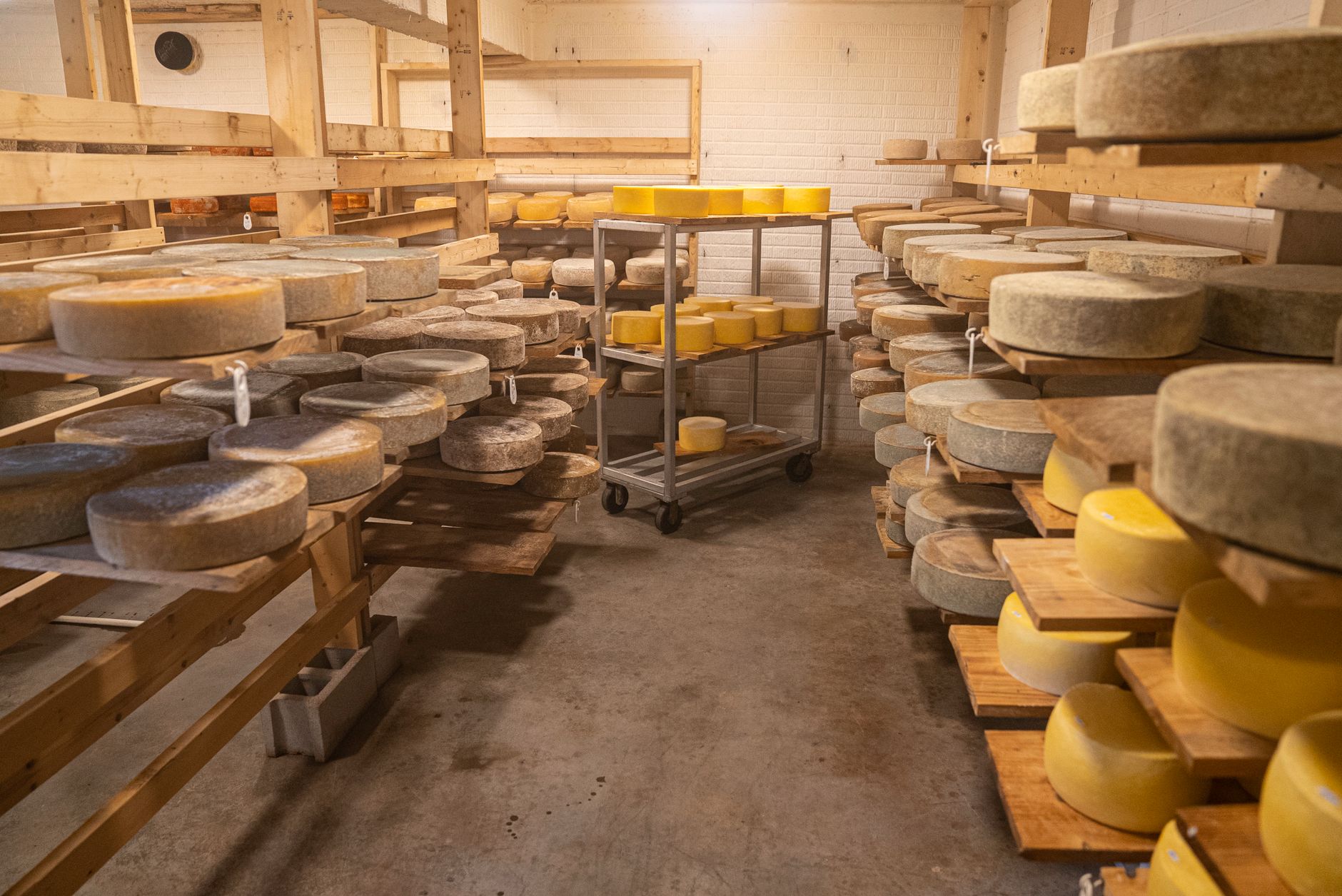
This creates a supply-side constraint that threatens the margin structure if supplier markets consolidate. Currently, HelloFresh maintains relationships with hundreds of small to mid-sized producers who value the revenue volatility less than the price premiums the company pays for flexibility. A dairy farmer might accept an order for specialty cheese that doubles one week and disappears the next because the per-unit margin compensates for the planning difficulty. However, as agricultural consolidation continues, large producers acquiring small farms, distributors merging into national networks, the supply base gains negotiating power. When a supplier reaches sufficient scale that HelloFresh represents less than five percent of revenue, the calculus shifts. The supplier may demand minimum order commitments, refuse to accommodate last-minute quantity changes, or simply charge prices that reflect the true cost of supply chain volatility.
The fragility manifests in specific ingredient categories. Proteins, chicken, beef, fish, represent the highest-cost components and the most volatile commodity markets. HelloFresh cannot easily substitute chicken thighs for breasts if the algorithm predicted breast demand and the supplier fails to deliver flexible quantities, because the recipe cards, nutritional information, and customer expectations have already been locked. A grocery chain facing a supply disruption simply removes the item from the shelf or substitutes a similar product; HelloFresh faces churn if the specific meal selected becomes unavailable. The company mitigates this through vertical integration in some markets, acquiring meat processing capabilities or contracting dedicated production lines, but this increases capital intensity and reduces the flexibility that defines the model’s advantage. The assumption that suppliers will indefinitely absorb demand volatility without extracting compensating premiums becomes less tenable as the company scales and supplier markets mature.
The Catalog Strategy and the Seven-Meal Prison
Dominik Richter’s foundational insight, that households cycle through approximately seven distinct meals repeatedly, shapes the menu philosophy but also creates a strategic ceiling. The Netflix and Spotify analogies that HelloFresh leadership employs to describe their catalog strategy reveal both the opportunity and the trap. Like Netflix, they curate a rotating selection designed to maximize engagement within a constrained set; like Spotify, they personalize the offering based on historical behavior. However, food consumption differs from media consumption in a critical dimension: novelty in food carries risk.
When Netflix recommends a film outside a viewer’s usual genre, the worst outcome is two hours of mild disappointment. When HelloFresh’s algorithm suggests a meal outside a customer’s preference profile, the outcome involves wasted money, spoiled ingredients, and the disruption of a family dinner. This asymmetry makes customers conservative. The data shows high prediction accuracy, customers generally select what the algorithm anticipates, but this accuracy may reflect self-fulfilling prophecy rather than genuine preference satisfaction. Customers choose from the menu presented, and if the menu presents primarily variations on the seven meals they already know, the prediction accuracy measures circularity rather than insight.
The tension between prediction and innovation becomes acute when attempting to expand the addressable market. Current customers are self-selected for cooking confidence, ouseholds willing to handle raw protein, operate a stove, and dedicate thirty to forty minutes to meal preparation. To grow beyond the eight million active customers, HelloFresh must attract segments that currently reject meal kits: older consumers seeking simpler preparation, households with limited kitchen equipment, or time-constrained professionals who view even thirty minutes as excessive. These segments require product innovations, fifteen-minute meals, pre-cooked components, or microwave-ready options, that disrupt the existing manufacturing workflows and procurement patterns.
Yet introducing these innovations degrades the forecasting accuracy that underpins the waste advantage. A customer who historically selects Italian chicken dishes might experiment with a Thai curry if it promises fifteen-minute preparation, but this behavioral variance introduces noise into the prediction model. As the company expands the catalog to capture adjacent market segments, the eighty-percent prediction accuracy decays, procurement efficiency suffers, and the one-percent waste rate becomes harder to maintain. The strategic choice becomes: optimize for the existing customer base with high-margin, predictable operations, or sacrifice margin to capture growth in less predictable segments. The current valuation and growth trajectory assume the company can do both simultaneously, but the operational data suggests these objectives may be mutually exclusive beyond a certain threshold.
The Attribution Mirage
The proprietary marketing attribution system, while currently a competitive advantage, carries the seeds of its own obsolescence. The fifteen-percent marketing spend relies on the ability to track customers across multiple touchpoints, assigning fractional credit to channels that contribute to conversion even if they do not close the sale. This multi-touch attribution assumes a stable technological environment where cookies persist, device graphs remain accurate, and cross-platform tracking functions as designed. The reality of privacy regulation and platform governance trends in the opposite direction.
iOS privacy changes have already degraded the visibility into mobile app behavior; cookie deprecation in Chrome will further fragment the attribution picture. As tracking becomes probabilistic rather than deterministic, the confidence intervals around marketing ROI widen. Channels that appeared marginally efficient in the old attribution model may prove unprofitable when measured with less precision; conversely, awareness-building channels that previously appeared wasteful may be undervalued by the new, noisier metrics. HelloFresh faces the risk of optimizing for the wrong inputs, reallocating spend toward channels that show strong last-click performance but weak incremental lift, while defunding the upper-funnel touchpoints that actually drive category consideration.
This matters particularly for television and podcast advertising, which HelloFresh uses extensively. These channels resist granular attribution; a customer who hears a podcast ad may convert three weeks later through a branded search, with no technical mechanism connecting the two events. The company’s proprietary system attempts to bridge this gap through survey data, geographic testing, and time-series analysis, but these methods have wider error bars than digital tracking. If the attribution model degrades further, the justification for the fifteen-percent marketing spend becomes faith-based rather than data-driven. The company might continue spending through institutional inertia, or it might cut spend prematurely, starving the upper funnel and accelerating the saturation dynamics in mature markets. Either outcome compresses the ten-percent EBITDA margin that investors have come to expect.
The Manufacturing Endgame
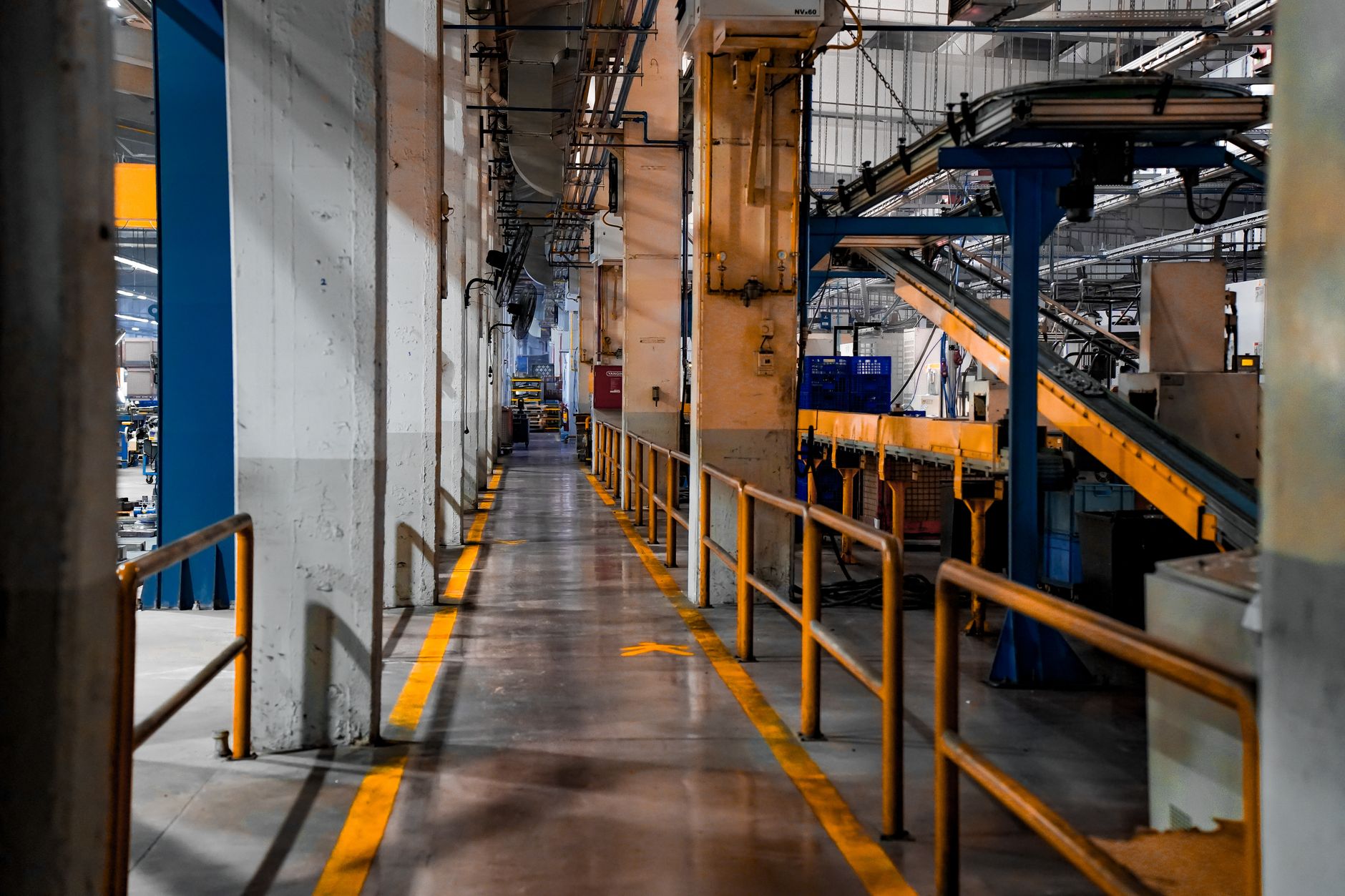
Looking across the twenty-five-site network, the standardization problem creates a compounding liability. Each non-standard legacy site requires separate maintenance protocols, spare parts inventories, and workforce training programs. When the engineering team develops a productivity improvement, an automated weighing station, a modified packing sequence, or an energy-efficient refrigeration upgrade, they cannot roll it out uniformly. Instead, they must engineer custom implementations for each site’s idiosyncratic layout, multiplying the capital and time required for operational improvements.
This creates a divergent cost curve. Greenfield sites, built to the target blueprint, continuously improve through standardized technology upgrades, achieving higher throughput per square foot and lower labor cost per meal. Legacy sites stagnate or require disproportionate capital to achieve marginal gains. Over time, the internal variance increases: the best-performing sites achieve unit economics that would justify aggressive expansion, while the worst-performing sites barely break even. The consolidated margin represents an average that obscures this dispersion, making it difficult to identify which markets are truly profitable and which are being subsidized.
The sunk cost fallacy prevents resolution. Writing down legacy sites would require acknowledging that early expansion decisions, made under different competitive conditions, destroyed capital. Instead, the company continues operating suboptimal facilities, hoping that volume growth will eventually amortize the fixed costs despite the physical constraints. This is a bet against physics: you cannot rearrange a building’s column spacing or ceiling height through scale. As the industry matures and competitors enter with purpose-built facilities, HelloFresh’s average productivity per square foot may decline relative to the market, eroding the process power advantage precisely when operational efficiency becomes the primary competitive battleground.
The Behavioral Wager
At its core, HelloFresh bets that the secular shift toward home cooking, driven by health consciousness, economic pressure, and the desire for control over ingredients, will persist against the convenience advantage of restaurant delivery and prepared meals. This is not obvious. The same demographic trends that favor meal kits, dual-income households, time scarcity, urbanization, also favor DoorDash, ghost kitchens, and supermarket prepared foods that require zero cooking skill and minimal cleanup.
The “seven meals” insight cuts both ways. If households truly cook only seven dishes repeatedly, they eventually learn to shop for those seven meals without assistance, eliminating the need for a subscription service. The meal kit provides value during the learning phase, introducing new recipes, building cooking confidence, but risks graduating customers out of the service once they have absorbed the repertoire. The high churn rates in the industry, including HelloFresh’s own cohort data, suggest that many customers view the service as educational rather than permanent, subscribing for six to twelve months before returning to conventional shopping armed with new recipes.
The algorithmic personalization that optimizes for retention may accelerate this graduation effect. By repeatedly serving variations on the customer’s established preferences, the algorithm trains the customer to cook those meals independently. A customer who receives chicken piccata three times learns the technique and ingredient list; on the fourth month, they may cancel the subscription and buy the components themselves at lower cost from a grocery store. The business model assumes ongoing novelty and convenience value, but the operational reality, optimizing for predictability and waste reduction, pushes toward repetition and standardization. This contradiction between customer development and customer retention remains unresolved.
Furthermore, the economic environment that supported fifteen-percent marketing spend, low interest rates, abundant venture capital funding competitive noise, and consumer willingness to experiment with subscription services, has shifted. In a higher-rate environment, customer acquisition costs rise as competitors fight harder for shrinking discretionary spending, while the lifetime value of customers compresses if economic pressure forces faster churn. The model assumes stable or improving unit economics over time; a sustained period of consumer retrenchment could make the math unworkable, stranding the capital invested in manufacturing infrastructure designed for a growth trajectory that no longer exists.
The process power HelloFresh has built: emand-pull manufacturing, algorithmic procurement, wasteless supply chains, epresents a genuine industrial achievement. Yet it exists within a fragile ecosystem of supplier relationships, consumer behaviors, and technological capabilities that could shift unfavorably. The company has optimized for efficiency within a specific set of constraints; if those constraints change, if suppliers demand commitment, if customers demand variety that breaks prediction, if privacy regulations destroy attribution, the efficiency advantage becomes a rigidity trap. The nine hundred million meals delivered annually demonstrate that the model works at scale; they do not prove that it works forever, or that it can survive the transition from growth company to mature incumbent in a market where the definition of “dinner” continues to evolve.