
Intuitive Surgical: How One Gap Dominated Surgery
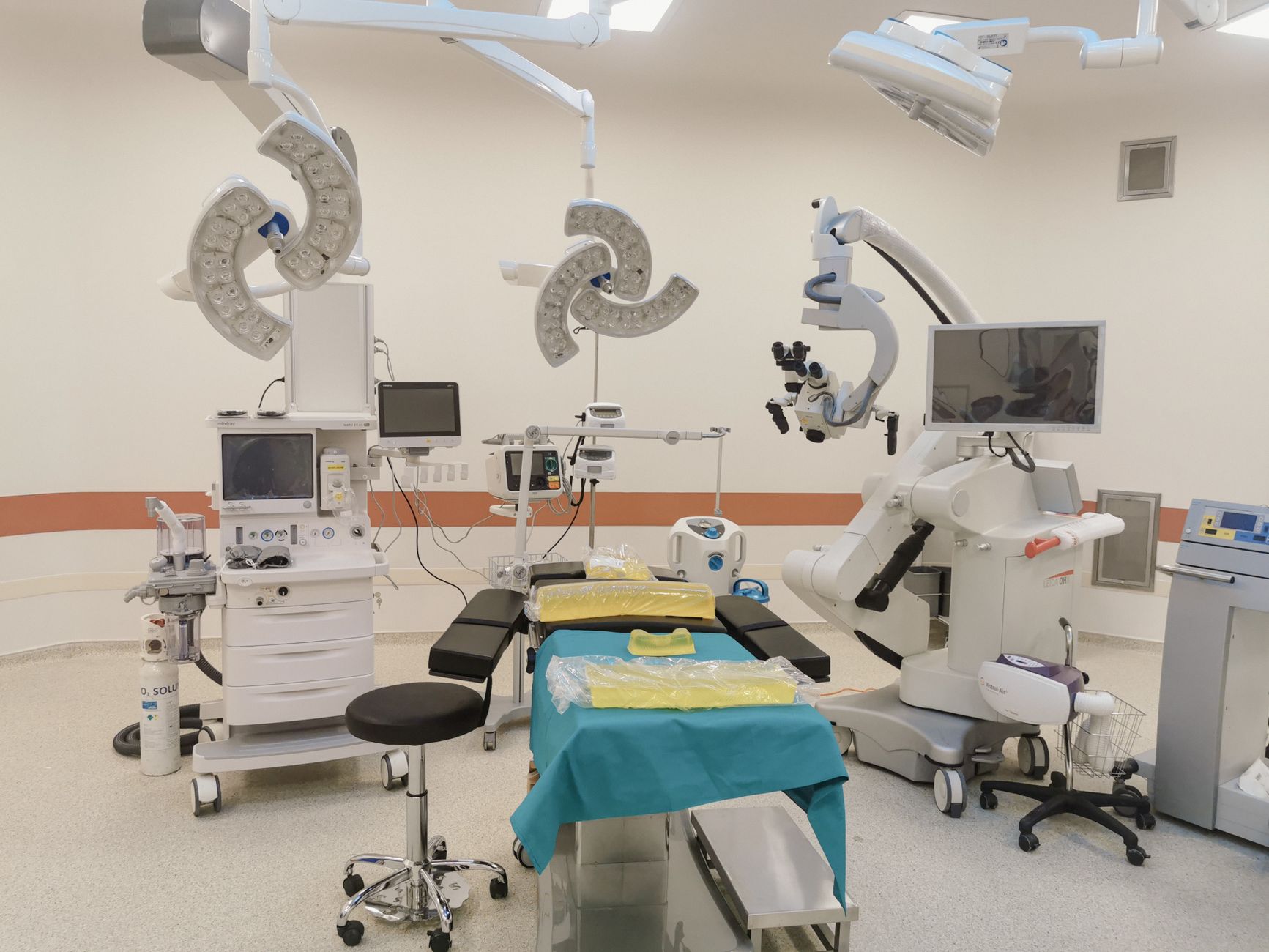
In 2014, Intuitive Surgical finally introduced stapling instrumentation for its da Vinci robotic systems. The launch was unremarkable to hospital administrators but should have been a klaxon to competitors. For fourteen years, Intuitive had dominated robotic soft-tissue surgery with a glaring gap in its product line, urgeons regularly scrubbed out mid-procedure to manually apply staples, then scrubbed back in to continue the robotic portion. That medical device giants allowed this gap to persist, leaving Intuitive to capture the high-margin consumable revenue itself, remains one of the more embarrassing lapses in modern healthcare economics. By the time stapling and energy systems were contributing over one billion dollars annually to Intuitive’s revenue, the competitive window had already slammed shut.
The episode reveals the true architecture of Intuitive’s business: it is not a robotics company in the conventional sense, but a consumable enterprise masquerading as a capital equipment manufacturer. The $1.5 million price tag on a da Vinci system functions less as a profit center than as a toll booth: mechanism to secure exclusive rights to the high-margin instruments that must pass through it. Hospitals amortize that capital cost over six or seven years, performing two to three hundred procedures annually to justify the investment. But the economic engine runs on the $1,800 average consumable cost per procedure, particularly the advanced instruments, staplers, energy systems, and endoscopes, that generate recurring revenue independent of robot replacement cycles. This is the model that matters: upfront capital to secure installed base, installed base to secure consumable lock-in, consumable lock-in to compound margins as procedure volume grows.
Intuitive has spent two decades derisking the cyclicality inherent in this capital equipment business. Leasing options and upgrade clauses now smooth the replacement cycle, converting lumpy capital expenditures into predictable operational costs for hospitals while ensuring Intuitive maintains the relationship. The result is a revenue stream that behaves like a subscription despite requiring massive physical infrastructure. When a hospital signs a lease, it is not merely renting a robot; it is pre-committing to a consumable supply chain that runs through Intuitive and Intuitive alone.
The Fee Is the Business
The consumable economics only work because the robot itself is non-interoperable. A da Vinci system accepts only Intuitive-branded instruments. This is not a technical limitation but a contractual and design choice that creates what economists call an installed base lock-in. Once a hospital has committed to the capital cost, every procedure performed on that machine generates captive demand for proprietary consumables. The margins on these disposables, particularly the advanced instruments launched after 2014, dwarf those on the capital equipment. While competitors slept through the 2000s and early 2010s, Intuitive filled every gap in its instrument portfolio, ensuring that surgeons no longer needed to break scrub to reach for third-party tools.
The financial asymmetry is stark. A prostatectomy performed robotically costs roughly four times as much in equipment fees as open surgery and twice as much as laparoscopic technique. Yet Intuitive does not sell equipment; it sells total cost of care. The company has built its commercial strategy on the accumulation of clinical evidence showing that robotic procedures reduce hospital stays, minimize readmissions, and lower long-term costs associated with recurrence treatment and palliative care. When a hospital board approves a $1.5 million capital outlay, they are not comparing robot to scalpel; they are comparing the total cost of treating a patient over six months against the amortized equipment cost plus consumables. This reframing, from capital expenditure to operational savings, is the central sales achievement of the company.
The model creates a self-reinforcing cycle. As procedure volume grows, driven by aging populations, expanded cancer screening, and the gradual colonization of new surgical specialties, the consumable revenue base expands. Each additional procedure type approved for robotic technique (gynecology, general surgery, thoracic) layers additional recurring revenue onto the same installed base. With approximately two million procedures performed on da Vinci systems in 2023 against an addressable market of seven million annually, the runway appears long. But the expansion is not automatic; it requires continuous clinical validation that the robotic approach justifies its premium across increasingly diverse anatomical territories.
Muscle Memory is the Real Lock-In
The durability of Intuitive’s position rests less on the sophistication of its hardware than on the irreversibility of human habit. Surgeons trained on da Vinci systems develop muscle memory and procedural intuition that do not transfer to competing platforms. This is not merely a matter of comfort; it is a liability calculation. A surgeon switching to a new robotic system mid-career faces a transitional period of worse outcomes, longer operative times, and heightened malpractice risk. No surgeon will undertake that transition voluntarily, and no hospital can force it without risking patient safety and institutional reputation.
This creates a demographic moat that strengthens with time. The youngest cohort of surgeons, those who completed residencies in the past decade, has trained exclusively on robotic systems. As older surgeons retire, the propensity for robotic adoption increases not through persuasion but through replacement. The incoming generation does not view robotic surgery as an upgrade; they view it as the baseline. This cohort replacement dynamic operates independently of clinical evidence or marketing spend. It is a structural shift in the labor supply that locks in demand for Intuitive’s specific configuration of hardware and software.
The switching costs extend beyond the individual surgeon to the entire surgical service line. A hospital that has invested in da Vinci systems, trained its nursing staff on the docking and undocking protocols, and stocked its sterile processing departments with Intuitive-specific instruments faces a complete operational overhaul to adopt a competing robot. The capital cost of the equipment itself becomes the least significant barrier to exit. When considering a second robotic platform, hospitals must weigh not merely the price of the new machine, but the retraining costs, the temporary productivity loss, and the risk of having two incompatible instrument inventories. For most institutions, the math favors staying within Intuitive’s orbit, even if competitors offer lower upfront pricing.
Evidence is a Weapon and a Burden
Intuitive’s commercial success depends on a specific epistemological arrangement: hospital purchasing committees must continue evaluating robotic systems through a total cost of care framework rather than a pure capital cost minimization lens. Maintaining this arrangement requires the continuous production of academic evidence. The company funds, publishes, and publicizes studies demonstrating that robotic procedures, despite their high equipment costs, reduce overall treatment expenses through better outcomes. This evidence accumulation functions as a strategic asset, creating an asymmetric information advantage over competitors who lack the scale to generate comparable data.
The evidence serves a defensive purpose as well. Once a hospital board has approved a $1.5 million robot based on peer-reviewed data showing lower readmission rates, reversing that decision requires new studies proving that an alternative technique is superior. The burden of proof shifts to challengers. Intuitive’s scale allows it to fund more research, recruit more principal investigators, and populate more journal pages than any competitor, effectively setting the evidentiary standard against which all other techniques are measured.
Yet this reliance on evidence creates a fragility. The company must continuously prove that robotic surgery delivers superior outcomes across an expanding range of procedure types. As Intuitive pushes into lower-complexity surgeries, cholecystectomies and other routine procedures, the clinical delta between robotic and laparoscopic techniques narrows. The early 2010s saw adoption driven partly by surgeon preference and marketing rather than rigorous outcome data. If Intuitive moves too aggressively into simple procedures before long-term data matures, it risks triggering a backlash from hospital purchasing committees and payers who may revert to cost-based decision criteria. The weapon becomes a burden: the company must keep generating positive data at an accelerating pace to justify its expanding footprint.
The Downmarket Trap
The central strategic tension facing Intuitive is the risk of commoditizing its own product through expansion. The company seeks to grow procedure volume by proving robotic benefits in low-complexity operations, gallbladder removals, hernia repairs, where the clinical advantages over laparoscopic techniques are marginal and the price sensitivity is high. These simple procedures offer larger addressable markets but lower margins and thinner justification for premium consumable pricing.
If robotics becomes standard for routine surgical work, Intuitive loses the scarcity premium that justifies its $1.5 million capital costs and $1,800 per-procedure consumables. The technology transforms from a specialized tool for complex oncology to a commodity instrument for general surgery. Hospital administrators, facing pressure to reduce costs, would then evaluate robotic systems purely on capital expenditure rather than total cost of care. The evidence-based value proposition that Intuitive has spent decades constructing collapses when applied to procedures where the clinical outcome differences are negligible.
The company navigates this tension by attempting to segment the market, ositioning advanced instruments for complex cancer surgery while offering streamlined configurations for simpler procedures. But the segmentation is unstable. Surgeons trained on the full-capability system for complex cases resist downgrading to limited instruments for simple cases, creating pressure for hospitals to standardize on the premium configuration across all procedures. This drives up the average cost per procedure while eroding the clinical justification for using robotics in routine cases. The result is a creeping commoditization that threatens the margin structure even as procedure volumes rise.
The Staple and the Scalpel
The most underappreciated structural advantage lies not in the robot’s kinematics but in the consumables that attach to it. When Intuitive launched its stapling platform in 2014, followed by advanced energy systems, it filled the last significant gaps in its instrument portfolio. These devices now contribute over one billion dollars in annual revenue at margins substantially higher than the capital equipment. Unlike basic graspers and scissors, staplers and energy devices cannot be substituted with third-party alternatives without risking catastrophic failure, taple line leaks or uncontrolled bleeding require immediate reoperation and carry severe liability implications.
Surgeons require absolute trust in these devices. That trust is not transferable; it is earned through years of clinical validation and institutional habit. Intuitive’s decade-long track record with these advanced instruments has embedded them into surgical practice to the point where switching to an unproven alternative carries unacceptable reputational and legal risk. Competitors cannot enter this market without undertaking years of clinical trials and reliability testing that Intuitive has already completed. Moreover, Intuitive controls the interface design, the physical and software connections between robot and instrument, creating technical barriers that regulatory agencies have not forced open.
This consumable moat is what makes the $1.5 million robot economically viable. Without the high-margin recurring revenue from instruments that surgeons cannot source elsewhere, the capital equipment business would generate insufficient returns to justify the research and development costs. The robot is the razor; the advanced instruments are the blades, except that no generic blades fit the handle. Hospital purchasing committees occasionally balk at the consumable pricing, but they have no alternative. The consumables subsidize the capital cost, which locks in the consumable demand: closed loop that competitors have been unable to penetrate.
The Reimbursement Time Bomb
The entire edifice rests on a fragile assumption about payer behavior. Intuitive’s economics require that Medicare, Medicaid, and private insurers continue reimbursing robotic procedures at premium rates relative to laparoscopic or open alternatives. Currently, most payers reimburse based on the procedure performed rather than the technique used, allowing hospitals to capture the efficiency gains (shorter stays, fewer complications) while passing the equipment costs through to the system. This arrangement incentivizes hospital adoption because the hospital bears the capital cost but shares the savings with the payer.
If major payers shift to bundled payment models that cap reimbursement regardless of surgical technique, or if CMS publishes studies showing no significant difference in long-term outcomes between robotic and laparoscopic surgery, the hospital return on investment collapses. Suddenly the $1.5 million robot and $1,800 consumables must be justified purely on labor savings, urgeon ergonomics and reduced physical strain. These benefits, while real, are insufficient to justify the capital intensity. Hospitals would revert to cost minimization, freezing new robot purchases and extending the life of existing systems far beyond their optimal replacement cycles.
The risk is not theoretical. The early 2010s saw adoption driven partly by patient demand and marketing rather than hard outcome data. If payers demand rigorous evidence of superiority and find variability across hospitals, if the total cost of care benefits prove inconsistent or geographically limited, the premium pricing structure unravels. Intuitive would be left with a installed base of expensive capital equipment in a market that treats robotics as a commodity tool, forced to compete on price against laparoscopic instruments that cost a fraction of the amount. The consumable margins that sustain the business would compress under payer pressure, transforming a high-growth medical technology company into a cyclical capital equipment vendor struggling to maintain service revenue.
The Discipline of Proof
Navigating these tensions requires a specific corporate discipline that functions as an economic variable in its own right. Intuitive’s leadership must manage the cadence of clinical evidence generation, ggressive enough to drive adoption into new procedure types, cautious enough to avoid overselling benefits before long-term data matures. This balance is not merely a matter of public relations; it directly affects the durability of the pricing power. If the company pushes adoption ahead of rigorous evidence, as occurred in the early 2010s, it risks triggering the payer backlash that would collapse the total-cost-of-care narrative.
The evidence strategy extends to the second act. With the Ion platform for bronchoscopic lung biopsies, Intuitive faces direct competition from J&J’s Monarch system, nlike the da Vinci’s effective monopoly in soft tissue. The temptation is to accelerate Ion adoption through aggressive marketing, but the company must apply the same evidentiary discipline that built the da Vinci franchise. Pushing the technology into routine use before robust outcome data accumulates would invite the same payer scrutiny that threatens the core business.
Leadership here functions as a governor on the economic engine. The company has shown discipline in derisking the capital replacement cycle through leasing structures; it must show similar discipline in managing the clinical narrative. Every procedure type added to the robotic repertoire increases the burden of proof. The governance challenge is to grow volume through genuine clinical superiority rather than surgeon preference or marketing momentum, because only the former sustains the pricing power against payer pressure. The culture that produced the 2014 stapling launch, filling product gaps methodically rather than racing to market, must now govern the expansion into simpler procedures and new anatomical territories.
Intuitive Surgical has built a business on the irreversibility of surgical training and the accumulation of clinical evidence that shifts purchasing logic from sticker price to total cost. The model works as long as surgeons continue to view robotic technique as the default and payers continue to reimburse the premium. But the push into low-complexity procedures and the emergence of bundled payment models threaten both assumptions. The company is not merely selling robots; it is arbitraging the difference between how hospitals account for capital costs and how payers account for outcomes. That arbitrage remains profitable only so long as the evidence cooperates and the competition remains asleep.
That arbitrage remains profitable only so long as the evidence cooperates and the competition remains asleep.
The Second Act Problem
The Ion platform for robotic bronchoscopy illustrates the difficulty of replicating the da Vinci model in contested terrain. Unlike the soft-tissue monopoly, Ion enters a market where Johnson & Johnson’s Monarch system arrived first and holds established relationships with pulmonologists. In 2023, Ion performed approximately 54,000 procedures: respectable debut but a fraction of the da Vinci’s two million. The installed base grew tenfold in three years, yet the economics remain fundamentally different. Where da Vinci captures essentially 100% of robotic soft-tissue surgery, Ion fights for share against a well-capitalized incumbent with comparable clinical claims.
The tension extends beyond market share to resource allocation. Every dollar invested in Ion’s sales force and clinical evidence generation is a dollar not spent defending da Vinci’s position in general surgery or expanding stapling penetration in thoracic procedures. More critically, Ion risks cannibalizing the finite resource of surgeon attention and hospital operating room capacity. A pulmonologist performing a diagnostic lung biopsy with Ion is not performing a cancer resection with da Vinci, yet both procedures demand the same hospital capital budget and the same administrative focus for robotics programs. If Ion succeeds, it may merely shift high-margin surgical time to lower-margin diagnostic procedures without expanding the total economic pie.
The consumable model also behaves differently in bronchoscopy. Lung biopsies utilize fewer advanced instruments per procedure, no stapling lines, no energy systems for hemostasis, reducing the $1,800 average revenue per procedure that sustains the da Vinci installed base. The capital cost structure remains similar, with hospitals still facing $1.5 million equipment outlays, but the recurring revenue lacks the high-margin attachment of advanced consumables. Ion represents a bet that Intuitive can replicate its ecosystem lock-in without the same consumable economics or competitive protection. If the platform fails to achieve critical mass against Monarch, Intuitive will have diverted focus and capital into a lower-margin, contested market while inviting scrutiny of its pricing power in the core business.
When the Interface Opens
The greatest threat to Intuitive’s consumable moat is not a better robot but a more open one. The strategic material identifies the risk: if a well-capitalized competitor, Medtronic, Stryker, or Johnson & Johnson, launches a robotic system with an open interface standard allowing third-party instruments to dock, Intuitive’s forced bundling collapses. Hospitals would then evaluate robots based on capital cost alone, selecting the cheapest platform and sourcing consumables from the lowest bidder. The $1 billion annual revenue from stapling and energy systems would face immediate compression.
Consider the mechanics of how this unfolds. Medtronic’s Hugo system or Johnson & Johnson’s Ottava, should either achieve FDA approval with interoperable architecture, could force a market shift by offering hospitals a $900,000 robot with no consumable exclusivity. A large hospital system, HCA, Kaiser, or the Mayo Clinic, could demand interoperability as a condition of purchase, leveraging its purchasing volume to break Intuitive’s closed ecosystem. The regulatory lever is equally plausible. Antitrust scrutiny of Intuitive’s 100% market share and forced bundling could result in consent decrees requiring open interface standards, similar to the interoperability mandates imposed on telecommunications and computing platforms.
The fragility lies in the instrument interface itself. Intuitive controls the physical docking mechanism and the software protocols that verify instrument authenticity. This control is currently a legal and technical choice, not a biological necessity. If regulators or large purchasing consortia force standardization, arguing that patient safety requires hospitals to select best-of-breed instruments regardless of robot manufacturer, the consumable margin engine stalls. Hospitals would unbundle the purchase, selecting Intuitive robots for specific procedures where they remain superior, but sourcing staplers and energy devices from competitors offering lower prices. The razor-and-blade model breaks when the blades fit every razor.
The competitive sleep that allowed Intuitive to capture stapling and energy revenues after 2014 cannot persist indefinitely. Medtronic’s 2019 acquisition of Mazor Robotics and its subsequent development of the Hugo platform signals intent to compete not merely on robot kinematics but on total cost of ownership. If Hugo achieves clinical parity with da Vinci while offering lower capital costs and interoperable instruments, Intuitive faces a dilemma: maintain pricing and lose share, or match pricing and destroy margins. The installed base provides protection only if switching costs remain prohibitive; if competitors offer financially compelling alternatives with lower retraining barriers, the demographic moat of young surgeons trained exclusively on da Vinci becomes less relevant.
The Geography of Lower Margins
As procedure growth saturates in American and European markets, where penetration in prostatectomy exceeds 85% and even general surgery approaches 50% in leading institutions, Intuitive must expand into geographies where the economic model strains. Emerging markets present a dual challenge: lower reimbursement rates that cannot support $1,800 per-procedure consumables, and hospital systems that cannot absorb $1.5 million capital outlays even with leasing.
The company has responded with simplified system configurations and extended payment terms, but these adaptations erode the margin structure. In India, China, and Brazil, robotic surgery remains concentrated in elite urban hospitals serving wealthy patients paying out-of-pocket. The volume required to justify a da Vinci system, two to three hundred procedures annually, demands a density of surgical oncology cases that simply does not exist outside major metropolitan centers. When Intuitive places systems in second-tier cities to preempt competition, it often accepts utilization rates below the economic threshold, subsidizing the installed base to maintain market presence.
This geographic expansion creates a two-tier margin structure. Mature markets generate the high-margin consumable revenue that funds research and development; emerging markets absorb capital at lower returns while exposing the company to currency risk and local competition. The tension intensifies as Chinese domestic manufacturers, aided by industrial policy and local regulatory preferences, develop robotic surgical platforms at significantly lower price points. While currently inferior to da Vinci in precision and reliability, these systems threaten to capture the mid-market segment, forcing Intuitive into a price competition it is structurally designed to avoid.
If procedure growth in the U.S. and Europe falls below 5-7% annually for consecutive years, a plausible scenario as robotic penetration approaches theoretical maximums in urology and gynecology, the company becomes dependent on emerging markets for volume growth. Yet these markets offer lower per-procedure economics and higher competitive intensity. The installed base stops compounding at high margins and begins requiring costly maintenance subsidies to prevent competitive entry.
The Evidence Reversal Scenario
The bear case crystallizes around a specific sequence: a major payer, likely CMS given its market-setting power, commissions a longitudinal study comparing robotic and laparoscopic outcomes across five-year horizons. The study examines total cost of care not merely for the index hospitalization but for recurrence, revision surgeries, and long-term complications. The findings show no statistically significant difference in oncologic outcomes between robotic prostatectomy and high-volume laparoscopic centers, while the capital cost differential remains fourfold. Simultaneously, a bundled payment pilot for joint replacement succeeds and expands to general surgery, capping reimbursement for hernia repair and cholecystectomy regardless of technique.
Hospital CFOs, facing pressure to reduce per-case costs by 15% to qualify for value-based purchasing bonuses, freeze all capital equipment purchases above $500,000. Existing da Vinci systems continue operating, leasing obligations cannot be broken, but hospitals extend replacement cycles from seven years to twelve, utilizing refurbished instruments and deferred maintenance to reduce per-procedure costs. New system placements drop by 40%, and the consumable revenue growth that drives Intuitive’s valuation stalls.
The cascade continues. With hospitals no longer expanding robotic capacity, residency programs reduce robotic training slots, slowing the cohort replacement dynamic that has driven organic growth. Older surgeons, already skeptical of the technology’s cost, revert to laparoscopic techniques for straightforward cases, reducing procedure volume in the installed base. Intuitive, accustomed to 15% annual consumable growth, faces a flat revenue line while fixed costs for regulatory compliance and manufacturing capacity remain elevated.
In this scenario, the company’s response, cutting instrument prices to maintain volume, triggers a margin collapse. The $1 billion advanced instrument revenue carries gross margins above 70%; reducing prices by 30% to match laparoscopic alternatives would require doubling procedure volume merely to maintain absolute dollar contribution. But volume cannot double if hospitals are freezing capacity and payers are demanding equivalence.
The Training Industrial Complex
An underappreciated reinforcement of Intuitive’s position lies not in the operating room but in the simulation center. The company controls the entire training pipeline for robotic surgery, from the dry-lab simulators sold to teaching hospitals at $150,000 per unit, to the proctoring fees for initial cases, to the certification programs that determine surgical privileges. This training infrastructure functions as an economic variable because it creates switching costs that extend beyond the individual surgeon to the institutional credentialing bodies.
When a residency program invests in da Vinci simulators and establishes a curriculum centered on Intuitive’s specific interface, it creates a path dependency that lasts decades. The program director, the nursing educators, and the risk management departments all develop institutional knowledge around Intuitive’s specific error messages, emergency undocking procedures, and instrument handling protocols. Switching to a competitor’s platform would require retraining not merely the surgeons but the entire perioperative team, from the sterile processing technicians who learn to stack specific blue-wrap configurations to the anesthesiologists who manage docking times and patient positioning for specific robotic arms.
This training ecosystem generates direct revenue, simulator sales, course fees, and proctoring contracts, but its strategic value lies in the friction it creates for competitive entry. A hospital considering Medtronic’s Hugo system must calculate not merely the capital cost differential but the cost of retraining fifty nurses, recredentialing twenty surgeons, and replacing two million dollars of simulation equipment. These costs do not appear on the robot invoice but dominate the total cost of switching. Intuitive has embedded itself into the medical education infrastructure to the point where choosing a competitor requires abandoning established curricula and institutional memory.
The durability of this advantage depends on Intuitive maintaining its position as the standard of care. If competitors achieve sufficient volume to establish their own training pathways, if Monarch in bronchiology develops a parallel educational infrastructure, the switching cost advantage erodes. Until then, the company’s control of the training pipeline ensures that the next generation of surgeons enters practice with muscle memory and institutional loyalty that competitors cannot purchase with lower equipment prices.
The Plateau Risk
Leasing and upgrade clauses have derisked the cyclical replacement cycle, but they have not eliminated the underlying capital intensity. If procedure growth plateaus in mature markets, the math of the installed base shifts from expansion to replacement. A hospital with three da Vinci systems performing six hundred annual procedures faces a decision: replace one aging system at $1.5 million, or redistribute procedures across the remaining two platforms, accepting slightly longer turnover times but avoiding capital outlay.
In a replacement-only market, Intuitive becomes a vendor fighting for share of a shrinking pie rather than a growth company capturing new procedures. The leasing model, which smooths revenue recognition, also locks in long-term contractual obligations that become burdensome if utilization drops. A hospital leasing three systems at $25,000 monthly per unit cannot easily downsize to two if procedure volume declines; the fixed cost structure remains while the per-procedure revenue to justify it disappears.
The plateau risk exposes the fragility of the demographic moat. Young surgeons trained on robots have higher propensity to use them, but if hospital systems stop purchasing new systems due to plateaued volume, those young surgeons enter practices with limited robotic access. They adapt to laparoscopic techniques out of necessity, breaking the cohort replacement dynamic. The muscle memory advantage reverses: surgeons trained on robots but practicing in non-robotic environments develop laparoscopic proficiency that reduces their dependence on Intuitive’s systems when they eventually move to better-equipped institutions.
This creates a negative feedback loop. Slowing capital purchases reduce resident exposure to robotics, which reduces post-training demand, which justifies further capital restraint. Intuitive’s response, increasingly aggressive leasing terms and guaranteed utilization clauses, merely delays the reckoning while compressing margins. The company that mastered the art of converting capital sales into recurring revenue finds itself with recurring obligations, service contracts, upgrade commitments, and lease servicing, that outlast the growth narrative sustaining its valuation.
The model works beautifully while procedure volume compounds at 12-15% annually, spreading fixed costs across an expanding base and justifying the $1.5 million capital outlay through volume. When growth decelerates to 3-4%, the installed base becomes a stranded asset, xpensive to maintain, costly to replace, and vulnerable to competitors offering lighter, cheaper alternatives for the remaining growth segments. The robotic surgery market does not need to shrink to threaten Intuitive; it merely needs to stop growing fast enough to hide the capital intensity of the underlying equipment business.