
Mercado Libre: Brazil’s Shipping Threshold Gamble

In June 2024, Mercado Libre reduced its free shipping threshold in Brazil from seventy-nine reais to nineteen. This was not a summer sale. It was a structural repricing of the company’s largest market, representing a seventy-six percent reduction in the order value required to trigger complimentary logistics. For a business that derives fifty-two percent of its revenue from Brazil at contribution margins already hovering in the high teens, roughly half the profitability of its Argentine operations, the move represented a deliberate compression of near-term returns in exchange for something less tangible: frequency.
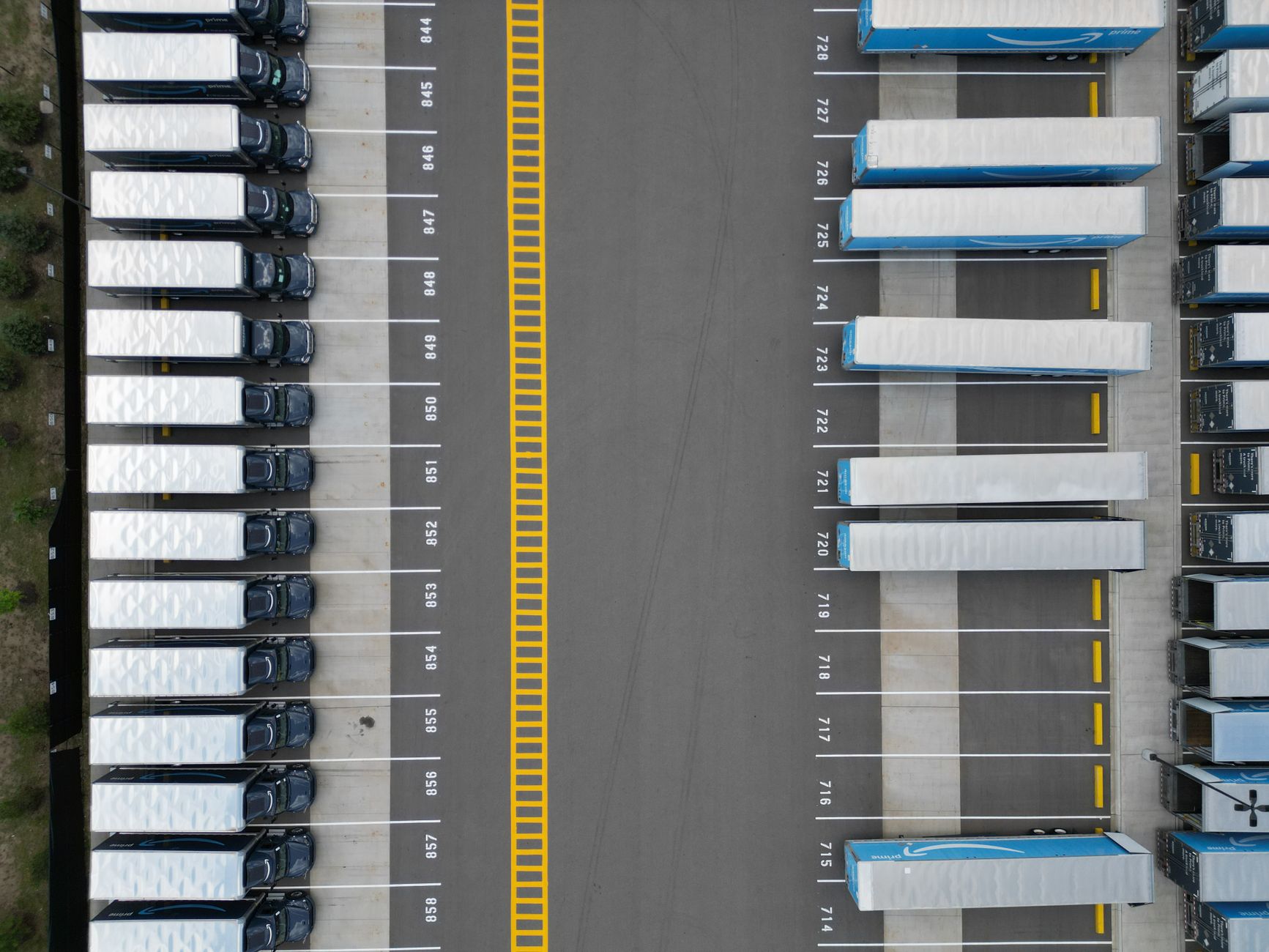
The logic follows a familiar playbook: lower barriers increase transaction frequency, which improves logistics utilization rates, which eventually justifies the fixed cost of fulfillment infrastructure. But Mercado Libre does not own that infrastructure. Unlike Amazon’s capital-heavy model of vertical integration, Meli operates a leased logistics network, wenty-two fulfillment centers planned across Brazil by the end of 2025, hundreds of hubs, thousands of pickup points, nearly all of it rented. This creates a structural imperative. The company cannot monetize its logistics services until fulfillment penetration reaches seventy percent, the threshold management believes sufficient to prevent merchant churn if fees are introduced. Brazil currently sits at sixty percent. The nineteen-reais threshold is therefore a race against amortization: drive volume fast enough to justify the lease obligations before a competitor with owned assets achieves comparable density.
The urgency is Shopee. The Singapore-based competitor entered Brazil in December 2019, crossed Mercado Libre’s monthly active user count in 2022, and reported EBITDA profitability in the third quarter of 2024 while opening its first Brazilian fulfillment center in September. Mercado Libre’s response, compressing its own margins to maintain forty percent Brazilian market share, assumes that leased density today creates a moat tomorrow. If Shopee reaches ten or more fulfillment centers by 2026 and matches the nineteen-reais shipping threshold, Meli’s Brazilian margins, already the thinnest in the portfolio, could compress two to three hundred basis points permanently. The business creates value by arbitraging high-margin Argentine fintech revenues to subsidize this aggressive logistics reinvestment, betting that leased fulfillment density will drive transaction frequency sufficient to amortize network costs before Shopee’s owned-asset model achieves competitive scale.
The Leasehold Trap
The decision to lease rather than own fulfillment centers is not merely a capital allocation preference; it is the defining structural constraint that shapes every strategic decision. Amazon’s owned-asset model converts logistics into a fixed cost that yields marginal revenue through third-party fulfillment services (FBA). Meli’s leased model keeps logistics as a variable cost that scales with penetration, ntil it doesn’t. At sixty percent fulfillment penetration in Brazil, the company is approaching the point where lease obligations effectively become fixed costs regardless of volume. If penetration stalls below the seventy percent target, those obligations convert into a permanent drag on margins with no offsetting revenue stream.
Management has been explicit about the sequencing: monetization begins only after Brazil reaches Mexican penetration levels (currently seventy percent). This delay is defensive. Introducing fulfillment fees too early risks pushing third-party merchants back to independent logistics providers, collapsing the density that justifies the network’s existence. But the delay creates a cash flow vacuum. The twenty-one percent take rate on third-party GMV, which has expanded from thirteen percent in 2021 through value-added services, currently subsidizes logistics operations that generate negligible direct revenue. This works only if volume growth continues at rates sufficient to cover lease payments while the company waits for the seventy percent threshold.
The risk is plateau. If third-party merchants resist “Full” fulfillment adoption due to fee pressure or service quality concerns, or if Shopee offers superior fulfillment economics to high-volume sellers, Brazilian penetration could stall at sixty to sixty-five percent. In that scenario, Meli faces over $500 million in annual lease costs with no mechanism to convert logistics from cost center to profit center. The company would be trapped with the infrastructure commitments of Amazon but without the monetization capability, forced to choose between merchant attrition (if they raise fees) or perpetual margin compression (if they don’t).
The Argentine Subsidy
Mercado Libre can sustain this Brazilian assault only because it operates a geographic arbitrage engine that transfers profits from high-margin, hyperinflationary markets to fund low-margin, competitive ones. While Brazil contributes fifty-two percent of revenue at high-teens contribution margins, Argentina contributes twenty-two percent at mid-forty-percent margins. The disparity is not operational efficiency but product mix: Argentina generates sixty-five percent of its revenue from fintech (Mercado Pago and Mercado Crédito), while Brazil generates twenty percent.
This creates a countercyclical stability that is, in reality, a sophisticated subsidy mechanism. When Argentine commerce weakens due to currency devaluation, fintech revenues often accelerate as consumers and merchants seek payment stability and working capital. Conversely, when Brazilian commerce faces competitive pressure, Argentine fintech profits provide the capital to fund nineteen-reais free shipping thresholds. The model assumes that the two geographies never weaken simultaneously, hat when one engine sputters, the other compensates.
But this
But this assumes that monetary instability in Argentina and competitive intensity in Brazil operate on independent cycles, hat a currency crisis in Buenos Aires never coincides with a price war in São Paulo. History suggests otherwise. When regional capital flows reverse, as they did during the 2018-2019 taper tantrum or the 2022 rate-hiking cycle, both markets suffer simultaneously. Credit demand collapses when interest rates spike, eliminating the Argentine fintech subsidy precisely when Brazilian commerce margins compress from defensive spending. The flywheel then reveals itself as a gearbox with no reverse: if both segments weaken at once, there is no offset mechanism, and the twenty-one-billion-dollar revenue machine stalls with its highest fixed costs, those twenty-two fulfillment centers, still accruing lease obligations.
The Argentine fintech miracle itself rests on regulatory forbearance. Mercado Crédito and Mercado Pago operate with capital efficiency ratios that traditional banks cannot match, arbitraging the gap between deposit-taking regulations and payment processing licenses. If Argentine regulators, facing inflationary pressure and currency controls, decide to impose bank-style capital requirements on fintech lenders, or if they force the separation of payment processing from credit origination, the mid-forty-percent contribution margins evaporate. The company would then face a simultaneous margin compression in its most profitable geography and its largest market, with no geographic arbitrage left to fund the logistics race against Shopee.

The Fintech Integration Tax
Mercado Pago began in 2003, a payment solution for a marketplace in a continent where credit card penetration was negligible and banking distrust endemic. Twenty-two years later, it processes transactions both on and off the marketplace, creating a dual-revenue stream that pure e-commerce competitors cannot replicate without separate fintech licensing, regulatory relationships, and capital reserves. This integration reduces friction in low-trust environments, uyers release funds only upon delivery, sellers receive working capital against future sales, and the entire transaction operates within Meli’s ledger rather than the traditional banking system.
The durability of this advantage depends on regulatory tolerance for shadow banking. Shopee has no fintech presence in Brazil; Amazon’s efforts remain nascent. But this absence is also a shield. If Brazilian regulators impose stricter capital requirements on fintech lenders following the recent playbook of Mexican or Colombian financial authorities, Meli faces a structural disadvantage that its competitors avoid entirely. The company would be forced to hold capital reserves against its credit book, compressing the forty-percent fintech revenue contribution, while Shopee continues to operate a pure marketplace model with none of the regulatory burden.
There is also the matter of credit quality. Mercado Crédito’s consumer and merchant lending operates in economies with volatile employment and inflation-indexed wages. The fifteen-year head start provides historical data for underwriting, but it also means the loan book has never been stress-tested through a prolonged regional recession where commerce, employment, and currency stability deteriorate simultaneously. If credit losses spike in Argentina while the Brazilian marketplace faces Shopee’s aggressive pricing, the fintech segment becomes a capital sink rather than a subsidy engine. The company would then be trapped between funding credit losses in Buenos Aires and funding logistics wars in São Paulo, with no profitable geography to balance the ledger.
First-Party as Controlled Burn
First-party sales, where Meli buys inventory and sells directly to consumers, represent only six percent of gross merchandise value, a fraction of Amazon’s thirty-to-fifty-percent first-party penetration. Management describes this as tactical: using direct sales to sharpen pricing in electronics, where MAP (minimum advertised price) violations by third-party sellers create perception problems, and to expand into grocery categories where third-party merchant supply remains thin.
This is a controlled burn strategy. By limiting first-party to six percent, Meli avoids the inventory risk and working capital intensity that crush margins at traditional retailers. But the category expansion into grocery, currently unprofitable, suggests the company is willing to sacrifice margin for frequency, hoping that grocery purchases drive habitual app usage that spills over into higher-margin categories. The risk is mission creep. If grocery requires fifteen or twenty percent first-party penetration to achieve viable assortment density, the six-percent cap becomes untenable. Inventory risk scales non-linearly with category breadth; a six-percent position in electronics involves SKU concentration in high-velocity items, while a twenty-percent position in grocery requires managing perishability, regional taste variation, and last-mile cold chain logistics that the current leased network is not optimized to handle.
Moreover, first-party growth cannibalizes the twenty-one-percent take rate. When Meli sells directly, it captures the full retail margin rather than the commission-plus-services fee, but it loses the pure margin economics of the marketplace model. If first-party penetration grows to Amazon levels, the take rate expansion narrative, already pushed from thirteen percent in 2021 to twenty-one percent today through logistics and advertising services, reverses. The company becomes a retailer with logistics assets rather than a platform with network effects, and its valuation multiple compresses accordingly. The tension lies in the temptation: grocery requires first-party depth, electronics pricing requires first-party parity, and both threaten the high-margin marketplace economics that justify the current stock price.
The Advertising Void
Amazon generates fifteen to twenty percent of its revenue from retail media advertising, ponsored search results, display placements, and brand storefronts that operate at software-like margins. Mercado Ads, by contrast, represents an undisclosed fraction of commerce revenue that analysts estimate at less than five percent. This is not merely a revenue omission; it is a structural hole in the margin expansion thesis.
The company has pushed its take rate from thirteen percent to twenty-one percent primarily through logistics services (Mercado Envíos) and payment facilitation (installment fees). Advertising remains nascent because merchant willingness to pay for search placement depends on conversion efficiency and merchant profitability. If Shopee’s lower fee structure attracts price-sensitive sellers operating on thinner margins, those sellers cannot afford to bid for advertising placement. Meli then faces a paradox: to monetize advertising, it needs high-margin merchants who can afford to pay for traffic, but to defend against Shopee, it needs to attract low-margin merchants who cannot.
The advertising gap also reflects data limitations. Amazon’s advertising engine runs on purchase history across categories, Prime membership data, and AWS-powered targeting. Meli’s data is rich within its marketplace but lacks the cross-domain depth that commands premium CPMs. If Mercado Ads fails to scale to double-digit revenue contribution, the company loses its primary lever for margin expansion that does not involve raising logistics fees (which risks merchant churn) or credit spreads (which risks regulatory intervention). The twenty-one-percent take rate becomes a ceiling rather than a floor, and the path to twenty-five or thirty percent, the levels that would justify the current valuation, disappears.
Shopee’s Profitable Aggression
The received wisdom in e-commerce holds that market share defense requires loss-leading subsidies until scale drives efficiency. Shopee’s third-quarter 2024 EBITDA profitability in Brazil, achieved with a single fulfillment center and market share gains against Meli’s forty-percent position, violates this assumption. If Shopee can maintain profitability while growing, then Meli’s nineteen-reais free shipping threshold is not a temporary investment but a permanent cost of doing business.
Shopee’s model relies on parent Sea Limited’s gaming cash flows (Garena’s Free Fire) to fund e-commerce expansion with less pressure on unit economics than Meli’s standalone public market structure. But the profitability inflection suggests something more troubling: Shopee may have achieved sufficient density in its single fulfillment center to match Meli’s service levels without the overhead of twenty-two leased facilities. If this is true, Meli’s logistics moat is shallower than advertised: function of lease commitments rather than true network effects.
The competitive dynamics hinge on fulfillment center count. Meli plans twenty-two centers by end-2025; Shopee opened its first in September 2024. If Shopee reaches ten centers by 2026 while maintaining profitability, it can match the nineteen-reais threshold without Meli’s fixed cost burden. Meli’s defensive pricing then becomes a permanent margin compression rather than a temporary investment. The Brazilian market, which contributes fifty-two percent of revenue at the thinnest margins, becomes a low-teens contribution margin business permanently, dragging the enterprise margin below the fifteen-percent threshold that separates platform economics from retail economics.
The Survival Bias as Strategy
During the dot-com era, approximately eighty Latin American e-commerce startups pursued auction-based models similar to eBay. Only Mercado Libre survived the 2000-2001 crash. The conventional narrative attributes this to superior execution or better timing, but the economic reality involves capital discipline. While competitors burned through venture funding on user acquisition with negative unit economics, Meli’s founder-led management prioritized organic growth and contribution margin positivity. This allowed the company to survive the capital drought that killed its competitors, creating a twenty-year runway with no serious challengers.
This history functions as an economic variable today, not merely a founding myth. The management team, educated at Stanford and Wharton, internalized the lesson that growth-at-all-costs is fatal in capital-scarce emerging markets. This culture manifests in the current strategy: the nineteen-reais shipping threshold reduction was accompanied by merchant fee reductions in May 2024, but both were framed as reinvestment rather than subsidy. The company maintains high-teens margins in Brazil while defending market share, suggesting operational discipline that Shopee, profitable but still investing heavily, may not match in a capital-constrained environment.
However, this survival bias also creates blind spots. The management team that weathered the dot-com crash by avoiding burn rates may underinvest in offensive moves that require temporary losses. The decision to lease rather than own fulfillment centers reflects this trauma, eases can be exited; owned assets cannot. But in a market where Shopee’s parent company can fund losses indefinitely through gaming revenues, Meli’s capital discipline becomes a strategic constraint. The company that survived by not burning capital may lose to a competitor willing to burn it more slowly.
The Penetration Plateau Assumption
Underlying the entire investment thesis is an assumption that Latin American e-commerce penetration, currently thirteen to fifteen percent, will rise toward twenty or twenty-five percent over the next decade, driven by connectivity, middle-class growth, and payment friction reduction. If this plateau occurs, Mercado Libre’s total addressable market caps at roughly double current GMV, insufficient to justify the logistics infrastructure being built for three or four times current scale.
The geographic concentration exacerbates this risk. Brazil, Mexico, and Argentina represent ninety-six percent of revenue; twelve other Latin American markets contribute negligible sales. If expansion into Colombia, Chile, or Peru fails, markets where local champions or Amazon have stronger positions, Meli faces a growth ceiling in its current three-country fortress. The forty-percent Brazilian market share, eighty-percent Argentine share, and growing Mexican presence represent saturation points as much as dominance. There are only so many unbanked consumers to bring into Mercado Pago, only so many third-party merchants to migrate from informal retail.
The logistics investment assumes volume growth that may not materialize if penetration stalls. Those twenty-two Brazilian fulfillment centers are sized for a fifty-percent GMV increase; if GMV grows only twenty percent due to macroeconomic stagnation or Shopee share gains, the utilization rates never achieve the density required for the seventy-percent monetization threshold. The company would then operate a network built for a future that arrived smaller than expected, with lease obligations fixed and revenue variable.
The Ownership Structure and Time Horizon
Marcos Galperin founded Mercado Libre in 1999 and remains CEO twenty-six years later. This longevity creates alignment with long-term outcomes, the twenty-two fulfillment centers, the fintech regulatory relationships, the fifteen-year Mercado Pago history, that transient professional management could not replicate. But it also creates concentration risk. The strategic decisions that define the current position, the lease-heavy logistics model, the geographic arbitrage strategy, the first-party restraint, all reflect Galperin’s specific risk tolerance shaped by the dot-com survival experience.
If leadership transitions or strategic direction shifts, perhaps toward the owned-asset model that Amazon employs or the aggressive first-party grocery expansion that Walmart favors, the economic engine changes. The current model depends on patience: waiting for seventy-percent fulfillment penetration before monetization, waiting for fintech margins to subsidize commerce wars, waiting for advertising to mature. A management team with shorter tenure or different incentives might accelerate monetization prematurely, collapsing the merchant base, or might accelerate first-party expansion, cannibalizing the take rate.
The company’s governance structure, with dual-class shares, insulates this decision-making from activist pressure but also concentrates the fragility. If Galperin’s assessment of the Shopee threat proves incorrect, f the nineteen-reais threshold is insufficient defense or if the logistics network proves too expensive to maintain against a profitable competitor, here is no external mechanism to force strategic pivot. The survival bias that created the moat may prevent the adaptation necessary to preserve it.
The Credit Cycle and the Flywheel
Mercado Crédito represents the most underappreciated component of the economic engine and its most fragile. Consumer credit and merchant working capital generate forty percent of total revenue, yet they operate on underwriting models that have never faced a simultaneous downturn across Brazil, Argentina, and Mexico. The countercyclical argument, that credit demand rises when commerce slows, holds only for short, shallow recessions. In a prolonged regional depression, credit losses consume capital faster than fintech revenues generate it.
The integration of credit with commerce creates systemic risk. If a Brazilian merchant defaults on working capital loans, Meli can restrict marketplace access, but it cannot recover inventory already sold. If Argentine consumers default on installment plans, the company faces currency-mismatched losses: loans originated in pesos convert to dollar-reported losses at unfavorable rates. The fifteen-year data history provides actuarial depth, but it does not provide experience with correlated defaults across geographies.
If credit quality deteriorates while Shopee pressures marketplace margins, the company faces a liquidity squeeze. The fintech segment requires capital reserves; the logistics segment requires lease payments; the marketplace requires subsidy. All three cannot be funded simultaneously if credit losses spike and commerce margins compress. The flywheel becomes a centrifuge, spinning capital outward rather than accumulating it.
The Endgame in Brazil
Brazil will determine whether Mercado Libre operates a platform with fifty-billion-dollar GMV potential or a defensive incumbent managing decline. The current strategy, leasing twenty-two fulfillment centers to enable nineteen-reais free shipping while funding the operation with Argentine fintech profits, assumes that Shopee cannot match this service level without comparable infrastructure investment. But if Shopee’s single-center profitability indicates superior operational efficiency, or if Amazon finally commits significant capital to Brazilian logistics, Meli’s forty-percent market share becomes a ceiling rather than a floor.
The logistics monetization trigger, seventy-percent fulfillment penetration, represents the critical variable. At sixty percent current penetration, the company is one percentage point of merchant churn away from missing the 2026 target. If Shopee offers better terms to high-volume third-party sellers, or if merchants resist Meli’s eventual fulfillment fees, the network never achieves the density required to convert leases from cost to profit center.
Mercado Libre has built a remarkable machine: a geographic arbitrage engine that transfers hyperinflationary fintech profits to fund logistics wars in the continent’s largest market, a twenty-six-year founder-led culture that survived the dot-com crash by avoiding the burn rates that killed eighty competitors, and a payment infrastructure that reduces friction in low-trust economies. But the machine depends on simultaneity never occurring, n Argentina never collapsing while Brazil stagnates, on credit never souring while commerce compresses, on Shopee never achieving scale without Meli’s cost structure. The nineteen-reais free shipping threshold is a bet that density arrives before bankruptcy, that leased assets become competitive moats before they become millstones. It is a bet against the correlation of disasters, placed by a team that survived one apocalypse and believes it can survive another. Whether that survival bias represents wisdom or blindness will be determined not by the next quarter’s earnings, but by whether those twenty-two fulfillment centers in Brazil ever reach the seventy-percent utilization that converts them from expense to advantage, or whether they stand as monuments to a platform model that leased its future and found the rent too high.
The calculus facing third-party merchants considering Meli’s “Full” fulfillment program reveals why the path from sixty to seventy percent penetration may be steeper than management’s timeline suggests. Currently, merchants pay the twenty-one percent take rate as a bundle: thirteen percent final value fee, five percent for payment processing and installments, and roughly three percent implied for logistics and advertising services. When Meli attempts to monetize fulfillment explicitly, separating the logistics component from the commission and charging a per-unit fee for storage and shipping, the effective tax on merchant revenue rises. For a merchant selling a hundred-reais consumer electronics item, the current system extracts twenty-one reais regardless of whether the item ships via Full or independent courier. Explicit monetization might add eight to twelve reais in fulfillment fees, pushing the total cost of sale toward thirty percent.
This creates a bifurcation in the merchant base that threatens adoption. High-velocity electronics sellers with thin margins, those selling smartphones where the spread between wholesale and retail might be only fifteen to twenty percent, cannot absorb an additional logistics fee without pricing themselves out of the market against Shopee’s lower take rates. They will opt out of Full, reverting to independent logistics that offer worse delivery times but preserve margin. Conversely, low-velocity, high-margin categories like fashion accessories can absorb the fee but lack the volume density to justify the fixed cost of the fulfillment center footprint. The result is a potential asymptote at sixty to sixty-five percent penetration, where high-volume sellers reject the economics while low-volume sellers reject the service quality, leaving Meli with the worst of both worlds: lease obligations fixed at twenty-two centers but utilization plateauing below the monetization threshold.
The risk compounds with category mix in ways that the current reporting obscures. Mercado Libre has pushed aggressively into grocery, fresh produce, dairy, meat, categories that require cold chain logistics and daily replenishment cycles that the leased parcel network is not designed to handle. Unlike electronics, where inventory has a twelve-month shelf life and can be stored in regional distribution centers optimized for cubic density, grocery requires hub-and-spoke distribution with last-mile refrigeration and daily turnover. Meli’s current fulfillment centers are general merchandise warehouses with ambient temperature zones; retrofitting them with cold storage requires capital expenditure that conflicts with the leased-asset model’s flexibility. The company must either accept massive spoilage rates in standard warehouses or build separate grocery-specific infrastructure that duplicates the network it is already struggling to monetize through parcel fulfillment.
Grocery also forces the first-party trap to spring. Fresh food cannot be drop-shipped by third-party merchants with the reliability required for consumer trust; it requires inventory ownership, quality control, and aggressive markdown management when produce spoils. Every percentage point of GMV that shifts to grocery therefore increases pressure on Meli to expand first-party penetration beyond the current six percent. But first-party inventory carries working capital intensity that destroys the marketplace model’s cash conversion advantages. When Meli facilitates a third-party sale, it collects cash from the buyer immediately, holds it for seven to fourteen days in float, pays the merchant minus the twenty-one percent commission, and earns working capital efficiency. When Meli sells first-party grocery, it pays suppliers upfront (often in cash due to the informality of agricultural supply chains), holds perishable inventory with hourly depreciation risk, and must price aggressively to match street markets where sixty percent of Latin American food retail still occurs. The cash conversion cycle inverts from positive fourteen days to negative thirty days, and the take rate economics collapse from twenty-one percent commission to five to eight percent retail margin minus spoilage write-offs.
This category expansion therefore threatens the margin structure in two directions simultaneously: it requires first-party inventory that compresses blended take rates, and it requires cold chain logistics that resist the density economics of parcel fulfillment. If grocery grows to ten or fifteen percent of GMV, a realistic target given the frequency advantages and the strategic imperative to drive daily app usage, Meli faces a permanent margin mix shift. The twenty-one percent blended take rate becomes a historical artifact, replaced by a bifurcated model where high-margin third-party electronics subsidize low-margin first-party food, with logistics costs that cannot be amortized efficiently across temperature zones.
The advertising business faces parallel constraints that prevent it from filling the margin gap left by grocery and logistics challenges. Amazon’s retail media engine commands fifteen to twenty percent of revenue because it offers advertisers closed-loop attribution: a sponsored product click converts to purchase within the same session, and the data feeds back into targeting algorithms that improve conversion rates over time. Mercado Ads operates in a more fragmented payment environment where a significant portion of purchases, particularly in Brazil, are paid via boleto bancário (invoice-based bank slips) or financed in installments that delay final confirmation of sale for days or weeks. The attribution window extends from hours to days, degrading the real-time optimization that justifies premium CPMs.
Moreover, the merchant base’s financial capacity constrains ad spending at a structural level. Amazon’s advertisers include Fortune 500 brands with marketing budgets that treat retail media as brand awareness spend, not merely performance marketing. Meli’s merchant base remains predominantly small and medium enterprises operating on thin working capital; every real spent on advertising is a real not spent on inventory purchase. When Shopee offers lower base commissions, these merchants retain more gross margin to potentially reinvest in ads, but when Meli extracts twenty-one percent before advertising costs, the residual margin cannot support Amazon-level ad intensity. The advertising business therefore faces a ceiling determined by the merchant economy itself: you cannot extract Google-level ad margins from a merchant class operating on street-market economics with thirty-day payment terms from suppliers and thin float.
This creates the margin compression vortex that the bear case anticipates. If logistics monetization stalls at sixty percent penetration due to merchant resistance from the thirty-percent total cost of sale, if grocery expansion forces first-party penetration toward fifteen percent with negative cash conversion cycles, and if advertising remains below five percent of revenue due to merchant budget constraints and attribution gaps, the twenty-one percent take rate becomes a maximum rather than a midpoint. The company must then choose between defending the forty percent Brazilian market share through continued nineteen-reais subsidy, permanently compressing contribution margins into the low teens, or ceding share to Shopee and accepting slower GMV growth that leaves the twenty-two fulfillment centers underutilized and the lease obligations crushing against fixed costs.
The geographic arbitrage with Argentina provides the cushion that delays this choice, but it cannot resolve it. Argentine fintech margins exist in a regulatory environment that currently treats payment processors with leniency relative to traditional banks. If the Central Bank of Argentina, facing reserve depletion and capital flight, imposes stricter reserve requirements on Mercado Pago deposits or reclassifies Mercado Crédito as a bank rather than a fintech, the mid-forty-percent contribution margins could compress by ten to fifteen points overnight. This would eliminate the subsidy capacity for Brazil precisely when Shopee’s profitability gives it the capital to increase aggression.
The correlation risk extends to credit quality in ways that the segment reporting masks. Mercado Crédito’s loan book is concentrated in consumer electronics and working capital loans for marketplace sellers, oth categories that deteriorate simultaneously in a recession. When unemployment rises in Brazil, consumers default on their installment plans for televisions while the merchants selling those televisions default on their working capital loans due to declining sales velocity. Unlike traditional banks with diversified loan books across mortgages, automobiles, and corporate credit, Meli’s credit exposure correlates perfectly with its commerce exposure. A downturn hits both sides of the flywheel simultaneously: the marketplace volume declines, reducing transaction revenue, while the credit losses spike, reducing fintech margins and requiring increased capital reserves.
Shopee’s structural advantage in this scenario is its funding mechanism. Parent company Sea Limited generates billions in annual cash flow from Garena’s gaming operations, Free Fire remains one of Latin America’s most popular mobile games, providing a capital source that does not depend on e-commerce margins or credit quality. Meli must fund its Brazil defense through operating cash flow or debt markets, subject to the scrutiny of public market investors who have priced the stock for twenty-five percent long-term margins. If Meli reports twelve percent margins due to Brazil subsidy and Argentine credit losses, the stock price collapses, raising capital costs and constraining the very investment required to defend share. Shopee can sustain losses or thin margins indefinitely through gaming subsidies; Meli has perhaps eighteen to twenty-four months of compressed margins before the capital markets force a strategic retreat that abandons either the logistics network or the market share target.
The final constraint is temporal. The twenty-two fulfillment centers must reach seventy percent utilization by late 2026 to justify the lease commitments signed in 2024-2025. If Shopee opens ten centers in that period and matches service levels, if grocery expansion cannibalizes third-party GMV with negative working capital intensity, or if advertising fails to scale due to merchant poverty, Meli faces a binary outcome: either break the lease contracts, paying penalties and writing off capitalized costs while admitting strategic defeat, or operate a permanently subscale logistics network that drags enterprise margins below the cost of capital, transforming the company from a platform into a low-margin logistics provider with a sideline in predatory lending.
This is the leasehold trap in its terminal phase. The company that survived the dot-com crash by avoiding fixed costs now finds itself imprisoned by them, having leased its way into a moat that may prove to be a ditch. The nineteen-reais free shipping threshold burns cash that must be recovered through logistics monetization, which requires merchant adoption that may never arrive if the economics don’t work for high-volume sellers, who are precisely the merchants Shopee is targeting with its single-center efficiency. The platform has built a fortress of rented warehouses, but the drawbridge is held by merchants who can’t afford the toll, and the treasury is filled with Argentine pesos that may be worth less tomorrow than the rent due today.