IBM: How Antitrust Created Software

The Unbundling Arbitrage
In 1968, International Business Machines Corporation entered into a consent decree that would reshape the architecture of the computing industry, though no participant in the settlement understood this at the time. Forced to separate the pricing of its hardware, software, and services, IBM effectively created a legal category where none had existed: software as a separable commercial asset. The decree was intended to limit the monopolist’s power. Instead, it opened a structural gap between the physical machine and the instructions that animated it, a gap that would eventually allow a small vendor of programming languages to capture more value than the manufacturers of the machines themselves.
Fifteen years later, in Albuquerque and then Bellevue, two young programmers exploited this gap with precision that seemed, to their hardware-making customers, almost precognitive. Their insight was not merely technical, hat microprocessors would proliferate and require programming languages, ut economic: that software could be priced as a product with zero marginal cost of reproduction rather than as a service billed by the hour or bundled into hardware COGS. This inversion of the IBM systems model, where software increased in value precisely as hardware fragmented and commoditized, created a compound margin structure that classical manufacturing could not replicate. The business they built did not sell computers. It sold permission to use languages that made unfamiliar hardware feel familiar, capturing recurring revenue through licensing agreements while bearing none of the inventory risk or capital intensity of semiconductor fabrication.
The economic engine runs on a simple but legally fragile premise: that a customer will pay separately for the operating system and the programming interpreter even when both are necessary for the hardware to function. In an industry designed around bundled integration, Microsoft’s model represented a disaggregation that was only possible because of the 1968 antitrust action. The company’s early dominance derived from this arbitrage, reating software as independent intellectual property in a world that still assumed computing was fundamentally a hardware business.
Emulation and Parallel Time
The durability of this model depended on a technical capability that remains underappreciated in conventional accounts of the company’s rise: the ability to write and test software for hardware that did not yet exist. In 1972, Paul Allen, then a student at Washington State University, constructed a complete emulator of the Intel 8008 microprocessor instruction set, running it on a DEC PDP-10 mainframe. This allowed him and Bill Gates to write a BASIC interpreter for the 8008 before any physical 8008-based computer had reached the market. They were coding in parallel with the hardware development cycle, collapsing the time-to-market window from months to weeks.
This was not merely a convenience. It was a structural advantage that compounded over time. As new microprocessor architectures emerged, the 8080, the Zilog Z80, the 6502, Microsoft could ship working software before competitors had acquired physical development machines. The capability required two rare inputs: deep relationships with semiconductor manufacturers who provided pre-production documentation, and engineering talent capable of writing accurate emulators. Intel shared specifications with Gates and Allen because they demonstrated technical credibility; Gates and Allen could absorb those specifications because they had learned systems programming from Steve Russell at Computer Center Corporation (C-Cubed) in Seattle, where they debugged PDP-10 software as teenagers. Competitors attempting to replicate this advantage would need to simultaneously develop trust with chip makers and employ engineers capable of building virtual machines on mainframes: combination that could not be assembled quickly or cheaply.
The emulator functioned as a time machine, allowing Microsoft to capture new hardware platforms at the moment of their birth. When a manufacturer like MITS or Tandy shipped a new machine, Microsoft’s software was already waiting, debugged, and documented. This velocity created a self-reinforcing cycle: hardware makers, facing their own time-to-market pressures, increasingly relied on the vendor who could deliver finished interpreters while their silicon was still in fabrication. The marginal cost of replicating that software, copying magnetic tapes or floppy disks, approached zero, while the value to the hardware maker was existential: without a high-level language, the microprocessor was merely a complex paperweight.
The Royalty Structure as Operating System
Technical capability alone would not have created a sustainable business. The economic architecture of Microsoft’s early years was designed by someone who understood that the contract mattered as much as the code. Bill Gates Sr., a co-founding partner of Preston Gates & Ellis (now K&L Gates), had negotiated the settlement of the very antitrust cases that shaped the industry’s structure. When his son and Paul Allen secured their first major commercial engagement, writing a payroll billing program for a Portland timeshare company, it was the elder Gates who structured the deal. Rather than accepting an hourly fee for programming services, the young developers received a royalty based on the revenue generated by the software, earning at least $10,000 in an era when average household income remained below that threshold.
This distinction, royalty versus hourly billing, was the true operating system of the business. It aligned Microsoft’s financial success with the commercial success of its customers, but more importantly, it created a revenue stream that scaled without additional labor. An hour of engineering time, once expended, could generate payments indefinitely as the customer deployed more units. This inverted the economics of professional services firms, which traded time for money at a fixed ratio. It also differed fundamentally from the hardware model, where each incremental sale required incremental manufacturing cost.
The Gates-Allen partnership combined this contractual sophistication with technical credibility that hardware manufacturers found reassuring. Gates understood the legal and financial architecture of software licensing; Allen could demonstrate working emulators and interpreters. Together, they offered hardware makers a complete solution: software that worked, delivered on time, priced in a way that preserved the manufacturer’s margin while guaranteeing the vendor’s upside. When they licensed their BASIC interpreter to MITS for the Altair 8800, they negotiated terms that allowed them to sell the same software to other manufacturers, preserving optionality while securing immediate revenue. This was not merely clever negotiation; it was the application of corporate legal strategy to a market that had previously treated software as an afterthought.

The Architecture Dilemma
The model’s structural constraint was immediate and unrelenting: the proliferation of incompatible microprocessor architectures created a tension between breadth and focus that shaped every resource allocation decision. The Intel 8008 gave way to the 8080, which competed with the Zilog Z80 and the Motorola 6800; later, the 6502 and variants from MOS Technology appeared. Each processor required its own interpreter, its own optimizations, its own debugging cycle. Microsoft could either spread its engineering talent thin across all viable platforms, risking quality degradation and missed deadlines, or concentrate resources on a single architecture, betting that their chosen processor would win the market.
This was not a theoretical risk. Gary Kildall, operating from the same Seattle technical community and possessed of the same insight regarding microprocessor software, founded Digital Research and built CP/M for the 8080. He faced identical constraints. The danger of concentration was orphaning: if Microsoft built exclusively for the 8008 and the 8080 captured the market, they would own a dead asset. The danger of breadth was mediocrity: if they supported every new chip with equal resources, they would ship second-rate products that hardware makers could bypass by building proprietary languages in-house.
The company navigated this by treating the emulator capability as a force multiplier, allowing a small team of elite engineers to cover multiple architectures without the linear scaling of headcount that pure hardware-dependent development would require. Still, the tension never resolved; it merely shifted. When IBM approached Microsoft in 1980 for a 16-bit operating system, the decision to commit primary resources to the Intel x86 architecture represented a massive concentration of risk. The partnership guaranteed volume but created dependency. If IBM had decided to develop software internally, or if Digital Research had secured the IBM contract, Microsoft’s fragmentation strategy would have collapsed into irrelevance. The constraint demanded constant vigilance: every new microprocessor introduction required a calculation of whether the platform warranted immediate support, strategic neglect, or acquisition.
The Fragility of Permanence
Beneath the operational tensions lay a single fragile assumption: that hardware manufacturers would continue to view software as a component to be licensed rather than a capability to be internalized. The 1968 IBM consent decree had created the market for independent software, but nothing in technology or law guaranteed that this separation would persist. The entire Microsoft model depended on the belief that chip makers and computer manufacturers would prefer to buy interpreters and operating systems from a specialized vendor rather than develop them in-house, because the vendor could amortize development costs across multiple customers.
This assumption was vulnerable at both ends of the supply chain. At the semiconductor level, Intel could have bundled development tools with its processors, treating software as a marketing expense to drive chip sales. At the systems level, IBM possessed the engineering resources to develop its own languages and operating systems for the personal computer, just as it had always done for mainframes. DEC, HP, and other minicomputer vendors maintained proprietary software stacks as a matter of course. If any major hardware manufacturer had decided to replicate Microsoft’s offerings internally, offering them free with hardware to eliminate the licensing friction, the pricing power that supported Microsoft’s margins would have evaporated.
The risk was not merely competitive but ontological. If software were redefined as a commodity utility or a bundled feature, the legal and economic distinction that allowed Microsoft to capture value would disappear. The company’s fragility was its dependence on the continued existence of the very market structure that IBM had been forced to abandon. Gary Kildall’s Digital Research represented the competitive threat; the existential threat was the possibility that hardware makers would collectively decide that software was not, after all, a separate product.
Language as Infrastructure
The specific choice of BASIC as the primary interpretive layer reinforced the economic model by creating a subtle form of dependency that transcended individual hardware platforms. Beginners’ All-purpose Symbolic Instruction Code was not technically superior to other languages; it was familiar. As microprocessors democratized computing, the pool of potential programmers consisted largely of hobbyists and business users who had learned BASIC on time-sharing systems or earlier machines. By providing a BASIC interpreter that ran identically, or near-identically, across the 8008, 8080, and subsequent architectures, Microsoft reduced the switching costs for software developers. A programmer who knew Microsoft BASIC could migrate to a new machine without learning new syntax.
This familiarity created a network effect that hardware manufacturers could not ignore. A computer without Microsoft BASIC faced adoption friction, because the existing base of software and trained users gravitated toward the standard. The interpreter functioned as a compatibility layer, masking the idiosyncrasies of each new processor behind a familiar interface. As hardware prices fell and microcomputer sales expanded, the value of this interpretive layer increased in inverse proportion to the cost of the silicon. The cheaper the machine, the more important the software that made it usable.
The company compounded this advantage by maintaining strict control over the licensing terms. Hardware makers paid not just for the initial software but often per-unit royalties, creating a recurring revenue stream that grew with the hardware market itself. The zero-marginal-cost nature of software replication meant that each additional unit sold by a customer, each Altair, each Tandy TRS-80, each subsequent IBM PC, dropped almost pure margin to Microsoft’s bottom line. The language interpreter had become infrastructure, and Microsoft owned the toll road.
The Accumulation of Advantage
Viewed from the perspective of the hardware manufacturers, Microsoft’s position seemed to emerge from technical competence and fortunate timing. In retrospect, it appears inevitable. Neither interpretation captures the contingency of the structure. The business required the specific legal environment created by IBM’s 1968 unbundling, the specific technical capability of mainframe-based emulation, the specific contractual innovation of royalty-based licensing, and the specific market condition of architectural fragmentation.

These elements compounded in ways that were difficult to reverse. Each emulator written deepened relationships with chip makers; each royalty deal signed provided cash flow to fund the next platform port; each hardware manufacturer that adopted Microsoft BASIC increased the pressure on competitors to maintain compatibility. The model was not merely scalable, t was self-reinforcing in a manner that classical hardware manufacturing could not replicate. Where IBM’s integrated systems required massive capital investment in fabrication facilities and field service organizations, Microsoft’s separable software required only legal contracts and magnetic media.
Yet the fragility remained. The company lived in the gap between hardware and software, a gap that existed only because of an antitrust decree and the temporary inability of hardware makers to close it. The teenager who had learned business law at his father’s dinner table and systems programming in the basement of C-Cubed had constructed an economic engine of remarkable efficiency, but one that depended on the continued tolerance of the very hardware giants it eventually supplanted. The interpreters were portable; the business model was not. It required a world where software was property, architecture was fragmented, and manufacturers preferred to license rather than build. That world was not natural; it was constructed, contingent, and fiercely contested. The value accumulated because the structure held.
The value accumulated because the structure held.
Yet structures bear weight only to the point of their material limits, and the engineering organization required to sustain this licensing model faced a constraint that was mathematical rather than merely managerial. Each additional microprocessor architecture demanded not simply code but comprehension: fluent understanding of instruction sets, memory addressing modes, and the peculiar electrical timing of chips that often arrived with errata sheets longer than their technical specifications. Microsoft could attempt to cover all platforms, hiring aggressively to match the proliferation of silicon, or it could maintain a small cadre of elite engineers and risk missing market windows. The choice between breadth and depth was not a staffing preference but an economic calculation with compounding consequences.
Gates and Allen opted for density over mass. The Lakeside Programmers Group had demonstrated early that a handful of exceptional systems programmers could outperform larger teams through the leverage of emulation and aggressive optimization. At C-Cubed, they had observed what happened when coordination costs overwhelmed output: the debugging of PDP-10 software required intimate knowledge of the hardware-software boundary that could not be partitioned across multiple minds without friction. They carried this bias into Microsoft’s early hiring, selecting engineers who could write emulators in assembly language and read chip schematics with the same fluency as code listings. This was expensive talent, carce enough that competitors like Digital Research could offer competing salaries, and rare enough that training replacements would require years of immersion in the specific intersection of mainframe systems and microprocessor constraints.
The risk of this concentration became acute during the transition from 8-bit to 16-bit architectures. As Intel developed the 8086 and Motorola prepared the 68000, Microsoft faced a resource allocation dilemma that would determine whether the company remained a vendor of hobbyist languages or became the infrastructure layer for business computing. They could not afford to delay support for the 8086 while waiting to see if the 68000 would dominate; nor could they afford to split their elite team to pursue both simultaneously without degrading quality. The decision to prioritize the Intel architecture, made before market dominance was assured, represented a concentration of engineering risk that could have orphaned the company if the technical computing market had gravitated toward Motorola’s superior segmented memory model.
This tension between coverage and quality manifested in the specific terms of the IBM PC deal in 1980. When representatives from IBM’s Entry Level Systems unit arrived in Seattle, they carried requirements for a 16-bit operating system and languages that would ship on their forthcoming personal computer. Microsoft did not, at that moment, possess a finished operating system for the 8086. They possessed BASIC, FORTRAN, and COBOL interpreters, but the CP/M-compatible operating system IBM required would need to be acquired or built under extreme deadline pressure. Gates faced a choice that illustrated the engineering constraint: he could dedicate his existing elite team to porting and extending a purchased operating system (which would eventually become PC-DOS), leaving the language products to languish, or he could attempt to execute both tracks simultaneously by expanding headcount rapidly.
He chose the latter, but with a specific structural hedge. Rather than building a large permanent engineering organization, Microsoft maintained a network of contract programmers and partner firms who could handle the commodity aspects of porting, adapting existing code to new memory maps, writing device drivers for specific disk controllers, while the core team retained control of the architectural decisions and the critical path code. This hybrid model attempted to capture the scale benefits of larger teams without incurring the permanent coordination costs. It was fragile: if the contract work proved inadequate, the core team would face impossible debugging loads; if the core team’s architectural decisions were flawed, the contract labor would amplify the error across multiple implementations.
The IBM deal crystallized the single-OEM dependency risk that had lurked in the business model since the Albuquerque days. Before 1980, Microsoft had maintained deliberate diversification across hardware vendors, MITS, Tandy, Commodore, various S-100 bus manufacturers, to ensure that no single customer could dictate terms or cancel the company’s revenue with one procurement decision. IBM’s volume promised to dwarf these customers combined, but accepting that volume meant concentrating Microsoft’s fate in the strategic decisions of a single purchaser in Armonk. If IBM decided to acquire Digital Research’s CP/M instead of Microsoft’s operating system, or if IBM chose to develop its own languages internally as it had always done for its mainframe products, Microsoft would face a revenue cliff with insufficient diversification to survive the fall.
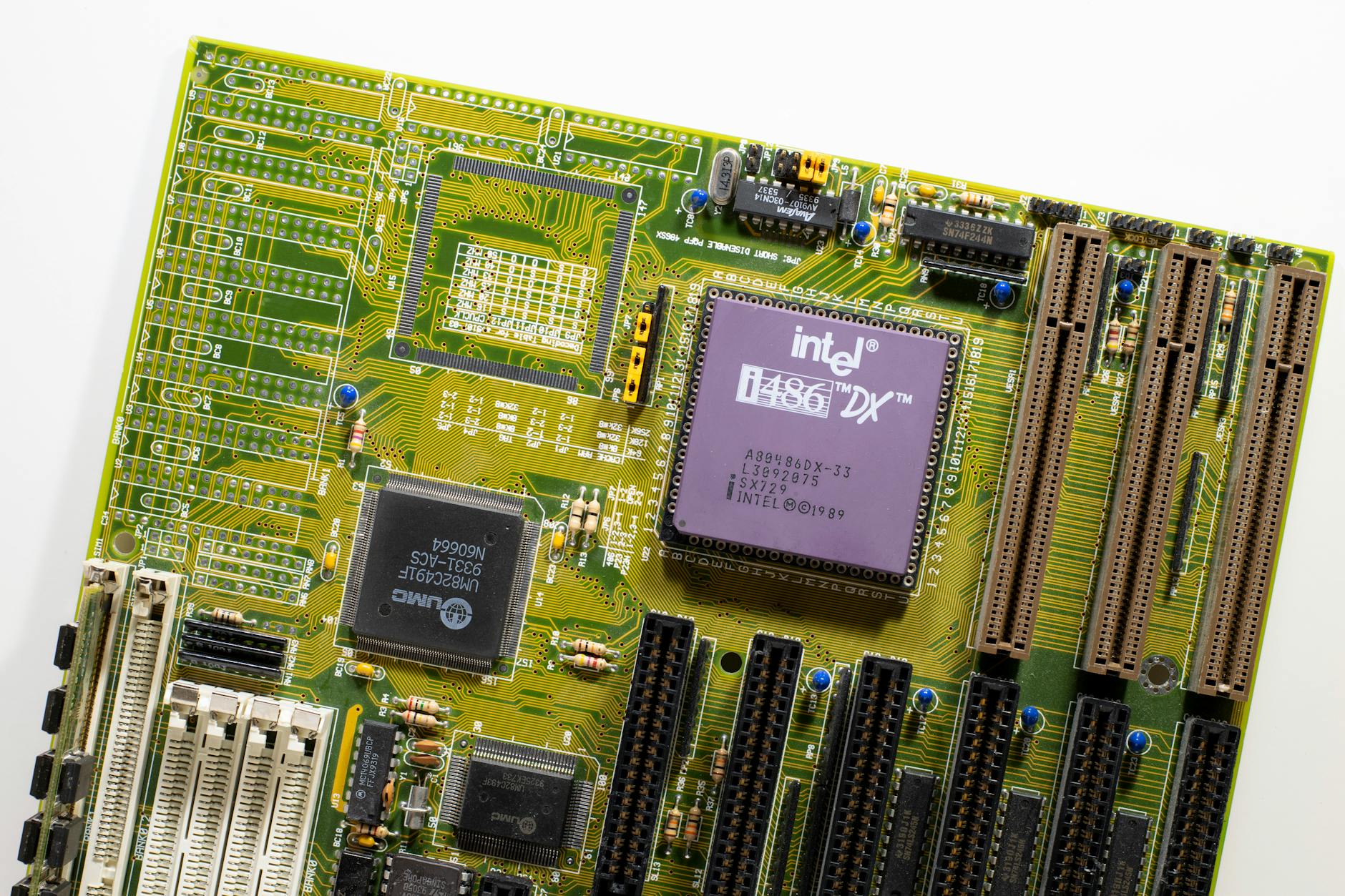
The negotiation that followed revealed how Gates’s legal training functioned as an economic variable rather than mere professional polish. Where Kildall at Digital Research had reportedly demanded contractual terms that IBM found unacceptable, retaining the right to license CP/M to other manufacturers at different price points, Gates structured a non-exclusive license that appeared to favor IBM while actually preserving Microsoft’s rights to sell the same operating system to IBM’s competitors. The key clause allowed Microsoft to license the operating system to other original equipment manufacturers (OEMs) under different branding (MS-DOS), creating a secondary market that IBM could not control. This was not merely clever lawyering; it was a risk mitigation strategy that addressed the dependency fragility by ensuring that even if IBM failed in the personal computer market, or if IBM later developed its own proprietary software stack, Microsoft would retain a viable business serving the clone manufacturers that were certain to emerge.
The commoditization threat, the third fragility, materialized not through competition from other software vendors but through the threat of zero-priced alternatives. As microprocessor prices fell and hobbyist communities expanded, the Unix operating system and various BASIC variants began circulating through user groups and bulletin board systems at marginal costs approaching zero. The Homebrew Computer Club in Silicon Valley represented not merely a marketing channel but an existential risk: a culture that viewed software as a shared resource to be modified and redistributed rather than as intellectual property to be licensed. If the dominant computing paradigm shifted toward these open, collaborative models, Microsoft’s royalty structure would collapse because the reference price for their products would reset to zero.
Gates confronted this threat directly in his 1976 “Open Letter to Hobbyists,” published in the Homebrew Computer Club Newsletter. The letter’s tone, often characterized as scolding, was economically rational. It articulated the specific mechanism by which uncompensated copying destroyed the incentive to invest in software development. More importantly, it represented a strategic decision to defend the proprietary licensing model as a matter of industry structure rather than mere corporate profit. By asserting that software required payment to sustain its production, Gates was not simply complaining about piracy; he was attempting to prevent the market from organizing around a different set of property rights that would have rendered the Microsoft business model impossible.
The letter failed to stop copying, but it succeeded in establishing a normative framework that influenced how the emerging industry would treat intellectual property. Microsoft complemented this rhetorical defense with technical measures: the “cassette BASIC” included in ROM chips represented a physical protection mechanism, embedding the interpreter in hardware that could not be casually duplicated. The economic logic was clear, f the software could not be separated from the silicon without specialized equipment, the zero-marginal-cost replication advantage that threatened the business model was physically constrained. This approach traded some flexibility for security, accepting that users could not upgrade their BASIC without replacing hardware, but ensuring that each hardware unit generated a licensing payment.
The tension between proprietary control and open standards created a strategic ambiguity that Microsoft navigated with particular skill. On one hand, the company benefited from the fragmentation of hardware architectures because it created recurring demand for porting services and new licenses. On the other hand, if the software itself fragmented, if each manufacturer demanded incompatible variants of BASIC or operating systems, the network effects that made Microsoft’s products valuable would dissipate. Users needed to know that software written for one machine would run on another, but manufacturers wanted differentiation that would prevent direct price competition.
Microsoft resolved this by offering “standard” versions of their languages while allowing OEMs to customize the implementations for specific hardware features. The base interpreter remained compatible across machines, preserving the software library ecosystem, while the modifications allowed manufacturers to claim unique capabilities. This was a delicate balance, oo much customization and the standard fragmented; too little and manufacturers would reject the license in favor of proprietary development. The economic equilibrium required Microsoft to maintain technical veto power over modifications that would break compatibility while granting sufficient autonomy to secure the deal.
The pricing tension, whether to charge premium prices that maximized immediate margin or penetration prices that locked in market share, played out differently across product categories and customer segments. For the early 8-bit BASIC interpreters sold to hobbyist kit manufacturers like MITS, Microsoft accepted lower per-unit royalties in exchange for volume guarantees and non-exclusivity. This was commodity pricing designed to establish the standard. When IBM approached them for the PC project, the pricing structure shifted toward premium terms reflecting the strategic importance of the deal and the engineering resources required to meet IBM’s specifications. However, Gates retained the right to sell the same software to other manufacturers at different price points: form of price discrimination that maximized revenue extraction from high-volume customers while maintaining penetration pricing for market development.
The specific mechanics of the Portland timeshare deal, the $10,000 royalty windfall negotiated by Gates Sr., established a template that differed fundamentally from the consulting model that dominated software development in the 1970s. When Information Sciences Inc. contracted the Lakeside Programmers Group to write a payroll system, they expected to pay for hours worked. Instead, they paid for results deployed. This shift from input-based to output-based compensation aligned Microsoft’s interests with the customer’s success in a way that hourly billing could not. If the payroll system failed to function, the royalty stream would not materialize; if it functioned well and the customer expanded their user base, Microsoft’s revenue would grow without additional labor input.
This royalty structure created a cash flow profile that resembled publishing or music more than engineering services. It required upfront investment in fixed costs (the engineering hours to write the code) followed by potentially infinite marginal returns as copies sold. The risk was concentrated in the development phase; the reward was theoretically unlimited. This profile attracted a different kind of capital allocation strategy, nvesting heavily in product quality and market timing to maximize the probability of adoption, rather than optimizing utilization rates of consultants. It also created a compounding advantage: successful products generated cash that funded the development of additional products, each with the same zero-marginal-cost scaling properties.
However, the fragility of this model appeared when considering the counterfactual of bundled software. If hardware manufacturers had decided that languages and operating systems were simply features necessary to sell the physical machine, cost centers rather than profit centers, they could have developed equivalent software internally and priced it at zero, absorbing the development cost into hardware margins. This was precisely the model that IBM had followed for decades and that DEC and HP continued to pursue in their minicomputer lines. Microsoft’s entire valuation depended on the assumption that this bundling logic would not extend to microcomputers, or that if it did, Microsoft could demonstrate sufficient technical superiority to justify a separate purchase.
The specific competition with Digital Research illustrates how narrow the margin of safety was. Gary Kildall possessed the same technical insight regarding microprocessor software and had access to similar Seattle-area talent pools and industry connections. CP/M was technically adequate and in some respects superior to the operating system Microsoft provided to IBM. The difference in outcomes, Microsoft’s dominance versus Digital Research’s eventual marginalization, cannot be explained by technical merit alone. It derived from the business model architecture: Kildall structured his company as a software tools vendor with traditional licensing, while Gates structured Microsoft as a royalty-generating platform layer that captured value from the entire industry’s growth. When IBM sought terms, Kildall demanded conditions that protected his existing business; Gates offered terms that maximized future optionality. The economic variable was not the quality of the code but the structure of the contracts.
The dependency on Intel’s architecture evolution represented a final concentration of risk that complicated the engineering talent strategy. As the x86 instruction set became the de facto standard for business computing, Microsoft’s early decision to prioritize Intel compatibility over Motorola or other architectures paid off handsomely. However, this created a new form of fragility: if Intel’s technical direction faltered, if the 80286’s protected mode proved too difficult to program, or if the transition to 32-bit computing encountered insurmountable obstacles, Microsoft would be tied to a sinking architecture. The company mitigated this by maintaining relationships with multiple semiconductor vendors and porting their languages to emerging chips, but the revenue concentration in the Intel ecosystem meant that these alternative ports were insurance policies rather than primary growth drivers.
The accumulation of these structural positions, the royalty model, the emulator capability, the hybrid engineering organization, the legal framework for software as property, created a business that was simultaneously robust within its specific context and fragile to changes in that context’s underlying assumptions. The value creation mechanism worked only so long as hardware remained fragmented enough to require software intermediaries, standardized enough to allow software portability, and expensive enough to justify separate software purchases. These conditions were not natural laws but temporary equilibria produced by specific regulatory, technical, and competitive dynamics. The business breakdown of Microsoft Volume I is not merely the story of talented programmers writing interpreters; it is the anatomy of a company that existed in the gap between hardware and user, extracting value from a separation that the rest of the industry had not yet learned to close.
The closing of that gap was not hypothetical. It was already visible in the minicomputer segment, where DEC’s VAX architecture integrated VMS so tightly that third-party operating systems became economically unthinkable, and in the mainframe world, where IBM’s gradual reintegration of software and hardware under different contractual structures threatened to reconstitute the pre-1968 bundle. If microprocessor prices collapsed faster than software development costs, if the $3,000 Altair became a $300 commodity within a single product cycle, the economic logic that justified separate software procurement would invert. Manufacturers facing margin compression would view per-unit royalties not as a minor tax but as a lethal drain, triggering either internal development or the acceptance of “good enough” alternatives from emerging clone markets. Microsoft’s defense against this eventuality depended on maintaining technical differentiation that was, by the nature of interpreters and operating systems, inherently leaky. A BASIC dialect or a disk operating system represented specifications more than inventions; once the specification was public, replication required only labor hours, not genius. The company’s moat was therefore temporal and contractual, speed to market and license terms, rather than deeply technological. When the hardware makers finally learned to write their own emulators, or when the courts reconsidered the permanence of software copyright protection for “methods of operation,” the arbitrage would expire. Until then, the royalty checks accumulated, written against the assumption that the gap would remain open just long enough to render the model irreversible.