Nintendo: How a Card Company Saved Gaming
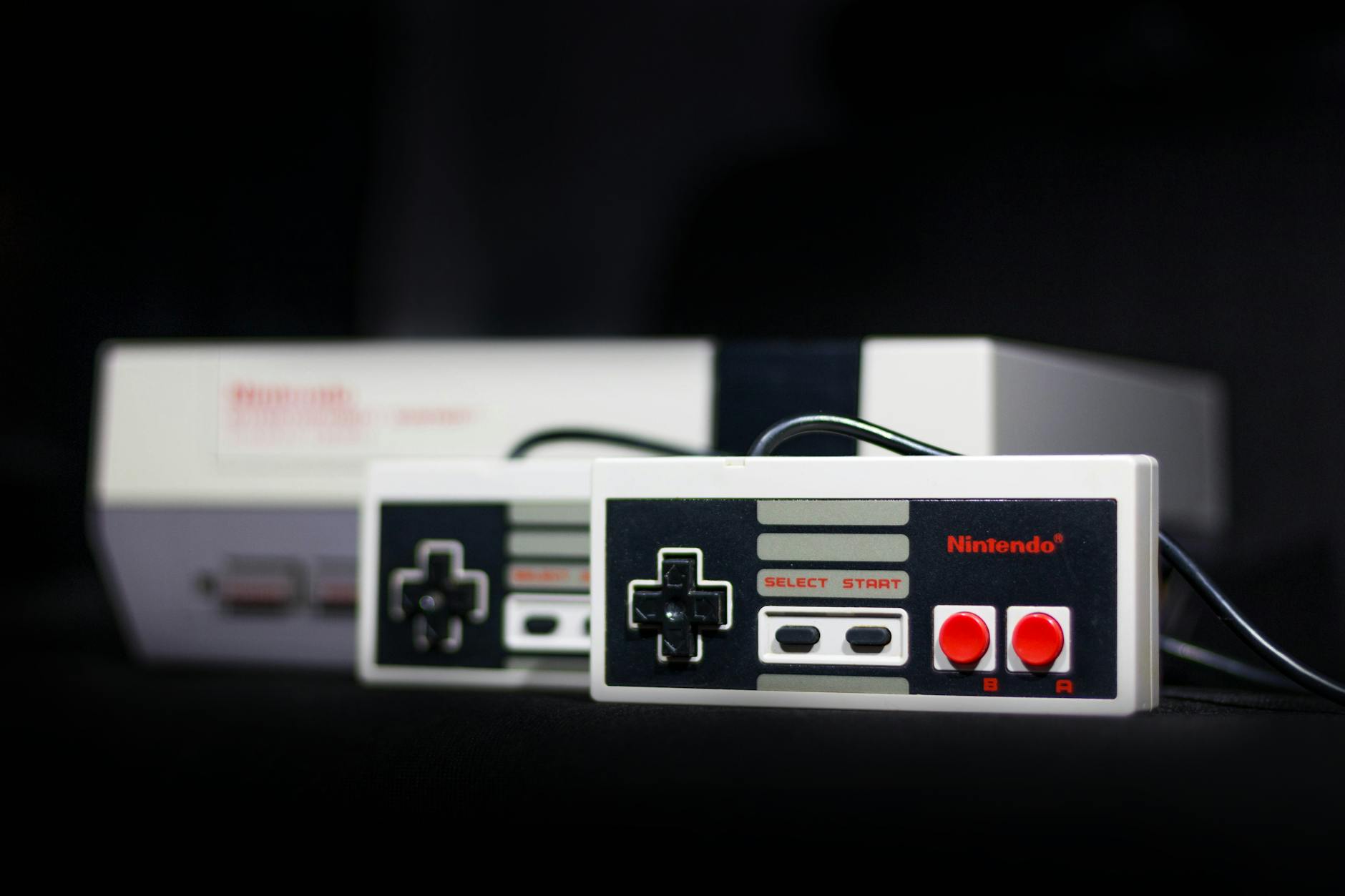
The North American video game industry did not merely decline in 1983; it evaporated. From a peak of $3.2 billion in 1982, the market imploded to $100 million by 1985: thirty-two-fold contraction that buried millions of unsold cartridges in New Mexico landfills and convinced retailers that the home console was a dead format. Into this graveyard, in 1985, a Japanese playing card company with no meaningful presence in American retail decided to launch a new machine. The decision appeared suicidal. The market had demonstrated that consumers would abandon consoles, that developers would flood shelves with unplayable software, and that retailers would refuse to stock inventory. Yet Nintendo’s entry was not merely a product launch; it was a deliberate restructuring of the video game economy. The company understood that the industry had collapsed not because consumers stopped wanting to play games, but because the prevailing business model made market fragmentation inevitable and quality control impossible. Nintendo’s early console business derived its power from solving the fundamental tension between subsidized hardware adoption and software profit extraction through a vertically integrated cartridge monopoly that used manufacturing scale and strict licensing to prevent the market collapse that had destroyed its predecessors, betting that arcade-proven intellectual property could reduce the capital risk of building a proprietary platform before cash reserves expired.
The Economic Architecture of Negative Margins
The core engine of Nintendo’s platform was a razor-and-blade model inverted through the lens of captive manufacturing. Where traditional razors generate profit on the replacement blade, Nintendo’s consoles were sold at minimal or negative margins, sometimes deliberately priced below production cost, to establish an installed base measured in millions of units. The profit, and indeed the entire economic viability of the enterprise, came from the cartridge. Each software unit sold, whether first-party titles or third-party releases, generated margin through a combination of direct sales and, more critically, royalty fees of 20 to 30 percent extracted from external publishers. This mechanism transformed the console from a product into a toll booth. By controlling the hardware platform, Nintendo enforced licensing agreements that made the cartridge format itself proprietary. Competitors could not manufacture compatible software without legal and technical authorization, creating a closed distribution funnel through which all industry revenue had to flow.
This model only functions at scale. A console sold at a loss remains a liability until the owner purchases sufficient software to offset the hardware subsidy. The mathematics are brutal: if a console costs $100 to manufacture and sells for $80, the platform owner bleeds $20 per unit until the consumer buys roughly three to four cartridges, assuming a 25 percent royalty on a $30 retail game. With manufacturing overhead and retail margins, the break-even point might require five or six game purchases per household: level of engagement that assumes both hardware penetration and software attachment rates far exceeding those of typical consumer electronics. The model compounds through switching costs. Once a consumer accumulates a library of cartridges, they are locked into the ecosystem. Abandoning the platform means rendering the entire software investment obsolete, creating a retention mechanism that grows stronger with each additional purchase. But this compounding effect requires the platform to survive the initial capital drain of the install base build.
The Arcade as Proving Ground
Most analyses of Nintendo’s early advantage focus on hardware innovation or mascot-driven marketing, overlooking a structural moat that predated the home console: the arcade-to-home pipeline. By the end of the 1970s, the arcade video game market generated $5 billion in annual revenue in the United States alone: figure that exceeded the combined revenue of Hollywood and the music industry. Titles like Taito’s Space Invaders could generate $2 billion in annual revenue in a single year, validating game mechanics, control schemes, and visual aesthetics with ruthless efficiency before a single home cartridge was pressed.
Nintendo possessed something its home-console-only competitors could not replicate: direct access to this validation laboratory. While competitors developed software speculatively for unproven home audiences, Nintendo and Atari before it could port proven arcade hits directly to cartridges. Space Invaders, Pac-Man, and later Nintendo’s own arcade properties provided an immediate library with demonstrated consumer demand. This pipeline reduced the capital risk of software development enormously. A home-console game developed from scratch represented a bet on unknown consumer preferences, requiring marketing spend to educate the market. An arcade port represented the monetization of existing demand through a different channel. The advantage compounded over time because arcade success created intellectual property moats and developer relationships. The arcade market effectively subsidized the R&D of home software, allowing Nintendo to offer a superior game library without bearing the full risk of failure for each title. Competitors lacking arcade presence had to develop hits through trial and error, a process that consumed capital and time they did not possess.
Critical Mass or Insolvency
The defining structural constraint shaping every decision was the velocity imperative: the platform had to reach critical mass, millions of installed units, before competitors consolidated the market and before the company’s cash reserves expired. This tension between hardware pricing and install base velocity governed capital allocation with an iron logic. Price the console too high to protect margins, and competitors reach scale first, locking in developers through network effects. Price too low, and the burn rate exceeds the capacity to recoup losses through software royalties, particularly if a market downturn delays purchases.
By 1982, fifteen different companies had rushed competing consoles to market, fragmenting consumer attention and retail shelf space. The result was incompatible hardware standards and a race to the bottom that destroyed consumer trust. Nintendo’s leadership understood that the 1983 crash was not an aberration but the inevitable consequence of a market structure that allowed anyone to publish software for any machine without quality control or royalty payments. To survive, Nintendo had to achieve scale faster than these fragmented competitors while maintaining stricter control over the software library. This required burning capital on hardware subsidies while simultaneously restricting supply: n economic paradox that demanded precise manufacturing control and ruthless curation of third-party publishers. The company was effectively running a sprint while wearing ankle weights, hoping to reach the finish line before the money ran out.

The Manufacturing Monopoly
Nintendo’s solution to the fragmentation problem was not merely legal but physical. The company vertically integrated cartridge manufacturing, developing proprietary chip designs and locking in supplier relationships that created a cost and speed advantage impossible for late entrants to match. Where competitors might face six-month lead times for ROM chips and assembly, Nintendo could manufacture millions of cartridges annually with predictable unit economics. This manufacturing dominance served a dual purpose: it generated margin on every cartridge produced, and it provided the enforcement mechanism for the licensing regime.
The technical architecture of the Nintendo Entertainment System included a proprietary lockout chip, the 10NES, that prevented unlicensed cartridges from functioning on the hardware. Combined with aggressive litigation against unlicensed publishers, this created a legal and technical moat that prevented the tragedy of the commons. Unlike the Atari 2600, which allowed anyone to manufacture compatible cartridges, Nintendo’s platform required developers to apply for licenses, accept royalty terms of 20 to 30 percent, and adhere to strict quality standards and production limits. The Seal of Quality was not merely marketing; it was a capital allocation tool that prevented market flooding. By restricting the number of titles a publisher could release annually and controlling the physical manufacturing of the cartridges themselves, Nintendo ensured that retail shelves would not become cluttered with low-quality software, preserving consumer trust and the premium pricing power of the software library. This control transformed the cartridge from a storage medium into a currency that Nintendo alone could mint.
The Tensions of Governance
The economics of the platform created governance challenges that directly impacted returns. The first tension lay between first-party investment and third-party ecosystem health. Nintendo invested heavily in proprietary franchises, Mario, Zelda, to drive hardware adoption and demonstrate the platform’s capabilities. Yet over-investment in first-party titles risked starving third-party developers of market share, signaling that the platform was not a viable commercial opportunity for external publishers. Conversely, allowing third parties too much freedom risked shovelware flooding the market, destroying the quality premium that justified the hardware purchase. Nintendo managed this through strict curation and production limits, effectively rationing access to the installed base to maintain price discipline.
A second tension existed between the proven $5 billion arcade market and the speculative home console business. Arcade machines generated immediate cash flow with lower capital requirements, perators purchased cabinets outright, and revenue was collected in quarters. Home consoles required massive upfront inventory, retail relationships with toy stores and department stores, and the acceptance of negative margins on hardware. The transition demanded diverting engineering talent and capital from a proven cash cow into a business with a three-year payback horizon and a recent history of total market collapse. The decision to pursue home consoles represented a bet that the installed base, once established, would generate annuity-like software royalties exceeding the transactional revenue of arcade quarters, but this required surviving the valley of death between hardware launch and critical mass.
Third, the company faced the tension between vertical integration and speed to market. Building internal manufacturing capability for cartridges required capital and time, delaying launch and increasing fixed costs. Partnering with established toy companies would have accelerated retail penetration but would have surrendered margin and control over the licensing funnel. Nintendo chose vertical integration, accepting slower initial growth to preserve the royalty extraction mechanism that made the economics viable. This decision proved critical when retailers, burned by the 1983 crash, initially refused to stock video games. Nintendo’s control over manufacturing allowed it to offer generous consignment terms and buyback guarantees that partners could not have matched, effectively using balance sheet strength to solve a channel problem.
The Fragility of the Closed Garden
The entire edifice rested on fragile assumptions about technological stability and retail power. The most dangerous assumption was that consumers would indefinitely accept closed, proprietary cartridge formats despite the emergence of cheaper, higher-capacity alternatives. The compact disc, with its superior storage and lower replication costs, represented an existential threat to the cartridge manufacturing advantage. If the industry shifted to CD-ROM, Nintendo’s vertical integration in chip manufacturing and cartridge assembly would transform from a moat into a sunk cost, while the lockout chip mechanism would become irrelevant. The company was betting that the durability of cartridges, resistant to scratching, familiar to consumers, and the installed base lock-in would delay format transitions long enough to extract sufficient returns.
Equally fragile was the assumption that retail distribution through toy stores would remain viable and that retailers would not consolidate purchasing power to squeeze margins. By the late 1980s, Toys “R” Us and other big-box retailers had begun to dominate toy distribution. If these retailers demanded lower wholesale prices, extended payment terms, or exclusive hardware variants, they could compress hardware margins to unsustainable levels and force Nintendo to rely entirely on software royalties. The company’s dependence on physical retail created vulnerability to channel leverage, particularly if a competitor with superior retail relationships or a lower cost structure emerged.
Finally, the model assumed that third-party developers would continue paying 20 to 30 percent royalties rather than defecting to competing platforms or open standards. This assumption held only as long as Nintendo’s installed base remained the largest addressable market. The moment a competitor reached comparable scale with lower royalty rates, the economic rationale for exclusivity collapsed. The platform was a monopoly that persisted only through network effects, and network effects dissolve quickly once the scale advantage erodes.
The Compounding Lock-In
Once the platform achieved critical mass, roughly one million units in the first year, with sales doubling annually, the economics inverted. The negative margins on hardware became negligible against the annuity stream of software royalties. Each additional console sold increased the value of the platform to developers, who paid for access to the growing installed base, creating a self-reinforcing cycle. The switching costs for consumers, initially a theoretical retention mechanism, became concrete as households accumulated libraries of $40 cartridges. The arcade-to-home pipeline continued to feed the software library with low-risk hits, while the manufacturing monopoly ensured that competitors could not undercut on price or availability.

The result was a business that generated returns not through the sale of electronics but through the governance of a proprietary marketplace. Nintendo did not merely sell toys; it operated a toll road where it controlled the pavement, the gates, and the traffic laws. The durability of this model depended on maintaining the technological and legal barriers that prevented market fragmentation, while managing the capital intensity required to scale faster than competitors. In solving the economic paradox of the razor-and-blade model through vertical integration and strict licensing, Nintendo transformed a collapsed industry into a platform monopoly: ne that would endure only as long as the closed garden remained sealed.
The sealing of that garden required a specific historical memory. In 1979, four former Atari programmers, David Crane, Larry Kaplan, Bob Whitehead, and Alan Miller, had departed to form Activision, recognizing what their employer refused to acknowledge: that the value in the video game business resided not in the plastic console casing but in the software code. Atari’s management had treated programmers as manufacturing employees, paid salaries to build products that generated billions in hardware sales while the creators received no royalties and minimal recognition. When Activision began producing cartridges for the Atari 2600 without authorization, Atari sued, claiming proprietary rights to the hardware interface. The litigation failed to prevent Activision’s entry, establishing the legal precedent that hardware manufacturers could not control software development through interface copyrights alone. By 1982, Activision had demonstrated that third-party publishers could capture the majority of value in the software market, while hardware manufacturers absorbed the capital intensity of console production without commensurate returns. This lesson, that an open platform inevitably transferred profits to software developers while leaving platform owners with inventory risk, formed the tactical foundation of Nintendo’s licensing architecture.
Nintendo’s response was not merely to charge royalties, but to restructure the physical economics of cartridge production so that the platform owner captured value regardless of which party developed the software. Where Atari had allowed any manufacturer to produce compatible cartridges, Nintendo positioned itself as the sole manufacturer of all cartridges bearing its proprietary lockout chip. Developers did not purchase blank cartridges and pay a royalty; they submitted master code to Nintendo, which then manufactured the cartridges at its own facilities (or through tightly controlled subcontractors), sold the finished goods back to the publishers at wholesale prices that embedded the royalty, and required payment upfront. This transformed the royalty from a contractual obligation subject to audit disputes into a physical toll collected before the product reached retail. Activision’s model of developer autonomy became impossible on the NES; to reach the installed base, one had to pass through Nintendo’s manufacturing bottleneck, and that passage required acceptance of strict production limits, initially set at five titles per year per publisher, that artificially constrained supply to prevent the market flooding that had destroyed Atari.
The production limits operated as a price maintenance mechanism. In 1983, the crash had been accelerated by a glut of low-quality software that depressed prices across the category, making it impossible for retailers to distinguish between premium and disposable products. By restricting each licensed publisher to a handful of titles annually, Nintendo forced developers to allocate their finite slots to projects with the highest probability of commercial success. This rationing function mimicked the scarcity economics of the arcade market, where floor space constraints naturally limited the number of titles that could generate revenue. The constraint also served to concentrate marketing resources; publishers facing title limits could not spray the market with low-budget attempts but instead had to invest heavily in the development and promotion of individual releases. The result was a software library with higher average quality and price integrity, preserving the $30-$40 price point that made the royalty model economically viable. Without these limits, the tragedy of the commons would have repeated: individual publishers, pursuing their own short-term inventory turns, would have flooded shelves until the category collapsed.
The governance of this system fell to Hiroshi Yamauchi, whose leadership functioned as a direct economic variable rather than a narrative of visionary inspiration. Yamauchi had inherited a playing card company in 1949, expanded into love hotels and instant rice, and recognized that Nintendo’s survival required escaping the structural constraints of these low-margin, cyclical businesses. His approach to the home console market was characterized by a ruthless allocation of capital toward vertical integration and an equally ruthless suppression of partner autonomy. When negotiating with retailers still traumatized by the 1983 crash, Yamauchi authorized terms that would have been unacceptable to a Western public company: Nintendo offered to buy back all unsold inventory, effectively removing inventory risk from retailers and placing it entirely on Nintendo’s balance sheet. This consignment model required immense capital reserves and confidence in the manufacturing lockout mechanism, but it solved the channel problem created by the 1983 hangover. Toys “R” Us and other major retailers, facing their own liquidity constraints and skeptical of the video game category, would not have allocated shelf space to an unknown Japanese entrant without such guarantees.
The retail relationship, however, contained the seeds of its own destruction. By 1985, Toys “R” Us had emerged as a category killer in toy distribution, consolidating purchasing power that allowed it to demand extended payment terms, promotional allowances, and exclusive product variants. Nintendo’s dependence on this channel created a structural fragility: if the retailer consolidated further, or if it demanded exclusive hardware configurations, Nintendo’s margin structure would compress under the weight of retailer leverage. The company mitigated this through the cartridge manufacturing monopoly, which ensured that even if hardware margins were squeezed to zero, the software royalties generated through controlled cartridge production would remain intact. Yet this mitigation assumed that retail would remain the primary distribution channel. The emergence of direct-to-consumer sales, or the concentration of retail into a handful of buyers capable of demanding margin concessions on software as well as hardware, would eliminate the buffer that made the razor-and-blade model sustainable.

The technological fragility of the cartridge format presented an equally serious threat. By the late 1980s, Sony and Philips were demonstrating CD-ROM technology that offered 650 megabytes of storage, hundreds of times the capacity of Nintendo’s largest cartridges, at replication costs below $2 per disc, compared to the $10-$15 manufacturing cost of ROM chips and circuit boards. The optical format eliminated the manufacturing moat that Nintendo had constructed; CDs could be pressed at any optical media facility, removing the lockout mechanism that enforced licensing royalties. The transition from cartridges to discs threatened to commoditize software distribution, transforming video games into a market resembling music or film, where manufacturing scale provided no platform control and piracy became trivial. Nintendo’s entire economic architecture depended on the physical impossibility of unauthorized manufacturing; the CD represented the dissolution of that impossibility.
The company’s resistance to CD technology was not merely technological conservatism but economic self-preservation. Optical drives introduced load times that cartridges avoided, and discs were vulnerable to scratching that rendered them unplayable, egitimate consumer drawbacks that Nintendo emphasized. Yet the deeper calculation involved the preservation of the manufacturing monopoly. If Nintendo had adopted CD-ROM, it would have lost the physical control that enabled royalty extraction. The format war was thus a battle over business models masquerading as a technical debate. When Sony eventually entered the market with the PlayStation, it did so precisely by abandoning the cartridge format and the strict licensing control it enabled, instead accepting lower manufacturing margins to capture market share and trusting that software volume would compensate for reduced royalty rates. Nintendo’s cartridge adherence, while preserving the closed garden, eventually ceded technological leadership to competitors willing to sacrifice the toll-booth model for adoption velocity.
The network effects that sustained the platform once critical mass was achieved operated with mathematical precision. The value of the platform to a software developer increased linearly with the installed base, while the cost of porting or developing software remained relatively fixed. At one million consoles, a developer might need to sell 50,000 units to break even on development costs; at ten million consoles, the same sales volume represented pure margin, while the larger addressable market justified higher development budgets and marketing spend. This dynamic created a winner-take-all market structure where the largest platform attracted the best software, which in turn drove hardware sales, compounding the advantage. Nintendo’s early investment in negative-margin hardware was a bet that it could reach the threshold where these network effects became self-sustaining before its capital expired.
The threshold was not merely a matter of unit sales but of attach rate: he average number of software titles purchased per console owner. If consumers treated the NES as a toy rather than a platform, buying the hardware with one or two pack-in games and no further software, the negative margin on hardware would never be recouped. Nintendo managed this risk through the design of the hardware itself: the initial “Action Set” included only Super Mario Bros., a game designed for high replay value but also for difficulty progression that encouraged the purchase of additional titles. More critically, the company limited the initial supply of consoles to create scarcity that ensured early adopters were dedicated gamers with high propensity to purchase software, rather than casual buyers who might treat the device as a seasonal novelty. This artificial supply constraint, seemingly counterproductive for a platform seeking critical mass, ensured that the early installed base had the highest possible software attach rates, generating the royalty stream necessary to fund the manufacturing of subsequent hardware units.
The underappreciated structural advantage of Nintendo’s position lay not merely in the lockout chip or the manufacturing scale, but in the specific geometry of the cartridge supply chain. ROM chip fabrication required long lead times and large minimum orders; semiconductor foundries would not prioritize small orders from potential competitors, particularly when Nintendo had secured capacity through forward contracts and equity relationships with Japanese chip manufacturers. A potential entrant attempting to match Nintendo’s cartridge production would face a six-to-nine-month gap between software approval and retail availability, during which Nintendo could price aggressively and update its library. This manufacturing latency created a temporal moat that protected the platform even if competitors offered superior hardware specifications. The physicality of the cartridge, its weight, its plastic casing, its proprietary connector, was not a limitation but a defensive fortification.
Yet this fortification assumed the stability of semiconductor supply chains and the continued availability of plastic resins and assembly labor at predictable costs. The vertical integration that provided control also concentrated risk; any disruption to Japanese manufacturing capacity, whether from currency fluctuation, trade disputes, or natural disaster, would halt the entire software pipeline. The 20-30 percent royalty rates that seemed extortionate to Western developers were necessary to cover the capital intensity of maintaining redundant manufacturing capacity and the inventory risk of the consignment model. When the yen strengthened against the dollar in the late 1980s, Nintendo’s U.S. dollar-denominated hardware sales became less profitable, while the software royalties, collected in dollars but converted to yen, provided a natural hedge. The economics required constant calibration of exchange rates, manufacturing yields, and retail payment terms.
The cultural governance of the platform, the specific aesthetic and content standards enforced by Nintendo’s approval committees, functioned as a quality control mechanism with direct financial implications. Where Atari had allowed the market to determine quality through purchase patterns, Nintendo recognized that in a market with network effects and switching costs, consumer trust was a collective good that individual publishers had no incentive to preserve. A single low-quality title did not merely harm its own publisher; it degraded the perceived value of the entire platform, reducing the attach rate for all software. Nintendo’s content standards, often criticized as paternalistic or culturally imperialist, were economically rational defenses of the price integrity necessary to sustain the royalty model. The company effectively taxed developers not only for manufacturing access but for insurance against market degradation.

The fragility of this equilibrium became apparent as the installed base matured. Once consumers owned libraries of twenty or thirty cartridges, the switching costs that retained them also created resistance to hardware upgrades. Nintendo faced the innovator’s dilemma: any successor platform that rendered the existing cartridge library obsolete would forfeit the installed base advantage, while any platform that maintained backward compatibility would perpetuate the technological limitations of the cartridge format. The Super Nintendo Entertainment System eventually arrived in 1991, but the transition required careful management of consumer upgrade incentives and developer migration paths. The closed garden, once established, became difficult to renovate without destroying the ecosystem that had grown within it.
In the end, Nintendo’s origins as a platform business reveal a fundamental truth about two-sided markets: the platform owner must subsidize one side to attract the other, but the mechanism of subsidy determines the durability of the moat. Atari subsidized consumers through low hardware prices but failed to capture the value created by developers; Nintendo subsidized consumers through even lower hardware prices but captured developer value through physical control of the distribution medium. The difference was not merely contractual but architectural, rooted in the decision to treat the cartridge as a proprietary currency rather than a commodity storage device. This architecture generated extraordinary returns while it lasted, but it lasted only as long as the physical and legal barriers to unauthorized manufacturing remained insurmountable: condition that technological evolution was already beginning to erode before the decade ended.
The erosion manifested concretely in 1988 when Atari Games, operating under its Tengen subsidiary, reverse-engineered the 10NES lockout chip. Engineers at Tengen chemically peeled away the epoxy coating of Nintendo’s proprietary chips, examined the circuitry under a microscope, and replicated the authentication protocol to produce the “Rabbit” chip: functional duplicate that bypassed Nintendo’s manufacturing monopoly entirely. By producing unlicensed cartridges for hits like Tetris and Pac-Man, Tengen demonstrated that the legal and technical moat was not insurmountable but merely expensive to litigate. Nintendo responded with copyright infringement suits, but the judicial process moved slower than manufacturing cycles; by the time preliminary injunctions arrived, Tengen had already shipped hundreds of thousands of units, proving that the enforcement mechanism relied on the threat of litigation rather than its certainty, and that the cost of perfect enforcement might exceed the royalties lost to infringement.
The Tengen breach exposed a structural asymmetry in the platform’s defense. Nintendo’s control required perfect technical security and continuous legal vigilance; competitors needed only one successful breach to establish a parallel distribution channel that permanently degraded the exclusivity premium. More dangerously, Tengen’s challenge signaled to other developers that the 20-30 percent royalty was not a natural law but a negotiated tariff subject to evasion. If major publishers followed Tengen’s lead or threatened to do so during contract renegotiations, the cartridge manufacturing monopoly would transform from a toll booth into a cost center, enforceable only through constant litigation that consumed margins and generated antitrust scrutiny from regulators already questioning Nintendo’s single-source manufacturing requirements. The fragility was specific: the lockout chip relied on security through obscurity, and once the obscurity dissolved, the manufacturing scale advantage could not compensate for the loss of exclusivity, particularly as gray-market import channels eroded price discipline across regional markets.
This technological and legal erosion compounded the retail concentration risk. As competitors like Sega entered with more permissive licensing terms and hardware architectures that resisted lockout attempts, Nintendo faced the choice between relaxing its controls, risking the shovelware deluge that had destroyed Atari, or maintaining strict standards while bleeding market share to platforms that offered developers higher margins and faster release cycles. The dilemma was economic, not philosophical: every percentage point of royalty extracted through manufacturing control increased the incentive for developers to defect to platforms with lower friction, particularly as development costs rose and the $40 cartridge price point became unsustainable. The transition to 16-bit architectures only amplified this tension, as the higher development costs of the Super Nintendo made the 30 percent royalty increasingly punitive for third-party publishers, who now required sales volumes impossible to achieve under Nintendo’s production limits. The platform that had solved the tragedy of the commons by restricting supply now faced the mirror-image problem: artificial scarcity of development slots that starved the ecosystem of software precisely when consumers demanded variety, creating the vacuum that Sony’s PlayStation would eventually fill.