
Watsco: The 120 Million Unit Replacement Cycle

The Inventory of a Hundred Million Machines
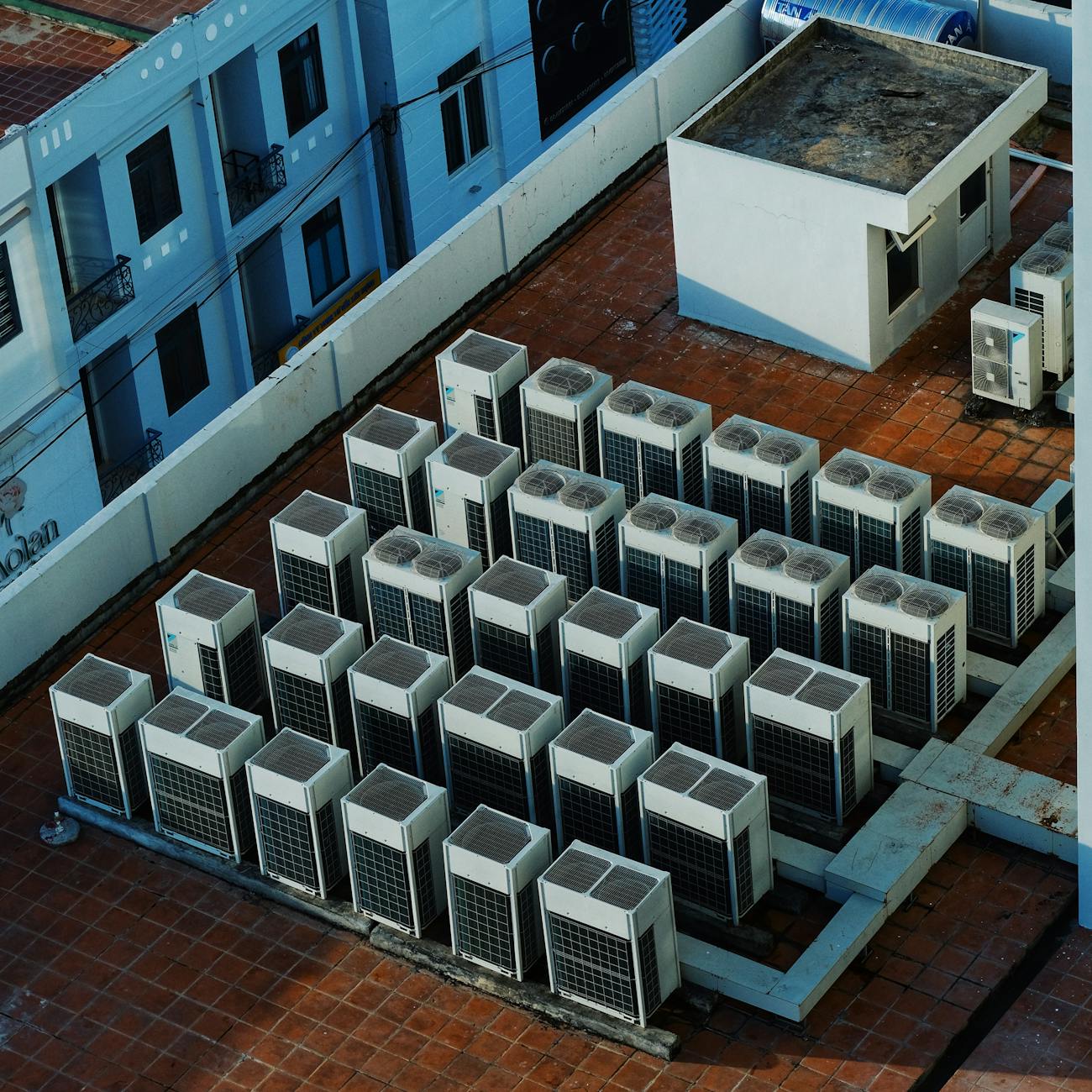
There are roughly one hundred and twenty million air conditioning units installed in American homes and businesses, and every one of them is temporary. They are mechanical liabilities with finite lifespans, ranging from fifteen years for the average residential condenser to three decades for commercial rooftop systems, each destined eventually for replacement or repair. This installed base represents the underlying collateral of Watsco, a company that does not manufacture a single compressor or condenser but has built a $20 billion market capitalization by positioning itself as the essential intermediary between the factories that build climate control equipment and the contractors who install it.
The economics are deceptively modest. Watsco captures value through a simple markup, ypically two to three percent on equipment sales, and higher margins on the parts and supplies that keep systems running. Gross margins hover around twenty-seven percent with a stated target of thirty. Operating margins have climbed toward eleven percent and continue expanding. These are not the fat returns of software or pharmaceuticals, but the steady accumulation of a business that has compounded revenue through three distinct mechanisms: organic volume growth of three to four percent from industry unit shipments plus market share gains in the Sun Belt; price and mix expansion of two to three percent annually as manufacturers raise list prices and regulatory redesigns force equipment upgrades every decade or so; and opportunistic acquisitions that add roughly two percent growth per year.
What distinguishes Watsco from ordinary distribution is not the margin percentage but the stability of the revenue stream. Unlike new construction, which cycles with housing starts and interest rates, replacement demand is driven by mechanical failure and discomfort. When a compressor seizes in a Florida August or a heat exchanger cracks during a Chicago January, the repair cannot be deferred. This creates transactional recurrence, evenue that repeats not because of contracts but because of physical necessity. The contractor needs the part today, not next week, and Watsco, with seven hundred sales branches concentrated heavily in the fastest-growing states, maintains the inventory position to provide it.
Yet this model rests on a precarious equilibrium. Watsco’s dominance depends on exclusive relationships with manufacturers, particularly Carrier Global Corporation, which accounts for sixty-five percent of Watsco’s purchases and operates under an eighty-twenty joint venture structure that has driven Watsco’s operating margins from roughly two percent to over twelve percent since 2009. Simultaneously, the company’s growth depends on a decentralized, family-friendly acquisition culture that preserves subsidiary autonomy: structure that resists the operational integration necessary for maximizing pricing efficiency and supply chain optimization. The company generates cash conversion exceeding one hundred percent, funds dividend growth exceeding twenty percent annually over thirty-five years, and maintains a fortress balance sheet with minimal debt. But the durability of these returns depends on two fragile assumptions: that manufacturers will continue to outsource distribution rather than reclaim it, and that the contractor base will remain fragmented rather than consolidating into entities large enough to bypass distributors entirely.
The Percentage Game
Watsco’s economic engine runs on a subtle form of inflation capture. When Carrier or Rheem or Lennox raises list prices by five percent to offset commodity costs or regulatory mandates, Watsco does not pass through a fixed dollar amount. It maintains stable markup percentages. This means that as the underlying equipment becomes more expensive, nd it reliably does, particularly during the regulatory redesign cycles that occur roughly every ten years and force high-single-digit to low-double-digit price increases, atsco’s absolute dollar profit per unit rises without any increase in volume or operational intensity.
This mechanism separates Watsco from typical distributors who compete on price and squeeze margins during inflationary periods. Because Watsco holds exclusive regional territories for ten major OEMs, and because contractors purchasing emergency replacement equipment are price-inelastic at the point of sale, the company captures the spread. The equipment category, which comprises seventy percent of sales, generates lower gross margins but higher absolute dollars as prices rise. The parts and supplies category, twenty-five percent of sales, provides the higher-margin annuity, ontractors need capacitors, contactors, and refrigerant regardless of whether they are installing new systems or repairing old ones.
The regulatory environment reinforces this dynamic. Environmental mandates periodically require equipment redesigns, shifts to higher-efficiency refrigerants, improved SEER ratings, altered physical dimensions, that force manufacturers to re-engineer product lines. These transitions function as pricing events. The new equipment costs more to produce and sells for higher list prices. Watsco, taking its percentage from a larger base, sees revenue per unit expand without corresponding cost growth. Combined with the three to four percent annual growth in industry unit volumes, driven by the compounding installed base and the migration of population toward the Sun Belt, this creates a reliable five percent organic growth trajectory before any contribution from acquisitions.
But this engine has a governor. Equipment margins are structurally compressed by the competitive dynamics of the manufacturing tier. While parts margins remain robust, equipment represents the majority of the revenue base. To reach the thirty percent gross margin target from the current twenty-seven percent, Watsco must shift its sales mix toward higher-margin categories or optimize pricing through data-driven tools. Both paths encounter resistance. Aggressive pricing optimization risks triggering defection among the sixty thousand contractors who currently lack contractual loyalty to Watsco. Meanwhile, the parts business, while profitable, grows more slowly than equipment replacement cycles. The margin expansion story is not guaranteed; it requires either a fundamental shift in contractor purchasing patterns or the successful deployment of technology that the company’s decentralized structure may be ill-equipped to implement at scale.
The Carrier Problem
In 2009, as the global financial crisis froze credit markets and paralyzed competitors, Watsco executed a transformational transaction. It formed a joint venture with Carrier Global, acquiring approximately one billion dollars in distribution revenue and nearly doubling the company’s size. The structure was deliberate: eighty percent ownership for Watsco, twenty percent for Carrier. This mirrored the template established in 1989 when Watsco pivoted from manufacturing to distribution through the Gemaire acquisition, using a similar joint venture with Rheem to secure supply and align incentives.

The Carrier deal solved two problems simultaneously. It provided Watsco with the scale to justify logistics investments and technology platforms that smaller distributors could not afford. More importantly, it gave Carrier a vested interest in Watsco’s profitability. Since 2009, Carrier’s margins within the Watsco system have improved from roughly two percent to over twelve percent. This margin expansion has been the primary driver of Watsco’s operating leverage. When Carrier wins, Watsco wins disproportionately.
But the concentration is extreme. Carrier represents sixty-five percent of Watsco’s purchases. No other relationship comes close. This recreates the single-manufacturer risk that Watsco escaped when it diversified away from its origins as a component manufacturer in the 1980s. The exclusivity agreements that grant Watsco protected territories for Carrier products are not perpetual; they are commercial arrangements based on mutual benefit rather than contractual obligation. If Carrier were to renegotiate terms, shift toward direct distribution models, or be acquired by a competitor with a different philosophy toward outsourced logistics, Watsco’s economics would unwind rapidly.
The structural rationale for the relationship’s durability is sound but not absolute. Manufacturers outsource distribution because managing seven hundred branches, training contractors, handling warranty claims, and maintaining local inventory requires capital and operational complexity they prefer to avoid. Watsco provides the service infrastructure, the e-commerce platforms, the technical education, the credit extension to contractors, that allows Carrier to focus on manufacturing and brand marketing. Carrier’s margin improvement within the Watsco system demonstrates that this arrangement creates more value than Carrier could capture through vertical integration or multi-channel distribution.
Yet this equilibrium assumes that manufacturers will continue to view distributors as partners rather than unnecessary intermediaries. If Carrier or another major OEM were to invest directly in e-commerce platforms capable of serving contractors, or if they were to favor large national accounts over regional distribution networks, Watsco’s exclusive territories would become irrelevant. The company has attempted to diversify through smaller relationships with other OEMs, but replicating the Carrier joint venture structure is difficult. Most manufacturers lack the incentive to grant equity stakes to distributors, and Watsco’s own capital discipline, its reluctance to lever up for transformational deals, limits its ability to force the issue through acquisition.
Decentralization as Economic Infrastructure
The most underappreciated structural advantage in Watsco’s model is not its relationship with Carrier or its branch density, but its method of acquiring competitors. Since pivoting to distribution in 1989, Watsco has acquired more than seventy regional distributors. The pace has accelerated since 2017, with nine deals completed in recent years. These acquisitions have added market share in the Sun Belt, filled geographic gaps, and extended the company’s exclusive relationships with secondary manufacturers.
What makes this pipeline durable is not financial engineering but cultural alignment. Watsco’s acquisition model promises selling families something that strategic competitors cannot or will not match: continued autonomy. When a family sells to Watsco, the subsidiary retains its brand name, its management team, its local customer relationships, and its operational independence. Watsco provides capital, technology platforms, and OEM relationships; the acquired company continues to run itself.
This structure functions as an economic moat because it neutralizes the primary objection that family-owned distributors have to selling. The HVAC distribution industry remains fragmented, with over two thousand independent operators across North America. Many are second or third-generation family businesses with deep ties to local contractor communities. Selling to a consolidated competitor like Ferguson or Home Depot typically means brand extinction, staff reductions, and absorption into a corporate bureaucracy. Selling to Watsco means joining a network while keeping the family name on the door.
The Russell Sigler acquisition illustrates the mechanism. Watsco acquired a thirty-five percent stake in the regional distributor, retaining the founding family’s operational control while providing access to Watsco’s technology and supplier relationships. Since 2017, Sigler’s operating profit has grown over four hundred percent. This outcome advertises itself. When other family owners consider succession planning, facing the choice between selling to private equity, selling to a strategic consolidator, or selling to Watsco, the Sigler example demonstrates that Watsco offers the best of both worlds: liquidity for the founders and continued prosperity for the business.
Competitors cannot easily replicate this model because they lack the specific combination of OEM relationships and decentralized culture. A plumbing and HVAC conglomerate could pay higher multiples for acquisition targets, but it cannot promise the same degree of autonomy while delivering the same manufacturer access. Watsco’s HVAC exclusivity makes it a more attractive partner for HVAC specialists than diversified distributors. The decentralized model creates a self-reinforcing acquisition pipeline that compounds market share without requiring the operational integration that typically destroys value in roll-up strategies.
However, this advantage extracts a price. Decentralization slows the realization of synergies. Watsco has invested heavily in technology, pricing optimization tools, mobile ordering platforms, fleet logistics software, but implementation across seventy-plus autonomous subsidiaries proceeds unevenly. The company has not fully captured the cost-to-serve reductions that technology should enable. Pricing remains locally determined rather than centrally optimized. Inventory positioning, while advanced at the branch level, may carry redundancies that a fully integrated network would eliminate. The cultural alignment that drives the acquisition engine simultaneously constrains the margin expansion potential.
The Tyranny of Now
Watsco’s revenue is recurring in practice but contractual in no way. The company maintains no long-term agreements with its sixty thousand contractor customers. A technician can walk into any branch and purchase parts, or he can drive to a competitor’s location. There are no switching costs in the traditional sense, o contracts to break, no penalties to pay, no proprietary technology locking the contractor into the relationship.
The stability of Watsco’s revenue stems instead from the physics of service work and the density of its branch network. When an air conditioner fails, the contractor needs the replacement component within hours, not days. The customer is waiting in a hot house. The contractor cannot order from a distant warehouse to save ten percent on the part; he needs the part now to complete the job and move to the next call. Watsco’s seven hundred branches, heavily concentrated in the Sun Belt where sixty percent of the network resides, position inventory within driving distance of most contractors. The company absorbs the carrying cost of maintaining that inventory availability, osts that smaller, undercapitalized competitors cannot match.
This creates de facto switching costs based on convenience and immediacy rather than contract. The contractor develops habitual relationships with local branch managers who extend credit, provide technical training, and troubleshoot warranty issues. These relationships are personal and local, not institutional. They depend on the Watsco subsidiary maintaining the culture that existed before acquisition: he very autonomy that makes the M&A model work.
But this transactional model contains a latent fragility. The installed base of one hundred twenty million units provides volume visibility, the units will eventually fail, but offers no pricing power against a consolidated buyer. If the contractor base consolidates into regional or national service chains with sufficient scale to negotiate directly with manufacturers, or to demand volume discounts that match Watsco’s purchasing power, the distributor’s position weakens. A chain operating five hundred trucks could bypass Watsco and negotiate directly with Carrier or Trane, particularly if e-commerce platforms reduce the friction of direct manufacturer sales.
The assumption underlying Watsco’s valuation is that the contractor base will remain fragmented, that the emergency nature of HVAC service will preserve the value of local inventory, and that manufacturers will continue to rely on distributors to handle the complexity of serving thousands of small contractors rather than dozens of large ones. These assumptions have held for four decades, but they are not immutable. The transactional nature of the business means that if consolidation accelerates, Watsco’s volumes could compress faster than historical patterns suggest, with no contractual buffers to slow the decline.
Margin, Mix, and the Thirty Percent Ceiling
Watsco’s management has articulated a target of thirty percent gross margins, up from the current twenty-seven percent. Achieving this requires either a fundamental shift in revenue mix toward parts and supplies, or the successful implementation of pricing optimization technology across the decentralized network.
Currently, equipment sales comprise seventy percent of revenue and carry structurally lower margins due to manufacturer competition and the transparency of list pricing. Parts and supplies, at twenty-five percent of sales, generate higher margins but slower growth. The remaining five percent comes from commercial refrigeration. To reach the thirty percent target without relying solely on manufacturer price increases, Watsco must either significantly grow the parts business as a percentage of sales, or extract more margin from the equipment category through data-driven pricing tools.
The parts business grows through attachment, echnicians purchasing components alongside major equipment, or returning for maintenance supplies. But equipment sales grow faster because they correlate with replacement cycles and regulatory redesigns. The mix has remained stubbornly stable. Without a catalyst to shift contractor purchasing patterns toward higher-margin categories, the margin expansion depends on technology implementation.
Watsco has deployed pricing optimization software and mobile ordering platforms designed to reduce the cost-to-serve and capture value from the urgency of repair work. However, the decentralized structure that enables the M&A strategy simultaneously complicates technology rollout. Subsidiaries maintain local pricing autonomy. Fleet optimization requires standardization that may conflict with local operational preferences. The company has not yet demonstrated the ability to capture the full margin potential latent in its technology investments.
Furthermore, aggressive pricing optimization risks triggering competitive response. Regional distributors, while smaller, can undercut Watsco on price for large equipment orders if Watsco pushes too hard on margin. Contractors, while loyal to local branches, remain economically rational. If Watsco’s pricing tools extract too much value from the urgency of the repair moment, contractors may divert planned replacement business to lower-cost competitors who lack Watsco’s infrastructure but can compete on price for scheduled work. The path from twenty-seven to thirty percent gross margins is not automatic; it requires threading a needle between capturing value and preserving the transactional relationships that generate volume.
The Fortress and the Transformational Deal
Watsco’s balance sheet philosophy is encoded in a simple principle: never bet the ranch. The company maintains minimal debt, generates cash conversion exceeding one hundred percent, and has funded dividend growth exceeding twenty percent annually for thirty-five years. Over two-thirds of free cash flow returns to shareholders as dividends, including a special dividend paid in 2012 equivalent to two years of distributions ahead of an anticipated tax rate change.
This capital discipline is not merely conservative; it is strategic infrastructure. The fortress balance sheet enabled the Carrier acquisition in 2009 when credit markets had frozen and competitors could not finance large transactions. It provides the capacity to act as a buyer of last resort during economic downturns when family-owned distributors face succession crises or liquidity crunches. The minimal leverage allows Watsco to promise acquired families that their businesses will not be loaded with debt and stripped for cash: commitment that competitors relying on leverage cannot match.
Yet this philosophy creates tension with the company’s growth ambitions and technological needs. The Carrier deal was transformational, but replicating it would require capital deployment that might strain the no-debt ethos. If acquisition opportunities accelerate, driven by demographic retirement among distributor owners or technological disruption requiring scale, the fortress balance sheet could become a constraint rather than an advantage. Watsco might be forced to pass on deals or dilute equity holders to maintain its leverage ratios, slowing growth relative to private equity or strategic competitors willing to utilize debt.
The technology investments required to optimize pricing and logistics, artificial intelligence for inventory positioning, predictive analytics for contractor demand, fleet electrification, will require sustained capital. The company’s historical approach has been to fund these investments organically while maintaining dividend growth. If the technology transformation requires a step-change in capital intensity, Watsco’s commitment to minimal leverage and high payout ratios may force a choice between shareholder distributions and competitive positioning.
The durability of Watsco’s model ultimately depends on the interaction between these constraints: the exclusive manufacturer relationships that require trust but not contracts; the decentralized culture that enables acquisition but constrains optimization; the transactional revenue that provides recurrence but not lock-in; and the fortress balance sheet that provides optionality but potentially limits scale. The company has navigated these tensions for four decades, compounding revenue from sixty-four million dollars in 1989 to seven point five billion today, generating twenty percent annualized returns across five, ten, twenty, and thirty-year periods. Whether this continues depends on whether the hundred twenty million machines humming across the American landscape continue to require human technicians who need parts today, and whether the families who own the local distribution networks continue to believe that selling to Watsco preserves something worth keeping.
The Carrier joint venture is not merely a supply agreement; it is a structural innovation that converted a transactional vendor relationship into a shared equity position. When Watsco and Carrier formed their eighty-twenty venture in 2009, they replicated a template first tested with Rheem in 1989, but at a scale that fundamentally altered the industry’s power dynamics. Under this structure, Carrier contributes inventory and brand equity; Watsco contributes distribution infrastructure, working capital, and operational execution. The profits flow according to the ownership split, but the critical alignment lies in the mutual hostage position. Carrier cannot easily replace Watsco without dismantling a network that carries its warranty obligations, technical training, and local credit relationships. Watsco cannot diversify away from Carrier without surrendering the margin expansion that has driven its operating leverage for fifteen years.
This alignment is tested during refrigerant transitions and efficiency standard revisions. When the Department of Energy mandated SEER rating increases in 2023, or when the industry phases down hydrofluorocarbon refrigerants under environmental regulations, equipment redesigns cascade through the supply chain. New condenser dimensions require different pad specifications; higher efficiency ratings necessitate upgraded thermostats and air handlers; refrigerant changes demand new recovery equipment and technician certification. Watsco absorbs the inventory risk of these transitions, stocking both the old and new equipment during changeover periods, financing the carrying costs that smaller distributors cannot bear. In return, it captures the markup on the higher-priced new equipment and the attach rate on necessary components, linesets, electrical disconnects, condensate pumps, that must accompany any system replacement.
But the dependency cuts both ways. Carrier’s manufacturing economics depend on volume throughput to amortize fixed costs. If Carrier faced a demand shock, say, a recession that depressed new housing starts or a technological shift toward heat pumps that favored Asian manufacturers, it might face pressure to reclaim margin from distribution. The eighty-twenty structure means Carrier participates in Watsco’s profitability, but if Carrier’s own manufacturing margins compressed, the company might renegotiate the JV terms, demand direct sales to large national accounts, or acquire competing distributors to create price competition within the network. Watsco has limited contractual protection against such moves. The joint venture agreements include performance standards and territorial exclusivities, but they also include termination clauses and material adverse change provisions that sophisticated manufacturing counsel draft precisely to preserve strategic flexibility.
The Russell Sigler acquisition, completed in 2017, illustrates how Watsco attempts to diversify this concentration risk while staying within its cultural constraints. Sigler operated as a Rheem distributor in the Southwest, a geography where Watsco’s Carrier-heavy network had gaps. Rather than a full acquisition, Watsco purchased a thirty-five percent minority stake, leaving the Sigler family with operational control and the incentive to continue growing the business. Since the investment, Sigler’s operating profit has grown more than four hundred percent, validating the model of providing capital and OEM access without operational interference.
Yet the Sigler structure also highlights the limits of Watsco’s decentralization. While Sigler gained access to Watsco’s e-commerce platform and supplier relationships, it maintained its own inventory management systems, pricing protocols, and fleet logistics. The technology integration that Watsco touts as a source of future margin expansion, centralized pricing optimization, predictive inventory positioning, route optimization for delivery trucks, proceeds slowly when each subsidiary maintains technical autonomy. Watsco’s investment in digital platforms, including mobile ordering apps that allow technicians to photograph failed components and receive immediate part numbers and availability, must be adopted voluntarily by subsidiary management teams who may view such tools as disruptions to established customer relationships.
This friction is not accidental; it is the price of the M&A model. When Watsco acquires a family distributor, it explicitly promises to retain the local brand, the existing management team, and the relationship-based sales culture. The selling family often continues to manage the business, now with Watsco’s balance sheet backing their inventory purchases and credit extensions to contractors. This preservation of autonomy is what induces families to sell to Watsco rather than to private equity or strategic competitors. But it means that pricing discipline, charging the optimal markup based on urgency, contractor history, and local competitive dynamics, remains locally determined rather than centrally optimized.
Consider the concrete mechanics of a service call in Phoenix during July. A contractor’s technician diagnoses a failed compressor in a residential split system. The compressor is a proprietary component specific to the equipment manufacturer; the contractor cannot substitute a generic part. He needs the compressor today to complete the job and invoice the homeowner. Watsco’s branch maintains inventory of that specific Carrier compressor because Watsco’s scale allows it to carry the carrying cost of slow-moving SKUs that smaller distributors stock only on special order. The contractor calls the branch, speaks to a counterman he has known for years, and receives the part within two hours on terms that include thirty-day credit. The markup on that compressor is modest, perhaps eight percent, but the contractor also purchases a new contactor, capacitor, and refrigerant, items where margins exceed twenty-five percent. The total transaction generates gross profit dollars disproportionate to the inventory value because Watsco’s density allows immediate availability.
This transaction occurs without contract, without subscription, without any technological lock-in beyond the convenience of the relationship. If a regional competitor opened a branch across the street with lower prices on compressors, the contractor might divert planned replacement business, system changeouts scheduled days in advance, while continuing to use Watsco for emergency repairs. The contractor optimizes his own procurement, splitting volume based on urgency and price. Watsco captures the high-margin, time-sensitive volume but loses the schedulable, price-sensitive volume to competitors with lower cost structures.
The bear case for Watsco centers on the potential for this fragmentation to end. Private equity has consolidated HVAC service contractors in several markets, rolling up independent operators into platforms with centralized procurement. A platform operating two thousand trucks across multiple states could hire a chief procurement officer, negotiate direct relationships with Carrier or Trane for volume discounts, and bypass Watsco entirely. Such a platform would not need Watsco’s local inventory because it would maintain its own regional warehouses. It would not need Watsco’s credit extension because it would have its own receivables financing. It would not need Watsco’s technical support because the platform would hire its own trainers.
If contractor consolidation reached sufficient scale, Watsco’s position would compress toward that of a commodity inventory financier, seful for small independent contractors who lack capital, but irrelevant to the large players who drive volume. The company’s response to this threat has been to deepen its technology offerings, creating digital platforms that small contractors use for business management, invoicing, dispatch, warranty processing, hoping that software adoption creates stickiness that the transactional relationship lacks. But these tools face competition from specialized software vendors and from manufacturers developing their own contractor portals.
The geographic concentration that drives Watsco’s growth, the Sun Belt migration, also concentrates its exposure. Sixty percent of Watsco’s branches serve markets from Florida to California, where population growth and air conditioning penetration create replacement demand. But these markets also attract the most aggressive competition and face the highest climate risk. Hurricanes in Florida or heat waves in Texas strain distribution networks and inventory positioning. More structurally, the Sun Belt’s housing stock is newer than the Rust Belt’s, meaning the installed base of equipment has longer remaining lifespans. Watsco’s revenue relies on the sweet spot of equipment aging, ystems between ten and twenty years old, past warranty but not yet fully depreciated. As the Sun Belt housing stock ages into this window, volumes will grow, but the company’s geographic concentration means that regional economic downturns or housing corrections hit harder than they would for a nationally diversified distributor.
The regulatory environment that drives price increases also introduces volatility. The transition from R-22 to R-410A refrigerant, and now to R-32 and other low-global-warming-potential alternatives, requires Watsco to manage inventory obsolescence carefully. When the EPA mandates efficiency standard increases, equipment redesigns often change physical dimensions, a new condenser may require a larger pad or different clearance specifications, rendering existing inventory incompatible with new installations. Watsco must finance the write-down of old-stock inventory while stocking new configurations, a working capital burden that strains smaller competitors but also compresses margins during transition periods.
The dividend policy, while impressive in its consistency, twenty percent annual growth over thirty-five years, also represents a commitment device that limits strategic flexibility. By distributing over two-thirds of free cash flow, Watsco signals its confidence in the recurring nature of replacement demand, but it also forecloses the option of retaining earnings to fund a major technology build-out or defensive acquisition. If Amazon or another logistics platform entered HVAC distribution with a capital-intensive, low-margin strategy designed to capture market share, Watsco could not easily respond by cutting its dividend to fund a price war. The shareholder base, attracted by the yield and the growth record, would punish such a move. The fortress balance sheet provides optionality, but the dividend policy constrains the use of that optionality for anything other than maintaining the status quo.
Ultimately, Watsco’s durability depends on the persistence of friction in the HVAC supply chain, riction that prevents manufacturers from selling direct, that prevents contractors from consolidating, and that prevents technology from eliminating the need for local inventory and human relationships. The company is a bet that air conditioning remains sufficiently complex, sufficiently urgent, and sufficiently fragmented that intermediaries will continue to extract value from the gap between the factory and the technician. As long as the one hundred twenty million machines continue to fail unpredictably, in August, in scattered locations across the Sun Belt, requiring immediate replacement parts that must fit specific configurations and meet immediate comfort needs, Watsco’s branches maintain their relevance. The moment that urgency diminishes, or that consolidation overcomes fragmentation, or that manufacturers reclaim the customer relationship, the markup becomes unsustainable. Until then, the percentages compound.