Agilent Technologies: The Instrument as Entry Fee
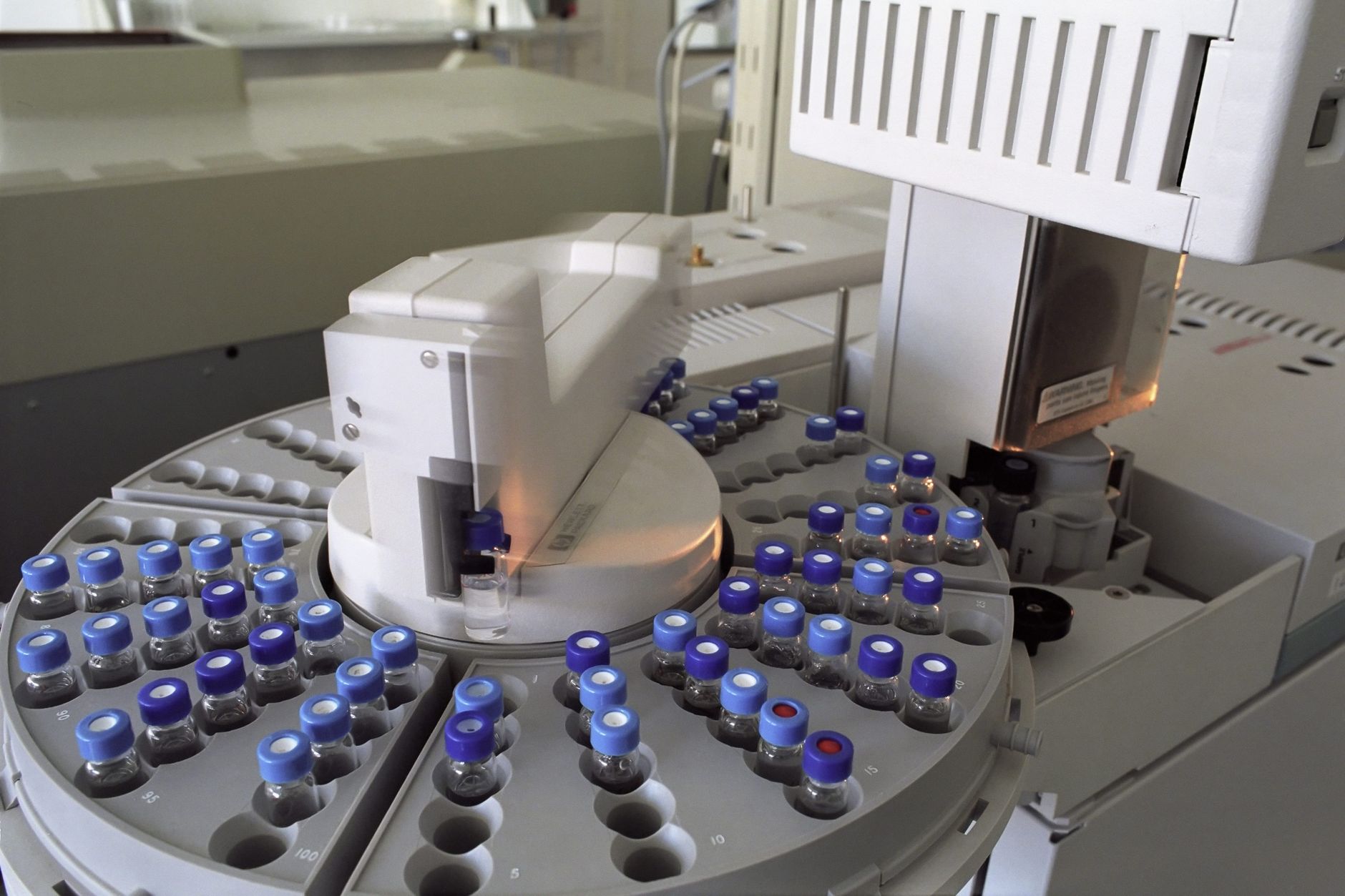
In 1972, chemists from F&M Scientific set up gas chromatographs at the Munich Olympics to test athletes for doping. The instruments worked. What those chemists understood, what their corporate descendants still exploit today, is that the machine itself matters less than what happens after it is installed. F&M became part of Hewlett-Packard, then spun out in 1999 as Agilent Technologies. Fifty years after Munich, Agilent operates on the same principle: the instrument is merely the entry fee. The economics begin once it is bolted to the floor.
The Instrument Is Just the Down Payment
Agilent’s financial architecture rests on a simple ratio that belies its complexity. Roughly one-third of revenue comes from selling chromatography and spectroscopy instruments, oxes that separate, identify, and measure chemical compounds. These machines cost about $100,000 apiece and sit in pharmaceutical quality-control labs, chemical plants, and environmental testing facilities for six to ten years. The remaining two-thirds of revenue arrives later, in the form of plastic columns that need monthly replacement, service contracts for recalibration, and technicians who arrive when FDA auditors have questions. Over the life of that $100,000 box, Agilent collects another $100,000, alf from physical consumables, half from service.
The margin asymmetry is stark. Equipment sales generate operating margins of 20 to 24 percent. Consumables and services yield 34 percent. This explains why Agilent’s earnings per share have grown at a 13 percent compound annual rate since 2015 despite organic revenue growth of only 5 percent. The business is slowly converting itself from a capital-goods manufacturer into a subscription service anchored to installed hardware. Every percentage point shift from equipment to recurring revenue expands the bottom line.
But this model depends on a specific tempo. Pharmaceutical customers, who account for a third of sales, do not buy chromatographs impulsively. They buy when building new production lines or when old machines fail. Once purchased, the instrument becomes embedded in validated workflows, a href=”https://bangid.com/industry/health-and-life-sciences/medical-product-development/” target=”_blank” rel=”noopener”>FDA drug approvals often specify the exact Agilent model by serial number. Replacing it requires new validation studies, regulatory submissions, and production downtime. The cost of failure, a product recall, a warning letter, brand damage, is unquantifiable. Customers therefore behave rationally: they stay put, paying for Agilent-branded columns and service contracts for decades.
This creates what amounts to a captive financing arrangement disguised as a vendor relationship. Agilent extends credit to itself in the form of discounted instrument placements, then collects interest through high-margin consumables. The equipment sale is merely the customer acquisition cost.
Four Thousand Chemists in Company Cars
Most analyses of Agilent focus on the instruments’ technical specifications or the regulatory moat. They miss the labor. Agilent employs 4,000 service technicians directly, 5 percent hold degrees in chemistry or biochemistry, a quarter hold master’s or PhDs. These are not repairmen with toolkits; they are scientists who understand the chromatographic separation of monoclonal antibodies. They conduct 2,500 on-site service calls daily.
This workforce represents a structural advantage that competitors cannot easily replicate. Building equivalent geographic density and technical competence requires five to ten years of recruitment, training, and capital expenditure. The economics of this density are subtle but decisive. Five technicians stationed in a given city can absorb 5 percent more service volume without additional headcount. The marginal cost of the next service call approaches zero while the revenue remains high-margin. Competitors, often smaller specialists or generalists like Thermo Fisher, cannot match this footprint without already possessing it. Local service shops lack the regulatory expertise; large conglomerates lack the specialized focus.
Customers value single-vendor relationships because FDA auditors prefer consolidated documentation. When an inspector asks why a batch failed a purity test, the pharmaceutical manager wants one throat to choke, not a patchwork of local contractors. Agilent’s technicians speak the language of compliance. They know that fixing the machine is secondary to documenting the fix in a 21 CFR Part 11-compliant format. This is not a skill set that can be hired quickly or trained cheaply.
The technician network also serves as an early warning system. When a pharma client begins scaling back service calls, Agilent knows a facility is slowing production before the quarterly earnings report says so. When a new biotech builds out a lab, the technicians notice the instrumentation gaps before the purchase orders arrive. This intelligence flow is invisible on balance sheets but central to revenue forecasting.
The FDA as Customer Retention Department
Regulatory compliance functions as the ultimate switching cost. In Agilent’s core markets, gas chromatography in applied markets, spectroscopy with 40 to 50 percent share, oligonucleotide synthesis, the company holds the number one or two position. These niches are too small to attract diversified giants and too specialized for new entrants to build credibility. Once an instrument is written into an FDA-approved drug application, it becomes part of the manufacturing record. Changing chromatograph models requires proving equivalence to regulators, a process that can take months and cost millions in delayed shipments.
This lock-in is not contractual but structural. The FDA does not care which brand a company uses, but it cares deeply about consistency. A drug approved using an Agilent 1260 Infinity II Liquid Chromatograph must continue using that model, r undergo extensive bridging studies. For a blockbuster drug generating billions annually, the risk of changing instruments to save a few thousand dollars on service contracts is economically absurd. The regulatory approval is a one-time, high-friction event that freezes procurement decisions for thirty to fifty years.
This dynamic allows Agilent to practice a peculiar form of pricing discipline. The company raises prices in the low single digits annually, eliberately below what the market might bear. Aggressive pricing would maximize short-term margins but risk breaking the long-term relationships that sustain the consumables model. By undercharging relative to value, Agilent ensures that customers never face enough financial pain to endure the regulatory hassle of switching. It is a restraint that sacrifices immediate margin for permanence. Competitors with less entrenched positions might capture share through discounting, but they cannot replicate the decades of validation that protect Agilent’s installed base.

When Sales Met Service
The transformation from equipment vendor to service company requires more than financial engineering; it demands organizational surgery. Historically, Agilent’s sales force sold instruments while service teams reacted to breakdowns. They operated on separate compensation structures, spoke different languages, and occasionally competed for the same customer budget. This friction mattered because the highest-margin revenue, service contracts, had to be sold at the moment of instrument purchase. Trying to attach a service contract three years after installation meant negotiating with a procurement department focused on cost-cutting rather than a capital budget focused on risk mitigation.
Over the past five years, Agilent has attempted to merge these cultures. Service attach rates, the percentage of installed instruments covered by active contracts, have risen from the high twenties to the low thirties. Waters Corporation, the primary competitor in pharmaceutical chromatography, enjoys attach rates in the fifties, suggesting significant runway remains. But capturing that runway requires sales representatives to forgo immediate instrument commissions in favor of bundled deals that pay out over years. It requires technicians to think like account managers.
This is where leadership functions as an economic variable, not a soft factor. The transition demands changing how roughly 2,000 sales and service personnel are measured, trained, and compensated. If the integration fails, if sales teams continue to optimize for quarterly instrument quotas while service teams wait for distress calls, Agilent remains dependent on lower-margin equipment sales. The high-margin recurring revenue stalls, and the compounding math breaks. The culture shift is the margin expansion.
Betting the Lab on RNA
While Agilent tightens its grip on the legacy chromatography business, it is simultaneously wagering $725 million on a different chemistry. In 2023, the company broke ground on a massive expansion in Frederick, Colorado, to manufacture oligonucleotides: he short strands of DNA and RNA used in messenger RNA vaccines and gene therapies. This is not an extension of the instrument business but a parallel venture: a contract development and manufacturing organization (CDMO) that sells synthesized molecules rather than machines that analyze them.
The strategic tension is palpable. The legacy business generates stable, recurring revenue from replacement columns and service calls. The CDMO business is capital-intensive, cyclical, and dependent on the commercial success of RNA-based therapeutics. When COVID-19 vaccine demand surged, Agilent’s 2018 investment in oligonucleotide capacity looked prescient. When that demand normalized, the capacity looked potentially stranded. RNA drug development moves in lurches, linical trial successes create sudden demand for synthesis capacity; failures leave expensive clean rooms idle.
This diversification defies the logic of focus that served Agilent well in chromatography. Manufacturing oligonucleotides requires different regulatory expertise (GMP for drugs rather than analytical instruments), different sales relationships (procurement officers at biotechs rather than lab managers), and different capital intensity (bioreactors rather than precision engineering). The $725 million expansion diverts cash that could have funded share buybacks or further service density in core markets. If RNA therapeutics fail to achieve sustained commercial adoption beyond vaccines, Agilent will own specialized capacity with limited alternative uses. If they succeed, Agilent captures a high-growth niche where it currently holds technological advantages. The bet is binary.
The Replacement Cycle Trap
Agilent’s model assumes stability in the replacement cycle. Instruments last six to ten years; consumables flow continuously in between. But this rhythm can be disrupted. During the COVID-19 pandemic, pharmaceutical companies accelerated capital expenditure, buying instruments in 2020 and 2021 that they would have otherwise purchased in 2023 or 2024. The resulting demand trough has persisted for years as customers deferred replacement cycles. A similar shock, harma consolidation reducing lab footprints, a recession compressing R&D budgets, or regulatory changes reducing quality-control testing requirements, ould compress equipment sales and delay the attached consumables revenue.
China exposes another fragility. The region represents 18 percent of Agilent’s sales, heavily dependent on government R&D grants that fluctuate with policy cycles. When Beijing reduces funding or redirects subsidies to domestic competitors, Agilent’s Chinese revenues fall without warning. Unlike in the United States or Europe, where switching costs bind customers to Agilent, Chinese customers often lack the same regulatory incentives to maintain Western equipment. They can migrate to local alternatives without FDA validation constraints. Agilent faces a choice: match margin-dilutive pricing to defend share, or retreat and cede ground that may be impossible to reclaim if funding resumes.
The Assumption Under Pressure
Beneath the technician networks, regulatory lock-ins, and consumables mathematics lies a single fragile assumption: that customers will continue to prioritize compliance over cost. Agilent’s entire margin structure depends on pharmaceutical and chemical companies viewing analytical instrumentation as a risk-mitigation expense rather than a commodity input. If industry consolidation produces larger buyers with more procurement leverage, or if generic drug manufacturers facing price pressure decide to extend instrument life beyond eight years, the replacement cycle lengthens. If customers begin demanding open-source consumables or third-party service to cut costs, the 34 percent margin on columns and contracts compresses.
The regulatory moat, while deep, is not infinite. The FDA could theoretically accept broader equivalency standards for analytical equipment, reducing the friction of switching. Biotech startups, less burdened by legacy validation, might adopt newer technologies from competitors without Agilent’s historical baggage. The 30-to-50-year customer relationships that justify low pricing discipline could erode if a generation of lab managers retires and procurement departments centralize.
Agilent compounds quietly, 5 percent revenue growth, 13 percent earnings growth, by extracting value from permanence. It sells $100,000 boxes that generate $100,000 in high-margin follow-on spending, protected by FDA paperwork and four thousand chemists with company cars. But permanence is a bet on human behavior, on the continued primacy of regulatory caution over budget pressure. The chromatographs installed at Munich in 1972 worked because the chemistry was precise and the operators were careful. Agilent’s shareholders are betting that tomorrow’s operators will remain equally careful, and equally willing to pay for the privilege.

The Frederick facility rises from the Colorado plains as a monument to conviction, r perhaps to anxiety. The $725 million investment represents more than seven percent of Agilent’s current market capitalization poured into stainless steel bioreactors and oligonucleotide synthesizers that serve a market still finding its commercial footing. Oligonucleotide manufacturing is not chromatography. While a gas chromatograph separates existing compounds, an oligonucleotide CDMO creates novel molecules, hort sequences of DNA or RNA that must be synthesized nucleotide by nucleotide through cycles of coupling, capping, and deprotection. The chemistry is unforgiving. A single failed coupling step in a twenty-mer sequence destroys the entire batch. The clean rooms must maintain ISO 7 standards. The wastewater contains organic solvents requiring environmental permits that take years to secure.
This is asset-heavy manufacturing in a company built on asset-light service density. The legacy chromatography business generates returns on invested capital exceeding twenty percent because the heavy assets sit on customer balance sheets, not Agilent’s. Agilent’s capital is employed in technician salaries and inventory, not in process development infrastructure. The CDMO model inverts this. Agilent now owns the stainless steel, pays the utility bills for the HVAC systems, and carries the depreciation on sequencing equipment that may become obsolete if CRISPR-based therapies or alternative delivery mechanisms reduce demand for synthetic RNA. The payback period depends entirely on the slope of the RNA therapeutic adoption curve: curve drawn by clinical trial success rates that remain uncertain outside of vaccines.
The competitive landscape compounds the risk. WuXi AppTec and Samsung Biologics have built CDMO empires on scale and geographic arbitrage. They can undercut pricing on commodity oligonucleotides while Agilent attempts to differentiate through quality and regulatory documentation: he same playbook used in instruments, but in manufacturing, scale often trumps precision. If Agilent cannot fill the Frederick facility to eighty percent utilization within three years of completion, the depreciation drag will compress corporate margins even as the legacy business remains healthy. Conversely, if RNA therapeutics for rare diseases achieve the commercial velocity that analysts project, Agilent will face the pleasant problem of capital rationing, hoosing between funding CDMO expansion or maintaining the technician network that protects the core franchise. The organizational attention required to manage a GMP manufacturing facility differs materially from managing a service organization. One requires chemical engineers and process validation specialists; the other demands field scientists with compliance expertise. The cultures do not naturally overlap, and the CEO’s calendar does not expand to accommodate both without trade-offs.
The Attach Rate Is a Cultural Problem
The service attach rate, currently climbing from the high twenties toward the low thirties, represents the most direct lever for margin expansion available to management. Every percentage point increase translates directly to 34 percent margin revenue replacing 20 percent margin revenue, requiring no additional capital expenditure. Waters Corporation, the primary competitor in pharmaceutical chromatography, maintains attach rates exceeding fifty percent. The gap suggests either that Agilent’s instruments are more reliable (requiring less service), which seems unlikely given comparable engineering, or that Agilent has historically failed to sell the relationship at the moment of instrument purchase.
The failure is organizational. Instrument sales representatives historically operated on quarterly quotas tied to hardware revenue. A $100,000 chromatograph sale delivered immediate commission. A service contract worth $50,000 over five years, sold simultaneously, might pay a fraction of that commission and defer most of it over the contract life. Rational salespeople optimized for the immediate payout, leaving service contracts for the post-installation team to pitch: team that encountered procurement departments already fixated on cost reduction rather than the risk mitigation mindset present during capital budget approvals.
Changing this requires redesigning compensation physics. Agilent has experimented with “attach bonuses”, accelerated payouts for bundled deals, and with dual reporting structures where service managers weigh in on sales representative reviews. But the friction persists. A sales representative in Boston, chasing a year-end quota, will discount the instrument heavily to close the deal, promising the customer that service contracts can be negotiated later “at a competitive rate.” The customer, having captured the capital savings, has reduced incentive to commit to a multi-year service agreement. The high-margin recurring revenue evaporates into the aftermarket, where local competitors undercut Agilent with third-party service using non-OEM parts.
The density economics of the technician network only materialize when Agilent captures the contract upfront. Once a customer chooses third-party service, switching back to Agilent requires not just price matching but organizational disruption, ew purchase orders, vendor onboarding procedures, and the implicit admission by the lab manager that the cheaper option failed. The attach rate is therefore a one-shot game played at the moment of instrument installation. Missing that window means waiting six to ten years for the next replacement cycle, or attempting to displace an entrenched third-party provider mid-cycle, which requires the customer to endure validation downtime. The cultural gap between sales and service teams is not a personnel problem; it is a leakage of lifetime value that compounds quarterly.
Waters provides the counterfactual. As a smaller company with tighter focus on pharmaceutical analytical markets, Waters never allowed the service organization to become a separate fiefdom. Their sales representatives are trained to view the instrument sale as the beginning of a subscription relationship, not the end of a transaction. Agilent’s broader portfolio, spanning applied markets, academic research, and now CDMO manufacturing, creates organizational complexity that obscures the service imperative. The path to Waters’ fifty percent attach rates runs through years of compensation realignment and likely some turnover among legacy sales talent who built careers on hardware quotas. The margin expansion story depends on this cultural renovation succeeding without alienating the very sales force that maintains market share against Thermo Fisher’s aggressive pricing.
The Chinese Grant Cycle
China’s eighteen percent of Agilent’s revenue is not merely a geographic diversification; it is a different economic species entirely. Unlike the American pharmaceutical market, where instrument purchases flow from multi-year capital budgets tied to drug pipelines, Chinese academic and government labs buy in surges dictated by Five-Year Plan funding allocations. When Beijing announces increased R&D expenditure, orders materialize within quarters. When fiscal austerity strikes or funds redirect toward domestic equipment manufacturers, Agilent’s Chinese bookings vanish with equal velocity.
This cyclicality would be manageable if the competitive dynamics mirrored the West. They do not. Chinese chromatography manufacturers, Techcomp, Beijing Ruili, others, receive direct subsidies that allow them to price instruments at negative gross margins, capturing market share to establish installed bases. They cannot match Agilent’s service network or consumables quality, but in a grant-funded environment, the purchase price dominates the total cost of ownership calculation. A Chinese lab director spending government money on a one-time capital allocation faces different incentives than an American quality control manager defending a thirty-year manufacturing record to the FDA. The former buys the cheapest instrument that meets specifications; the latter buys the instrument with the service history that auditors recognize.
Agilent’s response has been to maintain premium pricing in China, accepting volume declines during down cycles rather than engaging in margin-destroying competition. This preserves global pricing discipline but risks permanent share loss. Chinese domestic competitors are improving rapidly. A generation of Chinese PhD chemists, trained on Agilent and Waters instruments at American universities, now works for domestic manufacturers, closing the engineering gap. If Chinese policy mandates local equipment procurement for “sensitive” research areas, a trend already visible in genomics and semiconductor testing, Agilent’s eighteen percent revenue exposure could decline structurally, not just cyclically.
The grant dependency creates forecasting opacity. Agilent’s investors have learned to expect Chinese volatility, but the amplitude has increased. The recent downturn was not a gentle slope but a cliff, suggesting that Beijing’s funding priorities have shifted decisively toward domestic technology independence. Agilent cannot easily reduce its Chinese footprint, closing sales offices or service centers cedes the market entirely and would be nearly impossible to rebuild if funding resumes, but maintaining presence requires carrying fixed costs through revenue droughts. The technician density that enables margin expansion in Boston or Basel becomes a liability in Shanghai when utilization drops below the threshold where five technicians absorb excess volume. Instead, five technicians with nothing to service generate fixed costs without offsetting revenue.
The Compression Scenario
The bear case for Agilent is not that any single tension resolves unfavorably, but that they resolve simultaneously, compressing the model’s operating leverage from multiple directions. Consider a scenario unfolding over eighteen months: RNA therapeutic clinical trials suffer high-profile failures, reducing demand for oligonucleotide synthesis just as the Frederick facility ramps to full operation. The stranded capital charges, depreciation on underutilized bioreactors, weigh on corporate margins precisely as Chinese grant funding dries up, forcing Agilent to choose between maintaining technician headcount in Shanghai (preserving long-term optionality) or cutting costs to protect earnings per share. American pharmaceutical customers, facing their own patent cliffs and pricing pressure from Medicare negotiation, extend instrument replacement cycles from seven years to ten, deferring the high-margin consumables refresh that normally follows equipment turnover. Third-party service competitors, having captured install-base share during the COVID-era supply shortages, undercut Agilent’s service renewal rates by forty percent, exploiting the fact that FDA audit standards for generic drug manufacturers are less stringent than for innovator products.
In this compression, Agilent’s 13 percent EPS growth history proves non-recurring. The service attach rate stalls because sales teams, facing hardware revenue pressure, discount instruments aggressively to make quotas, sacrificing the bundled service contracts that would have stabilized the quarter. The CDMO business, intended to diversify revenue, becomes a cash incinerator requiring further investment to pivot toward non-RNA applications. The China exposure, once viewed as cyclical, reveals itself as structural decline.
The model’s resilience depends on the assumption that these shocks do not correlate. But they might. A global recession simultaneously reduces pharma R&D budgets (deferring replacements), Chinese government spending (reducing Asia-Pacific sales), and RNA investment enthusiasm (stranding CDMO capacity). Agilent’s balance sheet is conservative, net debt to EBITDA remains below two times, but operating leverage cuts both ways. The 34 percent consumables margins amplify on the downside if volume declines. Technicians cannot be furloughed and rehired like factory workers; their chemistry expertise represents sunk human capital that walks out the door during layoffs.
The Quiet Conservation of Capital
Against these fragilities, Agilent’s management practices a conservation that borders on asceticism. The company does not attempt to buy growth through reckless acquisition. Since the Keysight spin in 2015, capital deployment has prioritized share repurchases and the gradual expansion of the service network over transformative M&A. This discipline reflects an understanding that the core chromatography franchise is difficult to expand through acquisition, here are few independent chromatography companies left to buy, and rolling up small service shops would dilute the technical standards that justify premium pricing.
The pricing discipline, those low single-digit annual increases, similarly reflects long-term thinking. Agilent’s executives understand that they are extracting rent from a regulatory externality. The FDA’s validation requirements create the switching costs; Agilent’s pricing preserves them. If the company were to raise prices five percent annually instead of two, the cumulative cost might eventually exceed the friction of revalidating with a competitor, particularly for generic drug manufacturers with thinner margins than Big Pharma. By keeping increases below the threshold of pain, Agilent ensures that customers never reach the indifference point where switching becomes rational.
This restraint is harder than it appears. Shareholders demand growth. The easy growth lies in pricing power. Resisting that temptation requires a governance structure insulated from short-term pressure: board composition weighted toward industrial operators rather than financial engineers. The absence of leveraged recapitalizations or massive dividend hikes suggests that Agilent’s leadership views the business as a compounding engine requiring reinvestment rather than a cash cow to be milked. The $725 million CDMO bet, while risky, is at least a bet on chemistry and manufacturing, djacent enough to exploit existing regulatory expertise, distinct enough to require genuine operational skill.
The Thirty-Year Technician
The true duration of Agilent’s competitive advantage is measured not in patent lives but in career spans. A technician hired today with a fresh PhD in analytical chemistry will spend thirty years servicing instruments installed this decade. That technician’s knowledge, of not just the machinery but the specific SOPs of the pharmaceutical clients they serve, constitutes an irreplaceable asset. Competitors can buy the same mass spectrometers. They cannot buy the accumulated memory of how Client X’s lab manager prefers validation documentation formatted, or why Client Y’s HPLC column fails every March due to humidity fluctuations.
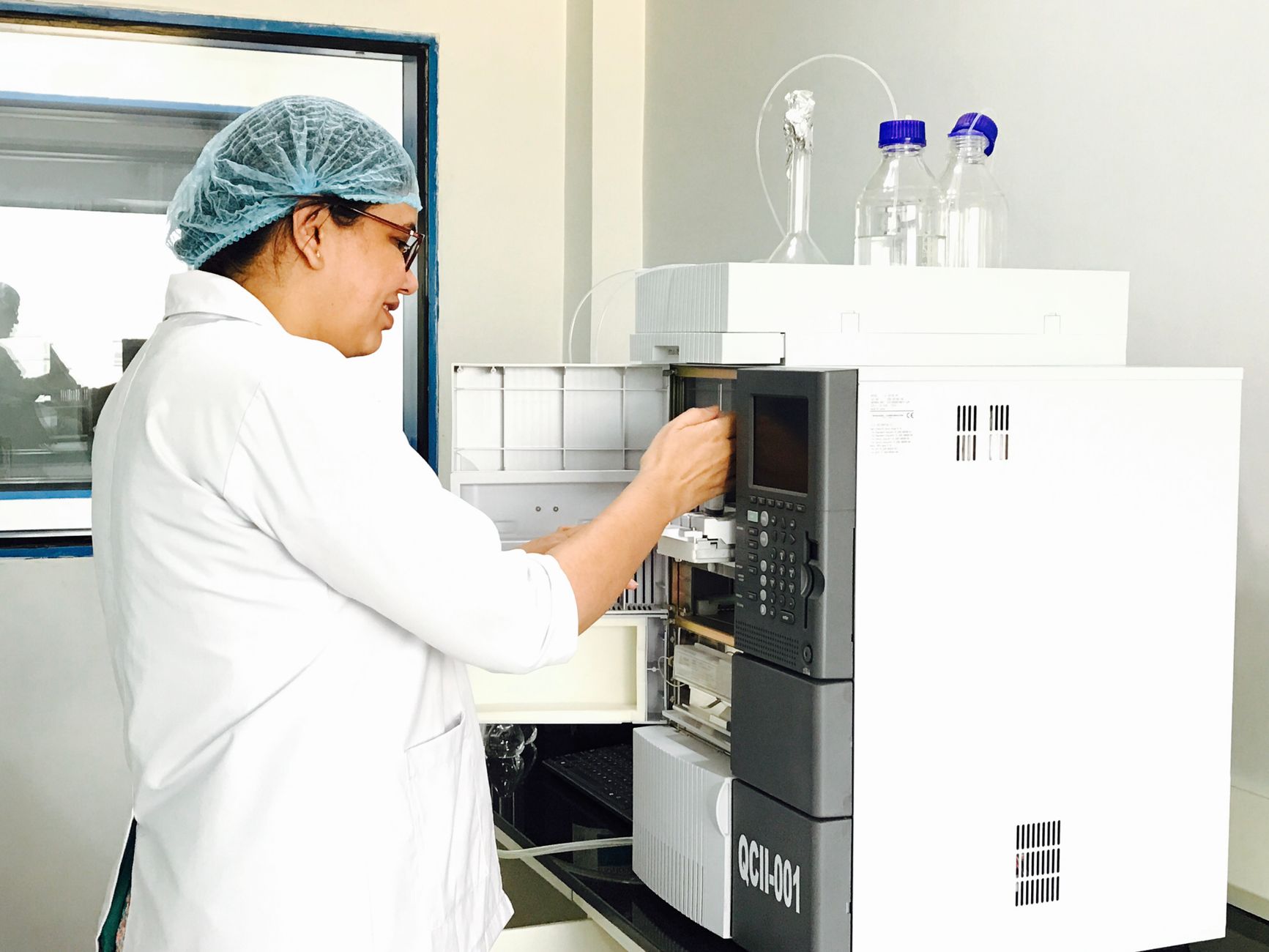
This human capital advantage is managed through unusual employment practices. Agilent technicians are direct employees, not contractors, with benefits and career ladders that encourage retention. The company can afford this premium because the service revenue per technician is high, roughly $400,000 annually for senior field service engineers, and the margins accommodate generous compensation. Third-party service organizations, competing on price, employ gig workers or recent graduates who turnover annually. They cannot replicate the relationships.
The risk is demographic. The generation of chemists who built Agilent’s service culture in the 1990s and 2000s is retiring. Replacing them requires attracting young scientists to field service careers that, while lucrative, lack the prestige of research positions. Agilent has responded by positioning service roles as regulatory consulting, technicians as compliance experts rather than repair personnel, but the talent pipeline remains uncertain. If the company cannot maintain the 75 percent chemistry-degree threshold for new hires, the technical moat erodes gradually, then suddenly. A technician who merely replaces parts is a commodity; a technician who can explain to an FDA inspector why a chromatographic peak shift does not indicate product adulteration is a moat.
The density economics depend on this quality. Five generic technicians in a city provide five service trucks. Five PhD-level chemists provide a knowledge network that can cover for each other’s expertise gaps while maintaining the trust relationships that secure contract renewals. The 5 percent volume absorption efficiency only materializes when the technicians are interchangeable at high capability levels. Dilute the talent pool, and the fixed costs of maintaining geographic coverage swamp the marginal revenue of additional calls.
Back to the Bench
Ultimately, Agilent’s value rests on a wager about the future of quality control. As pharmaceutical manufacturing becomes more complex, cell therapies, gene editing, personalized medicine, the analytical burden increases. Each new modality requires new separation techniques, new spectroscopic methods, new validation protocols. Agilent bets that complexity favors incumbents. A new entrant might build a better mass spectrometer, but they cannot build thirty years of regulatory precedent. They cannot replicate the service network that ensures compliance during the FDA pre-approval inspection that determines whether a billion-dollar drug launches on schedule.
The CDMO expansion represents a hedge against the possibility that analytical instrumentation becomes commoditized, hat cloud-based AI diagnostics or outsourced testing reduces the need for in-house chromatography. If the lab of the future requires fewer Agilent boxes, Agilent hopes to sell the molecules those labs produce instead. It is a diversification born of anxiety about the durability of the core model, even as management publicly expresses confidence in the fifty-year customer relationships.
The tension between these postures, confidence in the legacy moat, fear of its obsolescence, defines the company’s strategic position. Agilent is not a growth company pretending to be a value stock, nor a value stock pretending to have growth optionality. It is a toll road operator maintaining the pavement while building a parallel railway, unsure whether the future belongs to cars or trains, certain only that the chemistry must be precise and the documentation must be perfect. The shareholders who have enjoyed the 13 percent annual returns are betting that the road remains trafficked, the tolls remain collectible, and the railway does not derail before reaching its destination.