Align Technology: The $150 Teeth Economics

The Margins in the Mold
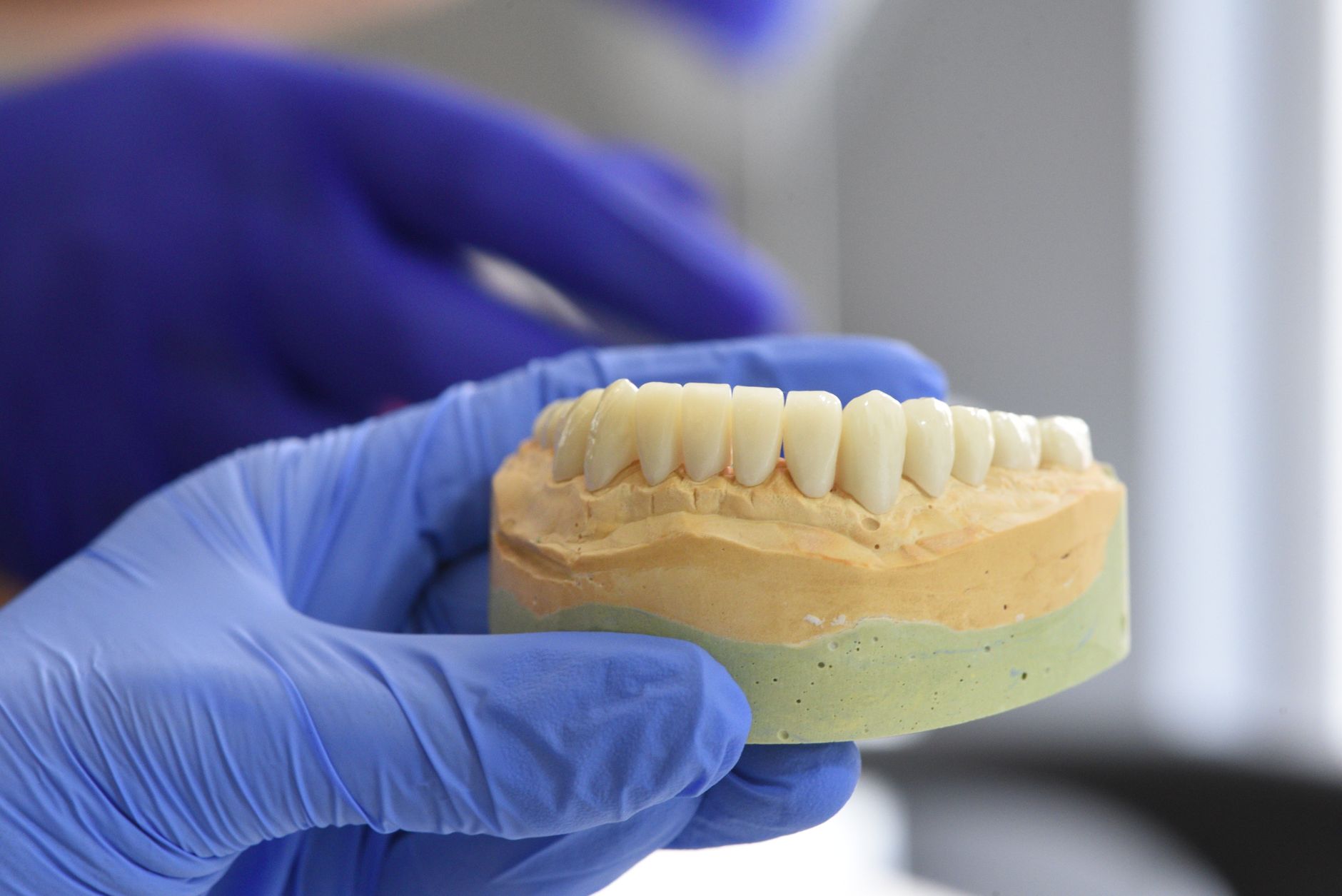
In a manufacturing facility near Juarez, Mexico, automated presses shape transparent plastic into dental aligners at a unit cost that approaches three dollars per tray. Each tray represents roughly one week of orthodontic correction; a complete treatment requires forty to fifty trays. The aggregate manufacturing cost to Align Technology for moving a patient’s teeth from misalignment to order, then, settles somewhere near one hundred and fifty dollars. The company invoices doctors between twelve hundred and two thousand dollars for that same case. The patient, standing at the reception desk, pays five thousand five hundred to six thousand dollars, plus or minus geography and vanity. Somewhere between the desert factory and the suburban dental suite, value multiplies by a factor of forty, yet Align captures only a slice of the final price. This is the central economic puzzle of Invisalign: it operates as one of the most efficient manufacturers in medical devices, yet its fortunes depend entirely on its refusal to behave like one.
The business is built on a vertical integration that would make an industrialist weep with envy. Align designs the treatment plans through proprietary CAD software, manufactures the physical product in owned facilities, and distributes through a channel it does not control but desperately needs. The Juarez operation represents two decades of automation refinement, tariff arbitrage, and process optimization that competitors struggle to replicate. While rivals reportedly manufacture aligners at eight to twelve dollars per tray, Align’s three-dollar cost structure provides a fourfold advantage that compounds across two to three million annual cases. This efficiency does not translate to lower consumer prices. Instead, it funds a complex distribution strategy that funnels the surplus to independent orthodontists and general practitioners, effectively buying their loyalty through margin rather than marketing.
The arrangement works because doctors, not patients, constitute Align’s true customer base. Invisalign reduces the labor intensity of orthodontic practice. Traditional braces require monthly adjustments, chair time, and emergency visits for broken wires. Clear aligners require fewer office visits and allow higher case throughput. For the doctor, this translates to forty to fifty percent EBITDA margins on Invisalign cases, a figure that rivals or exceeds traditional orthodontics while demanding less time. Align has constructed a business where it captures the manufacturing surplus, the doctor captures the professional premium, and the patient pays the sticker price. Everyone wins, provided no one asks why the factory gate price and the retail price diverge by an order of magnitude.
The Golden Goose Protocol
This equilibrium depends on a structural constraint that shapes every strategic decision Align makes: the doctor is simultaneously the distribution channel, the pricing intermediary, and the competitive moat. Align does not own the patient relationship. It cannot. To sell directly to consumers would be to amputate the hand that feeds. Doctors control access to prescription orthodontic treatment; they write the plans, monitor the progress, and collect the fees. If Align were to move downstream, acquiring dental practices, launching a direct-to-consumer brand, or offering aligners at prices that undercut doctor markups, it would trigger immediate channel defection. Competitors like Spark, Candid, or the remnants of SmileDirectClub wait eagerly for such a misstep.
The tension is existential. Align’s growth relies on convincing more doctors to start more cases, yet its manufacturing efficiency creates constant temptation to bypass the intermediary. Every dollar of margin captured by the doctor represents consumer surplus that Align could theoretically extract. The company navigates this by playing the role of silent partner, providing the infrastructure while allowing doctors to appear as the primary value creators. This requires extraordinary discipline. When direct-to-consumer competitors emerged promising aligners at a third of the cost, Align did not match their pricing; it litigated, lobbied, and doubled down on its professional channel. The message was clear: Align would defend the doctor’s margin even at the cost of market share, because without the doctor, there is no market.
The fragility of this arrangement grows apparent when one considers the consolidation of dental practices. Currently, corporate Dental Service Organizations control twenty to twenty-five percent of the United States market, but that percentage climbs steadily. DSOs negotiate volume discounts, standardize purchasing decisions, and employ doctors as wage labor rather than independent entrepreneurs. As these organizations scale, they wield purchasing power that threatens the twelve-hundred-to-two-thousand-dollar per-case price point Align has maintained. The independent practitioner, grateful for the margin boost Invisalign provides, accepts the premium pricing. The corporate purchasing manager, comparing line items across a thousand locations, sees only plastic trays that could be sourced cheaper. Align’s entire pricing architecture assumes the continued fragmentation of dental practice ownership: bet on professional independence that looks increasingly nostalgic.
Scanning for Lock-in
Most analyses of Align’s competitive position focus on the patent portfolio, the four hundred-plus claims on computer-aided tooth movement that provided legal monopoly until 2017. These patents mattered, and their expiration explains the market share erosion from ninety-five percent to roughly eighty percent among clear aligners. But the underappreciated structural advantage lies not in legal protection but in physical hardware: the iTero intraoral scanner.
Align acquired Cadent in 2011 and transformed its scanning technology into the iTero, a thirty-to-forty-thousand-dollar device that sits in dental offices and connects directly to Align’s treatment planning systems. The scanner reduces the time from patient impression to treatment plan from weeks to forty-eight hours. It eliminates the mess and inaccuracy of physical molds. It also creates switching costs that patents cannot match.
Once a doctor purchases an iTero, they have made a capital commitment to Align’s workflow. The scanner generates digital models that feed seamlessly into Align’s proprietary software; exporting that data to a competitor requires friction, conversion, and retraining. More importantly, the scanner generates data. Every scan adds to Align’s repository of dental arches, bite patterns, and treatment outcomes. This dataset trains the machine learning models that improve predictability of tooth movement, allowing Align to offer more complex cases and longer treatment plans, xactly the high-value procedures that justify the premium pricing.
Competitors face a brutal choice. They can build their own scanners, requiring capital expenditure, regulatory approval, and years of development. Or they can integrate with third-party scanners, losing the data stream and the workflow seamlessness that doctors have come to expect. Align’s manufacturing cost advantage is replicable with enough capital and time; its data advantage, fed by thousands of iTero units in daily use, widens with every case started. The scanner functions as a silo, storing not just patient information but doctor loyalty.

The Patent Wall and Its Cracks
If the iTero represents the soft power of Align’s strategy, the litigation department represents the hard power. The company’s leadership has consistently treated patent enforcement not as a defensive legal necessity but as an active competitive tool. When competitors emerged, Envista’s Ormco division, SmileDirectClub, various clear aligner startups, Align responded with lawsuits that functioned as a tax on competition.
The strategy carries economic logic beyond mere protection of intellectual property. Litigation raises the cost of market entry, forcing competitors to spend on legal defense rather than manufacturing scale or salesforce expansion. It creates uncertainty that makes doctors hesitant to switch to newer platforms; no practitioner wants to adopt a technology that might later be enjoined by court order. The 2009 settlement with Ormco, which reportedly involved Align taking a ten percent stake, demonstrated that these disputes could yield strategic assets as well as delay.
Yet this approach also represents a cultural and governance choice that introduces fragility. Aggressive patent enforcement invites regulatory scrutiny. The Federal Trade Commission and Department of Justice have shown increasing interest in whether patent thickets function as anti-competitive moats rather than legitimate innovation protection. A significant loss in court, particularly a ruling that invalidates broad swathes of the remaining patent portfolio, would not merely open the market to competitors; it would signal that Align’s legal threats lack teeth, potentially accelerating doctor migration to lower-cost alternatives like Spark or Candid.
Moreover, the litigation strategy risks reputational damage among the very doctors Align depends upon. Orthodontists, trained in professional collegiality, may view constant lawsuit barrages as unsavory, particularly when directed at consumer-friendly competitors promising lower prices. Align must calibrate its aggression precisely: hostile enough to slow competitors, restrained enough to avoid appearing predatory. This balance requires leadership judgment that treats legal strategy as a variable no less important than manufacturing automation.
When the Middleman Consolidates
The most fragile assumption underlying Align’s model is the stability of its distribution channel. The business plan assumes that independent doctors will remain the primary path to patients, that they will continue to accept Align’s pricing without demanding wholesale discounts, and that they will resist the temptation to switch to lower-cost aligners for simple cases. Each of these assumptions faces erosion.
The rise of Dental Service Organizations represents the most concrete threat. As private equity consolidates dental practices into chains of hundreds or thousands of locations, the purchasing dynamic shifts from relationship-based to procurement-based. The DSO chief operating officer does not care about the iTero’s workflow elegance or Align’s continuing education programs; she cares about per-unit cost across the enterprise. When DSOs reach critical mass in major markets, they possess the volume to demand price concessions that Align has historically refused. A twenty or thirty percent discount to a DSO purchasing a hundred thousand cases annually would crush Align’s EBITDA margins, which hover between twenty-five and thirty percent.
Simultaneously, the blurring boundary between simple and complex cases threatens the case-mix that sustains pricing. Align’s economics favor longer treatments, forty to fifty trays, because the marginal cost of additional trays is negligible while the per-case price remains fixed. Competitors offering shorter, cheaper treatments for minor cosmetic adjustments appeal to general practitioners who handle simpler cases. If market growth shifts toward these limited treatments, Align faces pressure to reduce per-case fees or lose volume to specialized competitors.
The direct-to-consumer segment, despite Align’s legal efforts, continues to nibble at the edges. While pure DTC models struggle with clinical oversight and regulatory compliance, they have established that consumers will accept lower prices for reduced supervision. This sets a ceiling on what doctors can charge for Invisalign, indirectly pressuring Align’s wholesale pricing. The company cannot match these prices without destroying doctor margins; it cannot ignore them without ceding market share at the bottom of the pyramid.
The Geography of Growth
Align’s response to these pressures has been to look abroad, particularly to China, where an estimated ten to thirty million potential annual cases await. International expansion offers growth vectors that offset domestic compression, but it introduces its own tension between capital deployment and margin preservation.
Entering China, Brazil, or Eastern Europe requires building treatment planning centers, sales infrastructure, and manufacturing capacity without the forty-year brand recognition Align enjoys in the United States. It demands upfront capital expenditure that dilutes the return on invested capital, at least temporarily. The Juarez model, highly automated, tariff-optimized, scaled to massive volume, may not transplant cleanly to jurisdictions with different labor costs, regulatory regimes, or intellectual property enforcement.
Moreover, international markets often feature entrenched local competitors. AngelAlign dominates the Chinese market with pricing and distribution strategies tuned to local conditions. Competing against these incumbents may require Align to sacrifice the premium pricing that funds its margin structure. The company faces a choice: maintain pricing discipline and grow slowly, or discount aggressively to capture share and accept lower profitability per case. The latter option risks importing price competition back to domestic markets, where DSOs would surely demand parity with international pricing.
The Automation Ceiling
Beneath all these strategic questions lies a technical one: how durable is the manufacturing advantage? Align’s three-dollar-per-tray cost structure resulted from two decades of iteration, automation intellectual property, and the specific economics of the Juarez location. Competitors, watching Align’s margins, have incentives to invest in similar automation. If Spark or another rival achieves cost parity, reducing their unit economics from twelve dollars to five or six, the competitive dynamic shifts. Align could no longer subsidize doctor margins through manufacturing efficiency alone; it would face direct price competition while still constrained by its promise to protect doctor profitability.
The Juarez facility also concentrates geographic risk. Changes in trade policy, tariff regimes, or border logistics could disrupt the cost structure that underpins the entire business model. Align has optimized for a specific regulatory environment; that optimization becomes vulnerability if the environment changes.
Yet even if competitors match the automation, they must still replicate the data network, the doctor relationships, and the treatment planning infrastructure. Manufacturing is necessary but not sufficient. Align’s true moat lies in the integration of cheap plastic, proprietary software, and locked-in distribution: combination that looks less like a medical device company and more like a vertically integrated platform that happens to make physical products.
The Efficiency Paradox
Align Technology operates in a state of suspended economic contradiction. It possesses the manufacturing capabilities of a commodity producer, the legal department of a pharmaceutical company, and the channel dependencies of a luxury goods distributor. It must remain efficient enough to fund doctor margins, yet premium enough to avoid commodity competition. It must expand internationally without cannibalizing domestic pricing, and defend patents without inviting regulatory backlash.
The business will continue to generate substantial cash flows as long as the orthodontic profession remains fragmented and as long as the iTero scanner maintains its position in dental offices. But the structural tensions, between manufacturer and brand, between doctor ally and potential competitor, between patent protection and open competition, do not resolve easily. Align’s future depends not on further automation of plastic pressing, but on the continued willingness of intermediaries to capture the surplus between factory cost and consumer price, and on Align’s ability to convince them that this arrangement remains their best alternative. In a world of consolidating practices, aggressive competitors, and price-transparent consumers, that conviction grows harder to maintain with each passing year.
The General Practitioner’s Dilemma
When Align began expanding beyond orthodontists into the general practitioner market around 2015, it encountered a channel conflict that exposed the fragility of its pricing architecture. General dentists, who comprise roughly one hundred and sixty thousand practitioners in the United States compared to eleven thousand orthodontists, represent an apparently obvious growth vector. They handle simpler cases: minor crowding, small gaps, cosmetic adjustments that require twenty trays rather than fifty. Yet this simplicity creates economic paradoxes that threaten the core business.
Orthodontists accept Align’s premium pricing because they can deploy the technology across complex cases that command high fees. A doctor treating severe malocclusion with fifty trays generates substantial revenue per chair hour, justifying the twelve-hundred-dollar lab fee. General practitioners, handling simpler cases in a market where cosmetic dentistry faces downward price pressure, balk at the same wholesale cost for half the trays. They see the mathematics clearly: if the patient pays three thousand dollars for a limited treatment and the dentist pays Align two thousand, the margin compresses to levels that resemble break-even service work rather than profitable medical care.
Align’s response has been to create product tiers, Express packages, Lite systems, limited treatment protocols, that nominally reduce the per-case fee while maintaining the essential margin structure. But these tiers cannibalize the orthodontist channel. When a patient with moderate crowding can receive treatment from a general dentist using Invisalign Lite for four thousand dollars instead of comprehensive orthodontics for six thousand, the orthodontist loses the case or must match the lower price point, sacrificing the premium that funds their practice economics.
This dynamic creates a hidden tax on growth. Every general practitioner trained to use Invisalign represents a potential source of channel conflict. The orthodontist who built Align’s brand in the early years, who attended the continuing education courses, purchased the iTero scanners, and converted their practice to clear aligner methodology, watches as the technology filters down to competitors who lack their specialized training and who compete primarily on price. Align must navigate this without alienating either constituency, a balancing act that grows more precarious as the general dentist channel expands to represent forty percent of case starts.
The company’s strategy relies on case complexity as the differentiating variable. Align theoretically restricts certain prescription capabilities to orthodontists, reserving the software’s full biomechanical range for specialists while limiting general practitioners to simpler movements. In practice, these restrictions prove permeable. Software updates gradually democratize capability; general practitioners learn to stretch the limitations of “simple” cases; patients demand comprehensive treatment from the convenience of their neighborhood dentist rather than traveling to orthodontic specialists.
If Align restricts general practitioners too aggressively, it loses the volume growth that justifies its manufacturing scale and satisfies investor expectations for twenty-percent annual case expansion. If it allows unrestricted general practitioner access, it triggers a race to the bottom in pricing that destroys the orthodontist channel’s profitability. The company currently threads this needle through opaque credentialing requirements and subtle software limitations, but these administrative barriers represent rearguard actions rather than structural solutions. As general practitioners gain experience with clear aligner therapy, experience built on Align’s own training investments, they naturally demand greater capability and lower pricing, pressures that converge on the company’s margin structure from both directions.
The Data Silo in Action
To understand why competitors struggle to replicate Align’s position despite the patent expirations, one must examine the specific mechanics of the ClinCheck software and its symbiosis with the iTero scanner. When a doctor takes a digital impression using iTero, the scanner captures not merely the static geometry of the dental arch but the dynamic occlusion: he way upper and lower teeth interact during biting and chewing. This data transmits to Align’s servers in Costa Rica, Germany, or China, where dental technicians manipulate the digital models using proprietary algorithms that predict tooth movement.
The crucial element is the feedback loop. Every completed case generates outcome data: did the tooth move as predicted? Did the patient require refinements, dditional trays beyond the original plan? Did the roots resorb or the bone remodel unexpectedly? Align has accumulated over twenty million of these treatment records, creating a dataset that no competitor can approximate. When a technician in San Jose, Costa Rica, plans a new case, the software suggests staging protocols based on statistically similar dental arches from previous patients. This predictive capability reduces the need for refinements, which doctors hate because they require additional impressions, additional waiting, and additional chair time with frustrated patients.
Competitors like Spark or SureSmile lack this historical density. Their treatment planning operates more like engineering, calculating forces and vectors from first principles, while Align’s system operates like experienced clinical judgment, pattern-matching against millions of prior outcomes. The difference manifests in refinement rates. Early clear aligner systems required additional trays in thirty to forty percent of cases; Align’s current protocols, fed by machine learning models trained on its proprietary dataset, have reduced this significantly. For the doctor, this reliability translates directly to practice efficiency and patient satisfaction.
The data advantage also creates network effects that lock in institutional users. Large orthodontic groups and DSOs generate vast quantities of case data that continuously improve their specific treatment protocols. Switching to a competitor would mean abandoning not just the software interface but the accumulated institutional intelligence embedded in years of Align case histories. A practice that has treated ten thousand cases with Invisalign possesses a digital archive that would require years to rebuild with an alternative system.

This moat remains invisible to patients and poorly understood by financial analysts who focus on patent cliffs. It explains why Align’s market share has stabilized near eighty percent despite the 2017 patent expirations, rather than collapsing as generic competition emerged. Competitors can copy the plastic; they cannot copy the twenty years of clinical outcomes that inform the treatment planning.
The SmileDirectClub War and Regulatory Arbitrage
The most aggressive test of Align’s channel protection strategy came with SmileDirectClub, the Nashville-based startup that attempted to bypass doctors entirely through remote teledentistry. Founded in 2014, SmileDirectClub offered clear aligners directly to consumers at eighteen hundred to twenty-four hundred dollars, roughly one-third the cost of Invisalign, using a model where dentists reviewed digital impressions remotely without physical examination of patients.
Align’s response revealed the economic centrality of the doctor channel. Rather than competing on price or launching a competing DTC product, Align funded and supported legal challenges to SmileDirectClub’s business model, alleging that unsupervised tooth movement constituted the unlicensed practice of dentistry. The company also enforced patent claims against SmileDirectClub’s manufacturing processes, initiating litigation that consumed millions in legal fees and generated headlines about Align’s aggressive protectionism.
The economic logic was cold and precise. If SmileDirectClub succeeded in conditioning consumers to expect sub-two-thousand-dollar orthodontic treatment, Align’s twelve-hundred-dollar lab fee to doctors would become untenable. Doctors would face patient demands to match DTC pricing, forcing Align to reduce wholesale prices or lose volume. By attacking SmileDirectClub’s regulatory legitimacy rather than its economics, Align sought to preserve the professional supervision requirement that justified the existing price structure.
The strategy carried substantial risk. Courts might rule that Align’s patents were overly broad, undermining the entire IP defense strategy. Regulatory bodies might view Align’s lobbying as anti-competitive restraint of trade. Moreover, the litigation generated public relations damage; Align appeared as a legacy incumbent attempting to crush an innovative competitor offering affordable care to underserved patients.
When SmileDirectClub filed for bankruptcy in 2023 after years of losses and regulatory setbacks, Align achieved a pyrrhic victory. The immediate threat dissipated, but the litigation revealed Align’s vulnerability to price disruption. The company had spent enormous resources defending a distribution model rather than improving its value proposition. More dangerously, the case highlighted to regulators and competitors exactly where Align’s moat was thinnest: at the intersection of professional licensing and consumer access.
The aftermath suggests that Align cannot survive another decade relying on legal protection of the doctor channel. The DTC genie, once glimpsed by consumers, cannot be fully returned to the bottle. Patients who investigated SmileDirectClub and similar services now know that aligners cost pennies to manufacture and that much of the five-thousand-dollar fee funds distribution markups rather than clinical complexity. This knowledge creates downward pressure on pricing even within the protected professional channel, as patients negotiate with doctors or defer treatment entirely.
The China Calculus
Align’s international expansion, particularly in China, exposes the limitations of its domestic model when transplanted to different regulatory and competitive environments. The Chinese clear aligner market, potentially representing ten to thirty million annual cases, operates under entirely different dynamics than the United States. AngelAlign, the domestic market leader, has built its business not through doctor education and premium pricing but through aggressive discounting, relationships with state-owned hospital systems, and products tailored to Asian dental anatomy.
In China, the concept of the independent private orthodontist as Align’s primary customer barely exists. Most orthodontic treatment occurs in hospital dentistry departments or large dental chains where purchasing decisions follow bureaucratic procurement processes rather than individual doctor preference. The iTero scanner, which locks in American doctors through capital investment and workflow integration, proves less effective in a market where doctors move between institutions and equipment remains hospital property.
Align’s cost advantage from Juarez also dissipates in China, where local manufacturing benefits from government subsidies, lower regulatory compliance costs, and proximity to Asian supply chains for the raw PETG plastic used in aligner fabrication. AngelAlign reportedly manufactures at costs comparable to or below Align’s Mexican operations while selling to distributors at prices significantly undercutting Invisalign’s Chinese pricing.
The bear case for Align’s international expansion suggests that the company may be investing heavily, in manufacturing facilities in Ziyang, treatment planning centers, and regulatory compliance, only to capture a premium-priced niche while local competitors dominate volume. If Align maintains its pricing discipline, it risks irrelevance in the world’s largest potential market; if it matches local pricing, it imports the margin compression it successfully avoided in the United States.
Moreover, the Chinese market reveals the limits of Align’s data moat. Chinese dental anatomy, treatment preferences, and clinical outcomes differ systematically from Western populations. The twenty million cases in Align’s database provide limited predictive value for Chinese patients, forcing Align to rebuild its machine learning models from scratch in a market where AngelAlign already possesses millions of local cases. The flywheel that generates competitive advantage in San Diego operates less efficiently in Shanghai.
Manufacturing as Theology
To comprehend the durability of Align’s cost advantage, one must look past the headline three-dollar-per-tray figure to the specific manufacturing theology that produced it. The Juarez facility operates not merely as a factory but as a continuous optimization engine where thermoforming parameters, resin selection, and automated trimming algorithms receive constant refinement.
The process begins with medical-grade PETG plastic pellets sourced from specialized chemical suppliers. The material arrives with specific molecular weight distributions and clarity specifications that Align has optimized over two decades. Competitors using generic dental plastics or newer entrants experimenting with biodegradable alternatives face learning curves in thermoforming behavior, ow the material responds to heat, how it retains shape under stress, how it degrades in the oral environment over two-week wear cycles.
Align’s thermoforming presses operate with temperature control tolerances and pressure curves developed through thousands of experimental runs. The aligner must fit precisely over the tooth while applying calibrated force, oo much force causes root damage and patient pain; too little fails to achieve movement. Achieving this calibration requires not just the CAD design but the physical molding process that translates digital plans into physical objects. Align’s competitors report higher defect rates and greater variability in fit, requiring more remakes and refinements that destroy their already inferior margins.
The automation extends to trimming and polishing. Early aligners required manual finishing; Align’s current systems use robotic trimming guided by optical scanning of each individual aligner, removing excess material with precision that reduces sharp edges and improves patient comfort. This automation required capital investment that only made sense at volumes exceeding one million cases annually. A competitor entering today would need to invest hundreds of millions in equivalent automation before achieving their first profitable case, creating a chicken-and-egg problem that protects Align’s position even without patent protection.
Yet this manufacturing advantage carries geographic concentration risk. The Juarez facility represents a single point of failure for North American supply. Political instability, trade disputes, or infrastructure disruptions could halt production of millions of aligners with limited alternative sourcing. Align has begun building redundancy with facilities in China and elsewhere, but these newer plants lack the twenty-year optimization of Juarez, operating at higher costs while serving markets that demand lower prices.
Leadership as Economic Variable
The transformation of Align from a patent-protected monopoly to a manufacturing-and-data company required specific leadership decisions that function as economic variables in their own right. Under Thomas Prescott, who served as CEO from 2002 to 2015, Align pursued vertical integration aggressively: acquiring Cadent for the iTero, building the Juarez facility, establishing the Costa Rica treatment planning operation. These decisions sacrificed short-term earnings for capital-intensive infrastructure that competitors could not easily replicate.
Current leadership faces different choices. The easy growth of the patent-protected era has ended; each percentage point of market share now requires competitive defense rather than natural expansion. The leadership must decide whether to deploy cash flows into international manufacturing capacity, a low-return investment in the short term, or into share buybacks and margin maintenance that please investors but leave the company exposed to competitors in emerging markets.
The cultural emphasis on doctor relationships also stems from leadership choices. Align could have pursued a razor-and-blade model, selling scanners at cost to maximize market penetration, or it could have launched its own retail clinics. Instead, management has consistently reinforced the message that Align serves doctors, not patients. This positioning requires organizational discipline: sales teams must refuse direct consumer inquiries, product development must prioritize doctor workflow over patient convenience, and legal must aggressively defend professional boundaries.
These cultural constraints function as commitment devices. By visibly binding itself to the doctor channel, Align makes credible promises to its customers that it will not compete against them. But they also limit strategic optionality. If DTC or corporate practice ownership becomes the dominant model, Align’s cultural commitments prevent pivoting. The company would rather lose market share than violate the professional alliances that built the business, a stance that is ethically consistent but economically perilous if the underlying channel structure shifts.
The Margin Compression Scenario
The bear case for Align Technologies unfolds not through technological disruption but through mundane arithmetic. If DSOs capture forty percent of the United States market by 2030, and if they negotiate fifteen percent volume discounts from Align, and if general practitioners simultaneously migrate twenty percent of simple cases to lower-cost competitors like Spark, Align’s average selling price per case declines from sixteen hundred dollars to approximately twelve hundred dollars. At three million annual cases, this represents twelve hundred dollars of lost revenue per case, or three point six billion dollars in foregone annual revenue against a current base of roughly four billion dollars.
Simultaneously, manufacturing costs face pressure. Labor costs in Mexico rise; competitors achieve automation parity; raw material prices fluctuate. If the three-dollar tray cost increases to five dollars, and if average case length remains forty trays, manufacturing costs rise by eighty dollars per case, eemingly negligible, but devastating when multiplied across millions of cases and combined with pricing compression.
In this scenario, Align remains a profitable company but transforms from a high-margin platform business into a conventional medical device manufacturer earning fifteen percent EBITDA margins rather than twenty-five percent. The stock reprices accordingly; investment in international expansion stalls; the data advantage erodes as constrained R&D budgets fail to keep pace with machine learning requirements; and the company enters a slow decline as a once-dominant incumbent unable to adapt to the channel consolidation it helped create.
This outcome requires no technological breakthrough, no regulatory catastrophe, merely the continued maturation of markets and the natural consolidation of purchasing power. It represents the fate of most medical device companies that built fortunes on professional intermediaries eventually displaced by corporate procurement. Align’s specific vulnerability lies in having optimized so completely for the independent practitioner model that it lacks the organizational capabilities to serve corporate buyers or direct consumers effectively.
The question for Align is whether it can gradually lower its pricing structure without triggering collapse in the doctor channel, hether it can become a mass-market manufacturer while maintaining the premium positioning that funds its current valuation. The Juarez facility suggests it has the cost structure to survive at lower prices; the doctor relationships suggest it cannot access that cost advantage without destroying the distribution partnerships that deliver patients. This contradiction will define the next decade of the business, as the company attempts to maintain the premium facade while the economic foundations shift toward commodity manufacturing beneath it.