Amazon: How Jeff Bezos Spotted the Phase Change

In the summer of 1994, Jeff Bezos observed that internet traffic had grown by a factor of 2,300 over the previous year. He was thirty years old, a senior vice president at the quantitative hedge fund D.E. Shaw, and he had spent the preceding months watching his firm launch Juno, an early free email service, and an online brokerage that would compete with E*Trade. The numbers suggested something beyond a trend. They indicated a phase change in the infrastructure of commerce. Bezos compiled a list of twenty products that might sell well online, settled on books for their universal demand and standardized inventory, and drove from New York to Seattle, writing the business plan in the passenger seat while his wife, MacKenzie, handled the driving. The plan he drafted during that cross-country trip contained a crucial error: ne that he would reverse within months, and that reversal would determine everything that followed.
Bezos originally conceived of Amazon as a pure intermediary. The model was elegant in its simplicity: Amazon would maintain a website, aggregate demand, and relay orders to publishers and manufacturers who would dropship directly to customers. No warehouses, no inventory risk, no capital tied up in boxes sitting on shelves. It was the logical internet-native approach, stripping away the asset-heavy burden that dragged down traditional retailers. But Bezos abandoned this plan almost immediately after launch. Instead of brokering transactions between existing parties, Amazon would insert itself as an unavoidable physical layer in the supply chain. It would build fulfillment centers, hold inventory, and control the movement of goods from supplier to doorstep. This inversion, from asset-light platform to capital-intensive logistics operator, meant that Amazon would require billions in funding and two decades of zero profits to reach maturity. It also meant that once the network reached sufficient density, no competitor could bypass it.
The Infrastructure Was the Bet
The decision to own fulfillment rather than broker it represents the most consequential strategic inversion in modern retail. In 1994, the obvious play was to let someone else handle the physical world. Software margins were attractive precisely because they avoided the tyranny of atoms, arehouses, trucks, inventory depreciation, the entire apparatus of moving mass through space. Bezos initially followed this logic. Yet he recognized quickly that dropshipping created a thin intermediation, a broker’s position vulnerable to disintermediation the moment manufacturers realized they could sell direct. Without control over the physical delivery of the product, Amazon would own nothing but a database and a brand, both replicable by anyone with sufficient coding skills and marketing budget.
The alternative was to embrace the capital intensity that internet businesses were supposed to escape. Amazon began building fulfillment centers in 1997, accepting the cash flow drain of construction, payroll, and inventory risk. This choice established a structural dynamic that would define the company for twenty years: Amazon would reinvest every dollar of gross margin into expanding this physical network, widening selection, and lowering prices. The mechanism converted capital markets’ patience into a compounding cost advantage. Each warehouse added fixed costs but reduced per-unit shipping expenses through density. As the network grew, the cost to deliver a package declined, allowing price reductions that attracted more customers, which justified more warehouses. The flywheel required negative profitability to function; extracting earnings would have starved the mechanism that generated the moat.
Competitors faced a brutal asymmetry. A traditional retailer entering the 2000s could not match this infrastructure without accepting years of losses that public markets would not tolerate. A pure internet play could not replicate the shipping economics without the capital expenditure. Amazon had identified a valley of death between asset-light intermediation and scaled logistics that only patient, long-term funding could cross. By the time the network achieved sufficient density to generate superior unit economics, the cost to replicate it had grown prohibitive. The warehouses were not merely operational necessities; they were economic fortifications, each one raising the capital barrier for challengers.
Negative Profitability as a Moat
For two decades, Amazon reported negligible or negative net income. In any other context, this would indicate business model failure. For Amazon, it was the active ingredient of competitive advantage. Bezos treated profitability not as a target but as a strategic option he declined to exercise. The decision to operate at break-even while scaling created a force field around the business. Competitors optimized for quarterly earnings; Amazon optimized for customer acquisition and fixed-asset deployment. The result was a widening gap in price competitiveness and selection breadth that no earnings-focused rival could close without destroying their share price.
The mechanism depended on a specific bargain with capital markets. Investors had to accept that Amazon would not return cash through dividends or buybacks, but would instead plow it into customer experience: rimarily through lower prices and faster shipping. This required a peculiar kind of credibility. Bezos had to convince the market that the reinvestment was generating compounding returns in the form of customer loyalty and operational efficiency, even if these returns did not appear on the bottom line. The bet was that the present value of future cash flows, unlocked only after achieving monopoly-scale intermediation, exceeded the value of current profits. As long as revenue growth remained robust and the flywheel metrics expanded, the market accepted the trade.
This approach inverted traditional retail economics. Most retailers extract margin from the spread between wholesale and retail prices. Amazon compressed that spread to zero or below, funding the difference through capital markets and operational efficiency gains. The company became a machine for transferring value from investors and competitors to customers. The longer it remained unprofitable, the stronger it became, because profitability would have indicated a cessation of the reinvestment that built the moat. The model assumed that capital markets would maintain this patience for decades, that the eventual monopoly rents would justify the interim losses, and that no external shock would force a premature pivot to profitability that would stall the flywheel.

The Intermediary That Cannot Be Bypassed
Having established physical control over distribution, Amazon constructed a two-sided market that locked in both customers and suppliers. Customers came for the selection and price; suppliers came for the customers. Once the platform achieved sufficient scale on the demand side, manufacturers faced a binary choice: sell through Amazon or accept invisibility to the majority of online shoppers. This created supplier lock-in that reinforced the flywheel. More suppliers meant more selection, which meant more customers, which meant more suppliers.
However, this structure contains a fragile assumption: that suppliers lack viable alternative distribution channels. The model assumes that Amazon’s customer reach remains irreplaceable, that suppliers will accept increasingly unfavorable terms, margin compression, payment delays, data exploitation, the threat of Amazon’s private-label competition, because the alternative is commercial death. This assumption held for two decades as e-commerce consolidated around the Everything Store. But it is not a law of physics.
The fragility manifests in the tension between customer obsession and supplier viability. Amazon’s relentless focus on lower prices and faster delivery extracts value from the supply side. Suppliers can absorb this compression only as long as Amazon represents their primary volume. When alternative channels emerge, direct-to-consumer infrastructure, competing marketplaces with better terms, or regulatory intervention limiting Amazon’s pricing power, the flywheel risks decoupling. If premium brands establish viable sales channels outside Amazon, or if antitrust action forces the opening of the platform, the selection advantage degrades. Amazon’s intermediation relies on being unavoidable. The moment it becomes avoidable, the supplier side gains negotiating power, prices rise, and the customer value proposition weakens. The model assumes this bypass remains economically irrational for suppliers; should that calculation shift, the compounding engine stalls.
Complexity as the Rate Limiter
The structural constraint that shapes every major operational decision is the necessity of growing selection breadth faster than operational complexity can degrade unit economics. The flywheel requires Amazon to expand from books to electronics to groceries to cloud computing services, continuously widening the aperture of what the logistics network can handle. Each new category introduces SKU proliferation, specialized handling requirements, return complexity, and supplier management overhead. The business must scale its operational discipline at the same rate it scales its product catalog.
This creates a precarious balancing act. If Amazon slows selection growth to manage complexity, it cedes market share to specialists who can serve niches better. If it accelerates selection growth without corresponding operational investments, the cost of returns, inventory mismanagement, and logistics failures overwhelms the thin margins. The company must maintain the illusion of infinite shelf space while ensuring that the physical reality of that shelf space, where the wrong inventory placement or shipping delay destroys profitability, remains invisible to the customer.
The risk intensifies with customer expectations. Having trained shoppers to expect free, two-day delivery on everything from batteries to furniture, Amazon cannot retreat from that standard without triggering defection. Yet each incremental improvement in speed, same-day delivery, one-hour windows, increases the operational complexity exponentially. The model assumes that technological improvements in logistics software and warehouse robotics can perpetually outpace the complexity cost of expanding selection. If a recession hits, forcing Amazon to absorb excess inventory and underutilized warehouse capacity, or if return rates spike in a new category, the unit economics of the flywheel break. The company must remain operationally excellent at a scale where most organizations descend into bureaucratic inefficiency.
The Rationality Engine
The mechanism that enforced these constraints for two decades was not a system or a process, but a specific mode of capital allocation embodied in Bezos’s leadership. At D.E. Shaw, Bezos had learned to treat decision-making as a quantitative discipline, evaluating expected value against alternative uses of capital. He brought this hedge-fund mentality to retail, operating Amazon as a rationality engine that consistently prioritized long-term compounding over short-term extraction.
This leadership function operated as an economic variable in its own right. Most corporations face organizational pressure to harvest profits once a business model matures. The default trajectory of large enterprises is toward earnings optimization and bureaucratic conservatism. Bezos functioned as a counterweight, actively suppressing the organizational impulse toward profitability. His famous refusal to entertain quarterly earnings concerns, his insistence on “Day 1” operational freshness, and his willingness to authorize billion-dollar bets on infrastructure or technology without immediate ROI served as governance mechanisms that maintained the reinvestment strategy.
The risk is that this function was personal. Bezos’s background, aised partly on his grandfather’s West Texas ranch where self-sufficiency and technical competence were valued, trained at D.E. Shaw to think in probabilities and expected values, reated a unique capacity to sustain the psychological and political pressure of running a publicly traded company that refused to show profits. As the organization scaled to hundreds of thousands of employees, the maintenance of this discipline required not just Bezos’s presence but a cultural architecture that could replicate his decision-making logic. The assumption embedded in Amazon’s valuation is that the organization can maintain this capital allocation discipline indefinitely, avoiding the entropy that afflicts scaled enterprises. If the company transitions to a more conventional corporate governance model, one that treats margin extraction as the primary objective, the compounding mechanism that built the moat reverses. The warehouses become cost centers rather than fortifications; the pricing power shifts from customer acquisition to profit maximization; and the vulnerable equilibrium with suppliers tips toward rent-seeking that invites defection or regulation.
Amazon’s business, at its core, is a structural bet that the compounding effects of reinvested cash flow into fulfillment density will create an intermediating position so dominant that suppliers cannot bypass it and competitors cannot match its cost structure. The model requires perpetual motion: capital markets must fund losses, suppliers must accept compression, operational complexity must remain manageable, and the organization must resist the temptation to harvest profits. The twenty years of zero profitability were not a phase to be endured but the active ingredient of the competitive advantage. Whether that advantage persists depends on whether the physical network remains denser than the alternatives, and whether the organizational discipline that built it can survive its own success.

The Third-Party Escape Valve
The expansion from books to “everything” presented a mathematical problem that threatened to collapse the flywheel. Each incremental product category multiplied the capital requirements for inventory, the operational complexity of warehousing, and the risk of obsolescence. A traditional retailer solves this through careful assortment planning, accepting that finite shelf space limits selection. Amazon’s promise of infinite selection seemed to require infinite capital and infinite operational entropy. The solution was not to own the inventory of “everything” but to own the customer relationship for everything while forcing suppliers to bear the inventory risk.
This distinction between first-party (1P) and third-party (3P) selling is the critical operational refinement that allowed the flywheel to accelerate without choking on its own complexity. Amazon opened its marketplace to external merchants in 2000, initially as a defensive move against eBay, but evolved the model into something structurally distinct. Unlike eBay’s hands-off classifieds approach, Amazon required third-party sellers to store their inventory in Amazon’s fulfillment centers, using the same physical infrastructure that supported Amazon’s own retail operations. The company converted its fixed-cost logistics network into a platform utility, charging sellers for storage and fulfillment while maintaining price and presentation control.
The economic effect was a transfer of working capital requirements from Amazon’s balance sheet to those of thousands of merchants. Amazon captured the revenue from fulfillment services and the customer data from transactions without carrying the inventory risk of long-tail products. A small merchant selling specialized camera equipment might wait sixty days for payment while Amazon holds the cash, uses the sales data to forecast demand for related products, and earns fees on storage, shipping, and payment processing. The merchant accepts these terms because Amazon’s logistics network provides delivery speed they could never achieve independently, and because the customer traffic on Amazon.com remains concentrated relative to the fragmented attention of the open web.
This hybrid model resolved the tension between selection breadth and operational complexity by externalizing the complexity of SKU management while internalizing the value of customer access. It created a new form of lock-in: merchants who build their businesses on Amazon’s fulfillment infrastructure face switching costs that extend beyond website migration to physical relocation of inventory and reconstruction of shipping operations. The model assumes that the cost and operational difficulty of operating independent logistics remains prohibitively high for the long tail of merchants, ensuring they remain tenants in Amazon’s warehouses even as they retain formal independence as sellers.
However, this arrangement introduces a fragility regarding quality control and brand integrity. As third-party listings proliferate, counterfeit goods and substandard products infiltrate the catalog, threatening the customer trust that drives the flywheel. Amazon’s response, algorithmic review systems, brand registry programs, and selective enforcement, represents an ongoing operational cost that scales with marketplace growth. If counterfeit proliferation or merchant fraud degrades the customer experience faster than Amazon’s enforcement mechanisms can police it, the selection advantage becomes a liability. The model assumes that algorithmic governance can substitute for the merchandising judgment of traditional retail buyers at scale; should that assumption fail, the infinite shelf becomes a junk shop.
The Data Density Advantage
Beyond the physical network of warehouses lies an underappreciated structural advantage: the granularity of Amazon’s demand signal. Traditional retailers operate on aggregate data, oint-of-sale information showing that a store sold forty units of a product on a given day. Amazon operates on individual behavioral data: the specific customer who searched for “stainless steel water bottle,” browsed three alternatives, added one to cart after viewing specific reviews, abandoned the purchase, returned two days later via a different search query, and completed the transaction with expedited shipping. This individual-level resolution creates predictive capabilities that alter inventory economics.
The mechanism functions through anticipatory positioning. Amazon’s algorithms forecast not just regional demand for product categories, but individual propensity to purchase specific items within specific time windows. This allows inventory pre-positioning at the fulfillment center level that reduces the distance and time required for final delivery while minimizing safety stock. A customer in Austin who previously purchased organic baby food and sustainable cleaning products might trigger the pre-positioning of a new biodegradable diaper brand at the local fulfillment center before they explicitly search for it, based on pattern matching with similar customer profiles.
This data moat compounds because accuracy increases with transaction volume. Each purchase refines the predictive model; each search query, even when it does not result in a purchase, provides signal about latent demand. Competitors beginning without this historical corpus face a cold-start problem: they cannot optimize inventory placement without transaction data, but they cannot generate transaction data without inventory already positioned for rapid delivery. Amazon’s twenty-year head start created a data asset that is non-transferable and non-replicable through capital expenditure alone.
The durability of this advantage depends on the continued opacity of customer intent. As long as purchase decisions remain influenced by personalized recommendations and search algorithms trained on proprietary historical data, Amazon maintains an information asymmetry over suppliers and competitors. However, this assumes that consumer behavior remains predictable based on historical patterns. A systematic shift in purchasing, driven by economic recession, generational turnover, or regulatory restrictions on data collection, could degrade the predictive value of Amazon’s historical corpus. The model assumes that the future resembles the past in ways that machine learning can interpolate; radical discontinuities render the data asset less valuable than the infrastructure suggests.
AWS as Cross-Subsidization
Between 2006 and 2015, Amazon Web Services provided the cash flow that allowed the retail operation to maintain its reinvestment discipline during a critical phase of infrastructure expansion. While the retail business reported minimal or negative profits, AWS generated operating margins exceeding twenty-five percent, funneling billions in cash that funded fulfillment center construction and technology development. This cross-subsidization is rarely acknowledged as a structural feature of Amazon’s retail dominance, yet it provided the financial slack that prevented capital market pressure from forcing premature retail profitability.
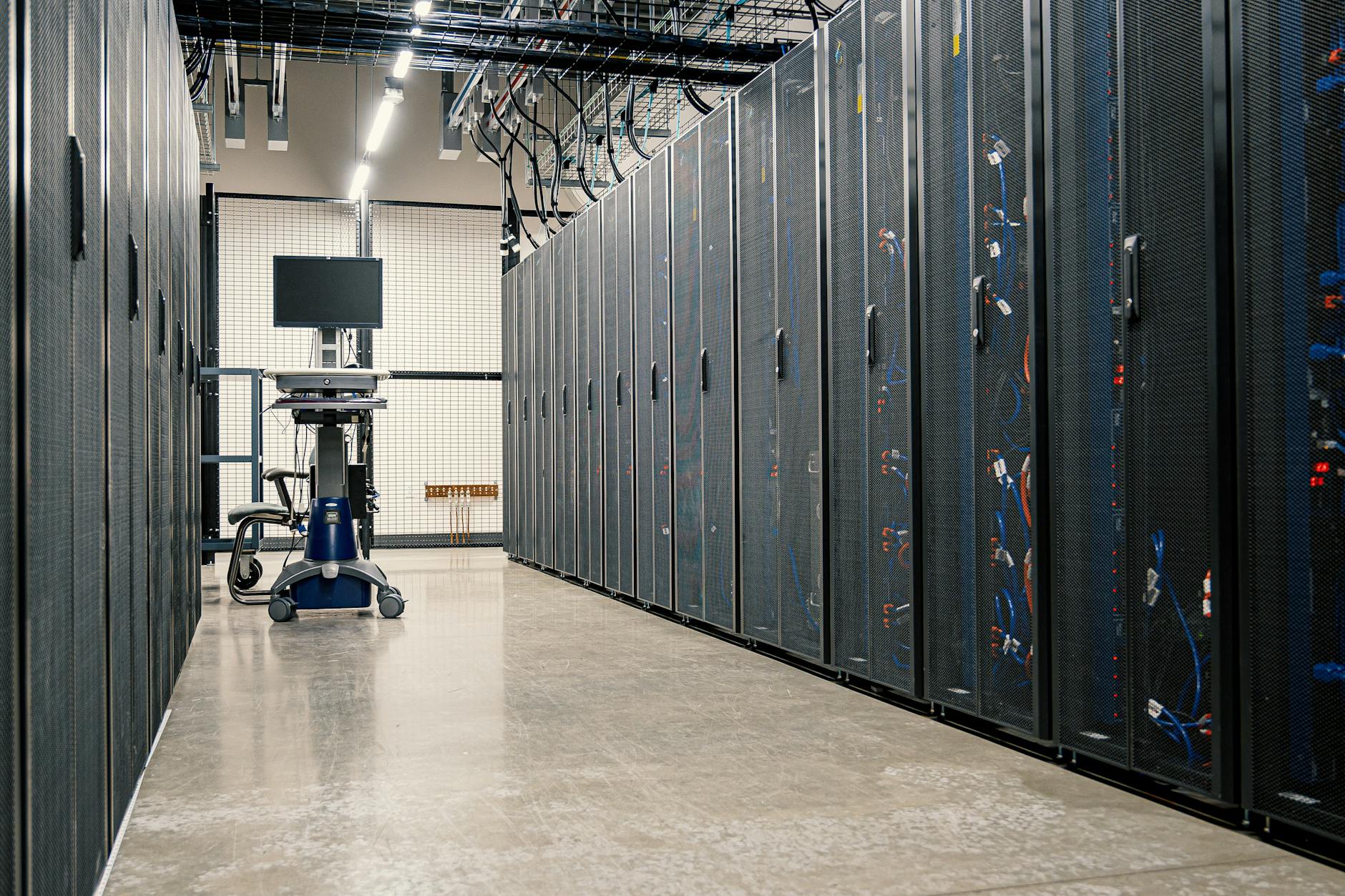
The mechanism worked through organizational architecture rather than accounting fiction. AWS leveraged the same operational competencies that Amazon had developed for its retail logistics: running large-scale distributed systems with high reliability and low marginal cost. By selling excess server capacity to external customers, Amazon converted fixed technology investments into revenue-generating assets. More importantly, AWS profits provided cover for the retail operation’s continued losses. When analysts questioned the sustainability of Amazon’s retail model, the growth and profitability of cloud computing provided a valuation anchor that justified continued investment in the physical network.
This arrangement created a strategic optionality unavailable to pure retail competitors. Walmart or Target could not fund twenty years of retail losses through a separate high-margin business because they lacked the technology infrastructure and the capital markets narrative that allowed Amazon to incubate AWS. The cloud business served as a political buffer, convincing investors that Amazon was not merely a retail operation refusing to show profits, but a technology conglomerate with multiple value creation engines.
The fragility here is temporal. As AWS matures and faces competitive pressure from Microsoft Azure and Google Cloud Platform, its margin contribution may decline precisely when the retail operation requires continued investment for grocery expansion, healthcare initiatives, or international penetration. The model assumes that AWS can indefinitely subsidize retail experimentation, or that retail will eventually generate sufficient free cash flow to self-fund. If AWS margins compress while retail remains in high-investment mode, the capital allocation discipline that Bezos enforced becomes harder to maintain under investor scrutiny.
The Direct-to-Consumer Counter-Movement
The assumption that suppliers cannot bypass Amazon faces its most credible threat in the resurgence of direct-to-consumer (DTC) infrastructure and the fragmentation of digital attention. Beginning around 2015, brands with sufficient capital and brand equity began investing in owned-channel capabilities that reduce dependency on the Everything Store. Nike, Birkenstock, and Ikea have reduced or eliminated their Amazon presence, betting that brand recognition allows them to attract customers directly without paying Amazon’s commission structure or surrendering customer data.
This defection remains individually rational but collectively limited. A niche premium brand can survive outside Amazon because its customers search specifically for its name. Commodity suppliers and long-tail merchants lack this brand equity and remain dependent on Amazon’s traffic aggregation. However, the emergence of Shopify, Meta’s commerce tools, and improved logistics APIs lowers the technical barrier for supplier independence. A manufacturer that once required Amazon’s fulfillment network can now access comparable shipping speeds through third-party logistics providers that aggregate demand across multiple DTC brands.
The critical threshold occurs when the fixed cost of operating independent channels falls below the effective cost of Amazon’s commissions, advertising requirements, and competitive pressure. Amazon’s marketplace has evolved into a pay-to-play environment where organic visibility requires sponsored product spending, effectively raising the tenant rent. Merchants calculate that for every dollar of revenue on Amazon, thirty to forty cents flow back to Amazon through various fees. If independent acquisition costs through social media advertising drop below this effective tax rate, the supplier lock-in loosens.
The bear case suggests that Amazon’s supplier dominance peaked in the late 2010s. As brands accumulate first-party customer data through their own channels, they can reduce the information asymmetry that previously made Amazon indispensable. The flywheel assumes that supplier alternatives remain fragmented and expensive; the proliferation of DTC infrastructure challenges this by creating viable alternative distribution. If premium brands, those with the highest margins and strongest customer loyalty, systematically exit Amazon to protect their pricing power and customer relationships, Amazon’s selection advantage degrades from “everything” to “everything that cannot command brand loyalty,” a significantly less valuable market position.
The Automation Frontier
The operational complexity that threatens to overwhelm unit economics finds its counterweight in automation density. Amazon’s fulfillment centers operate as robotics laboratories where human labor performs tasks that machines cannot yet master, fine motor manipulation, irregular item handling, judgment-based quality control, while automated systems handle movement, sorting, and inventory retrieval. The company’s acquisition of Kiva Systems in 2012 for $775 million removed the technology from the open market, ensuring that competitors could not access the same robotic infrastructure for warehouse automation.
This creates a compounding cost advantage that accelerates over time. As Amazon deploys more robots, it accumulates operational data that improves their efficiency, reducing the labor cost per unit shipped. Competitors face a moving target: by the they implement automation comparable to Amazon’s current generation, Amazon has deployed the next iteration. The fixed costs of the fulfillment network, once a burden, become a platform for operational experimentation that drives marginal costs downward.
However, automation introduces its own fragility. The capital intensity of robotic fulfillment centers increases the minimum efficient scale of operation. A warehouse that requires $100 million in robotics infrastructure must process sufficient volume to amortize that investment. During demand contractions, recessions, pandemic normalization, or market share loss to competitors, Amazon cannot easily reduce fixed costs. The model assumes that volume growth remains sufficiently consistent to keep automation assets fully utilized. A sustained period of stagnation would leave Amazon holding depreciating robots and warehouse leases while nimbler competitors with more variable cost structures adjust more quickly.
Moreover, automation faces physical limits. Certain product categories, fresh groceries, irregularly shaped items, high-fragility goods, resist robotic handling at current technology levels. Amazon’s expansion into these categories requires human labor with its associated costs and variability. The assumption that automation can perpetually outpace labor cost inflation and operational complexity holds only for standardized, high-velocity goods. As Amazon pushes into categories where robotic density provides less advantage, the unit economics that justified the infrastructure investment become harder to maintain.
The Regulatory Ceiling
The most immediate threat to the flywheel mechanism is not competitive entry but sovereign intervention. Amazon’s intermediation power relies on its ability to set terms unilaterally: determining which sellers appear in search results, enforcing price parity clauses, using aggregated seller data to inform private-label product development, and conditioning access to Prime customers on fulfillment service usage. Each of these practices faces antitrust scrutiny in the United States and Europe.

Regulatory action could force structural separation, preventing Amazon from selling its own products in competition with third-party merchants, or mandate data portability that allows merchants to transfer their customer relationships off-platform. More subtly, restrictions on Amazon’s ability to combine pricing data across categories would degrade the algorithmic advantages that enable dynamic pricing and inventory optimization.
The model assumes that Amazon can maintain its current degree of platform control indefinitely. Antitrust enforcement operates on decadal cycles; the tolerance for Amazon’s market concentration that existed during the 2010s may not persist through the 2020s. If forced to operate as a neutral utility, providing logistics and marketplace infrastructure without favoring its own products or extracting data rents, Amazon’s margin structure compresses significantly. The flywheel assumes that Amazon can capture the surplus created by its intermediation; regulation that limits this capture to pure logistics fees would invalidate the twenty-year bet on capital-intensive infrastructure.
The Endurance Test
Amazon’s business remains a machine for converting capital and time into an irreplaceable physical and data infrastructure. The mechanism functions only as long as all participants, customers, suppliers, investors, and regulators, accept the terms of the exchange. Customers accept surveillance in exchange for convenience; suppliers accept compression in exchange for volume; investors accept deferral in exchange for compounding; regulators accept concentration in exchange for consumer surplus.
The fragility is systemic. A break in any single loop, upplier defection degrading selection, regulatory action limiting pricing power, automation failing to reduce costs, or capital markets demanding immediate returns, tops the flywheel. Unlike software platforms that can pivot with minimal physical constraint, Amazon’s moat is concrete and steel, fixed in location and depreciation schedule. The company cannot exit its warehouses; it can only fill them or watch them drain cash.
Whether the advantage persists depends on whether the density of the fulfillment network continues to provide cost advantages that outweigh the organizational drag of managing millions of SKUs, and whether the data asset remains predictive in a market that grows less predictable. The bet that Bezos made in 1994 was that the internet would grow fast enough and long enough to justify the construction of a physical infrastructure that traditional retailers could not replicate. The question for the next decade is whether that infrastructure, once complete, maintains the insulation from competition that justified its cost, or whether it becomes a legacy asset in a market that has learned to route around it.
The erosion would not announce itself with quarterly losses or dramatic market share shifts. It would manifest instead as a gradual hollowing of the middle, erchants with sufficient volume to justify independent logistics peeling away, leaving Amazon with the least profitable long-tail transactions and the highest-cost customer acquisitions. A merchant shipping five thousand units monthly can now access rates from regional fulfillment networks that approximate Amazon’s internal cost structure without surrendering customer data or pricing autonomy. As these merchants exit, Amazon’s fixed cost base remains while its revenue per transaction compresses toward the marginal cost of serving only the smallest, most fragmented sellers who lack alternatives.
The warehouses, designed for throughput density rather than flexibility, cannot easily downshift to handle reduced velocity without bleeding cash. A fulfillment center optimized for seventy-five thousand daily shipments becomes an albatross at forty thousand, its automation amortized over insufficient volume, its labor costs fixed by local wage markets regardless of utilization. Unlike digital infrastructure, which scales down with demand, concrete and steel impose contractual and physical minima. The compounding advantage reverses into a compounding liability: each departing merchant increases the cost burden on remaining transactions, accelerating further defection.
This trajectory remains contingent on capital markets tolerating the transition. As long as investors value revenue growth over unit profitability, Amazon can absorb the hollowing by subsidizing merchant retention or acquiring competitors. But the assumption that capital will remain patient indefinitely, twenty years into the experiment, grows less certain as interest rate regimes shift and alternative investments promise immediate yields. The infrastructure that required two decades to construct may prove less adaptable than the modular, asset-light networks assembling to replace it.
The specific calculus confronting a mid-sized merchant illustrates the mechanism. A brand generating ten million dollars in annual revenue through Amazon currently surrenders approximately three million in referral fees, fulfillment charges, and advertising spend: n effective tax rate of thirty percent. If that same brand can acquire customers through social channels at a blended cost of fifteen percent of revenue and fulfill through a third-party logistics provider at rates competitive with Amazon’s internal costs, the eight hundred thousand dollars in annual savings funds independent technology infrastructure within eighteen months. Once the customer list reaches sufficient scale to support reactivation campaigns without platform dependency, the merchant faces a binary choice: remain as a tenant paying escalating rent, or graduate to ownership of the customer relationship. Amazon’s response, increasing advertising load to compensate for lost merchant margin, accelerates the exodus of the most profitable sellers, leaving the platform increasingly dependent on low-margin commodities and counterfeit-prone categories where brand equity does not exist. The flywheel, constructed to aggregate demand, begins to centrifuge value outward.