
American Tower: How Real Estate Became a Moat

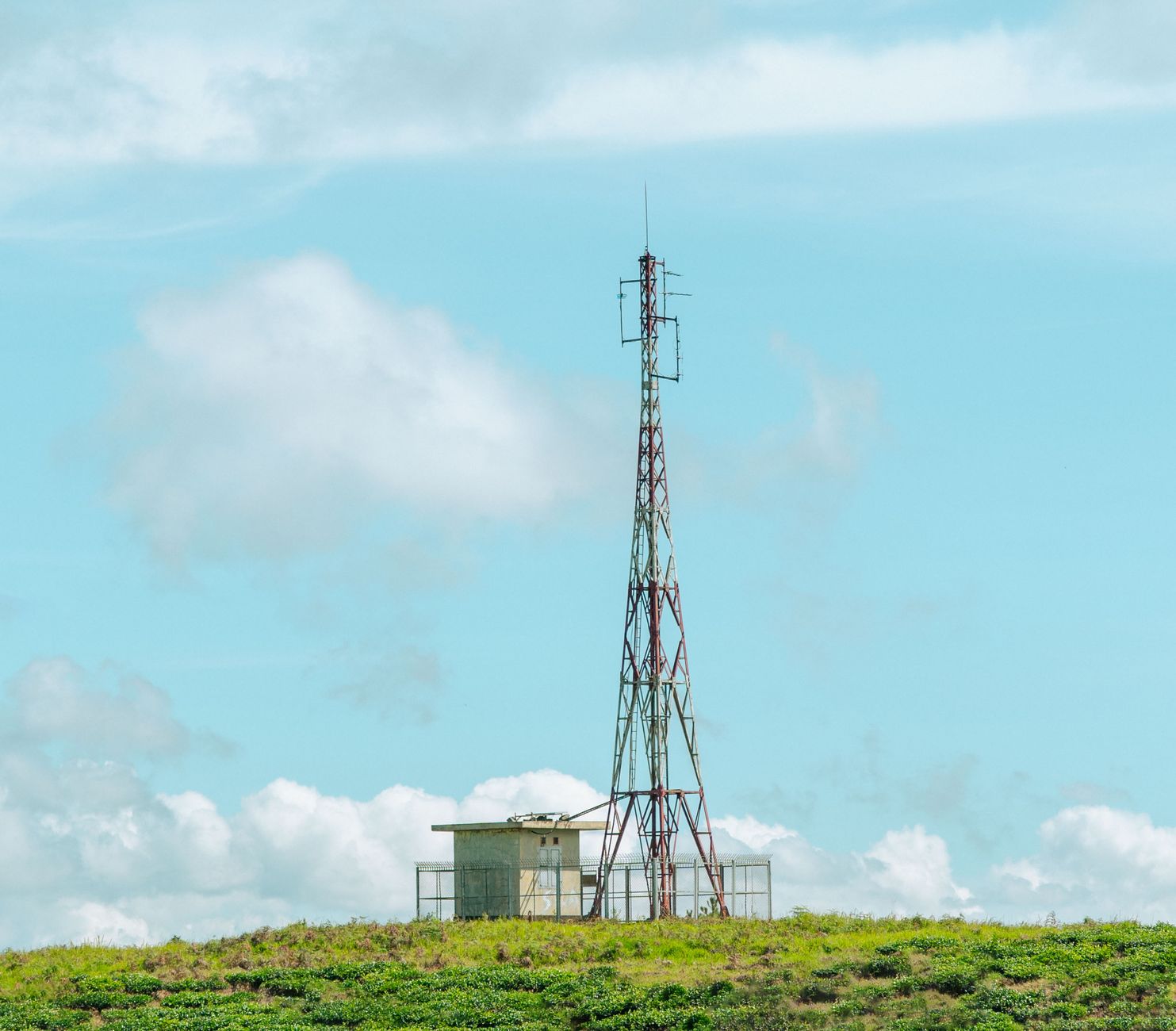
There are approximately five million wireless communication towers scattered across the globe, and American Tower owns roughly 224,000 of them. By market share, this is modest, erhaps four or five percent of a hopelessly fragmented industry where the top twenty operators collectively control only one million assets. Yet American Tower has built one of the most economically efficient businesses in modern markets by monopolizing the vertical real estate required for wireless transmission, converting irreversible scarcity into contractually locked, inflation-protected cash flows with ninety-seven percent incremental margins. The catch, and it is a significant one, is that the business operates within the straitjacket of REIT regulations that force a perpetual negotiation between dividend obligation and growth reinvestment, making management discipline the decisive variable that separates American Tower from its leveraged competitors.
The Vertical Monopoly
The economics of a tower are almost embarrassingly favorable once the steel rises. The structure is a fixed cost. The land beneath it is leased or owned, depreciated over decades, and maintained with minimal capital expenditure: oughly one to two billion dollars annually against a backdrop of forty to fifty billion in carrier capital expenditure flows. When a second or third tenant attaches antennas to the same structure, the incremental margin hits ninety-seven percent. There are no raw materials to replenish, no supply chains to manage, no inventory to mark down. The tower does not care if it carries Verizon’s traffic or AT&T’s; the physics of radio wave propagation remain constant, and the rent checks arrive with the same regularity.
This margin structure constitutes a moat that is both physical and financial. In dense urban corridors, Manhattan, downtown Chicago, the financial districts of São Paulo or Mumbai, the construction of new towers is functionally impossible. Local opposition, permitting processes that stretch across years, and the sheer absence of suitable real estate prevent new entrants from offering competitive capacity. A carrier cannot simply decide to bypass American Tower’s assets because the alternative, poor signal coverage in high-value markets, means customer churn, and customer churn is more expensive than the lease payments. The carriers, who collectively spend forty to fifty billion dollars annually maintaining and upgrading networks to avoid exactly this churn, have no choice but to rent the vertical real estate.
The fragmentation of the tower market, those remaining 4.8 million assets held by thousands of small operators, municipalities, and carrier joint ventures, presents American Tower with a permanent acquisition opportunity. Scale matters in this business not because it lowers manufacturing costs, but because it lowers capital costs. A portfolio of 224,000 towers can absorb the administrative complexity of the Telxius acquisition (30,000 European and Latin American towers) or the CoreSite data center purchase in ways that a regional operator with 500 assets cannot dream of. The fixed cost of legal due diligence, property management systems, and regulatory compliance spreads across a larger base, while the balance sheet capacity to issue investment-grade debt at favorable rates remains reserved for the largest players.
Inflation as Revenue
If the tower itself is the physical engine, the lease contract is the financial transmission. American Tower’s revenue is not merely recurring; it is contractually predestined. The typical lease runs five to ten years, but carries renewal options stretching twenty to thirty years into the future. More importantly, these contracts embed annual rent escalators of three percent or more, alongside pass-through mechanisms for property taxes, ground rent, and maintenance costs.
This is not inflation hedging; it is inflation capture. While most businesses must renegotiate prices with customers each year, hoping to pass along rising costs without losing volume, American Tower’s pricing adjustments are automatic and irreversible. The carrier that signed the lease in 2018 cannot renegotiate the 2024 escalator downward without breaching the contract and losing the site. And losing the site is not a credible threat. The cost of decommissioning equipment, relocating to a new (likely inferior) location, and rebuilding network coverage density far exceeds the savings from negotiating a lower rent. The lease is, in effect, a call option on inflation that the carrier must exercise annually.
The visibility of these cash flows, three to four billion in annual free cash flow with thirty percent margins, allows American Tower to operate with financial leverage that would terrify a manufacturing business. The company can borrow against decades of contracted revenue because the revenue is not speculative; it is legal obligation backed by the carrier’s existential need to maintain network quality. This visibility explains why the stock trades as a bond proxy during certain market conditions, and why the 2024 decision to pause dividend growth sent subtle tremors through the investor base.
The REIT Straitjacket
Real Estate Investment Trusts exist in a peculiar regulatory twilight. In exchange for avoiding corporate income tax, American Tower must distribute roughly ninety percent of its taxable income to shareholders. This creates a structural tension that defines every strategic decision the company makes. The business generates genuine growth opportunities, organic tower builds in emerging markets, the consolidation of fragmented international portfolios, the expansion of data center capacity, but the REIT structure starves the company of retained earnings to fund them.
Management’s response to this constraint has become the decisive economic variable separating American Tower from its leveraged competitors. In 2024, the company did something it had not done in a decade: it held the dividend flat. The stated rationale was deleveraging, reducing debt following the heavy capital deployment of the Telxius and CoreSite acquisitions, but the signal was unmistakable. American Tower was choosing balance sheet optionality over the immediate gratification of yield-hungry investors. This is the “say-do ratio” in action: a management team that prioritizes the capacity to acquire distressed assets during the next downturn over the optics of uninterrupted dividend growth.
The risk, of course, is valuation compression. If investors begin to view American Tower as a static yield vehicle rather than a growth business, the multiple contracts. Yet the alternative, aggressive dividend growth funded by floating-rate debt or asset sales, would sacrifice the very flexibility that allows the company to consolidate the fragmented tower market. The REIT straitjacket forces a zero-sum calculation: every dollar paid out as dividend is a dollar that cannot be deployed to acquire a 30,000-tower portfolio from a distressed seller. In choosing discipline over distribution, management is betting that the long-term value of optionality exceeds the short-term comfort of yield.
The Customer Concentration Paradox
For a business that claims irreplaceable scarcity, American Tower displays a troubling vulnerability to the negotiating leverage of its largest customers. The top three or four domestic carriers, Verizon, AT&T, T-Mobile, represent approximately forty percent of revenue, with individual customers accounting for more than ten percent each. In standard industrial analysis, such concentration would suggest pricing power resides with the buyer. The carriers know this. They employ armies of network engineers and real estate specialists whose sole purpose is to minimize tower lease costs.
Yet the asymmetry persists. The carriers continue to pay escalators because the alternative, building proprietary tower networks, would destroy their economics. A carrier’s capital expenditure must flow to spectrum acquisitions and handset subsidies, the true lock-in mechanisms that prevent subscriber churn. Diverting capital to vertical real estate ownership would yield lower returns than renting from American Tower, even at rising rates. The tower is a commodity input; the carrier brand and network quality are the differentiated product.
But this equilibrium is fragile. If two major carriers were to merge, say, T-Mobile and Verizon, or any combination that reduced the field from three national players to two, the combined entity would suddenly control enough volume to threaten vertical integration. A carrier with fifty percent market share might credibly build selective towers in high-traffic corridors, bypassing American Tower entirely. Alternatively, technological substitution poses a slow-moving threat. Small-cell networks and distributed antenna systems (DAS) can offload traffic from macro towers in dense urban environments. Satellite internet, Starlink, Amazon’s Kuiper, could erode the necessity for terrestrial towers in rural markets where American Tower’s international portfolio is concentrated.
The assumption that carriers will perpetually choose lease payments over ownership rests on the current structure of the industry. Should that structure shift through consolidation or spectrum policy changes that favor alternative infrastructure, the “no substitute” argument collapses with alarming speed.
International Exposure as Strategic Necessity
Half of American Tower’s revenue growth now originates outside the United States. The company operates 180,000 international towers against 42,000 domestic, a ratio that would have seemed reckless a decade ago. This geographic diversification is not a luxury; it is a requirement. The U.S. tower market is mature, with penetration rates approaching saturation and build-to-suit opportunities limited by the same NIMBY dynamics that protect existing assets.
Emerging markets, Latin America, Africa, India, offer organic growth. They also offer lower take rates, currency volatility, and the perpetual risk of rule-of-law deterioration. A tower in rural Brazil or Nigeria generates the same ninety-seven percent incremental margin on paper, but the cash must travel through foreign exchange markets and regulatory regimes that may not respect contractual escalators with the same rigor as American courts. Political instability could trigger expropriation or forced lease renegotiations. Currency devaluation could render local revenue worthless when converted to dollars.
American Tower accepts these risks because the alternative is stagnation. The domestic business generates cash, but the international business generates growth. The tension lies in the margin compression: international assets structurally earn less per tenant than U.S. towers, diluting the consolidated margin even as they expand the revenue base. Management must constantly weigh the accretion of scale against the erosion of profitability per unit. It is a balancing act that becomes precarious if emerging market currencies enter prolonged decline or if local carriers, often state-influenced or undercapitalized, default on lease obligations.
The Data Center Hedge
In December 2021, American Tower spent $10.1 billion to acquire CoreSite, a data center operator with facilities in eight U.S. markets. The move initially puzzled observers who viewed towers and data centers as distinct asset classes. But the logic reveals itself in the margins. While tower margins are high, data center margins at CoreSite approach fifty percent operating margins, ubstantially above even the tower business. Today, data centers represent eight percent of revenue, projected to reach ten percent
, ith thirty-four percent of capital expenditure now directed toward this higher-mix business. The strategic logic rests on convergence. Fifth-generation networks do not merely require taller towers with more antennas; they require fiber backhaul, edge computing capacity, and localized data processing that reduces latency for autonomous systems and industrial applications. The macro tower becomes the anchor for a distributed computing architecture that extends from the steel lattice down into climate-controlled facilities where servers process the traffic. American Tower is no longer simply leasing vertical real estate; it is assembling the physical infrastructure for a computational geography that happens to require height above ground and depth below it.
This diversification alters the risk profile in subtle ways. Data centers face different competitive dynamics than towers. While a tower’s location is protected by spectrum propagation physics and zoning permanence, data centers compete on power pricing, fiber density, and proximity to cloud hyperscalers. Microsoft, Amazon, and Google can and do build their own facilities when lease economics fail to satisfy. The customer concentration risk that American Tower manages in its tower business, those three or four carriers representing forty percent of revenue, finds its parallel in the data center segment’s dependence on the same technology giants who are aggressively verticalizing their infrastructure. Yet the margins justify the exposure. A tower lease generates steady, escalator-protected cash flow but caps upside; data center leases contain variable components tied to power consumption and cross-connect fees that expand with traffic volume. In an artificial intelligence deployment cycle where training models require massive, localized GPU clusters, the CoreSite assets sit at the intersection of carrier networks and cloud compute: position that commands premium pricing even if the moat is less permanent than the steel lattice above.
The Currency of Fixed Rates
American Tower’s balance sheet architecture reveals management’s interpretation of the interest rate environment. Eighty-nine percent of the company’s debt is fixed-rate, a deliberate posture that diverges from competitors who have allowed twenty percent or more of their obligations to float with benchmark rates. In a rising rate cycle, this structure preserves cash flow. While competitors face margin compression as LIBOR or SOFR increases drive interest expense higher, American Tower’s coupon payments remain locked at the low rates secured during the quantitative easing era. The financial flexibility is measurable: the company maintained free cash flow growth through the Federal Reserve’s 2022–2023 hiking cycle while leveraged peers scrambled to hedge exposures or sell assets to cover carrying costs.

But fixed-rate discipline carries opportunity costs that only become visible in retrospect. If rates fall sharply, if the Fed cuts aggressively in response to recession, American Tower cannot refinance its existing obligations to capture the savings. The debt is already cheap; the optionality flows to the borrower with floating exposure who can now lock in rates lower than their current fixed obligations. More interesting is the asymmetric risk created among competitors. Those with heavy floating-rate exposure face distress if rates spike further, potentially triggering forced asset sales at depressed valuations. American Tower’s balance sheet capacity positions it as the natural acquirer of such distress, yet the very fixed-rate discipline that enables this opportunism requires patience. The company must wait for competitors to break under leverage while resisting the temptation to deploy capital prematurely. The 2024 dividend pause becomes clearer in this light: management is hoarding dry powder not merely for deleveraging, but for the distressed consolidation that inevitably follows periods of monetary tightening.
The refinancing ladder provides additional texture. American Tower’s debt maturity profile is staggered, with no single year presenting a wall of obligations that must be rolled over during credit market seizures. This is not accidental. Treasury management at the company operates with the same long-term horizon as tower lease contracts, matching liability durations to asset cash flows. When the company issued ten-year bonds in 2021 at rates below three percent, it was not merely securing cheap capital; it was eliminating refinancing risk for a decade, ensuring that the 2031 obligations would be serviced by revenue streams contracted in 2021 dollars with embedded escalators. The result is a business that can endure years of capital market closure without operational disruption: resilience that smaller tower operators, dependent on revolving credit facilities and asset-level financing, cannot replicate.
The Geography of Scarcity
To understand why American Tower’s assets cannot be easily replicated, one must examine the specific mechanics of site acquisition. In the suburbs of Phoenix or the exurbs of Dallas, building a new tower remains feasible. Land is available, zoning is permissive, and community opposition is manageable. But these are not the sites that generate premium economics. The marginal value of tower capacity concentrates in dense urban cores where population density and data usage create the highest revenue per site, and where construction is functionally prohibited.
Consider the permitting timeline for a new tower in Manhattan or San Francisco. The process begins with FAA clearance, establishing that the structure will not interfere with flight paths, followed by environmental impact assessments, historical preservation reviews, and municipal zoning hearings. Each step invites public comment, and public comment, in affluent neighborhoods, means organized opposition. Residents cite property value impacts, visual blight, or unproven health concerns regarding radio frequency emissions. The process stretches across months or years, with no guarantee of approval. During this delay, the carrier needing capacity faces a binary choice: wait indefinitely while network quality degrades and subscribers churn, or lease existing capacity from American Tower at the contracted rate. The economic calculation heavily favors the latter.
The scarcity is reinforced by replacement cost economics. To replicate American Tower’s 224,000-tower portfolio would require not merely the steel and concrete, commodity materials, but the leaseholds on underlying land, the fiber connections, the electrical infrastructure, and the zoning permits that took decades to accumulate. A new entrant could not buy these assets at any price because they are not for sale as a portfolio; they are embedded in municipal fabric, held by thousands of individual landowners with varying willingness to lease, and protected by contracts that run thirty years or more. The moat is not technological; it is institutional. American Tower owns the regulatory permissions and community relationships that constitute permission to exist in the built environment.
When Carriers Consolidate
The bear case for American Tower rests on a simple arithmetic: if Verizon and T-Mobile were to merge, a scenario that antitrust regulators have blocked in the past but could permit under different political conditions, the combined entity would control approximately fifty percent of U.S. wireless subscribers. Such concentration would fundamentally alter the negotiating dynamic. Currently, American Tower faces a fragmented customer base of three national carriers who must each maintain comprehensive coverage to remain competitive. Post-merger, the combined carrier could credibly threaten to build selective towers in high-traffic corridors, bypassing American Tower in locations where the economics justify self-supply.
The threat is not theoretical. Vertical integration has historical precedent in telecommunications. In the early days of cellular, carriers owned their towers outright. The shift to third-party leasing occurred because capital constraints and competitive pressure forced carriers to prioritize handset subsidies and spectrum acquisition over real estate ownership. But a consolidated carrier with dominant market share faces less competitive pressure. With pricing power over subscribers, the carrier could redirect capital to infrastructure ownership, chipping away at American Tower’s tenancy one strategic site at a time.
The math of defection is brutal. If a merged carrier representing twenty percent of American Tower’s revenue chose to internalize just one-third of its tower needs, the revenue loss would approach seven percent of the total. Given the operating leverage inherent in the model, those ninety-seven percent incremental margins, such a loss would fall almost entirely to the bottom line, compressing free cash flow by roughly twenty percent. The dividend, already paused, would face further pressure. The stock multiple, predicated on stability, would contract to reflect the new volatility of customer relationships.
Smaller-scale consolidation presents similar risks. If Dish Network, currently building a fourth national network with heavy reliance on American Tower sites, were to be acquired by one of the incumbents, the overlapping tenancies would be rationalized. The acquiring carrier would terminate leases where its existing infrastructure provided redundant coverage, consolidating traffic onto its preferred towers. Each lease termination represents pure margin loss; there is no variable cost savings when a tenant departs, only the absence of revenue that previously flowed at near-perfect margin.

Technological Substitution and the Spectrum Frontier
Beyond consolidation, American Tower faces the perpetual risk that the physics of wireless transmission will shift in ways that devalue macro tower infrastructure. The current model depends on the propagation characteristics of spectrum bands below six gigahertz, where signals travel miles and penetrate buildings, requiring elevated antenna positions to maximize coverage area. But as carriers deploy millimeter-wave spectrum for 5G, frequencies above twenty-four gigahertz, the physics change. These signals carry massive data capacity but travel only hundreds of meters and fail to penetrate obstacles. They require dense networks of small cells mounted on streetlights and building facades rather than macro towers.
American Tower has positioned itself to capture this transition by leasing space for small cell attachments and acquiring distributed antenna system (DAS) networks. Yet the economics differ fundamentally. A macro tower lease commands thousands of dollars monthly with escalators; a small cell attachment generates hundreds of dollars with less contractual protection and higher churn risk. If the industry shifts decisively toward small-cell densification for urban capacity and satellite coverage for rural areas, the tower business faces volume decline even as data usage grows.
Satellite internet poses the more existential threat. Starlink, Amazon’s Kuiper project, and other low-earth-orbit constellations promise to deliver broadband to remote areas without terrestrial infrastructure. Currently, these systems suffer from latency and capacity constraints that prevent them from substituting for cellular networks in dense populations. But if technological advancement allows satellite systems to handle urban mobile traffic, if handsets begin incorporating satellite modems as standard equipment, the rural tower assets that constitute much of American Tower’s international portfolio could see demand evaporate. The company owns 180,000 towers outside the United States, many in regions where terrestrial infrastructure is sparse and satellite substitution would be most economically efficient. A policy shift, say, regulators mandating satellite compatibility for emergency communications or subsidizing rural satellite deployment, could strand these assets.
The assumption that carriers will perpetually prefer terrestrial towers to satellite coverage rests on the current cost structure of space-based transmission. If launch costs continue to fall and satellite manufacturing scales, the crossover point where satellite undercuts tower economics for rural coverage may arrive faster than the lease contracts expire.
The Emerging Market Gambit
American Tower’s international operations generate fifty percent of revenue growth but operate under radically different constraints than the domestic business. In India, the company manages tens of thousands of towers through a joint venture structure necessitated by foreign ownership restrictions. In Nigeria, it operates in a currency environment where the naira has depreciated sixty percent against the dollar over the past five years, rendering dollar-denominated debt service increasingly expensive relative to local revenue. In Brazil, political transitions have threatened expropriation of critical infrastructure under nationalist economic policies.
The international strategy assumes that emerging market wireless penetration will follow the trajectory of the United States, hat rising middle classes will demand smartphone connectivity, forcing carriers to build networks that require American Tower’s assets. But this assumption conflates demand growth with revenue realization. A carrier in Ghana or Indonesia may indeed need more towers to serve growing data demand, but if that carrier is state-owned or subject to rate regulation, it may lack the pricing power to pass infrastructure costs to consumers. The result is a squeeze: American Tower’s contracts may specify dollar-linked escalators, but the carrier’s revenue is in depreciating local currency. Either the carrier defaults, or the government intervenes to renegotiate lease terms downward, or inflation erodes the real value of the contracted payments.
The rule-of-law differential matters in ways that do not appear on pro-forma acquisition analyses. In the United States, a lease is a lease; breach triggers legal remedies with predictable enforcement. In certain Latin American or African jurisdictions, contract enforcement depends on political relationships, and asset ownership exists at the pleasure of the sovereign. American Tower mitigates this through local partnerships and insurance structures, but the risk cannot be eliminated, only priced. The lower take rates observed in international markets, revenue per tower below domestic levels, reflect this risk premium. Yet as the international portfolio grows to dominate the revenue mix, the consolidated margin structure necessarily compresses, challenging the narrative of a pure-play high-margin infrastructure business.
Capital Allocation as Competitive Advantage
The definitive economic variable distinguishing American Tower from its competitors is not the steel in the air but the discipline in the boardroom. The REIT structure forces a quarterly confrontation with the dividend imperative, and most management teams capitulate, prioritizing the immediate gratification of yield-hungry investors over the long-term compounding of retained capital. American Tower’s 2024 decision to pause dividend growth, a move that triggered temporary stock weakness and analyst downgrades, demonstrates the rare capacity to prioritize balance sheet strength over investor appeasement.
This discipline has historical precedent. When the company acquired Telxius’s European and Latin American towers in 2021 for $9.4 billion, it did not overpay to secure growth. The acquisition price reflected distressed seller dynamics, Telefónica needed to deleverage, and American Tower had the liquidity to act while competitors were capital-constrained. Similarly, the CoreSite acquisition occurred at a moment when data center valuations were moderating, and the company could deploy equity at valuations accretive to long-term per-share value rather than dilutive.
The “say-do ratio” manifests in leverage management. American Tower has consistently maintained net debt to EBITDA ratios below six times, even during aggressive acquisition phases, while peers have stretched beyond seven or eight times to chase scale. This conservatism appears costly during bull markets, when leveraged competitors report higher growth rates and trade at premium multiples. But the cost reveals itself as optionality when credit markets tighten. In 2023, as interest rates spiked, American Tower maintained investment-grade ratings and access to public bond markets while smaller competitors faced private placement windows closed or asset-level financing unavailable at any price.
The management team’s refusal to chase yield-driven M&A, declining to purchase tower portfolios at inflated prices during the low-rate exuberance of 2020-2021, preserved capacity for the 2024-2025 period, when rising rates force distressed sales from overleveraged operators. The dividend pause funds this opportunism. By retaining cash that would have otherwise flowed to shareholders, the company accumulates the dry powder necessary to consolidate the fragmented international market at recession-era multiples.
The Fragility of Assumption
Every investment in American Tower rests on a stack of assumptions that are visible but rarely questioned simultaneously. The first is that carriers will continue to prioritize handset subsidies and spectrum acquisition over infrastructure ownership, perpetuating the outsourcing trend that created the tower industry. The second is that NIMBY opposition and zoning complexity will prevent new entrants from building competitive capacity for decades. The third is that international wireless growth will follow the U.S. pattern of carrier profitability sufficient to honor dollar-linked lease contracts. The fourth is that technological substitution, satellite, small cells, spectrum sharing, will complement rather than replace macro towers.
If any one of these assumptions fails, the business model remains viable but impaired. If two fail simultaneously, say, carrier consolidation merges with satellite substitution in rural markets, the economic engine seizes. The ninety-seven percent incremental margins work in reverse; revenue loss flows directly to free cash flow, and the dividend, already suspended in growth, faces cut risk.
The structural advantages are real: the scarcity, the escalators, the fixed-rate debt, the management discipline. But they are defensive moats around a business model that requires the continued cooperation of its largest customers and the continued forbearance of technological change. American Tower does not control the spectrum policy decisions that determine tower density requirements. It does not control the merger ambitions of Verizon and T-Mobile. It does not control the launch schedules of Starlink or the permitting timelines of Indian regulators.
What it controls is capital allocation. In a business where the physical assets are irreplicable but the customer relationships are fragile, the ability to say no, to decline overpriced acquisitions, to pause dividends when reinvestment offers higher returns, to maintain leverage ratios that preserve optionality, becomes the only true durable advantage. The towers will stand for decades, steel structures requiring minimal maintenance, generating escalated rents if the carriers remain dependent. But the value captured from those towers depends entirely on the discipline of the institution that owns them, navigating the REIT structure’s demands while resisting the temptation to maximize short-term yield at the expense of long-term compounding.
The signal in the 2024 dividend pause is not financial distress; it is strategic patience. American Tower is positioning to own not just the towers that exist today, but the towers that distressed sellers will unload tomorrow. In an industry defined by fixed assets and variable politics, patience may prove the scarcest resource of all.
The arithmetic of this patience is stark. By retaining approximately $400 million in cash that would have otherwise distributed as quarterly dividends, American Tower maintains the liquidity to acquire a portfolio of 5,000–7,000 towers from a distressed European or Latin American operator without tapping capital markets or diluting shareholders. This is not theoretical: in early 2024, regional operators in Brazil and the Philippines began marketing assets at eight to nine times EBITDA, down from eleven to twelve times in 2021, yet found no bidders capable of closing transactions without financing contingencies. American Tower’s retained cash and undrawn revolver capacity position it as the only logical counterparty, enabling purchase prices that immediately accrete to levered free cash flow per share.
The REIT structure, typically described as a constraint on growth, thus functions as a selector mechanism, unishing competitors who prioritized current yield over liquidity while rewarding the discipline to defer gratification. In this light, the dividend pause is not a failure to return capital, but its highest-returning deployment: the conversion of distributed cash into permanent scarcity assets at recession-era multiples. When the next tower portfolio comes to market, inevitably, as floating-rate debt matures and refinancing costs spike, American Tower will be the only buyer not requiring a financing contingency. That certainty of execution commands a discount that compounds over decades of escalated rent receipts.