
Archaea Energy: Why Landfill Gas Never Runs Out
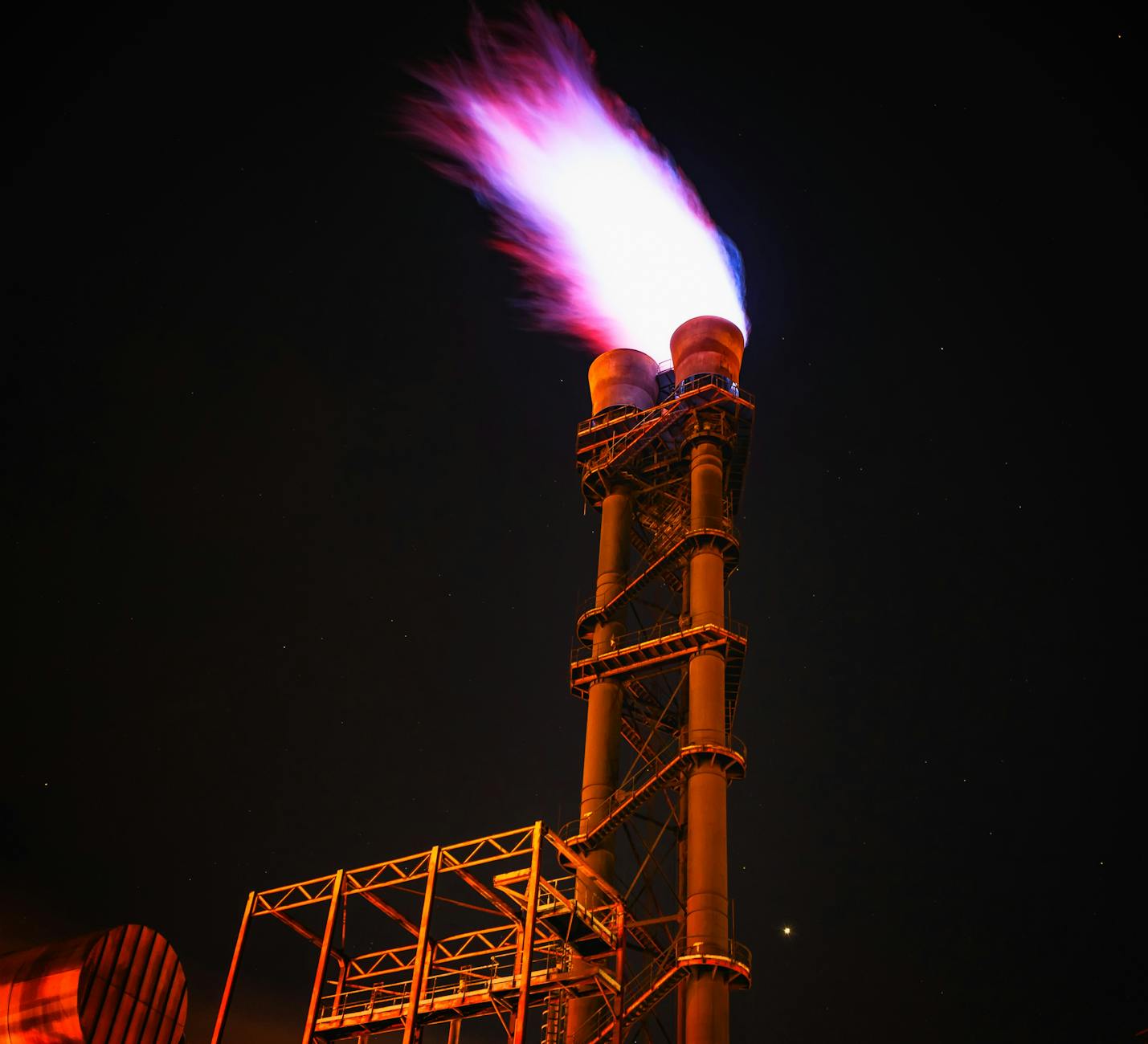
Landfill Gas Is a Fixed Resource
The decomposition of municipal solid waste produces methane regardless of market conditions. It rises from buried organic matter at a rate determined by the volume of refuse and the age of the cell, not by the price of natural gas or the political appetite for renewable fuels. This physical inevitability creates the structural foundation of Archaea Energy: a geographically constrained supply of raw material that cannot be manufactured, transported, or substituted. Of the 2,600 municipal solid waste landfills scattered across the United States, only approximately five hundred possess the scale, gas flow rates, and proximity to pipeline infrastructure necessary to support commercial renewable natural gas production. Archaea has spent the last several years racing to secure access to this finite inventory through joint ventures with the operators who own the real estate, effectively positioning itself as a toll collector on the inevitable byproduct of civilization’s consumption.
The scarcity of viable sites explains why BP paid $4.1 billion for the company. Waste Management, the largest landfill operator in North America, had already internalized its RNG production capabilities, removing roughly twenty percent of the addressable market from external competition. That left Republic Services, GFL Environmental, and Waste Connections as the primary remaining gatekeepers to the highest-quality gas fields. Archaea secured relationships with the first two through joint ventures, thirty-nine projects with Republic representing $1.1 billion in committed capital, and the Saturn Renewables partnership with GFL, creating a portfolio of secured feedstock that competitors cannot easily replicate. Once a landfill operator commits to a JV structure, the economic logic of sunk costs and relationship continuity makes it unlikely they will switch providers for adjacent sites, effectively removing those locations from the market for the duration of the agreement. Archaea is not merely building gas processing plants; it is staking claims in a depleting frontier.
This land-rush dynamic transforms Archaea’s economics from pure infrastructure into a hybrid of real estate arbitrage and industrial processing. The company invests capital to capture and upgrade methane that would otherwise flare into the atmosphere or generate low-value electricity through antiquated turbines. By compressing, cleaning, and injecting this gas into interstate pipelines, Archaea converts a waste liability for landfill operators into a revenue stream for itself. But the durability of that revenue depends entirely on maintaining preferential access to the sites. Unlike solar or wind developers who can theoretically place projects on any sufficiently sunny or windy parcel, Archaea must secure specific, immobile locations where waste has already accumulated for decades. The business is, at its core, an exercise in locking up optionality on the nation’s decomposing garbage before the landfill owners realize they do not need a partner to monetize it.
Standardization Creates Contractibility
Archaea’s method for securing this access relies on a departure from traditional RNG development. Historically, landfill gas projects were bespoke engineering exercises, with custom-designed facilities requiring eighteen to twenty-four months of construction and substantial onsite labor. Archaea’s founder, coming from a background of actually operating landfills rather than merely developing energy projects, recognized that contractors were consistently overcharging and overcomplicating these builds. The company responded by developing a modular, pre-fabricated facility design using interchangeable subcomponents that can be manufactured offsite and assembled rapidly. This approach reduces capital expenditure by roughly fifty percent and compresses deployment timelines significantly compared to custom builds.
The modular advantage is frequently characterized as an engineering efficiency, but its strategic value manifests in the capital markets rather than the construction yard. By accelerating project completion, Archaea moves faster than competitors from investment decision to cash flow generation. This velocity enables the company to secure long-term offtake agreements, ten to twenty-year contracts with creditworthy counterparties such as utilities and ESG-committed corporations, covering approximately half of production volume, with management targeting seventy percent coverage. Competitors operating bespoke facilities typically achieve only twenty percent contract coverage, leaving the majority of their output exposed to volatile spot markets. Archaea’s standardization effectively manufactures contractibility, transforming project finance from a speculative exercise into a predictable revenue underwriting.
This contractibility unlocks the central financial engine of the business. With fifty to seventy percent of volume committed to long-term contracts at fixed prices, Archaea can apply project-level debt financing at loan-to-value ratios approaching seventy percent. Unlevered, Archaea’s RNG projects generate approximately twenty-five percent internal rates of return against four times CapEx-to-EBITDA multiples. Apply seventy percent leverage against the contracted revenue streams, and the equity returns expand dramatically. Meanwhile, maintenance capital expenditure requirements settle at approximately five percent of EBITDA post-deployment, meaning the EBITDA the company reports approximates free cash flow far more closely than in capital-intensive industries requiring constant reinvestment. The modular design is not merely a cost savings; it is the key that opens the debt markets, allowing Archaea to deploy $1.9 billion in growth capital over five years while targeting $600 million in annual EBITDA without diluting shareholders through endless equity issuance.
The Capital Structure of Speed
The reliance on project-level leverage creates a compounding mechanism that rewards early land acquisition. Each successfully financed facility generates cash flows that can collateralize the next development, provided the pipeline of contracted revenue remains robust. Archaea’s announced portfolio of eighty-eight projects represents a specific sequence of capital allocation: secure the landfill relationship, deploy the modular facility, sign the offtake agreement, borrow against the contract, repeat. The speed of this cycle matters because the supply of viable landfills is not only finite but increasingly contested.
However, this capital structure contains a hidden sensitivity. The availability of seventy percent loan-to-value financing depends on the continued presence of long-term contracted buyers willing to pay premium prices for RNG attributes. If those buyers hesitate, or if the spread between contracted prices and spot market rates narrows, lenders will tighten underwriting standards or reduce advance rates. A shift from seventy percent to sixty percent leverage might seem marginal, but across a $1.9 billion capital program, that ten-percentage-point reduction implies an additional $190 million of equity requirement, apital that may not be readily available without dilution or asset sales. Archaea’s growth narrative assumes that debt markets will remain open and accommodating throughout the entire five-year deployment cycle. Should capital markets seize, or should RNG project finance suddenly demand more conservative advance rates due to regulatory uncertainty or supply saturation, the company’s ability to complete its announced project pipeline deteriorates rapidly. The twenty-five percent unlevered IRR is adequate but not spectacular; the implied forty-plus percent equity returns require the continued cooperation of project finance lenders who have not yet weathered a recession or a regulatory shock in the RNG sector. If financing dries up mid-cycle, Archaea faces the unpalatable choice of abandoning projects, urrendering landfill

sites to competitors or to the landfill operators themselves, who require no further education in the economics of gas capture. The loss is permanent; landfills do not return to market once abandoned. The operator simply waits, holding the real estate option until capital markets recover or until they develop the capability to build without external assistance. This irreversibility transforms financing risk into existential risk. A temporary liquidity squeeze for Archaea becomes a permanent competitive advantage for whoever assumes the project, whether a private equity entrant with deeper pockets or the landfill operator internalizing the capability. The modular design that enables speed also reduces the complexity barrier for successors; the facilities are, by design, replicable. Archaea’s capital structure assumes continuous access to debt markets during a five-year sprint that leaves no room for macroeconomic pause.
The Operators Are Learning to Fish
The joint venture structure with Republic Services and GFL Environmental represents not a permanent alliance but a temporary suspension of hostilities. Republic, the second-largest waste management company in North America, does not lack capital or engineering capability; it lacks, or lacked, the specific operational knowledge to convert landfill gas to pipeline-quality RNG at fifty percent below traditional costs. Archaea’s modular design provides exactly this education. Through the Saturn Renewables partnership and the thirty-nine project Republic JV, Archaea is effectively conducting a multi-year technology transfer, teaching its partners how to standardize facility construction while sharing the economics of the initial builds.
This creates a strategic tension invisible in the contract language. Every project completed with Republic or GFL reduces the switching cost for those operators to internalize subsequent development. The first facility demonstrates the viability of the modular approach; the second validates the supply chain; by the fifth or sixth, the landfill operator has accumulated sufficient operational data to replicate the process without Archaea’s involvement. Republic has already signaled intent to expand RNG operations internally, and GFL’s strategic communications emphasize vertical integration in waste-to-energy. The JVs function as training wheels that the operators will inevitably discard once they achieve balance.
The economic variable here is the rate of knowledge depreciation for Archaea’s advantage. In traditional infrastructure joint ventures, say, a pipeline company partnering with an oil producer, the operator’s core competency (drilling) differs sufficiently from the developer’s (midstream construction) that the partnership remains stable over decades. But landfill gas processing sits uncomfortably close to the landfill operator’s existing expertise in environmental compliance and gas management. They already monitor wells, flare gas, and manage emissions; Archaea’s contribution is merely the upgrading and commercialization layer. Once the landfill operators recognize that this layer consists of commoditized membrane separation and compression equipment arranged in a predictable pattern, the rationale for sharing revenue evaporates. The fifty percent cost advantage that Archaea currently enjoys narrows with every project completed, not because Archaea becomes less efficient, but because the operators learn to be equally efficient without the overhead of partnership.
This dynamic is exacerbated by the specific background of Archaea’s founder, who built the company upon insights gained from actually operating landfills. The founder’s prior experience provided the granular understanding of contractor inefficiency that birthed the modular design, but it also embedded a cultural assumption that landfill operators are natural partners rather than potential competitors. This perspective treats the waste management companies as static utilities rather than consolidating, margin-hungry industrial players. Waste Management’s early internalization of RNG production should have served as warning; instead, Archaea interpreted the remaining operators’ willingness to JV as evidence of permanent complementarity. In reality, Republic and GFL accepted JVs because they offered speed to market and capital efficiency in a nascent sector. As the sector matures and the technology proves itself, the operators’ incentive structure inverts: they no longer need Archaea’s capital (they generate sufficient free cash flow internally) and they no longer need its expertise (the modular playbook is now industry knowledge). The JVs have expiration dates that do not appear on the contracts.
The Regulatory Optionality That Cuts Both Ways
The demand for Renewable Natural Gas exists at its current scale, approximately $29 per million BTU effective prices when D3 RIN credits are included, against $6 spot natural gas, only because of regulatory mandates that create artificial scarcity. The Renewable Fuel Standard requires specific volumes of cellulosic biofuel, which RNG qualifies as, while California’s Low Carbon Fuel Standard and the Pacific Northwest’s clean energy mandates create geographic pockets of premium pricing. These are not market preferences revealed through voluntary exchange; they are compliance obligations enforced by the EPA and state utility commissions.
Archaea’s business model depends on the assumption that these mandates will not merely persist but expand. The company projects demand growth of 2.4 times current supply based on announced public mandates from California PUC, National Grid, and various corporate ESG commitments. However, this creates a structural fragility: the business is short regulatory volatility in a political environment where energy policy oscillates unpredictably. The EPA revises RFS mandates annually, subject to administrative discretion and political pressure. A change in administration or a shift in congressional priorities could reduce the D3 RIN obligations that currently provide the $2.50 credit transacting at twenty-nine-dollar effective gas prices. Similarly, California’s LCFS program faces continuous pressure from refiners and transportation interests who argue that the credit market has become too expensive for fuel providers.
If RIN prices collapsed from $2.50 to $0.50, a not implausible scenario if RNG supply expands 2.5 times while mandates remain static or grow more slowly, the economics of Archaea’s uncontracted volume disintegrates. Fifty percent of current production lacks long-term price protection. In this scenario, Archaea would face the choice of idling capacity (while continuing to service project-level debt) or selling into a market where the spot price no longer covers variable costs. The contracted fifty percent would remain viable, but the blended returns would fall far below the twenty-five percent unlevered IRR threshold necessary to justify new capital deployment. Growth would stall not because of operational failure but because the regulatory subsidy that underpins the entire sector’s economics had narrowed.
The dependence on policy creates a secondary risk in the contracted portion of the portfolio as well. While Archaea has secured ten-to-twenty-year agreements with creditworthy counterparties, these contracts typically include force majeure clauses and market-out provisions that activate if the cost of compliance exceeds certain thresholds. If RIN prices collapse, the very attributes that make RNG valuable, its status as a compliance instrument, disappear. Offtakers might find themselves holding contracts for overpriced gas in a market where conventional natural gas trades at a fraction of the contract price, creating irresistible pressure to renegotiate or litigate escape clauses. The “contracted” revenue that collateralizes the seventy percent project-level debt is only as solid as the regulatory framework that makes the contract economically rational for the buyer. Remove the mandate, and the contract becomes a liability for the counterparty, a stranded obligation they will seek to shed through whatever legal mechanisms available.
The Spot Market as Unacknowledged Equity
Archaea’s investor presentation emphasizes the migration toward seventy percent contracted volume, implicitly framing the business as a contracted utility with predictable cash flows. Yet the current reality, and the reality for the foreseeable future, remains a fifty-fifty split between long-term contracts and spot market exposure. This bifurcation creates a category error in how the market values the enterprise. The contracted half deserves infrastructure multiples: stable, debt-supporting, annuity-like. The spot half deserves commodity trading multiples: volatile, cyclical, requiring risk capital. Blended together, they create a valuation chimera.
The spot exposure operates through the D3 RIN and LCFS credit markets, which function as cap-and-trade systems for environmental compliance. When RNG supply is scarce relative to mandate obligations, RIN prices rise and spot sales generate supernormal profits. When supply floods the market, as it will if Archaea and its competitors successfully deploy the announced project pipeline, RIN prices fall toward the cost of production. Archaea’s modular advantage provides a cost floor below which competitors cannot profitably operate, but it does not eliminate the volatility. If the spot price drops below Archaea’s marginal cost, estimated at roughly ten to twelve dollars per MMBTU including operating expenses and maintenance capital, the company must either shutter the uncontracted portion of facilities or absorb losses to maintain relationships with landfill operators and pipeline interconnects.
This volatility is magnified by the capital structure. With seventy percent leverage at the project level, the equity cushion is thin. A sustained period of low RIN prices does not merely reduce free cash flow; it threatens debt service coverage ratios. Even if the contracted half of revenue remains stable, a prolonged collapse in spot prices could trigger covenant violations that restrict Archaea’s ability to draw on construction facilities or complete the $1.9 billion capital deployment plan. The company has effectively sold a volatility option short: it assumes that the spread between RIN-supported RNG prices and conventional natural gas will remain wide enough to absorb operating costs and debt service. If that spread narrows, whether through RIN price collapse or natural gas price spikes, the equity value in the spot-exposed projects erodes rapidly, potentially pushing project-level entities into negative equity positions.
The Commoditization of Speed
The modular facility design that currently provides Archaea with a fifty percent cost advantage and twelve-to-eighteen-month deployment speed contains the seeds of its own destruction. Standardization creates efficiency, but efficiency invites replication. Unlike proprietary chemical processes or patented biotechnology, Archaea’s innovation consists primarily of supply chain optimization and construction sequencing, echniques that cannot be protected by intellectual property law and can be reverse-engineered by any competent engineering firm observing two or three project completions.
The strategic tension lies in the transition from innovation to industry standard. Currently, Archaea’s modular approach distinguishes it from bespoke engineering contractors who design unique facilities for each landfill site. But as Archaea proves the model, it educates the market. Engineering firms that previously proposed custom solutions will begin offering modular packages. Waste Management, Republic, and GFL will internalize the design specifications. Private equity firms entering the RNG sector will hire away Archaea’s project engineers and replicate the playbook. The fifty percent cost advantage narrows to twenty percent, then to ten percent, until modular construction becomes the baseline expectation rather than a competitive differentiator.
When this commoditization occurs, and it is a matter of when, not if, Archaea loses its primary moat. The company then competes on scale and relationships alone, domains where the incumbent landfill operators possess structural advantages. Republic Services can finance projects off its investment-grade balance sheet at rates Archaea cannot match. Waste Management possesses the internal technical capacity and real estate portfolio to outbuild Archaea in any market they choose to contest. Archaea’s only defense is the early-mover position it has established through JVs, but as noted previously, those JVs transfer the very knowledge that allows operators to eventually bypass Archaea.
The modular paradox extends to the equipment suppliers themselves. Archaea relies on interchangeable subcomponents, membrane separators, compressors, pretreatment skids, sourced from third-party vendors. These vendors observe Archaea’s procurement patterns and volumes. They will inevitably begin offering “turnkey modular RNG packages” to the market at large, effectively productizing Archaea’s operational secret. The company finds itself in the position of a software firm whose code becomes open-source: the initial advantage was real, but it cannot be monetized indefinitely.
The ESG Commitment as Phantom Demand
Beneath the regulatory mandates lies a softer, more fragile demand driver: voluntary corporate ESG commitments. Major utilities and industrial gas users have announced targets for renewable natural gas procurement as part of carbon neutrality pledges. These commitments support Archaea’s contracting strategy, providing offtakers willing to sign ten-to-twenty-year agreements at premiums to market. However, voluntary ESG demand functions as a luxury good in corporate budgeting. It thrives in bull markets and low-interest-rate environments where shareholders prioritize sustainability metrics. It withers in recessions or periods of energy price volatility when management faces pressure to cut costs.
Archaea’s implicit assumption holds that the current ESG enthusiasm represents a permanent shift in corporate governance rather than a cyclical trend. This assumption is testable. If natural gas prices remain elevated, or if economic conditions deteriorate, corporations may quietly deprioritize RNG procurement in favor of cheaper conventional alternatives, particularly if the “renewable” attribute lacks regulatory enforcement. Unlike the RFS mandates, which are legally binding, corporate ESG goals are aspirational. A utility that fails to meet its voluntary RNG target pays no fine; it merely issues a revised sustainability report with adjusted timelines.
Furthermore, the ESG narrative faces political headwinds in specific jurisdictions. Several states have proposed or enacted legislation restricting the ability of municipalities or utilities to prioritize environmental factors over cost considerations in procurement decisions. If “ESG” becomes politically toxic in energy-intensive states, the voluntary demand premium for RNG could evaporate, leaving Archaea dependent solely on the regulatory floor. The company’s growth trajectory assumes that voluntary demand will expand to absorb the seventy percent contracted volume target. A stabilization or reduction in corporate sustainability spending would force Archaea back into the spot market for a larger percentage of its output, exposing the business to the RIN price volatility it seeks to avoid.
When the Model Eats Itself
The gravest threat to Archaea is not operational failure but the success of its own business model. If the company achieves its target of $600 million in EBITDA from eighty-eight projects, it will have demonstrated conclusively that landfill RNG generates superior risk-adjusted returns. This demonstration will attract capital and competitors until the market reaches saturation. The modular design lowers barriers to entry precisely because it lowers capital requirements; a market that once required $20 million and two years to enter now requires $10 million and one year. The flood of new supply will compress RIN prices and LCFS credits, destroying the spot market that currently funds half of Archaea’s revenue.
Simultaneously, the landfill operators, watching Archaea generate twenty-five percent unlevered returns on their sites, will accelerate internalization efforts. Republic and GFL will not remain junior partners indefinitely once the profitability is proven. They will exercise options to buy out Archaea’s interests, or simply decline to renew JVs on new sites, preferring to capture the full economics themselves. Archaea’s success teaches its partners that the middleman is unnecessary.
In this scenario, Archaea becomes trapped between a collapsing spot market and disappearing supply access. The debt-financed growth engine stalls because new projects cannot secure offtake agreements at prices sufficient to support seventy percent leverage. The existing portfolio generates cash flows, but the growth narrative, the $1.9 billion capital deployment, the eighty-eight projects, the compounding IRR, collapses. The company is left as a mature, slowly declining utility with fixed landfill contracts that eventually expire, unable to renew them because the operators have internalized the capability.
This is the bear case that the bulls miss: Archaea’s economics are so attractive that they cannot persist. The twenty-five percent unlevered IRR and forty-plus percent levered returns represent an arbitrage that markets close. Modular design commoditizes; landfill operators integrate; regulatory subsidies narrow; competitors enter. The business is a victim of its own structural efficiency, a temporary toll collector on a bridge that others learn to build cheaper and faster.
The Founder’s Knowledge as Depreciating Asset
Nick Stork founded Archaea after operating landfills and witnessing contractor inefficiency firsthand. This origin story provides more than narrative color; it explains the company’s singular focus on modular standardization and its comfort with landfill partnerships. However, the founder’s specific insight, that RNG facilities could be built cheaper and faster through pre-fabrication, has a finite shelf life. It is not protected by patent, not embedded in proprietary chemistry, and not secured by exclusive supply relationships. It is operational knowledge, and operational knowledge leaks.
The culture that enabled Archaea’s rapid scaling, aggressive capital deployment, speed to market, trust in landfill partnerships, contains the vulnerabilities described throughout: over-reliance on debt markets, underestimation of partner competitive instincts, and assumption of regulatory permanence. As the company scales from ten million BTUs to projected production levels several times larger, the founder’s granular attention to construction detail must cede to bureaucratic management. The operational excellence that derived from founder-led obsession becomes institutional process, and institutional process is what the landfill operators and competitors will replicate.
In this light, the $4.1 billion BP acquisition represents not a validation of perpetual competitive advantage but a liquidity event at the peak of the arbitrage window. BP gains a portfolio of landfill relationships and a pipeline of projects, but it also inherits the strategic tensions: the JVs that will eventually dissolve, the modular designs that will be copied, the regulatory subsidies that will fluctuate. The acquisition price assumes that Archaea’s advantages are durable assets rather than transient market inefficiencies. If the modular advantage commoditizes and the landfill operators internalize, BP will have purchased a high-leverage, short-duration cash flow stream rather than a permanent infrastructure platform.
The economic variable of leadership, then, is this: the founder’s insight created a company optimized for a specific moment in the RNG market’s maturation: he transition from bespoke to standardized, from ignorance to awareness. As the market matures, the founder’s advantage depreciates. The company becomes a generic developer with above-average leverage and below-average supply security, operating in a market where its own success has eliminated the inefficiencies that created its profits. The landfill gas remains, fixed and inevitable, but the ability to profit from it exclusively does not.
The BP acquisition crystallizes this temporal limitation. At $4.1 billion, the transaction values Archaea at approximately twenty-eight times trailing EBITDA and nearly seven times the projected $600 million annual EBITDA once the eighty-eight-project pipeline matures. These multiples assume not merely the completion of announced developments, but the perpetual renewal of the competitive advantages that enabled their financing. BP is purchasing the net present value of twenty-year contracted cash flows, certainly, but it is also purchasing the assumption that landfill operators will continue to accept minority positions in perpetuity, that modular designs will remain proprietary for decades, and that RIN markets will absorb fifty percent of uncontracted volume at spreads sufficient to service project-level debt. Each of these assumptions carries a half-life measured in years, not decades.
Consider the specific mechanics by which Republic Services might internalize the Saturn Renewables playbook. The joint venture agreement for the thirty-nine projects likely contains buyout provisions or right-of-first-refusal clauses that activate after initial production milestones. Once Republic has operated three or four modular facilities alongside Archaea’s construction teams, the operator possesses the commissioning data, the vendor relationships for membrane separators and compressors, and the standardized piping schematics. At this point, Republic faces a simple calculation: pay Archaea a development fee and fifty percent of revenue indefinitely, or hire three project engineers who have participated in Archaea’s builds and capture one hundred percent of the economics on the next thirty sites. The switching cost drops to nearly zero because the physical asset, the landfill itself, remains under Republic’s control regardless of the equity arrangement. Archaea’s only stick is the contractual obligation; its carrots are capital and expertise that become less valuable with each project completed. When the first JV site reaches the end of its initial term in ten to fifteen years, Republic will not renew. They will simply rebrand the facility as Republic RNG and contract directly with the same utility offtakers, having watched Archaea validate the market for a decade.
This transition is already visible in the spot market mechanics that Archaea’s contracts attempt to avoid. When D3 RINs trade at $2.50, the uncontracted half of production generates sufficient cash flow to cover not only operations but also the debt service on the leveraged portion of the facility. But RIN prices are not anchored to production costs; they are anchored to mandate scarcity. If the EPA increases the cellulosic biofuel obligation by only ten percent while Archaea and its competitors bring twenty-five percent more supply online, the RIN price collapses toward the marginal cost of natural gas plus a small environmental premium, perhaps $0.30 instead of $2.50. At that price, the uncontracted volume generates no free cash flow. Worse, the contracted volume, priced at $20 per MMBTU when the deal was signed, ecomes an albatross for the offtaker, who can now purchase conventional natural gas for $6 and acquire retired RINs from the secondary market for a fraction of the contract price. The offtaker does not default immediately; they invoke force majeure, or they negotiate a buyout at seventy cents on the dollar, or they simply defer volume off-take until the contract expires, knowing that Archaea lacks the liquidity to litigate. Each of these outcomes triggers the debt covenants. A project financed at seventy percent loan-to-value based on twenty-year contracted revenue suddenly carries debt service coverage ratios below 1.2x. The lenders, regional banks and infrastructure funds who have not previously experienced an RNG default, invoke cash sweeps, restrict distributions, and refuse to fund completion of the remaining thirty projects in the pipeline. The $1.9 billion capital deployment plan stalls not because Archaea lacks projects, but because the financing assumes a regulatory and competitive environment that the company’s own success has rendered obsolete.
In this environment, BP does not own a growing platform; it owns a portfolio of high-coupon bonds with deteriorating collateral and a development pipeline that leads to an empty frontier. The landfill gas continues to rise, steady as geology, but the economic rent has dissipated into the atmosphere, indistinguishable from the methane that flares above the sites Archaea never secured.