ARM Holdings: The Invisible Chip Revolution

Four Per Person
There is a technology company that places four products into the hands of every human being on Earth each year, yet remains largely invisible to the people who use its work. In fiscal year 2024, ARM Holdings enabled the shipment of twenty-nine billion microprocessors, pproximately four chips annually for every man, woman, and child on the planet. These processors do not arrive in boxes bearing ARM’s logo. They do not command the premium pricing of an Intel Inside campaign or the consumer cachet of an Apple Silicon announcement. Instead, they appear as the anonymous engines inside iPhones and Galaxies, Tesla’s drive computers and Amazon’s server chips, the microscopic controllers regulating power windows in automobiles and the sensors monitoring soil moisture in industrial agriculture. ARM’s architecture has become the default language of computing, yet the company itself occupies a curious position in the value chain: it designs nothing that is manufactured, manufactures nothing that is sold, and competes in no end markets where its customers operate.
This invisibility is the business model. ARM does not fabricate silicon. It does not manage inventory, negotiate with foundries over yield rates, or absorb the capital intensity of semiconductor manufacturing. Instead, it licenses instruction set architectures, the fundamental vocabulary that tells a processor how to execute commands, and collections of CPU designs to companies that do bear those costs. The economic engine is disarmingly simple: an upfront licensing fee that serves as a proxy for research and development investment, plus a per-unit royalty on every chip shipped that incorporates ARM’s intellectual property. The result is a financial structure that generates recurring revenue from a twenty-nine-billion-unit annual shipment base across phones, automobiles, Internet-of-Things devices, data centers, and artificial intelligence accelerators, while maintaining gross margins that approach one hundred percent on incremental units. ARM captures value from the proliferation of computing without suffering the cyclicality, capital expenditure, or operational risk that devours profitability in the semiconductor industry.
But this model rests upon a fragile equilibrium. ARM must maintain neutrality among licensees who are mortal enemies, licensing to Apple and Samsung, to Qualcomm and MediaTek, to Tesla and its automotive rivals, while simultaneously selling its own CPU core designs that compete with the custom implementations these same licensees develop. It must encourage broad adoption to amortize its research and development across the maximum number of units, yet broad adoption inherently means surrendering control over how its architecture is implemented, risking fragmentation that erodes the software ecosystem that forms its primary moat. And it must assume that the technological constraint which created its dominance, power efficiency, will remain the binding limitation on computing for decades to come, even as battery chemistry improves and competing architectures narrow the efficiency gap.
The Cambridge Constraint
To understand why ARM occupies this peculiar position, one must return to Cambridge, England, in 1990, when the company was founded to solve a specific problem of physical constraint. The original ARM1 processor was designed to run off a battery in a plastic package, a requirement imposed by the Apple Newton, an early handheld computer that failed commercially but established the design philosophy that would define the architecture. While Intel and Motorola were optimizing for the unlimited power available in desktop computers and the thermal headroom afforded by metal cooling packages, ARM’s engineers were forced to prioritize energy efficiency and design simplicity. This was not a marketing differentiation but a technical necessity. The constraint shaped the architecture’s elegance; reduced instruction set computing, or RISC, required fewer transistors per operation, consumed less power, and generated less heat than the complex instruction set computing that dominated personal computers.
This origin story is not merely historical trivia. It explains why ARM became the default choice for an entire paradigm of computing that did not yet exist when the company was founded. The first major commercial design win came in the mid-1990s, when Texas Instruments selected ARM processors for baseband chips in Nokia GSM phones. Texas Instruments’ value resided in radio frequency engineering, not processor design. They required a CPU that could handle communication protocols without draining battery life or requiring the engineering resources to design custom silicon. ARM’s low-power RISC design provided an off-the-shelf solution that allowed TI to focus on its core competency. The choice was opportunistic rather than strategic; mobile phones were niche devices in the 1990s, and the personal computer dominated the popular conception of computing.
The architecture’s true inflection point arrived with the iPhone in 2007. By then, ARM had accumulated two decades of “street cred” in low-power systems and small operating systems from its work in the Symbian era of smartphones. When Apple designed the original iPhone, it required a processor architecture that could deliver desktop-class responsiveness within the thermal and battery constraints of a handheld device. ARM was the only viable option, not because it was superior in absolute performance, but because it was the only architecture that had spent twenty years optimizing for the specific constraint of power efficiency. The iPhone did not merely adopt ARM; it validated the Cambridge Constraint as the governing logic of modern computing, shifting the center of gravity from the plugged-in desktop to the mobile device.
This path dependency is ARM’s most durable advantage. Competitors cannot recreate the 1990s market conditions that allowed ARM to establish dominance before x86 could pivot to mobile. Intel, locked into the high-margin personal computer market by IBM’s 1981 decision to standardize on the Intel 8086 architecture and Microsoft DOS, had spent three decades optimizing for performance per dollar rather than performance per watt. The software ecosystem that accumulated around x86, operating systems, compilers, applications, developer tools, created switching costs that were prohibitive without a tenfold advantage in performance or cost. ARM benefited from the inverse dynamic in mobile: by the time Intel recognized the significance of smartphones, ARM had already established the software ecosystem for handheld devices, and x86 faced the same tenfold barrier in reverse.

The Shared Success Model
If the Cambridge Constraint explains why ARM won technically, the licensing model explains why it won economically. ARM’s founders made a decision that was, at the time, radical: rather than manufacturing chips and competing vertically against Intel and Motorola, they would license their designs to all comers. This was not merely a strategic choice but a necessity born of capital constraints; a small Cambridge startup could not afford to build fabrication facilities. Yet this limitation became a structural advantage that defined the company’s economics.
The licensing model creates what might be termed a natural monopoly on the instruction set layer. By licensing to Texas Instruments, Qualcomm, Samsung, Apple, and dozens of other semiconductor manufacturers simultaneously, ARM enabled a competitive ecosystem of implementation while standardizing the architectural layer. Licensees compete fiercely on manufacturing process, chip design, and integration, but they do not compete on the fundamental instruction set. This competition drives down the cost and improves the performance of ARM-based chips, which increases adoption, which expands the software ecosystem, which makes the architecture more valuable, which justifies higher royalties. ARM captures the value created by this competitive fragmentation without bearing any of the manufacturing risk.
The financial structure is starkly superior to vertical integration. ARM collects modest upfront fees that cover its research and development costs, then receives per-unit royalties on shipped chips. Because the company carries no fabrication facilities, no inventory, and no yield risk, incremental revenue flows almost entirely to the bottom line. When a licensee sells an additional million chips, ARM’s cost of goods sold is essentially zero. Competitors like Intel, which must invest billions in fabrication plants and absorb the operational volatility of chip manufacturing, cannot replicate this model without abandoning their own integrated businesses. ARM’s pure-play architecture business is defensible precisely because it requires no manufacturing footprint, nly intellectual property and the engineering talent to maintain it.
This “shared success model” also solves a coordination problem in the semiconductor industry. Designing a modern CPU requires hundreds of engineer-years and hundreds of millions of dollars in research and development. By licensing pre-validated designs and a proven architecture, ARM allows companies like MediaTek or Tesla to field competitive processors without hiring armies of CPU architects. The upfront fee is a small price to pay for avoiding the fixed cost of architectural development; the per-unit royalty aligns ARM’s incentives with the commercial success of its licensees. The model scales across device categories, phones, cars, servers, IoT sensors, allowing ARM to amortize a single research and development effort across twenty-nine billion annual units.
The Neutrality Paradox
Yet this model contains a structural contradiction that shapes every major strategic decision. ARM must achieve broad adoption to justify its research and development expenditures, but broad adoption requires licensing to competing firms with incompatible strategic interests. Apple and Samsung are direct competitors in the smartphone market; Qualcomm and MediaTek fight for the same Android device manufacturers. ARM must license to all of them while maintaining absolute neutrality regarding their competitive positions. Moreover, ARM sells its own CPU core designs, the Cortex series, to these same licensees, even as some licensees, notably Apple, have developed their own custom implementations that compete with ARM’s reference designs.
This creates an information asymmetry and conflict of interest that is inherent to the business. Licensees may withhold strategic information about future product directions if they perceive that ARM might share insights with competitors. They may defect to alternative architectures if they believe ARM is favoring a rival’s implementation. The neutrality that enables ARM’s broad adoption simultaneously constrains its ability to differentiate and command premium pricing. If ARM’s reference designs fall behind the custom implementations developed by its most sophisticated licensees, ARM risks commoditization, educed to a mere instruction set licensor while the value migrates to the implementation layer.
The architecture itself is vulnerable to fragmentation. ARM’s licensing agreements allow significant customization. Apple’s ARM-based processors share the instruction set with Qualcomm’s Snapdragon chips, but their microarchitectures, the actual physical implementation of how instructions are executed, diverge significantly. If these divergences grow too large, the software ecosystem that constitutes ARM’s moat begins to splinter. A program optimized for Apple’s silicon may not run efficiently on Qualcomm’s implementation, forcing developers to choose sides rather than treating ARM as a universal standard. Such fragmentation would reduce the network effects that justify the royalties and open the door to competing architectures like RISC-V, which offers a simpler, more open alternative for specific use cases.
This tension is most acute in the relationship with Apple. The Cupertino company designs its own ARM-compatible CPUs, the A18 in iPhones and the M4 in Macs, using only ARM’s instruction set license while rejecting ARM’s core designs. Apple’s implementations are widely regarded as superior to ARM’s reference designs in both performance and power efficiency. This creates a template for vertical integration that other well-capitalized licensees may follow. If Samsung or Qualcomm were to internalize CPU design to the extent Apple has, ARM’s revenue would collapse to the lower-margin instruction set license, eliminating the design licensing fees that contribute significantly to profitability.
The Tenfold Rule
The durability of ARM’s business depends upon a single, fragile assumption: that software ecosystem lock-in remains the primary barrier to competitive entry. The company’s dominance rests on the economic reality that software never dies. Thirty years of accumulated applications, operating systems, compilers, and developer knowledge represent a sunk cost that can only be overcome by a competitor offering a tenfold advantage in performance or cost. This is why x86 survived technically superior RISC architectures in the 1990s, and why ARM survived Intel’s attempts to enter the mobile market in the 2010s.
But this assumption is not immutable. The tenfold rule assumes that porting software to a new architecture remains prohibitively expensive and time-consuming. If artificial intelligence enables automated code translation, or if new programming models abstract away the underlying hardware, the switching cost could collapse. Similarly, the assumption assumes that power efficiency remains the binding constraint in computing devices. ARM’s entire value proposition rests on the RISC architecture’s superiority in power-constrained environments. If battery technology improves dramatically, if lithium-ion energy density doubles or new chemistries emerge, the constraint that necessitated ARM’s efficiency becomes less binding. Alternatively, if Intel or AMD achieve parity with ARM in performance-per-watt through process node advances or architectural innovations, the tenfold advantage that protects ARM’s position in data centers and edge devices disappears.

The data center market represents the critical test of this fragility. ARM is attempting to expand beyond its mobile stronghold into high-margin server processors, where x86 enjoys thirty years of software lock-in. Amazon’s Graviton chips and NVIDIA’s Grace processors demonstrate that ARM can compete in the cloud, but widespread adoption requires overcoming the same ecosystem inertia that protected Intel in PCs. If ARM cannot establish a tenfold advantage in performance-per-watt in servers, and currently, it offers only incremental improvements, the software ecosystem will remain anchored to x86, and ARM will be relegated to niche workloads. Conversely, if ARM succeeds in data centers, it validates the architecture’s portability and extends the software moat into the highest-value computing segment. The stakes are existential: failure to penetrate the data center means ceding the highest-margin segment and the software ecosystem that drives future architecture adoption, while success risks provoking Intel into aggressive price competition or architectural improvements that close the power gap across all markets.
The Apple Template
The most immediate threat to ARM’s economic engine comes not from x86 competition but from the internal logic of its own success. Apple has demonstrated that a licensee with sufficient capital and engineering talent can treat ARM as a commodity input while capturing the premium value for itself. By licensing only the instruction set and designing its own microarchitecture, Apple reduces its dependence on ARM’s innovation while maintaining compatibility with the broader software ecosystem. This vertical integration is economically rational for Apple, it differentiates its products and captures the margin that would otherwise flow to ARM, but it establishes a precedent that threatens ARM’s design licensing revenue.
If Qualcomm or Samsung were to follow Apple’s path, developing custom microarchitectures that surpass ARM’s Cortex cores, ARM would be forced into a purely defensive position. The company would become a tax collector on the instruction set, collecting modest royalties while the value of semiconductor design migrates to the licensees. This is not speculative; Apple’s M-series chips for Macs have already demonstrated that custom ARM implementations can outperform Intel’s x86 processors while maintaining compatibility with mobile software ecosystems. The template exists.
ARM’s response to this tension reveals the governance constraints that leadership must navigate as an economic variable. Rene Haas, the company’s chief executive, has emphasized that ARM must avoid competing with its licensees: principle that sounds straightforward but requires extraordinary discipline in practice. When ARM designs a new Cortex core, it must avoid incorporating innovations that would put pure-play licensees at a disadvantage relative to integrated competitors like Apple. It must balance the need to provide competitive reference designs against the risk of obsolescing its own customers. This is not a question of corporate culture or public relations; it is a direct constraint on product development strategy. If ARM pushes too hard on design innovation, it accelerates the commoditization of its own offering. If it pushes too little, it cedes the high end of the market to custom designs and loses relevance.
When the Constraint Lifts
The long-term viability of ARM’s position ultimately depends on the persistence of the Cambridge Constraint: he primacy of power efficiency as the binding limitation in computing. For three decades, this constraint has been immutable: mobile devices demanded batteries that lasted days, IoT sensors required years of operation on coin cells, and data centers faced thermal and electrical power limits that capped density. ARM’s RISC architecture, optimized for these constraints, became the default choice.
But physical constraints evolve. If solid-state batteries or new chemistries dramatically improve energy density, the penalty for using less efficient architectures diminishes. If Intel or AMD succeed in reducing x86 power consumption to ARM parity while maintaining software compatibility, the tenfold switching cost threshold vanishes. The laptop market, which ARM’s leadership dismisses as a “very small fraction” of their twenty-nine-billion-unit base at only two hundred million units annually, represents a warning: in devices where battery life is less critical than software compatibility and raw performance, x86 retains dominance. If the broader computing landscape shifts toward plugged-in or high-capacity battery environments, f the Internet of Things matures into wired smart home infrastructure, or if automotive computing moves toward high-voltage architectures with abundant power budgets: he constraint that created ARM’s advantage weakens.
The company’s valuation, which approached one hundred fifty billion dollars following its initial public offering, assumes perpetual royalty streams from an ever-expanding base of power-constrained devices. This assumes not only that ARM remains the only viable option for such devices, but that the category of power-constrained devices continues to grow faster than the alternatives. It assumes that RISC-V, the open-source instruction set architecture that requires no licensing fees, will remain fragmented and underfunded. It assumes that Apple’s vertical integration remains a unique case rather than a template. And it assumes that software remains sticky, hat developers will not rewrite applications for new architectures even if automated tools make such ports economically feasible.
These assumptions are not obviously wrong. The software ecosystem surrounding twenty-nine billion annual units represents a cumulative installed base that compounds with each passing year. The licensing model, with its zero manufacturing risk and hundred-percent incremental margins, remains structurally superior to vertical integration. And the neutrality that creates governance headaches also creates a defensive moat: by not competing in end markets, ARM avoids the conflicts that would drive licensees toward alternatives.
Yet the fragility is real. ARM occupies a narrow ledge between the commoditization of its architecture by powerful licensees and the substitution of its architecture by efficient competitors. It must maintain the loyalty of Apple while licensing to Apple’s enemies. It must justify royalty payments in a world where RISC-V offers a free alternative. And it must pray that the constraint of power efficiency remains binding, that batteries do not improve too quickly, and that software remains expensive to port. The company that puts four chips in every human’s hands each year has built an empire on architectural neutrality and physical constraint. Whether that empire survives depends on whether those constraints persist, or whether technology finally lifts the Cambridge limitation that created it.
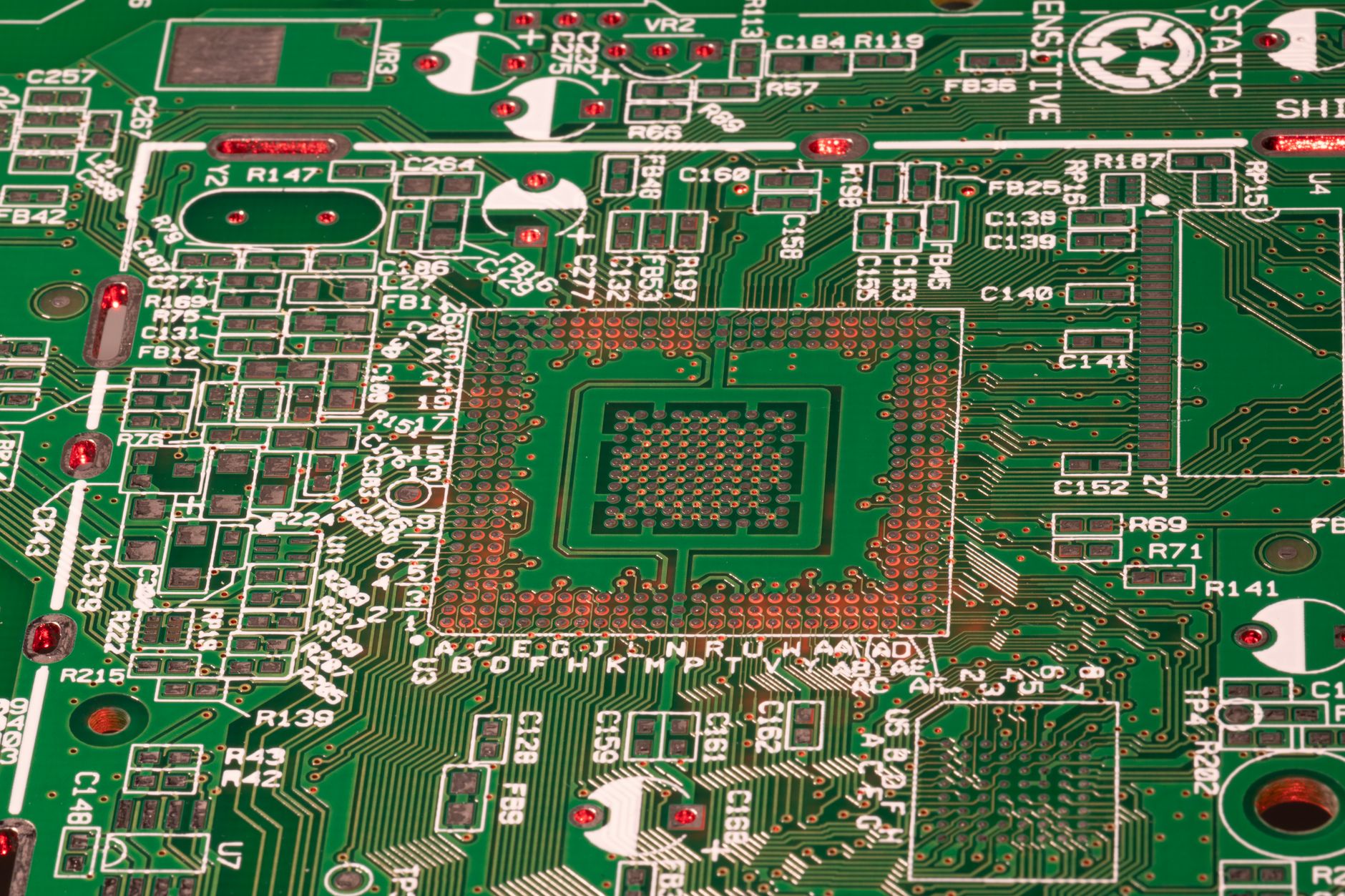
The most credible near-term challenge comes not from Intel’s process engineers but from the open-source hardware movement embodied by RISC-V. Unlike ARM’s proprietary instruction set, RISC-V offers a modular, royalty-free architecture developed at Berkeley and maintained by a foundation rather than a single corporation. For IoT sensor manufacturers or automotive suppliers who treat CPUs as commodity components rather than strategic differentiators, the difference between paying ARM’s per-unit royalty and paying nothing represents a meaningful margin improvement on devices that might retail for three dollars.
But the threat is not merely economic; it is architectural. RISC-V’s modularity allows licensees to implement only the instruction extensions they require, creating custom processors without the baggage of ARM’s accumulated legacy. A company designing a smart thermostat does not require the sophisticated vector processing or virtualization extensions that ARM’s full architecture mandates. RISC-V permits surgical precision; ARM requires adherence to a comprehensive standard that may exceed the application’s needs. As semiconductor design tools become more accessible and automated, thanks to advances in electronic design automation and cloud-based simulation, the fixed cost of developing custom silicon falls toward levels where the absence of licensing fees outweighs the convenience of ARM’s validated designs.
The danger for ARM lies in the threshold of acceptable fragmentation. If twenty percent of the IoT market adopts RISC-V, the software ecosystem bifurcates. Developers must then choose between targeting ARM’s massive installed base or RISC-V’s growing niche. If RISC-V captures automotive, where safety-critical requirements and long design cycles have historically favored proven architectures, the split becomes existential. ARM’s royalty model requires volume to amortize the fixed cost of architectural maintenance; a twenty-percent revenue haircut in the IoT segment, where margins are already thin and volumes high, would force either a reduction in R&D or a desperate attempt to raise royalties on remaining licensees, accelerating their migration to alternatives.
The Qualcomm litigation exposes the fault lines within ARM’s own house. In 2022 and 2023, ARM moved to terminate Qualcomm’s architectural license, arguing that Qualcomm’s acquisition of NUVIA, a startup founded by former Apple chip architects, violated the terms of their agreement. The dispute centered on whether Qualcomm could use NUVIA’s custom ARM-compatible designs in its Snapdragon processors or whether such usage required renegotiation of licensing terms at higher rates. The litigation revealed the precariousness of ARM’s neutrality. By attempting to enforce stricter controls over custom implementations, ARM signaled that it views architectural licenses as a tier above standard core licenses, worthy of premium pricing. Yet Qualcomm argued that ARM was arbitrarily redefining the boundaries of its intellectual property to capture value that rightfully belonged to the implementer.
The economic implications extend beyond the courtroom. If ARM succeeds in reasserting control over custom microarchitectures, it validates the Apple model as a restricted privilege rather than a replicable template. Large licensees would face a menu of constrained choices: accept ARM’s reference designs and compete on implementation details, or pay escalating premiums for architectural freedom. This would alienate precisely the customers, Qualcomm, Samsung, MediaTek, who lack Apple’s vertical integration but possess the engineering resources to develop custom cores if sufficiently motivated. If ARM loses, however, it establishes legal precedent that architectural licenses permit extensive customization without additional fees, effectively ceding the high ground of CPU design to its licensees and reducing ARM to a standards body collecting nominal dues.
The data center transition illustrates the tenfold rule in operation. Amazon Web Services’ Graviton processors, introduced in 2018 and iterated through Graviton3 and Graviton4, represent the most significant ARM incursion into x86 territory. AWS claims forty percent better price-performance compared to comparable x86 instances for specific workloads, and forty percent better performance per watt. Yet adoption remains concentrated in cloud-native workloads, ontainers, microservices, and horizontally scalable applications written in high-level languages like Java, Python, and Go. The legacy enterprise software that dominates corporate data centers, Oracle databases, SAP systems, Windows Server applications, remains architecturally bound to x86.
The economic calculation for a chief information officer is revealing. Migrating a containerized application to Graviton requires recompilation and testing, incurring modest engineering costs that are recovered through reduced compute pricing within months. Migrating an Oracle database requires license renegotiation, third-party vendor certification, and often complete application rewrites. The tenfold advantage exists for the former; it is absent for the latter. ARM’s server market share grows at the edges, capturing the expanding volume of cloud-native compute while leaving the high-margin, sticky enterprise core untouched. Unless ARM achieves compatibility with legacy x86 applications, an unlikely feat given instruction set differences, or unless cloud-native workloads completely displace legacy systems, ARM faces a ceiling in the server market: dominant in volume, marginal in value.
The governance of Rene Haas becomes critical precisely because these tensions cannot be resolved by strategy alone; they require negotiation, compromise, and credible commitment. Haas, who assumed leadership in 2022 after two decades in semiconductor sales and management, faces the task of extracting maximum value from the architecture without triggering the defection of its most powerful licensees. His predecessor, Simon Segars, pursued a strategy of architectural expansion, ushing ARM into laptops, servers, and automotive with aggressive performance targets. Haas has adopted a more conservative posture, emphasizing the “shared success” narrative while quietly attempting to reassert pricing discipline.
This is economic statecraft. When ARM attempted to alter its licensing model in 2023, shifting from a per-chip royalty to a percentage of device value for certain categories, it encountered immediate resistance from major licensees who viewed the change as an attempt to capture value from their own innovations. The retreat was swift and public. The episode demonstrated that ARM’s pricing power, while theoretically broad, is practically constrained by the concentration of its customer base. Apple, Qualcomm, and Samsung collectively represent a significant portion of ARM’s revenue; they possess the legal resources to challenge contract terms and the technical resources to explore alternatives. Haas must manage these relationships as a diplomat manages great powers, extracting tribute without provoking alliance formation against the hegemon.

The physical constraint of battery chemistry merits closer examination, for it is the bedrock assumption upon which the twenty-nine-billion-unit base rests. Current lithium-ion technology approaches theoretical energy density limits; improvements of five to ten percent per year emerge from packaging efficiencies and silicon anodes rather than chemical breakthroughs. Solid-state batteries, which replace liquid electrolytes with ceramic or polymer alternatives, promise fifty to one hundred percent improvements in energy density and safety, with prototype cells demonstrated in laboratories since 2015. Commercialization timelines remain uncertain, Toyota and QuantumScape project manufacturing scale by 2027–2028, but if realized, these batteries would alter the design space for mobile computing.
A smartphone with double the battery life faces different optimization criteria. The thermal constraints remain, processors still generate heat that must be dissipated, but the power budget relaxes. Applications that currently throttle performance to preserve battery life could sustain higher clock speeds. More significantly, the penalty for using a less efficient architecture diminishes. If x86 cores achieve ARM parity in performance-per-watt under relaxed power budgets, while maintaining superior absolute performance and software compatibility, the rational choice for device manufacturers shifts. The laptop market, currently dismissed by ARM as marginal, becomes the template: devices where battery life matters, but not enough to justify abandoning decades of software investment.
Automotive computing presents a variation of this theme. Modern electric vehicles run high-voltage architectures, 400 or 800 volts, that power not only drivetrains but increasingly sophisticated infotainment and autonomous driving systems. The power budget for a Tesla FSD computer or a Mercedes Drive Pilot system, drawing from a battery pack capable of delivering megawatts to the motors, is substantially different from that of a smartphone. While efficiency matters for range anxiety, the constraint is not the Cambridge limitation of plastic packages and coin cells; it is thermal management and raw compute throughput. Here, NVIDIA’s GPUs and custom AI accelerators compete directly with ARM-based SoCs. The power efficiency advantage narrows when the power source is abundant, and the workload, neural network inference, favors parallel architectures over CPU efficiency.
The royalty ceiling imposes a final constraint on ARM’s economics that the market capitalization tends to ignore. Unlike software subscriptions, which can increase pricing annually with inflation and feature additions, semiconductor royalties are typically fixed for the duration of architectural licenses, often spanning a decade or more. ARM’s revenue growth depends entirely on unit volume expansion into new categories. If the twenty-nine billion unit base represents near-complete penetration of addressable markets, if every phone, car, and sensor already contains ARM silicon, future growth requires either capturing the data center from x86 or successfully raising rates on existing licensees. The former is uncertain; the latter provokes defection.
The asymmetry of information in ARM’s licensing negotiations creates additional drag on pricing power. When ARM designs a new Cortex core, it possesses complete knowledge of the microarchitecture’s capabilities and limitations; the licensee knows only the specifications provided. Yet the licensee possesses superior information regarding the end market, hether a particular smartphone model will ship five million units or fifty million. This information asymmetry complicates the calibration of royalty rates. ARM must price for the average case, leaving money on the table for blockbusters while potentially overcharging for failures. More critically, as licensees develop custom implementations, they internalize proprietary knowledge about optimization techniques that ARM cannot observe. The architecture becomes a black box to its own creator; ARM knows the instruction set, but not the physical realization that determines whether a chip succeeds or fails in the market. This opacity prevents ARM from optimizing its own designs effectively, as feedback loops break down when licensees treat implementation details as trade secrets.
The result is a business that resembles a regulated utility more than a technology growth story. ARM maintains the infrastructure of computing, the instruction set equivalent of railroad tracks or electrical grids, collecting tolls that are difficult to increase and vulnerable to regulatory or competitive challenge. The elegance of the Cambridge Constraint created this position, but the lifting of that constraint, through battery advances, AI code generation, or architectural fragmentation, threatens to commoditize the commodity itself. When four chips per person becomes three, or when those chips no longer command premium positioning in the value chain, the economics of shared success give way to the economics of mere survival.