ASML: The €150M Monopoly on Moore’s Law

At the center of ASML’s business is a machine that generates plasma forty times hotter than the surface of the sun, uses light at a wavelength of 13.5 nanometers to etch patterns the width of a few atoms, and requires three Boeing 747s to transport from the factory in Veldhoven to a semiconductor fabrication plant in Taiwan or Arizona. The company sells roughly 345 of these machines annually, at prices exceeding €150 million per unit, to three customers who effectively have no choice but to buy them. In 2022, this translated to €21 billion in revenue and €6.5 billion in operating profit.
This is not a volume manufacturing business disguised as high technology. It is, instead, a bet that physics will cooperate long enough to amortize decades of accumulated research, and that the company can resist the gravitational pull of becoming what it is not: a conventional capital equipment supplier. The economics rest on a peculiar alchemy of technological lock-in, supplier interdependence, and the deliberate cultivation of obsolescence resistance. ASML does not merely sell lithography equipment; it sells the continued possibility of Moore’s Law, one thirteen-billionth-of-a-meter pulse at a time.
The Monopoly at the Physical Limit
To understand ASML’s position, one must first understand the vacuum in which it operates, iterally. Extreme Ultraviolet (EUV) lithography requires generating light by firing a carbon dioxide laser at droplets of molten tin smaller than a speck of dust, striking them 50,000 times per second to create plasma that emits light at 13.5 nanometers. This light is then reflected through a series of mirrors, each polished so smoothly that if expanded to the size of Germany, the largest defect would be a tenth of a millimeter, onto a silicon wafer coated with photosensitive chemicals. The process occurs in a vacuum because air absorbs EUV light.
No other company does this. Nikon and Canon, once dominant in lithography, abandoned EUV development between 2007 and 2010 after concluding that the technical barriers and capital requirements were insurmountable. Today, ASML holds approximately 100 percent market share in EUV equipment and over 90 percent in advanced lithography generally. This is not a competitive market with pricing pressure; it is a controlled monopoly over a physical process essential to producing transistors smaller than five nanometers.
The durability of this position stems from a 25-year gestation period. ASML invested over €10 billion in EUV research before shipping its first high-volume production system in 2019. The technology was so complex that ASML had to acquire Cymer, its supplier of light sources, for €2.5 billion in 2013 simply to ensure supply continuity. The U.S. government, through DARPA, and later Intel, Samsung, and TSMC contributed over €1.4 billion in co-investment in 2012 alone to push the technology across the finish line. Replicating this would require not just capital but time, ime that semiconductor manufacturers, racing to produce AI chips and advanced memory, do not have.
Yet the economic engine runs deeper than the sale of new machines. While new system sales generate 75 percent of revenue, the remaining 25 percent comes from servicing and upgrading an installed base that behaves unlike any other in industrial equipment. Ninety percent of all lithography machines ASML has sold in the past thirty years remain operational. These machines do not depreciate into scrap metal; they evolve.
The Thirty-Year Revenue Tail
In conventional manufacturing equipment, the economic life of an asset is bounded by physical wear or technological obsolescence. A customer buys a machine, uses it for five to ten years, then replaces it with a more efficient model. ASML has systematically broken this cycle. Because the capital cost of a wafer fab runs into the tens of billions of dollars, and because the marginal cost of running a depreciated lithography tool is low, customers rationally choose to upgrade existing machines in the field rather than replace them entirely. ASML sends engineers to modify optics, software, and light sources inside fabs from Taiwan to Ireland, extending the productive life of equipment that might have shipped during the Clinton administration.
This creates a structural asymmetry that competitors cannot overcome without first building a comparable installed base: Catch-22, since ASML’s monopoly on new technology prevents competitors from accumulating such a base. The result is a compound revenue stream: each machine sold generates not just the initial €150 million, but three decades of service contracts, upgrades, and replacement parts. The switching costs are not contractual; they are gravitational. Once a fab manager has optimized processes around an ASML tool, trained personnel on its quirks, and integrated it into a production line where downtime costs millions per hour, the idea of switching to an alternative supplier becomes economically irrational even if an alternative existed.
This installed base dynamic represents the most underappreciated structural advantage in ASML’s model. Analysts frequently focus on the backlog of new EUV orders, currently stretching years into the future, but the existing base provides ballast during cyclical downturns. When semiconductor capital expenditure contracts, as it did in 2023, foundries still require ASML’s presence to maintain and incrementally improve the productivity of their existing fleets. The company’s recurring revenue thus possesses a quality distinct from typical service contracts: it is demand-inelastic because it supports already-sunk infrastructure.
The Volume Trap
The defining structural constraint shaping every major strategic decision at ASML is the tension between scaling production capacity and maintaining technological leadership. The company could, in theory, expand output to meet the voracious demand for AI chips and advanced logic nodes. It could hire thousands more engineers, build additional cleanroom space, and try to push annual output from 345 machines toward 500 or 600. To do so, however, would risk diverting the specific breed of engineering talent required to develop the next generation of lithography, igh-NA EUV, which uses larger numerical apertures to print even finer features.
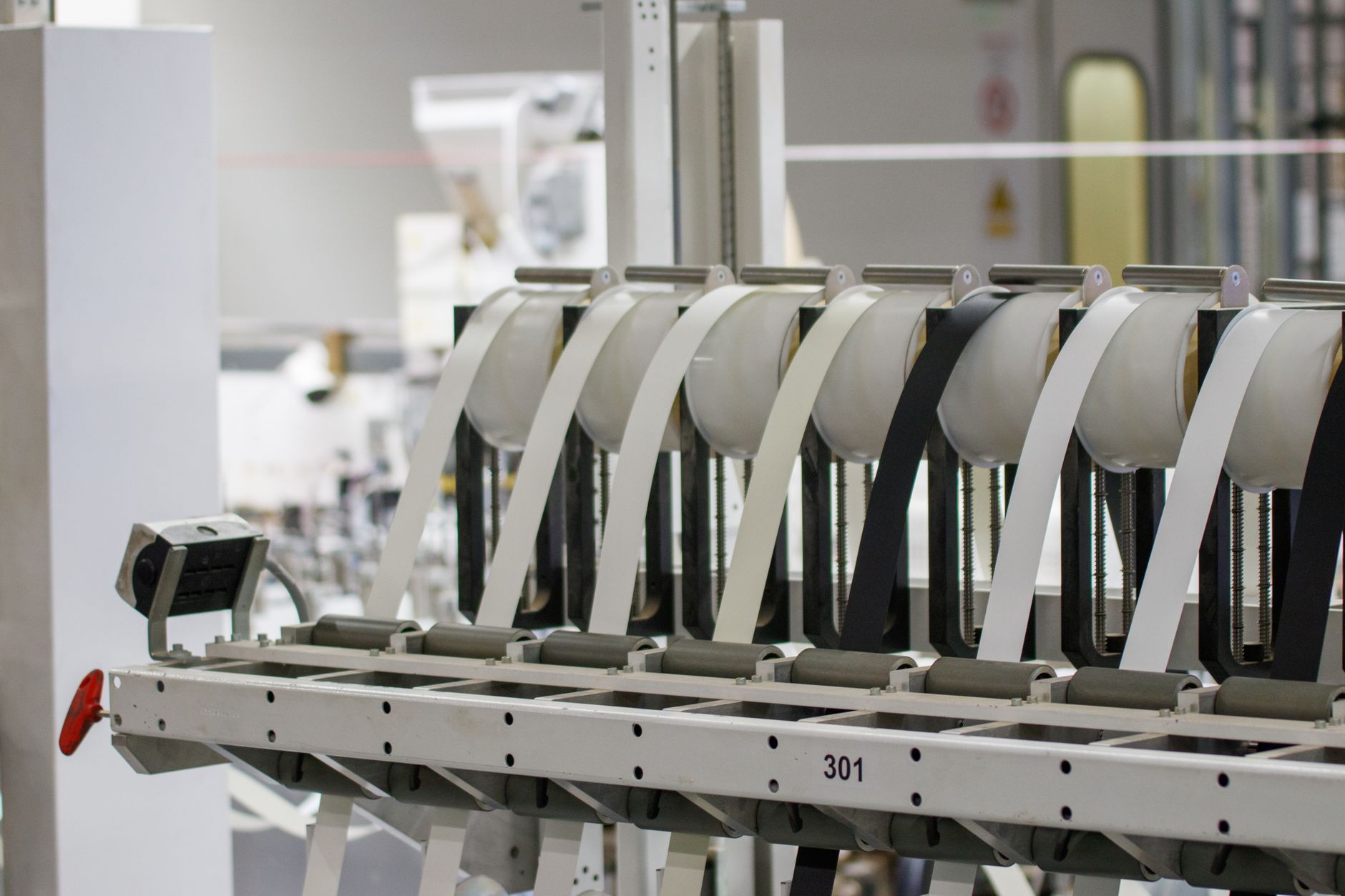
This is the trap that ensnared Nikon and Canon. Both companies pursued vertical integration and volume manufacturing strategies in the 1990s and 2000s, building comprehensive in-house capabilities for optics, mechanics, and electronics. They became efficient manufacturers of established technologies but lost the ability to pivot when EUV emerged. ASML deliberately chose the opposite path: asset-light assembly with 80 percent of cost of goods sold outsourced to a proprietary network of specialist suppliers. This keeps capital requirements manageable and forces the company to remain a systems integrator and technology architect rather than a manufacturer.
The danger lies in succumbing to the pressures of the current moment. With AI driving unprecedented demand for advanced chips, the temptation to prioritize quarterly delivery numbers over long-term R&D is acute. Yet if ASML becomes primarily concerned with production volume, it risks commoditizing the very technology that justifies its pricing power. A €150 million price tag is defensible only because the machine enables production that no other equipment can achieve. If ASML loses the lead in the race toward High-NA EUV or whatever follows it, that pricing power evaporates. The company must therefore maintain the discipline to under-supply the market relative to demand, ensuring that engineering resources remain focused on the next physical limit rather than the current production quota.
When Physics Imposes a Deadline
The most fragile assumption underlying ASML’s entire economic model is that Moore’s Law will continue long enough to amortize the current generation of technology and fund the next. EUV lithography operates at 13.5 nanometers. To produce transistors at 2 nanometers or 1.4 nanometers, the nodes currently on the industry roadmap, requires multiple patterning passes, increasing complexity and cost exponentially. At some point, likely within the next five to ten years, the industry will hit a physical wall: quantum tunneling, where electrons leak through insulating barriers; heat dissipation densities that cannot be managed; or simply the economic reality that smaller transistors cost more to make than the performance improvement justifies.
If Moore’s Law stalls, ASML does not simply face a cyclical downturn. It faces a structural collapse in demand for new machines. The company would be left with its installed base service business, table, profitable, but growing at low single digits rather than the 15-20 percent annual rates that justify its current valuation. The 30-year upgrade model, currently an advantage, would become a curse, as customers indefinitely extend the life of existing tools rather than purchasing new ones for nodes that no longer exist.
This risk is not theoretical. The cost per transistor stopped declining at historical rates around the 7 nanometer node. Each subsequent generation requires more EUV machines, more patterning steps, and more energy, yielding diminishing returns in performance per watt. The industry currently assumes that chiplet architectures, combining multiple smaller dies rather than one large monolithic chip, will extend the economic viability of scaling, but this reduces the number of leading-edge lithography steps required per functional unit of computing power. If the transition to chiplets accelerates, or if alternative technologies such as nanoimprint lithography or directed self-assembly mature for specific applications, ASML’s €10 billion EUV investment becomes partially stranded.
The Deliberately Thin Company
ASML’s response to the physics problem, and to competitive threats, rests on a counterintuitive supply chain strategy. Where competitors pursued vertical integration, ASML pursued deliberate fragmentation. Eighty percent of its cost of goods sold flows to external suppliers: Zeiss for the projection optics, Cymer (now fully integrated) for the light source, specialized German firms for the vacuum chambers and wafer handling systems. This is not outsourcing in the conventional sense, where suppliers are interchangeable. ASML has spent 25 years cultivating a proprietary ecosystem where suppliers are technically dependent on ASML’s specifications and economically dependent on its volume.
This creates a moat that is difficult to replicate. A new entrant could not simply hire engineers to build a better lithography machine; they would need to recreate the entire supply network, convincing Zeiss or comparable optical houses to defect from their decades-long relationship with ASML. Given that ASML represents the majority of advanced lithography demand, such defection would be economically irrational for suppliers. The system thus locks in ASML’s position not through ownership, ASML owns little of its supply chain, but through co-dependency.
However, this model introduces fragility. The supply chain spans geopolitically sensitive territories: German optics, Japanese ceramics, American laser technology, and Taiwanese final assembly. A conflict over Taiwan, or further tightening of Dutch and American export controls on China, could sever critical supply lines. ASML has already faced restrictions preventing the sale of EUV machines to Chinese customers, cutting off 10-15 percent of potential revenue. More severe disruptions could halt production entirely, forcing the company into costly and time-consuming redesigns to substitute components from friendly nations: process that could take years given the qualification requirements for precision optical components.
The Customer Concentration Paradox
ASML’s top three customers, TSMC, Samsung, and Intel, collectively account for the majority of orders. In most industries, such concentration would shift bargaining power to the buyers, enabling them to extract price concessions or demand equity stakes. In ASML’s case, the dynamic is inverted but precarious. The customers have nowhere else to go for EUV equipment, giving ASML pricing power. Yet they possess the capital and collective incentive to fund alternative technologies if they perceive ASML as a bottleneck or extractive monopolist.
This tension is exacerbated by geopolitical maneuvering. ASML is headquartered in the Netherlands but depends on American technology and funding origins (EUV development began with U.S. government support in the 1990s). It is now subject to American export controls regarding China, yet China represents a growing market and potential future competitor. If ASML loses access to American technology, its supply chain collapses; if it loses access to Chinese customers, its growth trajectory flattens; if it fully aligns with American strategic interests, it risks retaliatory measures from China that could disrupt its operations or spawn state-backed competitors.
The precariousness of this position was illustrated when the Dutch government, under American pressure, restricted ASML’s ability to service certain machines in China: significant revenue stream given the long operational lives of the equipment. ASML must navigate between maintaining technological neutrality (selling to any legitimate fab operator) and acknowledging that its technology has become a strategic weapon in great power competition. This is not a public relations challenge but an economic one: the company’s valuation assumes continued access to global markets, yet its political reality increasingly requires choosing sides.
The Infrastructure of Continuity
In an industry where chief executives rotate every five years and strategy shifts quarterly, ASML possesses a continuity of technical leadership that functions as economic infrastructure. Martin van den Brink joined what would become ASML in 1983, two years after graduating university. He was promoted to lead the company’s make-or-break product line after just two years, and has remained the chief technology officer and president through the company’s spin-out from Philips, its near-bankruptcy in the 1980s, and its rise to a €250 billion market capitalization.
This matters economically because EUV technology required 25 years of sustained development before generating revenue. In a typical corporate environment, such a timeline would never survive the churn of leadership changes and strategic pivots. Van den Brink’s presence ensured that knowledge accumulated in 1995 about laser-vaporized tin droplets remained accessible in 2015 when the technology finally matured. The company’s R&D investments, consistently 15-20 percent of revenue, were protected from short-term cuts because the technical leadership possessed the authority and longevity to make credible commitments to long-term physics problems.
This is not a story of charismatic leadership. It is a recognition that in businesses where the product cycle spans decades, institutional memory becomes a balance sheet asset. The alternative, hiring external managers with general industrial experience, would have resulted in the abandonment of EUV during its darkest periods in the 2000s, when the technology appeared physically impossible. ASML’s governance structure, which keeps technical leadership at the strategic center rather than treating engineering as a cost center, is what allowed the company to capture the monopoly position it holds today.
The Weight of the Bet
ASML stands at a peculiar intersection of physics, finance, and geopolitics. Its economics rest on the assumption that transistor shrinkage will remain economically viable for long enough to justify continued investment in lithography at the atomic scale. Its moat depends on resisting the temptation to become a volume manufacturer, instead maintaining the posture of a technology arbiter that decides which physical limits are breachable. Its stability relies on a supply chain that spans potential war zones and a customer base that is both concentrated and politically volatile.
The company sells 345 machines per year, yet shapes the architecture of global computing. Each machine represents a bet that Moore’s Law has another decade of life, that the Netherlands will remain a viable headquarters for strategic technology, and that TSMC and Intel will continue building fabs rather than pivoting to chiplet architectures that reduce lithography intensity.
If these bets hold, ASML compounds value through an installed base that never fully depreciates, generating three decades of service revenue from each unit sold while maintaining pricing power of €150 million per machine. If the bets fail, if physics intervenes or politics disrupts the supply chain, the company does not face mere competition. It faces obsolescence of its growth model, trapped with a brilliant technology for a road that has ended.
The discipline required is unusual in industrial history: to remain small enough in output to stay focused on the next breakthrough, while being large enough to fund physics research that nations struggle to afford. ASML has managed this by recognizing that its product is not the machine itself, but the continuation of a law that has governed electronics for sixty years. The moment it stops being the only company that can extend that law, it stops being ASML. Until then, it occupies a position of economic power so concentrated that it sells not just equipment, but the absence of alternatives.
The Export Control Spiral
The machinery of geopolitical restriction operates on a lag, but the direction is clear. In 2023, the Dutch government, under explicit pressure from Washington, expanded export licensing requirements to cover not just EUV systems but previous-generation deep ultraviolet (DUV) tools that ASML had been selling freely to Chinese fabs. This was not a technological threshold being crossed; it was a strategic perimeter being redrawn. The machines covered by the new restrictions represented mature technology, some of it decades old, yet they suddenly required government approval for shipment. The immediate revenue impact was measurable, roughly 10 to 15 percent of ASML’s order book faced new friction, but the structural implications ran deeper.
ASML finds itself in the position of a sovereign asset without sovereign protection. It is headquartered in the Netherlands, a nation of seventeen million people, yet controls a technology the United States considers critical to national security and China views as essential to economic independence. The company’s supply chain mirrors this vulnerability. The tin droplets vaporized by Cymer’s lasers require high-purity tin sourced through supply chains that pass through jurisdictions vulnerable to disruption. The precision optics come from Zeiss in Germany, itself dependent on specialized polishing equipment and rare earth stabilizers. The final integration occurs in Veldhoven, but the components circulate through a network that spans Taiwan (where some sub-assemblies are tested), Japan (ceramic components), and the United States (control software and laser subsystems).
When the Biden administration tightened restrictions in late 2023 to prevent the servicing of existing ASML machines in China, equipment sold legally years prior but now deemed strategic liabilities, the company faced a contractual crisis. It had sold these machines with implicit guarantees of operational support spanning decades. The Dutch government’s compliance with American demands forced ASML to choose between violating its service agreements and violating export controls. It chose the former, writing down revenue and damaging customer relationships, but the precedent was set: the thirty-year revenue tail could be severed by political fiat at any point.
This creates a peculiar cash flow risk. ASML’s valuation assumes that installed base service revenue is annuity-like, ontractually obligated, recurring, and low-risk. Yet if geopolitical alignment shifts further, the company could find itself barred from collecting on twenty-year service contracts signed in 2018, even as it remains liable for the performance guarantees embedded in those contracts. The asset-light model that seemed brilliant for capital efficiency becomes a liability in a sanctions environment. Unlike vertically integrated manufacturers who might redirect component production to friendly nations, ASML cannot easily replicate its supplier ecosystem. It cannot simply move Zeiss’s optical polishing expertise to Arizona or replace Japanese ceramic suppliers with domestic Dutch alternatives. The specialization is too deep, the qualification times too long.
The irony compounds when considering the strategic rationale for these restrictions. The United States restricts ASML’s sales to China specifically to maintain Western technological superiority in advanced semiconductors. Yet ASML’s ability to fund the next generation of lithography, High-NA EUV, which requires billions in additional R&D, depends on the cash flows generated by its current generation of machines. By restricting the Chinese market, Western governments are simultaneously reducing ASML’s R&D budget and demanding that it accelerate technological development to stay ahead of Chinese state-backed alternatives. It is a squeeze from both ends: reduced revenue to fund the race, and increased urgency to win it.
China, for its part, has responded not by abandoning advanced chipmaking but by directing state capital toward lithography alternatives with the same intensity it once directed toward solar panels and electric vehicles. The historical parallel haunts the analysis: in the 1990s, the United States created ASML by pooling government and industry resources to solve EUV when no single company could afford the risk. China is currently attempting the same with its “Made in China 2025” initiatives, funding domestic lithography efforts at Shanghai Micro Electronics Equipment (SMEE) and other state labs. They are not close, estimates suggest Chinese domestic technology remains stuck at 90nm resolution, generations behind EUV, but the gap is not static. If physics truly imposes a hard stop on Moore’s Law in the next decade, catching up becomes easier; the finish line stops moving.
The Co-Investment Paradox
In 2012, ASML announced a program that revealed the underlying power dynamics of its customer relationships with unusual clarity. Intel, Samsung, and TSMC collectively invested €1.4 billion in ASML’s research and development, specifically targeting EUV commercialization and 450mm wafer technology (the latter of which eventually failed). In exchange, they received equity stakes and priority access to the first production systems. On the surface, this appeared to validate ASML’s technological leadership: he wealthiest semiconductor manufacturers on earth were paying for the privilege of ensuring their supplier had enough money to build the machines they needed.
But the transaction cut both ways. The participation of all three major foundries in the same funding round demonstrated that none of them could afford for EUV to fail, and none of them trusted ASML’s balance sheet alone to carry the risk. It was a tacit acknowledgment that ASML had become a single point of failure for the entire semiconductor industry. The co-investment bought the customers not just machines, but insurance against ASML’s potential insolvency during the final, most expensive phase of EUV development.
This arrangement established a precedent that lurks in the background of every current negotiation. If ASML’s pricing power ever becomes too aggressive, if the €150 million price tags begin to consume too much of the foundries’ capital budgets, the customers possess a playbook for resistance. They could replicate the 2012 model, but with a different objective: not funding ASML’s success, but funding its replacement. The same consortium mechanism that birthed EUV could birth a post-ASML technology.
The candidates for such a transition exist at the margins. Canon has pursued nanoimprint lithography (NIL), a mechanical stamping process that avoids the wavelength limitations of optical lithography entirely. While NIL currently lacks the throughput for high-volume logic chip manufacturing, it offers compelling economics for memory applications where patterns repeat regularly. Directed self-assembly, using block copolymers to naturally form nanoscale patterns, could reduce the number of EUV passes required for certain layers. Neither technology threatens ASML today, but both represent pathways that could be accelerated with the concentrated capital of Intel, Samsung, and TSMC acting in coordination.
The fragility lies in the coordination cost. Foundries are fierce competitors; TSMC does not share technology roadmaps with Samsung. Yet all three share a common vulnerability: they are captive to ASML’s production schedule. When ASML announced that High-NA EUV machines would cost roughly €350 million each, more than double the current generation, and that initial production would be limited to five or six systems in 2025, the foundries faced a collective capacity constraint. They are being asked to pay more for less availability, even as they fund the R&D that created the technology.
At a certain point, the rational economic decision for the customers becomes not grudging acceptance of ASML’s pricing, but active investment in technological diversification. The U.S. government’s CHIPS Act, which directs $52 billion toward domestic semiconductor manufacturing, includes provisions for advanced lithography research that explicitly aims to reduce dependence on foreign suppliers. While the current focus is on securing ASML supply, the infrastructure being built, the National Advanced Packaging Manufacturing Program, the research alliances between national labs and universities, could pivot toward alternative patterning technologies if ASML’s constraints become too painful.
The Physics of the Endgame
High-NA EUV represents ASML’s bet that the economic viability of Moore’s Law can be extended through mechanical ingenuity even as the physics of light reaches its limits. The “NA” refers to numerical aperture; current EUV systems operate at 0.33 NA, while High-NA moves to 0.55 NA, allowing the projection optics to capture light at steeper angles and thus print smaller features without changing the 13.5nm wavelength. The machines will be physically larger, too large for the current generation of fabs, and will require new resist chemistries, new mask technologies, and new metrology systems. They will cost €350 million each, and a single fab might require six or eight of them.
This is where the economic logic of scaling begins to strain. The historical bargain of Moore’s Law was that each generation of smaller transistors would deliver lower cost per transistor, even if the capital equipment became more expensive. The increased density compensated for the increased machine cost. Around the 5nm node, this relationship inverted. The cost per transistor stopped declining and began flatlining or increasing. Chip designers continued shrinking features not because it was cheaper, but because performance gains, particularly in power efficiency, were necessary for mobile and AI applications.
High-NA EUV accelerates this inversion. At €350 million per machine, with increased energy consumption and complexity, the cost per transistor will likely rise further. The industry is entering a regime where semiconductor manufacturing becomes like nuclear power or pharmaceutical development: feasible only for the largest state-backed or quasi-state actors, with economics driven by strategic necessity rather than commercial efficiency. ASML’s business model assumes that demand remains inelastic, hat Intel, Samsung, and TSMC will pay whatever is required to access the next node because the alternative is technological obsolescence. But inelastic demand has limits. If the cost of a leading-edge fab reaches $50 billion, and each node shrink adds only marginal performance improvements, the industry will bifurcate.
In such a world, the 30-year installed base becomes not a growth engine but a managed decline. ASML would transition from a technology company selling the future to a utility maintaining the past. The upgrade path for existing EUV machines would extend indefinitely as customers attempt to extract value from sunk capital rather than investing in new High-NA systems. The field service organization, currently the source of high-margin recurring revenue, would shift from performing productivity upgrades to performing life-extension maintenance, eplacing worn components in 20-year-old machines to keep them operational because new machines are economically unjustifiable.
This bear case is not speculative; it is visible in the current dynamics of mature nodes. Semiconductor manufacturers are investing heavily in “lagging-edge” fabs, 40nm, 28nm, even 90nm processes, because the economics of producing automotive chips, power management circuits, and simple sensors on older technology remain robust. If AI demand saturates or shifts toward algorithmic efficiency rather than brute compute scaling, the same logic could infect the leading edge. Chiplet architectures, which disaggregate processors into interconnected tiles, reduce the requirement for monolithic chips at the bleeding edge. A chiplet-based system might use one expensive 3nm compute die surrounded by cheaper 7nm memory and I/O dies, reducing the total lithography intensity per system.
In such a scenario, ASML’s revenue growth would not collapse overnight; it would decay gradually as the replacement cycle extends. Machines sold in 2025 would still generate service revenue in 2055, but the volume of new machines sold annually might fall from 345 to 150, then to 100, as the industry consolidates around a fixed set of physical capabilities. The company would become a cash cow, distributing dividends from its maintenance operations, but its €250 billion market capitalization assumes perpetual growth in semiconductor density that physics may not permit.
The final tension lies in the timing. ASML must invest billions in High-NA EUV and potential successors (hyper-NA, or novel directed energy approaches) while knowing that the payoff window might be only five to seven years before physical limits or economic rationality closes it. If the company guesses wrong, if it invests in High-NA but customers pivot to chiplets and mature nodes, it will be left with R&D expenses that cannot be amortized and supplier contracts that cannot be fulfilled. If it guesses right, it extends its monopoly for another decade, capturing the final waves of transistor shrinkage before the industry reorganizes around post-scaling architectures.
Either way, the machine that generates plasma forty times hotter than the sun is approaching its final form. The question is not whether ASML can build it, engineers in Veldhoven are already assembling the first prototypes, but whether anyone can afford to buy it, and whether buying it will matter when the laws of physics finally refuse to bend.