
Cannabis: The Prohibition Premium Paradox

The Prohibition Premium
In any other industry, a company growing a crop at seven hundred dollars per pound and selling it through owned retail channels at five thousand dollars would trade at twenty times earnings, not four. It would attract sovereign wealth funds and index providers, not message-board retail traders. Its debt would cost four percent, not ten. And it certainly would not pay a seventy percent effective tax rate on profits while operating in a regulatory environment where crossing state lines with inventory constitutes a federal felony.
Yet this is the precise economic anatomy of the American cannabis industry in 2024. Multi-state operators (MSOs) have built billion-dollar enterprises by occupying the liminal space between state legalization and federal prohibition. They function within a structural contradiction: federal illegality creates artificial scarcity (limited state licenses) and artificial capital scarcity (institutional exclusion), allowing incumbents to capture supply-chain markups that would instantly vanish in a normalized market. The result is a twenty-billion-dollar equity complex trading at distressed multiples while underlying businesses generate fifty-percent gross margins and thirty-percent EBITDA margins on forty-percent annual revenue growth.
This is not a value trap in the conventional sense. It is a regulatory arbitrage: temporal trade that pays excess returns for as long as two conditions hold: that state legislatures continue doling out licenses with geological slowness, and that federal reform remains close enough to promise eventual legitimacy but distant enough to prevent institutional capital from flooding the zone. The moment that balance tips, the arbitrage collapses. MSOs will either gain access to cheap capital and normalized multiples (compressing the retail investor premium to zero) or watch the illicit market calcify its seventy-five-billion-dollar hold on consumers, capping the total addressable market well below the hundred-billion-dollar projections that justify current expansion. The entire edifice depends on the precise velocity of regulatory change.
Artificial Scarcity, Artificial Abundance
The economics begin with the license. In Illinois, the state issued exactly ten retail licenses to social equity applicants in the initial adult-use rollout. In Connecticut, the cap sits at four dispensaries per entity. Minnesota allows two. These are not zoning restrictions or planning commissions exercising discretion; they are hard numerical limits embedded in statute, creating a secondary market where licenses trade for eight-figure sums even before a single plant is cultivated.
This artificial scarcity produces a bifurcated landscape. In unlimited-license states like California and Colorado, wholesale prices have collapsed toward nine hundred dollars per pound, retail margins have compressed to twenty percent, and operators compete on agricultural efficiency alone. In limited-license states, wholesale prices hold at twenty-five hundred to five thousand dollars per pound, and vertically integrated operators capture the full markup from cultivation through retail. The latter model generates sixty-percent grower EBITDA margins and thirty-five percent retail contribution margins; the former generates commodity agriculture returns.
State legislators protect this scarcity with political predictability. Once initial license cohorts achieve profitability and begin generating nine-figure tax revenues, Illinois grew from two hundred fifty million to two billion dollars in legal sales within twenty-four months of adult-use legalization, incumbents acquire the lobbying power and tax-base importance to resist new market entrants. The political economy favors incumbency: new licenses dilute tax revenue per operator, reducing the incentive for compliance and enforcement spending. Thus, the moat is durable not because of brand loyalty or technological differentiation, but because the state has a vested interest in protecting the oligopoly it created.
The Capital Market Arbitrage
While license scarcity protects operating margins, capital market fragmentation protects valuation multiples. Approximately ninety-six percent of MSO ownership consists of retail investors. Institutional capital, mutual funds, pension systems, sovereign wealth vehicles, remains locked out by custody barriers, prime broker policies, and compliance frameworks that treat American cannabis equities as toxic assets despite their operating in fully legal state regimes. The result is a liquidity and pricing mismatch that borders on the absurd: the top five MSOs collectively command a twenty-billion-dollar market capitalization but trade only sixty million dollars in daily volume. Canopy Growth, a Canadian licensed producer with zero American THC operations, maintains a four-and-a-half-billion-dollar valuation on seventy million dollars in daily turnover because it lists on the Nasdaq and qualifies for institutional mandates.
This exclusion creates a ten-to-fifteen-year window where retail investors front-run institutional entry. MSOs trade at four-to-five times forward EBITDA while growing forty to fifty percent annually; comparable spirits and consumer packaged goods companies trade at fifteen-to-twenty times EBITDA on three-percent growth. The spread implies three hundred to four hundred percent upside if multiples normalize upon federal reform. Yet normalization is not purely advantageous. Current valuations depend on the inefficiency itself: he inability of Vanguard or BlackRock to allocate capital means MSOs face no institutional pressure to optimize returns on capital, no activist campaigns to reduce corporate overhead, and no efficient market pricing of operational execution. The “mispricing” is structural, not analytical.
SAFE Banking legislation, which has passed the House five times with one hundred eighty co-sponsors, or rescheduling under the MORE Act, would remove custody barriers. But institutional adoption requires more than statutory change. Custody infrastructure, compliance frameworks, and prime broker policies require two to three years to build post-legalization. The early movers, those MSOs that scaled during the exclusionary period, will capture the valuation expansion from five times to twenty times EBITDA without facing immediate competition from well-capitalized entrants. This is the underappreciated structural advantage: not the licenses themselves, but the temporal monopoly on institutional-quality assets held by non-institutional capital.
The Vertical Trap
Vertical integration from seed to sale maximizes per-unit economics but demands irreversible capital deployment. State regulations typically require separate licenses for cultivation, processing, and retail, and MSOs must acquire all three in each jurisdiction to capture the seven-hundred-dollar-to-five-thousand-dollar markup. Indoor cultivation facilities cost four to five hundred dollars per square foot to build, with electricity and labor comprising seventy-five percent of the seven-hundred-dollar per pound all-in cost. These are specialized assets, climate-controlled grow rooms with bespoke HVAC and lighting systems, that cannot be repurposed for other agricultural use if demand falls short.
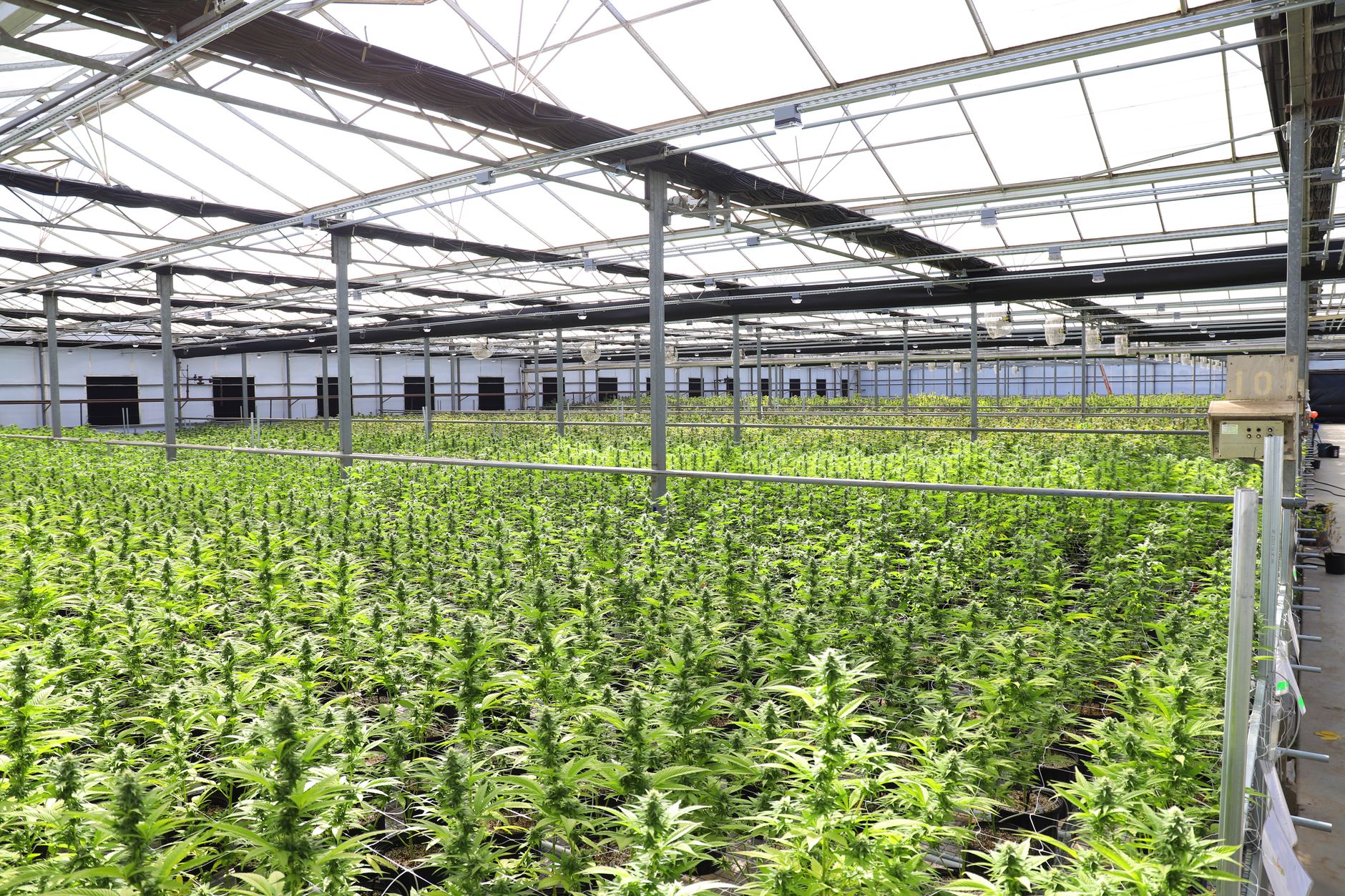
The tension is temporal. MSOs must pre-position supply ahead of legalization in states like Pennsylvania, Ohio, or Maryland, betting that adult-use passage will trigger demand spikes similar to Illinois’s tenfold growth. If legalization is delayed, or if the illicit market proves stickier than modeled, supply gluts emerge and wholesale prices collapse below twenty-five hundred dollars per pound. Illinois and Michigan validated the demand thesis, but not all states will replicate their trajectory. An MSO that over-builds in Pennsylvania faces stranded assets and margin compression; one that under-builds surrenders market share to competitors who timed the cycle correctly. The capex is sunk, the timing is speculative, and the window for correction is measured in years, not quarters.
This dynamic creates a prisoner’s dilemma across the industry. MSOs collectively benefit from supply discipline that maintains pricing power, but individually benefit from maximizing footprint before competitors enter. The result is a race to deploy capital in pre-legalization states, inflating asset bases that may never generate projected returns if the timing of regulatory change slips.
Competing with Ghosts
The illicit market, seventy-five billion dollars against the legal market’s twenty-five billion, remains the true competitor, yet MSOs are structurally incentivized to fight each other instead. State-by-state legalization creates sequential battlegrounds where first-mover advantage is real but temporary. An MSO that captures thirty percent market share in Illinois during the first eighteen months of adult-use sales establishes budtender relationships, brand recognition, and retail convenience that persist even as new entrants arrive. The window closes as more states legalize and capital becomes available to pre-position supply.
This creates a capital allocation tension that separates competent management from value-destroying expansion. The choice between maximizing cash flow in existing limited-license states (capital-light, certain) versus pre-positioning in future states (capital-intensive, speculative) determines long-term returns. MSOs that over-allocate to speculative expansion risk diluting returns in proven markets; those that under-allocate risk permanent exclusion from high-growth territories. There is no formulaic answer: he decision depends on predictions about legislative velocity, illicit market elasticity, and competitor behavior that are inherently uncertain.
The pricing strategy dilemma compounds the allocation challenge. Premium positioning (higher margins, brand differentiation) and Walmart-model pricing (market share capture from illicit) require opposite operational and marketing investments. If the illicit consumer is price-elastic, premium players lose volume to cheaper alternatives; if consumers migrate to legal for quality and safety assurance, discount players trigger industry-wide margin destruction. No clear winner emerges until markets mature, yet MSOs must commit to capital-intensive strategies, branding campaigns, SKU development, retail buildouts, before the consumer preference distribution clarifies. The race to displace seventy-five billion dollars in illicit sales risks becoming a race to the bottom that leaves the legal industry structurally unprofitable.
The Clock
The entire model rests on a fragile temporal assumption: that federal reform arrives within a three-to-five-year window that allows MSOs to complete their state-by-state land grab before institutional capital democratizes access to the asset class, but after the illicit market has begun converting to legal channels. If SAFE Banking passes in 2025, institutional capital could compress valuations from five times to fifteen times EBITDA within twelve to twenty-four months, erasing the retail investor premium that justifies current risk-adjusted returns. If reform is delayed beyond 2027, the illicit market may calcify its distribution networks and consumer loyalty, capping the legal TAM at forty-five to fifty billion dollars rather than the projected hundred-billion-plus, invalidating the capital-intensive expansion thesis entirely.
The assumption that illicit consumers will migrate depends on price and quality elasticities that remain unproven at scale. New York and New Jersey represent the critical test cases. If the illicit market in these states adapts by matching legal pricing through tax arbitrage while improving product consistency, the legal market may never achieve the thirty-percent price premium or fifty-percent quality advantage necessary to drive mass conversion. MSOs would then be left with stranded assets in saturated markets, competing against shadow operators who face no Section 280E tax penalties, no compliance costs, and no capital constraints.
Section 280E, denying standard business expense deductions to entities trafficking in Schedule I substances, creates the fifty-to-seventy-percent effective tax rates that make MSOs cash-flow negative at the federal level despite operating profits. This tax burden is simultaneously a structural cost penalty and a barrier to entry; only operators with sufficient scale and balance sheet strength can survive the cash burn until reform arrives. The fragility lies in the assumption that reform will arrive before the tax burden destroys the balance sheets of even well-run operators, or that rescheduling will occur with sufficient retroactive clarity to recover lost capital.
Allocation Discipline as Strategy
In an industry where regulatory velocity determines asset values and capital deployment is irreversible, management culture functions not as a soft factor but as a primary economic variable. The distinction between value-creating and value-destroying MSOs lies in capital allocation discipline: he specific decision calculus used to weigh cash generation in mature markets against speculative pre-positioning in future states.
Leadership teams that treat expansion as a land rush, deploying capital in every jurisdiction that hints at legalization, accumulate stranded assets and dilute returns. Those that maintain fortress balance sheets, deploying capital only after legislative clarity emerges and demand curves validate, sacrifice short-term revenue growth for long-term return on invested capital. The culture of the organization, ts tolerance for regulatory uncertainty, its discipline in saying no to marginal markets, its sophistication in modeling illicit market conversion rates, irectly determines whether vertical integration generates thirty-percent EBITDA margins or becomes a capital trap.
This cultural variable manifests in the choice between building versus buying capacity. Building cultivation facilities requires three-year lead times and four-hundred-dollar-per-square-foot capex, but secures permanent cost advantages. Buying distressed assets from failed competitors offers speed but inherits operational inefficiencies and legacy liabilities. The optimal strategy shifts based on interest rate environments, state-specific regulatory risk, and the cost of equity capital: calculation that requires management teams to function as macroeconomic portfolio managers rather than consumer goods operators.

Normalization and Its Discontents
The endgame is not a single event but a compression sequence. As federal reform approaches, the twin pillars of the current model, license scarcity and capital exclusion, will erode simultaneously. Institutional entry will normalize multiples, eliminating the three-hundred-percent upside that justifies current risk. Simultaneously, federal legitimacy may trigger license cap adjustments in states facing budget pressure, or interstate commerce provisions that transform cannabis from a state-protected oligopoly into a nationally traded commodity.
The operators who survive this transition will be those that used the arbitrage window to build brands capable of sustaining pricing power without regulatory protection, and balance sheets capable of surviving the multiple compression that accompanies institutionalization. The current twenty-billion-dollar market cap of American MSOs reflects not the present value of cannabis cash flows, but the option value of regulatory timing. When that option exercises, whether through SAFE Banking, rescheduling, or full federal legalization, the industry will bifurcate into agricultural commodity producers and branded consumer goods companies, with little room in between for the vertically integrated, tax-burdened, capital-excluded hybrids that dominate today.
Until that inflection arrives, the business remains what it has always been: a trade on the velocity of political change, conducted within the narrow margin where state legality creates excess returns and federal illegality prevents their immediate arbitrage away. The leaf is legal enough to sell, but illegal enough to keep the competition out. It is a fragile equilibrium, measured in legislative sessions and tax returns, where the reward for being right is measured in billions, and the cost of being wrong is measured in stranded grow lights and unrecoverable capex.
The physical reality of these facilities deserves closer inspection. A modern indoor cannabis cultivation operation occupies warehouses the size of aircraft hangars, retrofitted with HVAC systems capable of maintaining precise temperature and humidity bands, seventy-two degrees, fifty-five percent relative humidity, twenty-four hours a day. The lighting infrastructure alone draws two to three thousand watts per square meter, creating electricity demand profiles that rival data centers. When an MSO pre-positions supply in a state like Pennsylvania, it is not merely signing leases; it is committing to five-year utility contracts, specialized environmental controls that cannot be repurposed for traditional agriculture, and labor forces trained in the specific biochemistry of cannabis cultivation. These are not assets that can be sold into secondary markets if demand fails to materialize. The specialized grow tables, the sulfur burners for pest control, the trimming equipment, hese become scrap metal if the facility closes.
This capital intensity creates a specific form of operating leverage that amplifies both success and failure. In Illinois, where demand materialized precisely as modeled, operators like Green Thumb Industries and Cresco Labs captured the spread between $700 cultivation costs and $5,000 retail equivalents by filling facilities built during the medical-only era. But the timing was fortuitous. Had Illinois delayed adult-use legalization by eighteen months, those same facilities would have generated negative cash flows while debt service continued at ten percent interest rates, burning through liquidity reserves designed for twelve-month regulatory delays, not thirty-six. The difference between a strategic asset and a stranded liability is often six quarters of legislative timing.
The tax mechanics of Section 280E compound this operational leverage in ways that conventional EBITDA metrics obscure. Because cannabis remains a Schedule I substance, Internal Revenue Code 280E denies standard business expense deductions to companies “trafficking in controlled substances.” The practical impact is grotesque: an MSO with $100 million in revenue and $60 million in cost of goods sold reports $40 million in gross profit, then faces taxation on nearly the full amount because selling, general, and administrative expenses, rent, salaries, marketing, compliance costs, are non-deductible. At a twenty-one percent federal tax rate, the company pays $8.4 million in taxes on what might be $10 million in actual net income after legitimate expenses, yielding an effective tax rate of eighty-four percent. The accounting becomes surreal: companies reporting thirty-percent EBITDA margins to investors often generate negative free cash flow after taxes and working capital needs.
This tax burden creates a selection mechanism that favors scale at all costs. Only operators with sufficient balance sheet capacity to absorb years of negative cash flow can survive the gauntlet from medical-market approval to adult-use profitability. Smaller operators, even those with superior cultivation techniques or local brand recognition, bleed out under the tax load before reaching sustainable scale. The result is a consolidation pressure that has little to do with operational efficiency and everything to do with access to expensive capital. An MSO that can raise $200 million in convertible debt at twelve percent interest can outlast a competitor growing better cannabis but unable to shoulder the tax burden. The market structure that emerges is not necessarily the most efficient, but the most capitalized.
The illicit market competes precisely by avoiding these structural costs. A black-market operator in California or New York pays no excise taxes, no 280E penalty, carries no compliance overhead for seed-to-sale tracking systems, and faces no capital constraints from banking exclusion. The $75 billion illicit market can undercut legal pricing by forty percent while maintaining equivalent or superior quality because it operates outside the cost structure that legitimizes the legal market. When New Jersey opened its adult-use market in 2022, legal dispensaries initially priced flower at $60 per eighth-ounce; illicit delivery services offered comparable quality at $35, delivered to doorsteps within an hour, without the scrutiny of state surveillance systems.
The persistence of this shadow economy challenges the fundamental thesis of market conversion. Legalization advocates assumed that product safety testing, consistent dosing, and retail convenience would drive consumer migration from illicit to legal channels. But cannabis is not heroin; the illicit supply chain has matured over decades to deliver reliable, tested products through established relationships. The neighborhood dealer who has supplied a consumer for fifteen years offers credit, personalized recommendations, and discretion that no dispensary can match. The legal market must overcome not merely price differentials but relational inertia.
The strategic response to this competition has bifurcated the MSO landscape into two incompatible models, neither of which has proven definitively superior. One camp, led by operators like Curaleaf, pursues a volume strategy: maximize throughput, minimize per-unit cultivation costs through scale and automation, and accept compressed margins in exchange for market share capture from the illicit market. This approach requires massive capital deployment, automated trim lines, genetic breeding programs for high-yield strains, distribution infrastructure, but promises a commoditized future where cannabis becomes analogous to beer or tobacco, with returns driven by operational efficiency rather than brand premium.
The opposing strategy, exemplified by companies like Green Thumb and Verano, emphasizes premium positioning: exclusive genetics, sophisticated branding, and budtender relationships that drive basket size and loyalty. In this model, the dispensary functions not as a transactional point of sale but as an educational environment where trained staff guide consumers through terpene profiles and consumption methods. The economics rely on maintaining price premiums of thirty to fifty percent above illicit equivalents by delivering consistency, safety, and experience that black markets cannot replicate.
Both strategies face existential risks if the competitive dynamic shifts. If the illicit market successfully mimics legal product quality while maintaining tax arbitrage, the premium model collapses; if consumer preferences shift decisively toward price over experience, the discount model triggers industry-wide margin compression from which no operator emerges profitable. The strategic tension is not merely academic, t determines every operational decision, from facility design (automated greenhouse vs. craft indoor) to inventory mix (value flower vs. infused pre-rolls) to marketing spend (price promotions vs. brand building).
The capital allocation implications of this strategic choice are severe. An MSO committing to the premium model must invest in retail experience, staff training, and SKU proliferation, apital-light but operationally complex investments that scale slowly. The volume model demands continuous capex in cultivation capacity and manufacturing automation, creating fixed-cost structures that become lethal if demand growth decelerates. When Illinois sales growth slowed from triple digits to forty percent year-over-year as the market matured, volume-oriented operators faced capacity utilization issues that destroyed unit economics, while premium operators maintained margins but sacrificed growth rates. Neither outcome validates the underlying capital allocation.
The mechanics of federal reform, when it arrives, will not solve these competitive tensions but rather transpose them into a higher-stakes environment. SAFE Banking, the legislation most likely to pass in the near term, would allow MSOs to access depository banking, credit card processing, and institutional custody. The immediate effect would be a reduction in cost of debt from ten percent to six percent, and the elimination of cash-handling inefficiencies that currently require armed transport for dispensary deposits. But the second-order effects are more consequential: access to banking would enable the leveraged buyout industry to enter cannabis, applying the same roll-up strategies that consolidated veterinary clinics and dental practices. Private equity firms with lower cost of capital and more aggressive return thresholds could acquire distressed MSO assets, stripping out the operational inefficiencies that current management teams, protected by capital scarcity, have been allowed to maintain.
Rescheduling cannabis from Schedule I to Schedule III, as recommended by the Department of Health and Human Services, would eliminate the 280E tax burden but introduce new complexities. While operators would gain standard expense deductions, they would also face pharmaceutical-style regulations that could invalidate existing operational licenses. If the Food and Drug Administration asserts control over cannabis as a scheduled drug, the current state-by-state licensing regime might collapse into a federal permitting system that favors well-capitalized pharmaceutical companies over incumbent MSOs. The craft cultivation expertise developed by current operators, knowledge of specific phenotypes, curing techniques, and regional consumer preferences, might prove less valuable than regulatory affairs capabilities and FDA compliance infrastructure.
The specific pathway of federal reform thus matters more than the binary outcome. Incremental rescheduling without interstate commerce provisions preserves the state-level oligopolies but removes the tax penalty, creating a cash-flow bonanza for current incumbents. Comprehensive legalization with interstate commerce transforms the industry into agricultural commodity trading, where cultivation moves to low-cost jurisdictions like Central California or Colombia, and MSOs become pure retail brands stripped of their cultivation margins. The strategic preparation for these divergent futures is incompatible; one requires fortifying state-level supply chains, the other requires building brand equity independent of cultivation assets.
The temporal pressure of these uncertainties manifests in management decision-making that often appears schizophrenic. MSOs simultaneously tout their “plant-touching” vertical integration as a competitive moat while acquiring intellectual property and brands that could survive in a post-vertical-integration world. They lobby for federal reform while building war chests predicated on the continuation of state-level protection. They expand cultivation capacity in limited-license states while preparing marketing campaigns that could scale nationally. This strategic hedging is rational but expensive, consuming capital that could be deployed definitively if the regulatory trajectory were knowable.
The human element within these organizations bears the weight of this uncertainty in specific, measurable ways. Compliance officers at MSOs manage regulatory frameworks that change quarterly, where a shift in state testing requirements or packaging regulations can invalidate millions in inventory. Cultivation directors operate in environments where a single failed microbial test can trigger product destruction worth hundreds of thousands of dollars, with no insurance coverage available for crop loss due to federal illegality. Retail staff navigate cash-only transactions that create security risks and limit customer throughput. The talent premium required to attract executives willing to operate in this environment, where personal legal exposure remains theoretical but nonzero, and career mobility to mainstream industries is constrained, adds a hidden cost to MSO operating models.
The consolidation that has already occurred, Curaleaf’s acquisition of Grassroots, Cresco’s merger with Columbia Care, Trulieve’s purchase of Harvest Health, reflects not merely economies of scale but a survival instinct. In a capital-constrained environment with high fixed costs and tax burdens, scale provides the liquidity reserves to survive legislative delays and pricing compression. But these mergers have also created integration challenges that expose the operational fragility of rapid expansion. Combining seed-to-sale tracking systems, harmonizing genetic libraries, and rationalizing overlapping retail footprints in limited-license states requires management bandwidth that might otherwise be devoted to competitive positioning. The merged entities often find themselves managing complexity rather than capturing synergies.
Looking forward, the valuation gap between current trading multiples and consumer packaged goods comparables will close through some combination of price appreciation and earnings compression. If institutional capital enters and multiples expand to fifteen times EBITDA, current shareholders capture three hundred percent returns. If competition intensifies and EBITDA margins compress from thirty percent to fifteen percent while multiples only expand to ten times, shareholders break even. If the illicit market retains seventy percent of total volume and pricing power evaporates, equity value approaches zero regardless of multiple expansion.
The most likely outcome is a muddled middle: partial reform that removes tax burdens but preserves state licensing, allowing current operators to survive but not thrive, generating returns adequate to compensate for risk but not the lottery tickets implied by current valuations. In this scenario, the winners will be those MSOs that used the prohibition period not merely to accumulate licenses but to build genuine consumer relationships and operational discipline: he capabilities that persist when regulatory arbitrage disappears.
Until then, the industry remains suspended in a peculiar form of capitalism where the normal rules of competition are suspended by statute, where the cost of capital is determined by legal status rather than credit quality, and where the total addressable market is defined by legislative vote counts rather than consumer demand curves. It is a business built on the assumption that inefficiency is temporary, that the current structural advantages will convert into sustainable competitive positions before the arbitrage window closes. The operators who recognize that this conversion is operational rather than legislative, that building a brand matters more than banking access, that consumer loyalty outlasts license protection, will be the ones who survive when the leaf is finally, fully legal, and the prohibition premium vanishes forever.
The mechanics of this brand-building, however, remain poorly understood by investors accustomed to traditional consumer packaged goods metrics. In most limited-license states, cannabis brands cannot purchase television advertising, radio placements, or mainstream social media campaigns. The restrictions vary by jurisdiction, ome states prohibit any advertising that might appeal to minors, others ban billboard advertising within a certain distance of schools, and federal illegality prevents interstate commerce in branded merchandise or sponsorships. This regulatory environment forces MSOs to allocate marketing capital toward “budtender education”, raining dispensary staff to recommend specific products based on terpene profiles, desired effects, and consumption methods.
The economics of this strategy diverge sharply from conventional CPG. Rather than spending thirty percent of revenue on mass-market advertising to drive trial, premium MSOs spend fifteen to twenty percent of revenue on field marketing teams that visit dispensaries, provide product samples to staff, and build relationships with the individuals who actually hand products to consumers. This creates a moat that is personnel-intensive rather than capital-intensive: a competitor with superior manufacturing economics cannot displace an incumbent whose field team has trained a store’s entire staff on the nuances of their live resin extraction process or the consistency of their edible dosing.
Yet this model scales poorly across state lines. When an MSO expands into a new jurisdiction, it must hire and train a new field team from scratch, as budtenders cannot be transferred across state lines due to licensing requirements and the lack of federal labor mobility. The result is a fragmented, high-touch sales organization that resembles pharmaceutical detailing more than beverage distribution. Customer acquisition costs run four to five times higher than in normalized CPG categories, and retention depends on maintaining relationships with retail staff who turnover at forty to fifty percent annually in the dispensary sector.
The product innovation required to sustain these relationships adds further operational complexity. Unlike alcohol, where SKU proliferation is primarily a marketing exercise, cannabis product development requires navigating inconsistent state testing regimes: n edible formulation legal in Illinois may fail microbial standards in New York due to differing yeast and mold limits, or a vape cartridge design permitted in Colorado may violate Massachusetts packaging requirements. This forces MSOs to maintain separate manufacturing runs and inventory pools for each state, eroding the scale economies that theoretically justify vertical integration. The brands that survive normalization will be those that accepted these inefficiencies as the price of admission, building product portfolios sticky enough to withstand the transition from prohibition scarcity to competitive abundance, and recognizing that in cannabis, the last mile of distribution travels through human relationships rather than algorithmic targeting.