
Casey’s General Stores: Midwest’s Invisible Infrastructure
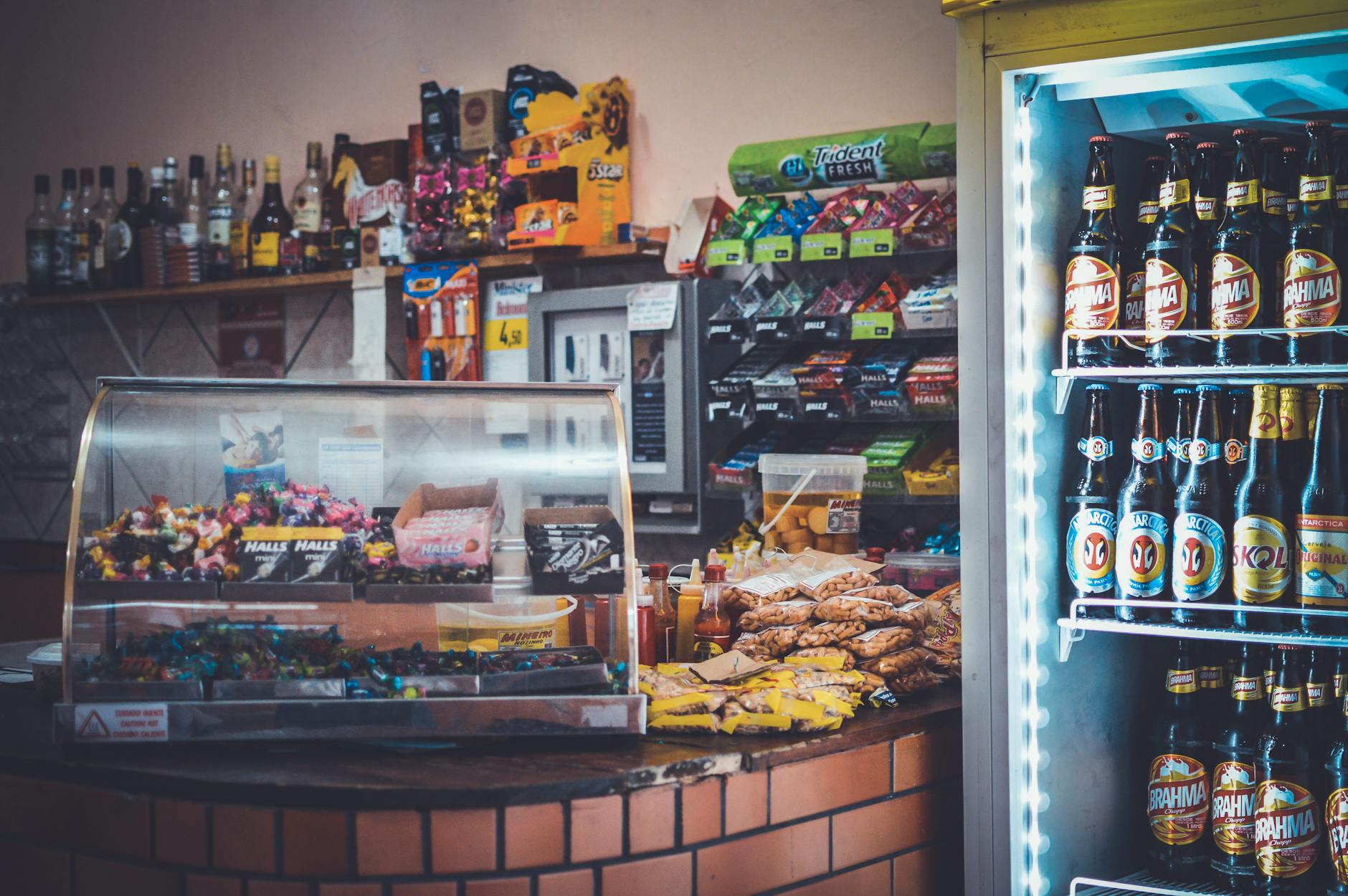
In the small towns of the Midwest, where the nearest Walmart is twenty miles distant and the local grocery closed a decade ago, Casey’s General Stores operates as commercial infrastructure disguised as convenience. Founded in 1968 when Don Lamberti converted an Iowa service station into something between a general store and a fuel depot, the chain now claims 2,500 locations across sixteen states, serving populations of fifteen to twenty thousand, arkets too small for national supermarket chains but large enough to support a carefully calibrated retail operation. What began as a strategy of geographic arbitrage has evolved into a capital-intensive compounding machine: a network of owned real estate and proprietary distribution centers that generates fixed-cost leverage as density increases. Yet beneath the operational elegance lies a singular, fragile assumption, hat the fuel island, which currently converts only twenty-five percent of customers into the high-margin store, can be transformed into an effective customer acquisition funnel before the secular decline of internal combustion renders that infrastructure obsolete.
The Rural Capture
Casey’s occupies a specific ecological niche in American retail, one defined by omission rather than commission. National convenience operators like 7-Eleven and Circle K optimized for urban density and franchisee economics, leaving the rural Midwest and Southwest to local operators. Lamberti recognized that these small towns offered captured audiences with high switching costs; residents might drive past a Casey’s to reach a competitor, but the time cost and fuel cost of doing so in a fifteen-minute town created de facto monopolies. By owning rather than leasing the underlying real estate, an anomaly in an industry that treats locations as disposable, Casey’s embedded itself physically and financially in communities where brand habitualness compounds over decades.
This ownership model created a moat that competitors cannot readily cross. National chains relying on leased properties cannot justify the capital expenditure to enter markets with lower sales per square foot, while local operators lack the balance sheet strength to match Casey’s infrastructure. The result is a portfolio of stores functioning as local institutions: the fifth-largest pizza chain in the United States by sales value, operating from gas station kitchens, serving $20 pizza orders to customers who initially stopped only to refuel. The economic durability of these positions stems not from network effects in the digital sense, but from the physical reality that building a competing distribution center and store network in sparsely populated geographies generates diminishing returns until the incumbent has already captured the market.
The Two-Tier Margin Architecture
The business operates on a bifurcated economic engine that separates revenue from profitability. Fuel accounts for seventy percent of sales but contributes thin, stable margins, approximately thirty to thirty-five cents per gallon, that have risen gradually over time due to regulatory and labor cost pressures but are structurally capped. Fuel serves a strategic function akin to customer acquisition cost: it generates traffic, builds routine, and maintains visibility on highway corridors. The actual returns materialize inside the store, where thirty percent of revenue generates the majority of EBITDA. Grocery items yield thirty to thirty-five percent margins, while fresh food, pizza, sandwiches, donuts, commands sixty percent or higher.
This margin architecture creates a specific operational imperative. A fuel customer who pays at the pump and drives away represents a failed conversion; the thirty cents per gallon margin covers the real estate and operational overhead, but does not justify the capital intensity of the owned-store model. The baseline in-store transaction averages six to ten dollars, but jumps to twenty dollars or more when prepared food enters the basket. Consequently, the difference between a mediocre return on invested capital and a compounding economic engine rests on a single behavioral variable: whether the driver who stops for gasoline can be induced to enter the building and purchase food.
The Distribution Center as Compounding Engine
The scalability of this model depends not on the stores alone, but on a proprietary logistics network that creates fixed-cost leverage as geographic density increases. Casey’s operates three distribution centers, massive facilities of roughly 250,000 square feet costing approximately $100 million each, servicing between six hundred and one thousand stores within a five-hundred-mile radius. A fourth center is planned. Currently, seventy percent of the serviceable geography within these radii remains uncovered, meaning Casey’s can add hundreds of stores to existing DC footprints without proportional capital expenditure on new distribution infrastructure.
This density dynamic generates incremental EBITDA margin expansion of one to three percent as the network fills in. Each additional store within a DC’s orbit reduces per-unit logistics costs, improves inventory turns, and increases the efficiency of private label distribution, urrently five percent of in-store sales with a target of ten percent or higher. Competitors relying on third-party logistics or leased store networks cannot replicate this leverage; they face variable costs that scale linearly with growth, whereas Casey’s fixed-cost base remains stable while revenue compounds. The mathematics resemble a retail version of the hub-and-spoke airline model, except the spokes generate sixty-percent-margin pizza instead of coach seats.
The Conversion Paradox
Despite the elegance of the distribution economics, the business faces a fundamental tension in its traffic architecture. Seventy-five percent of store visits are driven by non-fuel needs, ustomers arriving specifically for the pizza, groceries, or prepared food. Yet among the fuel customers who represent the chain’s most visible traffic source, only twenty-five percent enter the store. This bifurcation reveals a strategic paradox: Casey’s has built a food business that sustains itself independently of fuel, but relies on fuel to acquire new customers and maintain highway visibility.
The gap between the current twenty-five percent conversion rate and the forty to fifty percent rates achieved by European convenience operators represents both the company’s largest opportunity and its existential vulnerability. If conversion stalls, Casey’s becomes a fuel retailer with a side business in pizza: capital-intensive commodity operation with declining returns. If conversion improves, the high-margin food sales absorb the fixed costs of real estate ownership while the fuel operation functions as a subsidized customer acquisition channel. Every technological investment, digital pricing algorithms, self-checkout kiosks, inventory prediction systems, loyalty program data, aims to reduce the friction between the pump and the door. The prepared food strategy, particularly the pizza operation, serves as the specific conversion mechanism: the $20 ticket creates sufficient margin to justify the behavioral nudge required to pull a fuel customer inside.
Owned Real Estate as Strategic Constraint
The decision to own rather than lease stores creates a capital structure tension that shapes every strategic option. Real estate ownership locks up capital upfront, depressing early-cycle returns on invested capital and reducing flexibility to exit underperforming locations. If rural populations decline or store-level productivity falls, Casey’s cannot simply terminate a lease; it holds stranded assets with limited alternative use. This rigidity contrasts sharply with competitors who lease properties and can redeploy capital quickly in response to market shifts.
However, this captivity enables a specific strategic optionality crucial to the food-forward conversion strategy. Leased convenience stores operate under restrictive covenants that typically prohibit the capital-intensive retrofits required for fresh food operations, ommercial kitchens, ventilation systems, expanded refrigeration. Casey’s ownership allows format expansion: the ability to knock down walls, install pizza ovens, and redesign traffic flows to optimize the path from fuel island to food counter. While leasing competitors can exit bad locations faster, they cannot pivot their existing footprints to capture the sixty-percent fresh food margins that justify Casey’s valuation. The trade-off is between capital efficiency and strategic adaptability, with Casey’s betting that the ability to convert stores into food destinations outweighs the flexibility of a leasehold estate.
The Scale Economics of Operational Technology
Recent technology investments, self-checkout kiosks, digital price optimization, predictive inventory systems, function as variable cost reductions that only achieve positive return at significant scale. A regional chain with fifty locations cannot justify the $100 million data centers and software development costs required to reduce labor per transaction by seconds or optimize fresh food ordering to minimize waste. Casey’s scale makes these investments economical, creating operational leverage that smaller competitors cannot match.
Yet this technological moat operates within a narrow competitive band. While regional operators lack the capital to compete, national giants 7-Eleven and Circle K possess equivalent or superior technology resources and urban density that generates higher per-store data volumes for algorithmic training. Casey’s advantage lies not in technological superiority per se, but in the combination of technology with its specific geographic density and owned real estate. The kiosks reduce friction for the fuel-to-store conversion; the inventory systems support the fresh food supply chain; the digital pricing optimizes the thirty-five-cent fuel margins. These systems compound the existing structural advantages but do not create standalone moats against well-capitalized national competition.
The Fifteen-Year Assumption
Beneath the operational metrics and expansion plans rests a fragile long-term assumption: that fuel will remain the primary driver of convenience store traffic and customer acquisition for at least the next fifteen years, and that electric vehicle adoption will not exceed fifty percent of the vehicle fleet within that window. This assumption undergirds the entire conversion strategy. If Casey’s cannot raise the fuel-to-store conversion rate from twenty-five percent toward European levels before fuel volumes decline secularly, the business model collapses into its worst-case configuration, tranded real estate assets serving a diminishing pool of combustion-engine drivers, unable to generate sufficient traffic to support the high-margin food operations.
The fragility extends beyond electrification. Regulatory shocks, new EPA underground tank standards, carbon pricing, or wage inflation that outpaces fuel margin expansion, could render the fuel island unprofitable before the conversion mathematics resolve favorably. Rural depopulation poses a simultaneous threat: if the fifteen-thousand-person towns that form Casey’s core market lose population to urban centers, the owned real estate becomes permanently impaired, unlike leased competitors who can contract with their footprint. The company bets that it can solve the conversion paradox, turning fuel customers into food customers, faster than the fuel business enters secular decline, and that its owned real estate provides the format flexibility to pivot toward pure food retail if necessary. But the clock is not indefinite. The distribution centers and owned stores represent billions in sunk capital that require sustained traffic to justify their existence. Whether Casey’s can convert the twenty-five percent before the fuel island becomes a relic of automotive history determines whether this rural compounding machine endures or becomes a cautionary tale of capital intensity confronting technological obsolescence.
The End of Rural Arbitrage
The geographic logic that built Casey’s into a ten-billion-dollar enterprise is approaching its natural boundary. The chain’s historical expansion followed a precise demographic filter: towns of fifteen to twenty thousand residents, typically situated along interstate corridors or agricultural supply routes, where the population density supported convenience retail but fell beneath the threshold for national supermarket entry. These markets offered a specific mathematical profile, ufficient daily traffic to justify the capital expenditure of store construction and distribution center reach, yet insufficient to attract competitors with equivalent balance sheet capacity. For decades, this filter generated organic growth with limited competitive friction; each new store fortified the existing distribution network without requiring price wars or promotional intensity to capture share.
That reserve of available geography is depleting. While management notes that seventy percent of the serviceable territory within existing distribution center radii remains uncovered, the remaining voids represent progressively thinner markets, owns of five to ten thousand, or remote locations where the fixed-cost leverage of the DC model attenuates. To maintain the mid-single-digit growth trajectory that justifies the capital intensity of the owned-real-estate model, Casey’s has begun encroaching into suburban Chicago, southwestern metropolitan clusters, and other markets that violate the historical demographic sweet spot. The recent acquisition of sixty-three stores signals this territorial shift: these are not greenfield constructions in Iowa corn towns but entries into established competitive grids where Walmart, Target, and dedicated quick-service restaurants already partition the consumer wallet.
This geographic migration tests the central structural constraint of the business, real estate ownership, under unfamiliar economic conditions. In rural markets, land costs permitted Casey’s to purchase sites outright, amortizing the capital over decades while maintaining format flexibility. In suburban markets, land scarcity and commercial zoning inflate acquisition costs by multiples, stretching the return-on-invested-capital timeline beyond the tolerances of the fuel-margin math. Leasing becomes necessary, yet leasing strips away the precise advantage that enabled the fresh-food conversion strategy. Suburban landlords write restrictive covenants prohibiting the grease-venting infrastructure, extended hours, and traffic-modifying renovations that turn a fuel station into a pizza kitchen. The suburban Casey’s becomes, by necessity, a smaller-format convenience store competing on speed and location against 7-Eleven and Circle K franchises optimized for precisely those metrics. Without the owned real estate, the sixty-percent fresh-food margins remain inaccessible; without the fresh food, the twenty-dollar average ticket shrinks toward the industry standard of six dollars, and the incremental EBITDA margin expansion evaporates.

The cultural implications compound the economic tension. Rural Casey’s stores function as community infrastructure, meeting points, emergency provisions, local employment anchors, because the store manager typically resides within the service radius and operates with decentralized autonomy. Suburban convenience retail operates on anonymity: transient labor, standardized planograms, and price competition. The brand equity that Casey’s accumulated through decades of rural presence, what management internally refers to as “habitualness”, does not transfer to suburban strip malls where consumers lack geographic captivity and loyalty programs compete against Starbucks apps and Chick-fil-A drive-throughs. The business must now choose between disciplined stagnation, saturating only the remaining rural voids and accepting slower growth, or territorial indiscipline that risks converting the capital structure into a portfolio of geographically mismatched assets, some with irreplaceable community value, others with depreciating suburban commercial leases.
The Private Label Calculus
Within the in-store economics, a quieter tension governs the path from five to ten percent private label penetration. Currently, national brands, Coca-Cola, Frito-Lay, Philip Morris historically, and the constellation of packaged goods manufacturers, dominate the shelves, providing the branded draw that justifies the convenience premium. These relationships are not merely commercial but structural; national brands fund end-cap displays, cooler equipment, and promotional allowances that reduce Casey’s net capital requirements. Pushing toward ten percent private label means displacing these tenants, risking the slotting fees and promotional infrastructure that currently subsidize store operations.
The economic attraction of private label is transparent: margins expand by five to ten percentage points on categories where Casey’s controls the supply chain, and the proprietary distribution centers achieve higher utilization as they ship house-brand snacks and beverages alongside third-party goods. Yet the convenience channel differs fundamentally from grocery retail, where private labels have achieved twenty to thirty percent penetration. Convenience purchases are disproportionately impulse-driven and brand-dependent; the consumer seeking a Coca-Cola at midnight exhibits low elasticity for substitution, whereas the grocery shopper planning a weekly basket may trade down to a store brand. If Casey’s over-rotates toward private label to feed the DC fixed-cost base, it risks degrading the very traffic quality that makes the high-margin prepared food possible. The fuel customer who enters seeking a specific branded energy drink and finds only a generic alternative may complete that single transaction, but the failure to satisfy the specific demand erodes the behavioral routine that brings them back for pizza on subsequent visits.
This tension exposes the fragility of the conversion mechanism. The twenty-five percent conversion rate depends on absolute reliability, asey’s must stock the precise SKU that prompted the entry, whether that be a specific cigarette brand, a craft beer, or a regional candy. National brands guarantee that reliability; private labels introduce substitution risk. The ten percent target represents not merely a sourcing shift but a delicate rebalancing of the traffic architecture, where margin expansion on the grocery mix cannot come at the cost of the foot traffic that sustains the fresh-food operations.
Kitchen Economics
The underappreciated structural advantage resides not in the real estate itself, but in the operational complexity of the kitchens that occupy that real estate. Casey’s functions as the fifth-largest pizza chain in the United States by sales volume, a statistic that surprises analysts who categorize the business with fuel retailers. This ranking reflects a specific capital allocation choice: the installation of commercial-grade dough production, ventilation hoods, refrigeration chains, and labor training systems within gas station convenience stores. Each kitchen requires roughly $150,000 to $200,000 in specialized equipment beyond standard convenience-store fixtures, and ongoing operational management that includes food safety compliance, waste management, and culinary labor retention in rural markets where skilled kitchen workers command premiums.
This complexity creates a moat that competitors cannot readily cross. 7-Eleven and Circle K have historically avoided fresh-food preparation, opting instead for roller-grill hot dogs and pre-packaged sandwiches that require minimal capital and labor but generate thirty-percent margins rather than sixty. The operational burden of running a pizza kitchen, anaging dough inventory, maintaining consistent bake quality across hundreds of rural locations, training teenagers to stretch crust at altitude while monitoring fryer temperatures, eters competitors who lack the distribution center infrastructure to supply fresh ingredients daily to dispersed locations. A regional operator cannot justify the kitchen capital for six stores; a national operator with leased suburban locations cannot modify the infrastructure to accommodate the equipment.
The pizza operation serves as the specific mechanical driver of the conversion economics. The baseline convenience transaction of six to ten dollars covers little beyond the cost of goods and labor; the pizza order averaging twenty dollars generates the surplus that absorbs the fixed real estate costs and creates the incremental margin expansion. Without the kitchen, Casey’s is a fuel station with a snack aisle, competing on commodity margins with anyone capable of installing pumps. With the kitchen, the business captures a distinct meal occasion, dinner for rural families without nearby restaurant options, breakfast pizza for farm crews, that justifies the capital intensity of the owned-store model. The kitchen transforms the fuel island from a loss-leader into the parking lot of a restaurant.
Culture as Operating Infrastructure
The economic durability of this model depends on an organizational variable rarely quantified in spreadsheets: the decentralized operating culture that Don Lamberti embedded in the company’s DNA during its first three decades. Lamberti insisted that store managers possess autonomy to adapt to local conditions, djusting pizza toppings for regional tastes, extending credit to known farmers during planting season, modifying hours to accommodate local high school football schedules. This philosophy created the “habitualness” that functions as a switching cost; rural customers do not merely shop at Casey’s because of location but because the manager knows their name and their order.
As the business scales toward three thousand stores and invests in the centralized technology required for efficiency, digital pricing algorithms, predictive inventory systems, labor-scheduling software, this culture faces compression. The technology that enables the conversion rate improvement (reducing friction between pump and store) requires standardization that conflicts with local autonomy. A centralized algorithm may optimize labor costs by reducing kitchen staffing during theoretically slow periods, but if that Tuesday night reduction eliminates the ability to serve the local bowling league’s post-game orders, the intangible loyalty capital erodes. The data center does not capture the value of a manager who stays open an extra hour during a blizzard because the interstate is closed and travelers need shelter.
Leadership thus functions as an economic variable distinct from corporate governance. The current management must maintain the technical infrastructure to compete with 7-Eleven’s scale while preserving the localized decision-making that generates the rural margins. If the culture tips toward corporate standardization, the inevitable pressure of public-market quarterly expectations and supply chain efficiency, the stores become indistinguishable from any other convenience retailer, and the sixty-percent food margins compress toward industry averages as customers lose the non-transactional reasons to enter. Conversely, if local autonomy prevents the adoption of the kiosks and digital pricing necessary to improve the twenty-five-percent conversion rate, the secular fuel decline arrives before the business can pivot. The return on invested capital depends on maintaining this organizational paradox: a centralized supply chain feeding decentralized customer relationships.
The Consolidation Trap
The final structural tension involves the inexorable mathematics of the technology investment. The $100 million distribution centers, the data centers, the digital pricing infrastructure, hese fixed costs require continuous store-count growth to achieve economic viability. Unlike a software company where marginal distribution costs approach zero, Casey’s fixed-cost leverage only compounds if the store network expands within the existing DC radii. When growth slows, the fixed costs become an anchor; when growth accelerates into wrong markets, the capital allocation degrades.
This creates a forced march toward consolidation that may override disciplined capital deployment. Casey’s must acquire or build stores to justify the infrastructure already in place, yet the remaining rural markets offer diminishing returns, and the urban markets require leasehold structures that violate the core model. The recent sixty-three-store acquisition represents precisely this pressure: growth for the sake of fixed-cost absorption rather than incremental ROIC. If the chain continues acquiring smaller regional operators in marginal geographies, stores without the real estate ownership or kitchen infrastructure necessary for the high-margin model, it risks becoming a conglomerate of disparate convenience assets, some capable of sixty-percent food margins, others resembling the commodity fuel-plus-cigarettes operations that trade at half the valuation.
The bear case crystallizes here: a business that exhausts its rural arbitrage opportunities, overpays for suburban leaseholds to maintain growth metrics, dilutes its kitchen-focused brand identity in competitive urban markets, and finds itself holding billions in real estate assets in depopulating towns while simultaneously paying rent in saturated suburbs. The technology moat that protects against regional competitors simultaneously forces a scale trajectory that may lead to indiscipline. The conversion rate never reaches forty percent because the urban stores lack the community captivity, while the rural stores face declining fuel volumes. The fifteen-year assumption proves optimistic not because of electric vehicle adoption alone, but because the business model fractured under the pressure of its own capital intensity, having expanded into markets where the owned-real-estate advantage became a geographic liability.
In this scenario, the distribution centers, currently the engines of fixed-cost leverage, become stranded assets servicing a bifurcated network of high-performing rural kitchens and low-performing suburban convenience stores, unable to generate the uniform store economics necessary to justify the original capital outlay. The pizza remains excellent, but the infrastructure built to deliver it becomes economically untenable, leaving Casey’s as a cautionary inventory of what happens when the logic of capital compounding outpaces the reality of demographic limits.
The specific mechanics of this fracture reveal themselves in the twenty-year replacement cycle of underground storage tanks. Casey’s operates approximately 2,500 fuel islands, each requiring EPA-compliant double-walled tanks and pressurized piping systems that carry forty-year depreciation schedules but require complete replacement every two decades due to corrosion, regulatory upgrades, or liability concerns. At approximately $400,000 to $600,000 per location for tank replacement alone, exclusive of canopy renovations, dispenser upgrades, and compliance monitoring, the business faces a $1 billion capital wall over the next decade simply to maintain the fuel infrastructure that generates the thirty-cent-per-gallon margins. This is maintenance capex, not growth capex; it generates no incremental traffic, improves no conversion rates, and creates no new pizza kitchens. Yet if deferred, the regulatory penalties and environmental liability exposure destroy the real estate value that underpins the balance sheet.
The timing of this replacement cycle coincides precisely with the pressure to expand into suburban Illinois, Texas exurbs, and other non-core markets where land costs preclude ownership. The capital allocation tension becomes acute: replace the tanks in a mature Iowa market where the store generates $200,000 in annual EBITDA and maintains a ninety-percent fuel-to-store capture ratio, or deploy that same $500,000 toward a leased suburban location with higher traffic counts but no ability to install a kitchen, competing directly against RaceTrac and QuikTrip on fuel price alone? If management chooses the former, growth stalls and the fixed-cost leverage of the distribution centers attenuates as store count plateaus. If they choose the latter, the balance sheet accumulates leasehold improvements with no residual value while the owned real estate in rural markets depreciates toward scrap metal value as the tanks age and the towns hollow out.
The labor economics of the kitchen operation compound this capital intensity in ways that spreadsheets obscure. A standard convenience store operates with two employees per shift: one cashier, one floater for stock and cleaning. A Casey’s with a full pizza kitchen requires four to five employees during peak hours: a dough prep specialist, an oven operator, a fry cook for the accompanying chicken and appetizers, plus front-of-house staff. In rural labor markets with unemployment rates below three percent, these positions command premiums above minimum wage, and turnover rates exceed one hundred percent annually. The sixty-percent margin on a $20 pizza order rapidly compresses when training costs, food waste from inexperienced cooks, and the operational drag of managing a culinary workforce within a retail environment are fully loaded.
This operational complexity creates a specific vulnerability that pure convenience competitors avoid. When 7-Eleven experiments with a new market, it ships pre-made sandwiches and roller-grill items requiring no culinary skill; failure means closing the location and walking away from the lease. When Casey’s commits to a market, it must recruit, train, and retain kitchen staff capable of producing consistent pizza across hundreds of miles of territory. The recent expansion into the Chicago suburbs, specifically the collar counties of McHenry and Will, has already exposed this fault line. Store managers report that suburban labor markets, despite higher absolute population density, offer fewer candidates willing to work the 4:00 AM dough-prep shifts necessary for the breakfast pizza program that drives morning traffic in Iowa. The suburban consumer expects twenty-four-hour availability, but the suburban labor market demands shift flexibility that conflicts with the rigid production schedules of fresh food.
The demographic mathematics of the fifteen-thousand-person town further illuminate the fragility of the real estate ownership strategy. These towns exhibit binary economic trajectories: either they stabilize as agricultural service centers with stable or slowly declining populations, or they enter accelerated collapse when the local high school consolidates, the hospital closes, or the manufacturing plant relocates. Casey’s real estate, purchased at six to eight percent capitalization rates during the 1990s and 2000s, carries book values that assume perpetual utility. But a Casey’s in a town that drops below ten thousand residents loses the density required to support the fresh food operations; the pizza waste increases, the labor pool shrinks, and the fuel volume declines to levels where the thirty-cent margin fails to cover the fixed costs of the underground tanks. Unlike a leased competitor who can abandon the key and default on the remainder, Casey’s holds the deed to a commercial property with no alternative use, located in a market with negative absorption rates and no buyers.
The conversion rate assumption, that European levels of forty to fifty percent fuel-to-store conversion can be achieved through format optimization, ignores the specific cultural context of American rural consumption patterns. European convenience retail developed in dense networks where fuel stations function as neighborhood shops; American rural fuel purchasing remains a utilitarian transaction defined by speed and price sensitivity. The Casey’s customer who pays at the pump and drives away is not necessarily failing to be converted; they may be executing their preferred behavior, treating the fuel island as infrastructure rather than a retail entry point. The assumption that technology, kiosks, loyalty apps, digital coupons, can shift this behavior assumes a customer base with smartphone penetration and digital literacy that correlates inversely with age and rurality. If the twenty-five-percent conversion rate represents not operational inefficiency but rather the hard ceiling of American convenience culture, then the entire margin expansion thesis collapses. The prepared food operation becomes not a conversion mechanism but a standalone restaurant business competing against Subway and Dollar General’s frozen food section, requiring entirely different real estate economics and capital structures.
Against this backdrop, the private label expansion to ten percent appears less as a margin optimization and more as a desperate grab for gross profit to offset the rising fixed costs of tank replacement and kitchen labor. Yet as noted, private label conversion risks degrading the branded traffic that currently sustains the twenty-five percent who do enter. If Casey’s displaces the Coca-Cola cooler with a house-brand cola to capture an extra eight points of margin, they may gain on the five customers who buy the generic but lose the twenty who came specifically for the branded fountain drink and left with a pizza. The mathematics of substitution elasticity in convenience retail remain poorly understood by analysts who model grocery-store dynamics onto fuel-station economics; the convenience channel exhibits higher brand loyalty and lower price elasticity precisely because the purchase is incidental to the primary mission of refueling or urgent need. A mother stopping at midnight for diapers and a specific brand of infant formula does not accept substitution; she drives to the next exit.
The technology moat, finally, exhibits a half-life that the current investment cycle ignores. Self-checkout kiosks and digital pricing algorithms are replicable commodities; 7-Eleven Japan’s Seven & I Holdings deploys superior inventory prediction systems across urban densities that generate data granularity Casey’s cannot match. As Amazon and Google map rural purchasing patterns through delivery services and smartphone location data, the information asymmetry that protected regional operators dissolves. The proprietary advantage of Casey’s technology investment lasts only as long as it takes for national competitors to adapt their urban systems to rural deployment, r for delivery apps to intermediate the convenience relationship entirely, reducing Casey’s to a fuel depot with a mobile-order pickup window, capturing none of the impulse conversion that justifies the kitchen capital.
In this extended bear case, the business does not fail catastrophically but rather suffers a slow securitization of its real estate assets to fund the tank replacement cycle, a gradual conversion from an operating company to a property management firm collecting rent from its own diminishing operations, until the Midwest landscape is dotted with two thousand five hundred outdated fuel stations with deteriorating kitchens, unable to justify the next capital cycle, stranded between the demographic decline of their geography and the technological obsolescence of their infrastructure. The pizza remains good, perhaps, but the economics of delivering it have become a monument to the compounding power of fixed costs confronting finite markets.