
Cinnabon: How Smell Built a Billion-Dollar Empire

The Olfactory Moat
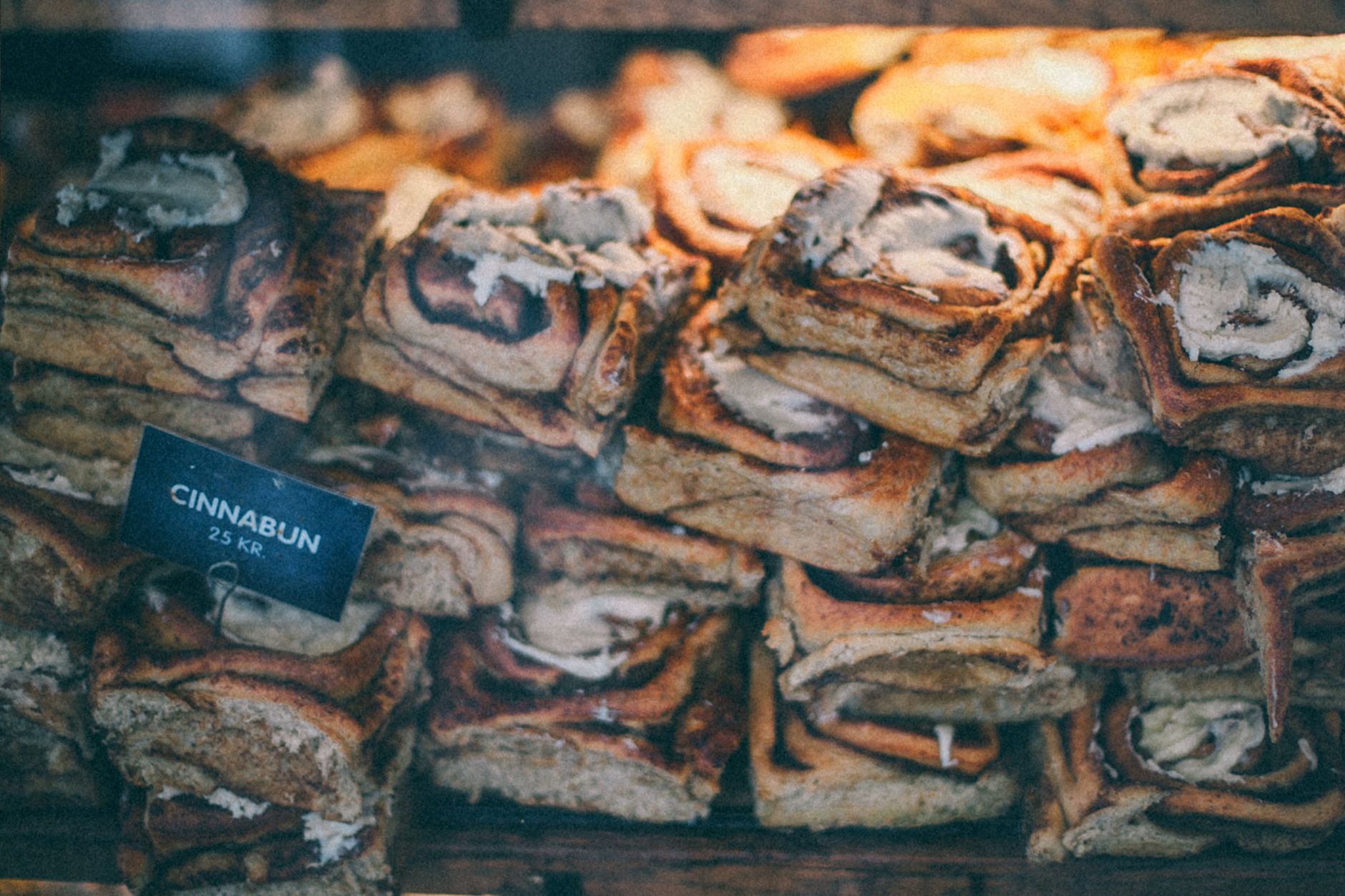
In 1985, the founders of Cinnabon made a series of decisions about cinnamon that would eventually support a billion-dollar licensing empire. They selected Indonesian Korintje cinnamon, not the more common Cassia or Ceylon varieties, and specified a particular milling texture that would behave differently under heat. They determined that the rolls should be pulled from the oven before achieving full bake, creating the “ooey-gooey” center that would become the brand’s signature, and they mandated that the product could not sit under heat lamps indefinitely, t had to be held hot, but fresh, requiring constant production cycles rather than batch preparation.
These were operational choices, not merely recipes. They created a production process that is difficult to reverse-engineer because the differentiation lies in the interplay between ingredient sourcing, milling specification, thermal management, and labor scheduling. A competitor could copy the recipe but would struggle to replicate the aroma, texture, and freshness simultaneously without investing in the same capital equipment, supplier relationships, and training protocols. The barrier to entry is not the cinnamon itself, which is available on commodity markets, but the operational discipline required to transform that cinnamon into a specific sensory experience consistently.
This sensory experience proved economically decisive. At the first Cinnabon location in Seattle, space constraints forced the ovens to the front of the store. When the founders opened their second location and moved the ovens to the back to improve workflow, sales dropped materially. The aroma, the physical diffusion of cinnamon and sugar through mall air, was driving impulse purchases. They moved the ovens back. This accident revealed that Cinnabon’s economic engine runs partly on olfactory marketing, a form of customer acquisition that requires physical presence and fresh production. You cannot bottle the smell of a Cinnabon baking in real time, which means you cannot fully digitize the brand’s most effective marketing channel. The product must be made fresh, in open view, near the customer.
This operational reality creates the central strategic tension that defines the business. Cinnabon generates approximately $1–2 billion in annual global product sales, with roughly 30% flowing from franchise royalties and the remainder from licensed channels, onsumer packaged goods through General Mills, foodservice partnerships with Burger King and Taco Bell, and grocery distribution reaching over 100,000 retail points. The franchise channel is economically the minority but strategically foundational. These locations, concentrated in malls and airports with premium rents consuming 18–22% of sales, function as brand museums. They maintain the authenticity of the fresh-baked positioning that makes the licensed channels credible. Without the mall bakeries pumping aroma into high-traffic corridors, the Cinnabon-branded products at Burger King or in the Pillsbury tube become mere commodity cinnamon items with higher price tags.
The Minority Channel That Controls Everything
The franchise system operates under economic conditions that would terrify most retail operators. Mall and airport real estate commands rents two to three times higher than street-side locations, and these venues only function when top-line traffic remains robust. During economic downturns or structural shifts in travel and retail, such as the 2008 financial crisis or the COVID-19 pandemic, franchisee margins compress immediately. The 2008 recession nearly broke the system; franchisees were small, undercapitalized operators deferring capital expenditures while banks, influenced by the Atkins diet craze and general credit tightening, refused to lend to bakery businesses. The physical footprint shrank, aged, and deteriorated.
Yet this fragile, capital-intensive channel determines the viability of the entire enterprise. Cinnabon licenses its intellectual property, recipes, and brand name to third-party manufacturers and operators who bear the capital risk and operational complexity. General Mills manufactures the CPG products. Burger King operated the Cinnabon Minibon in 7,000 locations, generating hundreds of millions of dollars in gross profit over a three-year contract. Cinnabon captures royalties and brand visibility without investing in manufacturing plants or kitchen equipment. This is economically efficient, but it depends entirely on the brand maintaining premium positioning.
That positioning derives its credibility from the franchise locations. When a consumer sees a Cinnabon product at a gas station or in a Burger King drive-thru, the implicit promise is that this item connects to the fresh-baked experience of the mall kiosk. The mall location validates the gas station purchase. This creates a peculiar dependency: the high-cost, low-margin franchise channel must remain healthy enough to justify the high-margin, low-capital licensed channel, even though the licensed channel generates the majority of revenue. If the franchise system collapses due to rent pressures or traffic declines, the licensing business loses its differentiation and becomes unmoored from its sensory proof point.
The franchisees know this. They understand that their investments in $500,000 mall build-outs and premium rents subsidize the brand’s expansion into competing channels. The economic relationship between Cinnabon corporate and its franchisees is therefore not merely transactional but psychological. Franchisees must believe that licensed distribution builds brand awareness that drives traffic to their locations, hat a customer who tries a Cinnabon Minibon at Burger King will eventually seek out the full-sized, fresh-baked experience at the mall. If they perceive licensed channels as cannibalistic rather than complementary, they will defer maintenance, reduce staffing quality, and exit the system. The brand then loses its authentic base, and the licensing house of cards collapses.
Arbitrage on Third-Party Balance Sheets
Cinnabon’s response to the economic fragility of its franchise base has been to construct a three-legged stool partnership model that distributes risk and capital requirements across stakeholders while concentrating returns and brand control at the center. General Mills provides manufacturing capability and bears the capital costs of production facilities. Burger King, Taco Bell, and other foodservice partners provide distribution through their existing real estate and operational infrastructure. Cinnabon contributes intellectual property, quality specifications, and brand equity, collecting royalties while maintaining veto power over product standards.
This structure allows Cinnabon to scale without proportional capital investment. The Burger King partnership alone represented one of the highest-volume and most profitable skews for the chain during its three-year run, demonstrating that Cinnabon’s brand carries sufficient consumer pull to drive significant traffic in someone else’s real estate. The consumer packaged goods division reaches over 100,000 retail points, a footprint impossible to achieve through company-owned stores or even traditional franchising. Each licensed placement increases brand awareness, theoretically driving latent demand back to the franchise locations, which justifies reinvestment in remodels and marketing, which strengthens the brand’s differentiation, which permits further licensing expansion.
The model compounds because the brand has permission to travel across channels in ways that competitors cannot easily replicate. The emotional resonance of Cinnabon, rooted in nostalgia, indulgence, and sensory memory, is not tied to a specific format or venue. Consumers actively seek the brand in new contexts, creating pull rather than push. This generates inbound licensing interest and reduces customer acquisition costs for new channels. A lesser brand would have to pay for shelf space or promotional support; Cinnabon can charge premium royalty rates because partners recognize that the brand drives trial independently.
However, this arbitrage depends on maintaining the brand’s scarcity premium while pursuing ubiquity. The economic temptation is always to license more broadly, o extend into lip balms, lotions, and other merchandise that monetizes the brand name without operational complexity. Yet such extensions risk commoditizing the indulgence positioning. The brand’s permission set is bounded by its core identity as a premium, fresh-baked indulgence. Each licensing decision must navigate the boundary between accessibility and dilution.
The Cannibalization Boundary
The defining structural constraint shaping every major strategic decision at Cinnabon is the tension between protecting franchise economics and expanding licensed distribution. These channels compete for the same consumer indulgence occasion. A customer who purchases a Cinnabon Minibon at Burger King or bakes Pillsbury Cinnabon rolls at home is, in immediate terms, not purchasing a $6 fresh-baked classic roll at the mall. If licensed products cannibalize franchise sales faster than licensing revenue offsets the loss, franchisees lose confidence, stop reinvesting in locations, and the authentic fresh-baked positioning that justifies the licensing premium erodes.
This is not a theoretical risk. Franchisee confidence is fragile and tied to capital availability. During prolonged periods of flat or declining sales, or during credit market tightenings, franchisees defer maintenance, buy off-spec products, and exit the system. The 2008 recession created exactly this dynamic: years of deferred CapEx, quality reduction, and franchisee distress. If the licensed channel grows while the franchise channel contracts, the brand risks becoming a licensed trademark without sensory proof: logo on a frozen product rather than an experience.
The strategic imperative, therefore, is to position licensed products as incremental rather than substitutional. The Minibon at Burger King must target a different occasion, mpulse purchase during a fast-food trip rather than intentional indulgence during a shopping excursion. The grocery product must promise convenience for home baking rather than replacement for the mall experience. This requires sophisticated channel management and product differentiation. The licensed items must be recognizably Cinnabon, using the specific Indonesian cinnamon, achieving the proper texture, but distinct enough to not directly compete with the franchise offering.
Corporate leadership must constantly manage the psychology of the franchise base, convincing operators that licensed distribution functions as brand-building marketing that drives traffic to their locations. This requires demonstrating that top-line sales improve in markets with strong licensed presence, or at minimum ensuring that royalty flows from licensing offset any cannibalization losses. The economic math is delicate: the franchise channel generates lower revenue per unit for corporate (royalties on smaller sales bases) but higher strategic value; the licensed channel generates high-margin revenue but risks killing the golden goose. The boundary shifts with economic conditions, competitive pressure, and consumer behavior, requiring constant recalibration.
Quality at Scale Is a Contract, Not a Process
The expansion into licensed channels introduces operational fragility that threatens the brand’s core differentiation. The “ooey-gooey” center, the specific aroma, the freshness standard, hese are easy to maintain in a Cinnabon-owned bakery with trained staff and direct oversight. They are difficult to enforce across thousands of Burger King locations with high employee turnover and competing operational priorities, or within General Mills manufacturing facilities optimizing for shelf stability and production efficiency.
The risk is not merely inconsistent quality but catastrophic failure. A supply chain disruption affecting Indonesian Korintje cinnamon, a stockout during a promotional period, or a quality control lapse resulting in off-spec product at a high-visibility partner like Burger King creates negative consumer experiences that undermine brand equity across all channels. Unlike a franchise location, where corporate can intervene directly, licensed operators are contractually governed. Quality assurance becomes a matter of contractual enforcement, training protocols, and supply chain redundancy rather than operational management.
During the Burger King rollout, the company experienced unexpected stockouts and promotional operational challenges. These were managed, but they illustrated the knife-edge nature of foodservice licensing. A widespread mold incident, a recall, or consistent quality degradation at thousands of external operators would erode trust faster than revenue accrues. The brand’s permission to license depends on its reputation for indulgence and quality; one severe failure in a licensed channel damages the credibility of the franchise channel simultaneously.
The fragility is heightened by the complexity of the product itself. The Cinnabon roll requires specific baking protocols, ulled early, held at precise temperatures, consumed within a narrow window. Fast-food operations optimize for speed and holding time. The marriage of Cinnabon’s production requirements with Burger King’s operational realities required significant adaptation, creating friction points where quality can degrade. As licensing expands into new geographic markets, nearly 50 countries with dense concentration in the Middle East, including nearly 150 locations in Saudi Arabia alone, supply chain complexity increases, multiplying the points of potential failure.

Recession as Business Model Stress Test
In 2010, when Kat Cole assumed the presidency of Cinnabon, the brand faced a crisis that tested the resilience of its economic model. The Great Recession had devastated the franchise base, which was concentrated in malls suffering from declining traffic. Simultaneously, the Atkins diet craze had made banks hostile to bakery lending, preventing franchisees from accessing capital for remodels or expansion. The brand had high differentiation but low relevance, rapped in dated mall locations with undercapitalized operators and no menu innovation.
The turnaround required treating leadership as an economic variable rather than a soft factor. Cole had to restructure the relationship between corporate and franchisees, convincing them that the company’s pivot toward licensing would benefit rather than cannibalize their businesses. This required strategic sequencing: establishing proof of concept with the Taco Bell partnership (Cinnabon Delights) before approaching Burger King, demonstrating that licensed channels could drive brand heat without destroying franchise economics.
Leadership decisions directly affected capital flows. By securing the General Mills partnership for CPG distribution and the major QSR deals, Cole diversified revenue streams away from the vulnerable mall base, creating the financial stability necessary to support franchisee remodels. The licensing revenue provided corporate with the resources to reinvest in the franchise system, upgrading locations, improving marketing, and restoring franchisee confidence, while the franchise improvements validated the licensing expansion.
This period revealed that in franchise-based businesses, leadership functions as a form of capital allocation and risk redistribution. The decision to pursue omnichannel licensing required not just strategic vision but operational discipline in contract negotiation, quality assurance, and supply chain management. The leadership team had to manage the tension between speed to market, capturing the Burger King opportunity before competitors could establish alternative dessert partnerships, and operational readiness, ensuring that scaling to 7,000 locations would not compromise quality. The economic value created during this period derived from the ability to hold these tensions simultaneously: expanding distribution while protecting scarcity, leveraging partner capital while maintaining brand control, and modernizing the franchise base while diversifying away from its geographic concentration.
The Half-Life of Indulgence
Cinnabon’s omnichannel model rests on a fragile long-term assumption: that the core cinnamon roll, fresh-baked, aromatic, indulgent, will remain emotionally resonant and differentiated enough to justify premium pricing and licensing fees across multiple consumer cohorts and geographies for the next five to ten years. This assumption faces pressure from multiple vectors. Health and wellness trends continue to push consumers away from high-calorie, high-sugar baked goods. The structural decline of mall and airport traffic, accelerated by e-commerce and remote work, threatens the physical visibility that drives brand awareness and franchise viability. Competitors with better capitalization or more agile supply chains could replicate the sensory experience or, more likely, render it irrelevant through category innovation.
The brand’s geographic diversification provides some insulation. With operations in nearly 50 countries and particularly strong penetration in the Middle East, Cinnabon is not solely dependent on American mall traffic. The indulgence occasion travels across cultures, and the aroma-based differentiation appears to translate. However, the model assumes that third-party manufacturers and operators will maintain quality discipline as scale increases and direct oversight decreases. It assumes that franchisees will continue to view licensing as complementary traffic generation rather than competition, and that they will reinvest in remodels if top-line sales improve. Most critically, it assumes that the brand’s permission set, indulgent baked goods, premium positioning, will not erode through over-licensing or cultural shifts.
The bear case for Cinnabon is not that the cinnamon roll becomes less popular, but that it becomes ubiquitous without being special. If licensed products proliferate into low-credibility channels, lip balms, lotions, discount retail, without maintaining the operational standards that define the fresh-baked experience, the brand risks commoditization. The economic engine depends on the friction between scarcity and availability: the product must be available everywhere (through licensing) but authentically produced only in specific, high-investment contexts (the franchise locations). If that friction disappears, if the mall locations close or the licensed products become indistinguishable from generic cinnamon items, the brand loses its pricing power and its royalty-generating capability.
The company is betting that emotional brand equity can outrun physical availability, hat the nostalgia and sensory memory associated with Cinnabon will persist even as the product becomes technically accessible through multiple channels. This is a bet on the durability of indulgence as a category, and on the specific operational moat of Indonesian cinnamon and early-pull baking techniques. If the bet fails, if consumers decide that fresh-baked cinnamon rolls are an anachronism or that Cinnabon has become too common to be special, the three-legged stool collapses. The manufacturers and QSR partners will switch to generic alternatives, the franchisees will exit, and the $1–2 billion in annual sales will contract to a fraction of its current scale, leaving behind only a trademark without the operational proof points that give it value.
The mechanics of this collapse would not be sudden but gradual, proceeding through several predictable stages that reveal the interconnectedness of the model. First, quality variance in licensed channels would increase imperceptibly: slightly drier roll at a Burger King in Memphis, a CPG product with modified ingredients for shelf stability in the Southwest, a franchisee in Ohio substituting generic cinnamon during a supply pinch. These would register not as crises but as statistical noise in customer satisfaction scores. Corporate quality assurance, operating through contractual audits rather than direct operational control, would detect the slippage only after brand equity had already eroded in local markets.
The General Mills partnership illustrates the technical complexity of maintaining brand standards when manufacturing moves off-site. The CPG products must approximate the sensory experience of the fresh-baked roll, the specific texture of the Indonesian cinnamon, the cream cheese frosting profile, while operating within the constraints of frozen distribution, retail shelf life, and home baking variables. General Mills bears the capital cost of manufacturing facilities and the operational complexity of nationwide distribution to 100,000 retail points, but Cinnabon retains the economic risk of brand dilution. If a formulation change reduces ingredient costs by twelve cents per unit but degrades the aroma profile that triggers consumer recognition, the damage accrues to Cinnabon’s licensing potential across all channels, not merely the grocery division.
The foodservice partnerships compound this technical challenge with operational fragmentation. At a Burger King location, the Cinnabon Minibon must be prepared by employees trained primarily in burger assembly, using equipment designed for speed rather than baking precision. The “ooey-gooey” center that defines the product requires specific thermal management, ulled from the oven before full bake, held at temperatures that maintain texture without continuing to cook. Fast-food operations optimize for holding time and throughput; the Minibon represents an operational outlier requiring distinct protocols. When Burger King experienced stockouts during the initial rollout, the immediate cause was supply chain friction, but the underlying issue was the mismatch between Cinnabon’s production requirements and Burger King’s operational rhythm. Each stockout represented not merely lost revenue but a broken promise to consumers who had been trained to associate the brand with indulgence availability.
The franchisee psychology that permits this system to function depends on a delicate narrative: that licensed distribution creates “brand heat” that drives traffic to mall locations. This proposition is difficult to prove empirically and varies significantly by market density. In a tertiary market with a single mall location and no Burger King partnership, the franchisee captures the full value of local brand awareness. In an urban corridor with dense licensed distribution, the franchisee may experience only cannibalization. Corporate must manage these divergent interests without the direct control that company-owned stores would provide. Franchisees are not employees but independent business owners with their own capital at risk and their own readings of local market conditions.
When franchisee confidence fractures, it does so through specific operational degradations rather than formal complaints. A franchisee facing margin pressure from declining mall traffic begins deferring the thirty-six-month oven maintenance schedule, extending product holding times beyond specification to reduce waste, or substituting lower-cost ingredients in the frosting. These adaptations are economically rational at the unit level, they preserve cash flow in a high-rent environment, but they degrade the sensory proof points that justify the licensing premium. The mall location that once pumped aroma into the corridor begins smelling of nothing, or worse, of burnt sugar and stale dough. The customer who visits this degraded location no longer perceives a meaningful distinction between the franchise experience and the licensed product available at the gas station, eliminating the rationale for the price premium in both channels.
The 2010 turnaround under Kat Cole required addressing exactly this fragility. The franchise base inherited from the AFC Corporation and Roark Capital eras consisted largely of small, undercapitalized operators who had deferred maintenance through the recession. Banks, influenced by the Atkins diet craze and general risk aversion to food-service lending, refused to provide capital for remodels or equipment replacement. The physical plant was aging, and with it, the operational capability to produce the specific product that justified the brand’s positioning. Cole’s strategy of pursuing licensing partnerships was not merely a revenue diversification play but a survival mechanism for the franchise system itself. The high-margin licensing revenue provided corporate with the cash flow necessary to offer franchisee incentives, reduced royalties for remodel completion, marketing support, operational training, without requiring immediate franchisee capital that did not exist.
This created a complex transfer payment system. The Burger King partnership generated hundreds of millions in gross profit over three years, with Cinnabon capturing royalties without capital investment. These funds flowed, in part, to subsidize franchisee remodels and quality improvements. The licensed channel was thus economically subsidizing the authentic proof points that made licensing credible. This is sustainable only if the licensing growth curve remains steep enough to offset the ongoing capital requirements of the franchise base. If licensing revenue plateaus while franchisee investment needs continue, if the Burger King deal is not replaced by equivalently scaled partnerships, or if CPG growth saturates, the corporate entity faces a capital allocation crisis. It cannot simultaneously fund franchisee subsidies and maintain shareholder returns without eroding the quality standards that protect the royalty stream.
The Middle East expansion, with nearly 150 locations in Saudi Arabia alone, demonstrates both the portability and the limits of this model. In these markets, mall culture remains robust, and the American indulgence brand carries cultural cachet that commands premium pricing. The franchise economics work differently, rent structures, labor costs, and consumer occasion patterns vary from the American model, but the core dependency remains. These international locations provide the sensory proof points for licensed distribution in their respective markets, just as the American mall locations do domestically. However, they also replicate the fragility: dependence on specific real estate formats with high rent burdens, and the requirement that local franchisees maintain operational discipline without the direct oversight available in company-owned markets.
The quality control challenge becomes geometrically more complex across international borders. Indonesian Korintje cinnamon must clear customs, maintain milling specifications through multiple handling stages, and arrive at franchise locations with sufficient freshness to produce the required aroma profile. In markets with less developed cold-chain infrastructure, or where import regulations create supply delays, franchisees face the same substitution temptations that afflict the American system. A Saudi franchisee facing a two-week customs delay on cinnamon shipments must choose between closing operations or using locally available substitutes that destroy the product differentiation. Corporate governance operates through master franchise agreements and periodic audits, but the lag between quality failure and detection allows significant brand erosion before corrective action.
The three-legged stool model, Cinnabon IP, manufacturer capability, retail distribution, creates specific contractual dependencies that become liabilities during stress. General Mills manufactures CPG products to specifications that balance shelf stability against sensory authenticity. If General Mills determines that a formulation adjustment reduces manufacturing complexity or extends shelf life, Cinnabon faces a choice between accepting degradation or threatening a partnership that provides access to 100,000 retail points. The power dynamics shift with scale: as licensed channels generate larger revenue shares, the manufacturer or QSR partner gains leverage to demand formulation concessions or reduced royalty rates. Cinnabon’s structural advantage, the ability to scale without capital investment, becomes a structural vulnerability when partners achieve scale and seek margin expansion at the brand’s expense.
The foodservice partnerships carry similar contractual half-lives. The Burger King deal generated hundreds of millions over three years, but fast-food menu rotations are driven by traffic metrics and competitive response. When the Minibon ceases to be a traffic driver for Burger King, or when Burger King negotiates a more favorable revenue split in contract renewal, Cinnabon loses not merely the revenue stream but the visibility that drives brand awareness in that channel. The replacement cycle for such partnerships is uncertain; Taco Bell preceded Burger King as a proof of concept, but there are finite QSR chains with sufficient scale and complementary menu profiles to support Cinnabon placement. Each partnership termination risks creating a revenue cliff that cannot be immediately filled, exposing the ongoing capital requirements of the franchise system.
The operational moat surrounding the cinnamon specification and baking process, while durable against direct replication, offers no protection against category substitution. The consumer seeking indulgence has expanding alternatives: artisanal local bakeries with fresher positioning, fast-casual concepts with healthier indulgence profiles, or simply the normalization of dessert consumption at QSR chains that develop proprietary offerings no longer dependent on licensed brands. Cinnabon’s brand permission is bounded by the cinnamon roll category itself. If the category declines, if consumers associate mall bakeries with outdated retail formats, or if home baking loses its nostalgic appeal, the operational excellence in producing the specific roll becomes economically irrelevant.
The bear case accelerates if franchisee exit reaches critical mass. When franchisees close locations due to rent pressure or sales decline, the effect is not merely the loss of that unit’s royalty stream but the loss of the aroma marketing and brand visibility that supports licensed channels in that geographic market. A city that loses its mall Cinnabon location simultaneously loses the sensory trigger that drives CPG purchases in local grocery stores and the brand recognition that makes the Burger King Minibon appealing. The licensed products become orphaned, vailable, but without the contextual reinforcement that justifies their premium positioning. In this scenario, the $1–2 billion sales figure contracts rapidly: first the franchise royalties disappear as units close, then the licensing revenue follows as the brand loses differentiation.
Corporate management must therefore operate with a precise understanding of the minimum viable footprint: he number and distribution of franchise locations necessary to maintain brand credibility for the licensing business. This number is not static; it shifts with consumer memory cycles and competitive intensity. In markets where Cinnabon has never had strong physical presence, licensed products must build brand awareness from scratch, requiring marketing investment that erodes the capital-light advantage. The omnichannel strategy works only where the franchise base provides foundation; it cannot be inverted to build licensed presence first and backfill with franchise locations later.
The capital allocation decisions facing Cinnabon leadership thus occur under conditions of radical uncertainty. Investment in franchise remodels during periods of declining mall traffic may preserve the licensing premium, or it may be capital destruction if the structural decline of the format is irreversible. Licensing expansion into new channels, grocery, convenience stores, international QSR chains, generates immediate revenue but accelerates the risk of ubiquity without distinction. The 2010 turnaround demonstrated that these tensions can be managed through strategic sequencing and partnership selection, but the economic environment that permitted that turnaround, low interest rates enabling leveraged partnerships, stable mall traffic in key demographics, the novelty of QSR dessert integration, may not persist.
Ultimately, Cinnabon represents an economic experiment in decoupling brand value from operational control. The model assumes that intellectual property, recipes, specifications, brand narrative, can maintain value independently of the capital equipment and labor management that traditionally anchored food-service brands. The Indonesian cinnamon and the early-pull baking process are supposed to function as pure information, licensable across manufacturing partners and operational contexts while retaining their economic premium. Whether this decoupling is sustainable depends on the continued willingness of third-party operators to maintain standards they do not fully control, and of consumers to perceive value in a brand that is simultaneously everywhere and rooted in the specific sensory experience of the mall bakery. The business continues to operate in the tension between these imperatives: the drive toward ubiquity that funds the enterprise, and the requirement of scarcity that justifies its existence.