
Cognex: The Machine Vision Moat
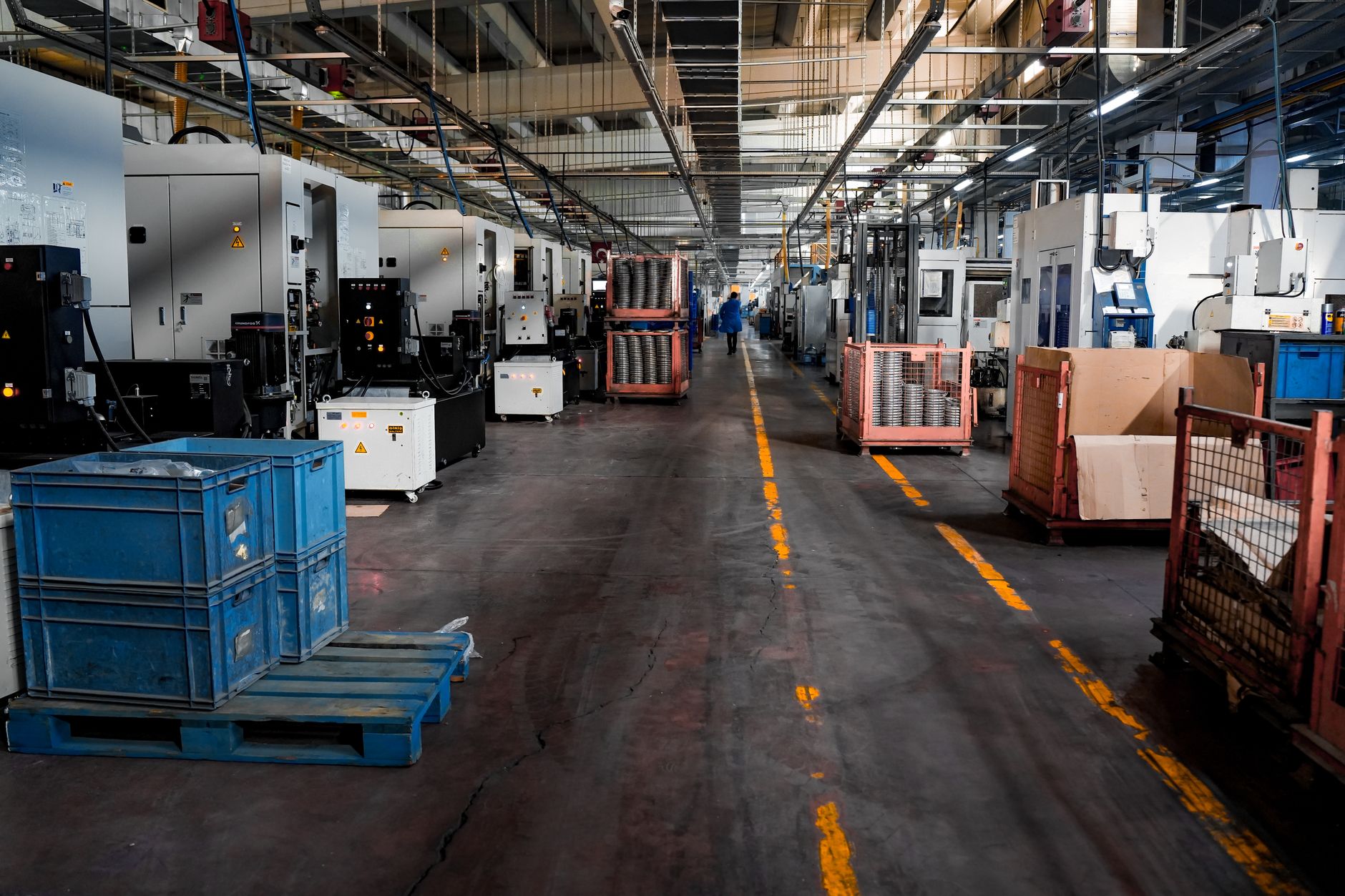
The yellow cameras mounted above conveyor belts in Amazon fulfillment centers and along Foxconn assembly lines function as industrial sentinels, quietly validating the geometry of smartphone screens or decoding scuffed barcodes at thirty frames per second. To the casual observer, they signal merely that quality control is occurring. To the manufacturing engineer, they represent a specific economic proposition: the purchase of certainty at a premium price, paid upfront, with no subscription to follow. This is Cognex Corporation’s basic contract with industrial capitalism, elling ruggedized vision systems that capture value in discrete, lumpy bursts tied to customer capital expenditure cycles, rather than the smooth, recurring revenue streams that modern software investors prefer.
The business operates at the intersection of optics, embedded computing, and manufacturing process knowledge. It generates roughly seventy percent gross margins not by being cheaper than alternatives, but by being measurably better, elivering read rates two to three percentage points higher than competitors in logistics applications, which translates to thousands of packages daily that require no human intervention. Yet this technical superiority exists within a structural straitjacket. Cognex recognizes revenue entirely at the point of sale. When an automaker pauses EV battery line construction or Apple delays a form-factor redesign, Cognex cannot rely on maintenance fees to bridge the gap. The company lives and dies by the S-curve, hose steep ramps of capital investment that accompany new iPhone designs, OLED manufacturing transitions, or warehouse automation buildouts. This cyclicality is not an unfortunate side effect but the defining characteristic of the model, one that shapes every strategic choice, from hiring PhDs to training junior salespeople to visit hardware stores in industrial parks.
The CapEx Cycle as Destiny
Cognex’s revenue recognition model stands increasingly anachronistic in an era of software-as-a-service valuations. The company sells capital equipment with expected lifespans of ten to twenty years, bundled with embedded software that standardizes operations across factory floors. Once deployed, these systems generate no recurring income beyond sporadic maintenance. The customer pays once, integrates the yellow cameras into their workflow, and benefits for decades.
This structure creates a feast-or-famine revenue pattern that follows the capital allocation rhythms of mega-manufacturers. When Apple transitioned to new iPhone form factors requiring precision measurement of glass and camera modules, Cognex captured that CapEx surge; at peak, Apple represented twenty percent of sales. When Amazon built out its logistics network to handle pandemic-era e-commerce volumes, Cognex’s barcode-reading business surged to three hundred million dollars annually, representing thirty percent of the company. Today, Apple has declined to mid-single digits of revenue, and Amazon has retreated to roughly ten percent. These are not customer losses in the conventional sense, the equipment likely still operates on those lines, but rather the exhaustion of specific S-curves.
The company’s serviceable addressable market has expanded from $2.9 billion in 2017 to $6.5 billion today, with management projecting $8 to $9 billion in coming years. Yet market expansion does not translate to linear growth. The addressable market exists as a series of discrete pools that fill suddenly and drain slowly. A new battery factory for electric vehicles creates a two-year window of intense vision system deployment; once operational, that facility will not need significant new Cognex hardware for a decade. The business requires constant discovery of new S-curves, a href=”https://bangid.com/industry/consumer/” target=”_blank” rel=”noopener”>consumer electronics transitions, automotive process changes, or logistics automation waves, o offset the natural decay of installed base revenue into maintenance mode.
This cyclicality is often miscast as volatility. It is better understood as the cost of premium positioning. By refusing to unbundle software into a recurring revenue stream, Cognex maintains a tight coupling between performance and payment. Customers buy the system because it solves a specific, acute problem in a high-stakes production environment. The upfront fee captures the full value of the application engineering and optical precision embedded in the hardware. To convert this to a subscription model would require dismantling the very stickiness that protects the business; customers standardize on Cognex software to simplify operations across their factory floors, creating switching costs that would evaporate if the software were merely rented.
Technical Differentiation as Economic Moat
The durability of Cognex’s margins stems from a capability that resists commodification: the ability to see reliably in chaotic industrial environments. In logistics hubs, packages arrive with wrinkled labels, glare from plastic wrap, and inconsistent orientations. A ninety-seven percent read rate versus ninety-nine percent sounds trivial until calculated across millions of daily shipments; those two percentage points represent thousands of manual interventions, each costing time and labor. Cognex charges five to ten thousand dollars per system because the alternative, human inspection or cheaper vision systems with higher error rates, costs more in operational friction.
This performance advantage derives from forty years of accumulated expertise in optics, embedded processing, and domain-specific software. The company employs the largest concentration of machine vision PhDs in the industry and maintains a culture of technical autonomy that allows engineers to pursue solutions without the bureaucratic constraints typical of industrial conglomerates. Half of employee departures are voluntary, a rate significantly below industry norms, suggesting a retention of tacit knowledge that competitors cannot easily replicate through hiring.
The economic consequence of this technical culture appears in the company’s resistance to price competition. While Asian manufacturers increasingly offer vision systems at lower price points, Cognex does not compete on cost. It competes on certainty. When a production line shuts down because a vision system failed to detect a defect, the cost of downtime far exceeds the premium paid for Cognex hardware. This creates a halo effect around the yellow cameras; on factory floors, they signal quality and sophistication to visiting executives, reducing sales friction in subsequent deals.
Yet this advantage carries a hidden dependency. The premium pricing model assumes that customers continue to face high-stakes inspection challenges where failure is expensive. If manufacturing processes simplify or if deep learning algorithms commoditize the ability to “teach” vision systems through examples rather than programmed rules, the justification for five-figure hardware prices erodes. The company recognizes this tension, having acquired ViDi Systems in 2017 and SUALAB in 2019 to develop deep learning capabilities. These technologies allow less sophisticated users to deploy vision systems by training them with sample images rather than writing complex algorithms. But they also threaten to lower the barriers to entry that protect Cognex’s core business.

The Emerging Customer Initiative and the Dilution Risk
In 2020, Cognex launched the Emerging Customer Initiative, an explicit attempt to expand beyond its traditional base of large manufacturers and logistics operators into the small and medium business market. The strategy required hiring and training hundreds of junior salespeople, “salesnoids” in the company’s vernacular, to conduct high-volume, lower-touch customer visits. The first cohort completed eighty thousand customer visits, added three thousand new customers to the existing base of thirty thousand, and exited at roughly one million dollars per week in sales at accretive gross margins.
On the surface, this represents successful diversification. Beneath the surface, it introduces a fundamental tension with the core business model. Traditional Cognex sales rely on application engineers, ighly compensated technical specialists who design solutions for complex manufacturing problems. These engineers justify premium pricing through deep consultation. The SMB initiative, by contrast, sells edge learning products priced at one to two thousand dollars per system, roughly one-fifth the price of traditional systems, to customers with less sophisticated needs and lower technical sophistication.
If this initiative scales, Cognex faces a choice between two incompatible identities. It can remain a premium vendor serving high-complexity applications with high margins and lumpy revenue, or it can become a volume player serving SMBs with lower-priced, easier-to-use products. It cannot easily be both. The technical culture that attracts PhDs and sustains seventy percent gross margins may not survive the transition to a sales organization optimized for transactional volume. Conversely, if Cognex fails to capture the SMB market, it cedes that ground to competitors who might use it as a beachhead to develop capabilities that eventually threaten the core business.
The initiative also risks cannibalization. Edge learning products simplify deployment but potentially eliminate the need for the application engineering that creates customer stickiness. If customers can train their own vision systems without Cognex’s intervention, the switching costs that protect the installed base diminish. The company currently enjoys the benefit of standardized software across customer operations; if edge learning fragments this standardization, the yellow cameras become interchangeable commodities.
The Keyence Shadow
No analysis of Cognex can ignore Keyence, the Japanese industrial sensor giant that operates with a radically different economic model. Keyence spends roughly two percent of revenue on research and development compared to Cognex’s mid-teens percentage, yet achieves gross margins in the mid-eighties versus Cognex’s seventy percent. Keyence achieves this through a relentless direct sales force of young generalists who make eighty thousand customer visits per cohort, selling standardized products with minimal customization.
The contrast reveals Cognex’s structural constraints. Keyence’s low R&D spend works because it focuses on selling existing sensor technologies through superior distribution rather than solving novel technical problems. Cognex’s higher R&D burden reflects its commitment to solving the difficult edge cases, irregular surfaces, high-speed inspection, microscopic defects, that justify premium pricing. This is not inefficiency; it is the cost of maintaining the technical differentiation that allows Cognex to charge prices Keyence cannot match for complex applications.
However, if deep learning and edge learning commoditize the technical complexity that currently justifies Cognex’s R&D investment, the company faces margin compression without a commensurate reduction in cost structure. Keyence’s model becomes more threatening as vision systems move down-market. The eighty thousand visits made by Cognex’s Emerging Customer Initiative sales force represent an attempt to build a Keyence-like distribution capability, but starting from a base of high-cost technical talent rather than low-cost generalists. The economics may not support this hybrid approach indefinitely.
Concentration and the S-Curve Hunt
The company’s revenue concentration in mega-cap technology customers creates asymmetric risk. When Apple represented twenty percent of sales, a single design change or CapEx pause could swing annual growth by five to ten percentage points. Amazon’s logistics buildout similarly drove growth spikes that proved temporary. Diversification across end markets, consumer electronics, automotive, semiconductors, general factory automation, reduces dependence on any single customer but requires maintaining technical excellence across disparate applications.
This diversification strategy assumes that new S-curves will emerge at regular intervals, roughly every five to ten years, to replace fading ones. The transition from LCD to OLED screens created one wave; electric vehicle battery manufacturing created another. But there is no guarantee that the next major form factor transition in consumer electronics will require significant new vision infrastructure, or that EV battery CapEx will resume after the 2024 slowdown. If manufacturing processes stabilize and new production technologies require less precise optical inspection, Cognex enters a slow-growth maintenance mode with limited ability to force demand.
The fragility lies in the visibility gap. Cognex has limited insight into customer CapEx plans beyond the immediate term. Unlike recurring revenue businesses that can model churn and expansion, Cognex must predict the unpredictable: when Apple will redesign its supply chain, when Amazon will open new fulfillment centers, when automakers will retool for solid-state batteries. These decisions depend on macroeconomic conditions, consumer demand, and technological shifts outside Cognex’s control.
Culture as Economic Infrastructure
The most underappreciated structural advantage resides not in the technology but in the organization itself. Cognex’s low voluntary attrition rate, half that of industry peers, functions as an economic variable rather than a human resources metric. In a business where expertise accumulates through decades of solving specific optical problems, the retention of experienced engineers represents compounding knowledge capital that cannot be purchased or quickly replicated.
This culture manifests in the autonomy granted to technical staff. While competitors increasingly centralize R&D to reduce costs, Cognex maintains distributed technical decision-making that allows rapid response to customer-specific challenges. This organizational structure directly affects returns; it enables the application engineering that justifies premium pricing and creates the switching costs that protect market share.
However, the Emerging Customer Initiative threatens this culture by requiring a different type of workforce. The SMB market demands sales efficiency and product standardization rather than technical customization. If Cognex successfully scales this initiative, it must manage two distinct organizations: one optimized for high-margin complexity, the other for high-volume simplicity. The cultural coherence that currently attracts top engineering talent may not survive this bifurcation. If the company fails to maintain its technical elite while pursuing volume growth, it risks becoming a mid-market player competing on ease-of-use rather than technical superiority.
The Edge Learning Dilemma
The acquisition of deep learning capabilities through ViDi and SUALAB positioned Cognex to address applications previously impossible for rules-based vision systems, ariable textures, unpredictable defects, complex geometries. Yet this technological expansion carries the seeds of margin destruction. Edge learning products target less sophisticated customers with lower price points and, potentially, lower switching costs.
The company currently benefits from the gap between what its systems can do and what customers can program themselves. Deep learning narrows that gap. As edge learning products improve, customers may choose one-thousand-dollar systems they can train themselves over ten-thousand-dollar systems requiring Cognex application engineers. The Emerging Customer Initiative accelerates this transition by introducing these products to price-sensitive SMBs.
If edge learning becomes the dominant paradigm, Cognex’s premium pricing model faces fundamental questioning. The company would transition from selling bespoke technical solutions to selling standardized AI tools, entering competitive terrain where software advantages erode quickly and hardware becomes commoditized. The seventy percent gross margins of today assume continued complexity; edge learning assumes simplicity.
The Unresolved Equation
Cognex stands at an inflection point where its technical heritage collides with market evolution. The core business generates exceptional returns by capturing discrete CapEx bursts from large manufacturers facing high-stakes inspection challenges. The growth imperative, however, demands expansion into SMB markets with simpler, cheaper products sold through scalable sales processes. These two modes of operation require different cultures, different margin structures, and different definitions of competitive advantage.
The company’s long-term durability depends on maintaining the S-curve discovery mechanism that has driven growth historically, finding the next iPhone transition, the next logistics automation wave, the next automotive manufacturing shift, while simultaneously building a sustainable presence in the mid-market without cannibalizing the premium business. This is not a diversification strategy but a tightrope walk between two incompatible economic models.
If Cognex succeeds, it will demonstrate that technical differentiation can survive democratization, that cyclical CapEx businesses can compound value without recurring revenue, and that industrial culture can scale without diluting. If it fails, the yellow cameras will become merely expensive nostalgia, isible reminders of a time when seeing clearly commanded a premium price, before the machines learned to see for themselves, and before the sales force learned to sell like everyone else.
The Software Archive and the Switching Cost Mechanics
When a manufacturing engineer considers replacing Cognex hardware with a competitor’s offering, the calculation rarely involves the price of the cameras. The true cost resides in the software archive: he accumulated library of inspection programs, lighting configurations, and geometric tolerances encoded over years of production. A typical automotive plant might operate five hundred distinct inspection routines across its Cognex-installed lines, each script representing hundreds of hours of debugging, validation, and regulatory documentation. These routines reference specific optical parameters, lens distortions, and timing sequences tied to the physical characteristics of the installed hardware.
Transferring this archive to a new vendor’s architecture requires rewriting each routine for a different software environment, a process that consumes six to eighteen months of engineering time depending on the complexity of the validation requirements. During this transition, the facility operates with elevated risk of quality escapes, efects that pass undetected through inspection stations. For a medical device manufacturer or automotive supplier, a single quality escape can trigger recalls costing tens of millions, dwarfing the capital savings from cheaper hardware. The switching cost is therefore probabilistic: the expected value of potential failure multiplied by the duration of the transition window. This explains why Cognex equipment remains in service for ten to twenty years even as processor technology advances. The hardware functions merely as a container; the software archive is the actual depreciating asset, and it degrades far more slowly than the silicon inside the yellow housing. Competitors offering superior specifications at lower prices encounter not customer loyalty but organizational inertia: he physics of validated systems.
The Apprenticeship Problem
Cognex’s application engineers undergo multi-year apprenticeships that cannot be accelerated through training modules. They learn to manipulate lighting angles to eliminate glare on curved smartphone glass, to select telecentric lenses that compensate for thermal expansion in welding environments, and to write scripts that distinguish between cosmetic blemishes and functional defects in battery electrodes. This expertise justifies the premium pricing but requires compensation structures and career paths that attract technically sophisticated professionals comfortable with factory floors rather than conference rooms.
The Emerging Customer Initiative introduces a parallel sales force with fundamentally different characteristics. These junior representatives receive weeks of training rather than years, and they sell edge learning products priced at one to two thousand dollars by emphasizing ease of deployment rather than technical optimization. The tension between these two sales cultures extends beyond organizational friction into epistemological conflict. The application engineer knows that a particular logistics application requires a five-thousand-dollar system with polarized lighting and specific focal lengths to achieve the read rates necessary for automated sorting; the junior representative sells a one-thousand-dollar edge learning box that might function adequately in eighty percent of conditions. When the box fails during peak holiday shipping volumes, the customer experience damages the brand reputation that the application engineer spent years constructing.
If Cognex disciplines the junior sales force for exceeding technical specifications, they sacrifice the volume economics that justify the initiative’s existence. If they allow the failures to accumulate, they degrade the standardized reliability that creates switching costs in the core business. The company currently attempts to segment these approaches, application engineers for complex manufacturing, salesnoids for simple logistics, but the boundaries blur in practice. A logistics customer who begins with edge learning for barcode reading may later require dimensional weighing or damage detection, capabilities that demand the technical sales force. If the initial experience involved inadequate technical support, the customer transitions to a competitor for the complex upgrade rather than engaging Cognex’s premium team.
The CapEx Winter of 2024
The structural fragility of the model revealed itself in early 2024 when major automotive manufacturers announced delays in electric vehicle battery factory construction. These facilities had represented Cognex’s most visible S-curve, ach gigafactory requires hundreds of vision systems for electrode coating inspection, cell stacking alignment, and final assembly verification. When Tesla, CATL, and their competitors paused expansion plans citing demand uncertainty, Cognex possessed no hedging instrument. Revenue recognition at sale meant that orders not secured in the first quarter could not be recovered in subsequent periods; the CapEx window had closed with the finality of a contract expiration.
Unlike recurring revenue businesses that might retain customers through subscriptions during a downturn, Cognex watched its customers pause spending while their installed base continued operating perfectly, providing no offsetting revenue stream. The company faced the particular cruelty of maintenance mode: seventy percent gross margins on declining top-line revenue generate cash flow, but the fixed costs of the R&D and sales infrastructure, maintained to capture the next S-curve, consume that cash rapidly. Between 2022 and 2024, Cognex reduced headcount and deferred hiring while maintaining mid-teens R&D spending as a percentage of sales, a combination that preserves technical capability but compresses operating margins.
The 2024 freeze illustrated the visibility problem inherent in the business model. Cognex management could track customer sentiment and backlog with precision for the immediate quarter, yet possessed limited insight into whether the pause would last six months or two years. When manufacturing capital freezes, it tends to remain frozen until macroeconomic clarity emerges: lag that extends well beyond Cognex’s forecasting horizon. The company cannot force demand through pricing; a ten-thousand-dollar vision system discounted to eight thousand dollars does not induce an automaker to build a battery line they have already postponed. The cyclicality is not a surface pattern but a deep structural feature that periodically renders the company’s growth engine inert.
The Physics of Inspection versus the Algorithm
The performance gap between Cognex and competitors in logistics applications, those two to three percentage points of additional read rate, stems from specific physical constraints that resist software abstraction. Packages travel at two meters per second beneath fluorescent lighting that strobes at sixty hertz, creating temporal gaps in illumination. Labels wrinkle at angles that generate shadows obscuring critical data. Ambient temperatures in warehouses fluctuate twenty degrees between seasons, causing thermal expansion in optical assemblies that shifts focal planes.
Cognex engineers address these constraints through hardware synchronization, timing exposures to microsecond precision to align with LED pulse cycles, and through liquid lens technologies that adjust focal length without mechanical movement. Their decoding algorithms reconstruct damaged symbols by modeling the specific deformation patterns created by conveyor vibrations and package compression. Competitors achieve similar results in laboratory conditions but fail in the thermal and vibrational chaos of actual production environments where dust, grease, and electromagnetic interference from welding equipment create noise that overwhelms less robust optical systems.
This physical robustness creates the measurable ROI that justifies premium pricing, but it requires maintaining expertise in optics, mechanical engineering, and embedded systems, recisely the capabilities that deep learning threatens to render obsolete. If neural networks can compensate for poor optics through computational reconstruction, essentially fixing blurry images after capture rather than preventing blur through precision engineering, the marginal value of hardware excellence diminishes. Cognex’s acquisitions of ViDi and SUALAB represent an attempt to own this transition, to ensure that as inspection tasks migrate from rules-based programming to statistical learning, the company controls the algorithms. Yet edge learning products commoditize the very expertise that currently differentiates the brand. When a customer can train a vision system by showing it five good parts and five bad parts, they no longer require the application engineering that justified the ten-thousand-dollar price point.
Geographic Concentration and the Migration of Manufacturing
Apple’s historical concentration at twenty percent of Cognex sales represented not merely customer concentration but geographic concentration. The revenue spike from iPhone form factor transitions occurred primarily in specific Foxconn facilities in Zhengzhou and Shenzhen, physical plants where Cognex application engineers maintained permanent residency during retooling periods. When Apple shifted production diversification to India and Vietnam beginning in 2022, Cognex faced the challenge of rebuilding technical relationships in new regulatory and logistical environments. The S-curve hunting requires not just foresight regarding technological transitions but physical presence in the specific industrial parks where manufacturing capital migrates.
Similarly, Amazon’s fulfillment network concentrated Cognex revenue in specific regional hubs, Phoenix, Robbinsville, Tracy, where the company installed barcode reading systems during the 2020-2021 e-commerce expansion. When Amazon paused logistics CapEx in 2023, the revenue decline was geographically concentrated in these specific facilities, creating localized revenue cliffs rather than broad-based slowdowns. This geographic specificity exacerbates the cyclicality. Unlike software companies that might experience broad-based subscription churn, Cognex watches specific buildings complete their automation and enter the ten-to-twenty-year maintenance period, creating step-function revenue drops that map to physical construction schedules.
The Emerging Customer Initiative attempts to address this concentration by diversifying across thousands of SMBs geographically distributed through industrial parks and manufacturing belts. However, this diversification strategy assumes that edge learning products can generate sufficient gross margins to support the sales force required for geographic dispersion. If the SMB products fail to achieve scale, Cognex remains exposed to the migration patterns of mega-capital, ollowing Apple and Amazon around the globe, capturing their S-curves when they occur, and suffering their pauses when capital freezes. The yellow cameras travel well, but they cannot create demand where construction has halted.
The geographic tethering to mega-cap CapEx cycles creates a cash flow asymmetry that becomes lethal when diversification attempts coincide with contraction phases. When automotive and consumer electronics capital froze in 2024, Cognex faced the precise economic trap that its business model cannot accommodate: the necessity to fund growth investments during revenue decline. The Emerging Customer Initiative requires sustained burn, hundreds of junior salespeople drawing salaries and commissions while the product margins they generate remain thin, precisely when the core business stops generating the excess cash that historically funded R&D and acquisitions.
This timing is not coincidental but structural. SMB diversification becomes attractive precisely when large-cap S-curves exhaust themselves; management seeks alternative growth vectors when the core engine stalls. Yet the cash flow profile of the core business, lumpy, front-loaded, irregular, provides no stable bridge to finance the construction of a new distribution model. A SaaS company experiencing customer churn might reduce expansion revenue and maintain renewal cash flows; Cognex experiencing a CapEx freeze watches revenue evaporate with no residual stream while the sales force hired for the previous S-curve remains on the books, their commissions deferred but their base compensation fixed.
The mathematics of maintenance mode reveal the severity of this constraint. Assuming a ten-year average equipment life and a historical installed base of fifty thousand active systems generating no recurring revenue, Cognex must replace approximately ten percent of its effective customer footprint annually merely to maintain flat revenue. In growth years, when new S-curves add thirty percent capacity expansion, this replacement rate is invisible. In contraction years, when no new factories open, the company must convince existing customers to replace perfectly functional hardware, yellow cameras still reading barcodes accurately after eight years, or accept double-digit revenue declines.
The Emerging Customer Initiative attempts to solve this replacement mathematics by expanding the denominator, dding thirty thousand new SMB customers whose lower price points might compound into stable volume. But the initiative faces a specific competitive threat that the core business has avoided: Chinese vision system manufacturers, particularly Hikrobot and similar entities, have targeted the same SMB logistics market with hardware priced below Cognex’s bill-of-materials costs. These competitors operate with government subsidy, local supply chain integration, and software ecosystems optimized for simplified deployment. When Cognex’s junior sales force visits a regional distributor with a two-thousand-dollar edge learning box, they encounter a five-hundred-dollar alternative that performs adequately for customers with lower throughput requirements.
The risk is not that Cognex loses the SMB market, t is that winning it destroys the margin structure required to maintain the technical differentiation in the core business. If the company matches Chinese pricing to achieve volume, it cannot fund the PhD-heavy R&D that maintains the read-rate advantages in high-speed logistics. If it maintains premium pricing, it cedes the volume that justifies the sales force expansion. The Emerging Customer Initiative thus creates a strategic vulnerability distinct from the cyclicality of the core business: a permanent margin compression that persists even when CapEx cycles recover.
This compression threatens the cultural infrastructure that functions as Cognex’s primary moat. The company’s low attrition rate depends on compensation premiums and technical autonomy that survive only in high-margin environments. When Keyence recruits Cognex application engineers, they offer higher salaries funded by eighty-five percent gross margins and minimal R&D spend. Cognex retains talent through equity appreciation and technical culture, oth of which depend on sustained profitability that the dual-model strategy jeopardizes.
The bifurcation extends into hiring pipelines. Cognex recruits application engineers from optics and computer vision graduate programs, offering them technical problems that rival academic research. The salesnoids emerge from business programs and industrial distribution backgrounds, trained to conduct forty customer visits weekly rather than solve optical challenges. As the initiative scales, these two populations collide in the same geographic territories. The SMB salesperson promises rapid deployment without engineering support; the application engineer arrives to discover the customer requires complex validation that the edge learning box cannot perform. The resulting account confusion, where the same brand represents both self-service simplicity and high-touch consultation, diminishes the halo effect that previously allowed Cognex to command premium pricing without competitive bidding. When procurement officers at major manufacturers begin to question why they pay ten thousand dollars for systems that the company’s own sales force implies can be replaced by two-thousand-dollar alternatives, the pricing power erodes not through competitor action but through internal contradiction.
If the Emerging Customer Initiative fails to achieve break-even within the current CapEx trough, Cognex faces forced divestiture or cultural bifurcation. The company might spin off the SMB division to survive as a standalone entity, abandoning the diversification strategy and returning to pure cyclicality. Alternatively, it might impose Keyence-like sales metrics on its technical organization, converting application engineers into quota-driven generalists. Either outcome represents the dismantling of the economic model described above: the transition from a premium technical vendor to a volume industrial supplier, or the retreat into a shrinking niche of high-complexity manufacturing that grows only when Apple decides to change the iPhone’s camera module.
The yellow cameras will likely persist on factory floors regardless of this strategic outcome: he switching costs ensure decades of operational life. But the company that manufactured them faces a narrowing window to resolve the tension between its cyclical heritage and its recurring-revenue ambitions. The next S-curve must arrive before the cash runs out, and it must be large enough to fund both the maintenance of forty years of technical accumulation and the construction of an entirely new distribution model. History suggests such curves appear; the specific risk is that this time, the construction has halted for longer than the balance sheet permits.