
Costco: Where Membership Is the Margin
The Membership Is the Margin
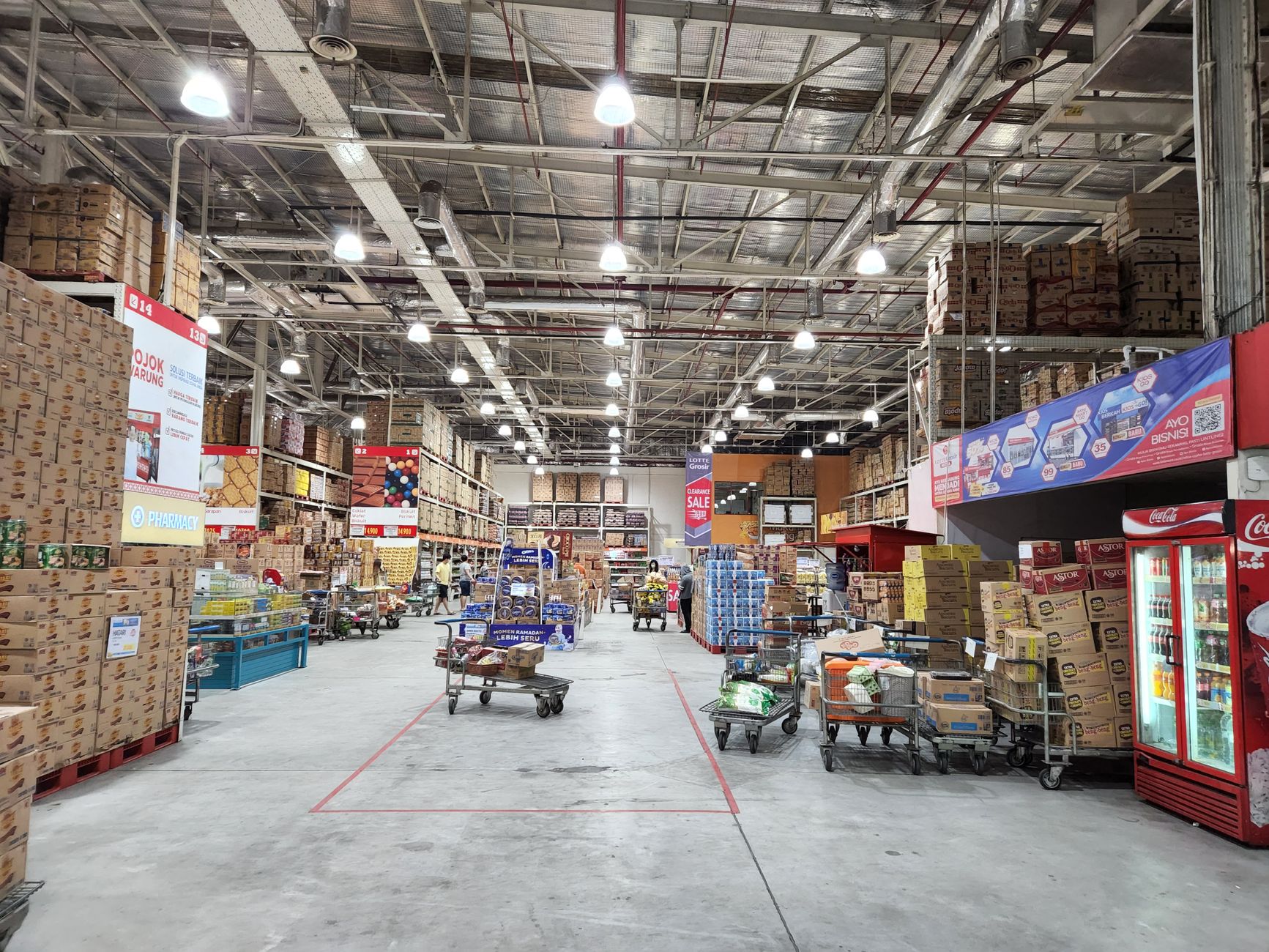
There is a peculiar geometry to Costco’s economics. The company moves nearly a quarter-trillion dollars of merchandise annually, rotisserie chickens, gasoline, industrial-sized jars of peanut butter, yet it does not, strictly speaking, profit from the sale of these goods. The operating income derived from merchandise barely covers the cost of the buildings, the forklifts, and the payroll. The actual profit, the line item that sustains a $300 billion market capitalization and funds decades of 10% annual growth, arrives in the form of a $60 to $120 annual fee that customers pay simply for the privilege of entering the warehouse. This is not a loyalty program bolted onto a retail operation. It is the entire business model inverted: the store is a loss leader for the membership, rather than the reverse.
Traditional retail economics assume a merchant buys at cost and sells at a markup sufficient to cover overhead and generate profit. Walmart, the closest structural comparison, earns roughly a quarter of every dollar as gross margin; Costco targets 11% to 14%. On many items, gasoline, pharmacy prescriptions, the $4.99 rotisserie chicken, the company prices at or below cost. The merchandise exists to justify the membership, not the other way around. This rearrangement changes everything about how capital is deployed, how inventory is managed, and how labor is compensated. It also creates a binding constraint: the model only works if customers renew their memberships at rates high enough to fund operations that operate on the mathematical edge of breakeven. The renewal rate, historically hovering near 90% in North America, is the only metric that truly matters. Everything else is infrastructure in service of that renewal.
The Tyranny of 3,700
To maintain prices low enough to justify the membership fee while funding a wage structure 30% above industry norms, Costco enforces a constraint so severe that it would terrify any conventional retailer: the company stocks roughly 3,700 active SKUs. Walmart carries 150,000. A typical supermarket carries 40,000. This is not curation in the boutique sense; it is a forced march toward velocity. By restricting choice to roughly 40 times fewer items than its closest competitor, Costco ensures that every remaining product must sell in enormous volume or be eliminated. The average item at Costco turns over fifteen times faster than at a conventional retailer. Inventory does not sit; it moves.
This velocity generates a working capital advantage that compounds. When inventory turns rapidly, cash converts back into purchasing power faster, reducing the need for expensive financing. More importantly, it grants Costco a negotiating position that borders on extortionate. A supplier fighting for one of those 3,700 slots knows that placement means instant access to millions of high-intent buyers. In exchange for that volume, suppliers accept lower per-unit prices. The restriction of choice is therefore the engine of the low prices, which drives the membership renewals, which fund the ability to keep prices low. It is a closed loop, but a fragile one. If Costco were to relax the constraint, if it were to add SKUs to compete with the infinite selection of e-commerce or the variety of a traditional supermarket, the velocity would slow, the purchasing leverage would diminish, and the margin structure would collapse. The company is held hostage by its own discipline.
This discipline has a logical endpoint: Kirkland Signature. Costco’s private label, which accounts for roughly $52 billion in annual revenue, more than Nike’s entire global business, is the purest expression of the SKU restriction strategy. Kirkland does not offer choice; it offers a single option per category, manufactured to Costco’s specifications, priced at the margin floor. The brand has become so trusted that it functions as a traffic driver itself, yet it exists only because the constrained shelf space forced Costco to internalize the value that would otherwise go to national brands. The success of Kirkland proves that the limitation of choice, when coupled with a guarantee of quality and price, can itself become a product. But it remains a high-wire act. The model assumes that customers will continue to accept severe limitation in an era of infinite digital choice. If that assumption frays, if members begin to see the warehouse not as a curated selection but as an impoverished one, the renewal logic breaks.
Wages as Shrinkage Insurance
The most misunderstood element of Costco’s model is its labor economics. The company pays an average hourly wage of $26, compared to Walmart’s $19.50. In an industry where labor is typically the first cost cut in a downturn, this 30% premium appears either as enlightened capitalism or as a vulnerability waiting to be exploited by lower-cost competitors. It is neither. It is a calculated insurance policy against the two hemorrhages that destroy retail profitability: employee turnover and merchandise shrinkage.
Retail labor markets are characterized by attrition rates that approach 20% annually. Costco’s attrition after the first year is 7%. The cost of replacing a retail worker, recruiting, background checks, training, lost productivity, typically runs to several thousand dollars per head. On a workforce of hundreds of thousands, the savings from low turnover alone offset a significant portion of the wage premium. But the larger economic variable is shrinkage. Industry-standard theft and loss rates run between 1% and 2% of sales. Costco’s shrinkage is 0.15%. On a business approaching $250 billion in revenue, that 1% differential represents more than $2 billion in annual savings, ufficient to fund the entire wage premium with capital left over.
The mechanism is straightforward: well-compensated employees with long tenure steal less and catch more theft by others. They are also more efficient. A forklift operator who has been with the company for fifteen years does not damage inventory; a cashier who has processed millions of transactions identifies scanning errors instinctively. The wage premium purchases institutional memory. This is why the company’s internal promotion pipeline is not a HR talking point but a structural necessity. Thirty-six percent of U.S. employees have more than ten years of service. The entire C-suite, including the chief executive, began as hourly workers, aggers, checkout clerks, forklift operators. This continuity matters because the operational model is subtle and easily broken. A warehouse layout that minimizes footsteps, a purchasing discipline that refuses “slotting fees” from suppliers, a pricing strategy that treats gas as a traffic driver rather than a profit center, hese are not strategies found in MBA textbooks. They are specific to the culture, encoded in the workforce, and non-transferable. A competitor cannot hire away Costco’s advantage because the advantage is distributed across thousands of employees who have spent decades learning how to run this specific machine.

The Exception That Proves the Rule
For all its discipline, Costco operates under a stated principle that it routinely violates. The company claims it does not sell products below cost; it does not use loss leaders. Yet gasoline and pharmacy prescriptions are priced at cost or below. The $4.99 rotisserie chicken, famously maintained at that price for two decades despite inflation, is widely understood to be a break-even or loss-leading proposition. These are not accidents. They are acknowledgments that the membership fee creates a different category of economics. Gas drives traffic with a frequency that no other category can match; the pharmacy creates a habituation that justifies the annual fee for aging demographics.
But this creates a strategic tension. If the company were to raise gas prices to market rates, the traffic would decline, threatening the renewal of members who calculate value based on fuel savings. If it continues to subsidize these categories, it admits that the “no loss leader” rule is flexible, which invites pressure to subsidize other categories. The gas pump and the pharmacy are the points where the model is most vulnerable to competitive pressure. A regional grocery chain with a loyalty program can temporarily price match on fuel; an online pharmacy can undercut on convenience. Costco must maintain these loss-adjacent businesses not because they are profitable, but because they are the gravitational center of the membership habit. Without them, the $60 fee becomes harder to justify.
The Inventory Velocity Machine
The restricted SKU count does more than reduce negotiation complexity; it transforms the balance sheet. In conventional retail, inventory is a liability that ties up working capital. At Costco, inventory is a cash-generation machine. Because items sell so quickly, often within days of arrival, the company collects cash from customers before it must pay suppliers. This negative cash conversion cycle means that Costco is, in effect, financed by its suppliers and its members rather than by banks. The faster the inventory turns, the more cash is available to fund new warehouses, to weather price wars, or to absorb the wage premium.
This velocity also enforces a brutal quality control. A slow-moving SKU is a capital trap; it is delisted quickly. The buyer’s job is not to maximize variety but to maximize throughput. This changes the relationship with suppliers. Rather than the slotting-fee model common in grocery retail, where manufacturers pay for shelf space regardless of sales, Costco demands performance. The threat of delisting is credible because the company has so few slots to fill. The result is a selection that is narrow but deep, optimized for the mean rather than the tail of consumer preference. It works because the customer base is self-selected: people who join Costco have already accepted the premise that they will sacrifice choice for price. But this is the fragile assumption upon which everything rests. If the median shopper begins to value variety over velocity, if the long tail of consumer preference becomes more valuable than the bulk savings, the entire model becomes obsolete.
The Saturation Horizon
Costco has grown revenue at roughly 10% annually for more than three decades while keeping the store format essentially unchanged: the concrete floors, the steel racks, the 148,000-square-foot box. This consistency is usually cited as evidence of operational excellence, but it also suggests a company approaching the limits of its format. There are only so many locations suitable for a warehouse club, ffluent suburbs with sufficient density and parking. International expansion offers growth, but the model has not been proven outside North America with the same consistency. Labor laws in Europe may prevent the 30% wage premium that undergirds the low-shrinkage advantage. In Asia, the membership concept faces cultural friction, and local competitors often have tighter supply-chain relationships.
More critically, the model assumes that the wealthy customer base will continue to tolerate a shopping experience designed for price sensitivity. Costco’s median household income is roughly double the national average. These are not desperate bargain hunters; they are affluent professionals who enjoy the gamified thrift of the warehouse. But if the experience becomes too austere, if the SKU restriction feels like deprivation rather than curation, this demographic has the disposable income to defect to premium grocers or to the convenience of delivery apps. The company is betting that the savings will always outweigh the friction, but that bet depends on maintaining a price gap that may narrow as e-commerce logistics improve and competitors adopt similar high-volume, low-margin strategies.
The Narrow Path
Costco is often described as a retailer, but it is more accurately understood as a club that sells access to a specific operational capability. That capability, moving massive volume through a constrained selection at minimal markup, requires a set of interlocking choices that are easy to describe and nearly impossible to replicate. The high wages fund low turnover, which reduces shrinkage, which preserves margins that do not exist on the merchandise itself. The restricted SKUs drive velocity, which generates supplier leverage, which enables low prices, which justifies the membership fee. The internal promotion pipeline preserves institutional knowledge that would dissipate if managed by conventional retail executives. Each element reinforces the others; break one, and the cycle unwinds.
The fragility lies in the fact that all of these choices are violations of standard retail doctrine. A competitor cannot simply copy the membership fee without accepting the wage premium; cannot accept the wage premium without the velocity of restricted SKUs; cannot achieve that velocity without the buying power of an established membership base. It is a moat built on contradiction: the cheapest prices offered to the wealthiest customers, the highest wages yielding the lowest labor costs, the fewest choices generating the highest loyalty.

The business will continue to compound as long as the renewal rates hold. But the assumption that underlies those renewals, that customers will indefinitely accept radical limitation of choice in exchange for bulk pricing, is being tested by an economy of infinite digital selection. If the membership fee ever comes to feel like a cover charge for a sparse pantry, rather than a key to a secret vault of value, the model does not degrade gradually; it collapses. For now, the warehouses remain full, the rotisserie chickens rotate, and the cash conversion cycle stays negative. The company has built something durable, but it is narrow. It is a machine that runs on the specific gravity of its own contradictions, and there is no wider road.
The Kirkland Signature phenomenon deserves closer inspection, for it represents the point where the SKU restriction strategy achieves its most perverse and brilliant inversion. When Costco limits itself to 3,700 items, it necessarily excludes thousands of brands that would otherwise pay dearly for placement. In a conventional supermarket, those brands purchase their presence through slotting allowances, ees that can run to hundreds of thousands of dollars per item per chain, effectively subsidizing the retailer’s operations. Costco refuses these fees, which forces it to be ruthlessly objective about performance but also means it leaves money on the table, oney that Walmart and Kroger collect merely for providing shelf space. To compensate, Costco does something more aggressive: it replaces the national brand entirely with its own label, capturing not just the retail margin but the manufacturing margin as well.
Kirkland Signature now generates $52 billion in annual revenue, a figure that places it ahead of Nike, Coca-Cola, or nearly any consumer goods company one might name. This is not private label as it is practiced elsewhere: n imitator offered at a slight discount. Kirkland is often manufactured by the same companies that produce the national brands it displaces, but sold at 20% to 30% less. The economics are stark: for a supplier, winning the Kirkland contract means guaranteed volume in the billions of units, but at margins compressed to the industrial minimum. The supplier accepts this because the volume justifies keeping factories running at capacity; Costco accepts it because it replaces a branded vendor that would have extracted a premium. The member accepts it because the quality remains consistent, irkland products are subject to the same obsessive quality control as everything else in the warehouse, precisely because a Kirkland failure would damage the membership justification directly.
Yet this creates a latent fragility. As Kirkland expands into ever more categories, wine, batteries, golf balls, mortgages, it tests the boundary of what a limited-assortment retailer can credibly curate. The brand succeeds because members trust Costco to have vetted the supplier, to have negotiated the price to the floor, and to stand behind the product with a generous return policy. But trust scales poorly. When Kirkland represented paper towels and coffee, the risk of a quality lapse was containable. As it moves into financial services, travel, and healthcare, the complexity of vetting increases exponentially, and the cost of a failure moves from a refund to a lawsuit or a regulatory sanction. Moreover, the strategy only works while Costco maintains the purchasing leverage to force manufacturers into the Kirkland mold. If volume growth stalls, or if international markets do not provide the same density of demand, suppliers may balk at the terms, preferring the higher margins of traditional retail. Kirkland is a parasite on the national brand ecosystem; it requires the existence of full-price competitors to define its value proposition. If everyone adopted the Kirkland model, the model would collapse, here would be no premium brands left to undercut.
The question of whether everyone could adopt the model leads inevitably to the problem of geography. For thirty years, Costco has grown by planting its standardized warehouses in the suburban ring of North American cities, then repeating the exercise in Japan, Korea, Australia, and the United Kingdom. The results have been respectable but not uniform. In Asia, where apartment living predominates and pantry space is measured in centimeters, the bulk-packaging logic faces headwinds. In Europe, where labor laws prevent the flexible scheduling and wage differentiation that allow Costco to pay above-market rates while maintaining labor productivity, the cost structure tightens. More fundamentally, the membership concept itself encounters cultural resistance. In the United States, the warehouse club fits neatly into a particular socioeconomic niche: the affluent but thrifty, the small business owner, the suburban family with a basement freezer. In countries with stronger traditions of daily shopping, smaller household sizes, or robust cooperative retail structures, the $60 admission fee feels less like an investment and more like a tax.
The international expansion also tests the supply-side advantages that the domestic model takes for granted. In North America, Costco’s purchasing managers have spent decades cultivating relationships with suppliers who have built dedicated production lines for Kirkland products and who accept payment terms that reflect Costco’s negative cash conversion cycle. In new markets, Costco arrives as a demanding buyer without a history, asking for terms that local suppliers may not need to grant, especially when established retailers already dominate distribution. The model requires that Costco be the biggest, or at least the most important, customer for any given supplier. In China, where Costco has opened a handful of locations to frenzied initial crowds, the long-term challenge is whether it can achieve the density of stores necessary to command supply chains dominated by Alibaba, JD.com, and local hypermarket chains. Without that density, it is merely a curiosity, a destination for bulk purchases of imported Cheerios rather than a primary shopping habit.

The real estate equation compounds the difficulty. The warehouse format requires specific parcels: roughly fifteen acres of land, proximity to affluent suburbs but with sufficient highway access to draw from a wide radius, and zoning that permits the volume of traffic and the unsightly architecture of a concrete box. In the United States, these sites are increasingly scarce in the coastal cities where the remaining growth potential lies. In Europe and Asia, land costs and planning restrictions make the format prohibitively expensive relative to the revenue per square foot that the limited-SKU model generates. The company has begun experimenting with smaller formats and urban locations, but each deviation from the standard 148,000-square-foot template risks breaking the operational model. A smaller warehouse cannot hold the inventory depth necessary to achieve the velocity that drives the purchasing leverage. An urban location lacks the parking for the bulk purchaser and the gas station that serves as the primary traffic anchor. The format has been frozen for decades not merely because of operational conservatism but because it represents a delicate equilibrium of land, labor, and logistics that cannot be compressed or expanded without losing the economic magic.
This brings us to the question of succession, ot merely of the chief executive, though that is relevant, but of the entire management culture that constitutes the company’s most durable competitive advantage. Costco’s leadership is famously homegrown. The current chief executive began as a forklift driver; the president started at the cash register; the CFO came up through the warehouses. This is not corporate mythology for investor presentations; it is a structural feature of the business. Because the model is so specific, ecause it requires managers who intuitively understand the relationship between inventory turns and wage premiums, who know how to run a warehouse without the crutch of markdowns and promotional calendars, ostco cannot easily hire executive talent from outside. An executive from Target or Amazon would arrive with assumptions about inventory management, labor scheduling, and customer acquisition that are actively destructive to the Costco model.
The durability of this culture is therefore a variable of economic significance. As the current generation of leaders, many of whom joined in the 1980s and 1990s, approaches retirement, the company must promote from a deeper bench. The internal pipeline is robust, 36% of employees have more than ten years of service, but the transition from warehouse manager to corporate strategist is not automatic. More importantly, the cultural transmission depends on a rate of growth that allows for the continuous promotion of junior managers into senior roles. If expansion slows, the pipeline constricts. The company loses the ability to offer the career progression that justifies the wage premium and the patience required to learn the model. In a no-growth scenario, Costco would still be profitable, but it might cease to be a place where a bagger can become a regional vice president. The labor model and the growth model are therefore entangled; the former requires the latter not for revenue reasons alone, but for cultural reproduction.
There remains the threat that no one in the C-suite discusses publicly but that occupies the margins of every strategic planning document: the possibility that the internet has finally caught up with the warehouse club. For years, the conventional wisdom held that e-commerce could not compete with Costco because shipping costs obliterate the economics of bulk goods. A pallet of paper towels or a fifty-pound bag of rice costs too much to deliver to a doorstep to compete with the warehouse price. Amazon has attacked this problem through subscription models and localized fulfillment, but the cost structure remains challenging. More dangerous is the long tail. Costco’s bet is that customers will accept the absence of niche products, specific brands of baby food, specialty dietary items, obscure electronics, because the savings on the staples justify the inconvenience of shopping elsewhere for the exceptions. This bet held when “shopping elsewhere” meant a separate trip to a supermarket. It holds less well when “shopping elsewhere” means a voice command to Alexa that delivers the obscure item in two hours.
The company has responded with e-commerce, but the effort is necessarily half-hearted, a defensive maneuver rather than a strategic embrace. Online sales at Costco grow, but they grow awkwardly. The website cannot replicate the treasure-hunt experience of the warehouse, where the limited inventory creates serendipitous discovery. More critically, the economics of shipping conflict with the core value proposition. Costco’s prices are low because the customer performs the last mile of logistics, hey drive to the warehouse, they load their own car, they store the goods in their own home. When Costco pays for shipping, it must either raise prices (destroying the membership justification) or eat the cost (destroying the thin margins). The company has experimented with curbside pickup and delivery partnerships, but each adds friction and cost to a model designed to eliminate both. The warehouse is the anti-app; it is physical, slow, and demanding. It requires a commitment of time and vehicle space that digital natives increasingly view as irrational.
Yet the bear case for e-commerce penetration must contend with the gasoline. The gas station remains Costco’s most potent defensive weapon against digital disruption, not because it is profitable, it is priced at cost, generating roughly zero margin, but because it creates a visit frequency that e-commerce cannot match. The average Costco member visits the warehouse more than once a month, often specifically for fuel. Each visit is an opportunity to convert a gas purchase into a cart full of groceries. No online retailer can replicate the gas station; the regulatory and capital barriers are too high, and the economics of delivery make fuel sales impossible. As long as internal combustion engines dominate American transportation, Costco owns a traffic driver that is immune to Amazon. But the electrification of the vehicle fleet threatens even this moat. Electric vehicle charging takes longer than refueling, but it also encourages different behavior, harging at home, at work, in urban centers. If the visit frequency enabled by cheap gas declines, the impulse purchases that fund the model decline with it.
The company also faces a subtler demographic challenge. Its customer base is affluent, but it is also aging. The median Costco member is in their late fifties, a demographic that has the time for warehouse shopping, the space for bulk storage, and the nostalgia for the ritual of the Saturday morning stock-up. Younger households shop differently. They value convenience over bulk savings, variety over curation, and instant gratification over the deferred gratification of a quarterly warehouse run. They are also less likely to own the large vehicles necessary to transport Costco quantities. The company has attempted to attract younger members through organic products and electronics, but the format itself, the concrete floor, the industrial lighting, the necessity of buying six months of toilet paper at once, may be inherently generational. If the membership renewal rate holds steady at 90% but the average age of the member increases by one year annually, the business is slowly dying even as the metrics look healthy.
The final tension concerns the price of the membership itself. For years, Costco has raised the fee roughly every five to six years, typically by $5 to $10. These increases are announced with the ritual solemnity of a central bank rate hike, and they drop straight to the bottom line. Because the company operates at near-zero merchandise margin, each incremental dollar of membership fee represents pure profit. This creates a temptation: why not raise the fee more aggressively? The answer is that the fee must remain small enough to be psychologically invisible relative to the savings claimed. A $60 fee is trivial to a household spending $5,000 annually at Costco; a $200 fee would demand conscious justification with each renewal. The company must balance the desire for immediate profit against the necessity of making the membership feel like a trivial cost of admission to a private club. If competitors, Amazon Prime, Walmart+, the various grocery delivery subscriptions, begin to bundle benefits that Costco cannot match, the relative value of the fee comes under pressure. The membership is the margin, but it is also a ceiling. It caps the pricing power and fixes the revenue model in a way that traditional retailers, who can raise prices when costs increase, are not constrained.
Costco will likely survive these pressures. The cash conversion cycle is too powerful, the cultural moat too deep, the operational discipline too ingrained. But survival is not the same as growth, and the next decade may reveal that the thirty-year expansion was a function of a specific moment in American retail history: moment when land was cheap, suburbanization was rampant, and the internet had not yet trained consumers to expect infinite choice delivered instantly. If that moment has passed, Costco becomes not a growth company but a cash-generating utility, harvesting the renewals of a loyal but shrinking cohort while defending against erosion on every front. The model is narrow, as we have seen, but it may also be finite. The warehouses will stand for decades, concrete monuments to a specific answer to the question of how retail should work. Whether they continue to multiply, or merely persist, depends on whether the contradictions that fuel the machine can endure the friction of a changing economy. The membership fee will still be collected, the rotisserie chickens will still rotate, but the compounding may slow to a crawl, leaving Costco as a profitable anomaly: retailer that made its money not from what it sold, but from permission to enter the door.