Exxon Mobil: When Oil Giants Rival Nations

The Last Empire
<pExxon Mobil produces 2.3 million barrels of crude oil every day. This is not merely a statistic of corporate scale; it is a sovereign-level output, equivalent to the daily production of Kuwait, Iran, or the United Arab Emirates. In a global market of one hundred million barrels per day, Exxon alone accounts for two percent, nough to qualify for OPEC membership were it a nation-state rather than a publicly traded corporation. The company generates $250 billion in annual revenue and $50 billion in EBITDA, figures that place it among the largest economic entities on earth, yet it now occupies a strange liminal space in the American economy. Three decades ago, Exxon stood perennially among the top three companies by market capitalization, shoulder-to-shoulder with IBM, General Electric, and Microsoft. Today, the entire energy sector commands merely 3 percent of the S&P 500’s value, down from the 8 to 15 percent it held for most of the past thirty years. The empire remains vast, but the world has moved its capital elsewhere.This shrinkage is not merely a valuation story. It represents a structural shift in how the market prices the future of hydrocarbons. Exxon exists as a legacy of the industrial age’s central conceit: that energy demand grows inexorably, that vertical integration creates defensible moats, and that geological endowments, once mapped and drilled, yield permanent cost advantages. These assumptions built Standard Oil, survived its 1911 dissolution into thirty-four separate companies, and animated the 1998 merger of Exxon and Mobil, wo siblings reuniting after eighty-seven years of forced separation. But the logic that Rockefeller forged in the 1880s, when controlling pipelines meant controlling wildcatters, now operates in a market of specialized global supply chains, spot-price commoditization, and potential demand stagnation. Exxon is not merely an oil company; it is a bet that the twentieth century’s energy architecture will persist indefinitely into the twenty-first.
Integration Was the Moat, Integration Is the Trap
John D. Rockefeller’s original strategic insight was logistical, not geological. In the fragmented oil patch of the 1800s, independent drillers pumped crude into a market prone to violent boom-bust cycles. By purchasing pipelines and refineries, Standard Oil captured the chokepoints through which all competitors had to pass. Integration provided control over price and supply, smoothing volatility and accumulating margin at every stage of the value chain.
That architecture persists today. Exxon explores for hydrocarbons, extracts them, transports them through proprietary pipelines, processes them in company-owned refineries, and sells them through branded retail stations. In theory, this vertical stack allows optimization across the cost curve: buying cheaper heavy crude grades at a $20-per-barrel discount to West Texas Intermediate, processing them through specialized refining assets that competitors lack, and capturing the full spread from wellhead to gas pump rather than surrendering margin to third-party logistics providers.
Yet the strategic environment that rewarded this integration has inverted. Rockefeller built his monopoly in a fragmented market where infrastructure was scarce and control meant survival. Today’s oil market is mature, liquid, and globally arbitraged. Competitors access pipelines, tankers, and refineries through third-party contracts without owning the underlying capital. Integration, once a defensive moat, risks becoming a capital trap. Exxon must justify owning depreciated refineries, aged pipeline networks, and retail real estate that generate returns below the cost of capital required to maintain them. The company faces a binary choice without an obvious correct answer: divest downstream assets to become a pure exploration-and-production player, surrendering the margin capture and crude-sourcing advantages that currently differentiate its cost structure, or retain the integrated model and accept the drag on return-on-invested-capital that comes with maintaining stranded industrial architecture.
This tension is exacerbated by the asymmetry of the oil cycle. When crude prices collapse, upstream exploration and production cash flow evaporates, forcing Exxon to slash capital expenditures on new reserves: delay that locks in future production declines. Conversely, when oil prices spike, refining margins compress because input costs rise faster than the market can pass through to consumers of gasoline and diesel. The integrated structure cannot hedge this cycle. A pure upstream company can optimize for high-price regimes, cutting costs and harvesting cash during booms. A pure refiner can optimize for margin volatility, buying cheap crude when spot markets soften. Exxon must manage both simultaneously, unable to pivot decisively toward either condition without abandoning the strategic logic of its own existence.
The Refinery Wall
Beneath the strategic tension lies a structural advantage so specific it resembles a geological formation rather than a business strategy. No new refineries have been built in the United States since 1976. Regulatory barriers, capital costs measured in billions per facility, and environmental opposition have frozen domestic refining capacity for nearly half a century. Exxon’s existing refineries, some dating to the early 1900s, continuously retrofitted rather than replaced, constitute an irreplaceable processing monopoly.
This matters because not all crude oil is equivalent. Heavy, sour crudes trade at significant discounts to light, sweet benchmarks like WTI or Brent because they require complex processing equipment, cokers, hydrocrackers, desulfurization units, to convert into usable gasoline, diesel, and jet fuel. Most modern refineries, particularly those built in the past two decades in Asia or the Middle East, are configured for the light crude that dominates new production. Exxon’s aged, complex American refineries can process the heavy, discounted barrels that others cannot handle. This creates a $20-per-barrel arbitrage opportunity: Exxon buys cheap heavy crude while competitors pay spot prices for light grades, then processes both into the same refined products selling at the same market prices.
The durability of this advantage is physical, not strategic. Competitors cannot replicate Exxon’s refining configuration without spending billions and navigating decades of regulatory approvals that society no longer grants. The assets are fully depreciated or amortized, meaning Exxon earns returns on sunk capital while new entrants would face full-cost economics. This is the underappreciated engine of Exxon’s downstream profitability: not volume growth, which is impossible in a fixed-capacity environment, but margin optimization through crude sourcing and utilization management during competitor downtime.
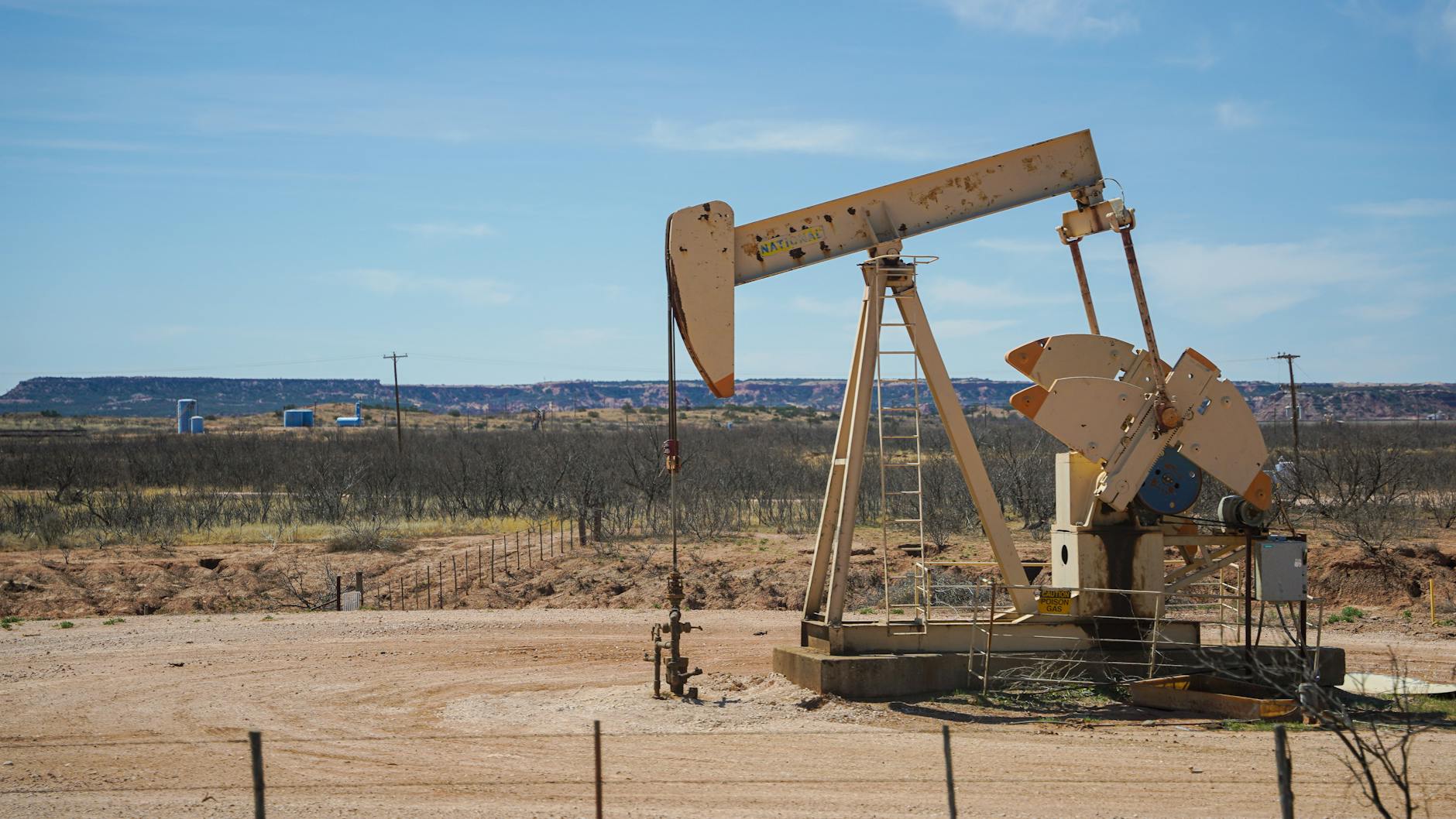
Yet this advantage carries its own fragility. Refining is a margin business, not a volume business. Because Exxon cannot build new capacity, it cannot grow refining returns through expansion. It can only optimize the spread between input costs and output prices, or capture market share during periods when rivals shut down for maintenance or encounter operational disruptions. If global refined product demand shifts, f electric vehicle adoption reduces gasoline consumption, if jet fuel demand remains depressed, if Middle Eastern and Asian subsidized refineries flood the market with cheap product, xxon’s fixed infrastructure becomes stranded capital. The specialized equipment that processes heavy crude has limited alternative use. The refinery wall protects incumbents from new entrants, but it also prevents incumbents from escaping a declining market.
Living and Dying by the Cost Curve
Upstream, the economics are starker. Exxon’s exploration and production assets span multiple geographies and cost regimes, allowing production at $30 to $35 per barrel in premium fields while competitors require $70 per barrel to generate acceptable returns on the same acreage. This cost-curve positioning represents the company’s primary economic defense. When oil trades at $80, Exxon captures enormous margin. When oil crashes to $50, Exxon breaks even while high-cost producers bleed.
This advantage derives from decades of accumulated geological knowledge, drilling expertise, and strategic acreage selection. It compounds over time as Exxon reinvests cash flow into lower-cost reserves, purchasing or leasing the geology that cheaper oil comes from. The mechanism resembles a treadmill: to maintain the cost advantage, Exxon must continuously replace the reserves it depletes, constantly hunting for new fields that sit at the favorable end of the global supply curve.
Here lies the central fragility. Acreage is finite. The easy oil, large conventional fields in stable jurisdictions, has largely been discovered and developed. New reserves increasingly come from difficult geologies (deepwater, shale, oil sands) or politically volatile regions. If Exxon fails to replace reserves at costs below the long-term oil price, production declines and the company faces a devil’s bargain: accept shrinking output and cash flow, or acquire acreage at premium prices like any other competitor, destroying the cost-curve advantage that justifies its valuation.
The reserve replacement failure risk is not hypothetical. It is geological and arithmetic. Every barrel pumped depletes the inventory. The replacement barrel must cost less to find and develop than the market price will pay for it over the field’s life. As the industry matures, the marginal barrel grows more expensive to locate. Technology improves extraction efficiency but does not create new geology. Exxon’s 150-year dominance rested on the assumption that the next field would be as good as the last. In a world of rising extraction difficulty and environmental restrictions on new development, that assumption grows increasingly tenuous.
The Inverse Correlation Problem
The integrated model was designed to smooth earnings. When upstream suffered, downstream would theoretically prosper, and vice versa. The reality proves more complex. When oil prices crash, as they did in 2020, when WTI futures briefly traded at negative $37 per barrel, upstream cash flow collapses. Exxon cannot simply shift capital to refining to compensate, because refining economics do not move in simple opposition to crude prices. Refining profits when competitors face downtime or when demand for refined products outstrips processing capacity, not merely when crude is cheap.
When oil prices spike, as they did during the 2022 geopolitical disruptions, upstream generates windfall cash flows but refining margins often compress. High crude prices increase input costs, while demand destruction or government intervention (price caps, export restrictions) prevents full pass-through to consumers. The correlation between segments is not reliably inverse; it is chaotic.
This creates a capital allocation paralysis. Exxon cannot optimize for a high-oil-price regime without overinvesting in upstream assets that will destroy capital if prices collapse. It cannot optimize for a refining-margin regime without maintaining infrastructure that requires constant maintenance capital regardless of utilization. The company must manage both simultaneously, which means managing neither optimally. Pure-play upstream competitors can slash capital expenditures during downturns and double down during booms. Pure-play refiners can time maintenance cycles to coincide with margin weakness. Exxon’s integration forces it to maintain operational readiness across the entire chain, burning capital to preserve optionality that rarely pays off symmetrically.
The 1-2% Bet
At the foundation of Exxon’s valuation lies a single, fragile assumption: that global oil demand grows at 1 to 2 percent annually, in perpetuity. This assumption justifies the reinvestment of billions in new production capacity, the maintenance of refining infrastructure, and the accumulation of geological reserves. It assumes that population growth, economic development in emerging markets, and the absence of viable substitutes for transportation fuels and petrochemical feedstocks will sustain hydrocarbon consumption indefinitely.
This is the bet that the market increasingly doubts. Energy’s declining share of the S&P 500, from 15 percent to 3 percent, reflects capital flight from this assumption. Electrification of transport, renewable energy substitution, bio-based petrochemicals, and policy-driven decarbonization represent existential threats not to Exxon’s operations tomorrow, but to its strategic logic over the next two decades. If oil demand peaks and enters sustained decline, Exxon’s model breaks. Not because it cannot produce oil profitably, low-cost producers will be the last standing in a declining market, but because the model requires growth to justify reinvestment.
Without demand growth, Exxon becomes a cash-harvesting asset in a shrinking total addressable market. The integrated infrastructure, refineries, pipelines, retail networks, loses value as throughput declines. The reserve replacement treadmill accelerates into a wall: why invest billions in new fields that will come online just as demand softens? The capital allocation logic inverts. Rather than reinvesting cash flow to maintain production volumes, the rational strategy becomes harvesting cash and returning it to shareholders until the assets deplete. But Exxon cannot easily pivot to harvest mode because its culture, governance, and cost structure are built for the opposite: perpetual reinvestment, perpetual growth, perpetual replacement of reserves.
Capital Discipline as Industrial Policy

Here the soft factors become hard economic variables. Exxon’s governance structure, its board composition, its executive incentives, its engineering culture, functions as a commitment device to the reinvestment strategy. Unlike financialized energy companies that treat reserves as tradable portfolios, Exxon operates as an industrial machine designed to find, extract, and process hydrocarbons. The company employs geologists, petroleum engineers, and refinery operators who have spent careers optimizing extraction curves and cracking margins. This is not a workforce that pivots easily to wind farms or shareholder maximization.
This culture creates economic consequences. It means Exxon will likely continue drilling and refining long past the point where pure financial logic suggests harvesting and returning capital. It means the company will defend its integrated structure not because the spreadsheet justifies it, but because the organizational identity requires it. When faced with the choice between divesting downstream assets to improve returns or maintaining the integrated chain to preserve the crude-sourcing advantage, the cultural bias points toward retention and reinvestment.
The capital discipline that served Exxon during the boom-bust cycles of the twentieth century, relentless focus on return-on-capital-employed, refusal to overpay for acreage during bubble periods, becomes a liability if the game has changed from growth to decline. A company optimized for finding the lowest-cost barrel and moving it through owned infrastructure cannot easily become a declining trust that distributes cash to shareholders while managing asset retirement. The organizational muscle memory pushes toward maintenance, replacement, and expansion even when the market signals saturation.
The Breaking Point
Exxon’s future hinges on whether the 1-to-2-percent demand growth assumption holds through the next decade. If global oil consumption plateaus or declines, the integrated model faces an unforgiving arithmetic. Fixed refining capacity becomes stranded as throughput falls. Pipeline networks depreciate against declining volumes. Upstream assets face premature decommissioning or forced sales into a buyer’s market.
In such a scenario, the $20-per-barrel heavy crude advantage becomes less valuable because the absolute margin on each barrel shrinks as product prices fall with demand. The cost-curve positioning protects relative profitability, Exxon loses less than competitors, but absolute cash flows decline. The company would face the final integration choice: break itself into pure-play upstream and downstream entities, allowing each to optimize for its respective market decline, or remain whole and manage a gradual, capital-intensive liquidation.
The refinery wall that currently protects Exxon’s downstream margins would become a cage. The specialized equipment designed for heavy crude cannot easily process biofuels or synthetic feedstocks. The retail network, dependent on combustion-engine vehicle traffic, loses value as electrification accelerates. The upstream assets, while low-cost, face earlier-than-expected retirement as the world’s carbon budget exhausts.
Conversely, if demand growth persists, f emerging economies industrialize on fossil fuels, if petrochemical demand for plastics and fertilizers grows faster than recycling and substitution, if electrification stalls, xxon’s current structure remains formidable. The integrated logistics monopoly, the cost-curve positioning, and the irreplaceable refining capacity would generate sustained cash flows for decades. The company would continue its 150-year history of replacing reserves, optimizing crack spreads, and returning capital to shareholders while competitors struggle with higher costs and less favorable crude slates.
The market’s current valuation, 3 percent of the S&P 500, suggests skepticism that this rosy scenario will prevail. Exxon has become a binary bet on the pace of energy transition, a levered play on the terminal value of hydrocarbons. It is no longer a growth stock, nor even a stable industrial. It is a vast, integrated, depreciating machine that produces the fuel of a civilization potentially moving past its product. The empire remains vast, but empires do not shrink gracefully. They either find new frontiers to conquer, or they tax the remaining provinces until the infrastructure crumbles. Exxon stands at that fork, with $50 billion in annual cash flow and 2.3 million barrels of daily production waiting to determine which path the capital takes.
The Capital Allocation Trap
The $50 billion question, literally, given Exxon’s annual EBITDA, is whether this cash flow funds reinvestment into a declining asset base or returns to owners through buybacks and dividends while management manages decline. For the decade following the 2008 financial crisis, Exxon chose the former path with near-religious conviction. Capital expenditures peaked at $42 billion in 2013, directed toward massive LNG projects in Papua New Guinea, oil sands expansions in Canada, and deepwater developments in the Gulf of Mexico. The company operated under the assumption that scale itself created optionality, hat owning the largest inventory of drillable prospects, regardless of cost, guaranteed survival in any price environment.
This assumption failed catastrophically in 2020. When the COVID-19 pandemic destroyed 20 million barrels per day of global oil demand practically overnight, WTI front-month futures collapsed into negative territory, raders paid $37 per barrel to avoid taking physical delivery of crude they had no storage capacity to accept. For Exxon, this was not merely a price shock; it was a structural demonstration of the integration trap. Upstream cash flows evaporated while refining margins, rather than providing the theoretical hedge, compressed simultaneously as demand for gasoline, diesel, and jet fuel collapsed in lockstep.
The company’s response revealed the rigidity of its capital structure. Exxon had maintained its dividend as a sacred covenant, the longest consecutive payment record of any S&P 500 company, dating to the Standard Oil Trust era, while peer competitors (BP, Shell, even Chevron) cut payouts to preserve liquidity. To fund this $15 billion annual dividend commitment while upstream cash flow turned negative, Exxon borrowed heavily, adding $20 billion to its balance sheet in a single year. It also slashed capital expenditures by $10 billion and deferred development of key projects, including the massive Permian Basin expansion that was supposed to drive production growth through the mid-decade.
This was the integration trap in its purest form. A pure-play upstream company could have shut in production, laid off crews, and waited for price recovery with minimal fixed costs. A pure-play refiner could have idled capacity and minimized working capital. Exxon could do neither without severing the logistical chain that justified its existence. Pipelines must flow continuously to avoid wax buildup and corrosion; refineries require minimum crude inputs to maintain catalyst activity; offshore platforms face geological pressure risks if shut in improperly. The integrated machine demands continuous feeding even when the market signals starvation.
The 2020 crisis also exposed the geographic fragility of Exxon’s reserve base. The company’s growth strategy had come to depend heavily on three pillars: the Permian Basin shale formation in Texas and New Mexico, offshore Guyana, and Brazilian pre-salt deepwater. These are not equivalent assets. The Permian, while offering low breakeven costs of $35-40 per barrel, requires continuous drilling to maintain production, hale wells decline 60-70 percent in their first year. It is a treadmill asset, consuming capital just to stand still. Guyana, by contrast, offers some of the lowest-cost barrels on earth, under $30 per barrel all-in costs, with conventional decline curves that do not require constant infill drilling. But Guyana is finite. Exxon’s Stabroek block discoveries, while massive, represent a depleting inventory that will peak in the late 2020s and enter terminal decline by the mid-2030s.
The Guyana dependency illustrates the reserve replacement arithmetic in brutal clarity. Each billion-barrel discovery in Guyanese waters generates headlines about Exxon’s “renaissance,” yet these fields add perhaps 5-7 years of production at current rates. To maintain flat production of 2.3 million barrels per day into 2040, Exxon must discover not one but multiple Guyanas: geological improbability given that the company’s exploration success rate, while industry-leading, relies on increasingly frontier and politically complex territories. The alternative is the Permian treadmill, where $10 billion annual capital expenditures buy not growth but stability, replacing depleted shale wells with new ones that drain faster each cycle.
Competitor Divergence
While Exxon doubled down on integration, its European peers chose bifurcation. BP and Shell explicitly pivoted toward “integrated energy companies,” divesting downstream refining capacity, selling retail networks, and redirecting capital toward renewables and biofuels. Chevron, Exxon’s most comparable American rival, maintained oil and gas focus but chose financial over operational integration, hedding refineries, minimizing downstream capital, and treating the value chain as a portfolio of tradable assets rather than a physical system to be optimized.
These strategic divergences create a natural experiment in corporate structure. BP’s divestiture of its Alaska Prudhoe Bay assets and its London refining complex generated immediate cash returns and improved ROIC metrics, but surrendered the crude-sourcing flexibility that allows Exxon to process discounted heavy barrels. Shell’s withdrawal from the Permian Basin eliminated capital intensity but removed the low-cost reserve base that protects against price downturns. Chevron’s minimal downstream footprint, just two US refineries compared to Exxon’s five, allows capital efficiency but forgoes the margin capture during supply disruptions when refining cracks spike.
Exxon’s insistence on maintaining the full stack represents a wager that the physics of oil processing will reassert dominance over financial engineering. When Hurricane Ida knocked out Louisiana refineries in 2021, Exxon’s Baytown and Beaumont facilities captured record crack spreads while competitors without integrated logistics paid premiums for available product. When Russian sanctions disrupted European diesel supplies in 2022, Exxon’s ability to redirect Permian crude through its Gulf Coast refining complex and export refined products to Europe generated billions in unexpected margin. These are not aberrations but the structural advantage of integration functioning as designed, rovided the volume flows continue.
Yet this advantage requires maintaining assets that consume capital regardless of market conditions. The Baton Rouge refinery, commissioned in 1909 and continuously modified since, processes 502,000 barrels per day of heavy sour crude. Its complexity allows the $20-per-barrel discount arbitrage, but its maintenance requires $500 million annually in capital expenditures simply to remain operational and compliant with environmental regulations. In a world of declining refined product demand, this is stranded capital masquerading as competitive moat. The refinery cannot pivot to produce biofuels without massive retooling; it cannot process light sweet shale oil efficiently without abandoning the heavy crude discount strategy; it cannot be easily idled without permanent degradation of its catalytic cracking units.
The Petrochemical Pivot
Beneath the surface of the upstream-downstream dichotomy lies a third business that complicates the integration calculus: petrochemicals. Exxon’s Baytown and Mont Belvieu complexes do not merely refine transportation fuels; they crack crude into ethylene, polyethylene, and aromatics: he feedstocks for plastics, synthetic fibers, and industrial chemicals. This business operates on different economics than fuels refining. While gasoline demand faces electrification risk, petrochemical demand correlates with global GDP growth and population increase, with fewer viable near-term substitutes. Plastics consumption grows 3-4 percent annually, double the rate of oil demand, driven by packaging, construction, and textiles in emerging economies.
Exxon has invested heavily in this divergence, building a 1.8 million metric ton ethane cracker at its Baytown complex and expanding polyethylene production capacity along the Gulf Coast. The strategy leverages America’s shale gas boom, thane, a natural gas liquid, provides cheaper feedstock than naphtha derived from crude oil. By integrating petrochemical production with refining and upstream gas production, Exxon captures margin at three stages: gas production, ethane extraction, and polymer manufacturing.
This represents the integration model’s last defensible redoubt. If transportation fuels demand peaks and declines, petrochemicals may sustain hydrocarbon processing volumes for decades. The problem is scale. Petrochemicals represent roughly 12 percent of global oil consumption, compared to 65 percent for transportation fuels. Exxon cannot replace gasoline margins with plastics entirely; the molecule balance does not work: barrel of crude yields specific fractions of light ends, naphtha, distillates, and residuum that cannot be arbitrarily converted to high-margin chemicals. The refinery complex optimized for transportation fuels produces petrochemical feedstocks as a byproduct, not a primary output. Retooling for maximum chemical yield would sacrifice the heavy crude processing advantage and strand the specialized equipment that defines Exxon’s downstream moat.
Moreover, petrochemicals face their own substitution threats. Mechanical recycling, chemical recycling, bio-based polymers, and extended producer responsibility regulations threaten the demand growth assumptions underlying Exxon’s Gulf Coast expansions. The “circular economy” initiatives in the European Union and advancing rapidly in California aim to reduce virgin plastic consumption by 30 percent by 2030. If these policies globalize, Exxon’s petrochemical pivot becomes merely a different flavor of stranded asset.
The Governance Constraint
The decision to maintain or dismantle the integrated structure ultimately rests with a governance apparatus designed to perpetuate it. Exxon’s board historically has been composed of executives from industrial conglomerates, retired oilfield service company leaders, and representatives of long-term institutional holders who view the dividend as a fixed obligation rather than a residual claim. This governance structure treats the company as a perpetual motion machine rather than a depleting trust.
Consider the 2021 proxy battle with Engine No. 1, the activist hedge fund that successfully placed three directors on Exxon’s board despite owning only 0.02 percent of shares. The activist thesis was not that Exxon should divest downstream assets or liquidate; rather, it argued that Exxon’s capital allocation discipline had failed, that the company should reduce growth capital expenditures and increase returns to shareholders while managing decline more aggressively. Even this modest challenge, essentially arguing that Exxon should act more like a declining trust than a growth company, required a proxy fight and the intervention of large institutional shareholders (BlackRock, State Street) who typically defer to management.
The board’s composition determines the economic outcome. Directors with backgrounds in chemicals, refining, and upstream operations evaluate capital projects based on engineering metrics, recovery factors, net present value at $60 oil, refinery utilization rates, rather than portfolio theory or terminal value maximization. When Exxon evaluates a $10 billion investment in Guyana, the board sees low-cost barrels that will produce for twenty years. It does not see the optionality value of returning that $10 billion to shareholders who could invest in non-hydrocarbon assets with different risk profiles. The governance structure is built to find and pump oil, not to optimize the declining value of an integrated hydrocarbon machine.
This governance constraint manifests in the company’s approach to energy transition investments. Unlike European majors, Exxon has avoided utility-scale renewables, electric vehicle charging infrastructure, or biofuel production at scale. Its “low carbon solutions” business focuses on carbon capture and storage (CCS): technology that preserves the value of hydrocarbon assets by mitigating their emissions rather than replacing their function. This is consistent with the governance mandate: preserve the integrated model, extend the productive life of the asset base, avoid transformation.
CCS economics, however, remain unproven at commercial scale. Capturing carbon from industrial sources costs $50-100 per ton, while voluntary carbon markets pay $10-30 per ton for offsets. Without regulatory mandates or subsidies, CCS becomes another capital-intensive infrastructure play requiring continuous reinvestment to maintain pipeline networks and storage facilities. It extends the integration trap into the decarbonization era, xxon proposes building the CO2 pipeline network that industrial emitters will depend on, replicating Rockefeller’s logistical control strategy for a carbon-constrained world. But if the world decarbonizes through electrification and renewable substitution rather than emissions mitigation, these pipelines become the twenty-first century equivalent of the nineteenth-century railroads that Standard Oil once controlled, mpressive infrastructure serving a shrinking market.
The Terminal Value Calculation
For investors and analysts evaluating Exxon today, the analysis reduces to a terminal value exercise with uncomfortably high uncertainty. If global oil demand grows 1-2 percent annually through 2040, Exxon’s integrated structure generates $400-500 billion in cumulative free cash flow, justifying a market capitalization significantly higher than current levels. The refinery wall, the Guyana cost advantage, and the Permian treadmill combine to produce reliable returns while higher-cost competitors exit.
If demand peaks by 2028 and declines at 2 percent annually thereafter, the math inverts. Refining margins collapse as utilization falls from 90 percent to 70 percent, destroying the downstream cash flow that funds upstream development. Upstream capital expenditures face declining present values as the terminal price of oil retreats toward the marginal cost of the last barrel produced, ikely $40-50 in a shrinking market. The integrated infrastructure cannot be liquidated piecemeal without destroying the value of the remaining pieces; the pipeline network requires the refineries, which require the upstream supply, which requires the retail distribution.
In this scenario, Exxon’s optimal strategy becomes maximization of current cash flow through minimum reinvestment, arvesting the Guyana barrels while they flow, minimizing Permian drilling to maintenance levels only, and allowing the refinery complex to depreciate without replacement. The company becomes a master limited partnership in structure if not in legal form, distributing cash until the geological and physical assets deplete. But this requires a governance transformation that the current board structure resists, a cultural shift from “find more” to “milk what we have,” and an acceptance that the empire ends not with a bang but with a long, slow decline.
The 2.3 million barrels per day continue to flow, the $50 billion EBITDA continues to generate, and the strategic fork remains unchosen. Exxon moves forward as if the twentieth century never ended, accumulating reserves, optimizing crack spreads, and defending the integration that has defined it since Rockefeller’s pipeline purchases in the 1880s. The market prices the stock as a option on oil demand stability, a leveraged bet that the energy transition will proceed slowly enough to allow decades of cash extraction from the existing asset base. Whether that bet pays depends not on Exxon’s operational excellence, its ability to find the lowest-cost barrels and process the cheapest crudes remains undisputed, but on whether the world’s energy appetite continues to grow, or whether the aging empire finds itself pumping oil that nobody needs into refineries that produce fuels nobody burns, a magnificent machine running ever faster toward a finish line that keeps receding into an electrified horizon.