
Ferrari: Scarcity as Valuation Multiplier

The Mechanism of No
In 2022, Ferrari delivered 13,000 automobiles. General Motors delivered 5.9 million. Yet when markets closed on the last trading day of that year, Ferrari’s enterprise value exceeded GM’s by tens of billions of dollars. The arithmetic defies industrial logic: Ferrari produces roughly one vehicle for every six thousand that roll off assembly lines in Detroit, Dearborn, or Wolfsburg, yet commands a valuation that treats it not as a manufacturer but as a luxury compounder with the margins of Hermès and the pricing power of a sovereign mint.
This is not a trick of accounting. It is the result of a specific economic engine that runs not on scale but on its deliberate absence. Ferrari does not compete in the automotive industry so much as it operates a vertical monopoly on scarcity itself, manufacturing desire by refusing to satisfy it. The business model rests on a simple, brutal mechanism: the company produces roughly ten percent of the cars the global market would absorb at current prices, then monetizes the resulting queue through a hierarchical allocation system that transforms discrete transactions into recurring revenue relationships lasting decades.
The pyramid works like this. A new collector enters through the “accessible” threshold: 296 GTB or Roma, priced at roughly $250,000. These vehicles serve a function analogous to a SaaS free trial. They establish the relationship, demonstrate purchasing discipline, and signal seriousness. But they are not the product. The product is progression. To access the limited editions, the $2 million SP3 Daytonas, the Icona Series homages to 1960s racing glory, the track-only specials without VIN numbers, buyers must demonstrate purchase history, garage continuity, and brand loyalty. Ferrari maintains files on thousands of collectors worldwide, ranking them not by wealth but by relationship capital. A billionaire who walks in cold cannot buy a Daytona SP3. The allocation was settled before the car was announced, distributed to clients who had purchased three, four, or five previous Ferraris and who had never flipped a car for profit (a blacklisting offense).
This creates a SaaS-like recurring revenue dynamic masquerading as discrete luxury sales. The collector does not buy a car; they buy a subscription to future allocation rights. Regular purchase maintains tier status. Lapsing allows competitors to climb the queue. The result is a lifetime value extraction per collector that dwarfs the initial sticker price. Customization adds $50,000 to $70,000 per vehicle. Tailor-made personalization, commissioning unique paints, interior stitching, or carbon fiber weaves, can double the base price. And the progression never ends. There is always a rarer Ferrari above the one currently in the garage, gated by purchase history rather than willingness to pay.
The defining structural constraint, then, is not manufacturing capacity but the credibility of the refusal. Ferrari must maintain the discipline to cap volume at approximately 13,000 units annually even when demand would support 130,000. This is the load-bearing wall. If the company ever accelerates production to match the queue, if it succumbs to the temptation that destroyed countless luxury brands before it, the scarcity premium evaporates. The pyramid collapses. Margins, which sit in the mid-to-high twenties percent (comparable to Patek Philippe, not Porsche), would compress toward traditional automotive levels. The waiting lists would disappear. And the collector base, which treats these vehicles as investment-grade assets with guaranteed appreciation, would face the depreciation curves of ordinary cars.
Consider the Purosangue. When Ferrari announced its first four-door vehicle, market analysts predicted it would follow the Porsche and Lamborghini playbook, where SUVs constitute 50 percent or more of volume. Instead, Ferrari capped Purosangue production at under 20 percent of total output, deliberately throttling the model despite waiting lists that could have consumed half the factory. This is not marketing posture. It is economic architecture. The SUV exists to attract new entrants, 40 percent of recent clients are under forty, many entering through the higher seating position, but its volume is constrained to prevent the brand from becoming a transportation utility rather than a collectible asset.
The Archive as Moat
Most analyses of Ferrari focus on the red paint, the racing pedigree, or the V12 engines. These are visible. Less examined is the vertical infrastructure that makes the scarcity model defensible: Ferrari Classiche, the department that maintains the original design papers, blueprints, and factory records for every car Enzo ever built. This archive is not a museum. It is a structural advantage that competitors cannot replicate regardless of capital expenditure.
Classiche enables Ferrari to authenticate, restore, and certify any vehicle from its 75-year history. For collectors, this creates switching costs. A 1962 250 GTO serviced by Ferrari retains provenance; one restored by an independent shop does not. More importantly, the archive allows Ferrari to mine its own history for product development. The Icona Series, limited-run homages like the Daytona SP3, derive their $2 million-plus pricing not from engineering complexity but from narrative fidelity. When Ferrari builds a car celebrating its 1967 24 Hours of Daytona victory, the Classiche department provides the original wind tunnel data, the exact Pantone codes for the Rosso Corsa of that era, the thread count of the upholstery. Competitors like McLaren or Aston Martin may build faster cars, but they cannot manufacture the historical continuity that justifies the allocation frenzy.
This heritage infrastructure also insulates Ferrari from the cyclicality that haunts other manufacturers. While traditional automakers face obsolescence risk every model cycle, Ferrari compounds brand equity across generations. The 296 GTB hybrid technology matters less than its placement in a lineage stretching to the 1947 125 S. Classiche makes this tangible, providing the documentation that turns storytelling into pricing power.
The Tension of the Electric Mandate
Yet the model rests on a fragile assumption: that collectors will continue to pay seven-figure premiums for internal combustion engines as regulatory pressure renders them illegal to sell new.
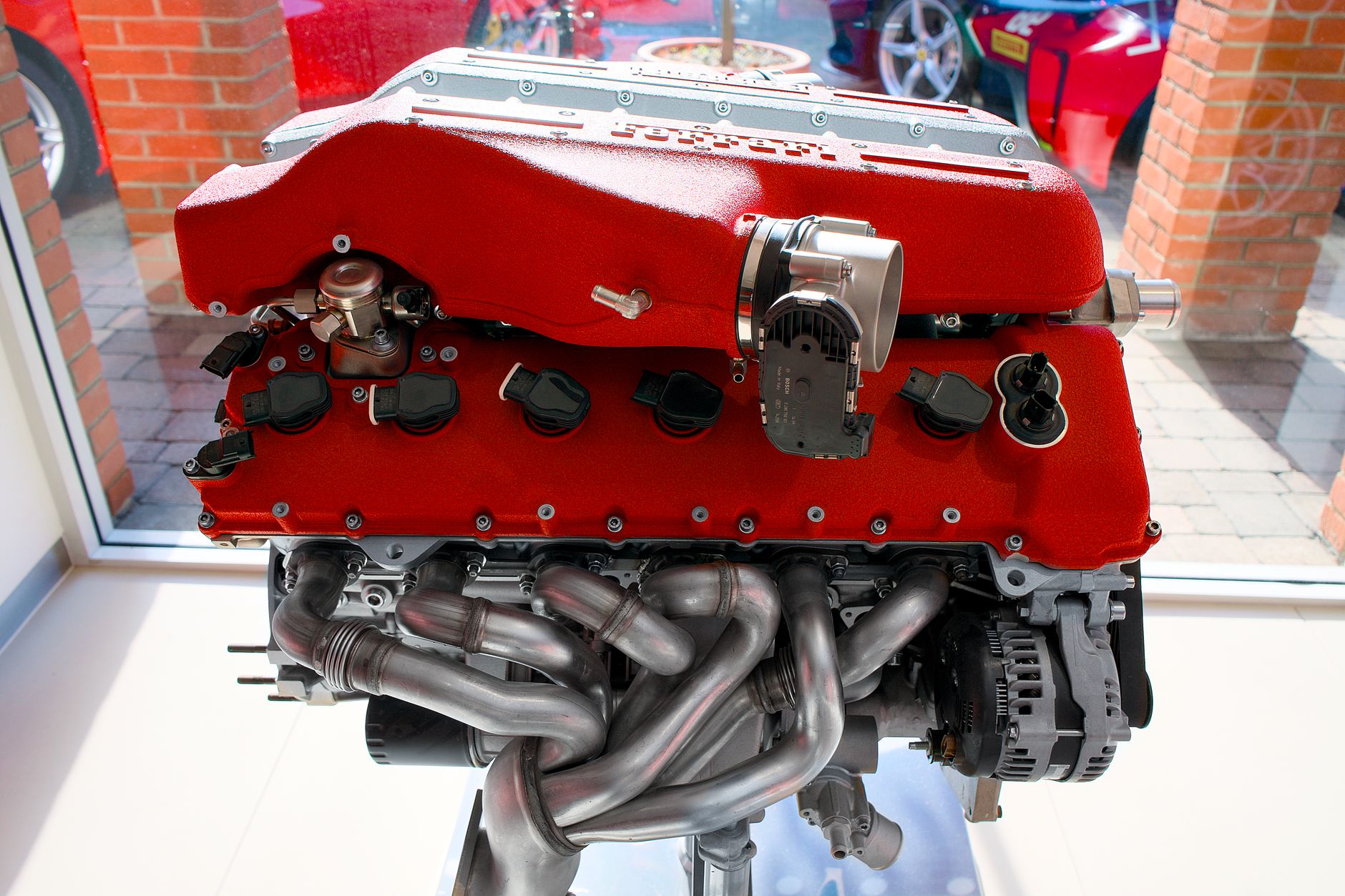
The European Union and several U.S. states have mandated electrification of new vehicles by 2030 to 2035. Ferrari’s current response, the hybrid 296 GTB and the V12-powered Purosangue, represents a holding action, not a strategy. The Purosangue’s naturally aspirated V12, chosen specifically for its scream and mechanical complexity despite packaging constraints, may be the last of its kind. When regulations force full electrification, Ferrari faces an existential product dilemma.
The scarcity premium derives partly from sensory differentiation. A naturally aspirated V12 produces a sound wave form, a mechanical vibration, and a driving engagement that electric motors cannot replicate. If Ferrari must build battery-electric vehicles, it enters a commodity space where Porsche, Lamborghini, Rimac, and Lucid compete on kilowatts and range. The engine note, what Enzo called “the music”, becomes software-generated. The mechanical complexity that justifies the Maranello artisanal production model (hand-built engines, low automation) gives way to modular battery packs and electric motors that any supplier can provide.
The assumption that collectors will treat electric Ferraris as equivalent investment assets to their combustion predecessors is unproven. Younger buyers, who represent the growth cohort, may value instantaneous torque and connectivity. But the current collector base, the sixty-to-seventy-year-old billionaires who fund the $2 million limited editions, grew up with carburetors and camshafts. If electrification commoditizes the driving experience, Ferrari’s margins compress toward those of technology companies rather than luxury houses. The company is betting that brand mythology will outlast mechanical differentiation, but this is precisely where the model faces its greatest fragility.
The Allocation Discipline
Maintaining scarcity requires more than factory gates. It demands a governance structure that resists the gravitational pull of distribution networks. Ferrari operates through approved dealers, but allocation decisions remain centralized in Maranello. This creates a permanent tension. Dealers, compensated on volume, naturally push for higher allocations and looser client vetting. They would sell to anyone with capital. Ferrari must say no.
The economic variable here is not soft culture but hard capital allocation. Ferrari employs a direct relationship management system that tracks collector behavior across decades. The dealer is merely a delivery mechanism; the allocation decision happens in Italy. This centralized gatekeeping allows Ferrari to blacklist flippers (those who sell cars immediately for profit), reject buyers who don’t fit the brand hierarchy, and enforce the pyramid progression. It is a credit underwriting model applied to luxury goods: relationship history determines access.
This discipline is fragile. Economic downturns could pressure Ferrari to loosen allocation standards to maintain revenue targets. Dealer consolidation, if a few large groups control multiple franchises, could give distributors negotiating leverage to demand volume autonomy. History suggests that luxury brands which lose control of distribution (certain watchmakers, leather goods houses that expanded too quickly into wholesale) see margin compression within eighteen months. Ferrari’s 20 percent-plus EBIT margins depend on the credibility of the “no.” If that word becomes “yes” to meet quarterly targets, the mechanism breaks.
The Generational Handoff
Implicit in the scarcity model is the assumption that the next generation of ultra-high-net-worth individuals will value the same status markers as the current one. This is undergoing stress.
Currently, 40 percent of new Ferrari clients are under forty. The company cites this as evidence of demographic vitality. But it masks a deeper risk. The collector pyramid is built on the preferences of aging billionaires who treat combustion supercars as alternative assets, like paintings or vintage wine. As wealth transfers to heirs over the next decade, the new cohort may bring different values: ESG constraints on portfolio holdings, skepticism of petrol-powered luxury, or preference for digital assets and experiences over physical garage space.
If the next generation views a $2 million V12 as environmentally obsolete, or simply less interesting than a virtual equivalent, the lifetime value model collapses. Ferrari is attempting to inoculate against this by expanding the client base now, capturing younger collectors before their wealth fully matures. But the test will come when these heirs control the capital, not just the interest. The company assumes that rejection will continue to increase desirability even as the collector base expands and democratizes. This is a bet on cultural continuity that history rarely rewards.
The Artisanal Bottleneck
Ferrari’s Maranello factory operates with intentional inefficiency. Trees grow inside the facility. Natural light floods the assembly floor. Engines are hand-built by craftsmen rather than robots. This is not aesthetic indulgence; it is the production architecture required to support the customization premiums that drive margin expansion.
However, this artisanal model creates a throughput ceiling. While competitors automate to reduce cycle times, Ferrari’s low-automation approach limits how quickly it can produce bespoke vehicles. As the company pushes personalization revenue, now adding $50,000 to $70,000 per car in options, it risks creating bottlenecks that frustrate collectors accustomed to instant gratification in other luxury categories. Younger buyers, raised on Amazon Prime and same-day delivery, may not tolerate the eighteen-month waits that Ferrari’s hand-building requires.
The economic trade-off is stark. Automation would increase volume and reduce per-unit costs, but it would eliminate the flexibility for customization and erode the narrative of hand-craftsmanship that justifies the price premium. Ferrari must hope that the slowness itself becomes a luxury good, a kind of mechanical slow food movement, while competitors offer faster, cheaper alternatives.
What Makes a Ferrari
Enzo Ferrari reportedly said, “I sell engines, and the car I throw in for free.” He was being literal. For the first eighteen years, Ferrari existed primarily as a racing team; road cars were a funding mechanism for the track. This DNA persists in the governance structure. The Formula One team remains a net marketing expense rather than a profit center, absorbing hundreds of millions annually while functioning as the brand’s global billboard.
This is an economic choice, not a sentimental one. F1 provides the narrative continuity that makes the Classiche archive valuable and the allocation pyramid credible. When Ferrari wins at Monaco, the SP3 Daytona allocations become more desirable. When it loses, the brand still benefits from the seventy-five-year continuum of competition. Competitors cannot buy this history; Aston Martin and McLaren race, but they lack the decades of mythology that allow Ferrari to reject buyers without explanation.
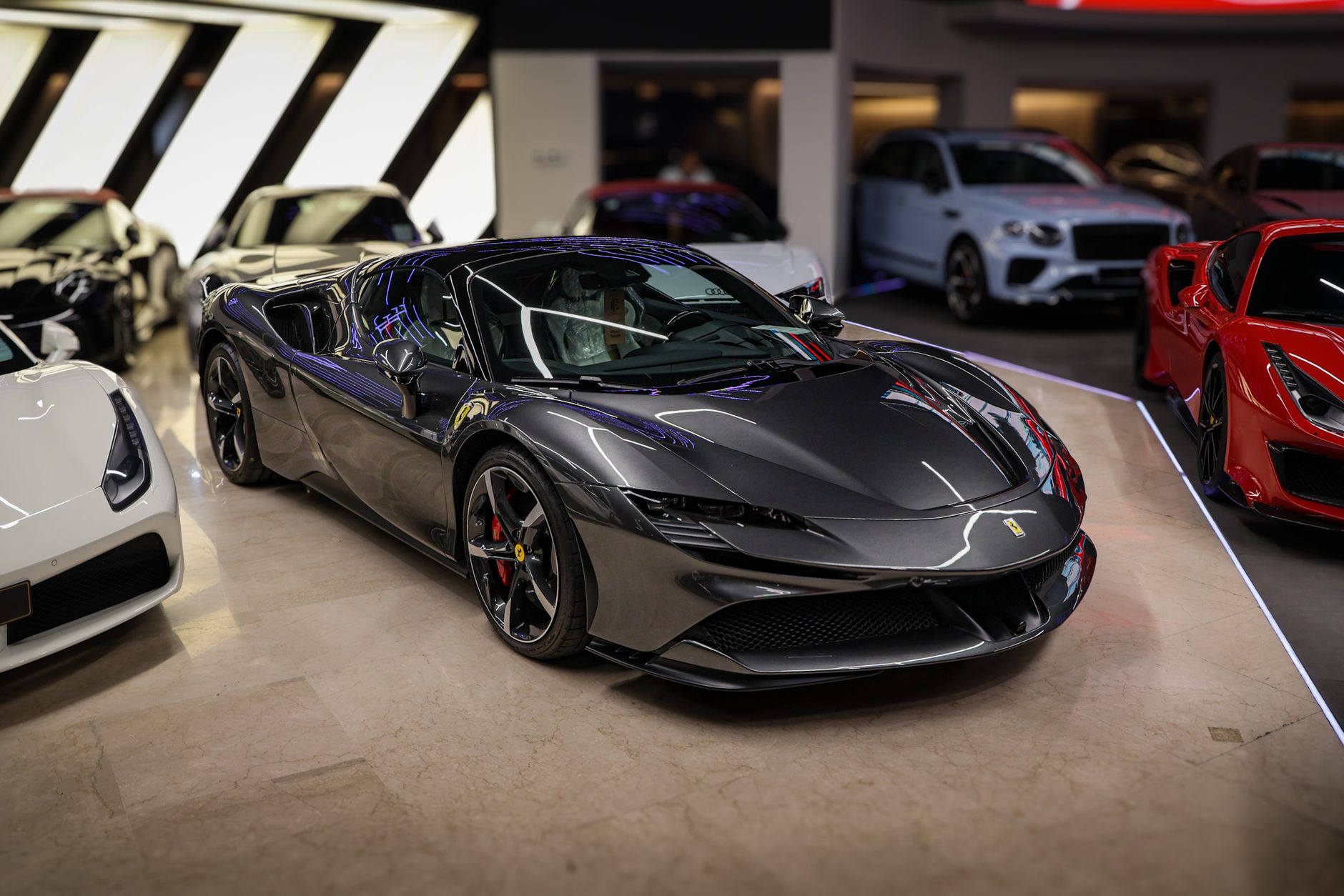
The risk is that F1’s cultural relevance diminishes, or that Ferrari’s on-track performance declines so drastically that the racing heritage becomes nostalgia rather than living proof of engineering superiority. For now, the team serves as the ultimate validation of the scarcity model: even in sport, Ferrari maintains the discipline to spend without demanding immediate revenue return, trusting that brand equity compounds in the allocation queue rather than the income statement.
The Fragility of Desire
Ferrari is not a car company. It is a mechanism for manufacturing and monetizing scarcity, using vehicles as the medium through which it sells access, progression, and historical continuity. The $78 billion valuation assumes this mechanism can persist indefinitely, thirteen thousand units annually, mid-twenties margins, escalating prices for limited editions, despite regulatory headwinds, demographic shifts, and the eternal temptation to grow volume.
The bear case is simple: electrification commoditizes the product, the next generation of wealth rejects combustion assets, and dealer pressure or shareholder impatience cracks the allocation discipline. If Ferrari ever builds to meet demand rather than to constrain it, it becomes Porsche: highly profitable automaker, but an automaker nonetheless, trading at automotive multiples rather than luxury premiums.
The bull case rests on the depth of the moat. The Classiche archive, the F1 heritage, the seventy-five-year narrative, and the centralized ability to reject capital create a switching cost for collectors that transcends the vehicle itself. Ferrari sells membership in a hierarchy that happens to include garage space. As long as rejection increases desire, and as long as the queue remains longer than the factory output, the economic engine runs.
But engines, even V12s, eventually reach redline. The transition to electrification will test whether the brand mythology can survive the commoditization of its core product. The generational wealth transfer will test whether the pyramid can refill with collectors who value analog machinery in a digital age. And the eternal tension between volume growth and exclusivity will test whether Maranello can continue to say no when every instinct of modern capitalism demands more.
Ferrari’s value lies not in what it produces, but in what it refuses to. That discipline, maintained across decades, has built one of the most valuable manufacturing enterprises in history. Whether it can survive the next decade of transformation will determine if the red cars remain assets, or become merely very expensive antiques.
The allocation mechanism itself deserves closer inspection, for it represents one of the most sophisticated client management systems in consumer goods: credit-scoring algorithm disguised as brand curation. When Ferrari evaluates a collector for a limited-edition allocation, the calculation extends far beyond liquid net worth. Maranello maintains what amounts to a behavioral dossier: purchase frequency, specification consistency (do they order Rosso Corsa or bespoke purple?), service history (do they use Classiche or independent shops?), and, crucially, holding periods. A collector who sells a 488 GTB after six months to capture market appreciation finds themselves blacklisted not just from future limited editions, but often from standard model allocations as well. The punishment is public and permanent; there is no appeals process.
This disciplinary function creates a secondary market dynamic unique to Ferrari. Unlike Porsche, where 911 GT3s trade at premiums independent of manufacturer control, or Lamborghini, where Urus SUVs depreciate like standard luxury vehicles, Ferrari maintains price floors through allocation threat. The 599 GTO, launched in 2010 at $400,000, trades today at roughly $1.2 million, ot because of mechanical superiority, but because Ferrari can ensure that any owner who flips for profit will never receive another allocation. This threat keeps supply off the secondary market, creating artificial scarcity even among existing vehicles. The company has effectively financialized its collector base, transforming owners into long-term holders through the credible threat of excommunication.
The Daytona SP3 illustrates this machinery in operation. When Ferrari announced the model in 2021, commemorating the 1967 24 Hours of Daytona sweep, production was capped at 599 units. The price exceeded $2 million. Yet no public sale occurred. Every unit was pre-allocated before the unveiling to clients who had, without exception, maintained multi-year purchase histories including at least three prior Ferraris, no secondary market sales, and active relationships with their regional Ferrari representatives. Some collectors who offered $3 million cash, above sticker, to secure a slot were declined. The refusal itself became marketing: photographs of the rejection letters circulated among ultra-high-net-worth circles, confirming that capital alone could not breach the hierarchy.
This operationalizes the SaaS-like recurring revenue dynamic in concrete terms. The collector does not purchase the SP3; they earn it through years of disciplined buying. The 296 GTB acquired in 2022 at $320,000 fully optioned serves as the annual subscription fee maintaining tier status. Skip a model year, and the allocation computer in Maranello demotes the client. Purchase consistently, specify tastefully (Ferrari disdains garish specifications that might photograph poorly on social media), and maintain the vehicle in factory condition, and the collector ascends toward the Icona Series, here profit margins for Ferrari approach 80 percent on vehicles costing more than some commercial aircraft.
The electric transition threatens this machinery at its root. The V12 engine serves not merely as propulsion but as the authentication token justifying the allocation hierarchy. When a Daytona SP3 fires its naturally aspirated 6.5-liter engine, the sound signature, mechanical, raw, historically continuous with the 1960s prototypes, validates the $2 million price tag in a way that specifications alone cannot. Electric motors produce no such authentication. They are silent, modular, interchangeable. If Ferrari produces a battery-electric limited edition, the differentiation from a Rimac Nevera or a Porsche Mission R becomes aesthetic rather than mechanical. The allocation queue, currently based on proven loyalty to the Ferrari combustion lineage, loses its logical foundation when the powertrain becomes a commodity battery pack.
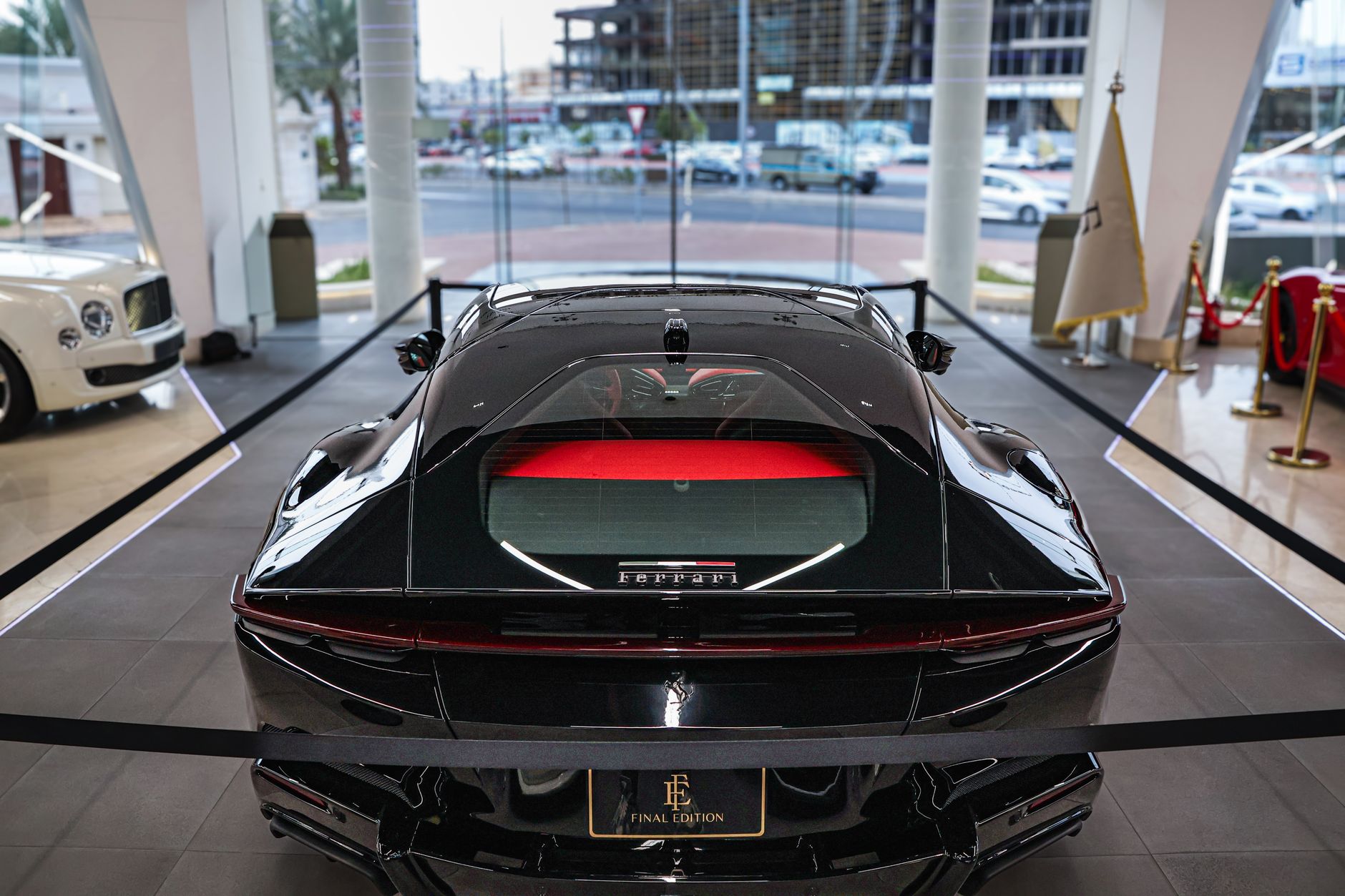
Consider the specific engineering constraints. The Purosangue’s V12 was reportedly insisted upon by Chairman John Elkann despite engineering preferences for a smaller turbocharged engine. The twelve-cylinder configuration required packaging compromises that reduced interior space and increased weight. Ferrari accepted these penalties because the V12 sound frequency, specifically the third and fourth order harmonics produced by the firing order, creates a physical sensation that electric motors cannot replicate through digital speakers. The company employs acoustic engineers who tune intake manifolds like musical instruments. When regulations eliminate this engineering tradition, Ferrari must ask collectors to pay $2 million for silence, or for synthesized engine notes generated through speakers: n act of theatrical artifice that may not sustain the brand’s claims to mechanical authenticity.
The generational transfer compounds this technological inflection. Current Ferrari collectors, median age 62, came of age during the analog supercar era of the 1980s and 1990s. They value mechanical complexity because they can read it; they understand camshaft profiles and compression ratios. The inheritors of this wealth, currently entering their thirties and forties, grew up with software. Their native language is code, not combustion. While Ferrari reports that 40 percent of new clients are under forty, this statistic masks a qualitative shift. These younger buyers often enter through the Purosangue or hybrid models, attracted by daily usability rather than weekend track days. They may not develop the emotional attachment to naturally aspirated engines that sustains the current collector pyramid.
If the next generation treats supercars as appliances, desirable for transportation and status, but not as mechanical art, the willingness to maintain the subscription model erodes. A thirty-five-year-old technology executive may buy a 296 GTB, but if they view it as a depreciating asset rather than an allocation ticket, they will sell when the next model arrives. This breaks the holding pattern that sustains secondary market prices. Once flipping becomes normalized and punishment becomes impossible to enforce across a fragmented global market, the scarcity mechanism collapses. Ferrari becomes Lamborghini: profitable, desirable, but unable to reject buyers or command allocation premiums.
The dealer network tension represents the operational front line of this fragility. Ferrari maintains roughly 170 approved dealers globally, yet these franchises operate under strictures unknown in the broader automotive industry. Maranello dictates not merely inventory allocation but showroom design, staff training protocols, and, critically, the customer relationship management software that tracks every interaction. When a collector visits a Ferrari dealership, the visit logs into a centralized database accessible to Maranello’s product marketing team. The dealer serves as a retail front, but the client belongs to Ferrari.
This arrangement creates perpetual friction. A dealer in Dubai or Beverly Hills might face a billionaire demanding immediate delivery of a limited edition, offering a cash premium that would triple the store’s quarterly profit. The dealer’s economic incentive screams to accommodate. Ferrari’s allocation rules demand refusal. The company enforces compliance through the ultimate threat: withdrawal of franchise rights, a death sentence for any dealership given the brand’s profitability. Yet as dealer groups consolidate, Penske, Sytner, and other large automotive groups acquiring multiple Ferrari franchises: he bargaining power shifts. A group controlling fifteen Ferrari stores gains leverage to negotiate allocation autonomy that individual dealers cannot demand.
History offers cautionary precedents. In the 1990s, certain Swiss watch manufacturers expanded distribution rapidly to meet Asian demand, allowing dealers to set prices and allocate based on immediate revenue rather than client relationship. Within five years, gray market trading exploded, brand equity collapsed, and margins compressed by half. Ferrari’s current discipline exceeds these predecessors, but the structural pressure remains. In an economic downturn, say, a prolonged correction in tech equities that reduces Silicon Valley demand, Ferrari faces the temptation to loosen allocation standards, allowing dealers to place cars with qualified but not vetted buyers to maintain revenue targets. Once the “no” becomes negotiable, it cannot be reclaimed.
The Classiche department, meanwhile, operates as the institutional memory that makes the scarcity model durable. Unlike Porsche’s archive or Lamborghini’s Polo Storico, Ferrari Classiche maintains the original tooling for components no longer in production. When restoring a 1958 Testa Rossa, the department does not fabricate approximate parts; it stamps body panels using the original dies stored in Maranello since the Eisenhower administration. This is not archival fetishism but economic infrastructure. It ensures that Ferrari remains the only entity capable of authenticating its history, creating a monopoly on provenance that supports the investment thesis underlying collector purchases.
The economics of Classiche also reinforce the allocation pyramid. Restoration work is profitable, margins exceed those of new car sales, but the department prioritizes clients with strong allocation histories. A collector seeking a ground-up restoration of their 365 GTB/4 finds the queue shorter if they maintain active new-car purchases. This cross-subsidization binds the old and new car markets into a single relationship economy. The vintage car requires the new car for authentication; the new car requires the vintage car for narrative legitimacy.
Yet this infrastructure assumes continuity of manufacturing tradition. If electrification mandates force Ferrari to abandon internal combustion entirely, the Classiche archive becomes a museum of obsolescence rather than a living resource. The mechanical knowledge required to rebuild a Colombo V12, currently passed among craftsmen in Maranello through apprenticeship, becomes archaeological expertise. The department can restore 1960s race cars indefinitely, but if the brand’s future products share no mechanical language with its past, the continuity that justifies the Icona Series pricing dissolves. A Daytona SP3 homage built on a battery platform bears only aesthetic relationship to its 1967 namesake; the spiritual connection, forged through shared mechanical ritual, severs.
The Formula One team represents another fixed cost that assumes continued brand architecture. Ferrari spends approximately $400 million annually on F1, more than any other team, while receiving roughly $100 million in prize money and sponsorships. The net $300 million outflow functions as marketing expenditure, but of a peculiar sort. Unlike advertising, which scales with product volume, F1 spending remains fixed regardless of whether Ferrari sells 10,000 or 13,000 cars. The economics only work if F1 maintains the brand prestige that supports the allocation queue. If Ferrari suffered a decade of mid-field mediocrity, say, finishing sixth in the constructors’ championship consistently, the marketing efficiency of the F1 spend would collapse. The team would become a $300 million annual liability rather than a justification for pricing power.
There is precedent for this risk. Between 1980 and 1996, Ferrari won no drivers’ championships. The brand survived because the road car division was smaller and less financially integrated with the racing team. Today, with the F1 operation serving as the primary marketing engine for a $78 billion enterprise, a prolonged competitive drought would stress the economic model. The company cannot easily exit F1, the contractual and cultural lock-in is total, but it cannot guarantee victory either. The expenditure represents a massive fixed cost supporting a variable revenue model, a structural tension that grows more precarious as the valuation assumes perpetual brand ascendancy.
The bear case, then, synthesizes these pressures into a coherent fragility. Imagine a scenario beginning in 2028: EU regulations mandate 50% electric sales, accelerating to 100% by 2032. Ferrari introduces the first electric limited edition: $2.5 million battery-powered hypercar with synthesized engine sound. Collectors, accustomed to V12 authentication, balk. Initial allocations sell, but secondary market prices stagnate rather than appreciate. Younger buyers enter, but they treat the cars as depreciating technology products, flipping them for the next model cycle. Maranello, facing shareholder pressure to maintain growth despite the product transition, increases production to 16,000 units annually, till “limited” by historical standards, but enough to eliminate the queue psychology.
Dealers, facing margin compression as the scarcity premium evaporates, begin discounting entry-level models to move inventory. The allocation discipline relaxes; a wealthy buyer can now acquire a limited edition with cash alone, without the three-car purchase history. The Classiche department continues restoring vintage cars, but the narrative link weakens, hy does a 1962 GTO matter to a battery-electric lineup? Formula One costs escalate to $500 million annually while on-track results remain mediocre. The company still earns profits, perhaps €800 million annually rather than €1.2 billion, but the multiple compresses from luxury goods (30x earnings) to automotive (8x). The market capitalization falls by half.
This is not a prediction of collapse, but a mapping of the cliff edge. Ferrari’s current valuation assumes the scarcity mechanism operates indefinitely, that mechanical differentiation survives electrification, and that generational wealth transfer preserves the collector psychology. Each assumption is reasonable in isolation; together, they constitute a high-wire act across a technological and demographic chasm. The company must navigate the electric transition while maintaining combustion-era pricing, expand the client base while preserving exclusivity, and centralize allocation control while depending on dealer networks for distribution.
The magic of Maranello has been the ability to manufacture desire by withholding supply in an age of abundance. For seventy-five years, this mechanism has compounded, creating a brand that transcends its products. But mechanisms require maintenance. The V12 engine, the Classiche archive, the allocation pyramid, and the Formula One team form an integrated system where each component validates the others. If electrification severs the mechanical continuity, if the next generation of wealth rejects the subscription model of car ownership, or if dealer pressure cracks the allocation discipline, the system unwinds not gradually, but suddenly. The cars remain beautiful, fast, and red. But they become, as all commoditized luxury eventually does, merely expensive.
Consider the specific pathology of collapse. When Ferrari first approves a dealer sale to an unvetted buyer, say, a cryptocurrency speculator who flips a Daytona SP3 for immediate profit without penalty, the signal travels through the collector network at the speed of encrypted messaging apps. The collector who waited three years, who maintained the perfect garage, sees the flipper unpunished. The contract between manufacturer and loyalist, sacrifice access now for guaranteed allocation later, voids. The next limited edition launches, and instead of pre-allocated silence, cars appear on Bring a Trailer within weeks. Prices soften by ten percent, then twenty. The speculators, sensing the end of the appreciation guarantee, dump inventory simultaneously, flooding the secondary market with 2023 296 GTBs and 2024 Icona models. Maranello, facing a revenue gap as the waiting list evaporates, approves 18,000 units for the following year. The scarcity premium does not erode; it detonates.
This pattern has precedent. In the late 1980s, certain Swiss manufacturers responded to Japanese demand by tripling production of mechanical chronographs, relaxing dealer allocation discipline, and certifying gray market watches. Within eighteen months, secondary prices collapsed below retail, and the brands required a decade of austerity to rebuild credibility. Ferrari’s advantage is the depth of its archive and the seventy-five-year habit of refusal. But habits break when growth mandates override gatekeeping. The margin for error is thinner than the carbon fiber weave on a Monza SP2.