
Filterbuy: How Weather Nearly Killed It
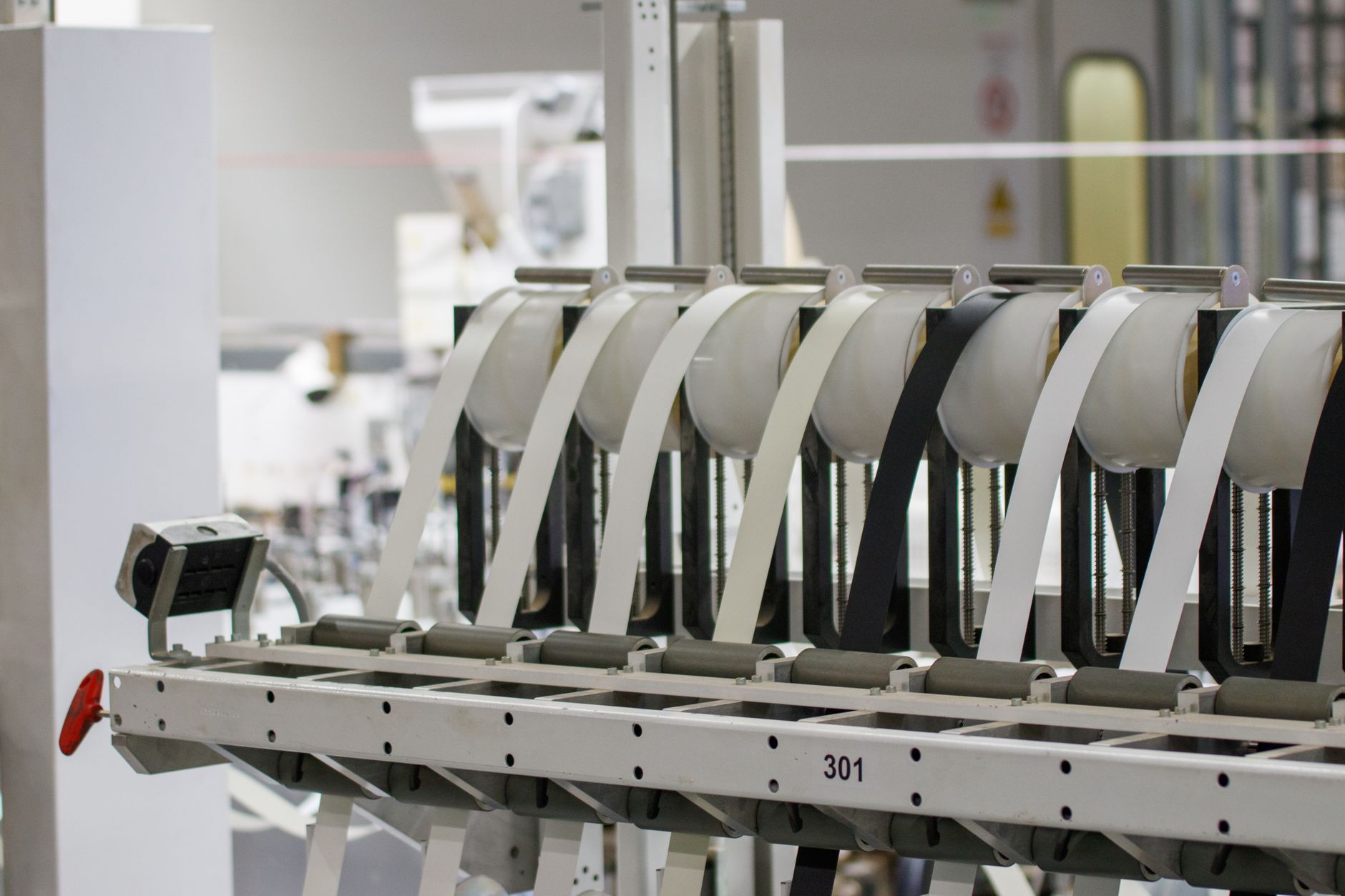
In the spring of 2015, roughly two and a half years into its existence, Filterbuy nearly died because of the weather. The company had been manufacturing pleated air filters in Alabama using a cold-glue laminator, a temperamental machine that bonded the filter media to the frame. When humidity spiked that May, the glue failed. Raw materials, paper, cardboard, metal, piled up in the corner, ruined. The waste consumed a third of the company’s inventory value. With no finished product to ship, revenue stopped, but payroll and rent continued. The founder, a former Goldman Sachs options trader who had left Wall Street to buy industrial supply companies, faced the specific terror of physical manufacturing: you cannot code your way out of a humidity problem.
The solution arrived in the form of a $55,000 hot-glue laminator sitting in a warehouse in Indiana. The founder rented a truck on Friday, drove through the night, trained the crew on Saturday, and by Monday had reconfigured the production line. This machine did not merely save the business; it revealed the true nature of the enterprise. Filterbuy is not a marketing company that happens to make filters, nor a direct-to-consumer brand riding a trend. It is a vertically integrated logistics operation whose economic viability depends on mastering the specific physics of bulky, low-value consumables that platform giants cannot profitably handle. The humid-glue disaster exposed the brittleness of this model, but the hot-glue laminator exposed its potential. To understand Filterbuy is to understand that this business exists in the narrow space where domestic manufacturing meets prohibitive shipping costs, a space that requires owning the entire stack from factory floor to front porch, and where the founder’s proprietary software functions as the central nervous system holding the organism together.
The Geometry of Unshippable Objects
Air filters occupy a peculiar position in the taxonomy of consumer goods. They are large, light, and cheap, ttributes that violate the basic mathematics of e-commerce logistics. A standard pleated filter might measure twenty by twenty inches but retail for twelve dollars. Its size-to-value ratio is catastrophic under standard fulfillment economics. When Filterbuy began exploring the market in 2009 through a dropshipping experiment, the founder discovered that third-party logistics providers, including Amazon’s FBA, lost money on two-thirds of the catalog. The fees required to store, pick, pack, and ship these bulky rectangles consumed the entire margin. Big-box retailers faced a different constraint: Home Depot and Walmart could not justify stocking three hundred sizes of a commodity product that turns slowly and occupies shelf space better suited for power tools or paint. The demand was real, American homes contain hundreds of millions of HVAC units, each requiring replacement every one to three months, but it was fragmented across dimensions that ranged from twelve by twelve to twenty-five by twenty-five inches, with varying depths and MERV ratings.
This fragmentation created an opening. A pleated air filter is essentially a commodity: paper, glue, cardboard, metal mesh. There are no patents protecting the design, no proprietary technology in the pleating itself. The moat, if one existed, would have to be operational. The founder recognized that the product’s physical properties, its bulk, its low value, its dimensional fragmentation, constituted a structural barrier to entry. Overseas manufacturers could produce filters cheaper on a per-unit basis, but the cost of shipping a container of bulky air filters across the Pacific, then breaking that bulk into individual parcels for last-mile delivery, erased the labor arbitrage. Conversely, domestic manufacturers existed, but they sold through distributors who sold through retailers, each layer extracting margin until the twelve-dollar filter cost the consumer twenty-five.
The economic opportunity lay in collapsing these layers. If Filterbuy could manufacture in the United States and internalize logistics entirely, owning the factories, the warehouses, the trucks, the shipping labels, it could capture the spread between the two-dollar manufacturing cost and the twelve-dollar retail price. The ten-dollar margin would need to cover not just materials and labor, but the fixed overhead of factories, four distribution centers, a thousand employees, and the marketing required to acquire customers directly. This only worked at scale, and it only worked if the company could solve the inventory problem of three hundred SKUs with unpredictable demand patterns.
The Four Years of Inefficiency
When the founder purchased a dying industrial supply business in 2012 and pivoted it toward air filter manufacturing, he confronted the reality that vertical integration is not immediately economical. For the first four years, Filterbuy could not manufacture filters as cheaply as it could buy them from existing suppliers. The company sustained itself through pricing power in the direct-to-consumer channel and the recurring nature of the product. Unlike a television or a jacket, an air filter is a consumable with a predictable replacement cycle. Once a customer entered their HVAC dimensions and set a subscription, the lifetime value justified the initial acquisition cost. The business grew despite manufacturing inefficiency because the market structure, fragmented demand, high shipping costs, retail incapacity, allowed for healthy gross margins even when production was suboptimal.
This period reveals something essential about Filterbuy’s strategy. The founder was not pursuing manufacturing excellence as an end in itself, but as a means to internalize logistics. The options trading background mattered here. At Goldman Sachs, he had learned to think in terms of volatility and fragmentation, of markets where standardization failed and bespoke sizing created opportunity. Air filters were derivatives of housing stock, ach home’s ductwork a specific contract requiring a specific strike price. The dropshipping business had generated $6.5 million in revenue, with $2 million coming from filters alone, demonstrating that the demand existed but was dispersed across too many variables for traditional inventory management.
The manufacturing learning curve was steep and unforgiving. The company had to learn to source paper media, to pleat it consistently, to bond frames without warping, to package for individual shipment rather than palletized bulk. The humid-glue disaster of 2015 represented the nadir of this curve, the moment when environmental variance nearly destroyed the operation. But it also forced a critical decision: the purchase of the hot-glue laminator that could operate regardless of Alabama’s humidity. This piece of equipment, found in stock in Indiana and transported overnight, became the physical manifestation of the company’s operational thesis. Manufacturing had to be robust enough to support the logistics advantage, because without domestic production, the last-mile economics collapsed.

The ERP as Proprietary Infrastructure
Most analyses of Filterbuy focus on the manufacturing and the direct-to-consumer model, but these are merely components of the actual competitive advantage: a proprietary enterprise resource planning system built and continuously refined by the founder over twelve years. This is not an off-the-shelf SAP implementation or a Shopify plugin. It is a bespoke software architecture that optimizes the entire flow from raw material procurement to shipping label generation across four distribution centers and manufacturing facilities. The system manages the scheduling of production runs for three hundred SKUs, the allocation of inventory across warehouses to minimize shipping zones, and the routing of packages to exploit the most efficient carrier relationships.
The durability of this advantage lies in its specificity. A competitor could not purchase equivalent software because it does not exist on the market. The system encodes twelve years of learning about the particular physics of air filters: how humidity affects glue, how many filters fit in a truck, which sizes correlate with which geographic regions, how to batch production to minimize changeover times. It reduces the number of “touches” per unit, a crucial metric in low-margin logistics. When Filterbuy moved twenty percent of its SKUs from Amazon FBA to self-fulfillment, it achieved a twenty percent top-line margin improvement, ot because the product changed, but because the software optimized the routing.
This system functions as the company’s central nervous system, and it is inseparable from the founder who built it. Unlike traditional manufacturing businesses where knowledge resides in floor supervisors and process manuals, Filterbuy’s operational intelligence is encoded in algorithms that the founder still oversees. The software determines which factory runs which sizes on which day, how inventory gets distributed across the four distribution centers to minimize shipping distances, and when to trigger replenishment orders for raw materials. It is the economic engine that allows the fixed-cost infrastructure to function efficiently enough to maintain the ten-dollar spread between manufacturing cost and sale price.
The Fixed Cost Trap
The internalization of logistics creates a cost structure that is both the company’s greatest strength and its most dangerous vulnerability. Filterbuy operates four distribution centers and manufacturing facilities with a thousand employees. This infrastructure represents fixed costs that do not vary with demand. If the company ships one million filters or eight hundred thousand, the rent on the warehouses remains constant, the machinery depreciation continues, and the core logistics staff must be retained. This is the defining structural constraint: the business only works at high volume.
Competitors using third-party logistics enjoy variable cost flexibility. If demand drops thirty percent, they reduce their FBA footprint or renegotiate warehousing contracts. Filterbuy cannot. A recession that causes homeowners to delay filter replacements by six months, or a shift toward reusable filters, or a housing market collapse that reduces HVAC usage, would not merely reduce revenue; it would invert the cost structure. With high fixed costs and declining volume, the business would burn cash rapidly. The proprietary ERP and manufacturing infrastructure, which create the margin advantage at scale, become millstones when underutilized.
This dynamic explains the company’s aggressive approach to catalog breadth and customer acquisition. The three hundred SKUs represent an aggregation of fragmented demand that no single retailer can match, but maintaining that breadth requires high inventory turns. Overstock ties up working capital and risks obsolescence; understock breaks the subscription model and forces customers to buy elsewhere, potentially losing them forever. The humid-glue disaster illustrated not just manufacturing fragility but inventory risk: when the laminator failed, the company not only lost production capacity but wasted raw materials that had already been purchased. In a business where the average unit sells for twelve dollars, wasting a third of your material inventory is an existential threat.
The capital intensity extends to continuous reinvestment. The $55,000 hot-glue laminator purchase in 2015 was not a one-time fix but a template for the company’s ongoing relationship with equipment. Manufacturing pleated filters requires specific machinery, pleaters, laminators, cutting stations, packaging lines, that must be maintained, upgraded, and occasionally replaced. This capital intensity limits strategic flexibility. The company cannot pivot to a new product line without massive new investment, nor can it easily reduce capacity during downturns without destroying the very infrastructure that creates its cost advantage.
The Geography of Manufacturing Assumptions
Filterbuy’s domestic manufacturing is economically viable only because of a specific and potentially temporary condition: the cost of international shipping and the lack of automation overseas. The founder explicitly chose air filters over ink cartridges because ink cartridges faced patent walls and overseas competition, while air filters were protected by logistics physics. But this protection assumes stability in global shipping economics.
If international shipping costs were to collapse, due to overcapacity in container shipping, new trade agreements, or fuel price declines, or if overseas manufacturing were to automate dramatically, reducing the labor cost differential, the entire structural moat would evaporate. A competitor manufacturing in Vietnam or Mexico with automated pleating and laminating equipment could produce at a fraction of Filterbuy’s cost and, if shipping became cheap enough, distribute through Amazon FBA or similar platforms. The two-thirds of the catalog that is currently unprofitable under FBA would become profitable, and Filterbuy’s twenty percent margin advantage would disappear.
This is the fragile long-term assumption underlying the business: that the physics of shipping bulky, low-value items will continue to favor domestic production. The company has bet its entire capital structure, factories, equipment, real estate, on this remaining true. Unlike software companies that can pivot with minimal physical constraints, or brands that can switch manufacturers, Filterbuy’s infrastructure is geographically fixed. If the economics of global trade shift, the company cannot move its factories overseas without abandoning the logistics integration that defines its model. It would be left with expensive domestic capacity competing against cheaper imports in a market where shipping costs no longer provided protection.
The Founder as Operating System
In most businesses, leadership is a soft factor discussed in terms of culture or vision. At Filterbuy, leadership functions as a hard economic variable, a literal input in the production function. The founder is not merely the strategic decision-maker but the architect of the ERP system that runs the operation. He has done every job in the business, from options trading floor to factory floor, and he remains “more involved probably than I would like to be.” This is not modesty; it is a description of technical necessity.
The statistics on institutional knowledge are stark: of one hundred corporate employees, only one or two have been with the company for more than four years. Ninety-eight percent turnover in the corporate ranks over four years suggests an organization that has not developed independent leadership depth or institutional memory. The knowledge of how to operate the proprietary ERP, how to schedule manufacturing across three hundred SKUs, how to route shipments through the four distribution centers, resides primarily in the founder. If he were to depart, become incapacitated, or simply lose focus, the business would lose its operating system.
This concentration of human capital creates a paradox. The company has scaled to $250 million in revenue and a thousand employees, yet it remains dependent on a single individual who understands the entire system. The rapid turnover suggests either that the work environment is unsustainable, that the company has failed to develop middle management capable of autonomous operation, or that the ERP system is so complex and idiosyncratic that only its creator can effectively manage it. Whatever the cause, the result is that Filterbuy’s enterprise value is inextricably linked to the founder’s continued involvement. This is not a governance issue in the abstract sense; it is a specific operational risk. The business cannot run without him because he is the only one who fully understands how the parts connect.
The implications extend to scalability. If Filterbuy aims to grow beyond its current footprint, it must either clone the founder’s capabilities in other executives, a process that appears to have failed given the turnover, or accept that growth will require his increasingly scarce attention. The ERP system, for all its sophistication, appears to require its architect’s ongoing optimization. This creates a ceiling on growth or a fragility in the face of the founder’s mortality or departure.
The Subscription and the Catalog
The business compounds through two reinforcing mechanisms: the consumable nature of the product and the breadth of the catalog. Air filters require regular replacement, creating natural recurring revenue that reduces customer acquisition costs over time. Once a customer has entered their specific dimensions, sixteen by twenty-five by one, MERV eight, the switching costs, while not high, involve friction. The customer must remember the size, find a new supplier, and risk getting the wrong filter. Filterbuy’s three hundred size variations aggregate demand that is too fragmented for big-box retailers to stock profitably. No Walmart can dedicate shelf space to three hundred sizes of a twelve-dollar item, but a direct-to-consumer model with a distributed inventory system can.
This catalog breadth creates a defensive moat. A competitor would need to simultaneously achieve manufacturing scale across three hundred SKUs and build a direct-to-consumer channel capable of aggregating the demand. The twelve-year head start matters because the ERP system has been learning for twelve years. It knows that certain sizes sell better in certain climates, that certain regions have older housing stock requiring non-standard dimensions, how to optimize production runs to minimize waste. This is not data that can be purchased; it is operational knowledge accumulated through iteration.
Yet the catalog also creates the inventory tension. Three hundred SKUs with unpredictable demand patterns require precise forecasting. The system must predict how many twenty by twenty by four MERV eleven filters will be needed in Dallas in August versus Minneapolis in November. Overproduction ties up cash in cardboard and paper that may yellow before it sells; underproduction breaks the subscription promise and sends customers to Amazon, where they might discover a competitor or simply buy a different size that fits adequately. The humid-glue disaster was a manufacturing crisis, but it was also an inventory crisis. When the laminator failed, the company could not produce the specific sizes needed to fulfill orders, risking customer churn in a market where retention is the entire economic model.
The Margin Expansion Mechanism
As Filterbuy grows, its margins expand through the amortization of fixed costs. The manufacturing facilities, distribution centers, and ERP infrastructure represent fixed investments. As volume increases, these costs are spread across more units, while the per-unit logistics cost declines through routing optimization. This is the virtuous cycle that justifies the capital intensity: scale begets margin, which funds further scale.
But this mechanism works in reverse as well. A twenty percent decline in volume would not merely reduce revenue by twenty percent; it would devastate profitability. The fixed costs of maintaining four distribution centers and a thousand employees would remain, while the revenue to cover them disappeared. The company has no variable cost lever to pull. It cannot exit FBA because it does not use FBA; it owns the entire chain. It cannot easily reduce headcount without losing the operational knowledge required to run the factories. It cannot shutter a distribution center without losing the geographic coverage that enables cost-effective shipping.
This asymmetry explains the company’s focus on subscription retention and catalog completeness. The business model requires continuous growth or, at minimum, stability. It cannot tolerate sustained volume declines. In a recession, homeowners might stretch replacement intervals from three months to six, or switch to cheaper fiberglass filters instead of pleated ones. Such behavioral shifts, modest in individual impact, would compound across Filterbuy’s fixed cost base to create a cash flow crisis.
The Second-Order Effects of Vertical Integration
Owning the entire stack from manufacturing to last-mile delivery creates advantages that extend beyond the immediate cost savings. Filterbuy controls the customer data, the production timing, and the quality assurance. When a customer orders a filter, the company knows exactly when it was manufactured, under what conditions, and how it was handled in transit. This vertical integration allows for quality control that platform sellers cannot match, and it eliminates the margin extraction of intermediaries.
However, it also eliminates the optionality that intermediaries provide. An Amazon seller can switch suppliers overnight if one factory fails; Filterbuy cannot. When the cold-glue laminator failed in 2015, there was no third-party logistics provider to absorb the shock, no alternative manufacturer to source from. The company had to solve the problem itself, immediately, or die. This self-reliance is empowering at scale and terrifying at the margin.
The proprietary ERP system represents the culmination of this integration. It is the tool that allows one thousand employees and four distribution centers to function as a coherent organism. But it is also a dependency. If the system fails, or if the founder is unavailable to adjust its parameters, the physical infrastructure, factories, trucks, warehouses, cannot coordinate. The software is not a support function; it is the core of the business.
Filterbuy stands as a testament to the enduring power of operational excellence in commodity markets. It has built a $250 million enterprise not through branding or technology patents, but through the ruthless internalization of logistics and the mastery of a product category that platform economics cannot easily digest. The ten-dollar spread between manufacturing cost and sale price funds an infrastructure that competitors cannot readily replicate, protected by the physics of shipping and the fragmentation of demand.
Yet this success rests on specific, fragile conditions: stable shipping costs that favor domestic manufacturing, the continued dominance of pleated paper filters over reusable alternatives, and the continued presence of a founder who constitutes the business’s institutional memory. The company has traded flexibility for efficiency, variable costs for fixed advantages, and breadth of leadership for depth of individual expertise. It is a machine optimized for a specific set of environmental conditions, highly efficient within those parameters and potentially brittle outside them. The humid-glue disaster was a warning: when you own the entire stack, you own every point of failure. The hot-glue laminator saved the company once, but the next crisis, whether economic, technological, or human, will test whether the machine can run without its architect.
The three hundred SKUs represent not merely a catalog but an information architecture. Each size, sixteen by twenty by one, sixteen by twenty by four, eighteen by twenty-four by one, constitutes a distinct demand signal with its own seasonality, geographic concentration, and correlation to housing vintage. A twenty-five by twenty-five filter sells predominantly in the Northeast, where older homes have larger ductwork; the twelve by twelve dominates in the Sun Belt’s tract housing. MERV ratings correlate with allergy seasons and regional pollen counts. Managing this fragmentation requires not just warehouse space but predictive capacity, the ability to forecast how many units of each specific rectangle will be needed in each of four distribution centers six weeks hence.
In a conventional manufacturing organization, this knowledge would distribute through layers of planners, buyers, and operations managers who develop intuition over years. They learn that August in Dallas requires buffer stock of certain sizes, that Minnesota winters shift demand patterns, that the pleating machine performs poorly with certain paper lots. This institutional knowledge accrues slowly and dissipates slowly; when a planner retires, their spreadsheets and relationships remain. Filterbuy has inverted this model. With ninety-eight percent turnover among corporate employees over four years, the company has not developed a cohort of seasoned operations managers who understand the seasonal patterns of the three hundred sizes. Instead, the ERP system holds this knowledge, encoded in algorithms that the founder adjusts continuously.
This is a radical departure from traditional manufacturing economics. The business has substituted software for institutional memory, and specifically, software that remains proprietary to its creator. When an employee leaves, and nearly all of them do within four years, they take no operational intelligence with them because that intelligence never resided in them. They executed tasks determined by the system: pick this size from this bin, ship to this zone, manufacture this batch on this line. The system determines the batch sizes, the inventory allocation, the routing. The human operators are interchangeable inputs, which explains the turnover but also reveals the fragility.
The risk is not merely that the founder might leave, but that the system he has built is, by definition, incompressible. It cannot be summarized in a manual or transferred through training because it represents twelve years of iterative adjustments, ot-fixes for the humidity problem, workarounds for the laminator’s quirks, carrier rate negotiations embedded in shipping logic. It is a cognitive externalization, a second brain that happens to run on servers. But unlike a distributed institutional culture, which can survive the loss of any individual, this architecture concentrates existential risk. If the founder is unavailable during a critical inventory crisis, if he is ill, distracted, or simply burnt out after twelve years of doing every job, the system cannot be modified by others. It will continue executing its last instructions until the inventory it manages no longer matches reality, at which point the physical infrastructure seizes up.
Consider the specific mechanics of the four distribution centers. The ERP determines not just which DC ships which order, but how inventory flows between them to minimize shipping zones. When a customer in Ohio orders a twenty by twenty-five by one MERV eleven, the system calculates whether to pull from the Midwest DC or to trigger a transfer from the Southeast based on current stock levels, upcoming production runs, and the cost of zone-crossing shipping. These calculations incorporate carrier-specific rate cards, dimensional weight algorithms, and the current capacity utilization of each facility. A human operator sees only the output: pick this item from this location. The logic that produced that instruction, the complex optimization across three hundred SKUs and four nodes, remains opaque.
This opacity creates a hiring paradox. The company needs sophisticated operators to manage a $250 million logistics network, but it cannot hire people who might challenge or modify the system because the system is not documented. It can only hire executors, which produces the high turnover. Talented logistics professionals arrive, discover they are functionally extensions of the software rather than operators of it, and depart within months. The founder remains, performing the cognitive work that the software cannot yet automate and that the employees cannot be trusted to perform.
The humid-glue disaster thus becomes a template for understanding the human capital structure. Just as the company had only one laminator and no redundancy, it has only one mind capable of adjusting the ERP and no distributed expertise capable of stepping in. The $55,000 machine was a physical single point of failure; the founder is a cognitive single point of failure. Both were acquired through the same logic: the belief that vertical integration requires owning the specific solution, whether mechanical or neurological.
This architecture also limits strategic optionality. If Filterbuy wished to pivot toward smart home integration, selling connected thermostats that automatically order filters when pressure drops drop, for instance, it would require modifying the ERP to handle electronics inventory, integration APIs, and different warranty logistics. Such a project would require the founder’s full attention for months, during which the core filter optimization would stagnate. Similarly, expanding into commercial HVAC, with its bulk orders and custom specifications, would require ERP modifications that only the founder can execute. The business is trapped in its own optimization, unable to evolve without the specific individual who built it, and unable to distribute his capabilities because the system’s complexity has surpassed the onboarding capacity of transient employees.
The mathematics of the three hundred SKUs exacerbates this trap. In a typical long-tail business, inventory risk is managed through diversification; if one SKU fails to sell, the hits subsidize the misses. But air filters are not discretionary purchases. A customer who needs a sixteen by twenty-five cannot be substituted with a twenty by twenty. The fragmentation creates a combinatorial explosion of inventory positions that must be maintained simultaneously. The ERP manages this through precise forecasting, but if the forecast errors, because of a mild winter reducing HVAC usage, or a wildfire season spiking demand for high-MERV filters beyond production capacity, the physical infrastructure cannot adapt. The warehouses are full of the wrong rectangles, and only the founder can recalibrate the system to prioritize production of the sizes in deficit.
This is the unresolvable tension at the heart of the model: the business requires scale to amortize its fixed costs, but scale requires complexity that only the founder can manage, which prevents the delegation necessary to scale beyond his cognitive bandwidth. The twelve-year head start in building the ERP is simultaneously the moat and the cage. Competitors cannot replicate the system, but Filterbuy cannot transcend it. The turnover statistics suggest that the company has chosen to solve the human capital problem through elimination rather than development, treating labor as a variable cost to be minimized while the founder’s cognitive load becomes the fixed constraint.
In this light, the hot-glue laminator purchase reveals its deeper significance. The founder drove to Indiana himself, trained the crew himself, integrated the machine into the production line himself. He did not delegate because he could not; the knowledge of how the laminator interacted with the humidity problem, with the paper inventory, with the shipping schedule, existed only in his head. The machine was a physical instantiation of the ERP’s logic: a specific, non-replicable solution to a specific problem, acquired through personal intervention rather than institutional process. As long as shipping economics favor domestic manufacturing and pleated filters remain the standard, this model generates exceptional returns. But the architecture, one laminator, one mind, one system, suggests a business built on irreducible complexity rather than scalable process. When the next crisis arrives, whether a supply chain shock, a demand collapse, or simply the founder’s exhaustion, there will be no institutional capacity to absorb it. The machine will keep running until it doesn’t.