
Gregorys Coffee: From Law School to Latte Art

The Impossible Middle
On Christmas morning in 2006, Gregory Zamfotis opened the first Gregorys Coffee on a lower Manhattan corner and immediately began working eighty-hour weeks behind the bar. He had finished law school, passed the bar, and abandoned the profession entirely to burn through twenty gallons of milk learning latte art while his father’s sandwich shop regulars wandered in, confused. The space was 1,800 square feet with a full basement, an odd luxury for a first coffee shop, and within months that basement would begin its transformation into a commissary kitchen, a decision that would ultimately distinguish Gregorys from the hundreds of cafés that have since opened and closed across New York City.
The business that emerged from those early years occupies a precarious structural position. Gregorys does not sell the convenience of Starbucks, nor does it sell the ritual slowness of the boutique third-wave shops that require customers to wait five minutes for a pour-over in a location chosen for cheap rent rather than foot traffic. Instead, Zamfotis built an economic engine designed to capture value from the gap between these two worlds: specialty-grade coffee delivered at mass-market velocity, in locations where the rent is so high that only extraordinary customer throughput can justify the lease. The model works only if the line moves fast enough to pay the landlord while the product remains distinctive enough to command a premium over Dunkin’. It is a narrow ledge, and maintaining balance requires solving a series of operational contradictions that would break a less disciplined organization.
The economics of this position are unforgiving. A Financial District or Midtown location might cost three or four times the rent of a residential neighborhood café, meaning the business must process three or four times the transaction volume to achieve the same unit economics. Yet the customer base, lawyers, traders, consultants, has developed tastes refined enough to distinguish between commodity espresso and single-origin Ethiopian Harar, the blueberry-forward natural process coffee that became Gregorys’ signature conversion tool in the early years, convincing “light and sweet” drinkers to appreciate acidity and terroir. Serving this customer base requires craft, but the rent requires speed. Resolve too far toward craft and the line backs out the door, losing the hurried commuter; resolve too far toward speed and the product commoditizes, eroding the price premium that makes the rent tenable.
The Basement as Structural Moat
Most analyses of coffee shop economics focus on the counter: throughput, average ticket, rent per square foot. Gregorys’ defensible advantage, however, lies beneath the counter, in the supply chain infrastructure that competitors rarely replicate. By the second store, Zamfotis had converted the original basement into a mini-commissary, producing food in-house rather than sourcing from third-party suppliers. By the fourth store, this operation had expanded and refined based on the operational learnings of the first three locations. The company did not introduce hot food until 2019, thirteen years after opening, despite having vertical integration into cold food production since 2007. This delay was not hesitation; it was discipline.
The commissary model functions as more than a cost-control mechanism, though it certainly reduces COGS relative to competitors who purchase finished goods. Its strategic value lies in optionality. When a competitor wants to test a new breakfast sandwich or adjust a recipe, they must negotiate with suppliers, manage minimum order quantities, and accept lead times measured in weeks. Gregorys can iterate overnight. This capability extends the economic utility of each store location beyond the morning coffee rush, filling seats during lunch with food production that maintains margins impossible for those buying from distributors. The commissary allows the company to capture a larger share of the customer’s daily food budget without surrendering the markup to a middleman.
Critically, this infrastructure compounds. As store count grows from ten to twenty to thirty locations, the fixed costs of the commissary distribute across more units, while the operational knowledge of running food production becomes embedded in the organization’s muscle memory. A new competitor entering Manhattan today faces a choice: build their own commissary, requiring capital and operational expertise they likely do not possess, or remain dependent on third parties, accepting higher costs and slower innovation cycles. Gregorys’ fifteen-year head start in vertical integration represents a moat that widens with each new location, provided the supply chain can scale without breaking.
The Bootstrap Trap and Its Compounding Effects
For thirteen years, Gregorys grew without external capital. Each store’s profits funded the next location’s buildout. In an era of venture-backed coffee chains burning through millions to capture market share, this approach seems almost anachronistic, yet it shaped the company’s character in ways that persist even after the 2019 Series A. Bootstrapping forced a brutal discipline: locations had to work immediately because there was no cash cushion to subsidize underperforming stores. Zamfotis could not afford to open in a trendy neighborhood with insufficient foot traffic and wait for the brand to attract customers. Every lease had to justify itself through immediate, high-velocity sales.
This constraint produced a specific location strategy. Gregorys targets corridors of extreme daytime density, Financial District, Midtown, where the rent is punishing but the foot traffic is guaranteed. These locations require operational excellence from day one; a slow barista or inefficient layout destroys the economics instantly. The bootstrap model thus selected for operational DNA optimized for these high-pressure environments. When competitors might open in softer locations to test the brand, Gregorys was forced to learn how to survive only where the rent was highest and the customers most demanding.
The tradeoff, of course, is velocity of expansion. While venture-backed competitors could open ten stores in a year to saturate neighborhoods, Gregorys moved incrementally, store by store. This creates a persistent risk: well-funded chains can establish density in premium locations before Gregorys arrives, capturing the leaseholds that make the model work. Yet the bootstrap approach also created a compounding advantage once scale was achieved. Without dilution, Zamfotis maintained complete operational autonomy, allowing him to implement improvements immediately, seeing something on Monday and changing the menu by Tuesday, without investor committees or board approval. This agility, while increasingly difficult to maintain at thirty-plus locations, created a culture of rapid iteration that becomes harder to replicate as organizations grow and bureaucratize.
The Replication Problem
The central fragility in the Gregorys model is not supply chain or real estate, though both present risks. It is the replication of founder energy. Zamfotis worked sixty to eighty hours per week in the first store, personally serving customers and training the initial cohort of managers. This direct transmission of values, this is how we make a latte, this is how we talk to a regular, this is how we move the line, created a cultural template that does not depend on hiring experienced operators from Starbucks or Dunkin’. The first generation of managers learned by doing, under the founder’s eye, and those managers then trained the next generation.
This culture functions as economic capital. It reduces training costs, increases customer retention, and maintains quality consistency across locations without the heavy corporate overhead typical of chains. A competitor entering the market must build this cultural infrastructure from scratch, hiring and hoping, while Gregorys has a fifteen-year head start in human capital formation. The durability of this advantage depends, however, on the organization’s ability to maintain the template as Zamfotis necessarily steps back from daily operations. At some point, the founder cannot be in the basement at 4 AM checking food production or behind the bar during the morning rush.
The tension here is acute. Scale requires delegation; delegation risks inconsistency; inconsistency erodes the brand differentiation that justifies the price premium and the high-rent locations. If the culture thins, if the thirty-second transaction at the fiftieth store feels like a transaction rather than a relationship, the customer has little reason to walk past a Starbucks to reach a Gregorys. The company must systematize the founder’s instincts without bureaucratizing the organization, a transition that has broken many founder-led retail concepts.
The Daypart Equation and Vertical Integration
The decision to integrate food production vertically, delaying hot food until 2019 while perfecting cold production, reveals a sophisticated understanding of coffee shop unit economics. Morning coffee captures the customer once; food captures them again at lunch, extending the revenue per square foot across more hours of the day. Yet food is dangerous for coffee companies. Done poorly, it complicates operations, introduces food safety risks, and destroys margins through waste and supplier costs. Done well, it creates a second economic engine within the same real estate footprint.
Gregorys’ commissary model allows the company to treat food as a manufacturing problem rather than a procurement problem. The marginal cost of adding a new item is limited to ingredients and labor within a facility already being operated, while the marginal revenue accrues directly to the stores. This changes the calculus of the high-rent location. A coffee-only shop in Midtown might struggle to justify its lease after 10 AM; a coffee-and-food operation can generate sufficient revenue through the lunch daypart to amortize the real estate costs across twelve hours rather than four. The vertical integration protects these margins. Competitors buying sandwiches from distributors face a binary choice: accept lower margins or price themselves out of the lunch market. Gregorys can price competitively while maintaining healthy unit economics because they control the means of production.
However, this integration introduces fragility. A supply chain failure, a refrigeration breakdown at the commissary, a food safety incident, a labor shortage in the production facility, does not affect one store but cascades across thirty. The complexity of producing and distributing fresh food to dozens of locations daily increases exponentially with scale. At twenty stores, the logistics are manageable; at fifty, they require enterprise-level supply chain management that the company may not have needed to develop during its bootstrap phase.
The Finite Geography
The most dangerous assumption underlying the Gregorys model is the permanence of urban daytime density. The strategy depends on premium locations in Manhattan and Brooklyn: pecifically, corridors where office workers generate sufficient foot traffic to justify rents that would bankrupt a residential café. There are only so many of these locations. Once Gregorys saturates the Financial District, Midtown, and the dense commercial strips of Brooklyn, growth must either stop or shift to secondary locations where the rent is lower but so is the foot traffic. In these environments, the model breaks. The operational complexity of running a commissary and maintaining specialty standards cannot be justified by the revenue potential of a neighborhood with half the daytime population.
This creates a natural ceiling on the bootstrap growth strategy that built the company. The finite geography of high-rent, high-traffic urban corridors means that at some point, perhaps forty stores in New York City, perhaps fifty, the company exhausts its natural habitat. Expansion to other cities requires not just capital but a complete replication of the location strategy, the commissary infrastructure, and the cultural template in environments where the founder’s presence cannot maintain standards. The 2019 Series A suggests recognition of this constraint, providing capital to accelerate capture of remaining premium locations before competitors or changing work patterns make them unavailable.
The changing patterns of work present an existential threat to the assumption that sustains the model. If remote work permanently reduces daytime office occupancy by even twenty percent, the foot traffic required to justify Midtown rents may not materialize. The “third place” positioning of Gregorys, neither home nor office, assumes that customers still have an office to escape from. A permanent shift to hybrid work does not eliminate the coffee shop market, but it alters the real estate calculus. Locations chosen for maximum daytime velocity may become liabilities if the velocity slows.
The Culture as Economic Variable
Ultimately, Gregorys Coffee is a bet on the scalability of founder-embedded operational culture. The competitive advantages, the commissary, the location density, the product quality, all derive from decisions made possible by a specific leadership approach. Zamfotis’ background in his father’s food businesses, his willingness to work the line during the founding years, his instinct for rapid iteration, created an organization that moves faster and cares more than typical chain competitors. This culture is not an intangible “nice to have.” It is the mechanism by which the company resolves the central tension of its existence: delivering specialty quality at mass-market speed.
If this culture can be encoded into systems and training without losing its edge, the model compounds beautifully. Each new store benefits from brand recognition, supply chain efficiency, and operational playbooks refined over fifteen years. The economics improve with scale rather than deteriorating. If the culture thins, if delegation leads to inconsistency, if the founder’s instincts cannot be replicated by district managers and training manuals, then the company becomes just another coffee chain with high overhead and ambitious real estate.
The next decade will test whether the discipline of the bootstrap years: he insistence on profitable unit economics, the vertical integration, the refusal to expand into marginal locations, reated a foundation robust enough to survive the very growth it enabled. The commissary must scale without breaking. The locations must maintain their traffic as work patterns shift. And the culture must replicate without the founder present to swat flies, shave carrots, and teach the perfect pour. The narrow ledge between Starbucks and the boutique shop grows no wider as you add locations; if anything, the wind blows harder at altitude.
The narrow ledge between Starbucks and the boutique shop grows no wider as you add locations; if anything, the wind blows harder at altitude.
The Mechanical Reality of Quality at Speed
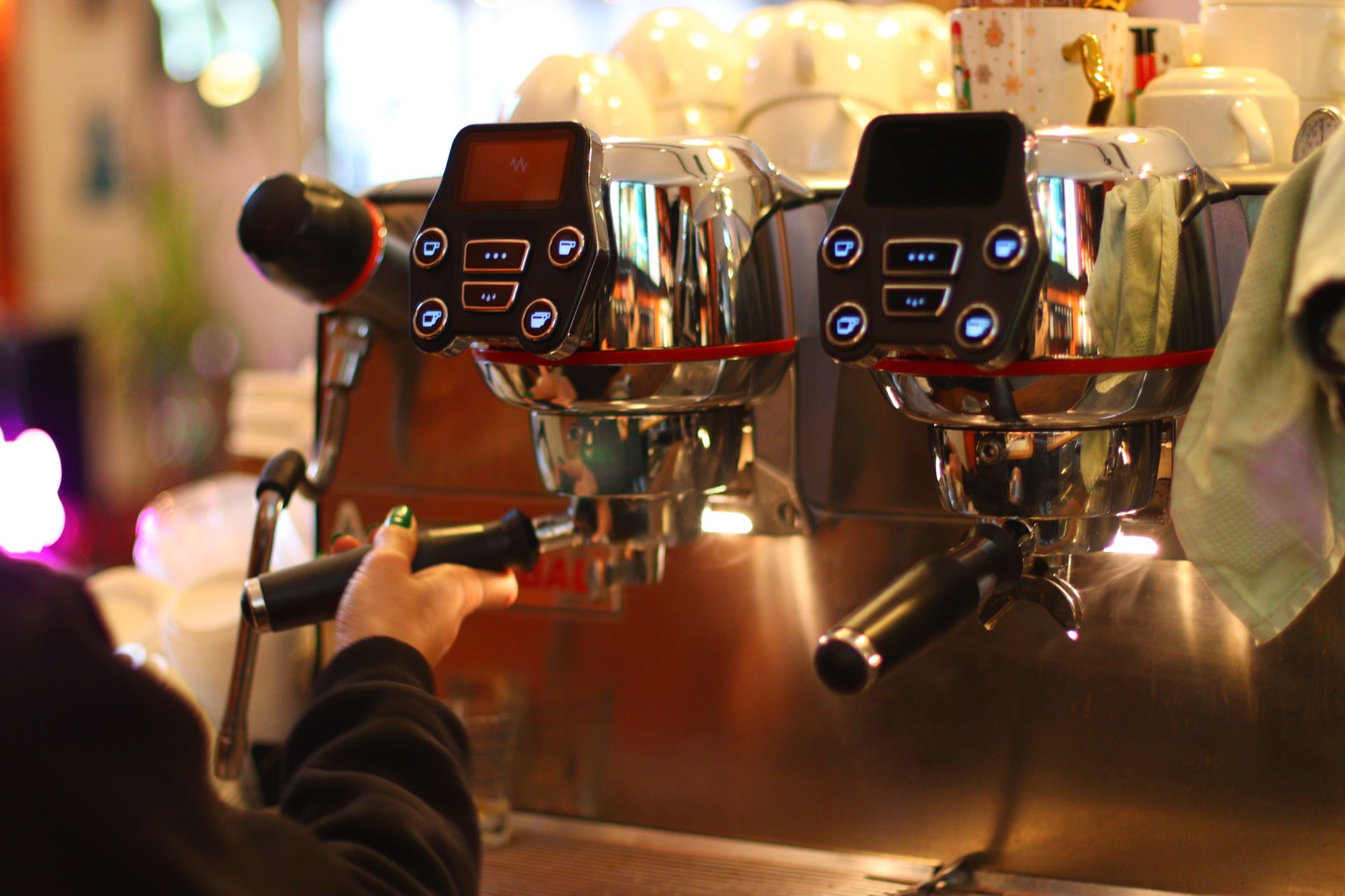
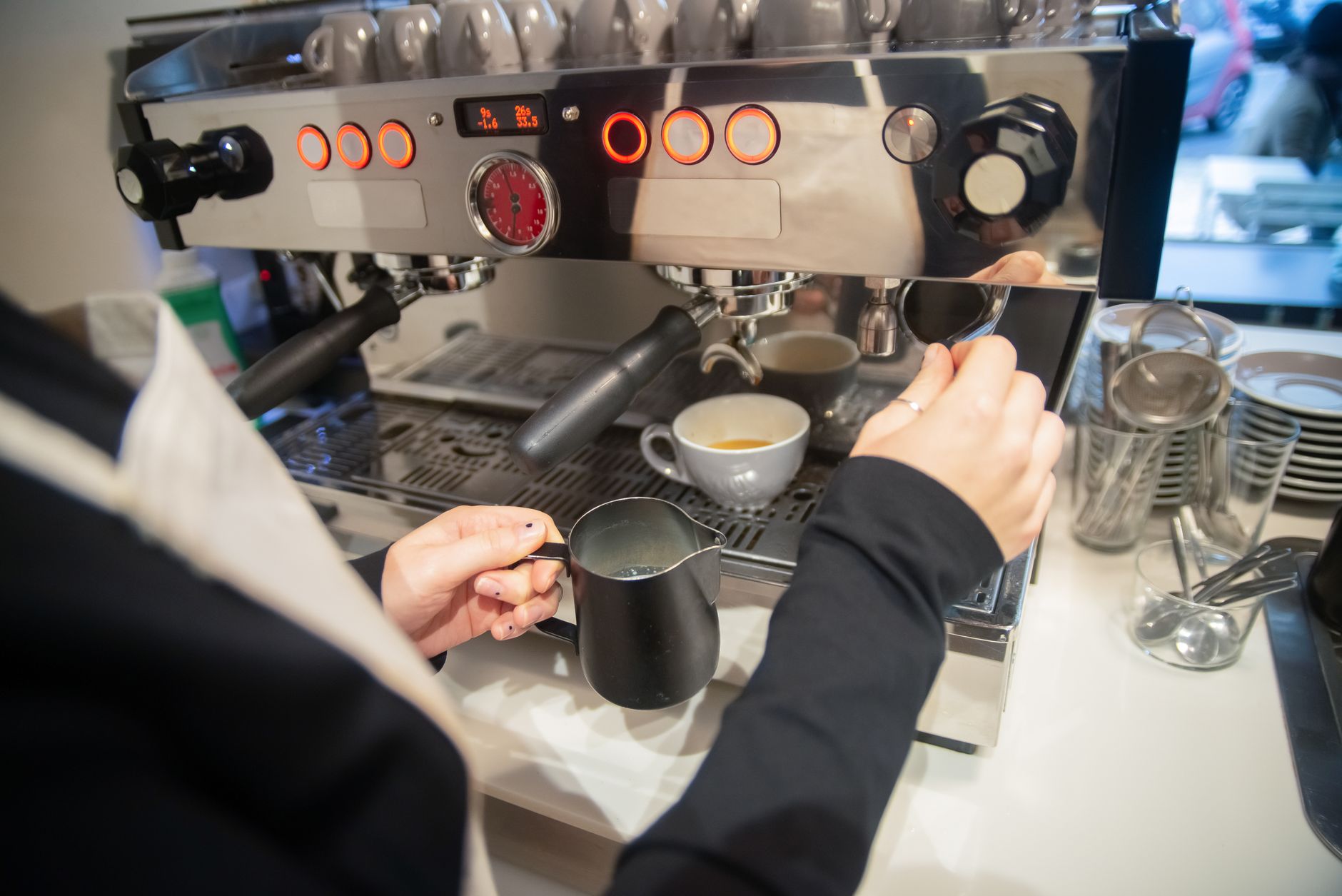
To understand how Gregorys maintains this balance, one must look past the counter and into the choreography behind it. In a boutique shop, a barista might weigh eighteen grams of coffee, grind to order, and extract espresso over twenty-five seconds, adjusting the grind setting between shots based on humidity and bean age. In a mass-market location, a super-automatic machine grinds, tamps, and extracts with the press of a button, producing acceptable coffee at industrial velocity. Gregorys operates in the narrow margin between these two systems, using equipment and workflows that allow manual control without manual delays.
The early decision to invest in semi-automatic espresso machines rather than fully automated systems, or conversely, than fully manual pour-over bars, created a operational template that requires skilled labor but not slow labor. A barista must know how to adjust the grind, how to texture milk to microfoam rather than merely heat it, and how to recognize channeling in a puck. Yet the layout of the bar, the positioning of the grinder, the staging of cups, and the sequencing of the order must be engineered so that this craft happens within a thirty-second window. This is not simply a matter of hiring fast baristas; it is the architectural design of the workspace itself, refined through fifteen years of observing where the seconds leak.
The high-rent locations force this optimization. When you pay Manhattan commercial rents, you cannot afford the luxury of a slow morning rush. Every second of throughput translates directly into rent coverage. But the specialty positioning requires that the thirty-second drink taste like it took two minutes. This creates a training burden that mass-market chains avoid through automation and that boutique shops avoid through acceptance of slowness. Gregorys must train baristas to execute craft at industrial speed, a combination that exists in few other retail environments, erhaps line cooking in high-end fast casual, or tailoring in certain luxury contexts, but rarely in coffee.
The commissary model extends this mechanical discipline to food. A competitor buying pastries from an outside baker faces a simple transaction: the truck arrives, the boxes come off, the staff places them in the case. Gregorys faces a logistics operation that begins at four in the morning in a basement production facility, where food must be prepared, packed, and dispatched to thirty locations before the morning rush begins. This requires refrigerated trucks, delivery windows, inventory management systems, and the operational overhead of running a food manufacturing business alongside a retail business. The complexity is substantial, but it creates a capability that competitors cannot easily replicate without similar capital investment and operational learning curves.
The Ethiopian Harar Conversion
The economics of the model depend not just on operational efficiency but on taste education, oving customers up the value chain from commodity coffee to specialty offerings with higher margins and stronger loyalty. In the second year of operation, Gregorys experienced what can only be described as a conversion moment. Zamfotis began brewing an Ethiopian Harar natural process coffee on a Clever dripper, a hybrid immersion method that produced a cup with distinct blueberry notes. Customers accustomed to ordering “coffee light and sweet”, the default New York City diner order, tasted this coffee black and experienced a sudden recalibration of what coffee could taste like.
This was not merely a product success; it was a strategic inflection point. The Harar served as an educational tool, a gateway drug that converted commodity drinkers into specialty enthusiasts. Once a customer learns to taste blueberry in a naturally processed Ethiopian coffee, they cannot unlearn it. Dunkin’ coffee, previously acceptable, suddenly tastes flat. The customer becomes willing to pay the premium for single-origin offerings and to wait in line at a Gregorys rather than grabbing a cup at the corner bodega.
The importance of this moment cannot be overstated for the unit economics. Specialty coffee commands higher margins not merely because the beans cost more, though they do, but because the perceived value justifies pricing that mass-market coffee cannot sustain. A customer who understands origin, processing methods, and tasting notes becomes less price-sensitive and more brand-loyal. They return not just for caffeine but for the specific sensory experience they cannot replicate at home or find at a competitor.
Yet scaling this education presents the same tension as scaling the operational culture. The Harar conversion required a barista with sufficient knowledge to explain the coffee, sufficient skill to brew it correctly, and sufficient time to engage the customer in a brief tasting conversation. In a store processing three hundred transactions during the morning rush, this educational moment becomes a bottleneck. The challenge becomes how to transmit the complexity of specialty coffee culture through a thirty-second interaction, or through packaging and presentation when the barista cannot speak.
The 2019 Inflection
For thirteen years, Gregorys grew through reinvested profits, a rate of expansion that allowed for obsessive attention to each new location but limited the total store count. By 2019, the company had reached a scale where the bootstrap model became a strategic constraint rather than a discipline. The Series A funding that year marked a recognition that the remaining premium locations in New York City were finite, and that competitors with venture capital could seize them first if Gregorys continued its incremental pace.
The funding also enabled the introduction of hot food, a program delayed for over a decade despite the company’s vertical integration into cold food production. This delay illustrates the operational conservatism that bootstrap growth enforces. Hot food requires different equipment, ovens, warming cabinets, different supply chains, than cold sandwiches and salads. It introduces food safety complexities, preparation timing challenges, and quality control variables that can destroy the consistency of the customer experience. Only after fifteen years of refining the cold food program, and after securing capital to invest properly in the infrastructure, did Gregorys attempt the hot food daypart.
The timing reveals a sophisticated understanding of operational leverage. Hot food extends the revenue potential of the high-rent locations into the lunch period, when coffee sales naturally decline. A trader who buys a morning latte might return for a hot sandwich at noon, effectively doubling the revenue per customer while amortizing the fixed real estate costs across more hours of operation. Without hot food, the store sits half-empty after 10 AM, paying rent for space that generates no revenue. With hot food, the location achieves the revenue density necessary to survive in the premium corridors where the brand must exist to maintain its positioning.
However, the introduction of hot food in 2019, concurrent with the first external funding, creates a strategic vulnerability. The company now operates two distinct manufacturing businesses, coffee roasting and preparation, and food production, each with its own supply chains, labor requirements, and quality control protocols. The complexity of managing fresh food distribution to thirty locations while maintaining coffee quality standards strains organizational bandwidth. A food safety incident, a supply chain disruption in the commissary, or a quality inconsistency in the hot program can damage the brand reputation that supports the coffee premium.
The Innovation Paradox
Zamfotis operates with an founder’s instinct for immediate improvement. He describes seeing something on Monday, a new brewing method, a food item, a operational tweak, and implementing it by Tuesday. This velocity of innovation creates competitive advantage; Gregorys can respond to customer preferences faster than bureaucratic chains, and can refine its offering continuously based on front-line observation. Yet this instinct conflicts with the requirements of scaling.
At thirty stores, the Monday-to-Tuesday innovation cycle becomes dangerous. A change in the coffee program affects the training of dozens of baristas, the inventory across multiple locations, the consistency of the customer experience. A customer who visits a Financial District location on Tuesday and receives a drink made with a new method expects the same experience at the Midtown location on Wednesday. If that location has not yet implemented the change, or if the barista there interprets it differently, the brand promise fractures.
The company faces the classic scaling paradox: the founder’s agility built the business, but the business can no longer tolerate the founder’s agility. Scaling requires standardization, testing protocols, and gradual rollouts. It requires saying no to immediate improvements in favor of systematic implementation. Yet slowing the innovation velocity carries its own risks. Competitors observe successful innovations and copy them; if Gregorys takes six months to roll out a successful menu change across the system, well-funded competitors can observe, replicate, and scale faster. The first-mover advantage erodes while the company waits for operational readiness.
This tension manifests in the training infrastructure. Early stores relied on Zamfotis’ personal presence to transmit standards. As the company adds locations beyond easy travel distance, it must build training systems that replicate his eye for detail without his physical presence. Video training, detailed operational manuals, and district managers who act as cultural carriers replace the founder behind the bar. But each layer of mediation introduces noise. The specific way a founder teaches latte art, the angle of the pitcher, the texture of the milk, the visual cues for when to stop aerating, loses fidelity when transmitted through intermediate trainers.
The Geographic Trap
The location strategy that created the company’s advantage also creates a hard ceiling. Manhattan and certain Brooklyn corridors contain only so many corners with the specific combination of high daytime foot traffic, street accessibility, and sufficient space for a coffee operation with commissary needs. At forty or fifty stores, Gregorys likely exhausts these optimal locations. Expansion then requires a choice: stop growing, move to secondary locations with inferior economics, or expand to new cities.
Each option breaks the model in different ways. Stopping growth satisfies the bootstrap discipline but cedes market opportunity to competitors. Secondary locations, outer boroughs, residential neighborhoods, smaller cities, cannot support the high-rent, high-throughput economics. A Gregorys in a Queens residential neighborhood might pay lower rent, but it will never generate the transaction volume necessary to justify the operational complexity of the commissary model and the specialty training requirements. The model is built for density; it suffocates in sprawl.
Expansion to new cities, Philadelphia, Boston, Chicago, requires replicating the entire infrastructure in markets where the brand has no recognition. The commissary must be rebuilt, the real estate relationships established from scratch, the cultural template transmitted to new managers without the fifteen-year head start. And critically, the founder cannot be in multiple cities simultaneously. The personal oversight that ensured quality in the New York stores becomes physically impossible. The company must rely on systems rather than presence at precisely the moment when it enters markets where it has no track record to buffer operational mistakes.
The Series A funding provides the capital for this expansion, but capital cannot buy the local knowledge that prevents expensive mistakes. A location that works on paper, a corner in downtown Philadelphia with high foot traffic, might lack the specific type of customer who values specialty coffee, or might have parking patterns that prevent the morning rush velocity, or might face competition from entrenched local players. New York City real estate has been Gregorys’ native environment; every other market is foreign soil where the learned intuitions may not apply.
The Commissary Scalability Question
Beneath all these expansion questions lies the mechanical reality of the commissary operation. At current scale, the model works. Food produced in central facilities and distributed to thirty locations achieves cost advantages and quality control impossible with third-party suppliers. But the logistics of fresh food distribution follow non-linear complexity curves. Adding five stores to a thirty-store network requires more than simply adding five delivery routes; it may require new production facilities, larger refrigeration capacity, and more sophisticated inventory management to prevent waste and stockouts.
A commissary producing for ten stores can adjust production based on daily feedback from the stores. A commissary producing for fifty stores faces the classic bullwhip effect: small variations in retail demand amplify back through the supply chain, leading to overproduction or shortages. Food safety risks compound with scale. A contamination incident at a commissary serving five stores is manageable; the same incident at a facility serving fifty stores becomes a systemic crisis affecting the entire brand.
The company has operated its commissary for fifteen years, but always at a scale where the founder could personally intervene in production issues. As the commissary grows into a true manufacturing operation, it requires professional food production management, HACCP protocols, and supply chain redundancy that small-scale operations can ignore. The capital requirements for this infrastructure escalate non-linearly. The 2019 funding round likely addressed immediate needs; sustained expansion may require additional capital that dilutes the founder’s control: he very control that enabled the rapid innovation and operational standards that created the competitive advantage.
The Remote Work Variable
All of these operational challenges assume the continued viability of the location strategy: high-rent, high-density commercial corridors where office workers generate consistent foot traffic. This assumption, stable for the first fifteen years of the company’s existence, became fragile in 2020. If remote work permanently reduces the occupancy of Manhattan office towers by even a modest percentage, the foot traffic that justifies the rents evaporates.
The Gregorys model does not work in a work-from-home world. The stores are positioned specifically for the commuter path: the corner between the subway and the office, the lobby of an office building, the street level of a commercial tower. They are deliberately not in residential neighborhoods where customers might wander in at midday for a leisurely coffee. The entire operational design, speed, throughput, the extension of daypart through lunch food, assumes the presence of thousands of office workers within a two-block radius.
A permanent shift to hybrid work creates a revenue death spiral for these locations. Lower morning traffic reduces coffee sales; reduced office presence reduces lunch food sales; the rent remains fixed; the commissary costs remain fixed; the model breaks. The company cannot easily pivot to residential locations because the unit economics require the specific density of commercial corridors. It is a strategy built for a specific urban form, and if that urban form changes, the strategy has no adaptive flexibility.
The bootstrap discipline that created the company’s strength, its refusal to open in marginal locations, its insistence on immediate profitability, also means it has no experience operating in the lower-rent, lower-traffic environments that might become necessary if commercial real estate markets shift. It is a specialist species evolved for a specific ecosystem; if the climate changes, it cannot easily evolve into a different species. The narrow ledge it occupies becomes a cliff edge when the ground beneath one side erodes.
The Cultural Half-Life
Even if the location strategy remains viable and the commissary scales successfully, the company faces the slow decay of cultural transmission. The first cohort of managers trained directly by Zamfotis possessed not just skills but context: they understood why the company operated as it did, not just how. They could make judgments in ambiguous situations because they had absorbed the founder’s priorities through osmosis during those eighty-hour weeks.
As the company grows, training necessarily becomes more procedural and less contextual. New employees learn the steps without necessarily understanding the reasoning. The difference between “we steam milk to this temperature because it produces the best texture for latte art” and “we steam milk to this temperature because the manual says so” seems subtle but compounds over time. The former allows for adjustment based on specific milk types, humidity conditions, or customer requests; the latter produces robotic inconsistency when conditions vary.
The fifteen-year head start in cultural development is a genuine moat, but moats silt up. Competitors can hire away trained managers, though the bootstrap history and founder presence likely created unusual loyalty in the early cohort. More dangerous is the natural dilution that occurs when a company grows from one store to thirty to fifty. At some point, the percentage of employees who have ever met the founder approaches zero, and the culture must survive as an abstraction, a set of written values and training videos rather than lived experience.
The question is whether the operational systems, checklists, quality control metrics, secret shopper programs, can substitute for the founder’s eye. In mass-market chains, these systems work because the product is standardized and the customer expectations are modest. In boutique shops, the founder’s presence maintains standards because the scale is small. Gregorys occupies the impossible middle where the product requires too much craft for pure systematization, but the scale is too large for founder oversight. The company must build systems that enforce excellence without crushing the craft, a balance that has defeated many retail concepts before it.
The next phase of Gregorys Coffee will test whether a business built on personal obsession can survive institutionalization. The commissary must become a factory without losing its flexibility. The locations must multiply without saturating their finite geography. The culture must replicate without the founder present to correct the errors. And all of this must occur while the fundamental assumption, that Manhattan office workers will continue to commute to high-rise buildings, remains under pressure from structural shifts in how knowledge work happens. The narrow ledge grows no wider; the question is whether the balance improves with practice, or whether the accumulated weight of scale eventually tips the enterprise into the gap.