Hetzner: The Data Center Bubble Thesis

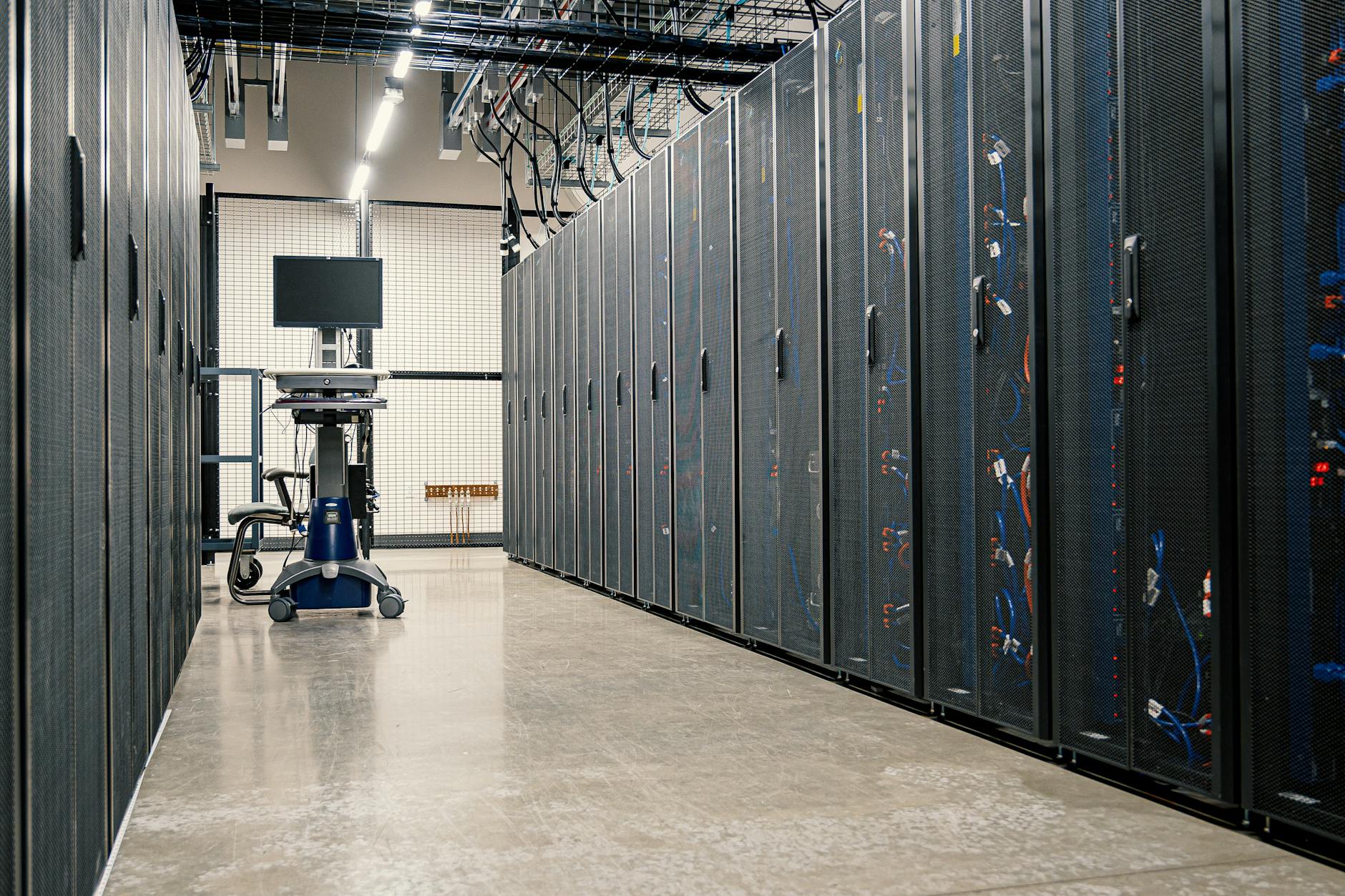
The data center at 22710 Hetzner Drive in Ashburn, Virginia, looks like a fortress built for the digital age. Twelve stories of reinforced concrete, redundant substations capable of drawing enough power to sustain a small city, and fiber optic infrastructure dense enough to circle the earth. It is the kind of asset that appears, at first glance, to epitomize the modern infrastructure investment: essential, irreplicable, earning rents from the insatiable growth of cloud computing and artificial intelligence. But the financial statements of its owner, Digital Realty Trust, reveal a different reality. Since 2016, the company has deployed eleven dollars of fresh capital to generate a single dollar of incremental revenue. In 2022 alone, it incinerated $2.7 billion in cash, roughly $230 million every month, to maintain a business that currently generates returns on invested capital of approximately 2%. This is not a toll road collecting passive rents on digital traffic. It is a capital furnace, requiring constant feeding to sustain an illusion of growth while slowly liquidating the underlying enterprise.
The mirage persists because of how the industry accounts for its own decay. Data centers are not static real estate; they are industrial facilities with mechanical lives closer to heavy manufacturing plants than office buildings. Cooling systems, power distribution units, and electrical infrastructure require constant replacement. Yet legacy operators have mastered a classification sleight-of-hand: routine replacements of HVAC systems and aging power infrastructure are labeled “growth capital expenditures” rather than maintenance, on the theory that these upgrades enable higher rents or new tenants. The result is accounting alchemy. Reported maintenance CapEx sits at roughly 10% of total capital spending, implying an asset life of approximately 150 years for mechanical equipment that physically deteriorates in fifteen. The true economic maintenance, what is actually required to prevent obsolescence, runs closer to 150% to 175% of reported depreciation. By labeling survival spending as expansion, Digital Realty and Equinix inflate their reported returns on invested capital from deeply negative territory up to 2% and 5–6%, respectively. These are not merely accounting preferences. They are the difference between an investment-grade credit rating and junk status, between a stock that trades on growth multiples and one that trades on liquidation value.
The economic engine itself is compromised by a structural tension that grows more acute each quarter. The largest customers, a href=”https://aws.amazon.com” target=”_blank” rel=”noopener noreferrer”>Amazon Web Services, Microsoft Azure, Google Cloud, re simultaneously the largest competitors. These hyperscalers have spent the last decade learning to build data centers at costs 30% to 40% below what legacy colocation operators can achieve, leveraging scale, custom server designs, and direct power purchase agreements that bypass traditional utility structures. They continue to lease capacity from Digital Realty and Equinix not because they must, but because it is occasionally cheaper than building a full facility in a specific geography, particularly in dense markets like Northern Virginia where land and power permits are constrained. This creates a peculiar landlord-tenant dynamic: the tenant possesses the capital, the technical expertise, and the long-term option to build its own facility, while the landlord holds depreciating concrete and copper in a market where the tenant’s alternative improves every year. When hyperscalers slow their colocation leasing, as they have recently, decelerating growth from 30–40% to 10–20%, they do not simply reduce demand. They signal that their own buildouts have reached sufficient scale to internalize capacity that previously required third-party leases. The legacy operator is left with stranded assets and no pricing power, yet still carrying the debt loads incurred to build facilities now valued by the private market at cap rates 40% higher than their public market valuations imply.
Compounding this deterioration is the Real Estate Investment Trust structure itself, which functions here less as a tax-efficient vehicle for cash-generating assets and more as a liquidity trap. REITs must distribute 90% of taxable income to shareholders, but taxable income in this sector is a nearly meaningless number, depressed by depreciation schedules that far exceed economic reality. The result is a mandate to distribute cash that the business does not generate. Digital Realty funds its dividend and debt service through a combination of asset sales and fresh debt issuance, effectively recycling capital from new investors and divestitures to pay old investors. With $19 billion in net debt against $2.2 billion in EBITDA, leverage of roughly 9 times, the company operates near covenant thresholds that leave little room for error. As interest rates have risen from the sub-2% levels of 2021 to current refinancing costs approaching 6–7%, the cash available for distributions shrinks, forcing additional asset sales. These sales occur at 8% to 10% capitalization rates, while Digital Realty’s equity trades at an implied 5.4% cap rate and Equinix at 5.6%. Each sale validates the private market’s lower valuation, eroding the collateral value supporting the remaining debt and accelerating the equity’s path to zero.
There remains, however, one underappreciated structural advantage that has delayed the reckoning: geographic density in the corridors of power. Northern Virginia’s “Data Center Alley” represents the most concentrated ecosystem of fiber, power, and latency-sensitive infrastructure on the planet. Hyperscalers cannot instantly replicate the network effects of this density; building a new campus requires three to five years of zoning battles, permitting, and fiber trenching in a market where every month of delay costs millions in lost cloud revenue. When a hyperscaler needs an incremental ten megawatts of capacity in Dulles tomorrow to satisfy a customer contract, legacy operators like Digital Realty remain the only landlords capable of immediate delivery. This creates a temporary monopsony where the legacy operator extracts premium rents despite inferior long-term economics. The advantage is real but eroding. Hyperscalers are now building their own mega-campuses adjacent to legacy facilities, chipping away at the density premium. Each year, the window narrows in which legacy operators can charge rents sufficient to cover their true cost of capital before the hyperscaler’s own facility comes online.
The private market has already rendered its verdict on this erosion, creating a valuation chasm that public shareholders have yet to fully recognize. Between 2020 and 2022, private equity firms such as DigitalBridge acquired data center assets at 25 to 40 times EBITDA, ultiples that assumed perpetual growth and inexhaustible demand. DigitalBridge’s acquisition of Switch at 40x EBITDA exemplified the peak of this frenzy. Today, those same private sellers are unloading assets at 8% to 10% cap rates, implying EBITDA multiples of roughly 10 to 12 times. Cyxtera, a colocation provider that recently restructured, trades at 9% cap rates. Digital Realty’s Singapore-listed subsidiary, DCRU, trades at 9%. These are not distressed fire sales; they are the new clearing prices in a rising-rate environment where buyers demand returns that exceed the cost of capital. Yet Digital Realty and Equinix continue to trade at implied cap rates below 6%, suggesting their equity values remain 40% to 50% above private market reality. As private equity funds face redemption pressures and are forced to sell additional assets into this bid-ask spread, they will flood the market with supply, depressing valuations further and eliminating the asset-sale funding that public REITs require to maintain their distributions.
The most fragile assumption supporting these valuations is the durability of the accounting classifications themselves. If auditors or regulators were to force a reclassification of “growth” CapEx as maintenance, or normalize depreciation schedules to reflect 15-year asset lives rather than 150-year fantasies, the facade would crumble. True maintenance CapEx of 150% to 175% of depreciation would obliterate reported free cash flow. Digital Realty’s 2% ROIC would turn negative; Equinix’s 5–6% would fall to low single digits, well below the cost of capital. Investment-grade ratings, already hanging by a thread at 9x leverage, would disappear. The resulting downgrade to junk status would spike refinancing costs on $19 billion in debt, triggering covenants that force accelerated asset sales precisely when cap rates are highest and buyers are scarce. This is not a distant tail risk; it is the mathematical consequence of subtracting reality from the financial statements.
Ultimately, the economics of this business are determined not by servers or fiber, but by governance structures that incentivize liquidation over returns. Executive compensation at these REITs is tied to Funds From Operations (FFO), a metric that treats depreciation as a non-cash charge despite the reality of constant physical replacement. Management teams are rewarded for growing square footage and leasing metrics, not for generating returns above the cost of capital. When a chief executive can classify a $50 million HVAC replacement as “growth CapEx”, thereby boosting reported FFO, triggering a bonus, and maintaining the stock price that funds his restricted stock units, he faces a rational incentive to liquidate the balance sheet slowly rather than confront the structural obsolescence of the model. The board watches the same metrics, bound by the REIT tradition of maintaining distributions even when those distributions are funded by debt and asset sales rather than operations. It is a culture that mistakes capital consumption for growth, and accounting adjustments for cash flow.
The asset sales will continue. First the peripheral properties in secondary markets, then the strategic facilities in Northern Virginia as debt maturities loom. Each sale at a 9% cap rate validates the private market’s skepticism and undermines the collateral value of the remaining portfolio. The hyperscalers will continue their migration to self-built facilities, reducing their colocation footprints by 10% annually until the legacy operators serve only those fleeting moments when a cloud provider needs immediate capacity in a geography where permits are pending. The accounting may hold for another quarter, or another year, but the cash flows do not lie. By the time the restatements arrive, the equity will have already traded toward the 9% cap rates that the Singapore subsidiary and the private markets already acknowledge. The servers will still be humming in Ashburn, cooling systems replaced and power bills paid, but the enterprise that owns them will have distributed its value to bondholders and short sellers, leaving behind a shell of depreciating concrete and broken classifications.
The liquidation proceeds slowly at first because the contracts themselves have become instruments of value destruction. Consider the typical hyperscaler lease signed in 2019 near Dulles, Virginia: a commitment for twenty megawatts of power draw, secured by a letter of credit, with stipulations that the landlord must deliver additional contiguous capacity within eighteen months if the tenant exercises expansion options. To satisfy such clauses, Digital Realty deployed $400 million in “growth” capital to construct a new powered shell adjacent to existing facilities, funded by the issuance of ten-year unsecured notes at 3.5%. The tenant occupied the space for thirty-six months at $150 per kilowatt per month, generating roughly $36 million in annual revenue against operating expenses of $12 million. The $24 million contribution margin appears healthy until one accounts for the true economic cost: the $400 million deployment must be maintained in perpetuity, as the mechanical infrastructure depreciates physically regardless of accounting treatment. When the hyperscaler declines to renew, having completed its own campus three miles south, the landlord is left with a purpose-built facility requiring $60 million in HVAC and electrical refresh to attract a new tenant, at a moment when that tenant can demand rates of $100 per kilowatt because Amazon and Microsoft have created surplus capacity in the same power grid. The landlord faces a binary choice: fund the refresh and accept a negative present value on the reinvestment, or default on the lease’s continuous operation covenants and trigger cross-default provisions across the entire debt stack. Most choose the former, booking the $60 million as growth CapEx to preserve the narrative of expansion, thereby converting shareholder equity into a subsidy for the departing tenant’s occupancy.
This dynamic repeats across the portfolio with mechanical inevitability. The physical plant of a data center does not age gracefully. Uninterruptible power supply batteries require replacement every five to seven years; the massive chillers that cool server halls lose efficiency and refrigerant capacity after a decade; the copper busbars that distribute megawatts across white space oxidize and must be re-terminated. These are not improvements; they are the biological functions of an industrial organism kept alive by constant transfusion of capital. Yet in the financial statements, these expenditures vanish into line items labeled “expansion” or “redevelopment,” buried alongside genuine new construction. The absurdity becomes apparent only when one compares the implied asset lives to physical reality. Digital Realty’s accumulated depreciation suggests its portfolio has an average remaining life of 135 years; Equinix implies 120 years. The actual mechanical components, Liebert cooling units, Schneider Electric switchgear, Cummins diesel generators, carry manufacturer warranties of ten to fifteen years. The divergence is not a rounding error; it is the entire story. If depreciation were accelerated to match physical decay, Digital Realty’s $2.2 billion EBITDA would fall by approximately $800 million, eliminating the coverage cushion on its $19 billion debt load and triggering immediate covenant violations. The company exists in its current form only because the accounting allows it to treat decay as growth.
The refinancing mathematics now closing in on these structures leave no room for such illusions. Digital Realty faces $4.2 billion in debt maturities during 2024 and 2025, including $1.5 billion in unsecured notes originally issued at 3.6% that must be refinanced in a market where comparable REIT paper trades at 7.5%. Each 100 basis point increase in the coupon consumes $42 million in annual cash flow: oughly the equivalent of the company’s entire dividend. But the true danger lies not in the unsecured notes alone, but in the secured mortgage debt covenanted to specific facilities. As asset sales accelerate to fund distributions, the remaining collateral pool shrinks, triggering loan-to-value maintenance provisions that require immediate prepayment or the posting of additional collateral. When Digital Realty sold its European portfolio to Private equity firm PIMCO in late 2022 at an 8.2% cap rate, it validated the private market’s skepticism while simultaneously reducing the unencumbered asset base supporting its revolving credit facility. The result is a liquidity squeeze: the company must sell assets to fund debt service, but each sale erodes the borrowing base required to fund the next quarter’s distribution. The spiral tightens with each transaction.
The hyperscalers’ alternative supply chain now operates with such efficiency that the landlord’s residual advantage has narrowed to a few specific power substations and fiber junctions. Amazon Web Services designs its own server racks, power distribution units, and cooling manifolds, manufacturing them at scale through Foxconn and Flex facilities in Taiwan and Mexico. By eliminating the markup that Dell, HP, and Cisco charge to colocation providers, and by deploying custom silicon that operates at higher ambient temperatures, AWS reduces its mechanical infrastructure costs by 40% relative to legacy third-party facilities. More critically, the hyperscalers have mastered the art of the “pre-cooled” data hall: modular construction techniques allow them to deploy fully operational facilities in eighteen months, down from the thirty-six months required by traditional stick-built methods. The time advantage translates directly to cost. When a cloud provider needs capacity in Frankfurt or Singapore, the calculus is no longer simply “build versus lease” but “build now versus wait for the landlord to refresh their aging plant.” As the hyperscalers’ construction timelines compress, the window in which legacy colocation operators can extract scarcity rents contracts toward zero. The twenty-megawatt lease in Dulles is not renewed because the tenant’s alternative has shifted from “impossible” to “operational in fourteen months at 60% of the current rent.”
The private equity bid-ask spread now distorting the asset market ensures that this transition will occur through violent repricing rather than gradual adjustment. When DigitalBridge acquired Switch at forty times EBITDA in 2022, it was not merely paying a strategic premium; it was capitalizing a perpetuity assumption that assumed data center rents would grow faster than inflation indefinitely, while capital costs remained at historic lows. The $11 billion purchase price implied that Switch’s $275 million in EBITDA would compound at 8% annually, justifying the multiple through discounted cash flow models that terminated in 2040 with terminal values higher than the entry price. Today, those same models generate valuations of $4 billion when using 9% cap rates and realistic rent growth of zero to negative 2%. DigitalBridge and its peers, Blackstone’s acquisition of QTS, KKR’s purchase of CyrusOne, now hold $50 billion in data center equity valued on their books at 2021 multiples, while the public markets and distressed sellers transact at 2024 realities. The pressure to realize liquidity for fund investors creates a supply overhang: every time DigitalBridge marks down a Switch facility for sale to reduce leverage, it establishes a new comparable that forces Digital Realty to mark down its adjacent properties, triggering appraisal reductions on secured debt and acceleration clauses. The private sellers are not merely competing with public REITs for buyers; they are actively destroying the collateral value that supports the public REITs’ debt structures.
The Singapore subsidiary, Digital Core REIT, offers a sobering preview of how this repricing propagates through the equity structure. Listed on the SGX in 2022, DCRU trades at a 9% distribution yield, nearly double the 4.8% yield on Digital Realty’s common shares, despite owning what management describes as “premium, stabilized assets” in Frankfurt and Silicon Valley. The market is not being irrational; it is applying a discount for currency risk, leverage, and the absence of a parent company willing to fund distributions through asset sales. But the divergence reveals the arbitrage at the heart of the parent company’s valuation. If DCRU’s assets, functionally identical to those retained by Digital Realty, are worth 9% cap rates, then Digital Realty’s $30 billion market cap implies a 40% premium to liquidation value. As DCRU continues to trade as a distressed income vehicle, it establishes a floor for asset valuations that renders Digital Realty’s equity deeply out-of-the-money. The parent cannot sell assets to DCRU at inflated valuations because the subsidiary’s cost of capital is too high; it cannot sell to third parties without recognizing impairment; and it cannot retain the assets without funding negative-return maintenance. The subsidiary has become a price discovery mechanism that exposes the parent’s insolvency.
Within the boardrooms, the governance structures prevent any recognition of this mathematical trap. Compensation committees benchmark chief executive performance against Funds From Operations per share, a metric that adds back depreciation, amortization, and, critically, most forms of maintenance spending classified as growth. When the chief operating officer approves a $40 million upgrade to a chiller plant in Phoenix, he does not see a maintenance event that preserves the status quo; he sees an accretive “redevelopment” project that will boost FFO when the new capacity leases. The board awards restricted stock units based on this accretion, ignoring that the $40 million expenditure merely prevents the facility from becoming uncompetitive, and that the new lease, if secured, will generate returns below the cost of the capital deployed. The incentive system selects for opacity. A manager who correctly classifies the chiller replacement as maintenance and reports lower FFO is penalized; a manager who labels it growth is promoted. Over a decade, this selection effect populates the executive suite with individuals who genuinely believe that replacing batteries is growth capital, and who are therefore psychologically unprepared to acknowledge that their business consumes more value than it creates.
The terminal value of these enterprises is not zero, but it is closer to the net present value of their power contracts and land leases than to their current trading multiples. If one assumes that Digital Realty’s assets, honestly depreciated, generate true free cash flow of $400 million annually, optimistic given the maintenance burden, and applies a 9% cap rate consistent with private market transactions, the equity value is approximately $4.5 billion, versus the current $30 billion market capitalization. The $25.5 billion difference represents the capitalized value of accounting classifications, interest rate subsidies, and the hope that hyperscalers will return to leasing rather than building. None of these are durable sources of value. As the refinancing wave breaks, as private equity sellers flood the market with supply, and as auditors eventually question the 150-year asset lives, the gap between $30 billion and $4.5 billion will close through a combination of equity issuance at distressed prices, asset sales at 9% cap rates, and eventual bankruptcy reorganization.
Until then, the servers continue to hum in Ashburn, drawing power, requiring cooling, generating heat that must be dissipated through mechanical infrastructure that ages in dog years while depreciating in geological time. The cash flows out the door to bondholders who have begun to hedge their exposure through credit default swaps, and to shareholders who receive distributions that are mathematically indistinguishable from return of capital. The concrete is permanent; the economics are temporary. The short thesis is not that data centers will disappear, but that the entities currently owning them have structured themselves to liquidate rather than compound, disguising the process through ledger entries that classify decay as growth. When the last hyperscaler exits its final colocation lease, when the last private equity fund dumps its last Switch facility into a 9% cap rate market, the industry will look up from its spreadsheets to discover that the assets remain, but the value has already been distributed to those who understood the difference between accounting and arithmetic.
The arithmetic becomes inescapable when examining the specific lease structures that legacy operators now confront. Consider a twenty-megawatt commitment in Digital Realty’s Northern Virginia portfolio, signed in 2017 with a major cloud provider at $140 per kilowatt per month, escalating at 2% annually. The contract requires the landlord to deliver “continuous cooling” within ASHRAE standards, with failure to maintain power density resulting in rent abatement and termination rights. As the facility ages, the existing CRAC (Computer Room Air Conditioning) units, installed in 2014, approach the end of their reliable service life. The hyperscaler, meanwhile, has secured a direct interconnect agreement with Dominion Energy for a new campus three miles east, bypassing the utility bottlenecks that once made the legacy facility indispensable.
When the lease comes up for renewal in 2024, the cloud provider offers $95 per kilowatt, citing their alternative supply and the market’s new construction costs, while Digital Realty faces a $28 million “redevelopment” charge to replace the chillers, upgrade the UPS systems, and increase power density to meet the client’s newer server configurations. The math is brutal: $28 million deployed to retain $3.4 million in annual revenue (the twenty megawatts at reduced rent, less operating expenses of roughly $1.1 million), generating a cash-on-cash return of 8% before debt service, but a negative return once the true cost of capital and the eventual next replacement cycle are factored. Yet refusal to spend the $28 million triggers immediate vacancy, the loss of the hyperscaler’s cross-connect revenue that subsidizes the facility’s other tenants, and a violation of the loan covenants on the specific mortgage securing the property, which requires minimum debt service coverage ratios that the remaining small tenants cannot satisfy.
This is the trap that grows tighter with each renewal cycle. Equinix faces a variant of the same mathematics, though its interconnection fabric provides slightly stickier economics. At its Ashburn campus, Equinix generates roughly 35% of its revenue from cross-connect fees, hysical fiber patches between tenants that create switching costs. Yet even this advantage erodes as hyperscalers establish their own meet-me rooms within their self-built facilities, offering direct peering to content delivery networks and enterprises at rates 60% below Equinix’s $300 monthly per-cross-connect pricing. The interconnection moat is being bypassed by the hyperscalers’ scale; what appears as a sticky, high-margin business is, in reality, a toll booth on a highway being rerouted. Equinix’s 5–6% ROIC, while superior to Digital Realty’s 2%, remains below its cost of capital, and its dependence on the same hyperscaler customers exposes it to the same slow exodus, merely delayed by eighteen to twenty-four months.
The refinancing mechanics now approaching criticality reveal how quickly the accounting classifications translate into liquidity crises. Digital Realty’s $19 billion debt stack includes $6.2 billion in secured mortgage debt covenanted to specific facility pools. These agreements contain standard loan-to-value (LTV) maintenance covenants set at 65%, tested annually through third-party appraisals. When the Singapore subsidiary trades at 9% cap rates, and when DigitalBridge sells a comparable Dallas facility at an 8.5% cap rate, these transactions become “comparable sales” that appraisal firms must consider when valuing Digital Realty’s collateral. A 200 basis point expansion in cap rates, from the 5.5% assumed in 2021 to the 7.5% market reality of 2024, reduces the appraised value of a $500 million facility portfolio to $367 million. If the outstanding mortgage is $325 million, the LTV jumps from 65% to 88%, triggering immediate covenant default.
The cascading effects proceed with legal precision. A covenant default on the secured mortgage triggers cross-default provisions in the unsecured bond indentures, specifically the $4.5 billion in notes due 2026–2028. These bonds carry change-of-control put options and debt incurrence covenants that restrict additional borrowing once secured leverage exceeds certain thresholds. With the secured debt frozen and the unsecured markets closed to sub-investment-grade issuers, Digital Realty loses the ability to fund the “growth” CapEx required by its customer contracts. The chillers fail, the hyperscalers exit, and the revenue drops precisely when the debt service coverage ratios are being tested. Even Equinix, with its investment-grade rating and $14 billion debt load, carries similar appraisal and covenant structures; the difference is merely tempo. Equinix burns cash more slowly, but burns it nonetheless, and when the rating agencies finally recognize that the 150-year depreciation schedule is unsustainable, it will face the same refinancing cliff.
The power market dynamics in Northern Virginia illustrate how the structural advantages are being systematically dismantled. Legacy data centers in Loudoun County typically secure power through standard commercial utility tariffs, with demand charges based on peak kilowatt usage. Hyperscalers have bypassed this structure entirely, negotiating directly with Dominion Energy for “transmission-level service” that connects their campuses to high-voltage lines at 230kV, avoiding the distribution costs that comprise 30% of Digital Realty’s power expenses. More critically, the hyperscalers have secured dedicated nuclear and solar generation through virtual power purchase agreements, stabilizing their energy costs at $45 per megawatt-hour while legacy operators face spot market volatility that has spiked to $200 per megawatt-hour during recent grid stress events.
This energy arbitrage destroys the colocation value proposition at its foundation. When a cloud provider can secure power at half the cost by building its own substation, the legacy operator’s “turnkey” offering, power included in the rent, becomes uncompetitive. The legacy operator cannot match the power pricing without destroying its own margins, yet cannot remain in business without the hyperscaler’s tenancy. The result is a slow-motion exodus: Amazon vacates its Digital Realty space in phases, taking 5 megawatts here, 8 megawatts there, each departure triggering co-tenancy clauses that allow smaller tenants to reduce their commitments or demand rent concessions. The facility’s revenue declines geometrically while its fixed costs, property taxes on the assessed value, insurance on the replacement cost, and the debt service, remain linear.
The accounting restatement, when it comes, will not require fraud or malfeasance, nly the recognition that a chiller plant is not a growth asset. When the auditors finally classify the $28 million replacement in Northern Virginia as maintenance rather than expansion, they will force an immediate $28 million charge against FFO, eliminating the dividend coverage. The credit agencies, watching FFO decline while leverage remains fixed at 9x, will downgrade the issuer to junk. The transition from BBB- to BB+ increases borrowing costs by approximately 250 basis points on the revolving credit facility, consuming an additional $150 million in annual interest expense, unds that were previously funding the “growth” CapEx that kept the lights on.
At that moment, the liquidation becomes explicit. The board will face a choice between cutting the dividend, triggering a 40% stock price decline as yield investors flee, and selling the Northern Virginia campus to a private equity firm at a 9% cap rate. The sale will generate $400 million against a book value of $650 million, forcing an impairment that violates the unsecured debt covenants requiring minimum asset coverage. The unsecured bondholders will accelerate the debt, demanding immediate payment of $4.5 billion, forcing asset sales across the entire portfolio in a market where DigitalBridge and Brookfield are simultaneously trying to exit their own positions. The equity value evaporates not through a single dramatic bankruptcy, but through a series of forced transactions at prices that validate the short thesis: the assets are worth less than the debt, and the accounting was the only thing keeping them afloat.
The concrete remains. The fiber remains. The tax lots in Loudoun County, zoned for critical infrastructure, remain. But the enterprise that owned them will have functioned not as a business, but as a mechanism for transferring capital from public equity holders to bondholders, contractors, and hyperscalers who extracted occupancy at negative economic cost. The data center industry will survive, but the REIT structure that financed its overbuilding will not. The assets will pass to distressed debt funds at 30 cents on the dollar, who will operate them as cash-flowing industrial properties with honest depreciation schedules and no dividend obligations. The new owners will not be confused about whether a chiller is growth or maintenance. They will simply replace it when it breaks, charge rents that cover their cost of capital, and wait for the next cycle of delusion to begin.