
Lockheed: How 143 Days Built America’s First Jet

143 Days and a Circus Tent
In the summer of 1943, Kelly Johnson pitched a tent in a plastics factory parking lot in Burbank, California. Inside, twenty-three engineers and thirty shop mechanics set out to build America’s first operational jet fighter. The Army Air Forces had given Lockheed 180 days. Johnson delivered the prototype, nicknamed Lulu Belle, in 143 days. The team worked with such intensity that they ignored the formal engineering drawings required by company protocol; instead, draftsmen sketched directly onto aluminum sheets, and machinists fabricated parts while engineers stood fifteen feet away, adjusting tolerances on the fly. The P-80 Shooting Star emerged from that tent not merely as an aircraft but as a proof of concept: that small, elite teams operating under extreme urgency could outperform lumbering bureaucracies with unlimited budgets.
Eighty years later, Lockheed Martin occupies a radically different position. It is the federal government’s largest contractor, collecting approximately $50 billion annually from American taxpayers. Its F-35 program alone represents the most expensive weapons system in history, with costs measured in trillions rather than millions. Yet the economic engine remains tethered to that original circus tent. Lockheed does not capture value through manufacturing efficiency or scale economies in the traditional sense. Instead, it converts moments of national security crisis into multi-decade monopoly positions through an organizational structure that deliberately sacrifices bureaucratic scale for innovation velocity. The model remains economically viable only so long as the U.S. government perceives existential peer threats worthy of premium pricing for technical superiority rather than cost optimization. When that perception fades, the entire mechanism begins to seize.
The Cost-Plus Monopoly
The defense industrial base operates on a peculiar cash flow rhythm unfamiliar to commercial enterprise. Lockheed’s revenue stream begins not with market demand but with the Pentagon’s perception of strategic vulnerability. The company bids on Research, Development, Test, and Evaluation (RDT&E) contracts for capabilities that do not yet exist, tealth, hypersonic glide vehicles, directed energy. These initial awards are modest, often just sufficient to cover costs plus a thin margin. The economic magic happens during the transition from prototype to production.
Once Lockheed demonstrates a working prototype, the government faces a switching cost calculus that borders on prohibitive. The U-2 surveillance aircraft, the SR-71 Blackbird, and the F-117 Nighthawk all followed this trajectory: urgent development contracts awarded during periods of strategic tension, followed by production runs stretching across decades. The customer cannot easily pivot to a competitor because the competitor lacks the classified security clearances, the institutional knowledge of the specific military requirements, and the integrated logistics infrastructure built around the platform. A general who has spent twenty years working with Lockheed program managers, who understands their engineering dialect, and who has trained personnel on Lockheed systems will not lightly restart the cycle with an unknown supplier merely to save marginal costs.
This dynamic creates de facto monopolies or tight duopolies in critical capability domains, ir superiority fighters, strategic reconnaissance, ballistic missile defense. Within these niches, Lockheed typically operates under cost-plus contracts where the government reimburses actual costs and pays a predetermined fee. The arrangement transfers development risk to the taxpayer while ensuring Lockheed captures margin regardless of overruns. The result is a $50 billion annual revenue stream that functions as non-discretionary spending on deterrence, insulated from the cyclical pressures that afflict commercial aerospace.
The Skunk Works Tension
The durability of this engine depends on maintaining the organizational capability to deliver breakthroughs like the P-80 in 143 days. Yet this capability exists in permanent tension with the requirements of corporate scale. Kelly Johnson codified fourteen rules for Skunk Works operations, including the dictum that “the number of people having any connection with the project must be restricted in an almost vicious manner” and that engineers must maintain physical proximity to the shop floor. These rules maximize innovation velocity but minimize financial controls.
The modern Lockheed Martin, formed from the merger of seventeen companies by 1995, must satisfy shareholder accountability, government audit requirements, and Sarbanes-Oxley compliance. Each of these demands documentation, process discipline, and bureaucratic oversight: he very antithesis of the Skunk Works methodology where engineers sketch on scrap metal and purchasing agents procure parts with handshake agreements. If corporate management imposes standard financial controls on advanced development programs, the iteration cycles slow, the elite talent departs for environments less encumbered by compliance theater, and Lockheed loses the technical edge that justifies its monopoly premiums. If, conversely, the company allows Skunk Works to operate as a lawless enclave, it risks financial opacity, strategic misalignment with corporate priorities, and the inevitable inefficiencies that accompany lack of oversight.
Ben Rich’s succession of Kelly Johnson in 1975 illustrates the economic stakes of this tension. Rich inherited not merely a division but a personality-dependent culture. Johnson had attracted genius-level talent not through compensation, Lockheed historically paid below commercial engineering rates, but through the intensity of the work and the clarity of the mission. Rich preserved many of the structural elements, producing the F-117 and contributing to the F-22, yet the very necessity of his book Skunk Works suggests an organization aware that its competitive advantage resided in tacit knowledge and personal relationships rather than replicable systems. The economic variable here is not morale or culture in the abstract; it is the specific organizational form that enables the rapid prototyping that wins contracts. Lose that form, and the monopoly dissolves.
When Urgency Fades
The entire apparatus assumes a specific psychological condition within the customer: the perception of existential threat. The 143-day P-80 sprint succeeded because the Army Air Forces operated under the conviction that Nazi Germany would deploy jet fighters over Europe within months. The U-2 and SR-71 programs accelerated because the Soviet nuclear threat created political tolerance for unlimited budgets and minimal oversight. As one historian noted, the mission was preserving America from “having nuclear bombs dropped on it by the Soviet Union.” Under such conditions, cost is secondary to speed, and the government willingly pays premium prices for technical superiority.

This assumption is fragile. Successful deterrence reduces the perceived threat level. Peace, paradoxically, destroys the business model. When the existential urgency dissipates, the Pentagon transforms from a patron of innovation into a procurement bureaucrat demanding cost efficiency, competitive bidding, and audit compliance. The 1990s peace dividend illustrated this dynamic: defense budgets contracted, programs faced cancellation regardless of technical merit, and the government pressured industry consolidation. Lockheed itself emerged from this period through aggressive merger activity, absorbing Martin Marietta and others to maintain revenue scale even as the underlying market for urgency-driven innovation contracted.
The risk persists today. A sustained period of reduced great-power tension, or a political decision to prioritize fiscal austerity over military modernization, would trigger demands for fixed-price rather than cost-plus contracts, competitive sourcing rather than sole-source awards, and efficiency rather than performance. Under such conditions, Lockheed’s organizational model becomes a liability. The small-team, rapid-iteration approach cannot compete on cost with larger, process-optimized manufacturers. The technical superiority that justifies premium pricing becomes irrelevant when the customer prioritizes affordability over capability. The $50 billion revenue stream depends on the permanent existence of a peer competitor capable of destroying the United States, and on the political will to spend without constraint to prevent that destruction.
The Geography of Innovation
Most analyses of Lockheed’s competitive moat focus on classified clearances, political connections, or manufacturing scale. These matter, but they obscure a more fundamental advantage: the physical and organizational architecture of innovation itself. Kelly Johnson insisted that designers remain within fifty feet of the shop floor. When an engineer’s drawing proved impractical, the machinist walked over, explained the constraint, and the engineer revised the design within hours. This proximity created iteration cycles measured in days rather than months, compressing development timelines by an order of magnitude.
This advantage is not technological. Competitors can purchase the same software, hire comparable talent, and access identical materials. They cannot easily replicate the organizational form because doing so requires dismantling existing hierarchies, eliminating middle management layers, and accepting the financial opacity that accompanies small-team autonomy. Most defense contractors organize for scale and cost control, eparating engineering from manufacturing, centralizing procurement, and optimizing for margin. Lockheed’s willingness to maintain Skunk Works as a protected enclave, even when it conflicts with corporate efficiency metrics, represents a strategic choice that competitors, beholden to different shareholder models, will not emulate.
The durability of this advantage lies in its cultural embeddedness. It persists not through patents but through hiring practices, physical plant layout, and the institutional memory of how to manage elite technical teams. When Lockheed merged with Martin Marietta and other entities during the 1990s consolidation wave, each integration threatened to dilute this culture with the bureaucratic processes of the acquired firms. The company’s ability to preserve the Burbank model, small teams, minimal oversight, proximity of design and build, while scaling to $50 billion in revenue represents the central managerial challenge. Failure here does not manifest immediately; it appears three contracting cycles later when Northrop Grumman or Boeing wins the next bomber contract because Lockheed’s proposal required eighteen months for internal review rather than six.
The Kelly Johnson Variable
Leadership functions in this business not as a soft factor but as a direct input to return on capital. Kelly Johnson won the Collier Trophy, the aviation equivalent of the Academy Award for Best Picture, twice, a feat achieved by only one other individual in history. He attracted talent not through compensation packages but through the density of the work and the clarity of the stakes. This represents a key person dependency of the highest order. The P-38 Lightning, which shot down Admiral Yamamoto’s transport over Bougainville, emerged from Johnson’s specific genius. The SR-71, which remained unchallenged for three decades, reflected his ability to bend titanium and aerodynamics to his will.
The economic risk is that this capability is not systematizable. Ben Rich inherited Johnson’s authority and preserved many of his methods, but the transition introduced uncertainty. When leaders who can attract and retain elite technical talent through personal charisma and technical credibility retire, organizations typically revert to mean, ecoming ordinary engineering divisions optimized for process compliance rather than breakthrough innovation. Lockheed’s current valuation assumes the Skunk Works methodology has been institutionalized, rendered independent of individual genius. The historical record suggests otherwise. Organizations that depend on singular leadership for competitive advantage rarely survive the leader’s departure unscathed; they merely postpone the reckoning across the decade-long duration of defense contracting cycles.
The Seventeenth Merger
In 1932, Robert Gross purchased the bankrupt Lockheed Aircraft Corporation for $40,000, outbidding the company’s founder Allan Loughead, who considered offering $50,000 but deemed the price insultingly low. This origin story, emergence from insolvency through aggressive financial engineering, established a pattern. By 1995, Lockheed had absorbed seventeen distinct aerospace entities, including Martin Marietta, creating the modern behemoth.
Each merger presented the same hazard: the assimilation of Skunk Works culture into the bureaucratic machinery of the acquired organization. Defense contracting economics encourage consolidation during budget contractions; the government prefers fewer primes to manage, and fixed costs must be spread across larger revenue bases. Yet consolidation threatens the very capabilities the government actually requires. When Lockheed absorbs a competitor, it inherits that company’s procurement procedures, financial controls, and middle management layers. The integration process inevitably creates pressure to standardize processes across divisions, eroding the autonomy that enables rapid prototyping.
The government’s periodic enthusiasm for consolidation thus contains a contradiction. Policymakers demand efficiency through merger, forcing Lockheed to grow larger and more bureaucratic, while simultaneously requiring the innovation speed of the 143-day jet fighter. These objectives are mutually exclusive. Lockheed’s challenge is to maintain the organizational schizophrenia necessary to operate as both a $50 billion public company with fiduciary duties and a collection of small, elite teams functioning like 1940s startups in a parking lot. The latter capability justifies the former’s margins; without it, Lockheed becomes merely another diversified industrial contractor competing on cost rather than capability.
The model persists, for now, because the threat perception has returned. Great-power competition provides the existential urgency that makes the $50 billion price tag seem like a bargain. But the underlying fragility remains. Lockheed Martin captures value only so long as the U.S. government remains sufficiently frightened to prioritize speed over efficiency, and only so long as the company can preserve the organizational anomalies, the small teams, the shop-floor proximity, the autonomous leadership, that enable it to turn that fear into flying machines faster than anyone else.
The Thirty-Year Tail
The initial production contract represents only the beginning of the economic capture. Once a platform enters service, whether the F-16 Fighting Falcon or the C-130 Hercules, Lockheed establishes a logistics apparatus that extends the revenue timeline across decades. The government does not merely purchase aircraft; it purchases a sustainment ecosystem: spare parts, technical manuals, depot maintenance, engineering change proposals, and software upgrades. These follow-on contracts often generate multiples of the original acquisition cost, and they flow almost exclusively to the original manufacturer who holds the proprietary technical data, the specialized tooling, and the institutional knowledge of how to keep complex systems airborne.
This creates a compound monopoly. The initial win establishes not just production rights but a regulatory and technical moat around the entire lifecycle. When an F-35 requires a software patch or a structural modification, the Pentagon cannot easily turn to a third-party maintenance provider because the technical data packages remain Lockheed’s intellectual property, classified at levels that prevent commercialization. The Air Force lacks the in-house engineering capacity to reverse-engineer solutions, having outsourced that capability decades ago to the primes. The result is a captive customer locked into a single-source relationship for thirty to fifty years, paying prices set without competitive pressure.
The economic beauty of this arrangement lies in its invisibility. Congress scrutinizes the billion-dollar line items for new fighter procurement; it pays less attention to the $400 million annual sustainment contracts that continue in perpetuity. These revenue streams exhibit negative cyclicality, hey actually increase as aircraft age and require more intensive maintenance. For Lockheed, this means that even when new program starts dry up during budget contractions, the existing installed base continues generating predictable cash flows. The 1990s consolidation wave, which eliminated competitors and reduced new contract opportunities, actually strengthened this dynamic by concentrating the sustainment portfolios into fewer hands.
Yet this model carries a hidden fragility. The thirty-year tail depends on the platform remaining relevant. If a shift in military doctrine renders a fleet obsolete, if, for instance, manned fighters give way to autonomous systems, the sustainment revenue collapses not gradually but catastrophically. The government retires aircraft to the boneyard, and the spares contracts terminate. Lockheed must therefore navigate a paradox: it profits from longevity, but it must also ensure that its legacy platforms remain central to military planning, even when technical logic suggests obsolescence. This creates subtle incentives to embed existing systems so deeply into military architecture, through training programs, tactical doctrine, and alliance standardization, that replacement becomes politically and operationally painful regardless of technological merit.
The Trillion-Dollar Question
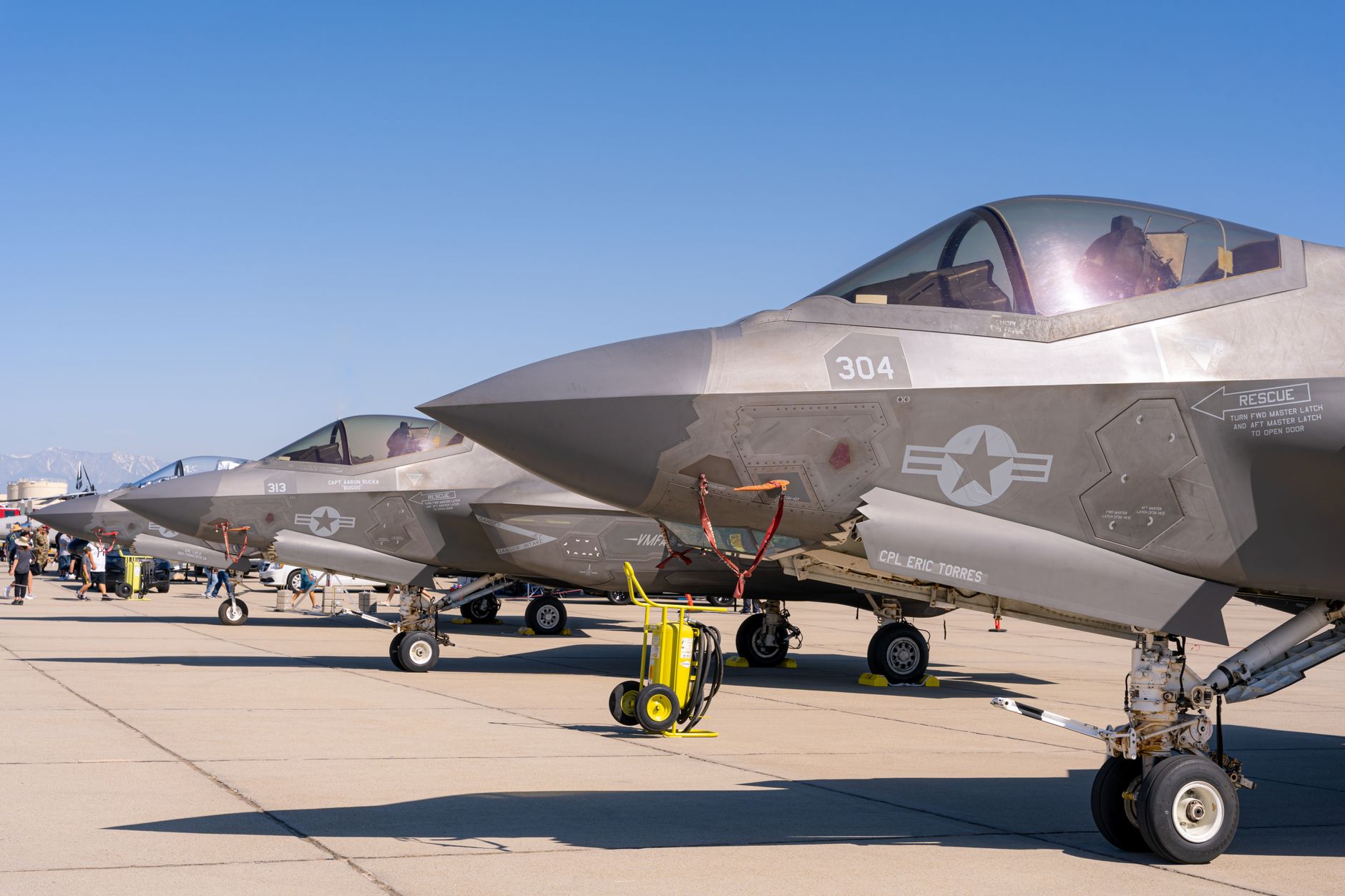
The F-35 Lightning II program tests the limits of this model. Conceived in the 1990s as a cost-saving measure, ironically, to reduce the expense of maintaining three separate tactical aircraft fleets, the program has become the most expensive weapons system in history, with lifecycle costs estimated above $1.7 trillion. The economics here reveal the strain of applying the Skunk Works mentality to mass production.
The F-35 began with the urgency narrative: American air superiority faced challenges from advanced Russian and Chinese integrated air defense systems. The response was classic Lockheed, promise breakthrough capabilities (stealth, sensor fusion, network-centric warfare) on an aggressive timeline. But the scale of the program, planned procurement of over 3,000 aircraft across multiple services and allied nations, equired manufacturing processes antithetical to the small-team, rapid-iteration model. When building twelve SR-71s, engineers can hand-fit components; when building three thousand F-35s, variation must be eliminated.
The result has been a decade of cost overruns, schedule delays, and performance compromises that expose the tension between innovation and standardization at scale. The concurrency problem, building production aircraft while still testing the design, generated massive retrofit costs as defects emerged in operational testing. The Pentagon’s patience, sustained by the great-power competition narrative, has proven remarkably durable, but it is not infinite. Each budget cycle brings renewed scrutiny of the cost-per-flight-hour, which remains significantly higher than the legacy aircraft the F-35 was meant to replace.
For Lockheed, the F-35 represents a bet that the threat perception will remain sufficiently elevated to justify the premium for technical superiority despite the erosion of the cost-plus cushion. The program has shifted toward fixed-price production lots, transferring risk back to the contractor. This marks a subtle but dangerous shift in the economic engine. If Lockheed cannot drive down manufacturing costs while maintaining performance, if the small-team innovation culture cannot scale to mass production efficiency, the margins compress. Worse, if the threat perception shifts, if China’s economic growth stalls or if military doctrine pivots toward unmanned platforms, the F-35 becomes the last of the manned fighter monopolies rather than the perpetual revenue machine its business case assumed.
Below Market Rate
Kelly Johnson maintained a compensation philosophy that would horrify modern human resources departments. He paid below prevailing engineering wages, sometimes significantly so, yet attracted the most elite talent in aerospace. The economic mechanism here was arbitrage: Lockheed captured surplus value from engineers willing to trade monetary compensation for mission density, creative autonomy, and the elimination of bureaucratic friction. This was not altruism; it was a cost structure that enabled the 143-day delivery cycle.
The modern defense labor market has complicated this equation. Silicon Valley and the commercial space sector now compete for the same physics and software talent, offering equity packages and workplace amenities that Lockheed’s government-contracting structure cannot match. The security clearance requirement, once a moat that trapped talent within the defense sector, now functions as a barrier to entry for young engineers who chafe at the lifestyle constraints and delay of investigation.
Lockheed’s response has been to emphasize the mission, the existential stakes of great-power competition, but this marketing faces diminishing returns among a generation less marinated in Cold War narratives. The economic risk is structural: if the company must pay commercial-market wages to attract talent capable of delivering breakthrough innovations, the cost-plus margin model breaks. The entire value proposition depends on delivering superior technology at acceptable cost; if the input costs (engineering talent) rise to commercial levels while the output pricing remains constrained by government budget politics, the return on invested capital declines.
Moreover, the knowledge transfer problem intensifies. The engineers who built the F-117 and shaped the F-22 are retiring, taking with them the tacit knowledge of how to manage titanium heat signatures or radar cross-section calculations. The younger engineers, however talented, lack the mentorship of the Kelly Johnson era. The company can document procedures, but it cannot document judgment: he intuitive sense of when a design is good enough and when it requires another iteration. This represents a slow depreciation of the human capital asset that constitutes Lockheed’s true competitive advantage.
The A-12 Avenger
The 1990s provide the essential bear case, a period when the existential threat evaporated and the business model nearly collapsed. In January 1991, Secretary of Defense Dick Cheney canceled the A-12 Avenger II program, a classified stealth attack aircraft being developed by McDonnell Douglas and General Dynamics. The cancellation came after $5 billion in expenditures, with the government citing cost overruns and schedule delays. More telling was the rationale: with the Soviet Union dissolving, the urgent need for a deep-penetration stealth bomber had vanished.
The A-12 cancellation sent shockwaves through the industry. It demonstrated that the government would, in fact, terminate major programs regardless of sunk costs if the threat perception disappeared. The economic assumptions that had governed defense contracting since 1945, that programs, once started, continued through inertia, proved false. McDonnell Douglas, already weakened, never recovered its footing in the tactical aircraft market and eventually merged with Boeing.
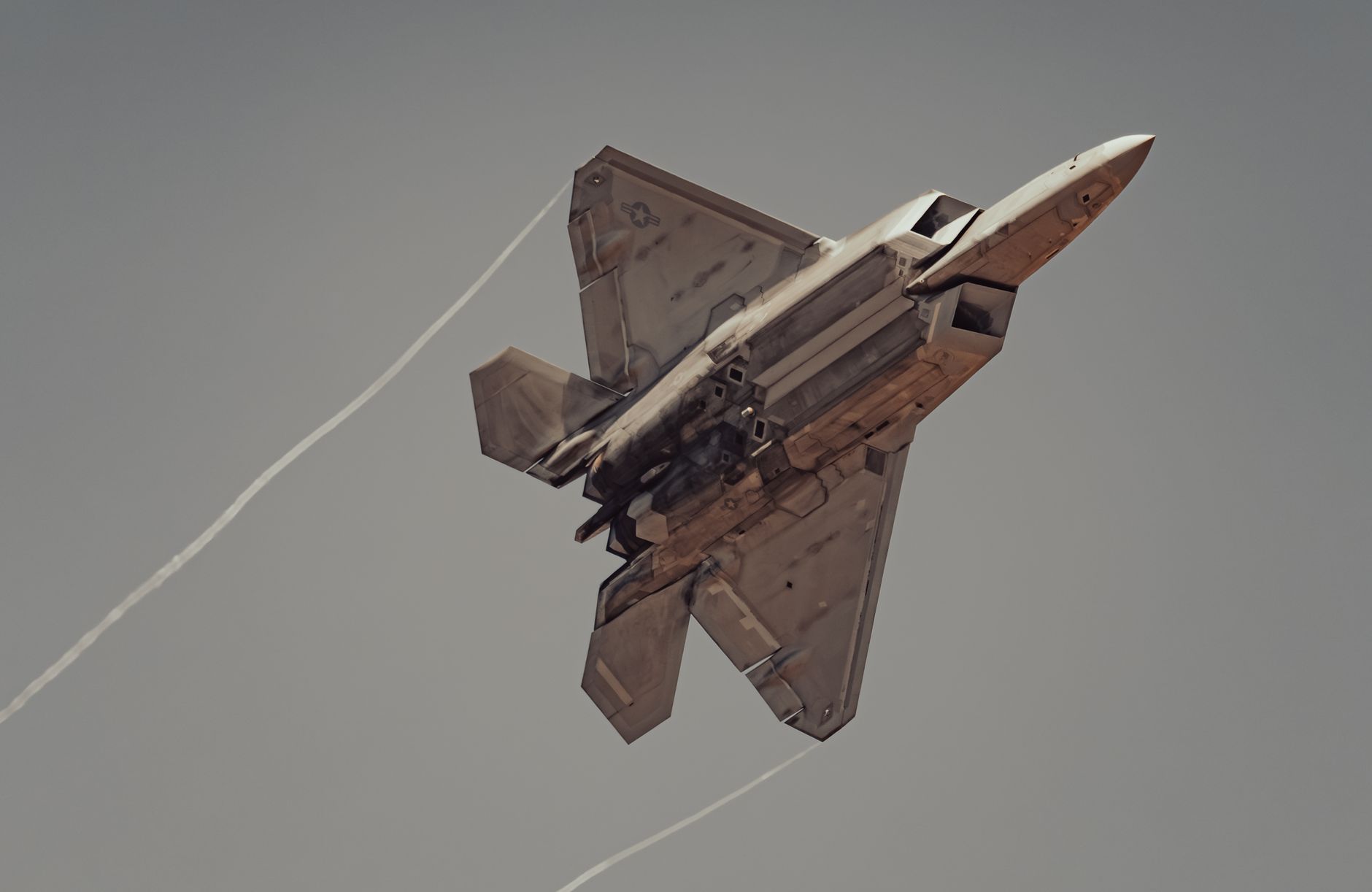
Lockheed faced similar pressures. The F-22 Raptor program, the successor to the Skunk Works’ F-117, saw its procurement numbers slashed from 750 aircraft to 187. The B-2 Spirit bomber, another Lockheed-adjacent program, was truncated at 21 aircraft instead of the planned 132. These cuts did not reflect technical failure; the F-22 represented perhaps the greatest fighter aircraft ever built. Rather, they reflected a political judgment that the absence of a peer competitor rendered such capabilities luxuries rather than necessities.
During this period, Lockheed’s revenue depended increasingly on sustainment of legacy platforms and diversification into information technology and space systems, reas with lower margins and greater competition. The company survived through the aggressive mergers that created the modern Lockheed Martin, absorbing competitors to maintain scale even as the underlying market contracted. But the Skunk Works culture suffered. The advanced development projects that had defined the division’s identity slowed. The urgent phone calls from generals demanding impossible solutions stopped ringing.
The lesson is stark. When the threat perception fades, the customer transforms. The Pentagon that funded the U-2 in months becomes the Pentagon that requires seventeen reviews to change a bolt specification. The acquisition system reasserts its bureaucratic prerogatives, demanding cost visibility, competitive sourcing, and audit trails. The small-team autonomy that enables breakthrough innovation becomes, in the eyes of congressional appropriators, evidence of insufficient oversight. Lockheed’s $50 billion revenue stream is secure only so long as the United States believes it faces an existential peer; should that belief waver, the company faces not merely budget cuts but a fundamental mismatch between its organizational capabilities and the customer’s procurement requirements.
The Clearance Cartel
The security clearance system functions as an economic barrier to entry more effective than any patent. To bid on the programs that matter, the next-generation bomber, the hypersonic cruise missile, the space surveillance architecture, a contractor must possess facilities rated for Sensitive Compartmented Information (SCI) and Special Access Programs (SAP). Obtaining these clearances requires years of government investigation, during which the company cannot bill for the work. More importantly, the clearance must attach to specific individuals; a cleared facility without cleared engineers is merely an expensive building.
Lockheed maintains thousands of cleared personnel, a workforce asset that cannot be replicated quickly. When a new threat emerges, say, a Chinese anti-satellite weapon demonstration, the government does not have time to wait for a startup to obtain clearances and build a classified facility. It must turn to the existing cleared base, which means Lockheed or its established competitors. This creates a cartel-like structure where entry is theoretically possible but practically prohibitive.
The durability of this advantage depends, however, on the classification system itself. If the government were to declassify certain technologies or shift toward commercial off-the-shelf solutions, a trend sometimes discussed in defense reform circles, the moat drains. Similarly, if the government began requiring contractors to surrender technical data rights upon contract completion, enabling third-party competition for sustainment, the thirty-year tail would amputate. These policy changes remain unlikely during periods of high threat perception, when speed and risk mitigation favor the incumbent, but they become plausible during budget crises when the political system searches for savings through industrial base restructuring.
The R&D Margin Squeeze
Technical superiority requires continuous investment in capabilities that may not generate revenue for a decade. Lockheed must fund this R&D from the margins of current production contracts, creating a cash flow tension that intensifies as shareholder pressure for returns grows. The company cannot simply bill the government for speculative research; it must absorb those costs as overhead or bid them into future proposals, risking non-competitive pricing.
This dynamic creates a subtle incentive to under-invest in the breakthrough technologies that secure the next monopoly position. If Lockheed maximizes current margins by reducing R&D expenditure, it wins the quarterly earnings battle but risks losing the next contract cycle to Northrop Grumman or a revitalized Boeing. Conversely, aggressive R&D spending depresses current returns and may trigger government audits questioning whether overhead rates are excessive.

The Skunk Works model mitigates this tension by keeping development teams small and capital-light, Kelly Johnson’s 23-engineer approach minimizes burn rate while maximizing output velocity. But as systems complexity increases, integrating software, artificial intelligence, and networked sensors: he small-team model faces limits. The F-35 required thousands of engineers, not dozens. The economic question is whether Lockheed can maintain the innovation velocity necessary to win future monopolies while managing the cost structures demanded by production-scale programs. If the next breakthrough requires the resources of the F-35 but the government will not tolerate the F-35’s cost trajectory, the model stalls.
The assumption that technical superiority will always command premium pricing assumes that the customer remains willing to pay for performance over cost. History suggests this willingness fluctuates with the geopolitical temperature. Lockheed’s $50 billion annual revenue depends on maintaining a fever pitch of threat perception sufficient to override the normal instincts of procurement bureaucrats. When that fever breaks, as it did in 1991, the company discovers that its structural advantages, its clearances, its logistics lock-in, its technical archives, amount to assets of declining value in a market that has suddenly discovered the virtues of efficiency. The circus tent in the parking lot produced wonders, but it also produced a cost structure that cannot survive peace.
The 1990s provide the historical laboratory for this proposition. Between the fall of the Berlin Wall and the September 11 attacks, the Department of Defense pursued acquisition reform with evangelical intensity. The Federal Acquisition Streamlining Act of 1994 and the Clinger-Cohen Act of 1996 imposed commercial-business practices on defense contractors, mandating open-system architectures, competitive sourcing of sustainment, and fixed-price development contracts. The implicit theory held that defense contractors had grown fat on cost-plus arrangements and required the discipline of market competition to achieve efficiency.
For Lockheed, this translated into immediate operational contradiction. The Skunk Works rules, minimal paperwork, vertical integration of design and build, isolation from bureaucratic oversight, became evidence of noncompliance. The Pentagon’s new emphasis on Earned Value Management Systems (EVMS) required granular tracking of engineering hours against schedule milestones, precisely the procedural overhead that Johnson had banned to achieve speed. When the Advanced Development Programs division proposed a rapid prototype for a stealthy unmanned air vehicle in 1996, the contract officers demanded a Work Breakdown Structure with ten thousand line items and a comprehensive Integrated Master Schedule before releasing initial funding. The 143-day prototype cycle became legally impossible.
The economic response was rational but damaging. Lockheed shifted resources from advanced development to systems integration, ggregating subsystems produced by subcontractors rather than designing breakthrough airframes in-house. The company hired McKinsey consultants to implement Lean Six Sigma, optimizing manufacturing processes for the F-16 (a mature platform) while allowing the Skunk Works to atrophy. By 1998, Advanced Development Programs employed fewer engineers than at any point since 1960, and many of those remaining had migrated to information technology contracts where the security clearance provided value but the engineering culture did not apply.
This peacetime efficiency drive created a capability gap that only became visible when threat perception returned. In 2001, when the Pentagon urgently needed a stealthy unmanned combat air vehicle, Lockheed found itself without the bench depth to execute rapid prototyping. The company had spent a decade optimizing for margin preservation and process compliance; it had forgotten how to manage the creative chaos of the circus tent. Competitors, specifically Northrop Grumman with its X-47 and later General Atomics with the Predator, captured the emerging unmanned market because they had maintained small-team rapid-prototyping capabilities while Lockheed had consolidated for efficiency.
The recovery required expensive reinvention. Lockheed had to reconstitute the Skunk Works culture essentially from archival memory, hiring back retired Kelly Johnson disciples as consultants to teach a new generation how to build aircraft without engineering reviews. The cost of this organizational amnesia was measured in lost contracts and delayed entries into growth markets like unmanned systems and hypersonics, omains where the threat perception returned before the capability did.
The episode reveals the hidden carrying cost of the Lockheed model. During periods of existential threat, the company maintains dual organizational structures: the efficient production bureaucracy and the expensive, inefficient innovation enclave. When peace arrives and shareholders demand consolidation of these redundancies, management faces an unresolvable choice. Eliminate the inefficiency, and you lose the next war; preserve it, and you suffer the quarterly earnings penalties of carrying idle capacity. The 1990s demonstrated that Lockheed’s leadership, presented with this dilemma, chose efficiency over capability, betting that the peace would be permanent. The bet was wrong, and the recovery remains incomplete. The assumption embedded in current valuations, that the company can maintain both structures indefinitely, ignores the history of what happens when the bombs stop falling.