L’Oréal: From Hair Dye to Beauty Empire
The Chemistry of Credibility
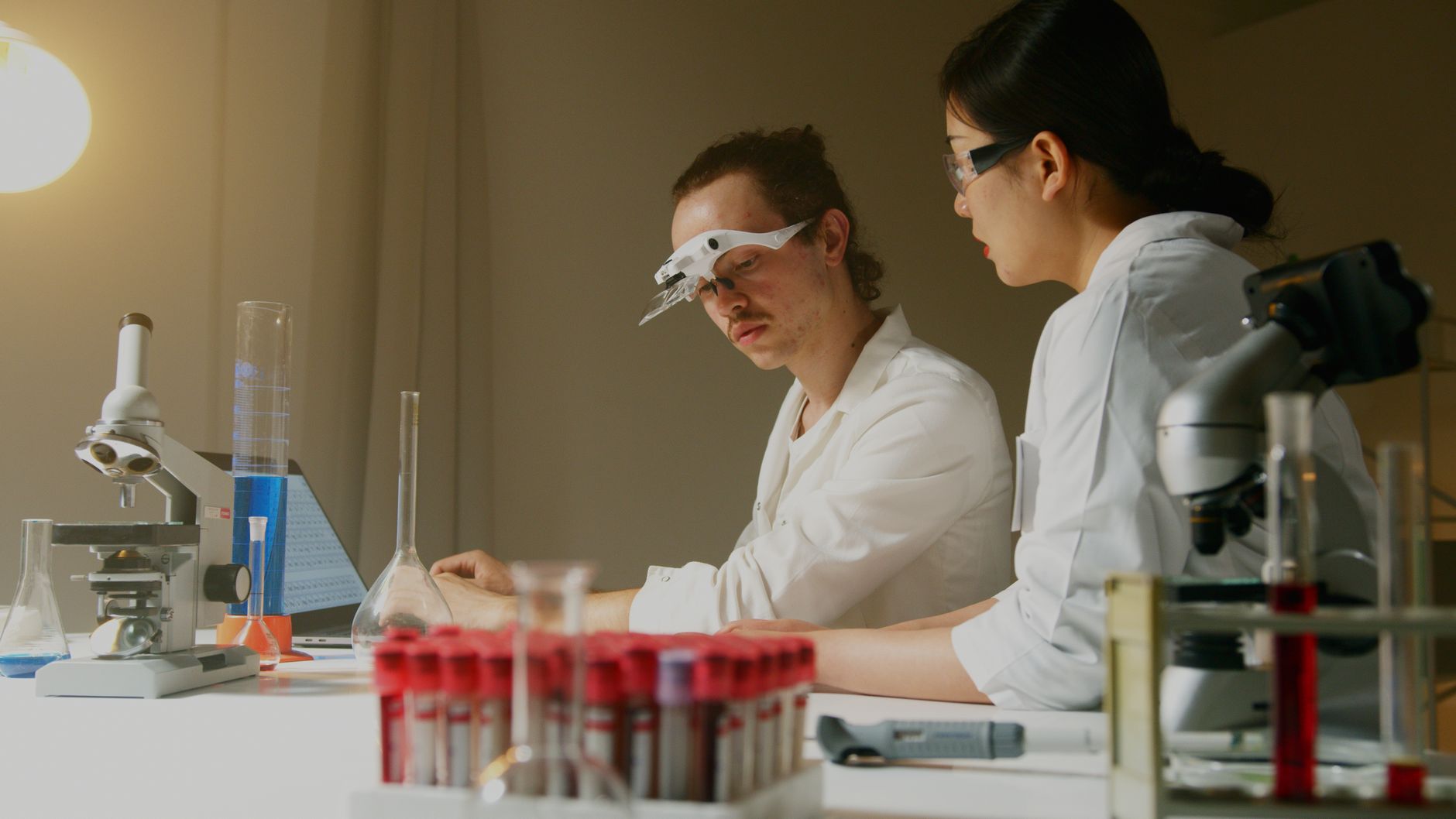
In 1909, Eugène Schueller sold hair dye to Parisian salons under the reassuringly bureaucratic name Société Française de Teintures Inoffensives pour Cheveux. The pitch was technical: his formulas did not poison customers. A century later, his company employs four thousand researchers across twenty laboratories on six continents, files five hundred patents annually, and generates €38 billion in revenue by selling the same underlying chemistry at price points ranging from €8 to €800. The transformation from safety to superiority, from “inoffensive” to “Because You’re Worth It”, is the central economic miracle of L’Oréal. It is also a high-wire act sustained by a peculiar organizational religion: the belief that mass-market and luxury products can share identical laboratories without sharing perceived value, provided the company spends €12.2 billion annually on advertising to maintain the segregation.
L’Oréal is not a beauty company. It is a manufacturing system for price-tier segmentation that happens to output mascara. Its engine converts scientific legitimacy into narrative architecture, capturing consumers across the income spectrum by repackaging shared research into differentiated brand experiences. The durability of this model depends on a single, fragile equilibrium: that consumers will continue to accept the fiction that the molecule in the drugstore tube differs meaningfully from the one in the department store jar, even as the internet makes ingredient lists transparent and e-commerce erodes the physical separation between high and low.
The Portfolio as Arbitrage
The four divisions, Professional Products (11% of revenue), Consumer Products (37%), L’Oréal Luxe (39%), and Active Cosmetics (13%), function as margin-extraction layers for the same underlying asset. A breakthrough in ceramide research at the company’s R&D hub in Saint-Ouen might appear within months in a $6 CeraVe moisturizer, a $25 Lancôme serum, and a $150 Helena Rubinstein cream. The chemistry travels; the price multiplies. This is not vertical integration in the traditional sense. It is horizontal segmentation, a strategy that treats brand equity as a membrane that can be wrapped around identical active ingredients to capture different willingness-to-pay.
The system works only if the membranes remain impermeable. L’Oréal Luxe, which doubled from €6.2 billion to €14.7 billion between 2014 and today, must remain untainted by the mass-market DNA of the Consumer Products division. If a purchaser of Armani Beauty or YSL Beauté perceives that her $80 foundation shares a supply chain with $8 L’Oréal Paris True Match, the margin collapses. The company solves this not through physical separation, oth divisions source from the same global manufacturing footprint, ut through narrative density. The Luxe brands inhabit different retail ecosystems: airport duty-free, selective perfumeries, high-end department stores. They are staffed by different sales associates, wrapped in different packaging, and marketed through different celebrity endorsements. The product itself is almost incidental to the architecture of distinction.
This creates the defining structural constraint of the enterprise: L’Oréal must acquire and scale mass-market brands (NYX, CeraVe, Ambi) to fuel top-line growth without triggering perception collapse in its luxury portfolio. The acquisition of CeraVe in 2017 brought the company explosive growth in the “active cosmetics” segment, ermatologist-recommended, science-backed, accessible. Yet CeraVe’s credibility depends on precisely the same research infrastructure that validates Lancôme’s premium positioning. The company navigates this by enforcing strict brand governance: CeraVe speaks in clinical white coats; Lancôme speaks in Parisian aspirational glamour. They never acknowledge their sibling relationship. The fiction requires constant maintenance.
The Geography of Intimacy
Most analyses of L’Oréal’s competitive advantage focus on the scale of its R&D spending, 1.1 billion annually, the largest in the industry. This misses the structural nuance. The durability of the research advantage lies not in the budget’s size but in its geographic distribution. Twenty research centers spread across the United States, Brazil, South Africa, India, China, Japan, and Europe create a form of knowledge that cannot be purchased or rapidly replicated: ethnicity-specific intimacy with hair and skin biology.
Hair texture varies by continent; sebum production responds to humidity and pollution; melanin density alters photodamage patterns. A moisturizer optimized for Scandinavian skin may fail in Mumbai. By embedding laboratories in São Paulo and Johannesburg, L’Oréal develops formulations tailored to local biology years before competitors can mount similar presence. This is not “localization” in the cosmetic sense of translating packaging. It is structural product differentiation derived from longitudinal observation of local populations. A competitor can match the €1.1 billion budget; it cannot buy the decade-long presence in Chennai that informs anti-pigmentation research for the Indian market.
This advantage compounds through the brand portfolio. A sunscreen breakthrough tested on Fitzpatrick skin types IV-VI in South Africa can migrate upward through the price tiers, appearing first in mass-market Dark & Lovely, then in luxury YSL. The research amortizes across the segmentation engine, but its origin is geographically sticky. Competitors relying on centralized European or American R&D facilities produce generic solutions that read as foreign, or worse, colonial, in emerging markets where L’Oréal has already established biological credibility.
The Thirty-Two Percent Tax
If the laboratories generate the product claims, the advertising apparatus generates the price inelasticity. L’Oréal spends 32% of sales, approximately €12.2 billion, on advertising and promotion. This is not a growth investment in the venture-capital sense; it is a maintenance cost, a tax on revenue required to prevent the portfolio’s segmentation from collapsing into commodity chaos. The company projects this ratio will hold steady at 32.1% to 32.4% over the next four years even as it targets thirty basis points of annual margin expansion. The math is precarious.
The tension is straightforward: if advertising ROI declines, if TikTok CPMs inflate, if influencer markets saturate, if television’s reach continues to fragment, L’Oréal must either accept declining brand salience or increase spend beyond the sustainable threshold, compressing the 24.5% EBITDA margin. The margin expansion thesis, which underpins the company’s valuation premium, assumes that media efficiency will remain constant or improve even as the industry shifts from broadcast television to digital micro-targeting. This assumption is load-bearing. If the cost to maintain the fiction of distinction between CeraVe and Lancôme rises faster than pricing power, the entire model stalls.
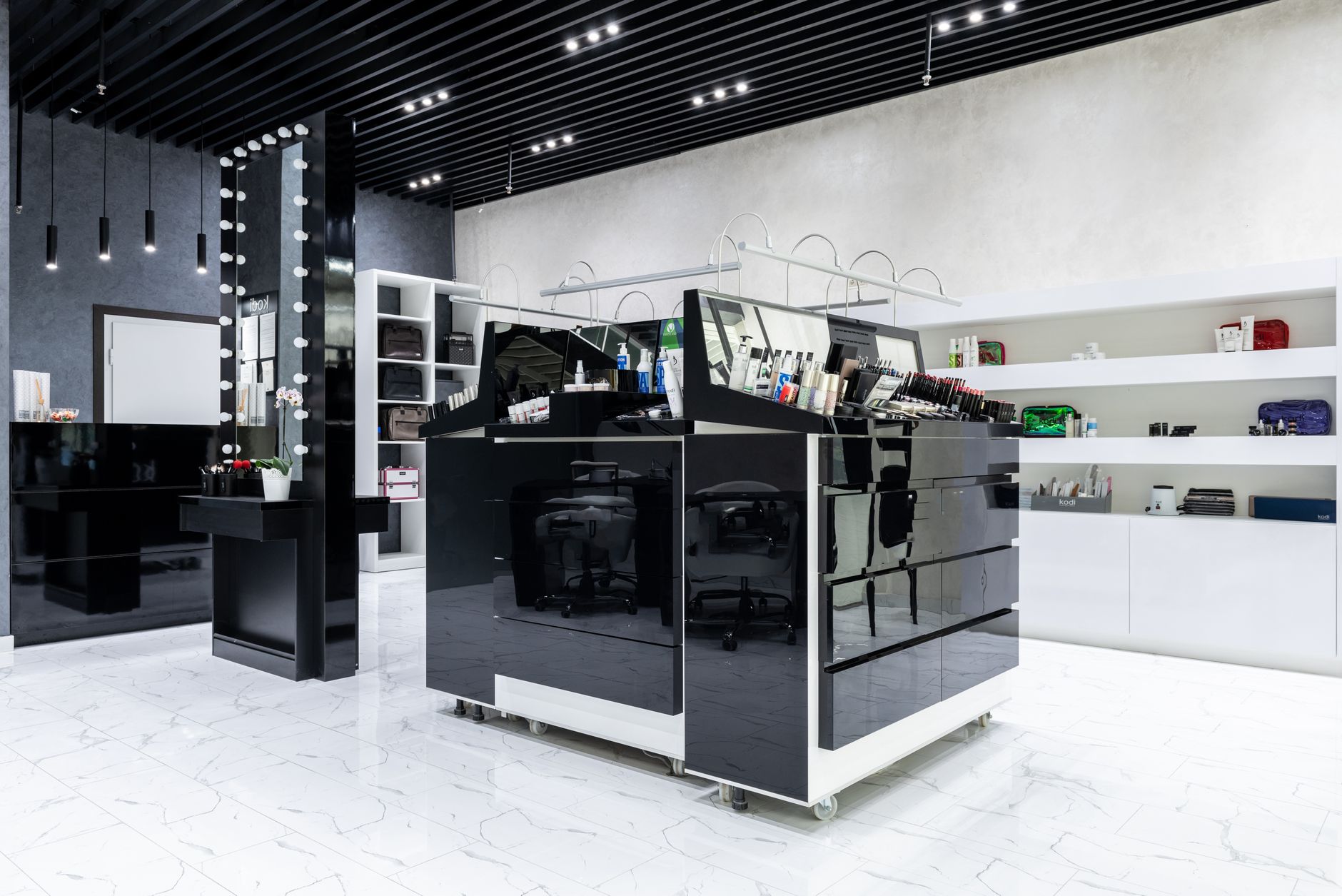
Historically, L’Oréal has managed this through scale advantages in media buying and creative production. When you spend €12 billion annually, you command attention from agencies and platforms that smaller competitors cannot match. But the digital transition threatens this moat. On Amazon or Tmall, brand storytelling gives way to algorithmic search optimization and price comparison. The thirty-two percent tax buys less insulation in e-commerce than it did in the department store era. The company’s response, building “brand.com” direct-to-consumer sites and investing in “social commerce”, accepts lower margins in exchange for data ownership and narrative control. It is a defensive maneuver disguised as innovation.
Buying Time
The L’Oréal Luxe division’s growth from €6.2 billion to €14.7 billion since 2014 reveals an uncomfortable truth: the company’s headline growth is largely acquisition-driven, not organic. The portfolio expanded through the ingestion of YSL Beauté, Armani Beauty, Urban Decay, IT Cosmetics, and Azzaro, rands purchased at premium valuations and accelerated through L’Oréal’s distribution machinery. Organic growth in the legacy divisions hovers between 2% and 4% annually. Without the acquisition pipeline, L’Oréal is a mature, low-growth chemicals company wearing mascara.
This dependence creates fragility. The M&A market for attractive beauty assets has tightened; valuations for “clean” and “indie” brands have inflated beyond disciplined multiples; regulatory scrutiny of large transactions has increased. If the acquisition pipeline slows, growth reverts to the underlying 3-4% rate of population and GDP expansion, nsufficient for a company priced as a compounder. More critically, the organizational capability to integrate acquired brands without diluting their positioning is a finite resource. Each new acquisition, CeraVe, NYX, Atelier Cologne, places strain on the company’s culture, supply chain, and retail relationships.
Here, culture functions as an economic variable, not a soft factor. L’Oréal’s ability to acquire a founder-led brand, extract its growth potential, and fold it into the corporate infrastructure without destroying the “founder magic” is a manufacturing process as real as any assembly line. It requires maintaining separate P&Ls, distinct creative teams, and often contradictory brand narratives under one roof. When this integration fails, when a acquired brand loses its founder, its retail partnerships, or its product integrity, the acquisition premium is written off. The company’s recent success in integrating dermatological brands (CeraVe, La Roche-Posay) masks the risk that future targets may resist corporate assimilation, particularly as consumers fetishize “authenticity” and “independence” in beauty.
The Digital Mirror
E-commerce now represents 30% of group revenue, and over 50% in China. This shift carries risks that transcend the obvious fulfillment costs. Online, the physical separation between L’Oréal’s price tiers collapses. A consumer can open two browser tabs and compare the ingredient lists of a $9 L’Oréal Paris Revitalift and an $89 Lancôme Rénergie. She will discover they share identical active compounds in similar concentrations. The thirty-two percent advertising tax purchases less protection in an environment where INCI lists (International Nomenclature of Cosmetic Ingredients) are transparent and review aggregators democratize efficacy claims.
The company’s response, emphasizing “education” and “content” online, attempts to re-narrativize the chemistry. But the risk remains: if consumers conclude that the $80 premium pays primarily for scent, packaging, and celebrity spokespeople rather than superior formulation, the segmentation arbitrage fails. The low return rates in cosmetics (unlike apparel, where e-commerce returns hit 30%) provide temporary margin relief, but the long-term threat is pricing convergence. If e-commerce becomes the primary channel, and if price transparency drives consumers toward the “good enough” option at the bottom of the portfolio, L’Oréal becomes Procter & Gamble with higher overhead.
The Fragility of Scientific Romance
At the foundation of the €38 billion edifice rests a single assumption: that consumers will continue to perceive cosmetics as categories where brand-mediated scientific claims justify exponential price differences. This is a romance, not a law. The rise of “skinfluencers,” ingredient transparency apps, and private-label alternatives (The Ordinary, Good Molecules) tests the proposition that L’Oréal’s R&D spend creates defensible product superiority. If consumers conclude that a $7 niacinamide serum performs identically to a $70 one, the company’s ability to maintain four price tiers from the same laboratory collapses.
The risk is not disruption by technology but erosion of credulity. L’Oréal’s patents protect specific formulations, but they do not protect against the consumer realization that “patented technology” often describes marginal improvements in texture or stability rather than efficacy. The 517 patents filed in 2021 are valuable as marketing assets, proof of seriousness, but they are not moats against generic competitors offering similar actives at commodity prices.
L’Oréal endures because it has built an organization capable of maintaining multiple contradictory truths simultaneously: that science is universal (the shared R&D) and that luxury is singular (the segmented brands); that the company is a laboratory (the 4,000 researchers) and that the company is a dream factory (the €12 billion in advertising). The machine runs on the conversion of credibility into cash flow, extracting margin at every point where consumer aspiration meets chemical reality. It will continue to run until the day consumers look past the packaging and see the same molecule staring back at them from every shelf. On that day, the thirty-two percent tax will come due, and the segmentation engine will grind to a halt. Until then, the patents accumulate, the acquisitions digest, and the laboratories hum across six continents, manufacturing distinctions that exist primarily in the mind, ut that pay dividends in euros.
The machinery of digestion is as precise as the chemistry itself. When L’Oréal acquired CeraVe in 2017 for an estimated $1.3 billion, the brand was generating roughly $300 million in annual sales, primarily in American drugstores and dermatology offices. By 2023, CeraVe had crossed $2 billion in global sales, becoming the company’s fastest-growing brand. This was not product innovation; it was distribution arbitrage. CeraVe’s formulas, developed originally by dermatologists in 2005, remained essentially unchanged. What changed was the piping: L’Oréal plugged the brand into its Chinese e-commerce infrastructure, its European pharmacy relationships, and its Latin American distribution web. The “acquisition” was actually a geographic acceleration, extracting value from pre-existing research by changing the addressable market.

This is the template for L’Oréal Luxe’s expansion. The division’s doubling in size since 2014 reflects not organic discovery but the purchase of brands with established positioning, YSL Beauté, Armani Beauty, Urban Decay, IT Cosmetics, Azzaro, and their injection into a global capillary system that independent owners cannot replicate. The economic logic is impeccable: buy an asset at 4-6x sales, apply L’Oréal’s media buying scale (reducing customer acquisition costs by 20-30% through centralized purchasing), expand retail presence from 20 markets to 130, and sell later at 8-10x sales. The value creation occurs in the transfer, not the laboratory.
Yet this model consumes organizational capacity at an accelerating rate. Each acquisition requires maintaining the “founder narrative” while replacing founder decision-making with corporate governance. CeraVe succeeded because its clinical, dermatologist-endorsed positioning aligned with L’Oréal’s existing “Active Cosmetics” infrastructure, a Roche-Posay, Vichy, SkinCeuticals. The brand could slot into pre-existing pharmacy relationships and regulatory frameworks without requiring new storytelling muscles. But not all acquisitions offer such clean fits.
Consider NYX Professional Makeup, acquired in 2014 for a reported $500 million. The brand was built on “professional-grade” color cosmetics sold at mass-market prices, distributed through beauty supply stores and digital channels with a heavy reliance on social media authenticity. L’Oréal’s initial strategy, expanding NYX into traditional retail while maintaining its “edgy” digital persona, created channel conflict. The brand’s core consumer, accustomed to hunting for products in specialized retailers, found NYX displays in mainstream drugstores alongside L’Oréal Paris, diluting the professional positioning. Growth stalled; NYX became a cautionary tale of over-extension. The company has spent subsequent years retreating NYX from general retail, refocusing on e-commerce and professional channels, effectively reversing the “L’Oréalization” process to preserve brand equity. The attempt to apply the standard distribution playbook destroyed value rather than creating it.
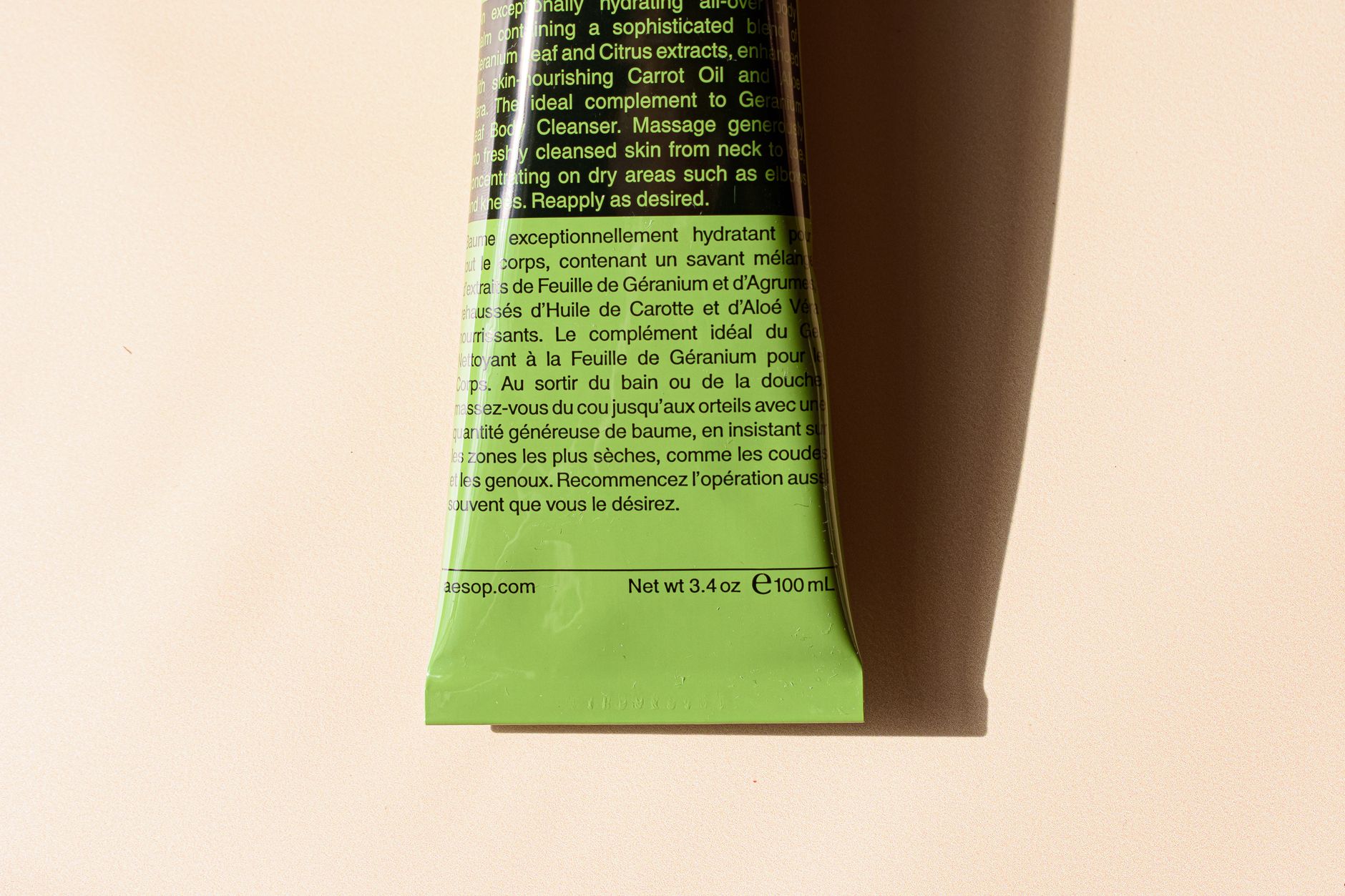
This tension reveals the finite nature of L’Oréal’s integration capacity. The organization can absorb perhaps two to three major acquisitions annually without experiencing cultural indigestion. Each integration requires dedicated “brand guardians” who police the boundary between corporate efficiency and brand distinctiveness. When L’Oréal lost the bidding war for Aesop to Natura &Co in 2023 (paying an estimated $2.5 billion), the failure was not merely financial. Aesop’s positioning, apothecary aesthetic, literary marketing, anti-corporate retail design, would have required L’Oréal to maintain a brand that explicitly rejects the very scale advantages the company provides. Winning the bid might have been more dangerous than losing it; the integration costs, measured in brand dilution and organizational distraction, could have exceeded the purchase price.
The Chinese Pricing Mirror
The geographic expansion that fuels acquisition returns faces its most complex test in China, where L’Oréal generates 20% of global revenue and where over 50% of sales occur online. The Chinese market embodies the company’s structural tensions in exaggerated form: it is simultaneously the largest luxury market (supporting Lancôme’s premium pricing) and the most brutally price-transparent e-commerce environment (where consumers routinely screenshot ingredient lists for comparison on Xiaohongshu).
In China, L’Oréal’s segmentation strategy relies on a delicate social architecture. The luxury brands, Lancôme, Helena Rubinstein, YSL, must remain aspirational, positioned as rewards for professional success. Simultaneously, the mass-market brands, L’Oréal Paris, Maybelline, NYX, must capture the entry-level consumer without appearing déclassé. The company navigates this through platform segregation: luxury dominates Tmall Luxury Pavilion and Douyin’s premium channels, while mass plays on standard Tmall and Pinduoduo (though the latter remains tactically avoided to prevent downmarket perception).
But the Chinese consumer’s path to purchase increasingly bypasses brand storytelling. Live-streaming commerce, dominated by influencers like Li Jiaqi (the “Lipstick King”), reduces brand equity to discount depth. When Li Jiaqi promoted L’Oréal Paris products during Singles’ Day 2021, offering prices lower than those available on the brand’s own Tmall flagship store, consumers revolted, ot at the discounts, but at the perceived betrayal of brand value. L’Oréal was forced to issue refunds and public apologies, revealing the fragility of pricing power in an environment where intermediaries control the narrative.
More structurally concerning is the rise of domestic competitors, Perfect Diary, Florasis, Winona, that combine local cultural fluency with supply chain agility. These brands lack L’Oréal’s R&D depth but compensate through rapid formulation iteration and hyper-localized marketing. Winona, a dermatological brand targeting sensitive skin in polluted urban environments, has captured significant share in the “active cosmetics” segment by emphasizing Traditional Chinese Medicine ingredients and domestic clinical testing. L’Oréal’s response, accelerating the launch of its own TCM-inspired lines, risks appearing inauthentic, the corporate appropriation of cultural symbols.
The margin compression in China is not merely a channel issue; it is a pricing architecture crisis. The same consumer who buys Lancôme Génifique in Shanghai may use CeraVe cleanser, but she expects the price ratio between them to reflect a 10x differential in value. When social media reveals that both contain similar concentrations of hyaluronic acid and ceramides, the ratio becomes harder to defend. L’Oréal’s Chinese strategy increasingly depends on “super premiums”, limited editions, artist collaborations, and experiential retail, that justify prices through scarcity rather than chemistry. This shifts the business toward fashion-like volatility, where misjudged collaborations destroy quarters rather than merely slowing growth.
The Professional Channel and the Screen
The Professional Products division, hair care sold exclusively through salons, represents L’Oréal’s most defensible moat and its most vulnerable legacy asset. At €4.4 billion, it is the smallest division, growing at only 2% annually since 2014, but it serves a critical economic function. Salon distribution creates professional endorsement that filters down to consumer purchases; the hairdresser recommending Kérastase becomes the influencer for the consumer who later buys L’Oréal Paris Elvive. The channel provides credible expertise in an era of skepticism toward digital advertising.
Yet the salon channel requires physical infrastructure, training programs, exclusive distribution agreements, inventory management, that e-commerce cannot replicate. During the COVID-19 pandemic, when salons closed globally, L’Oréal faced an existential channel conflict. Consumers, unable to visit stylists, purchased professional-grade products online for home use. The company was forced to temporarily relax exclusivity agreements, allowing Amazon and direct-to-consumer sites to carry Kérastase and Redken. When salons reopened, the genie could not be fully returned to the bottle. Consumers had discovered they could buy the “professional” product without the professional markup, and salons, facing rent pressure, began demanding stricter exclusivity enforcement.
This creates a zero-sum tension. To grow e-commerce revenue (the 30% target), L’Oréal must make professional products available online. To maintain salon relationships (the endorsement engine), it must restrict online availability. The compromise, salon-exclusive formulas and retail-available variants, risks exposing the segmentation arbitrage. If the Kérastase sold in salons is chemically identical to the “salon-exclusive” version now available on Amazon, the professional channel loses its authority. If it is genuinely different, the company must maintain dual supply chains for marginal volume, eroding the margin expansion thesis.
Travel retail, the third leg of the distribution stool, faces similar pressure. Airport duty-free stores, historically high-margin environments where captive consumers paid premium prices for luxury fragrances, have been hollowed out by e-commerce price transparency and the decline of business travel. L’Oréal’s response, pushing “travel exclusives” and oversized formats, relies on the continued psychology of impulse purchase in transit. But as Chinese consumers, the primary customers for travel retail luxury, become accustomed to live-streaming discounts at home, the 30% markup over domestic prices becomes harder to sustain. The channel that once provided pure margin now requires subsidy.
The Transparency Trap
Beneath these channel tensions lies a more fundamental threat to the segmentation engine: the democratization of chemical knowledge. The rise of “skinfluencers,” dermatologist YouTubers, and ingredient-analysis apps like Think Dirty and Yuka represents a structural shift in information asymmetry. For decades, L’Oréal maintained pricing power by controlling the narrative around efficacy, ranslating laboratory claims into consumer benefits through advertising. Today, a teenager with a smartphone can compare the INCI list of a $150 Lancôme serum against a $20 The Ordinary product, identify the shared active ingredients, and conclude that the 750% price premium pays for fragrance and packaging.
This is not merely a marketing challenge; it is an existential threat to the multi-tier model. If consumers conclude that the “science” justifying the luxury tier is largely rhetorical, hat the peptide complex in Lancôme is biochemically equivalent to the peptide complex in L’Oréal Paris Revitalift, merely concentrated differently or suspended in a more pleasant texture: he brand segregation collapses. The segmentation engine requires that consumers accept the premise that price correlates with performance in a linear fashion. Ingredient transparency reveals a step-function reality: adequate performance is cheap; marginal improvements are expensive; luxury is primarily sensorial.
L’Oréal’s defense has been to emphasize “galenic” science, the study of texture, penetration, and formulation stability, arguing that the delivery system matters as much as the active ingredient. This is scientifically valid but narratively complex. It requires educating consumers about emulsion technology and molecular encapsulation, topics that resist the thirty-second TikTok format. The company has invested in “skin science” content, partnering with dermatologists to explain formulation differences, but this educates consumers toward skepticism as often as toward loyalty.
The acquisition of “active cosmetics” brands, CeraVe, La Roche-Posay, SkinCeuticals, represents a strategic hedge against this transparency. By owning the brands that clinical professionals actually recommend, L’Oréal captures the consumer who has learned to ignore advertising and trust INCI lists. But this creates a new tension: if the dermatologist-recommended brand (CeraVe) and the luxury brand (Lancôme) share the same parent company and similar ingredients, the dermatologist’s endorsement becomes suspect. The company must maintain strict firewalls between its “clinical” and “luxury” divisions, ensuring that dermatologists never feel they are shilling for the same corporation that pays celebrities to sell perfume.
The Organizational Architecture of Separation
Maintaining these firewalls is not a marketing task; it is an organizational design problem that consumes significant management bandwidth. L’Oréal operates as a holding company of fiefdoms. The Consumer Products division headquarters in Clichy, France, functions with different incentive structures, different creative agencies, and different retail relationships than the L’Oréal Luxe division based in the same city. The “Active Cosmetics” division maintains separate R&D facilities in Lyon, physically distinct from the main Saint-Ouen research center, to preserve the clinical credibility of its brands.
This separation is expensive. It requires duplicate supply chain teams, redundant regulatory compliance staff, and parallel marketing organizations. When L’Oréal launches a new sunscreen, the Consumer Products team develops the mass-market version, the Active Cosmetics team develops the dermatological version, and the Luxe team develops the prestige version, ften simultaneously, often from similar base formulas, but with strict rules preventing cross-contamination of positioning. The company essentially pays three times to develop one product, then charges three price points for it.
The economic justification is that without this separation, the portfolio would collapse to the lowest common denominator, uxury margins would compress to mass-market levels as consumers traded down. But the cost of maintaining the separation is rising. As e-commerce platforms aggregate demand and algorithmic recommendations transcend brand boundaries, keeping the silos separate requires active suppression of information. The company must ensure that a consumer searching for “L’Oréal” on Amazon sees only the mass-market results, while the luxury customer searching for “Lancôme” never sees the shared corporate parentage. This requires sophisticated (and expensive) platform management and legal enforcement of trademark boundaries.
The R&D Amortization Clock
The segmentation engine ultimately depends on the continuous generation of new chemical claims to justify new price tiers. The €1.1 billion R&D budget must produce annually not just patents, but narratives, ew molecules, new delivery systems, new skin biology insights that can be packaged as breakthroughs. The 517 patents filed in 2021 represent this narrative raw material. But the lifecycle of cosmetic “innovation” has shortened. A new active ingredient, say, a novel retinoid derivative, might provide competitive advantage for eighteen months before competitors formulate equivalents, and for three years before the consumer narrative moves on to the next “hero ingredient.”
This creates an amortization problem. The cost of developing and patenting a new molecule must be recovered before the narrative expires. In the luxury tier, where prices can absorb R&D costs quickly, this is manageable. In the mass market, where margins are thinner, the company must rely on volume and rapid global rollout. But as e-commerce accelerates the speed of competitive imitation, Chinese manufacturers can replicate trending ingredients within months, the window for premium pricing narrows.

L’Oréal’s response has been to move “upstream” in biology, investing in microbiome research, epigenetics, and personalized skincare, ields where the complexity provides longer-lasting narrative protection. The company’s research into skin senescence (cellular aging) and the skin’s neural connections (the “neurocosmetics” trend) produces claims that are harder for competitors to replicate quickly and harder for consumers to verify independently. If L’Oréal can establish that its luxury products modify gene expression while its mass products merely moisturize, the price segregation holds. But this requires that consumers accept increasingly abstract scientific claims, laims that, if scrutinized, might reveal more marketing than mechanism.
The Enduring Bet
The company persists because it has built an immune system against skepticism. When ingredient transparency threatens the mass-luxury divide, L’Oréal acquires transparency-native brands (CeraVe) and absorbs the threat. When e-commerce threatens salon channels, it develops “click and collect” services that preserve professional intermediation. When Chinese competitors emerge, it buys local brands (though regulatory restrictions now limit this) or clones their positioning. The organism adapts rather than dying.
But the central bet remains unchanged: that consumers will continue to accept manufactured distinction as natural hierarchy. That they will pay €80 for a cream and €8 for a lotion containing the same water, glycerin, and silicones, because the €80 version comes in a heavier glass jar and references Parisian laboratories. That they will believe the €1.1 billion R&D spend creates value they cannot see in the ingredient list. That the thirty-two percent advertising tax buys not just attention but faith.
This bet has paid off for 115 years. It has survived wars, recessions, and the internet’s first wave of transparency. Whether it survives the second wave, here AI-powered comparison tools instantly parse formulation equivalence, where Gen Z consumers view brand loyalty as a character flaw, and where “dupe” culture celebrates exact replication of luxury products at commodity prices, emains the open question. L’Oréal’s segmentation engine is a marvel of economic engineering, but it runs on a fuel of perceived difference that grows more expensive to refine with each passing year. The laboratories will continue to hum, the patents to accumulate, and the acquisitions to digest. Whether they continue to pay dividends in euros depends on whether the human tendency to see distinction where chemistry shows sameness proves as durable as the molecules themselves.
The erosion is already visible in the algorithmic feeds where comparison culture metastasizes. When a TikTok creator overlays the INCI lists of La Roche-Posay’s Cicaplast Balm and Lancôme’s Advanced Génifique, highlighting the shared panthenol and glycerin bases while noting the 1200% price differential, the comment section becomes a referendum on brand value. These videos accumulate millions of views not because they reveal trade secrets, L’Oréal discloses its ingredients voluntarily, but because they frame the company’s own transparency as evidence of deception. The consumer who once trusted the Lancôme counter’s white coats now trusts the fluorescent-lit bathroom mirror where a teenager holds two pumps of beige liquid to the camera and declares them identical.
This is not merely a communications crisis; it is a repricing event. When The Ordinary sells a 10% niacinamide serum for $6 and L’Oréal Paris sells a comparable concentration for $18, the company can justify the premium through texture, fragrance, and packaging: he “galenic” advantage. But when SkinCeuticals sells a 10% niacinamide for $78 under the Active Cosmetics division’s clinical authority, the comparison becomes unsustainable. The dermatological endorsement that validates the medical premium cannot survive direct visual comparison with the commodity version in a split-screen video. L’Oréal’s response, emphasizing pH balancing, molecular weight, and penetration studies, requires a level of biochemical literacy that the platforms’ attention economy actively discourages. The thirty-two percent advertising tax was designed to purchase the gaze; it cannot purchase the suspension of disbelief once the gaze fixes on chemical equivalence.
The compounding risk lies in the company’s own portfolio breadth. No other beauty conglomerate offers such rich material for internal comparison. A creator can construct an entire content series using only L’Oréal-owned brands: CeraVe versus La Roche-Posay versus SkinCeuticals versus Lancôme, each tier revealing diminishing returns on each euro spent. The segmentation engine, designed to capture consumers as they ascend income brackets, instead provides a roadmap for trading down without trading off. The consumer who begins with CeraVe and learns to read labels does not graduate to Lancôme; she graduates to The Ordinary, or to private label, having learned that the peptide she sought was never proprietary, only the perfume surrounding it.