Lululemon: How Friction Built an Empire
Canada Is the Laboratory, Not the Limit
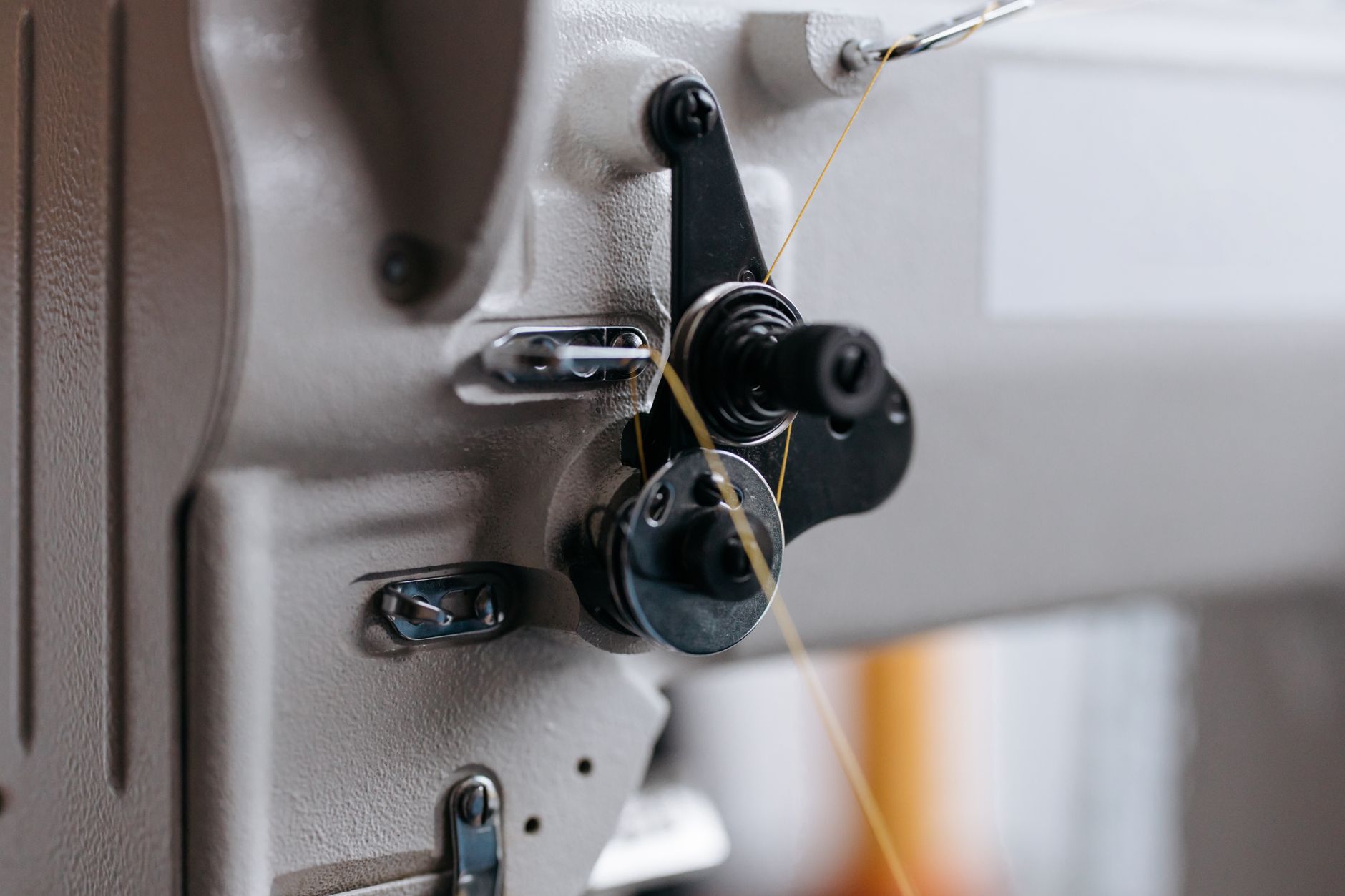
In 1998, Chip Wilson invested $160,000 in four Japanese flat-seam knitting machines, not because he saw an apparel empire, but because he saw friction. Women leaving yoga classes in Vancouver complained that their cotton pants bunched, stretched, and turned see-through when bent. Wilson, a serial entrepreneur who had already sold one technical apparel business, recognized that the solution was not aesthetic but mechanical: fabric that wicked sweat, retained shape, and eliminated chafing through seamless construction. He did not hire a celebrity to validate the product. He placed the pants on the bodies of local instructors, the human infrastructure of a growing wellness culture, and let function speak.
Twenty-five years later, that mechanical solution has compounded into a $10 billion enterprise with 55% gross margins, a financial profile that sits closer to luxury than to athletics. The mechanism of this compounding is geometric expansion from a deceptively productive core. Lululemon Athletica generates its highest sales per square foot not in Manhattan or Shanghai, but in Canada, where retail density per capita is lower than in the United States and brand penetration is nearly saturating. This is the critical, often misunderstood, foundation of the investment thesis. Canada functions as a laboratory proving that in concentrated markets with high brand equity, Lululemon can extract productivity rates that dwarf conventional apparel retail. The strategy assumes this laboratory scales, hat the intimacy of the Vancouver yoga studio can be replicated in Beijing, that the technical specifications of Luon fabric translate across cultures, and that the company can absorb lower-productivity geographic markets (the United States, Europe, and China) while maintaining pricing power derived from a community-based brand architecture.
The economic engine is a vertically integrated direct-to-consumer model, stores plus e-commerce, negligible wholesale, that captures full margin and controls inventory with precision. But the fuel is category ownership. Lululemon does not compete with Nike or Adidas on their terms; it owns women’s technical athletic apparel, a segment the legacy giants cannot aggressively pursue without cannibalizing their masculine heritage. The question is whether this ownership, built on grassroots authenticity and product function, can survive the geometry of global expansion.
Why Wholesale Is a Prison Lululemon Avoided
The apparel industry’s prevailing structure is a compromise. Brands design product, manufacture it through third-party contractors, then push inventory through wholesale partners, department stores, specialty retailers, Amazon, who control pricing, placement, and customer data. This model generates volume but erodes margin through channel discounts, markdown allowances, and inventory spillover. When product misses, it does not vanish; it appears at off-price retailers, training consumers to wait for sales and destroying brand equity.
Lululemon’s structural purity lies in its rejection of this compromise. The company owns the entire stack: design, raw material sourcing, manufacturing partnerships, and retail distribution. There is no Nordstrom rack clearing last season’s Align leggings, no Amazon channel undercutting store pricing. This vertical integration is not merely operational efficiency; it is a defensive moat that preserves the 55% gross margin. Competitors like Nike and Adidas are currently attempting to retreat from wholesale toward direct-to-consumer models, but they carry the burden of legacy obligations, xisting contracts, distributor relationships, and segmented product lines designed for multi-channel distribution. They cannot pivot without revenue collapse.
Lululemon’s DTC purity enables something rarer than margin: inventory discipline. Because the company controls its own shelves and website, it can adjust production in real time, avoiding the obsolescence that plagues fashion cycles. A missed color palette or silhouette at Lululemon results in a temporary gap, not a margin-destroying write-down at TJ Maxx. This discipline is only possible because the company never opened the wholesale door. Once opened, the door cannot be closed without financial trauma. Lululemon’s avoidance of wholesale is therefore a structural advantage that competitors cannot replicate without dismantling their existing revenue bases.
The Gender Arbitrage Nobody Else Can Make
The most underappreciated competitive barrier in Lululemon’s model is demographic, not technological. Approximately two-thirds of Nike’s revenue derives from men’s product and footwear; Adidas carries similar masculine coding in its brand heritage. These companies were built on male professional sports, Jordan, Ronaldo, the World Cup, and their cultural DNA is optimized for athletic performance defined by competition and speed. Pivoting aggressively toward women’s lifestyle and wellness would require them to abandon the very authenticity that commands premium pricing in their core market.
Lululemon occupies the inverse position. Sixty-six percent of its revenue comes from women’s apparel, and the brand’s narrative, self-empowerment, mindfulness, community, resonates within a wellness culture that treats athletics as personal practice rather than competitive spectacle. This is not a marketing veneer; it is categorical ownership. When a woman purchases $128 leggings for yoga or running, she is not buying generic athletic wear; she is buying into a technical and cultural specification that Nike and Adidas cannot match without confusing their male customer base.
This gender arbitrage creates pricing power. Competitors entering the women’s space must build brand equity from zero or risk alienating their core male consumers. Lululemon, conversely, faces no such heritage constraint in its primary category. The durability of this advantage depends on the company maintaining its functional differentiation, solving real problems of fit, friction, and aesthetics, while competitors remain structurally blocked by their own histories.
Grassroots Does Not Travel Well
The central tension in Lululemon’s expansion strategy is not manufacturing or margin, but intimacy. The company’s brand architecture relies on local ambassador programs, oga instructors, runners, and trainers who embed Lululemon in community fabric without centralized celebrity endorsement. This distributed model generates authentic loyalty and word-of-mouth velocity that advertising cannot buy. It also does not scale geometrically.
As the company approaches 655 stores globally, with aggressive expansion into China and Europe, the ambassador model faces entropy. A Vancouver store can deeply know its fifty local instructors; a Beijing store serving a market of twenty million cannot replicate that density of relationship. The risk is not merely that the marketing becomes less efficient, but that the brand loses the authenticity premium that justifies its price point. If Lululemon becomes just another international apparel brand using generic influencer marketing, it surrenders the differentiation that protects its margins.

China, where revenue approaches $1 billion and growth rates exceed 20%, is the critical test. Nike is ten times larger in China, suggesting vast upside, but also indicating that Lululemon must build community authenticity in a market where yoga culture is less indigenous and where state sentiment toward Western wellness brands fluctuates. The assumption that grassroots intimacy can survive global replication is the weakest link in the expansion thesis. Community, unlike fabric, cannot be manufactured to specification.
The Productivity Gradient
Geographic expansion introduces a mathematical challenge. Canada’s retail environment, lower square footage per capita, higher brand saturation, generates structurally higher sales productivity than the United States. As Lululemon expands into lower-density American markets and into international territories with unknown consumer behavior, it confronts a productivity gradient. Each new market, on average, generates lower revenue per square foot than the Canadian core.
The investment thesis assumes that volume offsets this gradient. If the company can achieve sufficient scale in China and the United States, the aggregate margin can be maintained even if per-unit productivity declines. This requires that pricing power holds in lower-productivity markets: questionable assumption. In China, where local competitors like Maia Active and foreign fast-fashion giants compete aggressively, Lululemon has not yet proven it can command North American price points at scale. If geographic mix shift drives margin compression toward 50% or below, the equity narrative of premium retail collapses.
The gradient also applies to store economics. The company’s Canadian stores function as showrooms of efficiency; its American stores, particularly in secondary markets, face higher rent burdens and lower conversion rates. The model assumes that brand equity, transferred through community activation, will normalize productivity across geographies. But retail history suggests that productivity is local. Abercrombie & Fitch once generated Canadian-level productivity in its American flagship stores; when it expanded into malls with lower demographic alignment, the margin structure unraveled. Lululemon is betting that its technical differentiation prevents this geographic entropy.
Men’s: The Adjacent Market That Could Capsize the Core
Management has targeted doubling men’s revenue, which currently represents a fraction of sales and suffers from only 11% unaided awareness in North America. The strategic logic is sound: capture the male partners of existing female customers, leverage existing real estate, and justify higher square footage in new locations. The execution risk is brand dilution.
Women’s athletic apparel and men’s operate on different cultural frequencies. The technical requirements overlap, but the retail environment does not. Men’s athleisure requires different store layouts, different marketing tonality, and different community ambassadors. If Lululemon over-rotates toward men, allocating floor space, inventory dollars, and marketing mindshare, it risks becoming a generic athletic brand, surrendering the categorical ownership in women’s that generates its premium valuation.
There is also the cannibalization risk. If men’s product fails to achieve velocity, it consumes inventory capacity and management attention that could have supported the core women’s business. The company has historically avoided fashion-cycle volatility by maintaining intense focus on a narrow product range for a specific demographic. Men’s expansion requires abandoning that focus without the guarantee that the new category will achieve comparable margin profiles. Abercrombie & Fitch attempted a similar gender broadening in the early 2000s, diluting its teenage brand identity to capture twenty-something men. The result was a loss of categorical clarity from which the company required a decade to recover.
Technical Apparel Is a Fashion Business in Disguise
The most fragile assumption underlying Lululemon’s valuation is that functional differentiation provides permanent insulation from fashion cycles. The company argues that it sells technical equipment, sweat-wicking, frictionless, durable, rather than fashion. This distinction is theoretically appealing and historically false. Every apparel brand that has collapsed from premium to promotional, from Abercrombie to Chico’s to J. Crew, began with a claim of functional or cultural differentiation. They all eventually became fashion-cycle victims, their margins destroyed by inventory mismanagement, trend misses, and competitive knockoffs.
Lululemon’s moat is only as durable as its product innovation pipeline. The Luon fabric, sourced primarily from Eclat Textile in Taiwan, provides a temporary technical barrier, but fabric innovations diffuse. Competitors can replicate four-way stretch and moisture wicking; they cannot easily replicate community trust, but they can erode it through sufficient product parity. If Lululemon’s design team misses a cycle, f the next generation of leggings fails to solve a new friction problem, or if aesthetic trends shift toward looser silhouettes that favor cotton over technical knit: he company faces a six-to-seven-year lag before full brand deterioration becomes visible in the financials, but the damage is irreversible by then.
The early warning signs are subtle: increasing promotional activity, inventory buildup in discontinued colors, declining unaided awareness among new cohorts, or competitor product wins in core categories. The functional narrative is a defensive position, not a permanent fortress. It requires flawless execution every season, a standard no apparel company has maintained indefinitely.
Founder Risk as a Balance Sheet Line Item
In 2013, Chip Wilson blamed a product defect, see-through Luon fabric, on the body types of customers rather than manufacturing error. The comment triggered a brand crisis that destroyed Christine Day’s tenure as CEO and eventually required the installation of professional management under Calvin McDonald, backed by Advent Partners and governance oversight from Glenn Murphy. This sequence was not merely a human resources episode; it was a recapitalization of brand equity.
Founder risk at Lululemon is a material economic variable. The brand narrative rests on inclusivity, empowerment, and technical problem-solving. A single misalignment between leadership statements and brand values directly impacts pricing power and customer retention. The 2013 crisis demonstrated that the equity value of Lululemon is vulnerable to the idiosyncratic risk of its founder’s public presence. The subsequent professionalization of the board and management team, Stuart Haselden’s financial discipline, McDonald’s operational focus, functions as an insurance policy against this volatility. However, Wilson’s continued ownership stake (reduced but significant) and historical interference remain contingent liabilities.
Similarly, supply chain concentration represents a binary risk obscured in the margin structure. Eclat Textile in Taiwan supplies the core Luon fabric. Any geopolitical disruption affecting Taiwan, military conflict, export sanctions, trade escalation, would halt production with no disclosed alternative supplier capable of matching quality at scale. COVID-19 exposed supply chain fragility across apparel, but Lululemon’s single-source dependency on a geopolitically sensitive region creates a tail risk that diversification, if undertaken, has not yet resolved. This is not operational detail; it is a potential impairment of the entire gross margin structure.

The Geometric Paradox
Lululemon’s economic engine converts a high-productivity Canadian laboratory into a global expansion model, absorbing lower-productivity markets and adjacent demographics while defending 55% gross margins through community intimacy and technical differentiation. The geometry is elegant: fixed costs of brand and product development spread across increasing volume, with vertical integration protecting the margin capture.
But the geometry is also unforgiving. The model requires that grassroots authenticity scale without dilution, that men’s expansion does not cannibalize women’s brand equity, that China achieves margin parity with North America despite lower retail productivity and fierce competition, and that product innovation never misses the cycle that would reclassify the company from technical equipment to fashion apparel. Each assumption is plausible; the simultaneity required is historical.
The business has navigated the transition from founder chaos to professional management, survived supply chain shocks, and proven that categorical ownership in women’s apparel generates pricing power that male-centric competitors cannot replicate. Yet it now faces the final test: whether a community-based brand built in the yoga studios of Vancouver can retain its coherence in the shopping malls of Chengdu and the weight rooms of Houston without collapsing into the promotional, fashion-cycle dynamics that have destroyed every premium apparel brand that grew faster than its cultural authenticity could sustain. The $10 billion question is not whether Lululemon can expand, but whether it can remain Lululemon while doing so.
The China Productivity Paradox
China represents both the largest opportunity and the most severe test of the geographic productivity thesis. With revenue approaching $1 billion and growth rates consistently exceeding 20%, the market is poised to surpass Canada as the company’s second-largest geography. Yet the retail economics of China operate on fundamentally different principles than the Canadian laboratory. In Canada, Lululemon benefits from a concentrated urban population with high disposable income and limited competition in the technical women’s athletic space. In China, the company faces Nike’s ten-fold scale advantage, a domestic competitor set that includes well-capitalized local brands like Maia Active and Fila, and a retail real estate market characterized by premium rent structures in tier-one cities and uncertain brand equity in tier-two and tier-three expansions.
The critical unknown is pricing power. In North America, the $128 price point for Align leggings functions as a signal of technical authority and community membership. In China, this price point places Lululemon in the luxury apparel tier, competing not merely with Nike and Adidas but with European fashion houses and local luxury sportswear brands that have deeper cultural resonance. The company assumes that the technical differentiation of Luon fabric and the global uniformity of yoga culture will justify premium pricing. This assumes, however, that Chinese consumers perceive the same friction problems that Vancouver yoga practitioners encountered in 1998, hat moisture-wicking and four-way stretch command the same utility premium in Shanghai’s humid summers as they do in Vancouver’s mild climate.
More concerning is the margin structure. The 55% gross margin in North America relies on supply chain proximity and inventory velocity. China’s margin profile remains undisclosed, but the logistics of serving a $1 billion market from Taiwanese and Southeast Asian manufacturing bases introduces freight costs, duty complexity, and inventory obsolescence risks that the Canadian market avoids. If Chinese operations require promotional pricing to achieve velocity, if the market demands seasonal sales events that North American customers accept as unnecessary, the geographic mix shift will compress aggregate margins faster than volume growth can compensate.
The community-based brand architecture faces particular friction in China. The ambassador model, which relies on organic relationships with local fitness instructors, encounters a regulatory and cultural environment where fitness culture is more commercialized and less studio-based than in North America. Chinese consumers discover brands through social commerce platforms and live-streaming events, not through the grassroots word-of-mouth that built Lululemon’s Vancouver base. The company must either adapt its community model to these channels, risking the authenticity that justifies premium pricing, or accept lower productivity in a market where digital discovery dominates physical community.
How Fashion Cycles Actually Kill Margins
The comparison to Abercrombie & Fitch and Chico’s is not merely cautionary; it is mechanical. These companies did not fail because they made bad clothes. They failed because they lost control of their inventory cycles, and in apparel retail, inventory control is margin control. Abercrombie’s descent began in 2008 when it missed the shift toward fast-fashion aesthetics and athleisure comfort, leaving it with millions of units of logo-branded fleece and denim that could not clear at full price. The company attempted to protect margins by refusing to mark down inventory, hoping to train customers to pay full price. Instead, customers simply stopped visiting stores. When Abercrombie finally capitulated to promotional pricing, it entered a death spiral: every clearance sale trained customers to wait for discounts, while the fixed costs of mall-based retail consumed cash flow.
Chico’s followed a similar trajectory. The brand built its identity on a specific silhouette and color palette for professional women. When that demographic shifted toward more casual workplace attire, Chico’s inventory architecture, designed six to nine months in advance, could not pivot. The result was inventory carryover that required deep discounting, which destroyed the perception of premium positioning, which reduced traffic, which necessitated more discounting.
Lululemon’s immunity to this cycle rests on the claim that it sells technical equipment rather than fashion. But technical equipment has its own obsolescence risks. Fabric innovations diffuse rapidly through the supply chain. When Lululemon introduced the Align pant with Nulu fabric, a weightless, buttery polymer blend, it created a category-defining product that commanded the $128 price point. Competitors have since replicated the hand-feel and compression specifications at lower price points. Lululemon’s defense is not patent protection but brand authority: the customer trusts that the Lululemon version will maintain its shape through hundreds of washes while the competitor version will pill and sag. This trust is earned through consistent execution, but it is destroyed through a single season of quality variance.
The inventory risk manifests in color and silhouette bets. If the design team misreads the shift from high-waisted to mid-rise, or from muted earth tones to bright synthetic dyes, the vertical integration that protects margins becomes a liability. Without wholesale partners to absorb excess inventory, Lululemon must either hold product until it clears at cost, tying up working capital, or mark it down, eroding the pricing architecture. The company has avoided this trap through disciplined product range management, maintaining a narrow SKU count compared to fashion retailers. But as it expands into men’s and international markets, the SKU proliferation increases the surface area for inventory error. A women’s-only business with limited colorways can maintain scarcity and full-price sell-through. A global, multi-gender business with seasonal variations faces the mathematical certainty that some percentage of inventory will miss the mark, and without wholesale clearance channels, those misses hit the gross margin line directly.
The Taiwan Concentration
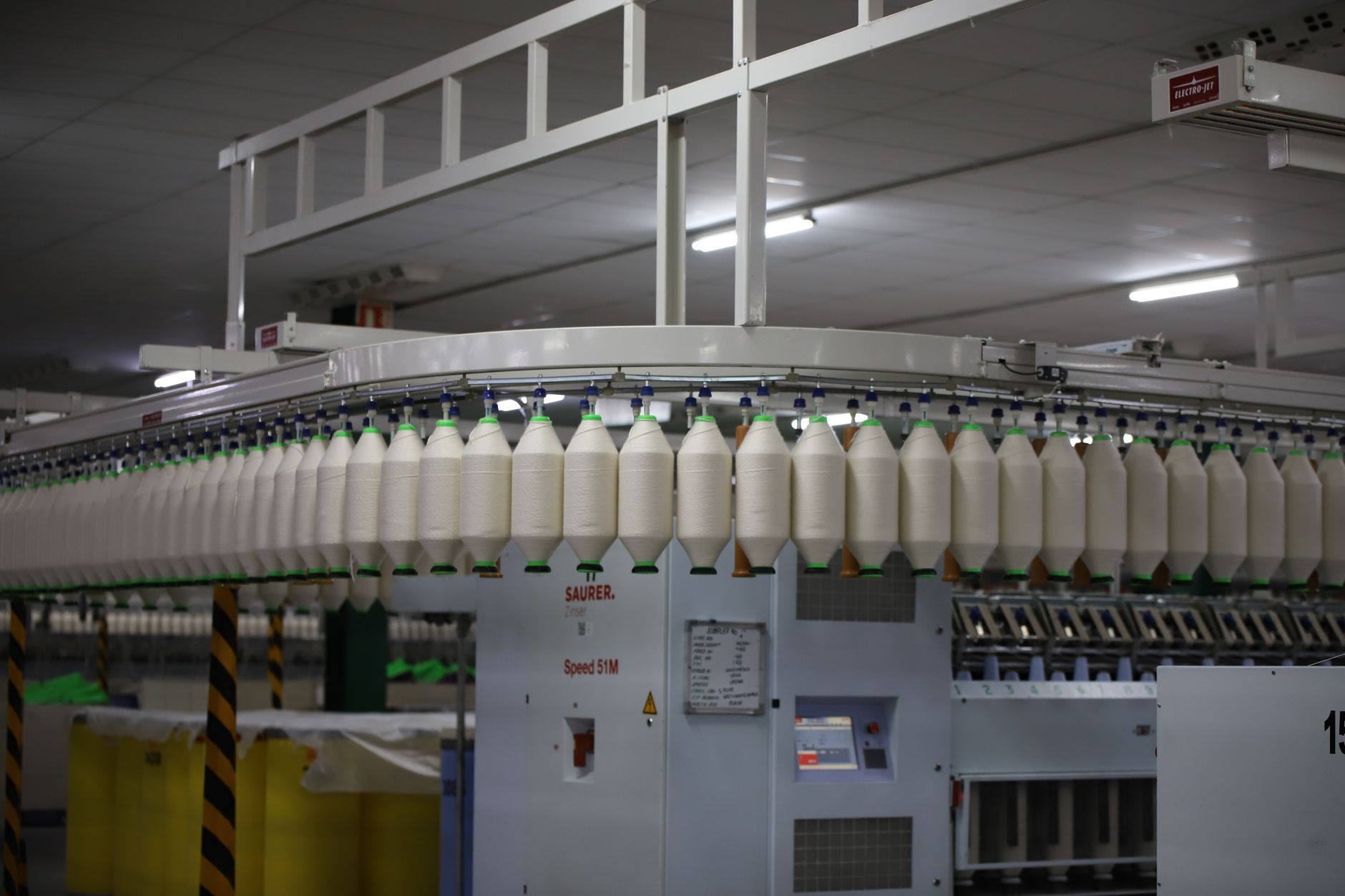
The supply chain architecture contains a binary risk that financial statements obscure. Eclat Textile, headquartered in Taiwan, provides the proprietary Luon fabric and other core materials that differentiate Lululemon’s product from commodity athletic wear. This is not a diversified supplier relationship; it is a technological dependency. The flat-seam knitting machines and polymer blends that create the specific compression and moisture-management properties are, according to company disclosures, concentrated with this single source.
Taiwan’s geopolitical position requires no elaboration. Any military conflict, trade embargo, or export restriction affecting Taiwan would immediately halt Lululemon’s ability to manufacture core product. Unlike semiconductor or electronics manufacturers, who have spent decades diversifying supply chains across multiple geographies, Lululemon has not disclosed meaningful diversification of its fabric sourcing. The company’s post-COVID supply chain adjustments focused on geographic diversification of cut-and-sew operations, moving final assembly from China to Vietnam and Cambodia, but the raw fabric production remains concentrated in Taiwan.
The economic implications of a disruption are severe and non-linear. In the short term, Lululemon would face a production halt with no alternative supplier capable of replicating the technical specifications of Luon at scale. The company maintains some inventory buffer, but at $10 billion in revenue, inventory turns rapidly. A six-month disruption would exhaust safety stock and create revenue collapse, not merely margin compression.
In the long term, relocating fabric production would require capital investment and technical knowledge transfer that Eclat has likely protected as trade secrets. Even if Lululemon could qualify alternative suppliers, the transition period would involve quality variance that risks the product consistency on which brand equity rests. Customers who experience pilling or loss of compression in a post-disruption product cycle may not return when supply normalizes. The concentration with Eclat is therefore not merely an operational risk; it is a contingent liability that could impair the entire enterprise value.
Competitors like Nike and Adidas, with their fragmented supplier bases and commodity fabric specifications, face higher baseline supply costs but lower existential risk. Lululemon has optimized for margin and product specificity at the cost of supply chain resilience. This is a rational trade-off until it is not.
Men’s Store Economics
The men’s expansion strategy, which targets doubling revenue from current levels, requires fundamental changes to the retail operating model that are rarely discussed in analyst presentations. Women’s Lululemon stores are designed as community gathering spaces with yoga studio adjacencies, feminine color palettes, and product density optimized for the browsing behavior of female athletic apparel shoppers. Men’s athletic apparel shopping operates on different patterns: higher intent, lower dwell time, different fitting room requirements, and different adjacencies (men do not typically require yoga studio spaces to validate technical apparel).
Integrating men’s product into existing women’s stores creates spatial inefficiency. Men’s product requires different fixture heights, different lighting temperatures, and different inventory depth to account for size curve variations. If the company dedicates floor space to men’s, it reduces the inventory capacity of the higher-margin women’s business. If it opens separate men’s stores, it incurs the full fixed cost of real estate without the productivity certainty that the women’s model has proven.
The customer acquisition cost also differs. Women’s brand awareness is saturated; marketing efficiency comes from community activation. Men’s unaided awareness sits at 11%, meaning the company must spend heavily on media and influencer marketing to achieve the recognition that women’s enjoys organically. This marketing spend reduces the margin contribution of men’s product just as the company needs men’s margins to fund expansion.
Historical parallels suggest caution. When J. Crew attempted to expand its men’s business in the early 2000s, it found that men’s apparel required different inventory management, fewer SKUs but deeper size runs, and different promotional patterns. Men’s customers responded more aggressively to markdowns, training the company into a promotional cycle that eventually infected the women’s business. Under Armour faced the inverse problem when attempting to expand women’s: the brand’s masculine locker room heritage created alienation among female shoppers that required years and hundreds of millions in marketing to overcome.
Lululemon’s advantage is that men’s technical athletic wear is less culturally coded than women’s; a man wearing Lululemon does not face the same brand stigma that a woman wearing Under Armour might. But the retail economics remain challenging. The company must either sub-optimize its women’s store productivity to accommodate men’s, or accept that men’s will generate lower sales per square foot, dragging down the average productivity metrics that support the premium valuation multiple.
The Professional Management Premium
The transition from founder to professional management is often treated as a governance formality, but at Lululemon it functioned as a recapitalization of intangible assets. When Advent Partners re-entered in 2014, purchasing half of Chip Wilson’s remaining stake and installing Glenn Murphy as board chairman alongside Stuart Haselden as CFO, the company effectively purchased insurance against founder volatility. This insurance has a measurable economic value: the reduction in idiosyncratic risk allows for a lower cost of capital and higher valuation multiples than founder-dependent peers.
Calvin McDonald’s background at Sephora provided a template for the beauty retailer’s successful expansion into men’s grooming and digital integration without diluting its core female beauty customer. This experience is directly applicable to Lululemon’s current challenge: expanding men’s while maintaining women’s brand equity. McDonald’s operational discipline, standardizing store operations, tightening inventory management, and professionalizing the supply chain, has already demonstrated results in the company’s consistent gross margin maintenance despite COVID disruptions.
However, professional management introduces its own risks. The pressure to demonstrate consistent quarterly growth can incentivize decisions that optimize short-term metrics at the expense of long-term brand equity. Opening stores in lower-productivity markets to hit revenue targets, expanding men’s too rapidly to demonstrate category growth, or accepting wholesale distribution to clear inventory would all boost short-term numbers while eroding the structural advantages. The board’s composition, with Murphy’s retail turnaround experience and Haselden’s financial discipline, suggests awareness of these temptations, but the tension between growth optics and brand preservation intensifies as the company scales.
The Community Calculation
The ambassador model’s scalability can be assessed through the mathematics of relationship density. In a mature Canadian market like Vancouver or Toronto, a single Lululemon store might maintain deep relationships with fifty local instructors, runners, and trainers. These ambassadors generate authentic product endorsement that converts at rates exceeding traditional advertising. The cost of this marketing is not media spend but relationship maintenance: free product, event hosting, and staff time.
In a new Chinese market, the same store might identify five ambassadors with genuine local influence, or fifty with diluted relevance. The model assumes that yoga and fitness culture creates universal community structures that Lululemon can infiltrate. But fitness culture in China is more commercial and less community-based; consumers follow KOLs (Key Opinion Leaders) on platforms like Xiaohongshu and Douyin rather than forming organic studio communities. The ambassador model may require adaptation toward influencer marketing, which carries higher costs and lower authenticity.
The risk is that Lululemon attempts to force the North American community model onto Asian markets, spending heavily on local relationships that do not generate proportional sales velocity, or worse, that the attempt to scale grassroots marketing creates a veneer of inauthenticity that damages the premium positioning. If Chinese consumers perceive Lululemon as attempting to manufacture community rather than participate in it, the brand loses the differentiation that justifies its price premium over local competitors like Maia Active or global giants like Nike.
The Margin Maintenance Equation
Ultimately, the investment thesis rests on a margin equation: can volume growth in lower-productivity markets and adjacent categories offset the inevitable compression from geographic mix shift and SKU proliferation? The 55% gross margin is not merely a financial metric; it is a statement of brand equity. If margins fall below 50%, Lululemon enters the territory of premium but not exceptional retail: category that includes companies like Ralph Lauren or Coach, which trade at significantly lower multiples.
Maintaining 55% requires that China achieves margin parity with North America despite higher logistics costs and uncertain pricing power. It requires that men’s product achieves women’s margin levels despite lower awareness and higher customer acquisition costs. It requires that the company never face a supply chain disruption that forces acceptance of substitute materials at higher cost. And it requires that inventory discipline remains perfect despite the increasing complexity of global, multi-gender operations.
Each of these requirements is individually plausible. Their simultaneity is historically unprecedented in apparel retail. The companies that have maintained 50%+ gross margins at $10 billion scale, Hermès, Ferrari, Louis Vuitton, operate in categories with century-long heritage, artificial scarcity, and zero fashion risk. Lululemon operates in a category where technical specifications diffuse in eighteen months and where yesterday’s innovation becomes tomorrow’s commodity. The margin structure is a high-wire performance, and the safety net of wholesale clearance has been removed.
The Second Act
Lululemon’s current trajectory assumes that the company can execute a second act, men’s and international, that is larger than its first, without the cultural conditions that enabled the first. The women’s business grew in a specific historical moment: the mainstreaming of yoga, the shift toward athleisure in professional environments, and the absence of technical competition. Men’s faces a crowded field where Nike and Adidas have already captured the performance athletic market, and where “athleisure” as a category is already saturated by Uniqlo, Everlane, and countless direct-to-consumer brands.
The international expansion assumes that the Canadian laboratory conditions, high income, low competition, community-based fitness culture, can be replicated in geographies with different retail structures and consumer behaviors. The company is essentially betting that its product is so technically superior that it will override local preferences and competitive dynamics.
If this bet succeeds, Lululemon becomes the first apparel brand to maintain premium margins while scaling globally without wholesale distribution: new model for retail economics. If it fails, the company follows the trajectory of Abercrombie, Chico’s, and countless others: a period of exceptional returns followed by margin compression, promotional dependency, and multiple contraction as the market reclassifies it from growth compounder to mature retailer.
The difference between these outcomes lies not in the ambition of the expansion, but in the maintenance of the specific conditions that created the Canadian productivity miracle: technical product excellence, community authenticity, and inventory discipline. Each new store, each new SKU, each new geographic market increases the entropy against these conditions. The geometry of expansion is fundamentally hostile to the intimacy that built the brand. Whether Lululemon can remain Lululemon while becoming global is the question that will determine whether the $10 billion revenue base is a foundation or a peak.