Mars Inc: A Century of Strategic Secrecy
The Architecture of Permanent Opacity
In 1991, a journalist named Joël Glenn Brenner telephoned Mars Incorporated every day for a year. She did not secure an interview until day three hundred and sixty-five, and when the family finally granted access, the resulting coverage constituted the only significant journalistic penetration of the company in its century-long existence. Mars does not hold earnings calls. It does not file public financial statements. It does not disclose executive compensation, organizational structure, or strategic priorities. This is not merely a preference for privacy but rather the central design principle of a fifty-billion-dollar enterprise.
The contrast with its most obvious rival clarifies the strategy. Milton Hershey built a town, named it after himself, opened a school for orphans, and left his fortune to it. The Hershey Company lists its shares on the New York Stock Exchange and reports quarterly. Mars, meanwhile, remains one hundred percent owned by descendants of Frank Clarence Mars, a man who endured three consecutive bankruptcies, in Minneapolis, then Seattle, then Tacoma, before founding the company that would make his family the second-wealthiest in America. Where Hershey’s transparency built public trust and civic infrastructure, Mars’s opacity constructs a competitive fortress. When a business refuses to reveal its margins, its manufacturing yields, or its compensation structures, competitors cannot benchmark against it, activists cannot pressure it, and rivals cannot poach talent with precise premium offers. The secrecy functions as a form of economic encryption.
This opacity would matter less if Mars were a simple operation. It is not. The company crosses fifty billion dollars in annual revenue across categories that share little operational DNA: chocolate confectionery, pet food and veterinary services, and rice. It owns M&M’s and Snickers, but also Pedigree, Whiskas, Ben’s Original, and Kind Bars. It operates VCA and Banfield Pet Hospitals. Each category demands distinct supply chains, manufacturing competencies, and regulatory navigation. Yet the family maintains tight control, refusing to professionalize governance through outside directors or public listing. The result is a highly particular economic architecture: extreme informational asymmetry combined with multi-generational family stewardship and proprietary technical processes developed over decades. The question is whether this architecture creates durable advantage or accumulating fragility.
Milk Chocolate as Industrial Craft
The commercial value of chocolate resides not in the recipe but in the process. In 1867, the Swiss chocolatier Daniel Peter combined cocoa with Henri Nestlé’s condensed milk powder to create milk chocolate, but the product remained coarse and prone to spoilage. The breakthrough arrived in 1879, when Rudolph Lindt accidentally left cocoa in a roller grinder for three days, discovering that prolonged conching produced a smooth, stable emulsion. The technique transformed chocolate from a gritty, perishable good into a mass-market staple.
Frank Mars understood that American chocolate production required more than importing European techniques. Milk chocolate is chemically unstable; the water content in milk causes cocoa emulsions to separate or spoil. Hershey solved this problem through a defect that became a trademark: slight fermentation of the milk prior to drying created a distinctive sour flavor profile that American palates now identify as the taste of chocolate itself. European competitors find this flavor unpalatable, but Hershey’s process, discovered accidentally and protected by scale rather than secrecy, created a continental divide in chocolate aesthetics.
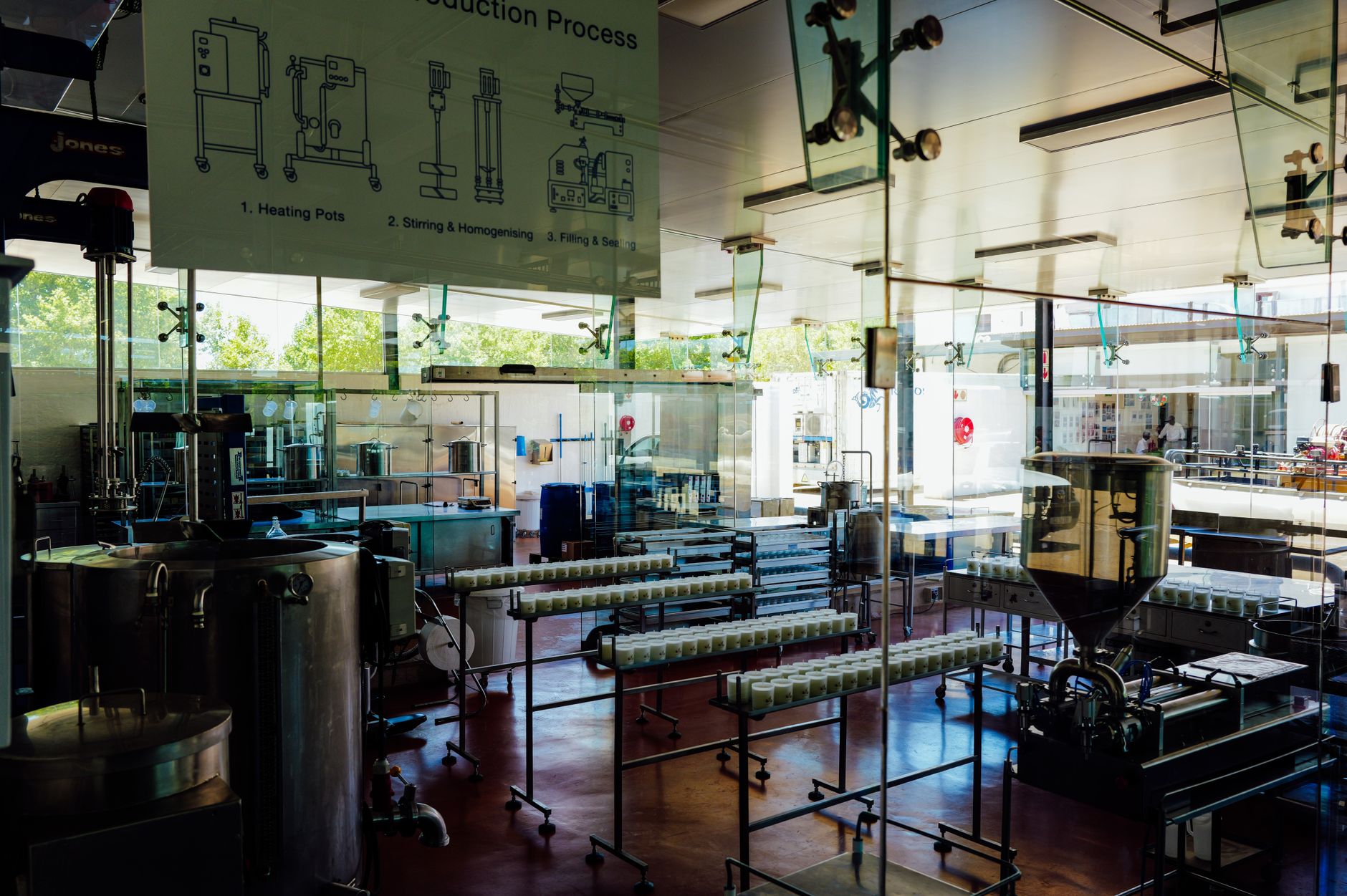
Mars pursued a different technical path. Rather than embracing sourness, the company developed methods to stabilize fresh milk in chocolate through precise control of condensation, drying speeds, and tempering sequences. The specific parameters, temperature curves, conching durations, particle size distributions, remain undocumented in public literature and unpatented. Patenting would require disclosure, so Mars protects these processes as trade secrets, embedded in the physical machinery and the tacit knowledge of long-tenured engineers. This creates a moat that recipe-based competition cannot easily cross. A competitor can duplicate the ingredient list for a Snickers bar, but duplicating the mouthfeel requires reverse-engineering decades of incremental process refinement, hiring away personnel with specific technical knowledge, or enduring years of trial-and-error reconstruction. All three paths impose prohibitive costs and delays.
The technical complexity necessitates vertical integration. Mars controls its manufacturing footprint with an intensity unusual even in the food industry, maintaining proprietary equipment and in-house engineering capabilities that custom-build production lines. This integration serves dual purposes: it protects process secrets from contract manufacturers, and it allows continuous experimentation with yield improvements and texture modifications without external observation. The manufacturing advantage compounds over time. While competitors rely on standard equipment and documented methods, Mars operates a closed technical system where improvements accumulate silently, embedded in machinery that never leaves company facilities.
The Privilege of No Quarter
Public companies report earnings every ninety days. This rhythm shapes capital allocation decisions, research and development timelines, and executive compensation structures. Mars, as a private entity, faces no such imperative. The family can fund decade-long research programs, sustain multi-year supply chain investments, or absorb short-term margin compression to defend market position without explaining variances to equity markets or activist investors. This patience represents a structural cost-of-capital advantage that public competitors cannot replicate.
However, private ownership imposes its own constraints. Without listed equity, Mars cannot use stock as acquisition currency. When the company purchased Kind Bars, expanded into veterinary services through VCA and Banfield, or acquired rice brands, it paid cash or assumed debt. Internal cash flow must fund growth, dividends to family members, and strategic investments simultaneously. The transcript mentions “one massive deal in the works,” suggesting the company currently navigates exactly this constraint: opportunities exist that require capital deployment beyond routine operational cash generation, yet the family refuses to dilute ownership through external equity. This forces rigorous prioritization. Public competitors can issue shares to consolidate industries rapidly; Mars must choose carefully, funding only those acquisitions that promise returns sufficient to justify the leverage or the forgone dividends.
The family’s willingness to accept these constraints reveals the economic function of their governance model. By refusing to go public across four generations, they have maintained optionality regarding time horizons. They can invest in cocoa sustainability programs with ten-year payoffs, or build pet food brands through slow retail penetration, without the pressure to demonstrate quarterly same-store sales growth. This patience is not merely cultural preference but a definitional feature of their competitive position. The patience allows process innovation that public companies, optimizing for current earnings, might abandon.
Portfolio Breadth as Distribution Leverage
Mars operates across categories that appear, at first glance, to lack strategic coherence. Chocolate confectionery requires fermentation science, conching expertise, and sugar chemistry. Pet food demands protein sourcing, nutritional formulation, and veterinary science. Rice involves agricultural commodity management and grain milling. These are not adjacent competencies in a technical sense. Yet they converge at the point of sale.
Retail shelf space functions as a network effect in physical commerce. Grocery stores stock M&M’s and Snickers not because Mars pays the highest slotting fees, but because these brands move inventory at high velocity, generating reliable turns per square foot. Once Mars establishes this presence, the company gains leverage to introduce adjacent products, Kind Bars in the health segment, Ben’s Original in rice, Pedigree in pet, at customer acquisition costs that standalone entrants cannot match. A new pet food brand must negotiate shelf space on its own merits; Mars negotiates portfolio-wide, bundling proven winners with experimental extensions.
This distribution architecture creates durable advantage. Retailers face high switching costs when considering delisting core Mars products, knowing that consumers specifically search for M&M’s or Snickers. This captive shelf presence reduces marketing expenditure for new category entries and creates barriers to entry for competitors who lack comparable portfolio breadth. The economics resemble platform leverage in digital markets, but executed through physical logistics and century-old brand recognition.
Yet the breadth introduces operational complexity that tests the limits of family governance. A contamination crisis in pet food, a supply disruption in Basmati rice regions, or a quality failure in Kind Bars could damage the corporate reputation that underpins the entire distribution network. The portfolio that generates leverage also creates surface area for reputational contagion. Where a pure-play chocolate company faces category-specific risks, Mars faces systemic exposure across unrelated supply chains. The diversification reduces single-category volatility but increases the probability that some operational failure, somewhere in the portfolio, will require management attention and capital reserves.
The African Fermentation Problem
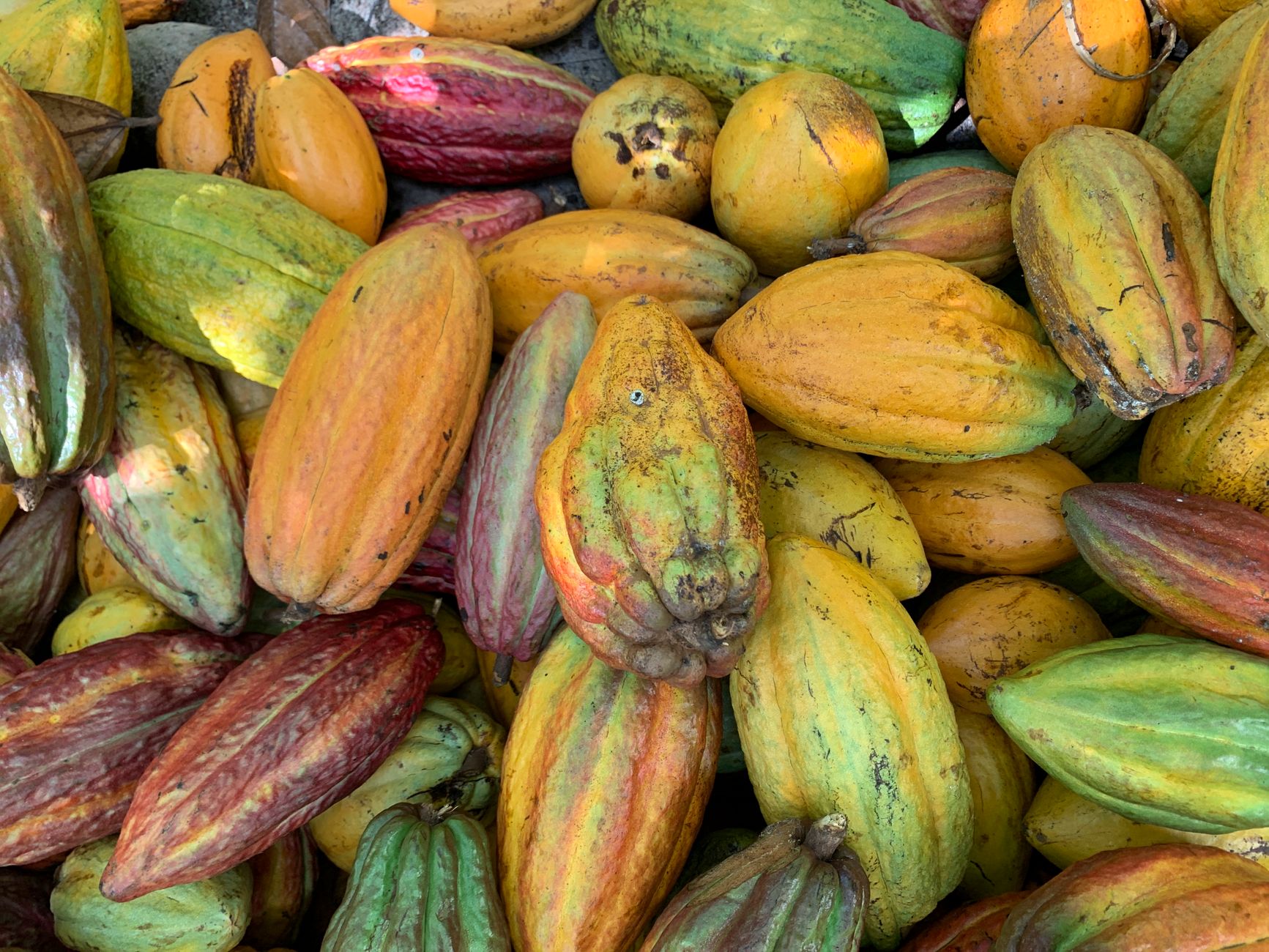
For all its manufacturing sophistication, Mars remains dependent on agricultural inputs it cannot control. Chocolate production begins with the cacao pod, which requires specific tropical conditions: rimarily the coastal regions of Côte d’Ivoire and Ghana, which now supply most of the world’s cocoa. After harvest, beans must ferment for five to seven days to develop flavor precursors. This fermentation is location-dependent, weather-sensitive, and labor-intensive. It cannot be industrialized or relocated to temperate manufacturing centers.
This geographic concentration creates structural vulnerability. Climate volatility, political instability, or labor disruptions in West Africa immediately threaten input availability. Mars has invested heavily in sustainability programs and farmer training, but these measures mitigate rather than eliminate the concentration risk. A severe drought, crop disease outbreak, or trade embargo would constrain supply regardless of manufacturing excellence. The company can optimize tempering curves and conching durations, but it cannot engineer a stable climate in the Ivory Coast.
The commodity exposure creates tension with the brand economics. M&M’s and Snickers command premium pricing based on decades of brand equity and proprietary process quality. Yet cocoa, milk, and sugar prices fluctuate with currency movements, harvest yields, and geopolitical events. Strong brands provide pricing power, but elasticity has limits. Sustained input inflation could force Mars to choose between margin compression and volume loss, testing whether brand loyalty extends to sustained price premiums during commodity shocks. The proliferation of M&M’s variants, dozens including peanut butter, pretzel, caramel cold brew, birthday cake, and pumpkin spice latte, suggests a strategy to capture premium shelf space and price points, potentially masking margin pressure on core milk chocolate SKUs through portfolio mix shifts.
The supply chain reality contradicts any narrative of complete vertical control. Mars owns the mystery of milk stabilization but rents the agricultural substrate from West African farmers and global dairy markets. This dependency on external fermentation, biological processes occurring thousands of miles from company factories, represents the irreducible fragility in the business model. Manufacturing secrets protect against competitors; they do not protect against crop failure.
The Knowledge Concentration Problem
Frank Mars failed three times before succeeding because he initially sold penny candy and caramel, ommodity products requiring no technical differentiation. His fourth attempt succeeded when he pivoted to chocolate, building proprietary process knowledge that accumulated within the family. This history carries warning. The company that survived its founder’s early failures now operates at a scale where institutional knowledge concentration creates existential risk.
The family maintains extreme secrecy regarding succession planning, governance structures, and the distribution of decision rights among descendants. If critical knowledge regarding supply chain management, brand strategy, or acquisition evaluation resides primarily in specific family members rather than documented systems, the loss of those individuals through death, incapacity, or dispute could create leadership vacuums. Unlike public companies, where board structures and disclosure requirements force some institutionalization of strategy, Mars operates as a black box. The opacity that prevents competitive intelligence leakage also prevents external verification of organizational resilience.
Generational transitions have historically destroyed family fortunes when businesses outgrow the administrative capacity of their owners. Mars has sustained four generations of private ownership, but each transition increases the complexity of maintaining family cohesion around capital allocation priorities. With fifty billion dollars in revenue and diversification across unrelated industries, the business now requires professional management sophistication that may exceed the expertise or interest of family members. Yet bringing in outside leadership without diluting ownership or exposing operational secrets creates governance tensions that public companies avoid through standard CEO search processes and disclosed succession plans.
The fragility is specific: a contested succession, a family dispute over dividend policy versus reinvestment, or simply the absence of prepared heirs could force either a public offering or a sale to a conglomerate. Either outcome would terminate the structural advantages of opacity and patience. The value created through a century of private process innovation and brand building could dissipate quickly under public market pressure or strategic asset stripping by an acquirer.
Shelf Space as Economic Moat
The underappreciated structural advantage lies not in any single brand or patent, but in the compounding value of physical distribution relationships built over decades. In an era of e-commerce enthusiasm, the durability of retail shelf presence is easily underestimated. Yet for impulse categories like confectionery and pet food, physical availability at point-of-sale drives the majority of purchase decisions. Mars’s portfolio generates such reliable traffic that retailers effectively subsidize the company’s new product introductions by granting shelf space to untested SKUs based on the historical performance of M&M’s and Snickers.
This creates a form of network effect difficult for digital-native competitors to replicate. A direct-to-consumer chocolate brand can build online subscription revenue, but it cannot capture the spontaneous purchase at gas stations or grocery checkouts that drives volume in the candy category. Mars’s relationships with retailers, built through century-old brands, maintained through private negotiation without public disclosure of terms, constitute a moat that requires decades to construct and would take decades to erode.
The advantage extends into pet care and rice. When Mars acquired veterinary chains and rice brands, it purchased not just customer relationships but access to retail networks already conditioned to trust Mars as a reliable supplier. The candy business, with its high-frequency purchase cycles and inventory turns, trains retailers to accept Mars’s operational standards and payment terms. This trust transfers to slower-turn categories, reducing the friction of expansion. A standalone rice brand must prove its supply reliability; Mars inherits the benefit of the doubt.
The Compounding Risk of Secrecy
Mars Incorporated represents a particular economic form: the patient, opaque, family-controlled industrial enterprise. Its value creation depends on the intersection of proprietary manufacturing processes, portfolio-driven distribution leverage, and capital allocation free from quarterly earnings pressure. These advantages compound silently, year over year, embedded in machinery that competitors cannot inspect and relationships that public filings cannot reveal.
Yet the same features that generate returns create concentration risks. The secrecy that prevents competitive benchmarking also conceals organizational fragility. The family control that enables long-term investment also concentrates knowledge in ways that generational transition could disrupt. The vertical integration that protects process secrets does not extend to the African farms where fermentation begins. The portfolio breadth that opens retail doors also exposes the enterprise to operational failures across unrelated supply chains.
The business sustains fifty billion dollars in revenue without external capital, suggesting that the model generates sufficient cash flow to fund its own expansion while satisfying family dividend requirements. But the architecture depends on an implicit assumption: that the Mars family will maintain cohesion, competence, and commitment to private ownership across generations, while weathering agricultural supply shocks that manufacturing excellence cannot prevent. If that assumption fails, the encryption that protects the company’s advantages would become the obstacle to its rescue, paque not only to competitors, but to the institutional partners who might otherwise assist in its continuity.
Frank Mars survived three bankruptcies by learning that candy alone is a commodity, but chocolate made with secrets is a franchise. His successors now manage the tension between that secrecy and the scale required to defend it. The result is a company that creates value by hiding how value is created, a strategy that works until the moment it suddenly does not.
The specific mechanics of such a failure remain obscure precisely because the company reveals no succession protocol. In family enterprises of comparable scale, Cargill, Koch Industries, the Ford Motor Company at various points, governance structures have evolved to include non-family executives, disclosed succession plans, or at minimum, documented decision rights among branches of the family tree. Mars maintains silence. This suggests either a confidence in informal coordination among family members that external observers cannot verify, or a vulnerability that disclosure would expose. The distinction matters because the technical knowledge underlying Mars’s competitive position is not merely managerial but artisanal. Chocolate manufacturing, particularly the stabilization of milk within cocoa butter matrices, involves tacit knowledge: he kind of expertise held in the hands and senses of experienced engineers rather than in technical manuals. When a company refuses to patent processes to avoid disclosure, and when those processes require sensory judgment regarding viscosity, sheen, and snap rather than measurable metrics alone, the departure of key personnel becomes an irreversible loss of institutional memory.
Consider the specific chemistry that Mars guards. Milk chocolate is an emulsion of sugar particles and milk solids suspended in cocoa butter, a fat that crystallizes in six distinct polymorphic forms. Only Form V provides the glossy appearance and sharp snap that consumers associate with quality. Achieving this requires tempering, recisely controlled heating and cooling sequences that seed the butter with stable crystals while preventing the formation of dull, soft Form IV or the waxy bloom of Form VI. Hershey’s process achieved stability through serendipity: the use of soured milk created phospholipid structures that incidentally stabilized the emulsion. Mars engineered its solution deliberately, developing methods to stabilize fresh milk through controlled protein denaturation and moisture reduction without the sour flavor profile. The specific temperature gradients, holding times, and shear rates required to execute this while maintaining the fluidity necessary for enrobing candy bars represent decades of incremental adjustment. These parameters reside in the muscle memory of production engineers and the calibration settings of proprietary equipment. If the family members or senior engineers who hold this knowledge retire, die, or depart for competitors, the documentation may prove insufficient for replication. A new generation of family leadership might inherit ownership certificates without inheriting the technical judgment to recognize when a batch of nougat has achieved the correct elasticity or when a tempering curve has drifted out of specification.
The fragility compounds when considering the geographic concentration of the family itself. Unlike diversified ownership structures where shares are distributed across hundreds of family members with varying involvement, Mars appears to maintain tight operational control among a small circle. This concentration amplifies idiosyncratic risk. A single aircraft accident, a contested divorce involving share transfers, or a generational dispute over dividend policy could disrupt the decision-making cadre. Public companies survive the death of CEOs because their governance documents specify replacement procedures and their institutional knowledge is distributed across thousands of employees and documented systems. Mars’s opacity suggests the opposite: a reliance on specific individuals whose departure would trigger crisis.
This organizational fragility intersects dangerously with the agricultural vulnerability already embedded in the business model. The cocoa supply chain that feeds Mars’s factories represents a biological bottleneck that manufacturing ingenuity cannot circumvent. The Theobroma cacao tree grows only within twenty degrees of the equator, and commercial cultivation has contracted to a narrow band in West Africa, primarily Côte d’Ivoire and Ghana, which supply approximately sixty percent of global cocoa. Unlike wheat or corn, which have been bred for diverse climatic resilience and mechanized harvesting, cacao remains a crop requiring manual pollination, hand harvesting with machetes, and immediate post-harvest fermentation that is location-specific and weather-dependent.
The fermentation process illustrates why Mars cannot simply engineer its way out of agricultural risk. Once harvested, cacao pods are split and the beans, covered in sticky mucilage, are piled in banana leaves or wooden boxes to ferment for five to seven days. During this period, naturally occurring yeasts and bacteria consume the pulp, generating heat that kills the germinating seed and develops the precursor flavor compounds, esters, pyrazines, and lactones, that will become chocolate’s complex aroma during roasting. This fermentation cannot be industrialized or relocated. It must occur within hours of harvest, near the plantations, because the fresh beans begin to spoil immediately. It requires specific ambient temperatures and humidity levels that vary by microclimate. A week of unseasonable rain can ruin a harvest, turning beans moldy or halting the microbial succession necessary for proper flavor development. Mars has invested in farmer training and sustainability certifications, but these programs improve yield and quality marginally; they do not eliminate the biological reality that chocolate production begins as an agricultural process subject to climate volatility, plant disease, and political instability.
The geographic concentration creates strategic exposure that no amount of manufacturing secrecy can offset. If Côte d’Ivoire experiences civil conflict that disrupts port operations, or if a cacao strain of fusarium wilt spreads through West African plantations as coffee rust devastated Latin American arabica crops in the nineteenth century, Mars would face input constraints that its proprietary tempering techniques cannot solve. The company could attempt to shift sourcing to Latin America or Southeast Asia, but these regions lack the processing infrastructure and fermentation expertise of West Africa. Brazilian cacao, for instance, is often poorly fermented due to different agricultural practices and climate conditions, producing chocolate with acidic, astringent notes that would violate the flavor profile expectations of M&M’s or Snickers consumers. The brand equity built over a century depends on consistency; a sudden shift in bean origin would produce perceptible taste variations that consumers would reject as inauthentic or defective.
Furthermore, the labor practices inherent in cacao cultivation present reputational risks that manufacturing opacity cannot contain. The majority of West African cacao is grown on smallholder farms employing family labor, with documented instances of hazardous child labor and forced labor in the supply chain. Mars, like other major chocolate companies, has pledged to eliminate child labor from its supply chain by specific target dates, but the structural reality of poverty in rural West Africa and the lack of supply chain transparency make such commitments difficult to verify or achieve. A scandal involving labor practices in the cacao belt would damage the Mars corporate brand across all categories, not merely chocolate. The pet food and rice divisions would suffer guilt by association, as retailers and consumers conflate the corporate entity with its constituent parts. The portfolio diversification that provides distribution leverage also creates reputational entanglement.
The operational differences between these categories amplify management complexity in ways that challenge the family’s capacity for oversight. Chocolate production is a continuous process industry involving thermal management and particle size reduction. Pet food manufacturing is a batch process involving meat rendering, extrusion, and nutritional formulation governed by veterinary science and FDA regulations distinct from confectionery standards. Rice milling involves agricultural commodity trading, silo management, and quality grading based on moisture content and broken kernel percentages. These are not merely different product lines but different industrial logics requiring distinct regulatory relationships, supplier networks, and quality control systems.
When Mars acquired Kind Bars, it purchased a brand positioned in the “healthy snacking” segment: category antithetical to the indulgence positioning of M&M’s. The integration requires maintaining Kind’s brand identity while leveraging Mars’s distribution network, a delicate balance that public companies often manage through dedicated divisional structures with disclosed financials. Mars must execute this integration without the external accountability that forces public acquirers to justify synergies or divest underperforming assets. The family must judge whether the pet care division’s capital requirements, for instance, the building of veterinary hospitals or the development of prescription pet food formulations, are yielding returns superior to reinvestment in chocolate manufacturing capacity. Without public comparables or disclosed segment financials, these allocation decisions occur in an information vacuum, dependent on the business judgment of family members who may lack expertise in one or more of these disparate fields.
The capital constraints of private ownership become acute during exactly these moments of strategic expansion. The reference to a “massive deal in the works” suggests Mars is currently navigating the limitation of its own liquidity. Public competitors such as Nestlé or Mondelez can issue equity to fund large acquisitions, using their stock as currency to purchase targets without draining cash reserves. They can also access public debt markets with greater transparency, providing lenders the disclosure necessary for large-scale bond offerings. Mars must fund acquisitions through retained earnings or leveraged loans secured against undisclosed collateral and cash flows. This constraint forces either slower growth than competitors, or higher financial leverage that increases vulnerability to economic downturns. When interest rates rise, the cost of debt-funded acquisitions increases for all players, but public companies can pivot to equity financing; Mars has no such flexibility.
Moreover, the inability to use equity as acquisition currency limits Mars’s ability to attract and retain top-tier professional management. Senior executives at public consumer goods companies receive substantial compensation through stock options and restricted shares, aligning their interests with shareholder value creation. Mars must compete for talent using cash compensation and the promise of private partnership stakes, which are illiquid and difficult to value. This restricts the talent pool to those willing to accept deferred compensation and secrecy regarding their wealth accumulation. While the family may view this as a filter for loyalty, it also excludes executives accustomed to the governance structures and transparency norms of public companies. The result is a management culture that is either remarkably cohesive, united by the shared secret of working within the black box, or dangerously insular, prone to groupthink and resistant to external best practices.
The comparison with Hershey illustrates the trade-off. Hershey’s public listing forced the company to professionalize management, disclose financials, and submit to shareholder governance, but it also provided the currency to make major acquisitions and the transparency to attract broad talent. Hershey’s has expanded into salty snacks and premium chocolate through acquisitions funded by equity and public debt. Mars’s privacy has preserved technical secrets and patient capital, but at the cost of strategic flexibility. When Hershey’s faces a supply chain disruption or competitive threat, its stock price reflects market confidence (or lack thereof) immediately, providing real-time feedback on strategy. Mars receives no such signal, operating instead on the internal judgment of family members who may be brilliant or merely fortunate, with no external mechanism to distinguish between the two until a crisis reveals the difference.
The technical moat surrounding Mars’s manufacturing processes, while formidable, is not permanent. Food science advances continuously. Universities and equipment manufacturers study chocolate rheology and crystallization kinetics, publishing findings that gradually erode the advantage of proprietary knowledge. A competitor with sufficient resources, perhaps a well-funded private equity consortium or a cash-rich technology company diversifying into physical goods, could hire away Mars’s senior engineers or fund research programs to reverse-engineer the milk stabilization techniques. The secrecy that protects Mars today assumes that competitors cannot assemble the tacit knowledge dispersed across its workforce. But tacit knowledge can be extracted through recruitment, particularly if Mars faces succession crises that drive senior engineers into the job market. The defensibility of trade secrets depends on the continuity of employment relationships; if the family’s governance failures trigger an exodus of technical talent, the encryption breaks.
Ultimately, Mars Incorporated operates as a bet on the compatibility of industrial scale with pre-modern organizational forms. It is a fifty-billion-dollar enterprise governed by the norms of a nineteenth-century family partnership, dependent on agricultural inputs from politically volatile regions, and protected by technical knowledge that resists documentation. The business generates extraordinary returns precisely because this structure is difficult to replicate: he patience of private capital, the compounding of manufacturing secrets, and the leverage of retail relationships built over generations create barriers that public competitors cannot easily cross. Yet these same features create specific, concentrated risks: a crop failure in West Africa, a succession dispute in McLean, Virginia, or a contamination event in a pet food factory could cascade through the opaque structure with catastrophic speed, finding no external governors or disclosed contingency plans to arrest the fall. The company creates value by hiding how value is created, and it will continue to do so until the moment when the hiding itself becomes the reason the value disappears.