
Mitsubishi Corporation: The Quiet Resource Baron

The Mountain and the Market
<pMitsubishi Corporation carries a balance sheet that defies easy categorization. With roughly $135 billion in enterprise value and $150 billion in annual revenue, the company is simultaneously one of the world’s largest traders of commodities and one of the world’s quietest resource barons. It owns 50 percent of BHP Mitsubishi Alliance (BMA), the largest seaborne metallurgical coal operation in Australia. It holds a 40 percent stake in Quellaveco, the massive copper mine in Peru that sits alongside deposits owned by Anglo American. It is a minority partner in Escondida, the world’s largest copper mine, sharing the burden and the yield with BHP and Rio Tinto. Yet Mitsubishi is not a mining company in the conventional sense. It employs no armies of geologists. It does not operate the draglines or set the extraction schedules. Its headquarters in Tokyo’s Marunouchi district does not smell of diesel or dust. Instead, Mitsubishi functions as a node in a global network of capital, relationships, and patient time horizons that has been under construction for more than 150 years.This duality, physical ownership without operational control, trading expertise anchored by illiquid mineral stakes, creates a business model that is neither pure asset play nor pure commerce. The returns do not flow from extraction efficiency or trading spreads alone, but from a specific configuration of trust, institutional memory, and capital allocation discipline that is now being stress-tested by the very investors who claim to validate it. When Berkshire Hathaway accumulated a 9 percent stake in 2020 and Warren Buffett and Greg Abel met with management last year to praise the company’s “shareholder friendliness,” they were endorsing a transformation already underway: a shift in net investment from 17 percent of equity in 2012 to roughly 2 percent today. This is a business in the process of shrinking its footprint to widen its returns. The question is whether the shrinkage will sever the relationships that make the returns possible.
The Asset Is Access, Not Ownership
The standard analysis of Mitsubishi treats it as a conglomerate discount story: collection of illiquid minority stakes in mines, auto distributors, and Philippine real estate that should be sold to release value. This analysis mistakes the container for the content. The true economic asset is not the 40 percent stake in Quellaveco or the retained holdings in Ayala Corporation; it is the 45-year relationship with Ayala that spans automobiles, water infrastructure, power generation, and technology. It is the institutional knowledge of which Chilean mining engineers can be trusted across a thirty-year project life. It is the reputation for showing up with capital when cyclical downturns freeze out weaker partners, and for not demanding control when others would insist on it.
This network operates on a timescale that renders quarterly earnings calls nearly irrelevant. Mitsubishi’s relationships with mining operators, governments, and commercial counterparties across Latin America, Australia, Southeast Asia, and the Middle East are embedded in organizational memory that cannot be replicated by competitors with deeper pockets but shallower histories. A private equity firm can write a larger check for a copper mine. It cannot acquire the decades of reliable performance, the cultural alignment with Japanese governance norms, or the specific signaling that Mitsubishi provides when it commits to a thirty-year asset. That signaling, an implicit promise not to flip the stake during the next downturn, grants Mitsubishi access to deal flow and partnership terms that pure financial buyers cannot match.
Consider the Ayala partnership, initiated in 1979 and spanning multiple sectors across the Philippine economy. Mitsubishi is currently reducing its equity position there, trimming its holdings to roughly $300 million, but explicitly maintaining the operational relationship. The maneuver illustrates the model: the equity is fungible, but the relationship is not. Selling the entire stake might capture a one-time gain and improve the return on equity ratio, but it would forfeit the embedded optionality: he right of first refusal on future infrastructure projects, the preferential terms on automobile distribution, the trust capital accumulated across four and a half decades. Competitors looking at Mitsubishi’s portfolio see a collection of low-liquidity positions depressing valuation multiples. Mitsubishi sees a web of strategic optionality that compounds with time. The difference is not analytical; it is temporal. The value is in the duration.
When Efficiency Destroys Value
The tension between these two views, portfolio optimization versus network maintenance, has become the defining structural constraint shaping every major decision at Mitsubishi. In 2012, the company deployed net investments equivalent to 17 percent of its equity base, aggressively building positions across resources and industrial assets. Last year, net investments net of disposals fell to roughly 2 percent of a doubled equity base. This is not merely a cyclical pause. It represents a philosophical shift toward capital efficiency driven by the Ito Review’s 2013 declaration that “increasing capital efficiency in the broadest sense is crucial from the perspective of Japan’s survival,” and accelerated by the arrival of Western institutional investors demanding visible returns.
On the surface, the math is unassailable. Exiting non-core, low-return positions should improve ROE, reduce complexity, and release capital for shareholder returns. Mitsubishi has listened. It has sold down stakes, returned cash, and streamlined operations. Yet the model contains a paradox: the network that generates deal access and pricing advantages requires holding illiquid, minority positions through cycles. Divesting to improve capital metrics may erode the very relationships that justify the premium valuations in the first place. The Ayala reduction is a controlled experiment in this fragility, rimming the financial exposure while explicitly preserving the partnership. But not all relationships survive partial divestment. Some counterparties interpret reduced equity as reduced commitment. The optionality that Mitsubishi values cannot be fully contractualized; it depends on the perception of long-term alignment.
This is the impossible optimization at the heart of the enterprise. The company must improve ROE to satisfy shareholders who now include Berkshire Hathaway, yet it cannot improve ROE by becoming a pure trader because the trading profits depend on the asset ownership that validates Mitsubishi’s seat at the table. The 50 percent stake in BMA does not just generate cash flows; it generates information, influence, and preferential access to BHP’s operational expertise and future projects. If Mitsubishi were to sell that stake to realize a gain and boost returns, it would forfeit the network position that makes its trading operations in metallurgical coal profitable. The business model requires holding assets that appear suboptimal on a standalone ROE basis to maintain the structural advantages that create superior returns elsewhere. It is a conglomerate that cannot deconglomerate without disappearing.

Institutional Patience as Economic Moat
The durability of this model depends on a cultural variable that standard financial analysis struggles to quantify: institutional patience. Mitsubishi operates within a Japanese corporate governance framework that privileges collective decision-making, employment stability, and multi-decade investment horizons over quarterly earnings beats. The company is consistently ranked among the top two most desirable employers in Japan, attracting talent that expects lifetime employment patterns and is socialized into long-term relationship maintenance. This is not a soft factor. It is a hard economic input.
The culture enables Mitsubishi to hold positions through commodity downturns that would force Western traders or private equity owners to divest. It allows the company to maintain minority stakes in 30-year mining assets without pressuring partners for early exits or dividend recaps. It creates the credibility required to be a preferred joint venture partner for BHP, Rio Tinto, and Anglo American, ompanies that know Mitsubishi will not force a sale during the next copper price collapse or attempt to seize operational control during construction delays. This patience is a moat that cannot be replicated by competitors operating on Western capital timelines. An activist hedge fund cannot acquire Mitsubishi’s skill set; it can only destroy it by imposing the short-term discipline that eliminates the advantage.
Yet this cultural moat is currently the site of maximum fragility. The pressure to conform to Western capital allocation standards, to hit specific ROE targets, to return excess capital promptly, to divest “non-core” holdings, threatens to dissolve the institutional patience that differentiates Mitsubishi from pure trading houses. If the company accelerates capital returns or exits long-term partnerships to satisfy short-term shareholder metrics, it will trigger a cascading loss of relationship value. The network effects that provide deal access and pricing advantages depend on the counterparty’s belief that Mitsubishi will remain invested through the cycle. Once that belief erodes, it cannot be rebuilt with higher dividends or share buybacks. The culture is the capital.
Control Without Command
Even if Mitsubishi maintains its cultural equilibrium, the model depends on a second fragile assumption: that its major partners in joint ventures will remain aligned with Mitsubishi’s multi-decade timelines. The company typically holds 40 to 50 percent stakes in its major resource assets, leaving control in the hands of operators like BHP or Anglo American. This minority position is intentional. It limits capital intensity and balance sheet risk. It allows Mitsubishi to participate in world-class assets without bearing full project risk. But it also creates a dependency.
If BHP decides to divest its coal assets to meet net-zero commitments, or if Rio Tinto chooses to consolidate its copper holdings, Mitsubishi cannot unilaterally block the exit. It must either increase its stake, accepting precisely the higher capital intensity and risk concentration that the minority model avoids, or exit alongside the partner, potentially at unfavorable valuations or moments of cyclical weakness. The company has no pricing power in commodities; it merely captures a share of the spread. And it has no voting power to enforce capital allocation decisions that conflict with its own long-term plans. The partnership with Ayala has survived 45 years because both parties chose continuity. The mining joint ventures may not offer the same choice. A strategic pivot by a major partner, driven by energy transition pressures, consolidation logic, or simply a different view of commodity cycles, could force Mitsubishi into binary choices that disrupt both cash flows and network positioning.
The Price of Normalization
Underlying the entire enterprise is a bet on long-run commodity prices. Management guides to normalized annual earnings of ¥800 billion to ¥1 trillion, implying a steady-state view of metallurgical coal, copper, and LNG demand that supports these assets for their full 30-plus-year lives. This assumption faces two threats. First, the energy transition may accelerate, collapsing demand for thermal or metallurgical coal faster than mine depletion schedules anticipate. Second, commodity cycles may simply prove longer and deeper than the normalized models allow. Mitsubishi has no pricing power to offset volume declines. It cannot innovate its way out of a copper glut. If the long-run price assumptions fail, the normalized earnings collapse, and with them the valuation floor that supports the patient capital model.
Yet the deeper risk remains cultural. The commodity cycles will turn; they always do. Mitsubishi has survived previous downturns precisely because its Japanese governance structure allowed it to hold through the pain. The current cycle of capital efficiency demands, from the Ito Review’s national imperative to Berkshire’s enthusiasm for shareholder returns, represents a more fundamental threat. If Mitsubishi optimizes too aggressively, if it chooses ROE over relationships, it will not simply shrink; it will transform into a different kind of entity: trader without a network, a holding company without strategic optionality, a smaller business with a narrower future.
The company is now walking a tightrope between two incompatible imperatives: the Western demand for capital efficiency and the Eastern logic of relationship depth. The thesis that has sustained Mitsubishi for 150 years holds that these are ultimately the same thing, hat patience produces superior returns over time. The next decade will test whether that thesis can survive its own success.
The Mechanics of Co-Investment
To understand the fragility of Mitsubishi’s position, one must examine the specific architecture of its largest holdings. Take BHP Mitsubishi Alliance (BMA), the metallurgical coal operation that moves roughly 60 million tonnes annually through the ports of Hay Point and Gladstone. Mitsubishi holds exactly 50 percent; BHP holds the remainder. This is not a passive financial interest. Mitsubishi staffs the joint venture with approximately 1,200 employees who sit alongside BHP operators, sharing operational committees, capital allocation decisions, and marketing strategies. Yet Mitsubishi does not control the board. Major decisions, whether to develop the next pit, whether to suspend operations during price troughs, whether to divest, require consensus or fall to BHP’s operational vote in deadlock.
This structure creates a peculiar economic calculus. When metallurgical coal prices collapsed in 2015-2016, falling below $80 per tonne, pure mining operations slashed dividends, cut workforces, and wrote down asset values. BHP, as operator, faced pressure from its own shareholders to divest fossil fuel assets. Mitsubishi, however, possessed the institutional capacity to weather the storm without forcing distress sales. Its Japanese balance sheet, supported by domestic banking relationships that view debt service as a relationship rather than a transaction, allowed it to accept suppressed dividends without threatening the partnership. This patience was not altruism; it was accumulation. While competitors exited, Mitsubishi maintained its position, securing preferential access to premium hard coking coal reserves that would become essential when Chinese steel production rebounded and prices surged past $600 per tonne in 2021.

The economic variable here is not merely capital structure but temporal arbitrage. Mitsubishi’s cost of capital is measured not against quarterly hurdle rates but against the career spans of its executives, who expect to manage these relationships across decades. When BHP now contemplates its own energy transition strategy, considering whether metallurgical coal fits its net-zero narrative, Mitsubishi’s willingness to hold becomes a bargaining chip. BHP knows that Mitsubishi will not force a fire sale if the asset becomes politically inconvenient. This stability allows BHP to manage its own transition without desperate divestitures, while Mitsubishi secures optionality on the asset’s long-term cash flows. But this equilibrium depends on both parties maintaining their current strategic postures. Should BHP decide that exit is mandatory rather than optional, Mitsubishi’s 50 percent stake becomes a control position it never sought, or a forced sale at cyclical lows.
Escondida presents a different configuration. There, Mitsubishi holds a minority interest alongside BHP and Rio Tinto in the world’s largest copper mine. The capital intensity is staggering, nnual output exceeds one million tonnes of copper, requiring billions in sustaining capital to manage ore grade decline. Mitsubishi’s stake generates approximately $400-600 million in annual equity earnings during mid-cycle prices, yet the company has no operational staff on site, no direct control over the $4 billion expansion projects required to maintain production levels. When BHP and Rio Tinto approved the $2.5 billion Escondida Water Supply project, a desalination and pipeline system necessary to replace declining aquifer access, Mitsubishi had to follow with its proportional capital contribution or face dilution. It could not veto the timing, the technology selection, or the cost overruns that eventually pushed the project significantly above budget.
This is the minority stake model in its purest form: participation without control, capital intensity without command. The durability of the advantage lies in the asymmetry of information and access. Mitsubishi learns, through its board representation and partnership protocols, the operational details of the world’s most efficient copper mine. It observes how Rio Tinto manages autonomous haulage systems, how BHP negotiates with Chilean labor unions, how the majors sequence capital deployment through geological challenges. This knowledge transfers to Mitsubishi’s trading operations, where its metals division can arbitrage physical copper markets with granular intelligence about production schedules and cost curves that pure traders cannot access. The stake is not merely a cash flow instrument; it is an information subscription.
Yet the fragility remains. If Rio Tinto and BHP determine that Escondida’s ore grades have declined to the point where marginal returns no longer justify sustaining capital, they may choose to accelerate decommissioning or shift investment to greenerfield projects. Mitsubishi cannot force the majors to extend mine life. It cannot compel them to accept lower returns to maintain volume. It is a passenger in the capital allocation decisions of partners with different hurdle rates, different ESG mandates, and different portfolio strategies. The 40-year mine life assumed in normalized earnings models depends entirely on the majors’ continued commitment to the asset’s future.
The Berkshire Paradox
When Berkshire Hathaway disclosed its 9 percent stake across the five major Japanese trading companies in August 2020, the investment was framed as validation of Mitsubishi’s transformation. Buffett highlighted the companies’ “shareholder friendliness,” their willingness to reduce cross-shareholdings, their improved capital returns. The market responded with enthusiasm, interpreting Berkshire’s involvement as a signal that these conglomerates would finally submit to Western-style capital discipline. Yet this interpretation contains a fundamental tension that remains unresolved.
Berkshire’s own model depends on permanent capital and infinite patience. Buffett has famously held positions in Coca-Cola and American Express for decades, tolerating cyclical downturns and operational challenges without demanding strategic pivots. In theory, Berkshire’s presence should insulate Mitsubishi from activist pressure, providing a shareholder base that values long-term compounding over quarterly efficiency. But Berkshire’s investment in Mitsubishi is not merely passive validation; it is a performance requirement. The stake was built through massive yen-denominated bond issuances by Berkshire, uffett borrowing cheaply in Japan to buy Japanese equities that yield significantly more than the cost of debt. The arbitrage requires that Mitsubishi maintain or increase its dividend capacity, that it generate the stable cash flows necessary to service Berkshire’s yield requirements.
This creates a subtle but critical shift in Mitsubishi’s capital allocation calculus. Previously, the company could tolerate volatility in resource earnings, building reserves during booms to maintain dividends during busts. The presence of a major Western shareholder with explicit yield requirements, even one as patient as Berkshire, introduces a floor on acceptable cash generation that did not exist when ownership was dominated by domestic banks and cross-shareholding partners. If metallurgical coal prices enter a prolonged downturn, or if copper demand disappoints, Mitsubishi now faces not merely the operational challenge of lower cash flows but the governance challenge of disappointing a shareholder who, while friendly, expects consistent returns.
Moreover, Berkshire’s enthusiasm for “shareholder friendliness” creates a signaling problem. When Buffett and Abel praise Mitsubishi’s reduced investment rates and increased buybacks, they validate the capital efficiency narrative. But as the analysis of Mitsubishi’s network effects suggests, there is an optimal level of investment below which relationship capital erodes. Berkshire’s approval of 2 percent net investment rates may encourage Mitsubishi to push further, to reduce capital deployment below the threshold necessary to maintain optionality. The trading company’s management, eager to retain Berkshire’s favor and attract similar long-term investors, may interpret this praise as permission to optimize too aggressively.
The paradox deepens when considering Berkshire’s own conglomerate structure. Buffett understands intimately that some businesses require retained earnings to maintain competitive position, that capital efficiency cannot mean zero investment without destroying the franchise. Yet his public statements emphasize the shareholder returns, the buybacks, the reduced equity base. This selective emphasis risks creating a governance feedback loop where Mitsubishi’s board, interpreting Berkshire’s satisfaction as mandate, accelerates the divestment of strategic stakes that provide the information and access advantages underlying the entire investment thesis. Berkshire may intend to hold forever; but its presence may catalyze changes that make Mitsubishi unholdable.
The Labor of Trust
Beneath these financial structures lies a human infrastructure that receives insufficient analytical attention. Mitsubishi’s trading operations depend on approximately 80,000 employees globally, but the critical economic work occurs within a much smaller cadre of career specialists, erhaps 2,000 to 3,000 individuals who manage the specific commodity and regional relationships that constitute the company’s network advantage. These are not transient investment bankers or rotating consultants. They are lifers, recruited from Japan’s top universities through a rigorous process that filters for institutional loyalty and long-term orientation. The company’s status as the most desirable employer in Japan (consistently ranked first or second in national surveys) allows it to select for psychological profiles that match its temporal requirements.
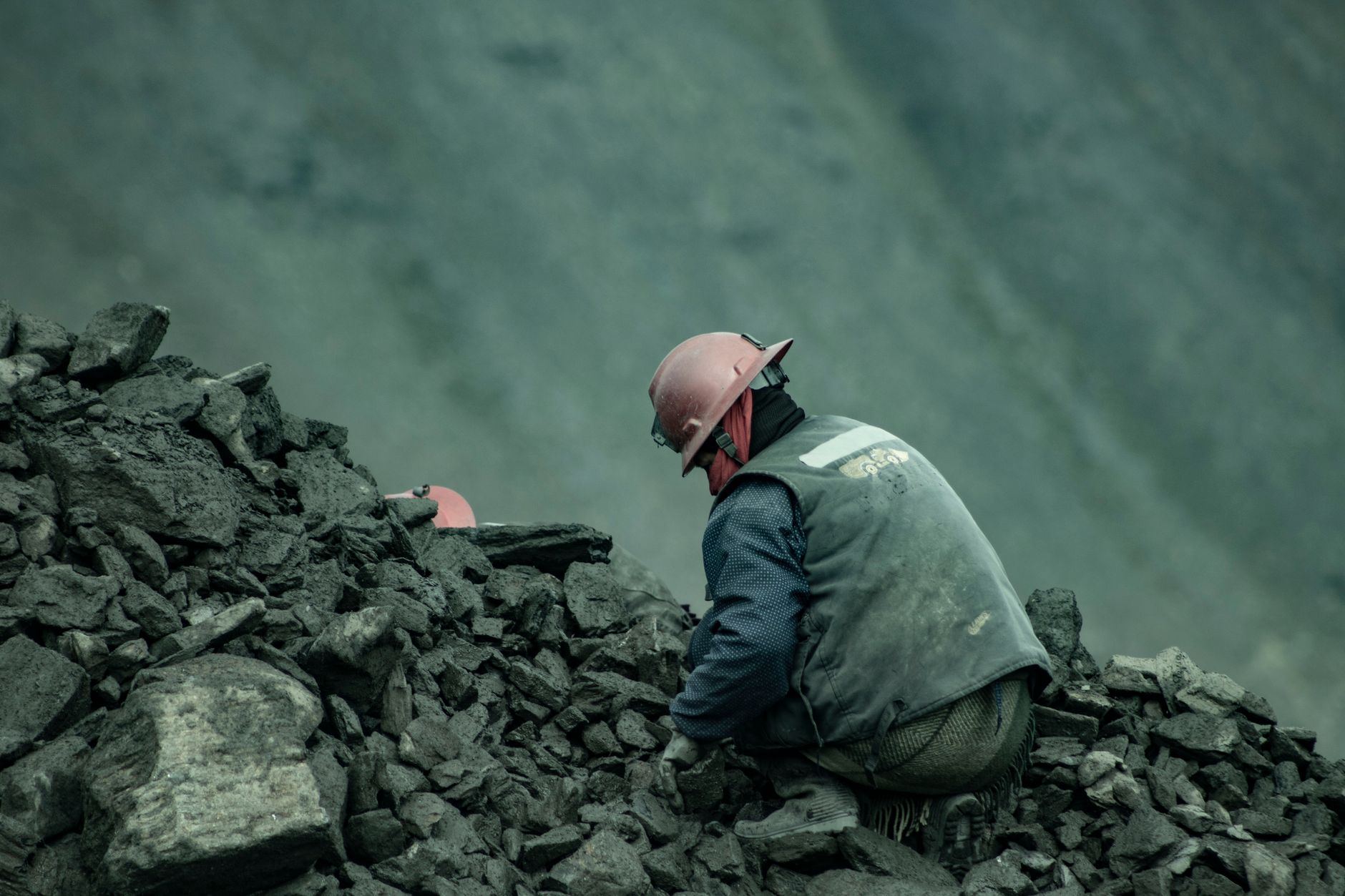
This hiring advantage functions as a direct economic input. When Mitsubishi assigns a representative to the BMA joint venture, that individual expects to remain in the role for 10 to 15 years, building personal relationships with BHP counterparts, Queensland regulators, and Japanese steel mill customers. The knowledge accumulated is not codified in databases; it resides in the contextual understanding of which BHP project manager can expedite a maintenance decision, which port authority official responds to personal calls, which Chinese steelmaker is likely to default on offtake agreements during downturns. This tacit knowledge, what the anthropologist might call “relationship capital”, depreciates rapidly if employment patterns shift. A Western trading house, with its two-year analyst programs and five-year partner tracks, cannot accumulate equivalent depth. The cost of employee turnover in Mitsubishi’s model is not merely recruitment expenses; it is the decay of network functionality.
The governance structure reinforces this. Mitsubishi’s board includes career executives who have risen through specific commodity divisions, possessing granular understanding of the assets and relationships they oversee. This is not the independent director model favored by Western governance codes, where outsiders provide oversight without operational involvement. It is a model where governance and operations fuse, where the decision-makers have spent decades inside the specific joint ventures they now steward. The durability of this arrangement depends on the persistence of Japanese employment norms, lifetime employment, seniority-based advancement, collectivist decision-making, that are themselves under pressure from demographic decline and generational shifts in work preferences.
If Mitsubishi capitulates to Western capital allocation standards, it may be forced to adopt Western human capital standards: performance-based compensation, aggressive headcount management, rotational assignments designed to expose talent to diverse experiences rather than deep specialization. Such changes would destroy the institutional memory that constitutes the primary barrier to entry. A trader who has managed the copper relationship with Escondida for eight years knows how to interpret BHP’s capital expenditure signals; a trader who rotates through copper, then coal, then LNG over six years possesses only superficial pattern recognition. The culture is not merely a pleasant artifact of Japanese corporate life; it is the production technology of the firm.
The Ayala Precedent
The recent restructuring of the Ayala relationship illustrates the surgical precision required to navigate these tensions. After 45 years of partnership, Mitsubishi announced a reduction in its equity stake in Ayala Corporation, the Philippine conglomerate, while explicitly maintaining operational collaborations across automobiles, real estate, power, and water infrastructure. The retained holding of roughly $300 million represents a significant downsizing from previous levels, releasing capital for shareholder returns and improving the appearance of capital efficiency. Yet the announcement emphasized continuity: the two companies would continue joint ventures in automotive distribution, explore new infrastructure projects together, and maintain governance linkages through board representation.
This is the model for managed decline: attempt to monetize equity while preserving optionality. But the transaction also reveals the knife-edge nature of such maneuvers. Ayala accepted the reduction because Mitsubishi framed it as portfolio optimization rather than strategic withdrawal. But if Mitsubishi had sold the entire position, or if it had demanded the sale to satisfy an aggressive ROE target, the message would have differed fundamentally. The Philippine conglomerate might have interpreted full exit as betrayal, closing doors to future collaboration that the equity stake had kept propped open. By retaining a meaningful, if reduced, position, Mitsubishi signaled that it remained a long-term partner, just one that needed to rebalance its balance sheet.
Other partners are watching this transaction closely. The mining majors, BHP, Rio Tinto, Anglo American, observe how Mitsubishi manages its legacy relationships to infer how it might behave in future cyclical downturns. If Mitsubishi treats the Ayala reduction as a template for exiting resource stakes during commodity lows, the majors will adjust their partnership calculations. They may demand higher ownership percentages to ensure operational continuity, or they may prefer partners with demonstrated willingness to double down during stress. The network advantage depends on being the counterparty that stays when others leave. If Mitsubishi’s capital efficiency program forces it to become the counterparty that leaves to optimize returns, the network reconstitutes itself around more reliable nodes.
The Philippine example also illustrates the geographic specificity of Mitsubishi’s model. The Ayala partnership spans sectors, automobiles, real estate, technology, water, power, that mirror Mitsubishi’s own conglomerate structure. This parallelism is not accidental. It allows for reciprocal learning: Mitsubishi observes how Ayala navigates Philippine regulatory environments; Ayala learns Japanese operational discipline. The relationship has survived multiple Philippine political transitions, currency crises, and shifts in economic policy precisely because both parties viewed it as permanent capital. If Mitsubishi now treats the Philippines as a market to be weighted according to ROE thresholds, it signals that similar logic might apply to its Australian coal assets or its Chilean copper positions. The partners in those jurisdictions, sovereign wealth funds, national mining companies, competing traders, will adjust their courtship accordingly.
The Cyclicality Assumption and Its Discontents
The normalized earnings guidance of ¥800 billion to ¥1 trillion annually depends on assumptions about long-run commodity prices that deserve scrutiny. Management’s models assume metallurgical coal prices averaging roughly $150-170 per tonne, copper prices near $8,000-9,000 per tonne, and stable LNG spreads. These are not aggressive assumptions; they represent modest premiums to historical averages adjusted for inflation. Yet the resource business is not a normalized business. It is characterized by violent cyclicality, decade-long bear markets punctuated by explosive spikes driven by Chinese infrastructure stimulus or supply disruptions.
Mitsubishi’s model assumes it can capture the average through the cycle, smoothing volatility via its diversified portfolio and patient capital. But this assumes the cycle continues to function as it has historically, hort, sharp corrections followed by recovery. If the energy transition accelerates, metallurgical coal demand could enter structural decline faster than the 30-year mine lives assume. Steelmakers may shift to hydrogen-based direct reduction faster than anticipated, obsoleting the premium hard coking coal that constitutes BMA’s primary product. In such a scenario, Mitsubishi’s 50 percent stake becomes a declining asset rather than a cyclical one, and the normalized earnings collapse not temporarily but permanently.
The company has no hedging mechanism for this transition risk. It cannot pivot BMA to produce copper. It cannot convert Escondida to lithium. The minority stake model, which limits capital intensity and risk, also limits strategic flexibility. Mitsubishi is tied to the commodity mix of its partners’ assets, unable to force transitions to energy transition metals even if it recognizes the shift earlier than the majors. If BHP decides to run BMA for cash, maximizing near-term extraction while minimizing sustaining capital, Mitsubishi must accept the accelerated depletion or buy out BHP’s position, recisely the capital-intensive outcome its model avoids.
Moreover, the assumption of stable partnerships assumes stable partner strategies. Anglo American’s 2024 restructuring, which included divestitures of non-core assets and reduced capital intensity, demonstrates how major miners are reshaping portfolios in response to shareholder pressure. If Anglo American determines that Quellaveco, the Peruvian copper mine where Mitsubishi holds 40 percent, requires capital beyond its new hurdle rates, it may seek to sell down or joint venture the asset with a state-backed Chinese entity. Mitsubishi would face the choice of partnering with a Chinese state-owned enterprise, potentially compatible with Mitsubishi’s long-term orientation but politically complex, or exiting at valuations determined by Anglo’s distress. The minority stake provides no protection against partner strategic shifts; it merely provides a seat at the table until the table is overturned.
The Breaking Point
The bear case for Mitsubishi is not that commodity prices fall, this the company has survived before, but that the governance transformation demanded by Western investors forces a simultaneous optimization of capital, culture, and relationships that the model cannot withstand. If the board, pressured by ROE metrics and Berkshire’s implicit expectations, accelerates divestitures of “non-core” holdings, it will trigger a cascade. Partners will observe the Ayala treatment and demand higher governance rights to ensure Mitsubishi cannot exit easily. The majors may prefer to deal with trading houses that offer permanent capital guarantees rather than equity stakes subject to quarterly review.
Simultaneously, if the company adopts Western human resource practices to demonstrate “modernization,” the relationship capital dissipates. The 15-year tenures that enable deep trust become 5-year rotations that produce competent but superficial engagement. Mitsubishi begins to resemble Glencore or Trafigura, ophisticated traders with operational insights but without the institutional patience that secures preferential deal terms. The discount on the shares narrows not because the market recognizes hidden value, but because the value has been liquidated.
The commodity cycle then delivers the coup de grace. A downturn in copper or coal arrives, but Mitsubishi no longer possesses the cultural capacity to hold through the pain. It must sell to protect dividend coverage, or because the new performance metrics cannot tolerate depressed equity earnings. The sales occur at cyclical lows, crystallizing losses and confirming to the market that Mitsubishi is no longer a patient capital partner. The network advantage, already eroded by cultural changes, disappears entirely. The company becomes a trading house with a legacy asset base, shrinking toward irrelevance.
This is not the inevitable outcome. It is the fragility embedded in the current transformation. Mitsubishi’s leadership understands these tensions; the measured pace of the Ayala reduction, the emphasis on maintaining relationships while monetizing equity, suggests sophisticated navigation. But the pressures are asymmetrical. Building a 45-year partnership requires decades; destroying the credibility that sustains it requires one ill-timed divestiture. Improving ROE by 200 basis points through operational efficiency is difficult; improving it by 200 basis points through stake sales is seductively easy, until the sales eliminate the source of future returns.
The company stands at an inflection where the metrics of success, return on equity, capital efficiency, shareholder returns, may become incompatible with the sources of value, elationship depth, institutional patience, network optionality. If forced to choose, Mitsubishi will likely attempt to split the difference, as it did with Ayala: selling enough to satisfy the metrics, retaining enough to preserve the relationships. But not all assets permit such surgical extraction. A 50 percent stake in a coal mine cannot be halved without triggering change-of-control provisions or partner buyout rights. The binary choices loom.
The thesis that patience produces returns assumes that the patient capital remains patient. With Berkshire’s approval, with the Ito Review’s mandate, with the global shift toward immediate capital returns, Mitsubishi is being asked to prove that it can be simultaneously patient and impatient, long-term oriented and quarterly efficient, collectivist in culture and individualist in compensation. These are not complements. They are contradictions that the business model, despite its 150-year history, may not survive intact. The next commodity downturn will not merely test the balance sheet; it will test whether the company still possesses the cultural architecture that made the balance sheet worth testing in the first place.