
Padel: The Sound of Scarcity

The Sound of Scarcity
There is a particular acoustic signature to padel, one that distinguishes it from the hollow thwack of tennis or the plastic clack of pickleball. The ball strikes tempered glass at velocity, producing a deep, resonant percussion that carries across converted warehouses and repurposed industrial yards. It is the sound of capital hitting barriers, oth literal and economic.
In Acapulco in 1969, Enrique Corcuera invented the game by building walls around a tennis court too small for conventional play. Half a century later, that architectural constraint has become the foundation of a $2 billion global industry. Europe hosts approximately 37,000 courts, with inventory expanding at 22 percent annually. The United States contains roughly 300. This disparity is not merely a lag in cultural adoption; it reflects a specific business model that extracts value through engineered scarcity, social coercion, and the deliberate occupation of urban industrial real estate before competitors or municipalities recognize the asset’s value.
The model is elegant in its brutality. A padel club requires $1 million to $3 million in upfront capital, six to ten courts for viable unit economics, and zoning permissions that favor private operators over public facilities. It charges $120 per hour, thirty dollars per person, protected by the fact that four players, not two, must coordinate to unlock access. Margins hover at 35 percent, payback periods stretch across two to three years, and the entire edifice rests on a wager: that cities will never build public padel courts the way they built tennis courts, leaving the field open for private operators to monetize the space between urban density and recreational demand.
The Warehouse Monopoly
The defining constraint of the padel business is not consumer interest but square footage. Unlike tennis, which can commodify any flat surface, or pickleball, which repurposes existing asphalt, padel requires a specific footprint: roughly 20,000 square feet of covered or convertible industrial space, sufficient ceiling height for lobs, and parking for a demographic that arrives in vehicles. In dense urban cores where the target market, affluent professionals aged 25 to 50, actually lives, such real estate competes with logistics companies, last-mile delivery hubs, and light manufacturing.
This competition creates the first and most durable moat. Early entrants secure long-term leases on warehouse districts before landlords understand the viability of the tenant. Once converted, these facilities are difficult to repurpose back to industrial use; the glass walls and specialized flooring represent stranded capital. More importantly, the capital intensity, $3 million for an indoor facility, deters rapid saturation. Municipalities, which flooded markets with cheap tennis courts in the 1970s and 1980s, cannot easily replicate padel infrastructure. The glass alone requires specialized installation and maintenance; the heating and lighting demands exceed those of racket-ball facilities. A city council looking to add recreational inventory faces a choice between converting existing tennis courts to pickleball at negligible cost, or funding multi-million dollar padel constructions. The rational actor chooses pickleball.
<pPadel Haus in Brooklyn illustrates the calculus. The operation runs four indoor courts and three temporary outdoor installations, occupying industrial space near the waterfront where traditional warehouse tenants once dominated. The location serves the 25-to-50 demographic concentrated in nearby residential towers, yet sits outside the premium retail corridors where rent would break the $30-per-person price elasticity. This is the playbook: find the grey zone between residential density and industrial zoning, pay industrial rents while charging hospitality premiums, and lock in the location before the neighborhood’s commercial identity shifts.The scarcity is structural. Each viable urban site can support perhaps one profitable 6-to-10-court club. The second entrant splits the player pool, utilization rates collapse, and the pricing power evaporates. The business is therefore a land grab disguised as a sports investment, with the racket sport serving merely as the highest and best use of temporarily undervalued industrial square footage.
Four Bodies, One Exit
Once the real estate is secured, the second mechanical advantage activates: the mandatory 2v2 format creates social lock-in effects that individual fitness modalities cannot replicate. A gym membership is a private contract between one person and a facility. A padel reservation is a quadrilateral coordination problem. To play, you need three other humans, scheduled simultaneously, committed to the same hour, and willing to split the cost. This friction is not a bug; it is the retention mechanism.
The economic implications are subtle but profound. Individual churn requires only personal motivation to wane. Group churn requires the simultaneous dissolution of four schedules. When one player considers quitting, they face social friction from three others who depend on their presence to unlock court access. This generates switching costs exponentially higher than those of yoga studios or climbing gyms. Furthermore, the format creates organic viral loops. A player cannot practice alone; they must recruit. Each existing player becomes a sales agent, filling courts through their social graph without marketing expenditure.
The $120 hourly rate, $30 per person, only works at this four-person threshold. Drop to three players and the cost becomes $40 per head, approaching the pain point for recurring casual sport. Drop to two and you might as well play tennis. The pricing architecture thus enforces the social structure. The business does not sell exercise; it sells coordination, capturing the premium that urban professionals willingly pay to outsource the logistical headache of organizing group recreation.
This quadrilateral trap explains why the model achieves 35 percent net margins despite significant fixed costs. The utilization curve is not driven by individual habit formation but by social obligation. A tennis court sits empty when one player gets busy. A padel court requires the collapse of an entire social cell to go dark.
The Membership Paradox
Yet the same social density that drives retention creates a tension in the pricing model. Operators face a choice between open-access utilization and membership exclusivity, and the wrong mix destroys the economics.

Membership models generate sticky recurring revenue, improve cash flow predictability, and create the psychological sunk cost that keeps players returning. But they restrict the player pool during the critical ramp-up phase. A club with 200 members might book 60 percent of its hours to the same faces, leaving 40 percent inventory unsold and word-of-mouth growth stunted. Open models maximize utilization and viral acquisition but reduce switching costs and pricing power. If courts are available to anyone with a credit card, the player treats the facility as a commodity, booking the cheapest hour rather than committing to the community.
The hybrid approach, membership tiers plus premium walk-in rates, attempts to split the difference. Members pay monthly dues for priority booking rights and reduced hourly fees; non-members fill the off-peak inventory at $40 or $50 per person. But this balance is precarious. Price the membership too low and you cannibalize the high-margin walk-in business. Price it too high and you fail to seed the court density necessary to make the space feel alive. A padel club with empty courts suffers a visibility death; the glass walls that create the acoustic signature also expose failure. Prospects walking past see desolation, not demand.
The $30-per-person equilibrium assumes near-maximum utilization during prime hours. At Padel Haus and similar early entrants, the calculation works because supply is genuinely constrained. As more capital enters the market, the membership question becomes existential. Clubs that over-index on exclusivity risk creating beautiful, empty cathedrals. Those that over-index on access risk becoming booking engines for transient users with no loyalty to the brand.
The Acapulco Problem
The current American market reveals the demographic fragility beneath the growth metrics. Of the 300 existing courts, utilization depends heavily on specific expatriate communities, Swedes, Spaniards, Argentines, who grew up with the sport and import their habits to New York, Miami, and Los Angeles. This is not incidental; it is the primary demand driver. The sport remains culturally dominant in Spain, where padel players outnumber tennis players, and in Argentina, where the professional circuit commands national television audiences.
The business model assumes this expat enthusiasm will translate to mainstream American adoption, converting tennis players and fitness seekers into padel regulars. But cultural translation is expensive. The “easy to learn, hard to master” retention loop requires coaching infrastructure to bridge the gap between casual curiosity and competent play. Without instruction, beginners experience not the addictive rhythm of extended rallies, but the frustration of hitting the glass or watching the ball die in the corners. The community feel that drives retention among expats, the specific social density of Swedish professionals booking standing Tuesday matches, does not automatically transfer to American newcomers who lack the cultural memory of the sport.
Operators face a narrowing window to convert the curious into the committed before the demographic ages out. The 25-to-50 cohort has limited years of intensive physical activity; the payback period requires high utilization across 24 to 36 months. If the expat communities plateau and local adoption fails to accelerate, clubs face the horror of fully amortized facilities serving shrinking populations. The glass walls, once assets, become transparent evidence of cultural miscalculation.
The Public Option
Beneath every private padel valuation lies a fragile assumption: that municipalities will continue to treat the sport as infrastructure-light entertainment, unsuitable for public provision. This is the central wager, more important than consumer trends or coaching quality.
Cities built public tennis courts by the thousands because the marginal cost of adding lines to existing asphalt was negligible. They are now converting thousands of those courts to pickleball, satisfying the same social racket-sport demand with zero access fees. If cities decide that padel represents a public health asset worth subsidizing, the private model collapses. A municipal padel court operating on park district budgets, charging $10 per hour or nothing at all, immediately caps the pricing power of $30-per-person private clubs.
The physical architecture of padel complicates this threat but does not eliminate it. The glass walls and specialized surfaces require maintenance budgets that park districts might balk at. The 2v2 format requires reservation systems that public parks often lack. Yet these are solvable problems. If the sport reaches sufficient penetration among voters, the political pressure to democratize access will meet the reality that industrial warehouses can be rezoned as recreation centers. The $1-to-$3-million capital barrier that protects private operators is only effective so long as public entities refuse to cross it.
The comparison to pickleball is instructive. Pickleball succeeded not because it is superior sport, but because it is municipal infrastructure. It colonized existing tennis courts at zero capital cost to the public. Padel cannot replicate this viral expansion; it requires construction. For now, that construction cost protects private margins. But it also creates a political target. A sport that charges $120 per hour for court time while occupying industrial real estate in housing-scarce cities may eventually face the same zoning scrutiny that golf courses now encounter. The assumption that cities will permanently abstain from building public courts is an expiration date on the business model, even if the date remains unclear.
Velocity Kills
The tension between growth and quality presents itself as a leadership problem, but it functions as an economic variable. First-mover advantage in padel requires rapid capitalization, ecuring the warehouse leases before competitors, building the 6-to-10-court footprints before the market saturates. But the coaching and community infrastructure that converts beginners into long-term members does not scale with capital velocity. It requires human capital, cultivated slowly.
A club that opens six courts simultaneously must fill them immediately to service debt. It faces pressure to lower barriers to entry, reduce coaching standards, and prioritize volume over instruction. The result is churn. Beginners who encounter poorly maintained courts, indifferent staff, or mismatched opponents in their first sessions do not form the quadrilateral social bonds that create retention. They leave, and they take their potential viral loops with them.
The payback period assumes a specific lifetime value per member, calculated across two to three years of high-frequency play. If expansion velocity degrades the community quality, that lifetime value compresses. The 35 percent margins evaporate not because of competition, but because of internal dilution. Leadership in this business is not charisma; it is the calibration of growth speed against the finite rate at which social culture can accrete. The operator who builds ten clubs in eighteen months may capture real estate, but they risk destroying the coaching capital necessary to make those clubs profitable before the loans come due.
The Pickleball Shadow
Finally, the substitution threat looms not from other premium sports, but from the municipal adoption of pickleball. The two sports serve nearly identical psychographic needs: social, doubles-based, accessible to aging athletes, conducive to conversation during play. Pickleball’s court requirements are negligible; its capital barriers are zero; its expansion is already funded by park district budgets.
If municipalities satisfy the social racket-sport demand through free outdoor pickleball, padel becomes a niche luxury product, not a mass-market recreation business. The $30-per-person price point requires that padel offer a demonstrably superior experience, ndoor climate control, professional coaching, hospitality amenities, the glass-wall spectacle. But those amenities extend the payback period and limit the replication speed necessary to capture the 22 percent demand growth.
The 300 American courts face a strategic choice. They can lean into the premium positioning, accepting that they serve only the wealthy urban elite in supply-constrained markets, becoming the squash clubs of the 21st century. Or they can race for mainstream adoption, hoping to achieve cultural critical mass before pickleball colonizes the public consciousness. The former is a real estate play with limited exit liquidity; the latter requires solving the municipal threat, the expat dependency, and the coaching velocity problem simultaneously.
The glass walls reverberate with the sound of money hitting scarcity. Whether that scarcity is permanent, or merely the temporary artifact of cities not yet paying attention, will determine if the racket sustains or shatters.
The hospitality premium extends this vulnerability into the operating model itself. Operators face a forced choice between capital efficiency and experiential differentiation, and the wrong calibration destroys the unit economics regardless of demand. The $3 million indoor facility commands $120 per hour because it offers climate control, professional lighting, and the acoustic enclosure that makes the sport playable in January. But to justify that price point consistently, many operators layer in restaurants, bars, and lounge spaces that extend the dwell time beyond the 90-minute court reservation. The logic is seductive: captive, affluent players with 45-minute buffers before and after play represent a captured F&B audience with high wine and beer attach rates. The margin on a $16 negroni approaches 80 percent, while the margin on court time, after debt service and utilities, struggles to clear 35 percent.
Yet the hospitality infrastructure triples the construction timeline and requires permits, liquor licenses, kitchen exhaust, health inspections, that pure court operations avoid. More critically, it divides management attention between two distinct businesses: real estate-intensive sports operations and labor-intensive food service. A padel club with a restaurant is not merely a padel club with auxiliary revenue; it is a hybrid entity competing against actual restaurants for chef talent, against actual bars for beverage directors, and against the relentless entropy of food spoilage and labor turnover. When the kitchen fails, the courts suffer. Negative reviews on reservation platforms rarely distinguish between slow service and cracked glass.
The capital efficiency alternative, bare-bones warehouses with vending machines and benches, sacrifices the pricing power that makes the $30-per-person model work in primary markets. In secondary cities, where industrial real estate is cheaper but the demographic is thinner, the stripped-down model may be the only viable path. But it cedes the high ground to competitors who can execute the hospitality bundle correctly. The tension is irreconcilable: the premium positioning required to amortize urban real estate costs demands amenities that slow expansion velocity and increase operational fragility.
This plays out in the specific physics of the 6-to-10-court threshold. Six courts represent the minimum viable footprint for a club that intends to host leagues, tournaments, and corporate events; below this number, the fixed costs of reception, bathrooms, and HVAC are distributed across too few revenue hours. Ten courts approach the optimal utilization curve in dense markets, allowing for simultaneous programming, junior clinics, beginner lessons, open play, and private matches, without cannibalizing the prime-time slots that generate 70 percent of revenue. But the jump from six to ten courts requires not merely 40 percent more capital, but a fundamentally different real estate parcel. Ceiling height requirements, column spacing, and parking ratios scale non-linearly. The eight-court sweet spot that many European operators favor becomes impossible in American cities where industrial stock dates from the 1920s with load-bearing walls every twenty feet.
The zoning complexity that protects margins is therefore an active operational constraint, not a static moat. Industrial districts in Brooklyn, Queens, and Chicago’s West Side operate under legacy zoning that permits recreational uses only through conditional permits or variances. Each conversion requires navigation of community boards, parking studies, and noise ordinances that treat the percussive thud of padel balls as industrial sound pollution. A logistics tenant moving into the same warehouse faces none of these frictions; they load at 6 AM and generate truck traffic that the neighborhood expects. A padel club loads at 7 PM and generates 200 cars seeking parking in a district designed for freight. The two-year zoning timeline that early entrants endured becomes a permanent structural disadvantage for followers, but it also represents a holding cost for pioneers. Every month of permit delay is a month of interest accrual on $3 million of deployed capital, with no revenue to offset it.
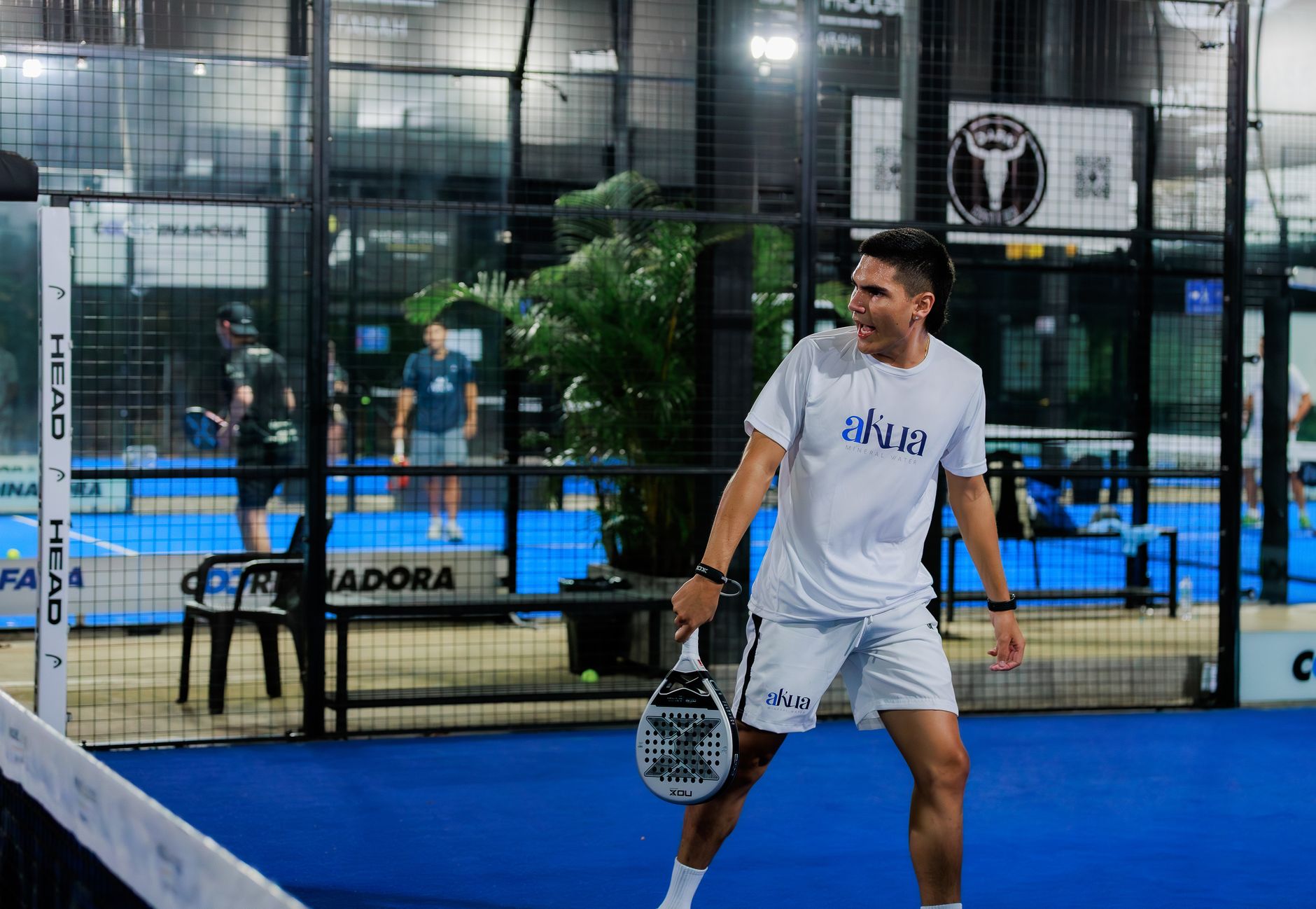
The Swedish, Spanish, and Argentine expatriate communities that currently form the nucleus of American padel demand are not merely marketing demographics; they are economic infrastructure. In Stockholm, padel is the default social activity for corporate team-building; the sport has colonized the 5-to-7 PM slot that Americans devote to happy hour. When Swedish multinationals transfer employees to New York, they import not just personnel but behavioral expectations. The same holds for Argentine professionals in Miami and Spanish finance workers in London’s satellite offices. These communities provide the seed crystal around which clubs nucleate: they book standing weekly matches, they understand the etiquette of the glass walls, they tolerate the price points because they compare them to Stockholm’s $50-per-hour rates rather than to public tennis.
But this dependency creates concentration risk that resembles the single-tenant industrial real estate exposure. If a Swedish bank consolidates its American operations, or if Argentine visa policies tighten, the core player base evaporates faster than it can be replaced by local converts. The demographic is also aging in place; the 25-to-50 cohort that launched the European boom is now 35 to 60, and while padel is gentler on knees than tennis, it is not immune to the physical attrition that eventually empties squash courts. The retention loop assumes a continuous pipeline of 30-year-olds entering the sport, but the cultural transmission mechanism, expatriate professionals bringing their girlfriends and boyfriends, who become spouses, who become parents seeking family activities, assumes a stability in migration patterns that political and economic volatility increasingly disrupts.
The coaching infrastructure necessary to convert locals into regulars faces its own human capital constraints. Unlike tennis, which has a century of pedagogical tradition and a surplus of instructors in most American cities, padel requires coaches who understand the specific geometries of the glass walls and the bandeja smash. The sport’s professional circuits in Spain and Argentina produce talented players who might immigrate to teach, but they arrive without English fluency or without the work visas that hospitality-classified jobs can provide. Domestic tennis coaches can cross-train, but the skill transfer is imperfect; the tactical emphasis on positioning and angles differs fundamentally from baseline tennis warfare. A club that expands from four courts to ten courts must quadruple its coaching staff, but the talent pool is geographically concentrated in Malaga and Buenos Aires. The quality degradation is not gradual; it is sudden, occurring when the head coach’s schedule is fully booked and beginners are handed off to assistants who cannot explain the difference between the chiquita and the vibora.
This coaching bottleneck feeds back into the membership tension. High-quality instruction creates the retention that justifies membership fees; without it, members churn. But the revenue model requires maximizing court utilization, which means scheduling back-to-back lessons that exhaust the coaching staff and leave no capacity for the casual drop-in play that builds community. The operator who optimizes for utilization destroys the instructional quality that creates loyalty. The operator who reserves courts for instruction sacrifices the hourly revenue that services debt.
The brand-based multi-location strategy that promises to solve the court availability bottleneck introduces compounding risks. When a player joins a network, Padel Haus, or its competitors, they purchase access to a portfolio of locations, solving the scarcity problem that single-site clubs create. But this requires maintaining consistent standards across facilities built in different industrial shells with different zoning constraints. A player who books a court in the Williamsburg location expects the same glass quality, lighting temperature, and ball pressure as the Tribeca location. The capital requirements for brand consistency, identical wall systems, identical HVAC specifications, identical hospitality fit-outs, multiply the $3 million baseline. The operator becomes a real estate fund with a hospitality overlay, managing not just sports operations but a portfolio of lease obligations with staggered renewal dates.
The fragility of the industrial real estate market dependency becomes acute here. Warehouse districts that seem abandoned often sit on land banks awaiting rezoning for residential use. The padel club that signs a ten-year lease with five-year options may find its landlord negotiating a buyout with a condominium developer in year three. The specific improvements, glass walls bolted to concrete floors, specialized HVAC ductwork, have no salvage value in a residential conversion. The operator must either accept relocation costs that reset the payback clock, or negotiate lease terms with termination penalties so severe that they eliminate the margin entirely. The first-mover advantage is actually a first-mover exposure; early entrants secured locations before landlords understood the business model’s viability, but they also secured locations before landlords understood the model’s vulnerability to residential gentrification.
The bear case coalesces around the intersection of these pressures. Imagine a 2027 scenario: municipalities, pressured by pickleball advocates and health equity campaigns, approve public padel courts in converted tennis facilities, charging $15 per hour. Simultaneously, the Swedish corporate presence in New York contracts, reducing the expatriate core. Industrial landlords, observing the $120 hourly rates, demand rent resets at renewal that reflect hospitality rather than warehouse pricing. Coaching quality degrades as expansion outpaces talent immigration. The $30-per-person price point, which assumed 80 percent utilization among affluent professionals, collapses to $20 per person as clubs discount to fill courts. The 35 percent margins become 15 percent margins, insufficient to service the debt on $3 million facilities. The multi-location operators consolidate or fail, and the surviving clubs retreat to the pure real estate play: bare-bones warehouses serving the residual expatriate communities and the wealthy enthusiasts who treat padel as squash, not as mass recreation.
Against this, the structural advantages remain potent but narrow. The social lock-in mechanics are real; quadrilateral coordination problems do not vanish because courts become cheaper. The capital barriers that prevent municipal overbuilding are physical, not merely financial; cities cannot easily justify glass-walled facilities when pickleball satisfies the same voting blocs. The first-mover real estate capture, if executed with long lease terms in secondary industrial zones not yet targeted for residential conversion, creates genuine local monopolies. A player in Bushwick who commits to padel cannot easily travel to the Bronx for a cheaper court; the logistics of carrying four rackets and coordinating three partners across boroughs preserve the neighborhood club’s pricing power even in competitive markets.
The ancillary revenue streams, retail, corporate events, junior academies, offer yield optimization that tennis clubs mastered decades ago. Padel racquets require replacement every six months for serious players; the strings fray against the glass, the frames crack from wall impacts. A club that captures equipment sales achieves retail margins on inventory that turns rapidly. Corporate events leverage the 2v2 format’s natural team-building alignment; four colleagues bond more effectively than two. Junior academies monetize the aspiration of parents who recognize that tennis scholarships are saturated while padel scholarships do not yet exist, betting on the sport’s eventual NCAA recognition. These revenues are small relative to court time but high-margin, and they accrue to the operator who controls the community’s social nodes.
Ultimately, the business is a bet on the permanence of coordination failure. It assumes that urban professionals will indefinitely pay a premium to outsource the logistical nightmare of organizing group recreation. It assumes that the specific physical architecture of padel, enclosed, loud, glass-walled, creates sufficient experiential differentiation from pickleball to justify the cost delta. It assumes that industrial real estate markets will remain fractured enough to allow private capture before public provision, but stable enough to amortize construction costs over ten years.
The sound of the ball against glass is the sound of these assumptions being tested. Each resonant thud marks another hour of utilization, another $120 of revenue, another moment of social cohesion in a city that fragments its leisure into solitary headphones and individual fitness trackers. Whether that sound persists depends on whether the scarcity is genuine or manufactured, whether the community is cultivated or merely monetized, and whether the warehouse walls that contain the game prove more durable than the economic pressures pressing against them from outside.
The junior academy strategy illustrates this calculus precisely. Tennis currently offers approximately 266 NCAA Division I scholarships for women and 126 for men, distributed across hundreds of universities, creating a tournament infrastructure that supports thousands of private clubs teaching seven-year-olds the continental grip. Padel offers zero. The bet, then, is that the sport’s trajectory in Spain, where junior participation now exceeds adult recreational play, will replicate in American suburbs before the scholarship window closes. Parents pay $180 per month for junior memberships not because their children love the sport, but because they believe they are buying optionality on a future where padel scholarships finance education at state universities. This is speculative demand, fragile and sentiment-driven, entirely dependent on the NCAA’s administrative timeline and the sport’s ability to displace tennis in athletic department budgets.
Operating these academies imposes brutal constraints on the unit economics. Junior programming requires court time during the 3:00 to 6:00 PM window, recisely the hours when adult professionals want to book matches to decompress after work. A club that dedicates two courts to junior clinics sacrifices $720 in peak-hour revenue per day, or $18,000 monthly, to generate perhaps $8,000 in coaching fees and membership dues. The margin compression is severe, yet the community cultivation is essential; the expatriate professionals currently filling the 7:00 PM slots rarely produce the three-generation loyalty that sustains country clubs through recessions. They are transient, corporate, transferable to Shanghai or London with six months’ notice. The junior player ties the family to the zip code.
This demographic transition, where the 25-to-50 cohort ages into parenthood, creates a temporal mismatch that threatens the model’s continuity. The current core player has no children old enough to populate academies; they are DINKs (dual income, no kids) or recent parents with toddlers. When their children reach six years old, in approximately 2028 or 2029, the facilities must be ready, but the coaching infrastructure must also have matured to pedagogical standards that currently do not exist in the United States. The Argentine professional who can execute a perfect bandeja may have no capacity to teach wrist articulation to a child, requiring the club to import European pedagogues at visa-complicating expense.
If the scholarship arbitrage fails, if the NCAA demurs, or if tennis successfully lobbies to exclude padel from emerging sport status, the junior academies become sunk costs of goodwill rather than profit centers. The courts return to adult programming, but the brand has anchored itself in family recreation, requiring expensive rebranding toward the corporate hospitality market it originally sought. The glass walls, designed to contain the sound and spectacle of adult competition, become inconvenient barriers for supervising parents watching seven-year-olds chase balls into corners. The business discovers that it has built infrastructure for a demographic transition that occurred too late, or not at all, leaving expensive square footage optimized for the wrong species of player.
The acoustic signature changes with the population. Junior clinics produce higher-pitched impacts, more frequent, staccato, lacking the rhythmic percussion of experienced rallies. A club filled with children sounds different than a club filled with Swedish finance professionals, and the real estate, those carefully secured warehouse walls, must absorb both frequencies without shattering. The scarcity model assumes a particular density of adult disposable income; it does not account for the acoustic or economic disturbance of saturating the space with subsidized junior programming. The walls stand, but what they contain determines whether the resonance is profitable or merely loud.