Paris Olympics: When Spectacle Masks Wealth Transfer

The Spectacle Masks a Transfer of Wealth
On the evening of July 26, 2024, the Opening Ceremony of the Paris Summer Olympics drifted down the Seine. Athletes from two hundred and six nations floated past Notre-Dame on ninety-four barges, while Lady Gaga performed on a gold-leafed staircase and Celine Dion sang from the Eiffel Tower. The production cost roughly $130 million to stage: figure that sounds extravagant until placed against the broader ledger of the event. The French taxpayer had committed roughly $9 billion to construct temporary venues, renovate the Grand Palais, build an Olympic Village on former industrial land in Seine-Saint-Denis, and deploy between fifty and eighty thousand security personnel across the capital. For seventeen days of competition, Paris would absorb this cost, along with the permanent liability of maintaining thirty-five to forty specialized sporting facilities on some of the most expensive urban real estate in Europe. The International Olympic Committee, meanwhile, would collect approximately $4 to $5 billion in international broadcast rights and global sponsorship revenue, retain roughly 10 percent for its executive operations, redistribute 70 percent to International Sports Federations and National Olympic Committees to maintain the competitive ecosystem, and direct approximately 20 percent to the host city alongside ticket sale proceeds.
The mathematics are brutal and consistent. Since 1960, every Summer Olympics has exceeded its initial budget by an average of 250 percent. Tokyo 2020 ultimately cost $35 billion against initial projections of $7.3 billion. Sochi 2014 consumed between $51 and $65 billion. Beijing 2008 required $45 to $60 billion. Paris, at $9 billion, represents relative fiscal restraint, et still guarantees a negative return. The IOC has engineered a mechanism wherein municipal governments compete against one another for the exclusive right to host a mega-event, driving capital expenditures far beyond economic utility while the organization itself captures the monetizable value of the global audience. The Games function not as a commercial enterprise shared between partners but as a monopoly extraction regime that socializes infrastructure costs and privatizes media rents.
The Architecture of Extraction
The IOC operates as an unregulated international monopoly. No supranational body possesses the authority to enforce cost controls, mandate revenue-sharing reforms, or constrain the terms the organization dictates to prospective hosts. This regulatory vacuum allows the Committee to set the rules of engagement without external constraint. The mechanism relies on artificial scarcity: the Summer Games occur once every four years, cannot be replicated by competitors, and confer a non-transferable prestige upon the host. Cities must bid against one another for this exclusive right, and the competitive dynamic forces them to propose ever more elaborate infrastructure packages, specialized velodromes, whitewater kayaking courses, and Olympic Villages housing thirteen to fourteen thousand athletes, that serve no economically viable purpose after the closing ceremony.
The revenue split reveals the structural relationship. Host cities receive roughly 20 percent of international television revenue, down from higher historical percentages. The IOC retains 10 percent for its Lausanne headquarters and executive operations. The remaining 70 percent flows to the constituent federations and committees that constitute the Olympic movement. This distribution ensures that the global sport ecosystem remains dependent upon the IOC’s continued extraction from hosts; the federations receive their subsidies regardless of whether the host city bankrupts itself. The host, meanwhile, must commit to infrastructure spending “in kind” rather than cash, constructing physical assets that transfer no equity to the IOC but permanently burden municipal balance sheets.
The durability of this model stems from its decoupling of revenue generation from capital risk. The IOC captures the value of the global broadcast audience: rimarily through long-term contracts with NBCUniversal and other partners, hile forcing cities to assume the capital expenditure risk of building the physical stage upon which the content is performed. When Tokyo faced a one-year delay and billions in additional pandemic-related costs, the IOC did not absorb the loss; Japanese taxpayers did. When Rio de Janeiro’s venues fell to disrepair within months of the 2016 closing ceremony, the Committee faced no financial penalty. The architecture ensures that the entity controlling the brand captures the upside while the entity seeking prestige absorbs the downside.
The Political Economy of Overrun
The bidding process creates a seven-to-ten-year preparation window during which initial cost estimates inevitably metastasize. Mayors and political leaders must propose politically palatable bare-bones budgets to win initial selection, knowing that once a city is committed, the sunk cost psychology and international pressure will force additional expenditure. The IOC mandates a portfolio of thirty-five to forty specialized venues plus an Olympic Village, costing $2 to $3 billion alone to construct. During the preparation decade, “bells and whistles” accumulate: more elaborate aquatics centers, additional luxury accommodations for IOC officials, and enhanced security architectures. The result is a guaranteed cost spiral that destroys municipal fiscal capacity.
The incentive misalignment is structural. Politicians gain immediate glory and international visibility from hosting; the Games provide a unique concentrated moment of global attention that no infrastructure project or policy initiative can replicate. The benefits accrue personally and politically to the decision-makers, while the costs, decades of maintenance running $10 to $30 million annually per venue, perpetual subsidies for economically non-viable facilities, accrue to taxpayers and subsequent administrations. Montreal’s 1976 Olympics produced a $1.5 billion debt that took thirty years to retire. Athens 2004 contributed to Greece’s subsequent sovereign debt crisis. Yet cities continue to bid because the decision calculus occurs within the horizon of electoral cycles rather than generational fiscal health.
The tension between cost containment and spectacle inflation is not incidental to the model; it is the model. The IOC requires specialized venues that cannot be repurposed for general use, a 50-meter pool with ten lanes and specific depth requirements, a velodrome with particular banking angles, ensuring that host cities construct assets with no secondary market. The Olympic Village, designed to house thousands of athletes in standardized accommodations, typically converts to luxury housing that fails to address local affordable housing needs while requiring massive public subsidy to make the conversion economically feasible. The externalized costs include not merely construction debt but the opportunity cost of devoting prime urban land to low-utilization sports complexes rather than housing, commercial development, or public parks that serve daily civic life.
When Democracy Becomes Inconvenient
The IOC faces a persistent reputational hazard: the bidding process must maintain the appearance of competitive legitimacy to justify the selection, yet open competition exposes the organization to embarrassment when cities withdraw due to cost concerns. In 2017, the bidding for the 2024 Games collapsed when five cities, including Rome, Hamburg, and Budapest, withdrew after recognizing the fiscal implications or facing public referenda that rejected the expenditure. Only Los Angeles and Paris remained, creating the appearance of a failed market for the product. The IOC could not afford the optics of a single bidder, nor could it risk further public votes that might reject the Games outright, as Denver’s electorate had done in 1972 after recognizing the costs.
The response revealed the organization’s strategic adaptability. In 2019, the IOC abandoned open competitive bidding in favor of secret private negotiations. The new process allows the Committee to approach prospective hosts privately, avoiding the public scrutiny that had previously forced withdrawals. Brisbane was awarded the 2032 Games through this opaque mechanism, bypassing the traditional bidding war that might have generated cost comparisons or public opposition. The shift resolves the tension between open competition and opacity by eliminating the competition, yet it introduces a new fragility: the loss of competitive pressure removes the very mechanism that once lent legitimacy to the selection process. The Games risk appearing predetermined, awarded to compliant partners rather than earned through merit.
This opacity serves the extraction model. When negotiations occur in private, municipal leaders can commit to infrastructure spending without immediate public accountability. The secret process prevents the formation of organized opposition that might emerge during a public bid phase, allowing politicians to present the Games as a fait accompli rather than a choice requiring democratic deliberation. The IOC has effectively recognized that democracy, in the form of cost-benefit analysis, referenda, and transparent budgeting, constitutes an existential threat to its business model.
The White Elephant Portfolio
The venue requirement functions as structural sabotage. Host cities must construct between thirty-five and forty specialized facilities, many of which serve sports with minimal local participation or audience demand. The modern pentathlon requires a temporary arena combining fencing, swimming, show jumping, pistol shooting, and cross-country running. Synchronized swimming demands specific aquatic architecture. These are not multi-use civic assets; they are bespoke content production facilities for a seventeen-day television broadcast.
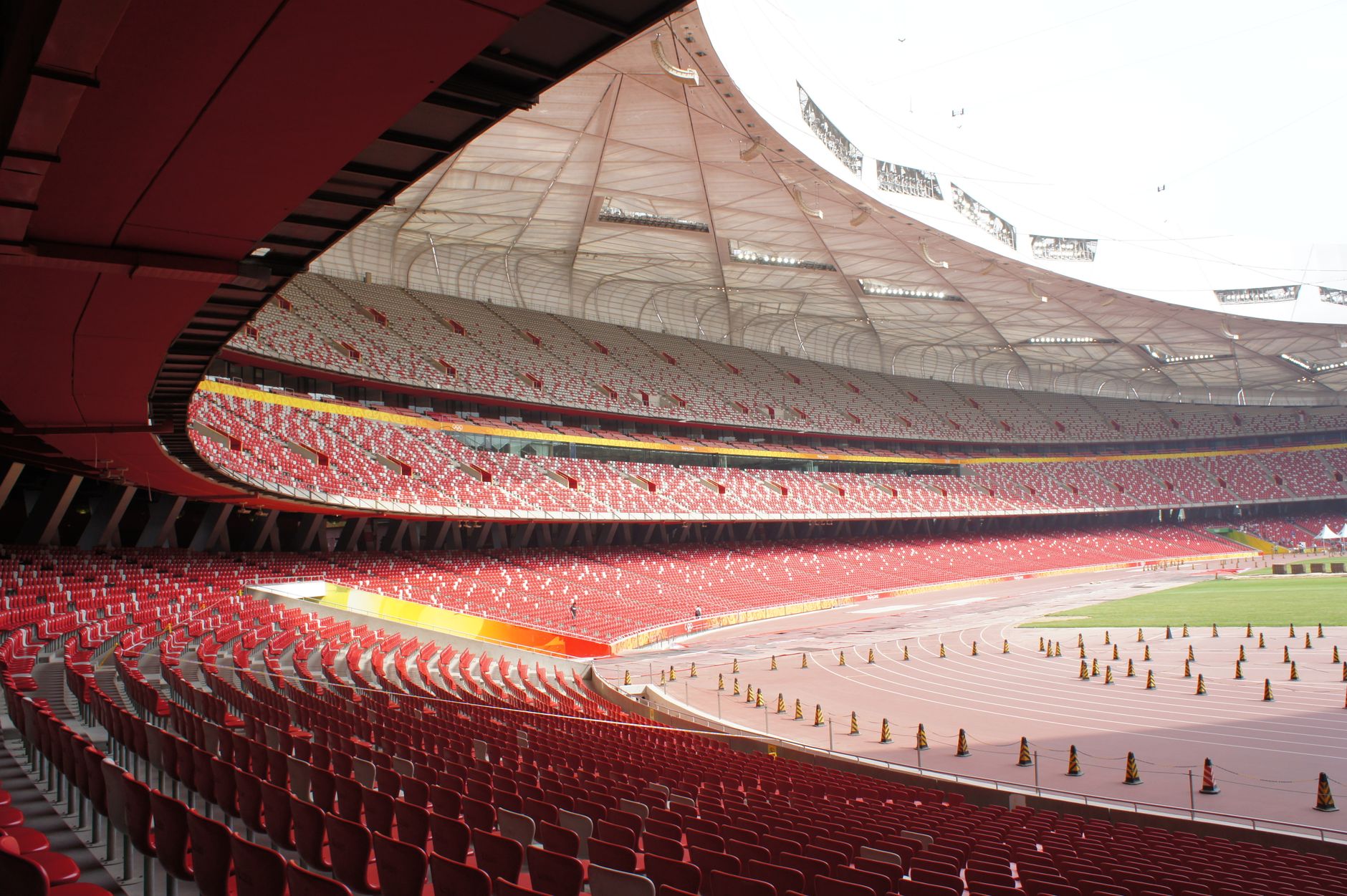
After the Games conclude, cities inherit a portfolio of liability. The Bird’s Nest in Beijing requires $11 million annually in maintenance and sits largely empty. Rio’s Maracanã stadium deteriorated within months of the closing ceremony, its electricity cut due to unpaid bills. London’s Olympic Park converted some facilities to community use, but only through massive ongoing public subsidy and the demolition of several temporary structures that represented sunk capital. The specialized nature of the assets ensures negative economic returns in perpetuity; they consume real estate that could generate property tax revenue or housing density, instead requiring municipal budgets to fund the preservation of infrastructure designed for quadrennial global competitions.
The Olympic Village compounds the problem. Constructed to house thirteen to fourteen thousand athletes in standardized accommodations with specific security and medical facilities, these complexes cost $2 to $3 billion to build. Their post-Games conversion to residential use typically targets luxury markets, failing to address housing shortages while requiring public subsidy to render the economics viable. The Village represents a transfer of public capital into real estate assets that benefit private developers or elite residents, subsidized by taxpayers who will never access the housing. The IOC mandates this construction as a condition of hosting, yet bears no responsibility for the decades of maintenance or the opportunity cost of the land.
The Broadcast Revenue Trap
The entire extraction mechanism depends upon the continued growth or stability of international broadcast rights fees, which constitute roughly 80 percent of IOC revenue. NBCUniversal holds rights through 2032, paying approximately $4 to $5 billion per cycle. This revenue stream funds the redistribution to federations, the executive operations in Lausanne, and the modest 20 percent share allocated to hosts. The model assumes that linear television networks will continue to justify escalating payments for seventeen days of content despite audience fragmentation and the decline of broadcast television.
The fragility is evident. Streaming services, Netflix, Amazon Prime, YouTube, have fragmented the audience that once concentrated around network television. Younger demographics increasingly consume sports through highlights and social media rather than appointment viewing. NBC faces the mathematical impossibility of maintaining advertising rates for shrinking audiences while paying fees negotiated during the peak of linear television dominance. When the broadcast partners eventually face pressure to renegotiate or reduce payments, the entire IOC funding model destabilizes. The 70 percent redistribution to sports federations depends upon these fees; without them, the federations might demand structural reforms that increase host revenue shares or reduce the infrastructure burdens that make hosting fiscally toxic.
The security requirements exacerbate the economic pressure. Host cities must deploy fifty to eighty thousand security personnel, military equipment, drones, and high-technology surveillance systems to prevent terrorism. These deployments create massive urban disruption, shutting down transportation networks and commercial districts for weeks. The security costs add billions to the total expenditure while undermining the local tourism and economic activity the Games purportedly stimulate. Paris 2024 restricted access to the Seine’s banks for residents, transformed the city center into a militarized zone, and required business closures that eliminated the consumer spending supposedly generated by the influx of visitors. The security architecture serves the IOC’s need to protect the broadcast content and the VIP attendees, yet the costs and disruptions fall entirely upon the host municipality.
The Ueberroth Exception
The history of the Games includes a singular counter-example that proves the model is not mechanically deterministic. The 1984 Los Angeles Olympics generated a surplus of $225 million: figure that seems miraculous only because subsequent hosts have ignored its methodology. Peter Ueberroth, leading the Los Angeles Olympic Organizing Committee, refused to construct new venues. Instead, he utilized existing facilities at UCLA and USC, leveraging the infrastructure already present in a major American city. He pioneered the modern corporate sponsorship model, selling exclusive category rights to companies like McDonald’s and Coca-Cola at rates that covered operating costs without requiring municipal debt.
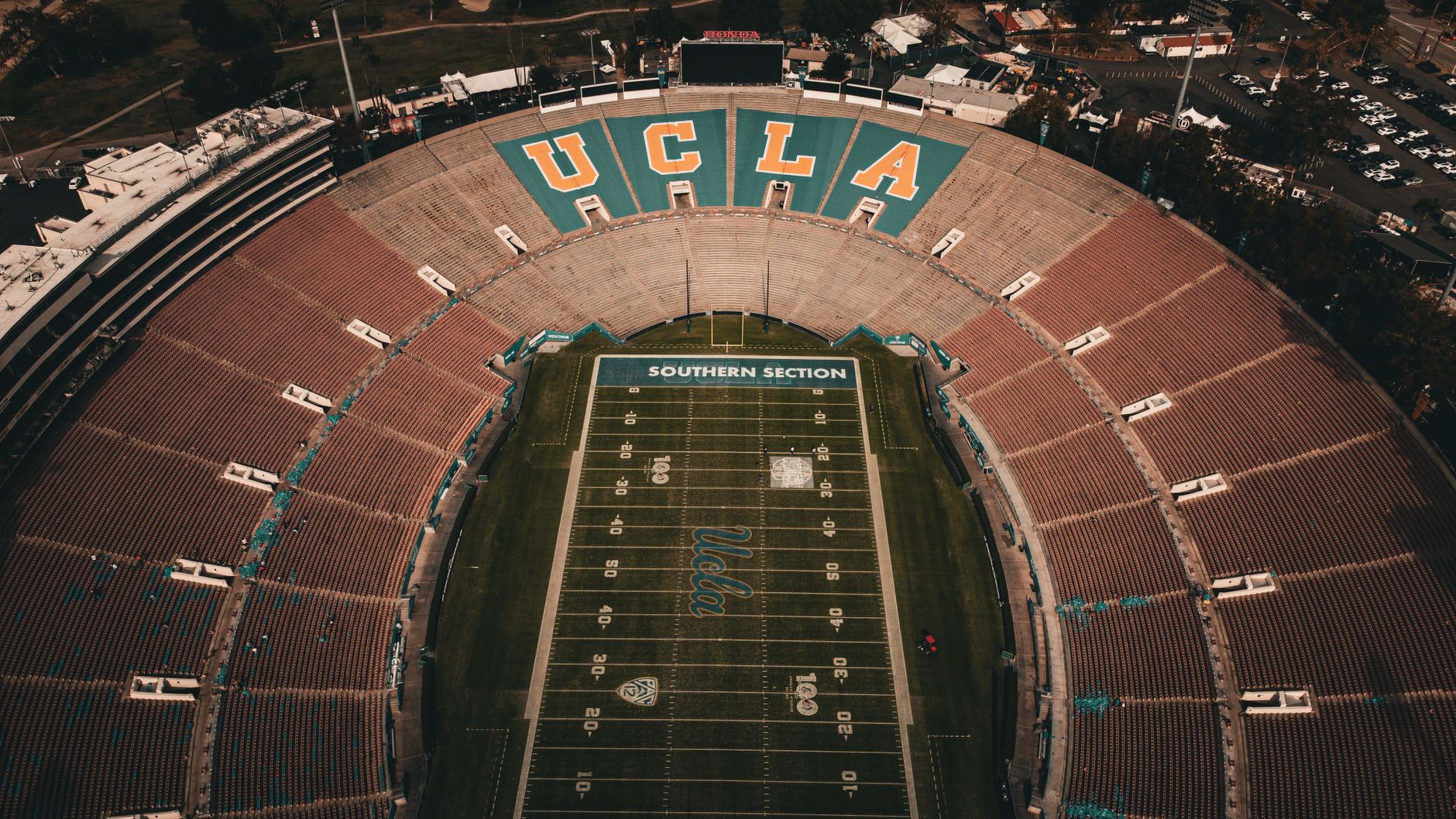
The Ueberroth model demonstrated that leadership and governance function as economic variables. By treating the Games as a content production requiring existing stages rather than a development project requiring new construction, Los Angeles avoided the white-elephant portfolio. By refusing to build an Olympic Village, instead housing athletes in university dormitories, the city sidestepped the permanent real estate liability. The surplus funded youth sports programs in Los Angeles for decades.
Yet subsequent hosts have systematically rejected this template. Political leaders prefer the visible construction of new stadiums and transit lines to the efficient utilization of existing assets. The IOC subtly discourages the Ueberroth approach by favoring bids that promise new, “iconic” architecture, acilities that serve the Committee’s brand prestige while burdening the host. The 1984 example remains an outlier not because it is replicable only in Los Angeles, but because it requires political leaders to prioritize fiscal outcomes over construction pageantry. Most mayors choose the ribbon-cutting over the balance sheet.
The Collapsing Market for Glory
The fragility of the Olympic model rests upon a single assumption: that municipal governments will continue prioritizing international prestige over rigorous cost-benefit analysis despite documented fiscal catastrophe. This assumption faces increasing strain. In 2023, Melbourne withdrew from hosting the 2026 Commonwealth Games after recognizing cost and disruption risks similar to those of the Olympics: n estimated $6 to $7 billion in expenditure for limited return. The withdrawal demonstrated that sophisticated municipal governments can perform the analysis and decline the transaction.
The bidder pool for the Summer Games has contracted dangerously. The secret negotiations with Brisbane and the simultaneous award of the 2024 and 2028 Games to Paris and Los Angeles, negotiated when no other viable candidates remained, reveal an organization facing a supply crisis. The IOC cannot manufacture new cities willing to absorb $9 to $60 billion in infrastructure costs. When the pool of bidders drops to one or zero, the monopoly pricing power collapses.
Paris 2024 may represent the final iteration of the old model. The $9 billion price tag, while lower than Tokyo or Beijing, still guarantees loss. The security lockdown alienated residents. The temporary venues along the Seine will require costly removal or conversion. The athletes will depart, the television cameras will shift to Los Angeles in 2028, and Paris will inherit thirty-five specialized facilities requiring perpetual maintenance on some of the most expensive real estate in the world. The IOC will have captured its $4 to $5 billion in media revenue, redistributed the majority to the federations that sustain its power structure, and moved on, eaving the French taxpayer with the permanent liability and the memory of seventeen days when the world watched.
The extraction is not merely financial but temporal, eventeen days of glory purchased with decades of liability. To understand why this transaction persists despite its evident destructiveness, one must examine the constituent dependencies that stabilize the IOC’s monopoly. The organization disburses roughly seventy percent of its media revenue, approximately $3 billion per cycle, to International Sports Federations and National Olympic Committees. This redistribution creates a cartel of stakeholders whose institutional survival depends upon the continued flow of funds from host-city sacrifice. The Fédération Internationale de Gymnastique, Fédération Internationale de Natation, and the thirty other federations governing sports from modern pentathlon to synchronized swimming receive substantial subsidies from Olympic distributions, funding their global championships and administrative apparatuses. Without these disbursements, many federations would face insolvency; their world championships generate minimal independent revenue, and their athlete populations are too small to support commercial self-sufficiency. Consequently, these organizations function as a political bloc that defends the IOC’s extraction model, resisting any structural reform that might reduce host burdens if such reform threatens the revenue stream upon which their executives and competitions depend. The federations do not merely accept the white-elephant venue requirements; they mandate them, insisting upon Olympic-standard facilities that exceed any rational cost-benefit analysis for the host, because their own prestige and operational budgets rely upon quadrennial showcases built at public expense.
This dynamic explains the peculiar solidarity between the IOC and its constituent sports bodies when cities attempt to reduce costs. When Paris proposed utilizing temporary facilities or existing structures for certain events, the federations resisted, threatening to downgrade the competitions or relocate them to cities with more compliant infrastructure commitments. The federations effectively hold the host city hostage, demanding bespoke palaces for sports with negligible local participation, knowing that the IOC’s monopoly on the Olympic brand forces the municipality to capitulate. The result is a coalition of international bureaucracies whose economic interests align perfectly with capital expenditure maximization, even as the cities that fund them descend into fiscal distress. The federations do not pay for the venues; they merely specify the requirements. It is a remarkably efficient mechanism for converting public debt into private bureaucratic sustenance.
The security architecture required to protect this revenue stream constitutes another hidden transfer of wealth and liberty from host populations to the IOC’s risk-mitigation strategy. Paris deployed not merely fifty thousand police officers but military personnel, armored vehicles, fighter jets, and high-altitude anti-drone systems across the Île-de-France region. The security perimeter extended far beyond competition venues, encompassing central business districts, tourist corridors, and residential neighborhoods. For seventeen days, the economic activity that normally defines Paris, café culture, riverside promenades, spontaneous assembly, was suspended or severely restricted. The IOC requires this militarization not merely to protect athletes and spectators, but to protect the broadcast product; a terrorist incident during the live global telecast would destroy the brand value that generates the $4 to $5 billion in media fees. The host city bears the full cost of this risk mitigation, oth the immediate $2 to $3 billion in security expenditure and the longer-term installation of permanent surveillance infrastructure. Paris retained the facial recognition systems, drone detection networks, and integrated command centers after the Games concluded, institutionalizing the security state as a “legacy” of the event. The business districts that should have benefited from Olympic tourism instead suffered under lockdown conditions; restaurants within the security perimeter reported revenue declines of forty to sixty percent compared to typical July operations, directly contradicting the economic stimulus promises used to justify the bid. The security apparatus serves the IOC’s insurance underwriters and broadcast partners, while the economic disruption accrues to local merchants and residents.
Los Angeles 2028 now stands as the next test of whether the model can survive its own contradictions. The city accepted the 2028 Games through the opaque backroom negotiations that have replaced public bidding, agreeing to host after Paris was awarded 2024 in a simultaneous deal that prevented an embarrassing public contest with no other competitors. Los Angeles enters this arrangement with distinct advantages: the city possesses SoFi Stadium, the Crypto.com Arena (formerly Staples Center), and the Los Angeles Memorial Coliseum, meaning it can theoretically replicate the 1984 Ueberroth strategy of utilizing existing collegiate and professional venues rather than constructing permanent white elephants. The city plans to house athletes in the dormitories of UCLA and USC, avoiding the $2 to $3 billion Olympic Village construction cost that has plagued other hosts. Yet these efficiencies reveal the extent to which the IOC has adapted to protect its revenue stream even when hosts minimize capital expenditure. The Committee has already begun mandating “temporary” overlay structures and specialized modifications to existing venues that will cost hundreds of millions, xpenditures that serve the broadcast spectacle while leaving no permanent civic asset. Moreover, Los Angeles faces a timeline that extends into the late 2020s, when the media rights model may face existential pressure. NBCUniversal holds Olympic rights through 2032 under a contract negotiated during the peak of linear television dominance, but by 2028, the network will be grappling with audience fragmentation that makes the $7.75 billion twelve-year deal appear increasingly unsustainable. If NBC cannot monetize the audience at rates sufficient to cover these rights fees, the next contract cycle, post-2032, will face catastrophic downward pressure, potentially breaking the redistribution mechanism that keeps the federations loyal. Los Angeles may host the final Games conducted under the old financial architecture, the last city to receive the diminished 20 percent revenue share before the entire funding model collapses.
The selection of Brisbane for the 2032 Games illustrates the IOC’s strategic retreat from democratic accountability. The “Future Host Commission,” established in 2019 after the bidding collapses of 2017, approached Brisbane in secret, negotiating terms without public competition or referendum. The Australian city offered a spread of venues across Brisbane proper, the Gold Coast, and the Sunshine Coast: geographic sprawl that maximized political support among regional constituencies while minimizing the concentration of disruption in any single electorate. This fragmentation strategy obscures the total cost, distributing the infrastructure burden across three distinct municipal and state jurisdictions while aggregating the prestige in Brisbane. The secret process prevented the organized opposition that had derailed bids in Hamburg, Rome, and Boston, allowing Australian political leaders to present the Games as a fait accompli before cost-benefit analysis could occur. The Brisbane model represents the IOC’s adaptation to the collapsing bidder pool: rather than compelling cities to compete against each other, the Committee now approaches municipalities that exhibit political compliance and fiscal naivety, offering the “opportunity” as a privilege to be accepted gratefully rather than a transaction to be scrutinized. This shift from competitive auction to bilateral negotiation eliminates the market pressure that once, theoretically, constrained the IOC’s demands; when only one city is being negotiated with at a time, the Committee can insist upon venue requirements and security protocols without fear that the host will withdraw in favor of a competing bid.
The generational transfer of debt that follows these Games constitutes perhaps the most cynical aspect of the economic engine. Montreal’s 1976 Olympics required thirty years to pay off, with Quebec taxpayers financing the debt until 2006, eaning children born during the Games were entering their thirties, with children of their own, before the province retired the obligation. Athens 2004 contributed directly to Greece’s sovereign debt crisis; the $15 billion expenditure on Olympic infrastructure occurred precisely when the Greek state was concealing its true fiscal deficits, and the maintenance costs of the empty stadiums added structural pressure to a budget already buckling under European monetary constraints. Tokyo 2020, postponed to 2021 due to the pandemic, incurred an additional $2.4 billion in delay costs alone, with the total expenditure reaching $35 billion. Japanese taxpayers will service this debt for decades, even as the nation faces demographic contraction and pension crises that make the diversion of capital to empty velodromes and aquatic centers particularly grotesque. The IOC extracted its $4 to $5 billion in media revenue from Tokyo without absorbing a single yen of pandemic-related loss; the contract structures force hosts to carry all force-majeure risk while the Committee retains its broadcast fees. When future historians examine Japan’s fiscal challenges in the 2030s and 2040s, they will find embedded in the sovereign debt instruments the legacy of seventeen days of athletic competition that occurred when much of the world was under lockdown, watched primarily on screens by audiences who could not attend in person.
The media rights plateau approaches with the inevitability of demographic and technological shift. NBC’s Olympic viewership has declined steadily; the 2021 Tokyo Games averaged 15.6 million primetime viewers, down from 26.7 million for London 2012 and 17.8 million for Rio 2016. Yet the network remains contractually obligated to pay escalating rights fees through 2032, creating a widening gap between cost and value that cannot persist indefinitely. Streaming platforms have not stepped in to fill the void with equivalent bids because the Olympic audience, while large, is diffuse and difficult to monetize through subscription models; the Games occur episodically rather than seasonally, preventing the retention economics that justify Netflix or Amazon’s sports investments. When the NBC contract expires, the IOC will face a market wherein linear broadcasters cannot afford the fees and streamers will not pay them. The $4 to $5 billion per cycle revenue assumption will shatter, and with it, the 70 percent redistribution that sustains the federations. The federations, suddenly deprived of their Olympic subsidies, will face a choice between demanding structural reform, reducing host burdens to attract viable cities, or watching their sports fade from global relevance. The model’s fragility rests upon this assumption of perpetual media revenue growth in a medium that is dying. The extraction has worked for decades because the broadcast fees increased faster than the inflation of construction costs, masking the negative-sum nature of the transaction. When that arithmetic inverts, when the media revenue stagnates while security and construction costs continue their inevitable rise, the IOC will possess a monopoly over a product that no solvent city can afford to host, and no broadcaster can afford to buy.
The federations, accustomed to quarterly disbursements from Lausanne, possess limited institutional capacity to absorb revenue shocks. The Fédération Internationale de Gymnastique, for instance, derives more than sixty percent of its operating budget from Olympic distributions; its world championships generate negligible broadcast revenue and attract audiences measured in the hundreds of thousands rather than the billions that justify the IOC’s fees. When the media rights plateau arrives, these organizations will face not merely budget constraints but existential crises. Their response will likely take the form of desperate venue inflation, emanding ever more elaborate facilities for their sports as a demonstration of continued relevance, hoping that spectacle can restore the broadcast value that mathematics says is eroding. This dynamic creates a terminal feedback loop: as audiences fragment, the federations insist upon more expensive infrastructure to attract attention, further deterring democratic hosts and narrowing the bidder pool to authoritarian regimes that treat the Games as reputation-laundering exercises rather than economic investments.
The geographic shift is already visible in the data. Beijing 2022 and Sochi 2014 represent the extreme cost outliers, $51-65 billion and $45-60 billion respectively, precisely because these hosts operated without electoral accountability or press scrutiny capable of revealing the true expenditure. The IOC’s shift to secret negotiations in 2019 facilitates this autocratic capture. When the Committee approaches Doha, Riyadh, or other Gulf capitals, it does so through bilateral discussions that bypass the public referenda that derailed Boston, Hamburg, and Rome. These potential hosts view the $9-60 billion price tag not as a cost to be recovered through tourism or infrastructure reuse, but as a straightforward purchase of international legitimacy: transaction akin to acquiring sovereign debt or military hardware, where the expenditure itself constitutes the value proposition. The Games thus evolve from a competitive auction among municipalities into a closed market between an unregulated monopoly and authoritarian marketing budgets.
This evolution solves the immediate bidder-pool crisis while introducing a longer-term reputational fragility that threatens the broadcast partners upon whom the IOC ultimately depends. NBC, Comcast, and the European Broadcasting Union cannot easily sell seventeen days of content explicitly staged as propaganda exercises to American or European audiences who increasingly associate the Olympic brand with labor exploitation, surveillance architecture, and human rights abuses. The 2022 Beijing Winter Games already demonstrated this tension: the IOC collected its media fees while foreign correspondents documented the genocide of the Uyghurs occurring three hundred miles from the ski slopes. When the host pool narrows to regimes that purchase prestige through construction rather than cities that seek economic development through tourism, the content itself becomes politically toxic to the Western advertisers who fund the broadcast rights.
The maintenance liability compounds across decades in ways that municipal accounting rarely captures transparently. Rio de Janeiro’s Maracanã stadium, central to the 2016 Games, now operates as a decaying monument to fiscal illusion; the state government lacks the $20 million annually required for basic upkeep, while the surrounding neighborhood suffers from diverted infrastructure investment that occurred during the construction phase but ceased when the television trucks departed. Athens’ softball stadium hosts weeds and refugee encampments; London’s Olympic Park requires £10 million in annual public subsidy to prevent the aquatic center from becoming a derelict shell. These are not unfortunate side effects but the logical terminus of an economic model that treats physical infrastructure as disposable staging for content production. When the IOC redistributes its media revenue to the federations, it includes no provision for venue maintenance; the 70 percent disbursement is consumed immediately by administrative salaries and championship operations, leaving the host with capital assets that depreciate at rates far exceeding any conceivable return.
The simultaneous award of the 2024 and 2028 Games to Paris and Los Angeles, announced in 2017 as a “historical moment” of dual celebration, revealed not strength but panic. The IOC faced the genuine possibility of having no qualified bidder for 2028, which would have exposed the monopoly’s collapse. By locking in two democratic hosts early, the Committee secured twelve years of fee collection before the media rights cliff. Yet this maneuver consumed the last viable Western candidates; after Los Angeles, the pipeline contains only Brisbane 2032 and a scattering of authoritarian aspirants. The model has entered its endgame: extraction continues only because the contracts were signed years ago, and the municipalities are now legally bound to construct the venues, deploy the security, and assume the debt that the IOC’s economic architecture requires. When Los Angeles extinguishes its flame in 2028, the Olympic movement may discover that it has successfully optimized itself into obsolescence, ossessing a monopoly over a product that democratic nations can no longer afford to purchase and authoritarian states can no longer sanitize sufficiently to sell to a fragmenting global audience.