Permian Basin: The Water-Oil Ratio Problem

The Certainty of Four Barrels to One
In the Delaware Basin, physics operates on a different ledger than finance. For every barrel of oil pulled from the Permian shale, the formation surrenders approximately 3.7 barrels of water. This is not a temporary imbalance, a problem awaiting technological solution. It is a geological constant that worsens with time. As wells age, as the pressured fractures deplete their hydrocarbons and operators punch deeper into lower-tier formations, the ratio climbs. Five to one. Six to one. The water comes up hot, saline, corrosive, aced with heavy metals and radioactive isotopes that occur naturally in the formation but complicate handling. It cannot be dumped. It cannot be easily treated. It must disappear into the earth again, injected thousands of feet below the water table into porous rock that has the capacity to absorb it.
WaterBridge exists at the intersection of this inevitability and the operator’s desire to avoid it. The company owns the holes in the ground, saltwater disposal (SWD) wells, and the pipelines that carry the waste to them. It charges between ten and twelve cents per barrel, a fee that seems trivial until multiplied by the volume. At current cuts, this adds roughly four dollars to the lifting cost of every barrel of oil, a persistent drag on margins that operators cannot eliminate, only outsource. The business model is built not on optimism about oil prices but on the certainty of entropy. As long as the Permian produces, the water will come, and as the basin matures, the water will come in greater proportion to the oil. WaterBridge does not compound through innovation or market share capture in the traditional sense. It compounds because the waste stream of its customers grows organically, inexorably, independent of commodity cycles.
This creates a peculiar economic engine. The revenue stream is contracted, often for decades, with take-or-pay arrangements that guarantee volumes. Operators cannot afford interruption; without guaranteed disposal, production shuts in. Yet the pricing is per-barrel, meaning WaterBridge captures the upside of rising water cuts without bearing the downside of declining oil prices. When oil crashes, the water keeps flowing. When operators drill lower-tier formations with higher water content, WaterBridge’s revenue grows even if the operator’s shrinks. It is a rare instance of structural decoupling from the commodity it serves, predicated on the geological reality that shale reservoirs yield increasingly aqueous bounty as they age.
Shallow Wells, Deep Liabilities
The machinery of this disposal, however, sits atop a structural tension that threatens to unravel the entire proposition. WaterBridge must choose between shallow and deep injection, and neither choice is safe.
Shallow disposal, injecting into the Delaware Mountain Group formations at moderate depths, is cheaper. The wells cost less to drill, the pressures are lower, the infrastructure lighter. But shallow wells have begun to misbehave. In the Permian’s northern reaches, particularly around the New Mexico-Texas state line where WaterBridge concentrates its assets, shallow injection has triggered seismic events, opened sinkholes, and interfered with legacy vertical wells drilled decades ago for conventional production. The Texas Railroad Commission, responding to earthquakes and surface instability, has shifted regulatory tolerance. Today, roughly seventy-five percent of new permits are for shallow wells, but this regulatory preference masks accumulating liability. A single significant seismic event traced to a WaterBridge well, or a sinkhole that swallows surface infrastructure, could force the Commission to impose pressure restrictions or mandate well retirements. The shallow wells that provide the company’s current margins carry a tail risk of catastrophic shutdown.
Deep injection offers an escape. By drilling below the shale layer, into formations with more stable geology and less proximity to active oil and gas production, WaterBridge could mitigate seismic risk. But depth demands capital. Deep wells require more steel, more concrete, more sophisticated downhole monitoring, and more time to permit. They transform the business from a high-margin, quick-turn infrastructure play into something resembling traditional oilfield service capital intensity. Moreover, deep injection does not eliminate risk; it merely trades seismic uncertainty for economic strain. If regulatory pressure forces a wholesale migration from shallow to deep, WaterBridge’s existing shallow well portfolio, a significant portion of its current capacity, faces stranded asset risk. The company must navigate a narrowing corridor between geological danger and economic impracticality, betting that it can extract sufficient cash flow from shallow wells before regulation forces costly migration, while simultaneously deploying capital into deep infrastructure that may not earn returns for years.
The Landlord’s Optionality
Beneath this operational dilemma lies a more fundamental constraint. WaterBridge does not own the surface upon which its business depends. The land, tens of thousands of acres across Loving County and the surrounding Delaware Basin, is controlled by LandBridge, a separate entity with which WaterBridge maintains a symbiotic but subordinate relationship. WaterBridge holds easements and leases, paying per-barrel fees for access to drill sites and pipeline corridors. This arrangement keeps WaterBridge asset-light on the surface, avoiding the capital intensity of land ownership, but it cedes control to the landlord.
The tension is economic and strategic. If LandBridge chooses to raise per-barrel rates for surface access, WaterBridge’s margins compress with no recourse. If LandBridge restricts expansion into new areas, WaterBridge’s growth capacity hits a hard ceiling. The optionality resides entirely with the landowner. WaterBridge can sink millions into drilling a deep SWD well or laying miles of gathering pipeline, but the right to access that infrastructure remains terminable or repricable by the entity that controls the dirt above it. This is not merely a contractual inconvenience; it is a structural asymmetry that shapes every capital allocation decision. WaterBridge must invest heavily in subsurface infrastructure, wells that cost millions to drill and complete, while holding only tenuous, fee-based rights to the surface that makes that infrastructure viable.
The relationship manifests in complex corporate choreography. When Five Point Infrastructure acquired the Hanging H Ranch, approximately seventy thousand acres in 2021, it provided surface acreage for WaterBridge’s operations, yet maintained the separation of ownership. Similarly, WaterBridge’s joint venture with Texas Pacific Land Corporation to exploit the state line area, a zone of particular scarcity where pore space and easement access are fiercely limited, demonstrates the premium placed on surface control. WaterBridge can build the plumbing, but it cannot own the ground the plumbing crosses. It is a tenant with heavy CapEx on someone else’s property, forever vulnerable to the reversion clause or the renegotiated lease.

Becoming the Liability
If the business were merely the mechanical disposal of water, this landlord-tenant dynamic would render it uninvestable, a capital trap with no defensive moat. But WaterBridge provides something operators cannot easily replicate or reclaim: the absorption of liability. When an E&P company signs a disposal contract with WaterBridge, it does not simply hire a vendor. It transfers the regulatory, environmental, and operational risk of produced water management to a third party.
This is the underappreciated structural advantage. Produced water is not just a volume problem; it is a legal and reputational hazard. Spills, earthquakes, groundwater contamination, and radioactive accumulation are liabilities that can persist for decades, generating lawsuits, regulatory fines, and cleanup obligations that survive corporate bankruptcies and asset sales. By outsourcing to WaterBridge, operators achieve finality. The ten to twelve cents per barrel is not merely a service fee; it is an insurance premium against future liability. WaterBridge becomes the bad bank for environmental risk, holding the regulatory permits, maintaining the monitoring equipment, and facing the Texas Railroad Commission’s scrutiny if things go wrong.
This liability transfer creates profound stickiness. An operator cannot easily switch disposal providers mid-contract without reclaiming the very risks it sought to shed. The cost of building internal disposal capacity, drilling SWD wells, obtaining permits, hiring environmental compliance staff, assuming the long-term liability, far exceeds the cost of paying WaterBridge. Even if a competitor offered lower per-barrel pricing, the operator would face the prospect of dual liability during transition and the uncertain regulatory posture of an unproven disposal network. WaterBridge’s guarantee of disposal capacity functions as a critical operational input, akin to electricity or pressure maintenance. The contracts are long-term not because of legal complexity but because the operational risk of disruption is intolerable. WaterBridge captures value not despite the liability it assumes, but because of it. The company is, in essence, a specialized liability sink, capitalizing on the E&P sector’s desire to keep produced water off its balance sheet.
When Pore Space Runs Out
The durability of this model depends on a finite resource: pore space. The rock formations capable of accepting injected water are not infinite. Each barrel disposed of occupies space that cannot be reclaimed. As the Permian matures and water cuts rise toward five or six barrels of water per barrel of oil, the rate of depletion accelerates. The basin produces eleven to twelve million barrels of oil equivalent daily; at a four-to-one water cut, that is forty-four million barrels of highly saline fluid seeking burial every twenty-four hours. The core areas, particularly the high-demand zone along the state line where LandBridge and Texas Pacific Land hold sway, are approaching saturation.
The escape valve is distance. WaterBridge must build long-haul pipelines capable of moving water from saturated core areas to peripheral zones with remaining pore space, or potentially out of the basin entirely. This infrastructure requires capital on a different scale than gathering lines or local SWD wells. It demands rights-of-way across vast tracts, regulatory approval for interstate or long-distance transport, and coordination with the same landowners, LandBridge, TPL, who already hold the company in a subordinate position. If WaterBridge cannot execute these pipeline expansions faster than pore space depletes, disposal capacity becomes the bottleneck for Permian production. Operators would face the choice of curtailing output or seeking alternative methods, destroying WaterBridge’s pricing power and its guarantee of disposal.
This creates a race against the geological clock. The company must simultaneously manage the migration from shallow to deep wells to satisfy regulators, secure surface easements from LandBridge to expand pipeline networks, and deploy hundreds of millions in capital before existing pore space fills. The scarcity that protects WaterBridge’s margins, limited disposal capacity in high-demand areas, also threatens its growth if that scarcity becomes absolute. There is a threshold where the Permian’s water production exceeds the basin’s injection capacity, a physical constraint no contract can overcome.
The Twenty-Year Bet
All of these operational and structural challenges, the shallow-well seismic risk, the landlord dependency, the pore space arithmetic, rest upon a single, fragile assumption: that the Permian Basin will produce oil at flat or growing volumes for the next two decades, with water cuts rising steadily as the geology demands. If this assumption fails, the entire economic edifice collapses.
The bear case is not merely that oil prices fall; WaterBridge is insulated from price volatility. The bear case is that the Permian itself stalls. If operators shift capital to other basins, Guyana, the Bakken, offshore, if shale decline curves prove steeper than modeled and the economics of lower-tier formations deteriorate, or if technological breakthroughs in large-scale water recycling eliminate the need for third-party disposal, WaterBridge’s volume growth evaporates. The company has wagered that the physics of shale depletion, rising water cuts, declining oil fractions, will outlast any technological alternative. It assumes that operators will never find it economical to treat and reuse four, five, or six barrels of corrosive brine for every barrel of oil, and that they will prefer to pay WaterBridge forever rather than solve the water problem themselves.
This is a bet on stagnation. It assumes that the water infrastructure industry, born only around 2014 with the shale boom’s maturation, will persist in its current form for decades. It assumes the Texas Railroad Commission will not, in the wake of a major seismic event or environmental incident, impose restrictions so severe that they force the retirement of a material portion of WaterBridge’s shallow well portfolio. It assumes that pore space will remain scarce and controlled by the current landowners, preventing new entrants from flooding the market with disposal capacity. Each of these assumptions is plausible in isolation; together, they form a delicate lattice of contingencies. The model requires not just the continued production of the Permian, but the continued failure of any technological or regulatory solution to the water problem.
Fragmentation as Strategy
The final variable in this equation is governance. WaterBridge does not operate as a consolidated, vertically integrated entity. It is deliberately fragmented from LandBridge (the surface owner) and Five Point Infrastructure (the capital partner that acquired the Hanging H Ranch). This separation is not an accident of corporate history but a strategic choice to maximize valuation multiples. By keeping WaterBridge a pure-play water infrastructure company, management seeks to attract investors who value contracted, utility-like revenue streams at premium multiples. If WaterBridge were merged with LandBridge, the combined entity might trade at a blended multiple that undervalues the water business, or it might be viewed as a complex real estate/oilfield service hybrid that the market struggles to categorize.
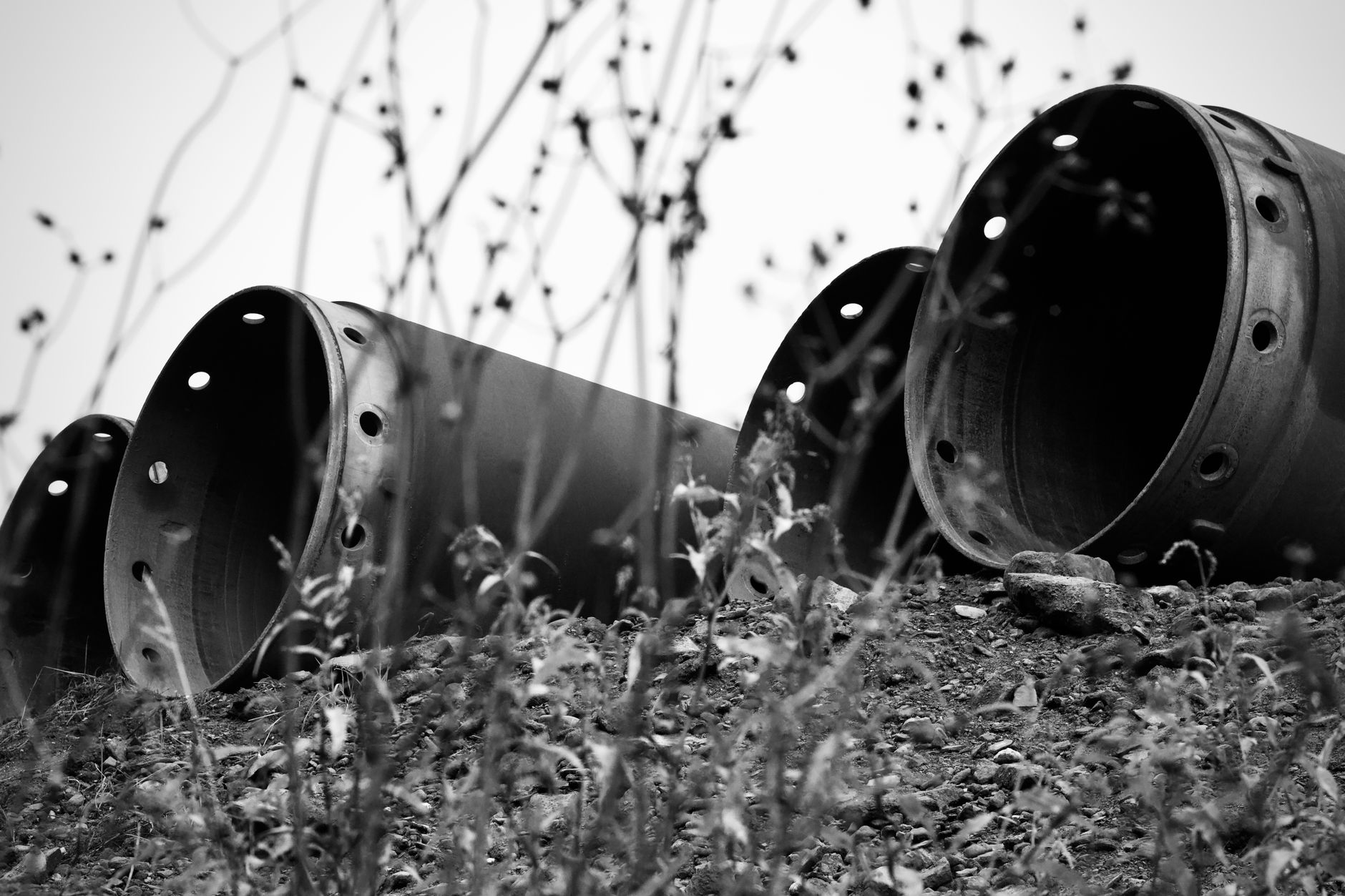
Yet this fragmentation comes at an economic cost. It foregoes the operational synergies that a consolidated player might achieve, oordinated planning between surface acquisition and subsurface drilling, integrated pipeline routing, unified bargaining power with operators. It creates a governance structure where capital allocation decisions must navigate the competing interests of three separate entities, each with its own shareholders and return thresholds. When WaterBridge needs to build a long-haul pipeline across LandBridge territory, the negotiation is not internal; it is an arm’s-length transaction with a counterparty that knows WaterBridge has no alternative route.
This is leadership and governance functioning as an economic variable, not a matter of corporate culture or vision statements. The decision to remain separate is a bet on market efficiency, hat the sum of the parts, properly valued, will exceed the whole. But if the market shifts to value integrated infrastructure plays more highly, or if competitors consolidate to achieve operational cost advantages, WaterBridge’s pure-play structure may leave value on the table. The company is optimized for the capital markets of today, potentially at the expense of the operational flexibility needed for the geological and regulatory challenges of the next twenty years.
WaterBridge has constructed a business around the certainty of waste. It assumes that the Permian will produce, that the water will rise, that operators will pay to be rid of both the volume and the liability, and that no one will find a better solution. It operates as a tenant on the surface, a guest in the geology, and a repository for risk. Whether this position proves durable depends on whether the twenty-year bet pays out before the pore space fills, the earthquakes start, or the water stops coming.
The Delaware Mountain Group, where most of WaterBridge’s shallow capacity resides, is not a single homogeneous sponge but a complex of interbedded sandstone and siltstone deposited during the Permian’s final marine regression. The formation accepts water readily, its porosity averages twelve to eighteen percent, its permeability sufficient to swallow thousands of barrels daily without immediate pressure buildup, but it lies uncomfortably close to the surface, typically between four thousand and six thousand feet, and it is riddled with the vertical wellbores of previous generations. Those legacy wells, drilled in the 1950s and 60s for conventional pay, were never designed to withstand the injection pressures required for modern shale operations. When WaterBridge pumps produced water into the Delaware Mountain Group at rates exceeding ten thousand barrels per day per well, the pressure front migrates laterally until it encounters one of these ancient boreholes, finding a path of least resistance upward. The result is not always dramatic, sometimes merely a slow seepage of brine into shallower formations, contaminating groundwater, but occasionally it manifests as a sinkhole swallowing a drilling pad, or as seismicity detectable on regional seismographs.
The Texas Railroad Commission has begun mapping these pressure fronts with the granularity of a cardiogram, tracking which wells interact with which faults. In 2022, following a series of earthquakes in Culberson and Reeves counties that exceeded magnitude 3.5, the Commission ordered operators to reduce injection pressures by as much as fifty percent in specific zones. For WaterBridge, such restrictions are existential mathematics. A shallow well’s economics depend on volume throughput; the fixed cost of the well, two to three million dollars to drill and complete, must be amortized over tens of millions of barrels. If regulatory pressure limits drop the daily injection rate from fifteen thousand barrels to seven thousand, the payback period doubles, and the margin evaporates. The company faces the prospect of owning infrastructure that is physically intact but economically stranded, prohibited from operating at capacity by regulatory fiat.
Deep injection offers a theoretical solution but demands entry into the Ellenburger formation, a dolomitic limestone sitting below the shale at depths of twelve thousand to fifteen thousand feet. The Ellenburger has vast pore space, ancient reefs and vuggy zones capable of absorbing immense volumes, and its distance from the surface and from active production zones nearly eliminates seismic risk. But drilling to the Ellenburger costs eight to twelve million dollars per well, requires heavier steel casing to withstand the corrosive brine at high temperatures, and encounters formation pressures that challenge equipment limits. More critically, the Ellenburger underlies the entire Permian, including areas where WaterBridge does not have easement rights from LandBridge or TPL. To move from shallow to deep disposal is not merely a technical upgrade; it is a land-access negotiation that resets the company’s entire strategic position. WaterBridge must persuade LandBridge to grant new easements for deep well pads, often in locations where the surface geology makes drilling difficult or where existing ranching operations resist the industrialization that deep injection requires, arger pads, heavier truck traffic, more extensive power infrastructure.
The Hanging H Ranch acquisition by Five Point in 2021 illustrates the complexity. The seventy thousand acres provided WaterBridge with surface access for gathering pipelines and shallow disposal, but the ranch’s geology does not uniformly support deep Ellenburger targets. portions of the acreage sit above geologically complex zones where the Ellenburger thins or where faulting makes high-rate injection risky. WaterBridge can drill deep wells on perhaps forty percent of the Hanging H acreage, meaning that even after the acquisition, the company remains constrained by surface location even when subsurface capacity exists. This creates a patchwork quilt of available disposal capacity, with WaterBridge constantly optimizing between shallow wells that face regulatory sunset risk and deep wells that face capital intensity and surface-access limitations.
The Area of Mutual Interest with Texas Pacific Land Corporation compounds these constraints with the logic of joint ventures. The AMI covers northern Loving County, a narrow strip along the state line where pore space is scarcest and most valuable. Under the agreement, WaterBridge and TPL share costs and revenues on new infrastructure, but TPL retains veto rights over specific well locations and pipeline routes. This is not passive landownership; TPL employs geologists and reservoir engineers who evaluate every proposed injection site for its long-term value. If WaterBridge proposes a shallow well in a high-seismic-risk zone, TPL can demand deep drilling instead, shifting capital costs to WaterBridge while maintaining its per-barrel revenue share. Conversely, if WaterBridge seeks to minimize capital by clustering shallow wells, TPL can withhold easement rights for the gathering lines, effectively forcing the company into suboptimal geography. The AMI creates a marriage of convenience where divorce is impossible but harmony is expensive. WaterBridge cannot build around TPL’s land, the state line acreage is irreplaceable, so it must accept terms that erode the pure-play margin thesis.

These operational constraints shape capital allocation in ways that the company’s public filings rarely capture with precision. When WaterBridge commits three hundred million dollars to a new pipeline network, the kind of long-haul infrastructure necessary to move water from saturated core areas to peripheral disposal, it must secure not just the originating easements from LandBridge but continuous corridor access across dozens of separate landowners, many of whom are not institutional owners like TPL but individual ranchers or family trusts who remember the Permian before the shale boom. The negotiation dynamics differ fundamentally from those of oil and gas pipelines, which carry valuable hydrocarbons and can offer landowners participation in the commodity upside. WaterBridge offers only the transport of waste, a service that carries nuisance value rather than royalty potential. Landowners demand upfront damages, annual surface payments, and strict liability indemnification for spills or leaks. The cost of assembling a forty-mile corridor can exceed the cost of the steel and welding, and these costs are sunk before the first barrel flows. If the pipeline’s terminus, a cluster of SWD wells in an unsaturated zone, proves geologically disappointing, or if regulatory changes force those terminal wells to shut, the pipeline becomes a stranded asset carrying water to nowhere.
The alternative to disposal, recycling and reuse, lurks at the edge of every WaterBridge investor presentation, acknowledged but dismissed. Currently, recycling treats perhaps five to eight percent of Permian produced water, primarily for use as frac fluid in new well completions. The technology exists to treat produced water to irrigation or even potable standards, but the energy cost is prohibitive. Reverse osmosis of Permian brine, which can exceed fifty thousand parts per million total dissolved solids, requires pressure differentials and membrane maintenance that consume roughly thirty to forty kilowatt-hours per barrel. At Texas industrial electricity rates, this adds three to four dollars per barrel in energy costs alone, before capital recovery or labor. Disposal at ten cents per barrel remains economically irresistible by comparison.
Yet the calculus shifts at the margin. As water cuts rise to six-to-one, the volume of water requiring management grows exponentially. An operator producing ten thousand barrels of oil per day at six-to-one water cuts generates sixty thousand barrels of water daily, or twenty-two million barrels annually. At WaterBridge’s pricing, that is $2.2 million in disposal fees per year, per operator, per asset. If technological learning curves reduce treatment costs by even thirty percent, or if regulatory pressure makes disposal increasingly difficult, f shallow wells face mandatory retirement, or if the Railroad Commission begins requiring post-closure care bonds so expensive that they alter project economics, ecycling becomes competitive. More threateningly, large integrated operators like ExxonMobil or Chevron, with balance sheets capable of absorbing decade-long capital cycles, might build centralized treatment facilities that serve multiple operators, achieving scale economies that WaterBridge cannot match with its geographically dispersed well network.
The specific risk is not that recycling replaces disposal overnight, but that it captures the growth. If operators begin treating even twenty-five percent of produced water for reuse, WaterBridge’s volume growth assumptions fracture. The company models its twenty-year contracts assuming continuous volume increases tied to water cut escalation. If those volumes plateau because recycling absorbs the incremental growth, WaterBridge finds itself with fixed commitments to LandBridge for surface access, minimum annual payments or per-barrel fees regardless of volume, and declining throughput to cover them. The operating leverage that makes the model attractive in growth scenarios becomes a death spiral in stagnation.
This vulnerability is most acute in the Delaware Basin’s western reaches, where the Bone Spring and Wolfcamp formations are entering mature production. Here, water cuts have already reached five-to-one in many fields, and the decline curves are flattening into the long tail of marginal production. These are exactly the wells that produce the stable, decades-long water volumes WaterBridge covets, but they are also the wells where operators have the strongest incentive to minimize lifting costs. A well producing two hundred barrels of oil per day with a thousand barrels of water is marginally economic at fifty-dollar oil; adding four dollars in disposal fees to the lifting cost represents a significant percentage of the netback. If that operator can treat even half its water for reuse, reducing disposal volumes to five hundred barrels and treatment costs to six dollars per barrel, the blended water management cost drops from four dollars to two dollars and thirty cents, saving $620 per day, nough to keep the well online during price downturns. WaterBridge’s margin becomes the operator’s survival threshold.
The geological clock ticks faster than the contract terms suggest. Pore space depletion in high-injection zones follows a non-linear curve: early injection fills the most permeable channels easily, but as these saturate, pressure builds non-linearly, requiring ever-increasing pressure to force water into less permeable rock. WaterBridge’s engineers monitor “bottom hole pressure” as the critical metric of remaining capacity, but this metric can deteriorate suddenly when pressure fronts from adjacent wells intersect, creating communication pathways that render zones effectively full despite remaining porosity. The company must constantly drill new wells not just to handle volume growth, but to replace capacity lost to pressure depletion in existing wells. This “replacement drilling” is capital intensive and subject to the same surface-access constraints as growth infrastructure. If LandBridge or TPL delays easement approvals for new wells while old wells pressure out, WaterBridge faces a capacity gap that cannot be bridged with existing infrastructure.
The regulatory environment compounds this geological exhaustion. The Railroad Commission’s rules on “sets back”, the required distance between an injection well and a producing oil well, or between two injection wells, are tightening as the density of both production and disposal increases. In the state line region, where LandBridge and TPL control checkerboarded acreage, finding locations that satisfy setback requirements from existing shale wells, legacy verticals, and other disposal wells becomes a geometric puzzle. A prospective SWD site might have ideal geology but sit within one thousand feet of a 1970s vintage oil well whose exact location is uncertain in Commission records. The liability of accidentally communicating with an abandoned well, creating a pathway for injected fluids to surface, forces WaterBridge to avoid these locations, effectively sterilizing subsurface capacity due to surface uncertainty.
WaterBridge’s response to these pressures, deep drilling, long-haul pipelines, and the LandBridge dependence, creates a capital structure that is inherently leveraged to regulatory and geological outcomes that the company cannot control. The ten-to-twelve-cent per-barrel fee must cover not just the marginal cost of injection, but the amortization of ever-more-expensive deep wells, the interest on pipeline debt, and the escalating surface fees demanded by LandBridge as it recognizes the scarcity value of its acreage. The model works only if the price can rise with costs, but the contracts are long-term and often capped. An operator locked into a fifteen-year disposal agreement at eleven cents per barrel provides WaterBridge with revenue certainty, but if regulatory changes force a shift to deep injection that costs eight cents per barrel to operate, up from three cents for shallow, the margin compresses to a point where the return on invested capital no longer justifies the risk.
This is the quiet fragility behind the compound growth narrative. WaterBridge appears to own a toll road, collecting fees on a waste stream that cannot be stopped. In reality, it owns a series of temporary permits to inject fluid into rock that is slowly filling, under surface rights that are permanently leased from counterparties with superior bargaining position, subject to regulatory limits that are tightening as the basin matures. The twenty-year bet is not merely that oil production continues, but that the specific configuration of geology, regulation, and land access that makes WaterBridge viable persists without interruption for two decades. Any single break in that chain: major earthquake triggering a statewide shallow-well moratorium, a LandBridge decision to double surface fees, a breakthrough in low-energy desalination, ransforms the company from a compounder into a restructuring candidate.
The Permian will produce water for decades, but it is not guaranteed to produce it in a manner that requires WaterBridge. If operators consolidate, achieving the scale to internalize disposal liability; if pipeline networks achieve such density that disposal becomes a commodity with locational discounts; if the Railroad Commission maps the remaining pore space and auctions it to the highest bidder rather than grandfathering existing permits: he structural advantages of early entry evaporate. WaterBridge’s current position rests on having assembled, between 2014 and 2020, a portfolio of SWD permits and easements in a regulatory and competitive environment that no longer exists. New entrants today face higher barriers, but existing competitors with similar legacy portfolios face the same depletion curves. The industry is transitioning from a land-rush phase, where the first to drill a well captured the local market, to a mature phase of capacity management, where the economics are determined by pressure maintenance, regulatory compliance, and surface fee negotiations.
In this transition, WaterBridge’s separation from LandBridge becomes not a valuation optimization but a strategic vulnerability. An integrated owner of surface and subsurface could optimize the entire system, outing water to the geologically most suitable disposal regardless of surface ownership boundaries, internalizing the trade-off between shallow and deep injection, capturing the full value of scarcity rather than sharing it with a landlord. WaterBridge cannot do this. It must negotiate every optimization, pay for every option, and accept the surface constraints that LandBridge imposes. The pure-play structure that markets the company as a utility-like water play also prevents it from becoming the integrated infrastructure operator that the Permian’s maturation actually requires. It is a water company that does not control the land the water crosses, a disposal company that does not control the space into which it disposes, a twenty-year bet on a geology that is slowly, barrel by barrel, running out of room.