Sony: How Digital Killed the Disc

The physical disc did not simply decline; it was made obsolete by a structural realization. In 2015, console manufacturers processed roughly ten percent of their software revenue through digital channels. The remaining ninety percent moved through a physical supply chain, iscs pressed in factories, shipped to distribution centers, shelved at retailers, sold by clerks, and often resold secondhand, circulating value without generating new tolls. By 2024, Sony reported that seventy percent of its software revenue arrived through digital pipes. Nintendo reached sixty percent. This inversion represents more than a channel shift. It marks the moment when the console business understood that it was not in the business of manufacturing electronics, but in the business of operating enclosed marketplaces.
The economics of this recognition are stark. When a customer purchased a physical game in 2010, the console manufacturer collected a royalty, but the retailer captured the margin, logistics consumed costs, and the used-game market allowed players to recoup value by selling their copies to one another, ransactions from which the platform holder saw nothing. Today, when that same customer downloads a fifty-gigabyte file, the manufacturer retains thirty percent of the purchase price with near-zero marginal cost. There is no retail markup, no secondhand leakage, no packaging. The console has become a storefront disguised as hardware, a living room tollbooth collecting rent on every transaction within its walls.
This model is structurally identical to Apple’s App Store circa 2015, which now generates an estimated twenty-three to twenty-four billion dollars in annual net earnings. Console manufacturers are operating at the same inflection point, fter the infrastructure has been cemented, but before regulatory scrutiny has fully dismantled the commission structure. The thirty percent toll applies universally: to first-party titles where margins approach ninety percent, and to third-party sales where the manufacturer collects pure rent without development risk. As digital sales climbed from ten percent to seventy percent of Sony’s software revenue between 2015 and 2024, the business transformed from a cyclical hardware operation with volatile margins into a high-margin digital landlord with compounding revenue streams.
But the platform holders recognized that toll collection alone was insufficient. The traditional console cycle created a fatal discontinuity. Every five to six years, the installed base reset to zero. A customer who purchased a PlayStation 3 and accumulated a library of sixty games faced a binary choice in 2013: abandon the investment and buy a PlayStation 4, or exit the ecosystem entirely. Most migrated, but the friction was real, and the churn, the percentage of customers who never purchased the next generation, hovered in the double digits. The new model, which Nintendo is pioneering with the Switch 2 and Sony is pursuing through live-service continuity, treats hardware as iterative rather than revolutionary. The goal is to extend the customer relationship from five years to thirteen, binding users across hardware generations through backward compatibility and persistent software libraries.
The financial impact is compounding. Under the old cycle, year six of a console generation showed declining software sales as anticipation built for new hardware. In the new model, year eight, the current age of the Nintendo Switch, can show record profitability as the installed base matures and software spending per user accelerates without proportional hardware replacement costs. Sony currently extracts approximately six hundred dollars in lifetime value from a PlayStation user; the projection is two thousand dollars within five years. Nintendo aims to quadruple its three-hundred-dollar base to fourteen hundred. These are not incremental improvements. They are category changes predicated on the assumption that the console cycle is dead, replaced by a perpetual rental relationship.
The End of Generations
The iterative hardware strategy represents the most underappreciated structural advantage in the console business. For decades, the industry operated on planned obsolescence. Each generation required new development architectures, incompatible software formats, and hard resets that treated the previous decade’s library as landfill. The PlayStation 3’s cell processor was architecturally distinct from the PlayStation 4; the Nintendo 64’s cartridges were incompatible with the GameCube’s mini-discs. These discontinuities were not technical necessities but economic choices, forcing customers to repurchase their entertainment libraries with each upgrade.
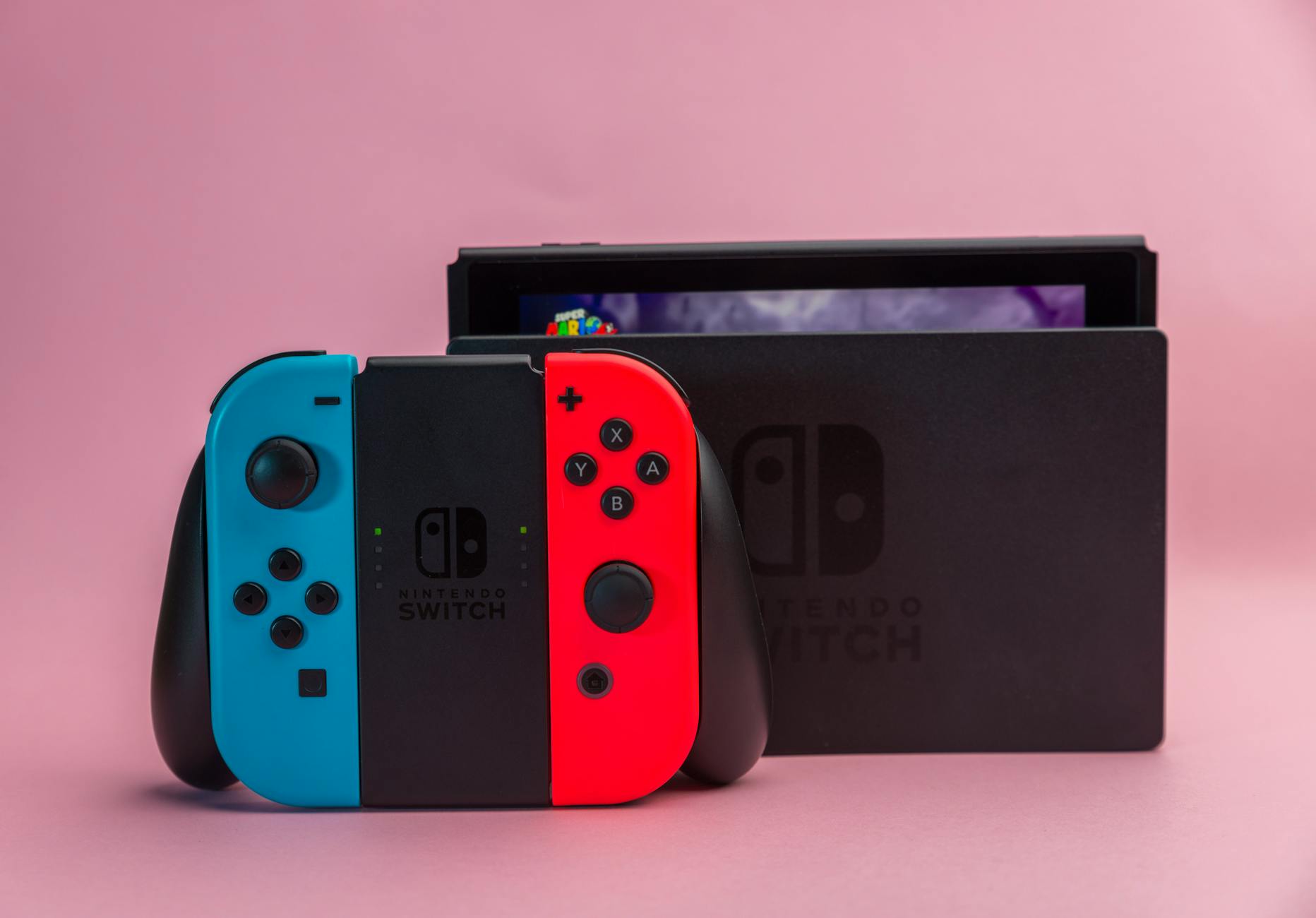
The Switch 2, expected by March 2025, breaks from this tradition. Unlike the transition from Wii U to Switch, a hard reset that abandoned the previous console’s software entirely, the Switch 2 maintains compatibility with the existing library while offering performance upgrades. Sony has adopted a similar posture, structuring its live-service games to persist across hardware generations. The PlayStation 5 is not a destination but a waypoint; the PlayStation 6 will presumably run the same games, with the same accounts, the same friends lists, and the same microtransaction histories.
This continuity creates a retention mechanism that consumer electronics rarely achieve. The switching costs for a player with a hundred-game library and a decade of save files are not merely financial but archival. To move to PC or Xbox is to abandon a personal history. The lock-in is emotional, practical, and increasingly legal, igital purchases are licenses tied to specific platform ecosystems, not transferable assets.
The economic effect is the extension of customer lifetime value without the corresponding extension of customer acquisition cost. When Sony sells a PlayStation 5 to a PlayStation 4 owner, the marketing cost is minimal, the user is already captive, but the revenue potential resets and extends. If that user previously generated six hundred dollars over six years, the iterative model aims to generate two thousand dollars over thirteen. The hardware upgrade becomes a revenue accelerant rather than a churn event.
Moreover, the iterative strategy solves the developer’s dilemma. Under the old model, launching a game in year five of a console cycle risked obsolescence if the next hardware arrived eighteen months later. Under the new model, software investments amortize over a decade. This encourages higher production budgets and justifies the thirty percent toll, since the platform holder guarantees a stable, growing audience across hardware iterations. The moat deepens with each passing year as the library grows and the switching costs compound.

The Mobile Invasion
The projected leap from six hundred to two thousand dollars in lifetime value does not come from selling more seventy-dollar games. The math does not support it. A player would need to purchase twenty-three full-price titles over thirteen years: rate of consumption that exceeds historical attach rates. The delta must come from a different species of revenue: the injection of mobile gaming’s monetization DNA into the living room.
Sony and Nintendo are attempting to graft live-service mechanics, gacha economies, battle passes, cosmetic microtransactions, and persistent monetization loops, onto console audiences. The model assumes that console players, like mobile players, will accept conversion rates of five to ten percent, with that minority subsidizing the majority through continuous spending. This is a cultural and economic mismatch of significant proportions.
The console audience has been trained for four decades on the concept of ownership. Sixty dollars purchased a complete experience. The cartridge or disc represented finality. The live-service model replaces finality with perpetuity, ames that never end, content that expires unless purchased immediately, and psychological pressure mechanics borrowed from casino design. Mobile audiences accepted this transition because the entry price was zero; the extraction was the business model from inception. Console
audiences, accustomed to purchasing finite products, must now accept infinite obligations. The calculation is explicit: if the transition succeeds, a single engaged user generates the revenue of three traditional customers. If it fails, the margin expansion thesis collapses, leaving platform holders with mature hardware bases and declining software attach rates.
The execution record offers scant comfort. Anthem, BioWare’s multiplayer shooter, was shuttered after two years. Marvel’s Avengers, despite a beloved intellectual property and massive marketing spend, failed to sustain a player base sufficient to justify continued development. Concord, Sony’s most recent attempt at a live-service hero shooter, was cancelled within weeks of launch, the servers darkened before the seasonal content could debut. These are not marginal experiments; they represent hundreds of millions of dollars in development costs, opportunity costs, and reputational damage. Each failure suggests that console audiences, when presented with mobile-style monetization mechanics, respond not with wallets open but with suspicion and retreat.
The behavioral gap is measurable. Mobile games achieve paying ratios of five to ten percent by conditioning users to accept friction as the default state of play, nergy systems, wait timers, randomized rewards. Console audiences, paying upfront for premium experiences, experience the same mechanics as violations of contract. When a PlayStation player encounters a battle pass that expires if not completed, or a cosmetic item priced at twenty dollars, the reaction is not resignation but resentment. The thesis assumes this friction can be engineered away through better design; the evidence suggests it may be a cultural constant.
Yet the mathematics allow no retreat. Without the projected three-to-fivefold increase in lifetime value, the console business reverts to its historical volatility, ardware cycles with boom-and-bust profit profiles, dependent on white-knuckle launch windows and unpredictable hit-driven software sales. The live-service pivot is not an option but a necessity, driven by the need to justify hardware upgrade cycles that no longer offer revolutionary technical leaps. If the PlayStation 5 cannot compel purchase through novelty alone, it must compel through continuity, y trapping the user in persistent worlds that demand daily login and continuous spending.
Nintendo’s Third-Party Dilemma
While Sony battles for monetization parity with mobile, Nintendo faces an inversion of the same problem. The Kyoto-based manufacturer derives approximately seventy percent of its software revenue from first-party titles, Mario, Zelda, Pokemon, while Sony derives seventy percent from third-party releases. This divergence is not merely statistical preference; it represents two distinct economic organisms attempting to occupy the same ecological niche.
Nintendo’s first-party dominance has historically insulated it from competitive pressure. When third-party developers abandoned the Wii U, Nintendo survived through the strength of its own intellectual property, maintaining profitability even as the console sold fewer units than any Nintendo home system in history. The Switch’s success amplified this strategy, creating a self-reinforcing cycle where hardware sales drove first-party software sales, which funded further hardware innovation. The thirty percent toll on third-party sales was gravy; the meat was Nintendo’s own ninety-percent-margin software.
The Switch 2 disrupts this equilibrium. Described internally as a “massive hardware upgrade,” the successor device is designed to run third-party AAA titles, Grand Theft Auto VI, the next Call of Duty, the iterative Assassin’s Creed releases, that were technically impossible on the original Switch’s mobile chipset. This capability is not merely additive; it is existential. If Nintendo cannot capture the third-party software spending that drives PlayStation’s economics, approximately one hundred eighty dollars per user annually versus Nintendo’s three hundred dollars total, it will cede the high-value customer to competitors permanently.
But the technical capability creates strategic peril. If the Switch 2 successfully runs third-party titles at parity with PlayStation, Nintendo’s first-party software faces competition for the first time on its own hardware. The attachment rate for Mario Kart or the next Zelda could decline as players allocate their finite attention and spending to Grand Theft Auto VI. Nintendo’s pricing power, sustained by artificial scarcity and platform exclusivity, depends on the absence of substitutes. The Switch 2 introduces substitutes.
The company must thread a needle: attract third-party developers to justify the hardware upgrade and capture the high-spending user, while maintaining the first-party attachment rates that generate the majority of profit. This is not a stable equilibrium. If third-party support flourishes, Nintendo’s margin structure compresses as first-party sales cannibalize; if third-party support lags, the device fails to capture the PlayStation defectors necessary for installed base growth, and the upgrade cycle stalls at fifty percent migration, recisely the rate currently plaguing Sony’s PS4-to-PS5 transition.
The hardware architecture reveals the tension. By adopting a more conventional chipset capable of running standard game engines, Nintendo gains compatibility but loses differentiation. The original Switch succeeded because it offered experiences unavailable elsewhere, andheld-console hybrid play with Nintendo’s specific mechanical polish. The Switch 2 risks becoming a merely competent tablet in a market flooded with competent tablets, differentiated only by its first-party exclusives, which may face competition for the first time from multiplatform blockbusters.
The Subscription Ceiling
Recurring revenue seduces with its predictability. For a business historically dependent on hit-driven software launches and cyclical hardware replacement, the subscription model, monthly fees for online play and rotating game catalogs, promises the holy grail of SaaS economics: negative churn and compounding lifetime value. But the ceiling is lower than the thesis assumes.
Currently, fifty percent of PlayStation’s one hundred ten million installed base pays for online subscription services. This is a remarkable statistic in its implications: half of all users, despite needing subscription access for multiplayer functionality in most major titles, decline to pay. The remaining fifty percent consists of single-player enthusiasts, casual players who avoid competitive modes, and price-sensitive users who do not see sufficient value in the rotating catalog of “free” games to justify the monthly fee.
The thesis projects penetration increasing to seventy or ninety percent. This assumes that the value proposition, online connectivity plus a Netflix-style game library, will eventually convert the holdouts. But the assumption ignores the demographic reality of the console base. A significant portion of Nintendo’s installed base consists of children and families for whom recurring digital charges represent parental friction points. On PlayStation, a substantial cohort plays exclusively single-player narrative titles, The Last of Us, God of War, Spider-Man, experiencing them as linear consumables rather than ongoing services. For these users, the subscription offers nothing; they do not need multiplayer, and the rotating catalog represents a library of games they already purchased or do not wish to play.
Microsoft’s Game Pass has demonstrated the economic limitations of aggressive subscription pricing. By offering day-one access to first-party titles for a flat monthly fee, Microsoft has trained a segment of its user base to never purchase software at full price. The model works only if subscriber growth outpaces the cannibalization of full-price sales: delicate balance that requires continuous content investment and risks margin compression if acquisition costs rise.
Sony’s more conservative approach, restricting new releases from the subscription tier for months or years, maintains software pricing power but limits the subscription’s value proposition. The user who must purchase Grand Theft Auto VI at seventy dollars regardless of subscription status sees little reason to maintain the monthly fee unless actively engaged in multiplayer modes. As games-as-a-service titles monopolize player attention, Fortnite, Call of Duty, FIFA, the rotating catalog of older single-player titles becomes inventory without buyers.
The subscription revenue is the highest-margin, most predictable component of the console thesis. If penetration stalls at sixty percent rather than reaching eighty, the recurring revenue model fails to compound as projected. The business remains transactional, vulnerable to the irregular cadence of hit releases and the fickle appetites of seasonal players. The hardware becomes, once again, a container for software rather than a platform generating perpetual rent.
The Hardware Migration Problem
The iterative generation model depends on a paradox: players must upgrade hardware frequently enough to maintain technological relevance, but not so frequently that they abandon the software libraries that create switching costs. The current data suggests this balance is proving difficult to strike.
The PlayStation 4 installed base peaked at approximately one hundred twenty million units. The PlayStation 5, four years into its lifecycle, has achieved roughly fifty percent penetration among that cohort, ixty million units, with the remaining sixty million PS4 users still actively purchasing software for last-generation hardware. This is not the seamless transition the thesis envisions; it is a bifurcated market that doubles development costs, forcing publishers to support two hardware generations simultaneously or abandon the larger installed base.
The thesis assumes that Grand Theft Auto VI will resolve this stagnation, acting as the system-seller that compels PS4 owners to upgrade. Rockstar Games’ titles have historically driven hardware adoption spikes: he launch of Grand Theft Auto V coincided with the strongest PS3 and Xbox 360 sales periods of their late cycles. But the dependency on a single third-party release represents a fragility that the platform holders cannot control.
If Grand Theft Auto VI launches with technical issues, a distinct possibility given Rockstar’s perfectionist development culture and the title’s rumored scope, the migration stalls. If the game releases exclusively on next-generation hardware but requires such limited processing power that it runs adequately on base-model PS4s through streaming or optimization, the upgrade incentive evaporates. If the live-service components of GTA VI’s online mode launch delayed or broken, the player base remains on older hardware where their existing progress and purchased content resides.
The fifty percent migration rate is already below historical norms. The PlayStation 2 to PlayStation 3 transition, despite significant price differentials and backward compatibility issues, achieved higher percentage migration within the same timeframe. The softness suggests that hardware improvements no longer compel purchase the way they once did. The PlayStation 5 offers faster load times and ray-traced reflections; it does not offer a fundamentally different gaming experience than the PlayStation 4. When the incremental hardware upgrade costs five hundred dollars and the software library persists across generations, the rational consumer delays indefinitely.
This delay collapses the lifetime value projections. The model assumes a user generates revenue across three hardware generations, Switch 1 to Switch 2 to Switch 3, extending the relationship to thirteen years. But if hardware adoption curves flatten, if the PS5 installed base peaks at eighty million rather than one hundred twenty, the software sales per user must increase proportionally to maintain revenue targets. This returns the burden to the live-service monetization model, which, as established, has demonstrated limited traction with console audiences.
The Regulatory Knife Edge
The thirty percent toll that underpins the entire margin structure rests on regulatory forbearance. The European Union’s Digital Markets Act has already forced Apple to permit alternative app stores on iOS devices; similar logic applied to console platforms would permit Epic Games, Microsoft, or independent developers to distribute software directly to PlayStation and Switch users, bypassing the platform holder’s commission entirely.
The console manufacturers defend their position through the argument of subsidized hardware. Unlike Apple, which sells iPhones at forty percent margins, Sony and Microsoft traditionally sell consoles at or near cost, occasionally at a loss in early generations. The thirty percent software commission, they argue, recoups the hardware investment and funds the network infrastructure required for online play. This is economically coherent but legally fragile.
The Federal Trade Commission’s ongoing scrutiny of app store practices suggests that console platforms remain secondary targets only because of their smaller user bases. Should the political salience of gaming increase, perhaps through renewed attention to loot box mechanics or concerns about youth screen time, the thirty percent toll becomes a conspicuous target. A mandated reduction to fifteen or twenty percent, or a requirement to allow alternative payment processors, would not merely reduce margins; it would eliminate the operating profit that funds first-party development and hardware innovation.
The Nintendo model is particularly vulnerable. Because seventy percent of its revenue derives from first-party software sold at full price through its own storefront, a regulatory mandate to permit third-party app stores or alternative payment methods would expose Nintendo’s high-margin software to price competition and grey-market imports. The company’s ability to maintain sixty-dollar pricing for first-party titles eight years into the Switch lifecycle depends entirely on its control of the distribution channel.
The defense, that console platforms are closed ecosystems distinct from general-purpose computing, grows weaker as the devices become more like general-purpose computers. The Switch 2’s rumored hardware specifications suggest a device capable of running standard operating systems and streaming applications. As the functional distinction between console and tablet blurs, the legal distinction between gaming platform and general computing platform may dissolve, exposing the thirty percent toll to the same antitrust pressure that has eroded Apple’s App Store dominance.
Culture as Economic Variable
The divergence between Sony’s live-service pivot and Nintendo’s hardware-centric conservatism reflects not merely strategic choice but organizational culture functioning as an economic variable. Sony Interactive Entertainment, headquartered in California and increasingly managed by executives with backgrounds in network services and mobile gaming, has restructured its development portfolio to prioritize “service games”, itles designed for perpetual engagement and continuous monetization. This is not a product strategy but a cultural transformation, betting that the company can acquire the DNA of mobile publishers faster than mobile publishers can acquire console production values.
The economic stakes of this cultural bet are visible in the workforce. Sony has cancelled or restructured multiple single-player narrative projects, traditional strengths of the PlayStation brand, to reallocate resources to live-service development. Concord’s rapid failure suggests that this cultural transplantation is failing; the company’s institutional knowledge of multiplayer service architecture remains shallow compared to specialists like Riot Games or Epic Games. Each failed live-service title represents not merely a write-off but a delay in the margin expansion timeline, burning cash and credibility while the installed base ages.
Nintendo, conversely, maintains a hardware development culture rooted in Kyoto manufacturing traditions and toy-making philosophy. The company’s reluctance to fully embrace live-service monetization, evident in the limited microtransaction offerings in its major titles, represents either a failure to adapt or a disciplined protection of brand equity. The economic consequence is lower per-user revenue but higher customer trust and longer hardware cycles. Nintendo’s culture permits it to sell eight-year-old hardware at full price; Sony’s requires continuous technological justification.
The governance structures reinforce these tendencies. Nintendo’s ownership is concentrated and patient, permitting decade-long hardware development cycles without quarterly pressure. Sony, as a diversified electronics conglomerate, faces capital allocation competition from imaging sensors, motion pictures, and music, ivisions that may not tolerate the volatile earnings profile of a hit-driven gaming business indefinitely. If the live-service transition fails to materialize, Sony’s corporate parents may demand restructuring or divestiture, whereas Nintendo’s governance permits continued iteration on hardware-software integration regardless of short-term monetization metrics.
Microsoft’s seventy-billion-dollar acquisition of Activision Blizzard represents a third cultural-economic variant: the elimination of platform exclusivity as a constraint. By making Call of Duty available day-one on Game Pass across console, PC, and cloud, Microsoft is betting that the future margin lies in subscription scale rather than per-unit tolls. This is a frontal assault on Sony’s model, forcing the Japanese company to either match the content spending, diluting margins, or risk losing the third-party content that drives seventy percent of its software revenue.
The Streaming Unbundling
The long-term fragility in the thesis lies in the potential decoupling of software distribution from proprietary hardware. Cloud gaming, streaming high-fidelity interactive experiences to generic screens, threatens to unbundle the console manufacturer’s toll collection from its hardware moat. If Grand Theft Auto VI can be streamed to a smart television without a PlayStation console, Sony becomes merely a content licensor, competing with Amazon Luna, GeForce Now, and Xbox Cloud Gaming on equal footing.
Currently, streaming is technically constrained by latency and bandwidth limitations. The tactile precision of competitive multiplayer or the visual fidelity of cinematic single-player experiences requires local processing that cloud infrastructure cannot yet reliably deliver. But these are engineering problems with engineering solutions. The thesis assumes that proprietary hardware remains essential for premium gaming experiences; if this assumption fails, the thirty percent toll evaporates.
Sony’s response, PlayStation Now, remote play integration, attempts to own the streaming layer while maintaining hardware primacy. But operating global streaming infrastructure requires capital expenditure profiles closer to Netflix or AWS than to traditional console manufacturing. The margin structure inverts: instead of collecting thirty percent on third-party sales with minimal ongoing cost, Sony would bear the server costs and bandwidth fees while competing with platform-agnostic services.
The Nintendo case is more acute. The Switch’s value proposition depends entirely on the hybrid portability of dedicated hardware; streamed experiences require constant connectivity that undermines the core use case. If streaming becomes the dominant consumption method, Nintendo’s hardware expertise becomes irrelevant, and its software library must compete on open platforms where the thirty percent toll is replaced by platform-agnostic revenue shares or, worse, direct-to-consumer sales that bypass the platform holder entirely.
The installed base of three hundred thirty million console users represents a formidable barrier to streaming adoption, etwork effects and library lock-in create inertia. But inertia is not immunity. The teenage player entering the market today may never purchase dedicated gaming hardware, instead experiencing AAA titles through cloud subscriptions accessed via smartphone or television. The console manufacturer’s transition from toll collector to infrastructure operator is theoretically possible but economically unproven, requiring massive capital deployment in competition with technology giants whose core competencies lie in cloud architecture rather than character design.
The Compounding Risk
The console business thesis rests on a concatenation of optimistic assumptions: that digital sales will reach ninety percent penetration despite physical retail’s residual strength; that live-service monetization will achieve mobile-style conversion rates despite cultural resistance; that hardware upgrade cycles will maintain five-to-seven-year cadences despite diminishing technical returns; that subscription penetration will double despite value proposition limitations; and that regulatory authorities will permit the thirty percent toll to persist despite global antitrust momentum.
Each assumption is individually plausible. Their simultaneous realization is not guaranteed. The model is levered to compounding margins, ach percentage point of digital sales growth, each dollar of microtransaction revenue, each year of extended customer lifetime value multiplies through the income statement. But leverage works in both directions. If live-service adoption stalls at current levels, the lifetime value projections fall short, hardware upgrade cycles extend, and the fixed costs of first-party development become unsustainable. If regulatory pressure forces commission reductions, the margin expansion story reverses, and the business reverts to the volatile, low-margin hardware cycles of the pre-digital era.
The current profitability, Sony’s two billion dollars in annual operating profit, Nintendo’s record cash reserves, represents the extraction phase of a mature installed base, not the proof of a permanent new equilibrium. The PlayStation 4 generation demonstrated that console gaming could generate stable, recurring profits; the PlayStation 5 generation must prove that these profits can grow without cyclical reset. The evidence is mixed: fifty percent hardware migration, live-service failures, and subscription penetration stalls suggest that the compounding narrative faces headwinds.
Yet the structural advantages remain formidable. The walled-garden distribution moat, the iterative hardware continuity, the proprietary intellectual property, 些 create defensive positions that competitors cannot easily replicate. The question is not whether the console business will disappear, but whether it will mature into a high-margin, recurring-revenue platform or revert to its historical pattern of cyclical volatility. The next three years, encompassing the Switch 2 launch, the release of Grand Theft Auto VI, and the resolution of regulatory scrutiny, will determine which trajectory prevails. The toll booth is well-constructed; whether traffic continues to flow at sufficient volumes remains the open bet.
The concatenation of dependencies creates a particular vulnerability to cascade failure. Consider the scenario where Grand Theft Auto VI achieves technical success but fails to drive the anticipated hardware migration because the live-service component, GTA Online’s successor, launches six months delayed. Players remain on PlayStation 4 hardware, where the thirty percent toll applies to a shrinking catalog of cross-generation releases, while development costs for the new hardware generation continue to accumulate without corresponding software sales velocity. The iterative model assumes that live-service revenue bridges the gap between hardware cycles, but if the live-service launch falters, the bridge collapses midway, leaving the platform holder supporting two hardware generations with the revenue profile of one.
This interdependence is most acute in the transition from transactional to recurring revenue models. When Electronic Arts attempted to graft live-service mechanics onto Star Wars Battlefront II in 2017, the backlash was not merely reputational; it forced the company to temporarily suspend the game’s monetization entirely, eliminating the projected lifetime value uplift while maintaining the fixed costs of server infrastructure and content production. The console audience’s rejection of “pay-to-win” mechanics, specifically the ability to purchase gameplay advantages rather than cosmetic items, demonstrated that the mobile monetization playbook requires significant translation before application to living room audiences. Sony’s current live-service portfolio faces this same translational hazard: the gacha mechanics that generate two-thousand-dollar lifetime values in mobile markets may simply fail to convert in console contexts, leaving the company with the fixed cost structure of perpetual content updates without the corresponding revenue per user.
In such a scenario, the thirteen-year customer lifecycle compresses back to five, not through churn but through revenue stagnation. The player continues to inhabit the platform, but as a low-margin participant, consuming server resources and first-party development capacity without generating the microtransaction flows necessary to justify the infrastructure investment. The toll booth remains staffed, but the traffic consists increasingly of pedestrians refusing to pay the toll, and the operator discovers that the cost of maintaining the gate exceeds the revenue collected from those who pass through it.