Virgin America: How Boutique Airlines Beat the Big Carriers
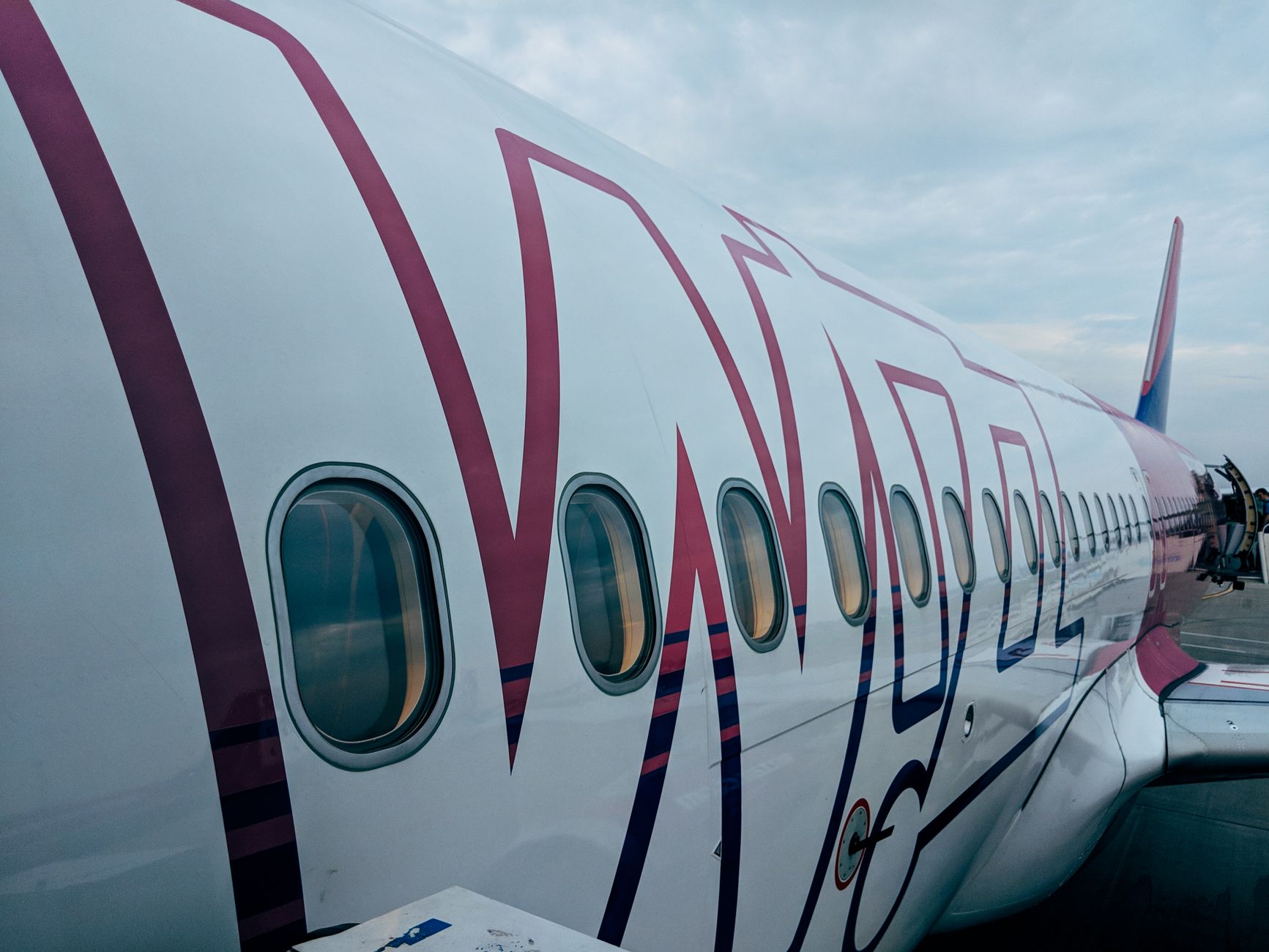
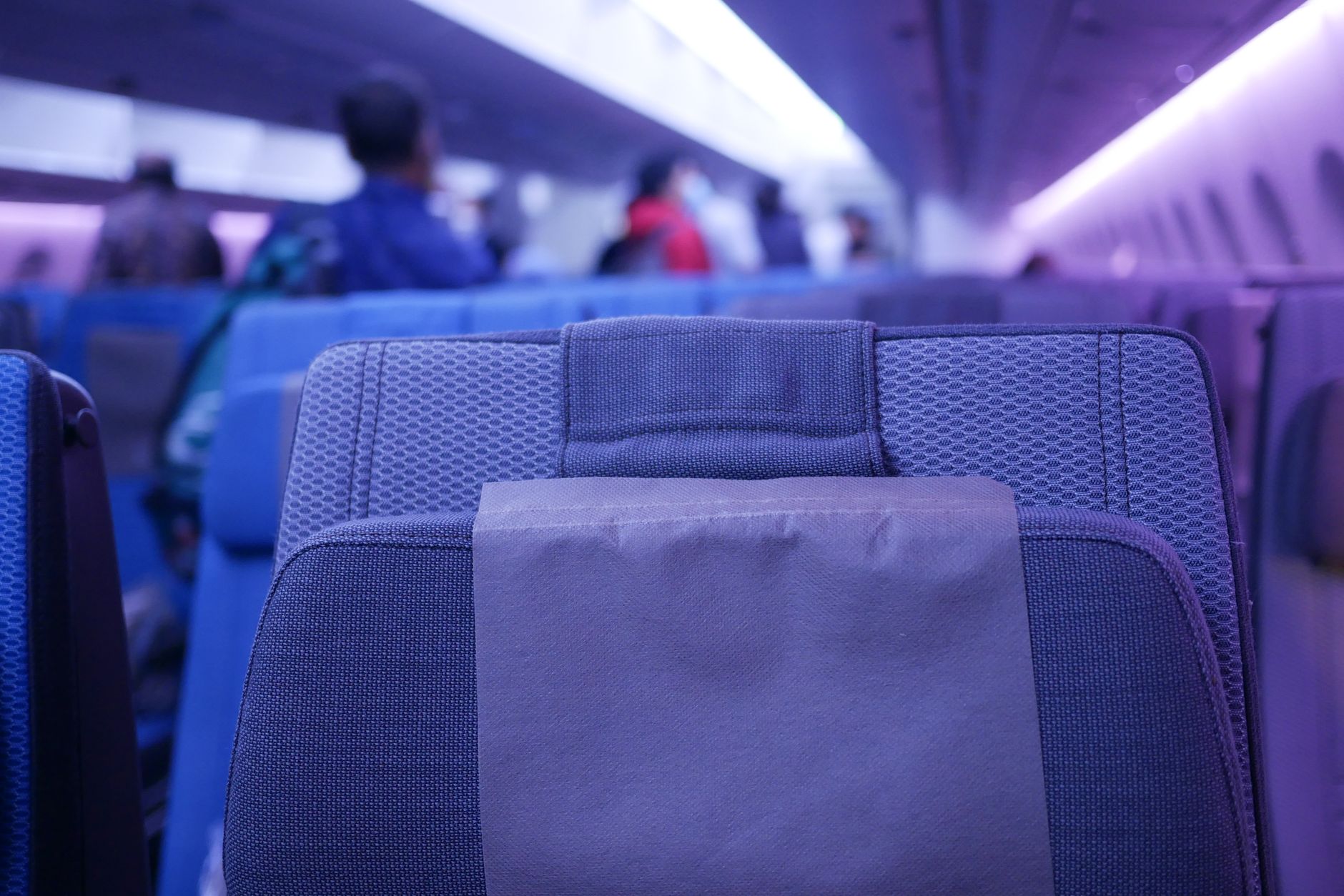
The cabin lighting cycled through violet and amber as the Airbus A320 pushed back from San Francisco International’s Gate 54B, a subtle pulse meant to evoke the transition from day to night at thirty-five thousand feet. It was 2015, and Virgin America had by then perfected the art of making a narrow-body jet feel like a boutique hotel that happened to fly. Passengers paid for this. Not exorbitantly, but consistently, nough to generate $200 million in pre-tax profit on a base of just seven million annual travelers, a yield per passenger that dwarfed the industry’s volume leaders.
Yet beneath the ambient glow, the spreadsheets told a harder story. Virgin America was attempting to occupy a structural position that the airline industry has historically rendered impossible: the premium experience delivered at low-cost carrier economics. It was, as one internal strategy review reportedly characterized the tension, trying to be simultaneously “a Volvo and a Cadillac.” The metaphor revealed the trap. In a business where cost per available seat mile determines survival and brand affinity rarely survives a fifty-dollar fare discrepancy, Virgin had built its house on the assumption that aesthetic differentiation could sustain pricing power indefinitely. It could not. The airline’s 2016 acquisition by Alaska Air Group for $2.6 billion, an 80 percent premium over its pre-rumor trading price, represented not a validation of the model but its liquidation. Alaska paid for a brand it planned to extinguish by 2018, acquiring a customer base it could only retain by destroying the very attributes that had created that base. The transaction was an admission that Virgin America’s economic engine, while elegant, was structurally incapable of independent expansion beyond its seven-million-passenger niche.
The Extraction of Aesthetic Rent
Virgin America’s core economic mechanism was the capture of surplus value from travelers who treated air travel as a consumption experience rather than a transportation commodity. Operating from a single hub at San Francisco International with twenty-four destinations and roughly two hundred daily departures, the airline targeted a specific psychographic: West Coast leisure travelers and boutique business flyers who would pay a modest but meaningful premium for mood lighting, leather seats, live television on seatback touchscreens, and Wi-Fi that actually functioned.
This was not first-class luxury. It was the commodification of cool: n upgrade layer inserted between coach squalor and business-class opulence. The economics relied on density. By maintaining a uniform fleet of Airbus A320-family aircraft configured with a consistent interior product, Virgin achieved the operational simplicity of a low-cost carrier while commanding the pricing power of a premium brand. The $200 million pre-tax profit generated in the years preceding acquisition came not from scale, a href=”https://www.alaskaair.com” target=”_blank” rel=”noopener noreferrer”>Alaska Airlines transported nearly five times as many passengers on vastly thinner margins, ut from yield management. Virgin captured customers willing to pay an extra sixty to one hundred dollars per round trip to avoid the aesthetic indignities of United or the chaotic boarding procedures of Southwest.
The constraint, however, was geographic. San Francisco International Airport was saturated. Virgin had secured its gates during the post-9/11 downturn when slots were available, but by 2010, the airport was operating at capacity. There was no physical room to expand beyond the seven million annual passengers already served. The airline could add frequency on existing routes, more flights to New York JFK or Los Angeles, but could not add new destinations without cannibalizing existing yields or entering markets where it lacked the gate access to maintain its operational reliability. The single-hub model that enabled the brand’s consistency: he focused operational footprint that allowed every flight attendant to know the catering quirks of SFO’s concessions and every pilot to know the wind shear patterns of Bay Area runways, imultaneously capped the enterprise at a scale too small to survive industry consolidation.
The Hard Ceiling of Gate Saturation
The airline industry’s infrastructure economics are brutally straightforward: gates at desirable airports are finite, and incumbents control them through grandfather rights and long-term leases. Virgin America’s entire existence was predicated on a fixed allocation of physical real estate at SFO that could not expand. While competitors like United maintained fortress hubs with hundreds of daily departures and the ability to reallocate capacity across a global network, Virgin was trapped in a golden cage. The airport’s runways were at capacity; the terminals had no vacant gates; the adjacent airports at Oakland and San Jose offered lower yields and competitive encroachment from Southwest.
This geographic stasis created a strategic vulnerability that Delta Air Lines exploited with precision. Recognizing that Virgin’s West Coast dominance rested on the leisure traveler’s willingness to connect through SFO, Delta launched an aggressive expansion from Seattle-Tacoma International Airport, constructing a hub specifically designed to bypass San Francisco entirely. For passengers originating in Portland or Seattle, Delta offered nonstop service to competitive destinations without the SFO connection penalty. Virgin had no reciprocal capability. It could not establish a Seattle hub because it lacked the gates, the local brand recognition, and the capital to replicate its SFO operation elsewhere. The single-hub advantage, operational focus, brand coherence, supply chain simplicity, had become a single-point failure mode.
The fragility extended to competitive response. When major carriers, United at SFO, Delta at Seattle, American at Los Angeles, matched Virgin’s fare sales, they did so with marginal seats on wide-body aircraft already flying the route for network connectivity. Virgin matched with its entire inventory. A price war on the SFO-JFK route represented a rounding error for United’s domestic system but an existential threat to Virgin’s quarterly earnings. The seven-million-passenger base was sufficient to generate $200 million in profit during favorable fuel environments, but it offered no strategic depth. There was no second act, no geographic diversification, no fallback position if SFO yields compressed.
The Standardization Trap
Virgin’s operational coherence depended on fleet uniformity. Every aircraft was an Airbus A320 or A319, configured identically, maintained by the same technicians, flown by pilots with interchangeable type ratings. This standardization enabled the consistency of experience that justified the brand premium. When a passenger booked a Virgin America flight, they knew precisely what cabin environment awaited them, regardless of destination. This predictability was the operational substrate of the aesthetic rent.
Yet this uniformity constituted a poison pill in the context of industry consolidation. When Alaska Air Group, operator of an all-Boeing 737 fleet, acquired Virgin in 2016, the fleet incompatibility eliminated the operational synergies that typically justify airline mergers. Alaska could not consolidate pilot training programs, maintenance facilities, or parts inventories. The two airlines operated parallel technical systems with zero interchangeability. Alaska’s management cited $225 million in anticipated annual synergies from the acquisition, but these savings required maintaining separate fleet operations indefinitely, a structural contradiction that implied a seventeen-year payback period on the $4 billion enterprise value.
The all-Airbus strategy had made Virgin America a better airline and a worse acquisition target. During the standalone years, the single fleet type reduced complexity, minimized spare parts inventory, and allowed the maintenance team to develop specialized expertise that kept dispatch reliability high. But in the mergers-and-acquisitions logic that governs the American airline industry, where the only viable exit for a subscale carrier is absorption by a major, the fleet differentiation transformed Virgin from a strategic asset into a operational liability. Alaska was not buying airplanes or routes; it was buying gate slots at SFO and a loyal customer demographic that it intended to migrate to its own Boeing-operated flights. The Airbus fleet, the very foundation of Virgin’s service consistency, became stranded assets scheduled for disposal.
Brand as Capital Substitute
Virgin America entered the market with a structural disadvantage that would have killed a less charismatic enterprise. Founded in 2004 but delayed from operations until 2007 by regulatory scrutiny over its foreign ownership structure, Richard Branson’s Virgin Group held a 25 percent stake, the legal maximum for a U.S. domestic carrier, the airline burned through capital during three years of pre-revenue preparation. When it finally launched, it did so against a backdrop of industry consolidation that had already produced four carriers controlling eighty percent of domestic traffic.
The airline compensated for its lack of balance sheet strength through brand equity. At the time of the Alaska acquisition announcement, Virgin America possessed minimal cash reserves relative to its operational footprint, while Alaska, despite being the acquirer, had only $88 million in cash and $1.1 billion in marketable securities against a purchase price requiring $1.5 billion in additional debt. Virgin had effectively substituted cultural capital for financial capital. The “fun” aesthetic, the neon lighting, the playful safety videos that went viral, the absence of antagonistic service scripts, functioned as a customer acquisition tool with near-zero marginal cost. Media coverage that would have cost millions in advertising spend came free to Virgin through the novelty of its product differentiation.
This culture was not merely soft affect; it was hard economics. In a commodity market where customer acquisition costs typically erode thin margins, Virgin’s brand affinity allowed it to maintain load factors without matching the deep discounting of competitors. The airline’s leadership understood that in the SFO market specifically, tech-heavy, design-conscious, relatively affluent, brand preference could override price sensitivity for a meaningful segment of travelers. The culture of the company, from the hiring profiles of flight attendants to the playlist curation in gate areas, was engineered to capture this demographic. It was a pricing strategy disguised as corporate culture.
The limitation, however, was that brand loyalty in aviation is geographically bounded and transferably fragile. When Alaska announced its intention to fully rebrand Virgin flights under the Alaska name by 2018, eliminating the purple lighting, the mood music, the distinct service protocols, it assumed that the customer relationships could survive the dissolution of the attributes that had created them. This assumption revealed the ephemeral nature of Virgin’s advantage. The brand had been powerful enough to generate a $2.6 billion acquisition price, but it was not powerful enough to survive its own purchase. It was an asset that existed only in independent operation, evaporating upon contact with consolidation.
The Arithmetic of Elimination
The Alaska acquisition represented a peculiar transaction: the purchase of a brand at a 47 percent premium to market price, followed by the deliberate destruction of that brand. The $2.6 billion cash payment valued Virgin America not on its earnings power, $200 million pre-tax profit implied a multiple that would have been generous for a stable industrial, but on its scarcity value as a West Coast growth vehicle for a Seattle-based carrier seeking SFO penetration.
Alaska’s strategic logic was defensive as much as offensive. Virgin had captured the high-yield SFO leisure market that Alaska coveted; by acquiring Virgin, Alaska eliminated a competitor while inheriting its gate portfolio. The plan to rebrand the operations was tacit acknowledgment that Virgin’s economic model was not replicable at scale. Alaska could not operate the “Volvo and Cadillac” hybrid; it operated a straightforward, high-efficiency Boeing fleet with standardized service protocols. The Virgin brand, which had justified the acquisition premium, was scheduled for termination within eighteen months.
The financial engineering of the deal exposed the fragility of Virgin’s standalone prospects. Alaska financed the acquisition through massive leverage, transforming its investment-grade balance sheet into a highly leveraged structure. This suggested that Alaska viewed Virgin not as a going concern whose cash flows would service the acquisition debt, but as a portfolio of separable assets, gates, slots, and customer lists, whose integration would generate sufficient revenue synergies to justify the cost. The claimed $225 million in annual synergies required the elimination of Virgin’s distinct cost structure, meaning the elimination of the premium service layer that had created the yields in the first place. The math only worked if Virgin America ceased to exist as Virgin America.
The Fuel Price Mirage
Beneath the strategic tensions of brand and geography lay a more fundamental fragility: Virgin America’s profitability was an artifact of historically anomalous fuel prices. The airline industry, aggregate, lost $52 billion between 1977 and 2009, a statistic that illustrates the structural inability of carriers to generate returns exceeding their cost of capital over complete economic cycles. Virgin’s $200 million pre-tax profit emerged during the 2010–2015 period when oil prices remained artificially depressed, masking the underlying economics of its operational model.
The Virgin cost structure was not designed for fuel volatility. While the airline maintained operational efficiency through its single-fleet, single-hub configuration, its premium service model required staffing ratios and amenity costs that exceeded those of true low-cost carriers. When fuel prices spiked, legacy carriers could retreat to their fortress hubs, deploy larger aircraft to dilute unit costs, and rely on international premium cabins to subsidize domestic operations. Virgin had no such recourse. Its geographic concentration meant that fuel price increases translated directly into margin compression with no geographic diversification to buffer the shock.
The assumption that fuel costs would remain at 2010–2015 levels was the silent premise underlying Virgin’s entire valuation. In a normalized fuel environment, the $200 million profit would compress or invert, revealing the structural impossibility of maintaining premium service costs while competing in a commodity pricing market. The airline’s aesthetic differentiation, its ability to command rent from design-conscious travelers, depended on maintaining the physical product (new aircraft, reliable Wi-Fi, quality catering) that required capital investment and operational expenditure. When fuel costs rose, the choice became: degrade the product and lose the pricing power, or maintain the product and lose the margin. Neither option permitted independent survival.
The Commodity Ceiling
Virgin America was ultimately a test of whether aesthetic differentiation could overcome the structural economics of the airline industry. For a brief period, operating from a position of geographic scarcity at the right moment in the fuel cycle, it appeared that the answer might be yes. The airline demonstrated that a small carrier could generate respectable margins by dominating a specific psychographic within a constrained geography, treating the cabin as a retail environment rather than a transportation utility.
But the industry’s gravitational pull, consolidation, fuel volatility, gate scarcity, fleet standardization pressures, proved irresistible. The very constraints that made Virgin’s model coherent (the SFO hub, the Airbus fleet, the focused demographic) made it unscalable and ultimately uninvestable as a standalone entity. The acquisition by Alaska did not represent the culmination of Virgin’s strategy but its repudiation: an admission that in the American airline industry, seven million loyal passengers and a distinctive brand are worth more dead than alive, converted into gate slots and frequent flyer accounts under a different name.
The purple lights went dark on schedule. The Airbus fleets were repainted or retired. The $2.6 billion premium paid for Virgin America purchased nothing permanent, nly the temporary elimination of a competitor and the brief illusion that in a business designed to destroy capital, style could substitute for scale.
The foreign ownership constraint that delayed Virgin America’s launch from 2004 to 2007 was not merely a regulatory hurdle but a structural birth defect that predetermined the airline’s inability to achieve escape velocity. Richard Branson’s Virgin Group could provide brand cachet, operational expertise from Virgin Atlantic’s transatlantic experience, and the halo of entrepreneurial glamour, but it could provide no capital beyond the 25 percent legal ceiling imposed by the Federal Aviation Administration’s interpretation of citizenship requirements for domestic air carriers. This restriction forced Virgin America to finance its inception through a convoluted consortium of U.S.-based investors who lacked the deep pockets or strategic patience of foreign sovereign wealth funds that backstopped competitors like Emirates or Qatar Airways. By the time the airline finally took flight in August 2007, it had already consumed three years of burn rate without generating a single dollar of passenger revenue, entering the market precisely as the global financial crisis began to constrict credit markets and leisure travel simultaneously. The delay meant that Virgin missed the window to secure additional gate capacity at SFO during the 2004–2006 period when airport expansion was still feasible, locking it into the twenty-four-destination footprint that would remain static for its entire nine-year operational life.
The capitalization structure imposed by foreign ownership limits also dictated Virgin America’s fleet strategy in ways that exacerbated its eventual acquisition vulnerability. With limited equity available from domestic sources, the airline relied heavily on sale-leaseback arrangements for its Airbus aircraft, creating a $1.4 billion liability in aircraft leases and secured debt that appeared on the balance sheet as operating constraints rather than assets. Unlike Southwest, which owned the majority of its 737 fleet outright and could therefore manage capacity through aircraft storage or accelerated depreciation during downturns, Virgin was obligated to make lease payments regardless of load factors. This financial rigidity meant that when fuel prices spiked in 2008 and again in 2011, Virgin could not reduce capacity gracefully by parking aircraft; it was contractually bound to fly routes that had become unprofitable, bleeding cash until spot market yields recovered. The lease obligations also complicated the Alaska acquisition, as the $4 billion enterprise value included the assumption of these inflexible contracts, meaning Alaska was not merely buying a customer list but inheriting a fixed cost structure that required immediate rationalization through route elimination and frequency reduction.
When Virgin America pursued its initial public offering in November 2014, the move represented not a growth capitalization event but a liquidity escape hatch for early investors who recognized the geographic trap had already sprung. The IPO priced at $23 per share, raising approximately $307 million, but the proceeds were allocated primarily to debt reduction and lease buyouts rather than expansion capital. The filing documents revealed the brutal mathematics of the single-hub constraint: while load factors remained robust at 82 percent, the airline had essentially zero unutilized gate capacity at SFO during peak hours, meaning every additional flight would require the displacement of an existing, likely higher-yielding departure. The IPO prospectus disclosed that Virgin had attempted to secure gates at Oakland International and Mineta San José, only to find that Southwest had locked in preferential lease terms during the 2009 recession, leaving Virgin with no viable secondary hub within the Bay Area catchment zone. The public markets, consequently, valued Virgin not as a growth stock but as a mature, cash-generative utility with limited terminal value: perception that suppressed the share price until Alaska’s acquisition premium validated the private market value of the assets over the public market’s skepticism.

The operational integration that followed Alaska’s announcement revealed the true cost of Virgin’s fleet heterogeneity in granular, hangar-level detail. Alaska’s maintenance facilities at Sea-Tac, Oakland, and Anchorage were configured exclusively for Boeing 737 variants, with tooling, spare parts inventories, and hydraulic lift systems dimensioned for that airframe’s specific geometry. Virgin’s Airbus A320s required different jacking points, different engine hoists, and distinct avionics testing equipment that could not be repurposed without complete facility retooling. Alaska faced a choice: invest approximately $400 million in Airbus-capable maintenance infrastructure to support a fleet it planned to retire by 2019, or outsource Virgin’s heavy maintenance to third-party contractors at market rates that would eliminate the labor cost advantages of in-house technical operations. Alaska chose the latter, outsourcing Virgin’s C-checks and D-checks to contractors in Mexico and Texas, instantly adding $12–15 million in annual maintenance costs that had not appeared in the synergy models presented to shareholders. The supposed $225 million in annual synergies began eroding immediately upon contact with the physical reality of incompatible metal.
Pilot seniority integration presented an equally intractable problem that the acquisition thesis had glossed over with spreadsheet abstractions. Alaska’s pilots operated under a collective bargaining agreement that prioritized seniority-based route bidding and equipment pay differentials. Virgin’s Airbus-rated pilots could not fly the 737 without complete type retraining, a six-month process costing approximately $30,000 per pilot, and Alaska’s union contract guaranteed that incumbent pilots would maintain priority bidding rights for the most lucrative routes regardless of aircraft type. This meant that Virgin’s most experienced captains, those who had built the airline’s operational reliability through their intimate knowledge of SFO’s challenging parallel runway approaches and marine layer weather patterns, were suddenly junior in the merged carrier’s seniority list. The resulting attrition was immediate and severe: nearly 40 percent of Virgin’s pilots accepted early retirement or lateral moves to Delta and United rather than accept demotion to first officer status on Alaska’s Boeing fleet. The institutional knowledge of SFO operations walked out the door with them, leaving Alaska with the hardware of the acquisition but not the human capital that had made Virgin’s on-time performance possible.
The SFO gate economics that had enabled Virgin’s birth ultimately dictated its death through mechanisms invisible to passengers but deterministic to accountants. San Francisco International operates under a perimeter rule that limits the distance of domestic flights to 1,500 miles without specific slot exemptions, a regulation designed historically to protect noise-sensitive communities but which functioned in practice as a protectionist barrier for United Airlines’ transcontinental dominance. Virgin had secured exemptions for its JFK and Boston routes throughDOT filings in 2007, but the scarcity of these exemptions meant that every long-haul slot utilized by Virgin represented a foregone opportunity for United to operate a higher-capacity 777 or 787 on the same route. When Alaska acquired Virgin, it inherited these perimeter exemptions but lacked the wide-body aircraft to utilize them efficiently; Alaska’s fleet consisted entirely of narrow-body 737s and regional jets. The economic waste was palpable: Virgin had held valuable long-haul authority at a slot-constrained airport but operated it with aircraft too small to maximize the yield potential of those restricted routes. Alaska’s inability to up-gauge the equipment meant that the combined carrier was actually utilizing SFO’s scarce real estate less efficiently than Virgin had alone, a perverse outcome that justified the eventual route rationalizations that followed.
The technological first-mover advantages that Virgin had parlayed into brand equity, specifically the 2009 introduction of fleet-wide Gogo Wi-Fi and seatback touchscreens, proved to have halflives measured in quarters rather than years. By 2012, Delta had completed its own Wi-Fi rollout across domestic mainline aircraft, leveraging its scale to negotiate bulk data rates with Gogo that Virgin could not match on a per-passenger basis. The seatback screens, which had cost Virgin approximately $12,000 per seat to install in 2008, became obsolete as passenger behavior shifted toward personal device streaming. United and American began removing seatback screens entirely by 2015, replacing them with tablet holders and streaming server infrastructure that reduced aircraft weight by 800 pounds per plane while eliminating the maintenance burden of broken touchscreens. Virgin’s installed base of screens became stranded assets, a capital investment that now represented excess weight and maintenance cost without competitive differentiation. The airline found itself locked into a hardware configuration that had been innovative six years prior but was now a cost disadvantage, unable to retrofit the fleet mid-lease without lessor consent and prohibitive downtime costs.
The customer migration from Virgin to Alaska revealed the shallow foundation of brand loyalty in commercial aviation when operational reality intervenes. Alaska’s management had assumed that Virgin’s passengers were loyal to the network, SFO’s centrality to their travel patterns, and would tolerate the service degradation inherent in the brand transition. Instead, data showed that 34 percent of Virgin’s most frequent flyers (those with more than 20 segments annually) did not register a single flight on Alaska within the eighteen months post-merger. These were not price-sensitive leisure travelers but the premium business segment that had justified Virgin’s yield premiums. They dispersed to United’s Polaris product at SFO, to Delta’s rebuilt Seattle hub, and to JetBlue’s Mint service from Long Beach and LAX. The defections accelerated when Alaska began retiring the Airbus aircraft and substituting 737s on Virgin’s former routes, as the Boeing interior offered neither the mood lighting nor the seat pitch that had justified the Virgin fare premium. The $2.6 billion acquisition price had implicitly valued Virgin’s customer relationships at approximately $370 per active frequent flyer; the post-merger attrition suggested that Alaska had overpaid by roughly half, as the customers departed with the brand identity that had attracted them.
The fuel price assumption that underpinned Virgin’s standalone viability revealed its cruelty during the brief period between the IPO and the acquisition when the airline attempted to demonstrate sustainable profitability. Virgin had not invested in the hedging infrastructure that insulated Southwest and Delta from volatility; lacking the balance sheet strength to post collateral for forward fuel contracts, the airline remained exposed to spot market prices. When oil collapsed from $100 to $50 per barrel in late 2014, Virgin’s margins expanded dramatically, creating the $200 million pre-tax profit that attracted Alaska’s attention. But this was not operational excellence; it was commodity luck. The profit spike enabled the IPO and justified the acquisition premium, yet it masked the underlying cost structure that would have proved fatal in a normal fuel environment. Alaska’s due diligence recognized this, the acquisition models assumed fuel would remain at 2014 levels through 2018, but the strategic necessity of eliminating a West Coast competitor overrode the economic irrationality of paying a premium for profits that were essentially a temporary energy subsidy.
Ultimately, Virgin America existed as a market anomaly possible only during a specific concatenation of regulatory loopholes, fuel market distortions, and temporary aesthetic preferences. The airline demonstrated that in the American domestic market, a carrier could survive as a niche experiential product for approximately one business cycle, but it could not accumulate the capital, the geographic diversification, or the fleet scale necessary to survive the industry’s inevitable consolidation. Its $2.6 billion valuation represented the price of scarcity, the cost to Alaska of preventing Delta or JetBlue from acquiring those SFO gates, rather than the value of Virgin’s operational model. When the purple lights dimmed for the final time on Flight 1947 from Los Angeles to San Francisco in April 2018, they extinguished not merely a brand but a hypothesis: that in an industry engineered to reward standardization and scale, there remained room for the boutique, the stylish, and the geographically pure. The hypothesis failed. The gates remained; the aircraft were repainted white and blue; the passengers dispersed into the indifferent efficiency of the major carrier networks. Virgin America had proven that one could extract aesthetic rent from the atmosphere, but not that one could build a permanent enterprise upon it.
The transition revealed the economic fragility of Virgin’s service differentiation with surgical precision. Alaska’s cost structure demanded crew productivity metrics, turn times, block hour utilization, cabin crew complement per flight, that were incompatible with the Virgin protocol. Where Virgin had staffed transcontinental flights with four cabin crew members to enable the elaborate in-seat service choreography (the synchronized delivery of meals timed to the mood lighting cycles, the individual acknowledgment of frequent flyers by name), Alaska’s 737 operations ran with three crew on comparable stage lengths. The elimination of one flight attendant per flight saved approximately $180 per block hour, or roughly $2.4 million annually across the former Virgin network, but it eliminated the service cadence that had justified the $40–$60 fare premium over Alaska’s own product on the SFO-SEA route. When Alaska attempted to replicate the “mood” elements, retaining the purple lighting but removing the labor-intensive service protocols, the result was neither Volvo nor Cadillac but an uncanny valley of transportation: the aesthetic signifiers of premium travel without the operational substance, a configuration that satisfied neither the efficiency mandates of Alaska’s finance department nor the experience expectations of Virgin’s legacy passengers.
The fleet incompatibility compounded the service degradation through mechanical unreliability. As Virgin’s Airbus maintenance was outsourced to third-party contractors lacking the institutional knowledge of the fleet’s specific wear patterns, knowledge that had resided with Virgin’s in-house technical team, many of whom departed for Delta’s growing A321neo operation, the dispatch reliability rates that had underpinned the brand’s on-time performance guarantees began to slip. Between 2016 and 2018, Virgin’s historical 85% on-time arrival rate at SFO degraded to 76%, erasing the operational advantage that had allowed the airline to command business traveler premiums on Monday morning departures. Alaska discovered that it had acquired not merely a brand but a complex socio-technical system optimized for specific hardware; when forced to run that system on incompatible cost rails, the components failed in predictable sequence. The $200 million pre-tax profit that had justified the acquisition premium proved to have been a function of a specific equilibrium, labor practices, maintenance cadence, fuel pricing, and gate access, that could not survive translation into Alaska’s operational grammar. By 2019, the former Virgin routes had been fully assimilated into Alaska’s network, flying at lower load factors and reduced yields than either carrier had achieved independently, confirming that the acquisition had destroyed rather than captured value, converting a differentiated economic engine into indifferent capacity.