Webflow: How No-Code Disrupted Custom Development

In the early 2010s, Vlad Magdalin was running a small design agency in California when he encountered an economic absurdity that would define the next decade of his work. A client had commissioned a custom content management system for their website, a straightforward database of properties, or team members, or products, and the final invoice came to nearly $100,000. Magdalin, who handled the technical implementation, knew the actual labor involved: three to four days of his time, mostly spent translating static designs into database schemas, admin interfaces, and frontend markup. The design work had consumed weeks. The strategic planning had taken meetings. But the production, the mechanical act of building, was measured in days, not months. The bottleneck was not creativity or complexity; it was the translation layer between those who imagined the interface and those who coded it.
This observation, that the handoff from designer to developer had become the most expensive and friction-laden step in digital production, was not unique to Magdalin. What proved unique was his architectural response. While competitors attempted to automate code generation through graphic design tools or to simplify coding through visual abstractions, Magdalin pursued a more demanding path. He would force designers to learn the web’s underlying primitives, Document Object Model hierarchies, Cascading Style Sheets specificity, Flexbox constraints, without ever allowing them to write code. The tool would operate not as a drawing application that guessed at markup, but as a direct manipulation interface inside the browser itself, using the same rendering engines that would eventually display the final site. The economic engine of Webflow rests on this specific contract: users accept a steep pedagogical burden in exchange for eliminating the translator. The durability of this model depends entirely on whether that bargain remains preferable to the emerging alternative, escribing intent to an artificial intelligence that handles the primitives automatically.
The Abstraction That Bites Back
The history of web design tools is largely a graveyard of false promises. From Microsoft FrontPage to Adobe Dreamweaver, the industry has repeatedly attempted to hide code behind visual metaphors, only to produce markup so bloated and semantic structure so corrupted that professional use became impossible. These tools treated HTML and CSS as outputs to be generated from graphic design paradigms, pixels arranged on canvases, layers stacked in panels, rather than as logical systems with specific constraints. The result was always the same: designers created layouts that looked correct in the tool but broke when rendered across different browsers, devices, or accessibility tools. The generated code was garbage, and professionals learned to avoid it.
Magdalin’s insight, refined through three separate attempts to build the product between 2005 and 2012, was that the failure was not one of execution but of abstraction. The web is not a canvas; it is a hierarchical document structure styled by rule-based systems. Any tool that obscured this reality would eventually produce broken output. But any tool that required users to write code would exclude the designers who controlled the visual decisions. The solution was architectural: build the tool inside the browser itself, using real-time DOM manipulation and live CSS rendering, so that what the user saw was not a simulation of the web but the web itself.
This approach, however, imposed a cognitive tax. Webflow users must learn the CSS box model. They must understand parent-child relationships in the DOM. They must internalize the behavior of Flexbox and Grid layouts, the cascade of class inheritance, and the constraints of responsive breakpoints. The interface visualizes these primitives, users drag to adjust margins, click to add classes, toggle to switch display properties, but it never hides them. The tool forces designers to think like developers without permitting them to write syntax. This is the defining structural constraint shaping every product decision Webflow makes. Too much abstraction, and the tool produces the same garbage code that doomed Dreamweaver; too little, and the learning curve excludes the agency designers who form the core customer base. Webflow walks a razor’s edge where the friction is the feature. Users who persist do not merely learn a software interface; they internalize a specific mental model of how web documents are structured, a model that exists nowhere else in the same form.
The Browser as Factory
The technical architecture that enables this abstraction layer serves as Webflow’s most defensible structural advantage, one that competitors struggle to replicate even with substantial capital. Because Webflow operates entirely within the browser, using iframes for canvas rendering, DevTools APIs for inspection, and the browser’s own layout engines for real-time preview, it works with the actual primitives of the web rather than approximations. When a user adjusts a Flexbox container in Webflow, they are manipulating the same CSS properties that Chrome or Safari will use to render the final site. When they add a class, they are creating a selector that exists in the actual DOM, not a layer in a graphics application that will later be compiled to code.
This matters because it creates an architectural barrier to entry for competitors approaching from adjacent markets. Figma, Adobe, and other design tools operate on graphic rendering engines optimized for vector manipulation and pixel-perfect composition. Their natural abstraction layer is the canvas, the artboard, the vector path. To replicate Webflow’s functionality, they would need to abandon this foundation and rebuild on browser technology: task that requires not merely frontend engineers but browser engineers, specialists in rendering engines and DOM APIs. Such a rebuild would take years and would force these companies to abandon the graphic design paradigms that define their existing user experiences. Webflow’s ten-year head start, conceived in 2005, launched in 2012, profitable by 2015, represents a decade of accumulated knowledge about browser internals that cannot be purchased or accelerated. Competitors are locked into the wrong abstraction layer, and the cost of switching architectural foundations is prohibitive.
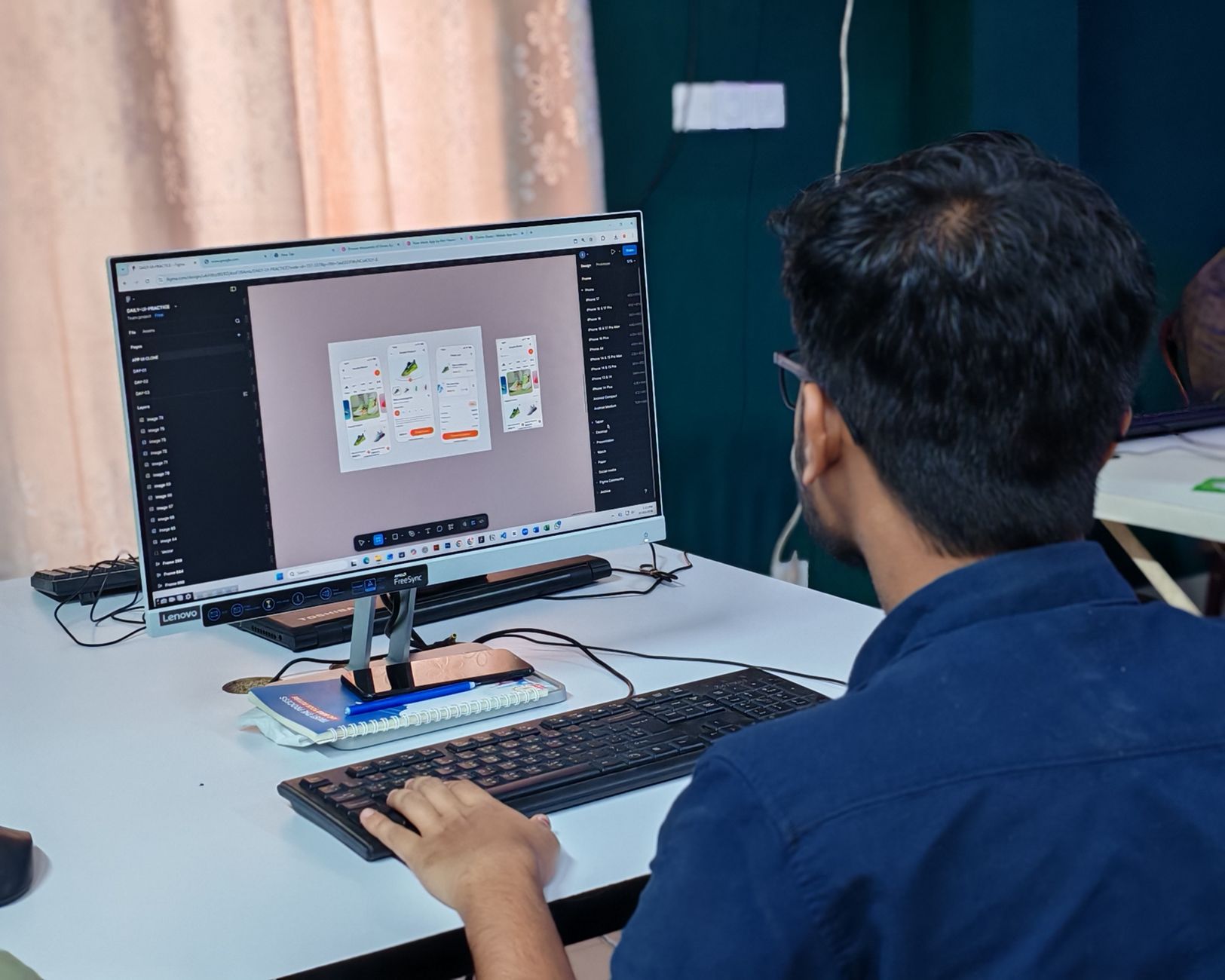
Moreover, this browser-native approach creates a form of lock-in that is cognitive rather than contractual. Users do not merely store their work in Webflow; they learn to see web layouts through Webflow’s specific representation of CSS classes, breakpoint structures, and component hierarchies. This mental model is non-transferable. A designer who has spent years internalizing Webflow’s particular visualization of the cascade cannot simply export that understanding to WordPress, Squarespace, or even hand-coding. The switching cost is not just the migration of files; it is the relearning of production logic. This cognitive residue compounds over time, making each additional year of use deepen the moat.
The Economics of Impatience Deferred
The durability of this advantage is reinforced by an unusual capital structure that functions as an economic variable in its own right. Magdalin attempted to launch Webflow three times, nce in 2005 as a college project, again in 2007-2008, and finally successfully in 2012. The second attempt collapsed when a Florida company issued a trademark cease-and-desist; Magdalin received the trademark certificate by mail in late 2011, five years later, only after the competing claim had lapsed. This delay, combined with his subsequent experience at Intuit’s innovation lab (where he worked on an internal collaboration tool called Brainstorm under the mentorship of Bill Campbell), instilled a governance philosophy antithetical to the growth-at-all-costs mentality dominating venture-backed software.
After participating in Y Combinator in 2013 and raising a modest $2.9 million across seed and extension rounds, Webflow achieved profitability in late 2015. The company then raised no external capital for four years. During this period, from 2015 to 2019, when competitors were often incentivized to prioritize user acquisition over unit economics, Webflow could optimize for user value and product depth. The $72 million Series A led by Accel in 2019 arrived only after the company had proven its model and built its cognitive moat without the pressure to chase adjacent markets or bloat its feature set to satisfy growth metrics.
This capital efficiency serves as a structural defense against well-funded competitors. A venture-backed rival entering the no-code space today faces immediate pressure from investors to demonstrate rapid growth, which typically manifests as feature creep, aggressive expansion into tangential use cases, or pricing strategies that prioritize volume over sustainability. Webflow, by contrast, had the luxury of seven years of iteration (2005-2012) and four years of profitable operation (2015-2019) to refine its specific abstraction layer without external interference. This patience allowed the company to resist the temptation to become a generalist platform and to instead deepen the specific cognitive lock-in of its designer-centric model. In a market where competitors must grow fast and break things, Webflow’s ability to grow slowly and preserve architectural integrity becomes a sustainable advantage.
The Fault Line Between Design and Development
Yet this same focus creates a strategic tension that threatens to fragment the product. Webflow’s core user, the agency designer who never learned to code but understands visual hierarchy, has opposing needs to the developer workflows that enterprise customers increasingly demand. Designers think in components, visual states, and responsive behaviors. Developers think in version control, command-line interfaces, and CI/CD pipelines. As Webflow attempts to expand upmarket into larger agencies and enterprise teams, the pressure mounts to add developer-centric features: Git integration, code export workflows, programmatic API access. Each such addition risks alienating the core designer user who drove early adoption, while ignoring them cedes the high-value enterprise segment to competitors.
This tension is exacerbated by the horizontal nature of Webflow’s platform. The tool can theoretically build any type of website, arketing sites, e-commerce storefronts, SaaS applications, documentation hubs. This maximizes total addressable market but dilutes product focus. Specialized tools can optimize for specific verticals: Shopify for commerce, Notion for documentation, specialized landing page builders for marketing. Webflow must compete with these optimized solutions while maintaining the generalized abstraction layer that supports all use cases. The risk is feature bloat that compromises the clean, designer-centric interface, or conversely, underfitting that leaves specific verticals poorly served. The company must resist the temptation to become everything to everyone, even as venture capital (post-2019) and market expansion logic push in that direction.
The Intent Interface
These near-term strategic challenges, however, may pale beside a more existential fragility in Webflow’s underlying assumption. The entire economic engine rests on the premise that designers must learn web primitives to ship production websites, hat the direct manipulation of CSS and DOM structures represents the optimal balance of power and usability. But this assumption depends on the continued inadequacy of artificial intelligence at bridging the gap between human intent and code execution.
If AI systems advance to the point where a designer can describe a layout in natural language, “a three-column grid that collapses to single column on mobile, with the first column sticky and a hover state that reveals a secondary navigation”, and receive production-ready, standards-compliant code without understanding Flexbox or Grid, Webflow’s pedagogical burden becomes a liability rather than a moat. The value proposition of “direct manipulation” collapses when manipulation itself becomes unnecessary. Why learn the box model when you can simply describe the desired behavior?
This is the fragile long-term assumption: that the market will continue to prefer the cognitive investment of learning Webflow’s specific abstraction over the convenience of intent-based generation. The bear case for Webflow is not that a competitor builds a better visual editor, but that the entire paradigm of visual editing becomes obsolete, replaced by conversational interfaces that render the underlying primitives invisible. In such a world, Webflow becomes a niche tool for “designer-developers” who enjoy granular control, while the mass market moves to systems that require no knowledge of DOM hierarchies whatsoever. The company’s deep investment in browser-native manipulation, its core structural advantage, becomes an architectural anchor preventing pivot to the new paradigm.

The Weight of Learned Constraints
Whether this fragility materializes depends partly on the durability of the cognitive switching costs Webflow has already accumulated. This represents the most underappreciated structural advantage in the company’s portfolio: the specific, non-transferable mental model users develop through years of Webflow use. Competitors often discuss “switching costs” in terms of data migration, contract lock-in, or network effects. Webflow’s switching costs are more subtle and potentially more powerful. They are lodged in the user’s perceptual framework.
A designer who has spent five years building in Webflow does not merely know where buttons are located; they unconsciously parse web layouts according to Webflow’s class system, its specific implementation of responsive breakpoints, its component structure. They think in “Webflow-ese.” Migrating to another platform, whether a competing no-code tool or AI-generated workflows, requires not just learning new software but unlearning a specific way of seeing. This cognitive residue creates stickiness that no contract can match. Even if a competitor offers superior features or lower prices, the psychological cost of reconceptualizing one’s production process acts as a brake on churn.
This advantage compounds with time. The longer the no-code infrastructure matures, the more entrenched these mental models become across the agency ecosystem. Junior designers learn Webflow not as one option among many but as the definition of how websites are built. The tool becomes invisible, part of the professional grammar. In this light, the four years of profitability and the delayed venture funding were not merely financial prudence; they were temporal fortification, allowing the company to sink cognitive roots deep into the design industry before competitors could establish alternative paradigms.
The question that will determine Webflow’s next decade is whether these roots are deep enough to survive a shift in the technological substrate. If the web remains the dominant platform for interactive content, and if browser standards continue to evolve incrementally, the company’s combination of cognitive lock-in and capital discipline suggests a durable enterprise. But if the nature of interface creation shifts from manipulation to description, from learning constraints to stating intent, Webflow’s greatest asset, its browser-native, primitive-respecting architecture, may become the very thing that prevents adaptation. The $100,000 invoice that started it all assumed that translation was the costly problem. The next phase of the industry may decide that the cost lies not in translation, but in the necessity of knowing what requires translation at all.
The horizontal positioning that maximizes Webflow’s addressable market simultaneously creates a product geometry problem. When a platform attempts to serve marketing sites, e-commerce storefronts, SaaS applications, and documentation hubs from the same abstraction layer, feature requests arrive from orthogonal vectors. An e-commerce merchant demands inventory management integrations and tax calculation logic; a SaaS marketer needs A/B testing frameworks and dynamic personalization; a documentation team requires version control and collaborative editing. Each vertical carries distinct workflow expectations and performance benchmarks. The generalized Flexbox-and-DOM model that serves the marketing site designer adequately becomes friction when the user attempts to build a complex checkout flow with conditional logic.
Webflow’s response has been to add vertical capabilities, Memberships, Logic, E-commerce, without abandoning the core visual abstraction. But this layering introduces architectural strain. E-commerce functionality, for instance, requires database transactions, payment processing, and inventory state management that resist clean visualization through CSS-centric interfaces. The designer who understands box models may not understand relational database constraints or payment gateway webhooks. The tool faces a choice: hide these complexities behind additional abstraction layers, risking the “garbage code” problem that destroyed previous WYSIWYG tools, or expose them, breaking the designer-centric value proposition that distinguishes Webflow from developer platforms. The company currently oscillates between these poles, adding “no-code” database features that nonetheless require users to understand concepts like many-to-many relationships and API rate limits. This is not a failure of execution but a structural consequence of refusing to specialize. The broader the horizontal claim, the more frequently the product encounters problems that cannot be solved through visual manipulation of the DOM.
The browser dependency that enables Webflow’s technical advantage simultaneously constitutes its most precarious long-term fragility. The entire architecture assumes continued standardization and capability convergence across rendering engines. Webflow generates CSS Grid and Flexbox layouts assuming that Safari, Chrome, and Firefox will interpret these specifications consistently. It relies on DevTools APIs for inspection and debugging. It assumes that browser performance will continue improving linearly, allowing complex JavaScript-driven canvas manipulation without frame drops. Should these assumptions fracture, f Apple’s Safari team deprioritizes web application capabilities to protect its native app ecosystem, or if Chrome’s dominance leads to proprietary API extensions that break cross-browser compatibility, ebflow’s “what you see is what you get” promise collapses into a testing nightmare.
This is not speculative. Safari’s historical lag in implementing web standards, particularly around IndexedDB, Service Workers, and certain CSS properties, has already forced Webflow to maintain browser-specific workarounds or to disable features for Safari users. Each such compromise breaks the core abstraction: the designer manipulating the canvas in Chrome sees different behavior than the end user accessing the site via mobile Safari. The visual editor’s fidelity depends on browser homogeneity that market incentives may not sustain. If the web platform fragments into competing rendering paradigms, accelerated by regulatory pressure on Chrome’s monopoly or by Apple’s strategic preference for native apps, Webflow faces an expensive architectural rewrite. The tool would need to become either a lowest-common-denominator platform, limiting features to universally supported standards, or a multi-rendering-engine beast, maintaining separate abstraction layers for different browser capabilities. Either path erodes the technical moat derived from browser-native manipulation.
The specific mechanics of that original $100,000 invoice illuminate why these constraints matter. In the agency workflow Magdalin observed, the design phase produced static mockups in Photoshop or Fireworks. These mockups represented visual intent but contained no information about responsive behavior, database relationships, or content management structures. The “handoff” to development required the engineer to infer these technical requirements from pixel arrangements, then rebuild the entire visual system using HTML, CSS, and server-side logic. The $100,000 charge reflected not complexity but translation overhead: the developer had to reverse-engineer design intent, then forward-engineer technical implementation, then reconcile the inevitable discrepancies when the browser rendered differently than the graphic design tool predicted.
Webflow eliminated this translation by collapsing design and production into a single step. The designer works directly with the rendering engine that will serve the final site, eliminating the discrepancy between mockup and reality. But this solution assumes that the designer can handle the technical decisions previously deferred to developers. When Webflow users build e-commerce sites, they must now make decisions about database schema, payment flows, and security compliance, omains previously handled by engineers who had learned these disciplines through years of specialized training. The tool has not eliminated the need for technical knowledge; it has relocated it onto designers who may lack the training to handle edge cases. This creates a new friction: agencies must either hire “Webflow developers” who combine design sensibility with technical systems thinking, a rare and expensive hybrid, or they must accept that complex implementations will hit walls where the visual abstraction cannot hide underlying complexity.
The formation of this hybrid identity, the designer who thinks in CSS classes and DOM hierarchies, represents Webflow’s most successful cultural achievement and its most vulnerable point of failure. These users do not identify purely as visual designers; they have internalized a specific technical craft that exists only within Webflow’s ecosystem. They participate in community forums discussing the optimal use of combo classes and the performance implications of excessive DOM nesting. They have become, in essence, a specialized labor pool trained on proprietary tooling. This creates powerful network effects within agencies: when one team member adopts Webflow, they create workflow dependencies that pull colleagues into the same environment to maintain project consistency. The agency that commits to Webflow finds it easier to hire Webflow-trained designers than to retrain existing staff or migrate historical projects.
Yet this identity formation depends on the continued scarcity of alternative pathways to production. If AI-assisted development tools allow traditional designers to generate production code through natural language prompts, ”create a responsive grid with sticky navigation and CMS-driven blog posts”, the hybrid Webflow specialist becomes redundant. The specific knowledge of Webflow’s class system and breakpoint methodology loses market value when the underlying production can be handled by conversational interfaces. The community that currently strengthens Webflow’s moat through network effects and shared knowledge could dissolve as quickly as it formed, its members’ specialized skills commoditized by generative models that bypass visual editing entirely.
Consider the specific trajectory of such a shift. A marketing designer currently using Webflow spends weeks mastering the cascade, learning how global classes propagate changes across hundreds of pages, understanding the constraints of the CMS collection structure. This investment pays dividends in maintenance efficiency: when the client requests a color change, the designer modifies a single class rather than manually updating each instance. Now imagine an AI-assisted workflow where the designer describes the site structure in plain language, receives generated code, and makes subsequent changes through conversational refinement. The AI handles the cascade logic; the designer never needs to understand class inheritance. The maintenance burden shifts from the designer’s structured foresight to the AI’s ability to interpret context. In this scenario, Webflow’s pedagogical burden, its requirement that users learn web primitives, transforms from a feature into a tax. Users who previously accepted the learning curve for the payoff of direct control now face a tool that demands expertise while competitors offer equivalent output without the cognitive investment.
The bear case, then, is not merely that Webflow loses users to a better visual editor, but that the entire category of visual editing becomes obsolete for a significant portion of use cases. The market segments: simple marketing sites move to AI generation; complex applications remain with traditional engineering teams using code-centric workflows; Webflow retains only the middle ground of designer-developers who specifically enjoy the granular control of visual CSS manipulation: niche smaller than the current TAM suggests. The company’s browser-native architecture, its decade of accumulated rendering expertise, becomes irrelevant in a market where the browser is merely an output device for AI-generated code rather than the primary authoring environment.
Magdalin’s experience at Intuit’s innovation lab, often overlooked in narratives focused on the agency work, shaped the governance discipline that might navigate these threats. At Intuit, he worked on Brainstorm, an internal idea-sharing platform that achieved multimillion-dollar ARR within the corporate structure. Bill Campbell, the legendary Silicon Valley coach who advised Steve Jobs and numerous tech leaders, specifically counseled Magdalin against spinning Brainstorm out as a separate company. The lesson Magdalin extracted was not about the specific product but about the relationship between capital structure and product integrity. Brainstorm succeeded within Intuit because it served a defined user need without the growth pressures of venture funding. When Magdalin finally launched Webflow successfully in 2012, he carried this skepticism of external capital’s influence on product decisions.
This governance philosophy, treating profitability as a product feature rather than a financial outcome, allowed Webflow to resist the horizontal expansion that destroys focused tools. For four years, from 2015 to 2019, the company had no external board members demanding quarterly growth metrics. Product development could prioritize depth over breadth, refining the specific abstraction layer rather than chasing adjacent markets. This capital efficiency serves as an underappreciated economic variable: it alters the competitive dynamics by changing the time horizon over which Webflow can optimize. While venture-backed competitors must show growth trajectories that justify their valuations, Webflow can accept slower user acquisition in exchange for deeper cognitive lock-in.
However, this same discipline may become a liability if the market shifts faster than organic growth allows Webflow to adapt. The 2019 Series A from Accel introduced external capital precisely when the no-code market began accelerating. The company now faces the classic innovator’s dilemma: its core user base of designer-developers provides stable, high-margin revenue, but the potentially larger market of intent-based users may require product changes that alienate this base. Adding AI-assisted generation to Webflow risks undermining the very pedagogical structure that creates switching costs. If users can generate layouts through prompts, they no longer need to learn the CSS box model, and the cognitive moat evaporates. Yet failing to add such features cedes the mass market to competitors.
The trademark delay that stalled Webflow’s second launch attempt in 2007-2008 also shaped this risk tolerance. Magdalin received the cease-and-desist shortly after the initial launch, forcing a shutdown and five-year wait for the trademark to lapse. During this period, he worked at Intuit, observing how large organizations handle product development under bureaucratic constraints. When the trademark finally arrived in late 2011, he possessed both the technical knowledge from his earlier attempts and the organizational patience to build slowly. This biography suggests a leadership capacity for delayed gratification that may prove essential if Webflow must weather a transition from the visual editing paradigm to an intent-based paradigm. The company that waited five years for a trademark certificate may possess the governance stability to survive a longer transition than venture-backed competitors could tolerate.
Yet patience alone cannot resolve the fundamental tension between respecting web primitives and hiding complexity. Webflow’s current trajectory attempts to split the difference: the core product remains the visual editor demanding technical literacy, while newer features like “Webflow Logic” introduce workflow automation that resembles the intent-based interfaces of competitors. But this bifurcation risks product schizophrenia. The designer who chose Webflow specifically to learn the underlying primitives finds Logic modules that obscure those primitives behind conditional “if-this-then-that” interfaces. The user seeking simpler abstraction finds the core editor still demands understanding of the cascade. Neither user receives a coherent experience.
The durability of the economic engine ultimately depends on whether the translation layer that Webflow eliminated stays eliminated. If AI systems prove capable of reliable translation from design intent to production code, if the gap between Figma mockup and deployed website closes without requiring the designer to understand Flexbox, then Webflow’s entire value proposition becomes a historical artifact: the best solution to a problem that no longer exists. The $100,000 invoice reflected a specific market inefficiency in the 2000s, when graphic design tools and web development environments were separate universes. If the next decade unifies these universes through artificial intelligence, Webflow becomes a sophisticated tool for an increasingly narrow cohort of professionals who prefer manual transmission in an era of automatic vehicles.
The company’s structural advantages, browser-native architecture, cognitive switching costs, capital discipline, remain formidable in the current paradigm. The browser dependency that creates fragility also creates defensibility; competitors cannot easily replicate the rendering fidelity without similar investments. The horizontal positioning that strains the product also maximizes the surface area for cognitive lock-in. But these advantages assume the continuation of a world where websites are built through direct manipulation of technical primitives. Should that world give way to one where production is mediated through language models, Webflow’s specific form of expertise becomes less relevant than the data sets and prompt engineering capabilities of AI-native competitors.
For now, the agency ecosystem continues to deepen its investment in Webflow’s specific mental model. Design schools increasingly teach Webflow alongside Figma, creating new cohorts of designers for whom Webflow-ese is the native language of web production. This educational penetration extends the cognitive moat into generational replacement: as designers retire or change careers, their replacements enter the field already thinking in Webflow’s abstraction layers. The tool becomes infrastructural, invisible, part of the professional water supply. Such entrenchment can persist long after technological superiority fades, orporate IT departments still maintain COBOL systems not because they are optimal but because the cost of replacing embedded expertise exceeds the cost of maintenance.
Webflow’s bet is that this infrastructural status will survive the transition to AI-assisted development, positioning the company as the “professional’s choice” even as amateurs adopt simpler tools. The risk is that AI development proves not merely additive but substitutive, rendering the professional’s expertise in CSS manipulation as relevant as expertise in typesetting or film development. In that scenario, Webflow’s durability becomes a trap, its sophisticated architecture serving a shrinking cadre of purists while the market moves to conversational interfaces. The $100,000 invoice problem, expensive translation between design and code, may find its ultimate solution not in better translation tools, but in eliminating the distinction between the languages being translated.