
Introduction:
Imagine designing complex user interfaces with dozens of forms, each requiring meticulous crafting and testing. Now, picture AI stepping in, not just to automate the tedious parts but to generate entire forms, optimized for usability and tailored to your specific product. This is the near future of product design, where AI-powered form generation tools are poised to revolutionize workflows and unlock unprecedented levels of efficiency.
This isn't just about saving time; it's about fundamentally changing how we approach UI/UX design. In today's hyper-competitive market, speed and user experience are paramount. Businesses are constantly seeking ways to accelerate product development cycles while delivering seamless, intuitive interfaces. Automated form generation offers a powerful solution, allowing design teams to focus on higher-level strategic decisions and creative problem-solving, rather than getting bogged down in repetitive tasks. This shift empowers designers to iterate faster, experiment more freely, and ultimately create better products that meet evolving user needs.
My years of experience leading design teams at both established enterprises and agile startups have given me a front-row seat to this transformation. I've witnessed firsthand the challenges of scaling design operations and the growing demand for intelligent automation. Through practical application and rigorous testing, I've seen how AI-driven tools can dramatically improve design workflows, reduce development costs, and enhance the overall user experience. This article will explore the emerging landscape of AI-powered form generation, examining the core principles, advanced techniques, and strategic implications of this exciting new frontier in product design.
Industry Landscape & Emerging Trends:
The landscape of product design is rapidly evolving, driven by the convergence of AI and automation. Traditional form creation methods, often tedious and iterative, are giving way to intelligent tools that promise to streamline workflows and unlock new levels of design efficiency. This shift is not merely incremental; it represents a fundamental change in how we approach user interfaces and digital experiences. The demand for personalized, dynamic, and context-aware forms is exploding, pushing the boundaries of what's possible and creating a fertile ground for AI-powered solutions.
One key trend is the rise of no-code/low-code AI platforms. These tools empower designers, even those without deep coding expertise, to leverage the power of AI for form generation. Platforms like Webflow and Bubble are incorporating AI features that simplify complex tasks, such as layout optimization, content suggestion, and even predictive user behavior modeling. This democratization of AI is crucial for wider adoption and will accelerate the development of innovative form experiences.
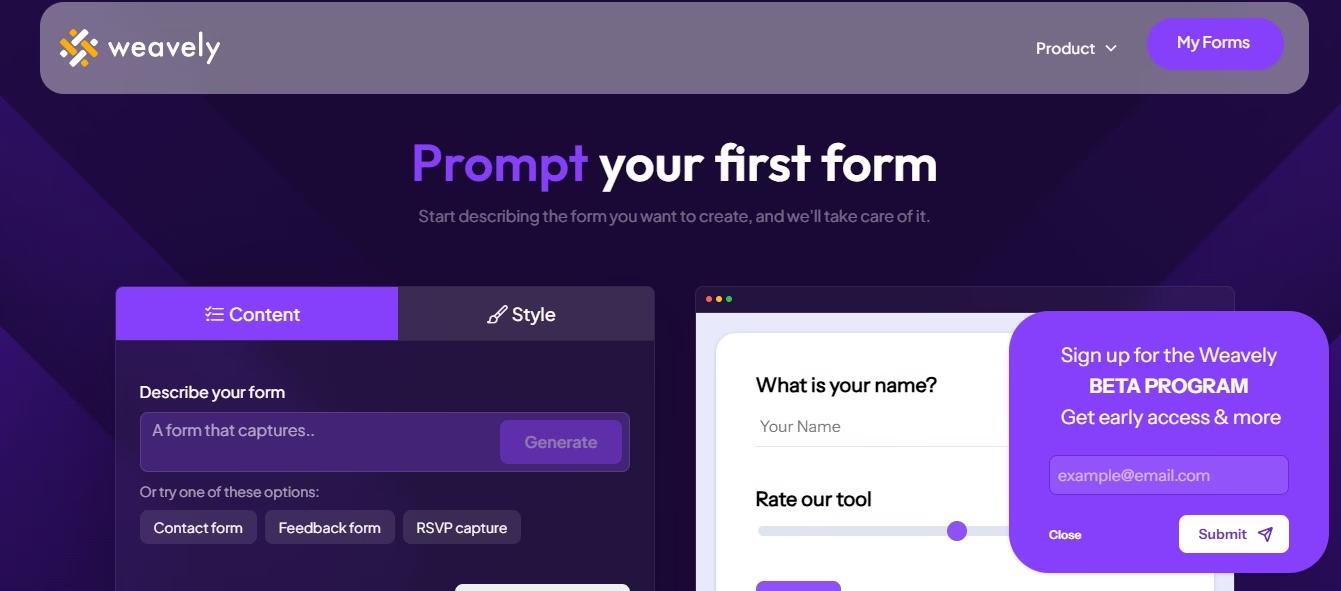
Another significant development is the increasing sophistication of natural language processing (NLP) models. These models are becoming adept at understanding user intent and translating it into functional form elements. Imagine describing the desired functionality of a form in plain English, and the AI automatically generates the corresponding HTML, CSS, and JavaScript. Tools like UXPin are already exploring this territory, paving the way for a future where form creation becomes a conversation rather than a coding exercise.
Finally, the integration of AI with design systems is gaining momentum. Design systems, which provide a centralized library of reusable components and design guidelines, are becoming increasingly intelligent. AI can analyze existing design patterns, predict user needs, and automatically generate form components that adhere to the system's specifications. This not only ensures consistency and brand compliance but also significantly reduces design and development time. Companies like Zeroheight are at the forefront of this integration, demonstrating the potential for AI to transform design system management. These converging trends point towards a future where form creation is not just automated but also deeply personalized, intelligent, and seamlessly integrated into the broader product design ecosystem.
Core Frameworks & Fundamental Principles:
Imagine crafting complex user interfaces with the same ease as sketching on a napkin. That's the promise of AI-powered form generation, a field rapidly evolving beyond basic form builders. Understanding its core principles is crucial for leveraging its full potential.
Data-Driven Form Design. This isn't just about pre-filling fields. It's about using data to inform the entire form structure. Think analyzing user behavior on existing forms (e.g., time spent on fields, drop-off rates) to dynamically adjust future iterations. Tools like Hotjar provide the analytics necessary to fuel this data-driven approach. By understanding where users struggle, AI can suggest streamlined layouts, personalized field order, or even alternative input methods.
Contextual Awareness and Adaptive Forms. Next-gen form generators will go beyond static templates. They'll adapt to the user's context. Imagine a form for an e-commerce checkout that automatically populates fields based on the user's location (pulled from their device) or past purchase history. This requires integrating AI with broader user data platforms like Segment. The result? A frictionless experience that anticipates user needs.
Natural Language Processing (NLP) and Semantic Understanding. NLP is key to making forms truly intelligent. Tools like those offered by Google Cloud Natural Language can analyze the intent behind user input, even if it's freeform text. This allows for more flexible and conversational form interactions. For instance, a user could describe their shipping address in plain English, and the AI could accurately parse it into the required fields.
Component-Based Architecture and Reusability. Modern design systems emphasize reusable components. AI can amplify this by automatically generating form components based on design specifications or even by learning from existing design libraries. Tools like UXPin are already exploring this space, allowing designers to create and manage design systems that can be leveraged by AI-powered form generators. This ensures consistency and accelerates the design process.
Validation and Error Handling. AI can move beyond basic input validation (e.g., checking for valid email formats). By understanding the relationships between fields and the overall context, it can provide more intelligent error messages and even suggest corrective actions. For example, if a user enters an invalid credit card number, the AI could suggest checking the expiration date or offer alternative payment methods. This proactive approach minimizes user frustration.
Accessibility and Inclusivity. AI has the potential to make forms more accessible to users with disabilities. By integrating with accessibility guidelines (WCAG), AI can automatically generate forms that comply with these standards. This could include features like automatically generating alt text for images, ensuring proper color contrast, and providing keyboard navigation support. This not only improves usability for a wider audience but also reduces development time and costs associated with accessibility remediation.
Advanced Insights & Expert Techniques:
Navigating the landscape of AI-powered form generation requires a keen understanding of the nuances and trade-offs inherent in different approaches. One crucial distinction lies in the level of customization offered. Some tools, like Wix's ADI, prioritize speed and simplicity, offering pre-built templates and automated layouts. This approach excels for rapid prototyping and basic forms, but can limit flexibility when dealing with complex user flows or unique branding requirements.
Conversely, platforms like Framer empower designers with fine-grained control over every element, leveraging AI for tasks like layout suggestions and component generation. This granular approach allows for bespoke form experiences but demands more design expertise and time investment. Choosing the right tool hinges on balancing the need for speed with the desire for customization.
Another critical consideration is the integration of AI-driven form validation and user input analysis. Tools like Uizard are beginning to incorporate AI that predicts potential user errors and suggests optimized input fields based on the expected data type. This predictive capability significantly enhances usability and reduces development time by preemptively addressing common form design pitfalls. However, relying solely on AI-driven validation can sometimes lead to overly restrictive forms that don't accommodate edge cases or unexpected user behavior. Expert designers understand the importance of combining AI insights with human-centered testing to ensure robust and inclusive form experiences.
Beyond individual tools, a significant trend is the emergence of AI-powered design systems. These systems, often integrated within platforms like Zeroheight, leverage AI to automatically generate form components and styles that adhere to pre-defined design guidelines. This ensures consistency across a product's interface and drastically reduces the overhead of maintaining design libraries. The challenge, however, lies in striking the right balance between automated consistency and the need for design evolution. Over-reliance on rigid AI-generated systems can stifle creativity and limit the ability to adapt to changing user needs.
A further advanced technique involves leveraging AI for A/B testing and optimization of form designs. Tools like Maze are incorporating AI to analyze user interactions with different form variations, identifying areas for improvement and predicting which designs will lead to higher conversion rates. This data-driven approach allows for continuous refinement and optimization, but requires careful consideration of the metrics being tracked. Focusing solely on conversion rates can sometimes lead to designs that prioritize short-term gains over long-term user satisfaction.
Finally, the integration of natural language processing (NLP) is poised to revolutionize form generation. Imagine describing a form's functionality in plain English, and having an AI tool automatically generate the corresponding interface. While still nascent, this technology holds immense potential for streamlining the design process and empowering non-designers to create functional forms. However, the success of NLP-driven form generation hinges on the development of robust AI models that can accurately interpret complex design intents and translate them into pixel-perfect interfaces. The future of form design lies in strategically blending these AI-powered tools and techniques with human expertise, creating a synergistic approach that unlocks unprecedented levels of efficiency and user-centricity.
Implementation Blueprint:
Translating the promise of AI-powered form generation into tangible results requires a structured approach. Begin by identifying key pain points in your current form design workflow. Are you struggling with consistency across platforms? Is user testing revealing significant usability issues? Pinpointing these challenges will guide your tool selection and implementation strategy.
Next, prioritize your needs. Do you require a tool focused on rapid prototyping like Uizard? Or are accessibility and cross-platform compatibility paramount, making a solution like Framer more suitable? Consider factors like integration with existing design systems, collaboration features, and the level of customization offered. Don't hesitate to leverage free trials or demos to assess how well each tool aligns with your specific requirements.
Once a tool is chosen, start with a pilot project. Select a low-risk form, perhaps an internal tool or a less critical user-facing form. This controlled environment allows your team to familiarize themselves with the AI's capabilities and limitations, refine workflows, and identify potential integration challenges. Documenting this process is crucial. Capture learnings, best practices, and any unexpected roadblocks encountered during the pilot phase.

Finally, scale gradually. As confidence and expertise grow, expand the use of the chosen AI tool to more complex forms and integrate it more deeply into your design process. Continuously monitor performance, gather user feedback, and iterate on your approach. Remember, the effective implementation of AI isn't a one-time event; it's an ongoing journey of learning, adaptation, and refinement.
Conclusion & Strategic Implications:
The convergence of AI and product design is revolutionizing how we create and interact with digital interfaces. Automated form generation, powered by machine learning, stands as a pivotal advancement, promising to streamline workflows and enhance user experiences. Embracing these tools, however, requires a strategic mindset. Designers must shift from pixel-pushing to orchestrating intelligent systems, focusing on defining design principles, training AI models, and curating the output.
The future of form design hinges on this human-AI partnership. Those who master this collaboration will unlock unprecedented levels of efficiency and personalization. Designers can leverage tools like Uizard for UI design automation, but the real challenge lies in shaping the ethical and user-centric application of these powerful technologies. We must ensure AI-generated forms remain accessible, inclusive, and prioritize genuine user needs above all else. The question isn’t ‘if’ AI will transform form design, but ‘how’ we will guide its evolution to create a more user-friendly digital world.