Blue Bottle Coffee: The Premium Coffee Paradox
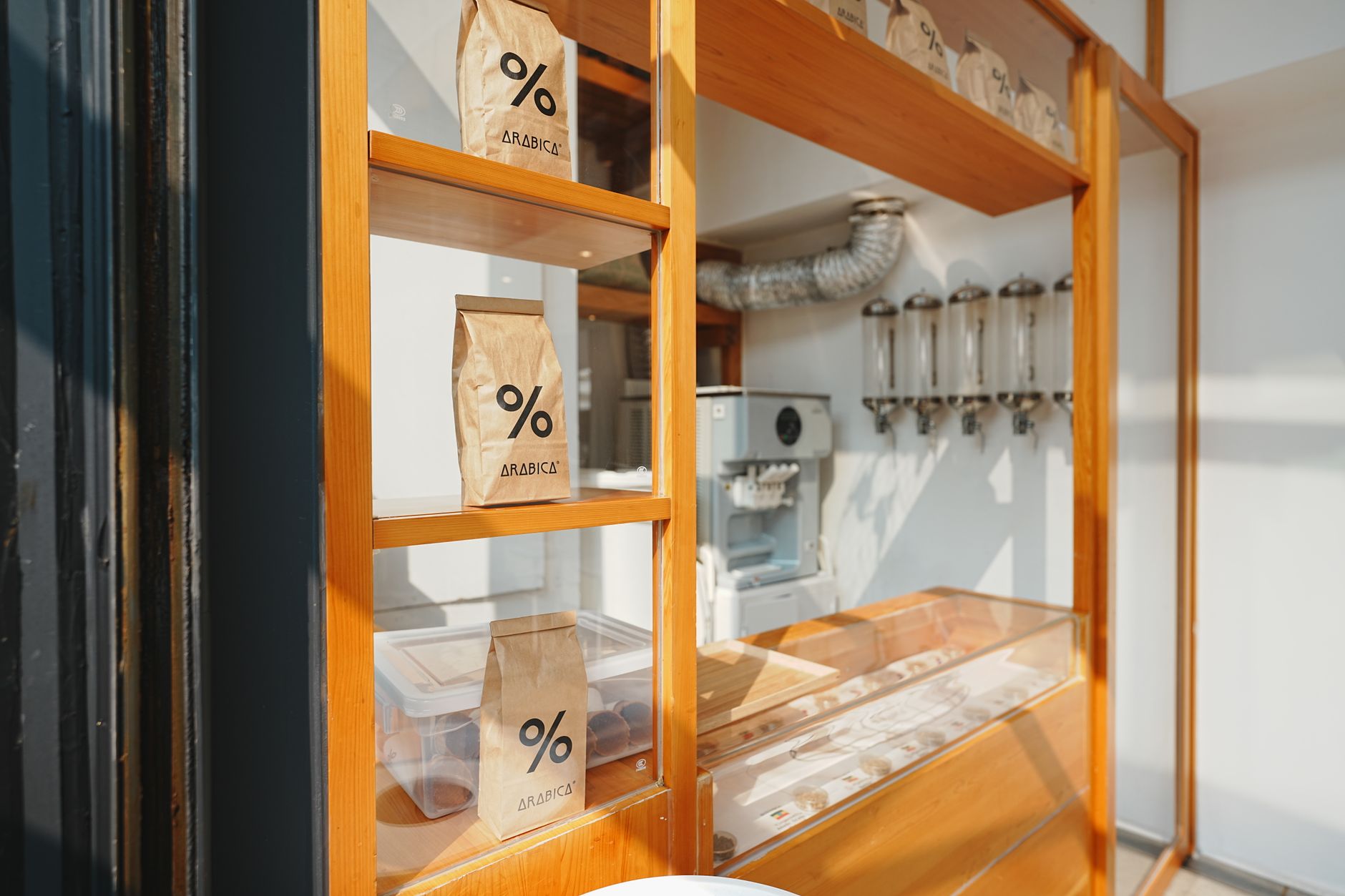
The Mint Plaza location opens at seven in the morning, two blocks from where Twitter once headquartered its operations in San Francisco. There are no power outlets. There is no wireless internet. The menu offers no sizes, nly a single, precise volume for each preparation. Those who stay drink from ceramic cups; paper is reserved for those who leave. This is Blue Bottle Coffee, and a latte costs roughly five dollars, or nearly double the price at Starbucks two streets over. The customers, software engineers, venture capitalists, designers, pay willingly, even gratefully, for the austerity.
This scene contains the entire economic engine. Blue Bottle does not sell convenience, nor does it sell caffeine. It sells a specific form of cultural capital: the demonstration of taste through the rejection of mass-market efficiency. The business captures value by positioning itself as the anti-Starbucks, a Third Wave coffee purveyor where scarcity, curation, and slowness function as luxury goods. Revenue arrives through high-margin per-cup sales in company-owned retail locations, supplemented by direct-to-consumer bean subscriptions that extend the brand’s presence into domestic kitchens. The model depends upon a narrow demographic, affluent tech workers who view the purchase not merely as refreshment but as status signaling, and upon a deliberate constraint: the refusal to scale at the speed that capital typically demands.
Scarcity as Operating System
Most retail concepts treat physical expansion as the primary mechanism for value creation. More locations equal more revenue, and franchising accelerates this multiplication while offloading capital risk. Blue Bottle has pursued the opposite strategy. After fifteen years of operation, the company maintains approximately forty stores, all company-owned, each selected with the precision of a gallery choosing exhibition spaces. The first canonical location opened in 2005 in a friend’s garage in Hayes Valley; the second, the Mint Plaza cafe, established the pattern of geographic clustering near technology company headquarters. There are no franchises, no licensed airport kiosks, no drive-through windows.
This scarcity is not a temporary phase before “real” growth begins. It is the product. The brand’s positioning requires that it remain difficult to access. A Blue Bottle on every corner would be indistinguishable from the Second Wave coffee culture it defines itself against. The economic logic operates through exclusivity: by constraining supply, the company maintains pricing power and brand prestige that mass-market operators cannot replicate. Competitors like Stumptown or Intelligentsia may match the roast quality, but they cannot easily match the deliberate geographical sparseness that makes each visit feel like a discovery rather than a transaction.
The operational choices reinforce this scarcity. The absence of Wi-Fi and power outlets discourages laptop camping, increasing table turnover during peak hours while simultaneously signaling that the space exists for coffee appreciation, not office work. The single-size philosophy eliminates the complexity of choice architecture, reducing operational friction while creating an impression of curatorial confidence. Ceramic cups for those who stay add labor costs, someone must wash them, yet this friction filters the customer base, ensuring that those who occupy the physical space demonstrate commitment to the experience. These are not marketing affectations; they are economic filtration mechanisms that preserve the high-margin customer mix.
The Network Effect of Proximity
An underappreciated structural advantage lies not in the coffee itself but in the specific geography of expansion. Blue Bottle did not grow randomly; it clustered. The Mint Plaza location’s proximity to Twitter headquarters created a self-reinforcing network effect among high-income tech workers. Early employees at Twitter, Google, and subsequent startups adopted the brand, creating organic word-of-mouth transmission through professional networks that overlap heavily with venture capital and design communities. This clustering strategy, San Francisco, then New York, then Los Angeles, then Tokyo, targeted dense concentrations of affluent early adopters rather than maximizing geographic coverage.
The advantage is durable because it cannot be purchased. A competitor could replicate the austere aesthetic, the ceramic cups, the single-origin roasts, but it cannot replicate the fifteen years of cultural embedding within the Bay Area tech ecosystem. Blue Bottle became the default coffee of the pre-IPO technology class during a specific historical moment, and that association has persisted. The brand functions as a credential: carrying a Blue Bottle cup signals membership in a particular professional and aesthetic tribe. Replicating this requires simultaneous credibility in coffee craftsmanship and proximity to the specific urban enclaves where technology wealth concentrates. Competitors face a chicken-and-egg problem: they need the tech workers to establish the brand cachet, but the tech workers will not adopt a brand without established cachet.
The Freeman Variable
Blue Bottle’s brand coherence derives from a specific source: James Freeman, who founded the company in the early 2000s after working as a freelance clarinetist until his mid-thirties. Freeman began roasting coffee beans in his home oven in Oakland before opening the first location. His background in classical music and his stated influences, Japanese coffee culture, the choreographer Merce Cunningham, the philosopher Jean-Paul Sartre, shape the company’s aesthetic vocabulary. This is not incidental biography. In this business, leadership functions as an economic variable, not a soft factor.
The brand’s defensibility rests upon an intellectual and artistic coherence that is difficult to imitate without appearing derivative. Competitors can copy the minimalism, but they cannot authentically replicate the philosophical foundation. The moat is Freeman’s taste. As long as he remains the public face and retains decision-making authority over product and store design, the brand maintains its differentiation. If Freeman departs or loses creative control, the company becomes a collection of expensive retail locations selling premium beans: commodity business indistinguishable from other high-end roasters. The aesthetic vision prevents commoditization; without it, the premium pricing collapses.
This creates a structural vulnerability disguised as stability. The company’s value is concentrated in the continued involvement of its founder, yet the ownership structure that emerged in 2017 places that involvement at risk. On September 14, 2017, Nestle acquired a 68 percent majority stake for a reported $425 million, valuing Blue Bottle at $625 million. Freeman and management retained 32 percent ownership and a separate board, preserving formal autonomy. But majority ownership carries ultimate veto power. The economic logic of the acquisition depends upon Freeman remaining central to operations indefinitely: fragile assumption for a conglomerate that typically measures returns in quarterly intervals.

The Nestle Compression
The acquisition creates a structural impossibility. Nestle, which dominates the European single-serve coffee market with Nespresso (70 percent share) but holds less than 5 percent of the US single-serve market, purchased Blue Bottle to penetrate American premium coffee. The strategic logic for Nestle is clear: its beverage division generates 25 percent margins compared to 15 percent company-wide. Introducing Blue Bottle single-serve pods would exploit this margin differential while leveraging the brand’s prestige.
However, any move toward mass-market product extensions directly contradicts Blue Bottle’s identity. The brand’s rejection of convenience, no pods, no drive-throughs, no seasonal Frappuccino equivalents, is precisely what justifies its pricing. Introducing single-serve pods for grocery store distribution would alienate the core customer base that defines the brand’s cultural authority. Yet without such extensions, the mathematics of the $625 million valuation become untenable.
Consider the unit economics. With approximately forty stores generating roughly $2 million per location in annual revenue, total revenue likely falls in the range of $80 million. Even assuming generous margins of 15 to 25 percent, annual cash flow remains insufficient to justify a $625 million valuation through organic growth alone. The implied multiple requires either aggressive expansion, which would dilute the brand’s scarcity positioning, or margin compression through operational efficiency, which would contradict the product philosophy of meticulous craft.
Nestle’s operational playbook compounds this tension. The conglomerate’s core competency is systematization and cost reduction: he Starbucks model of standardization. Blue Bottle’s competency is bespoke curation and the rejection of standardization. These are incompatible operating philosophies. While Nestle has initially maintained Blue Bottle’s separate board and operational independence, the structural pressure to integrate the acquisition into Nestle’s supply chains, to introduce efficiency measures, or to expand store count to justify the purchase price will intensify. When Nestle eventually demands the returns that justify a $425 million investment, the options are limited: expand and dilute the brand, or compress margins and destroy the craft positioning that created the value.
The Impossible Equilibrium
The company now occupies a precarious middle ground. To satisfy Nestle’s return requirements, Blue Bottle must scale toward sixty, eighty, or one hundred stores. Yet the brand’s identity depends upon remaining small enough to maintain quality control and scarcity cachet. The founders explicitly stated their refusal to take the company public, viewing public markets as incompatible with brand integrity. The Nestle acquisition was intended as a compromise that provided liquidity to early investors while preserving operational autonomy. But private ownership under majority corporate control removes the very autonomy the founders sought to protect. The 32 percent stake provides insufficient protection against Nestle’s board majority if the conglomerate decides to optimize for cash flow over craft.
The fragile long-term assumption underlying the entire structure is that Nestle will indefinitely respect the founders’ vision despite holding majority ownership. This assumption ignores the governance reality: 68 percent ownership means ultimate control. If Nestle faces pressure to improve beverage division performance, or if leadership changes at the conglomerate bring executives less enamored with Third Wave aesthetics, the operational integration will begin. It might start innocuously, upply chain efficiencies, slight menu expansions, a pilot program for retail pods. Each step would degrade the brand’s differentiation while attempting to justify the acquisition price.
The Clarinetist’s Dilemma
Blue Bottle generates value not despite its refusal to scale, but because of it. The constraint is the product. The economic engine runs on scarcity, on the specific cultural signaling that occurs when tech workers pay five dollars for coffee served in ceramic cups without Wi-Fi. This positioning created a company worth $625 million in 2017. Yet that same positioning makes the valuation structurally unsustainable under majority ownership by a mass-market consumer goods conglomerate.
The brand survives only as long as it remains small, curated, and philosophically consistent. But smallness cannot generate the returns required by a $625 million price tag held by a public company accountable to quarterly earnings. The tension is irreconcilable. Either Nestle accepts modest returns from a boutique operation, which contradicts the logic of the acquisition, or Blue Bottle expands into the mainstream, destroying the scarcity that created its value.
James Freeman, the clarinetist who began roasting in a home oven, built a company that proved consumers would pay premium prices for austerity and slowness. He also built a company that cannot grow without dying. The ceramic cups at Mint Plaza remain, for now, filled with five-dollar lattes served to software engineers. But the math of forty stores and a $625 million valuation ticks steadily toward a resolution that will require either the abandonment of the aesthetic vision or the acceptance of returns too small to justify the purchase. In either case, the Blue Bottle that exists today represents a specific, temporary equilibrium, rofitable precisely because it refuses to become what its majority owner needs it to be.
The subscription business offers the illusion of a solution. Beyond the forty retail locations, Blue Bottle ships beans directly to domestic kitchens, extending the brand’s presence into morning routines that never involve the Mint Plaza cafe. Customers who cannot reach Hayes Valley or the Financial District still pay premium prices for beans roasted within the last forty-eight hours, delivered in packaging that mimics the retail aesthetic, lean, white, minimal, quietly expensive.
Yet the subscription model reveals the fundamental limitation rather than resolving it. Coffee subscription businesses operate in a crowded field where Counter Culture, Intelligentsia, Stumptown, and dozens of smaller regional roasters compete for the same high-income households. Without the physical environment, the ceramic cups, the absence of Wi-Fi, the specific spatial austerity that enforces slowness, the subscription becomes merely a transaction for fresh beans. The margins compress against shipping costs, packaging overhead, and customer acquisition expenses in a digital environment where Blue Bottle holds no particular technological or logistical advantage. The physical store creates the customer for the subscription; the subscription rarely creates the customer for the store. The economics depend entirely upon the retail presence maintaining the brand prestige that justifies the premium pricing online. If the stores dilute, the subscription business becomes a commodity play in a market where scale favors industrial roasters with superior supply chain efficiency.

Tokyo and the Geography of Selective Expansion
The Tokyo locations offer the most revealing test case for whether Blue Bottle can expand without destroying itself. Japan represented the first international market, opened years before the Nestle acquisition, and the expansion followed the same clustering logic that worked in San Francisco. The Japanese market possessed a specific affinity for Blue Bottle’s aesthetic, the brand’s emphasis on Japanese coffee culture, the minimalism, the ritual precision, created natural resonance rather than cultural translation. Freeman could open in Tokyo without adapting the formula; the market met the brand more than halfway.
However, Tokyo also demonstrates the narrow constraints of viable geography. Japan’s coffee culture supports premium pricing for hand-poured single-origin brews in a way that London or Berlin might not. The density of Tokyo’s affluent neighborhoods allows the clustering strategy to function, ocations in Aoyama, Nakameguro, and Shinjuku maintain proximity to creative-class professionals similar to the San Francisco tech worker demographic. Yet even with this cultural alignment, the operational complexity multiplies. Supply chains must cross oceans. Green coffee sourcing that depends on personal relationships with specific farms becomes harder to maintain at distance. The ceramic cup policy, already labor-intensive in San Francisco, operates within Tokyo’s different labor cost structures and service expectations.
Most critically, the Tokyo expansion consumes capital and management attention without generating the liquidity events that venture investors require. The $75 million investment from Fidelity in 2015, coming just two years before the Nestle sale, suggests a company already facing pressure to demonstrate paths to scale that justified late-stage valuations. Fidelity does not invest for boutique cash flows; it invests for appreciation events. Tokyo proved that Blue Bottle could replicate its model internationally, but it also proved that replication required the same slow, capital-intensive store-by-store development that had produced only forty locations in fifteen years. The Japan market served as evidence of concept for geographic expansion, but simultaneously demonstrated that such expansion could not proceed fast enough to satisfy the return thresholds of institutional investors holding preferred shares with liquidation preferences.
The Ceramic Cup Calculation
To understand why the business cannot scale under Nestle’s ownership without breaking, examine the ceramic cup decision in detail. Most specialty coffee shops default to paper cups for all orders, regardless of whether customers stay or go. The cost difference appears marginal, eramic cups require capital expenditure for dishware, installation of washing stations, hot water usage, and labor hours for cleaning. Paper cups cost pennies and leave with the customer, externalizing disposal costs while minimizing staff time.
Blue Bottle’s ceramic cup policy reverses this efficiency calculation deliberately. The policy increases labor costs per transaction for in-store customers while decreasing throughput, aristas must retrieve cups from tables, wash them, restock them. The friction filters the customer base. Those willing to drink quickly and leave select paper; those willing to linger and experience the space select ceramic. The choice creates a visible class distinction within the store itself, reinforcing the status signaling that justifies the five-dollar price point. More importantly, the ceramic cup policy limits the number of customers who can occupy the physical space at any given time. The store cannot serve an infinite queue of ceramic-cup drinkers because the cups return to the counter slowly, washed by hand, dried, restocked. This constraint on capacity maintains scarcity even during peak hours, preventing the space from feeling like a throughput operation.
Under Nestle’s operational discipline, this policy becomes indefensible. Standardization programs would identify the ceramic cup workflow as a variable cost that could be eliminated, increasing transactions per labor hour and improving store-level EBITDA. The introduction of dishwasher automation or, more likely, the elimination of ceramic service entirely would follow standard consumer packaged goods logic. Yet removing the ceramic cups eliminates the filtration mechanism that maintains the brand’s positioning. The store becomes indistinguishable from a high-end Starbucks Reserve location, leasant, expensive, but lacking the specific austerity that creates the taste signal.
Stumptown and the Alternative Exit
The comparison with Stumptown Coffee Roasters illuminates Blue Bottle’s structural trap. Stumptown, founded in Portland in 1999, pursued similar Third Wave principles, direct trade sourcing, in-house roasting, premium retail, but accepted acquisition by Peet’s Coffee & Tea (itself owned by JAB Holding Company) in 2015 for an undisclosed sum estimated significantly lower than Blue Bottle’s $625 million valuation. The Stumptown acquisition allowed the brand to maintain operational independence while accessing distribution through Peet’s retail network and grocery channels. Stumptown pods appear in Whole Foods; Stumptown cold brew cans fill convenience store refrigerators.
Stumptown accepted brand dilution in exchange for liquidity and survival as a mass-market premium product. The brand still carries cachet in Portland and Brooklyn, but it no longer functions as a pure signal of taste discriminations, t has become available, convenient, ubiquitous in the way that Blue Bottle explicitly refuses to become. Stumptown’s founders traded scarcity for scale and accepted that the Third Wave aesthetic could survive, watered down, in grocery aisles.
Blue Bottle’s founders rejected this path, first by refusing to franchise, then by refusing to go public, finally by selecting Nestle rather than a private equity rollup like JAB. The choice revealed a commitment to maintaining the physical retail experience above all else. Yet the Nestle acquisition created a more dangerous proposition than the Stumptown model. JAB allows portfolio companies like Peet’s or Stumptown to operate as separate brands with distinct positioning, accepting that some will remain niche while others scale. Nestle, with its specific need to crack the US single-serve market and its beverage division margin targets, cannot accept permanent niche status. The conglomerate paid $425 million not for a boutique operation generating modest cash flows, but for a platform that could be expanded into the single-serve channel where Nestle has failed against Keurig.
The Mechanics of Conglomerate Digestion
The pressure will arrive not as a dramatic coup but as operational adjustments that seem reasonable in isolation. First comes the supply chain integration. Nestle possesses green coffee buying operations at massive scale, with futures contracts and logistics networks that reduce input costs significantly. Blue Bottle currently sources through direct relationships with specific farms, paying premiums for specific lots and maintaining quality control through small-batch purchasing. Nestle procurement executives will identify opportunities to consolidate purchasing, leveraging Blue Bottle’s volume through Nestle’s existing coffee trading desk. The change will appear minor, erhaps the Ethiopian single origin remains the same, but sourced through Nestle’s traders rather than Blue Bottle’s direct relationships. The taste difference may be imperceptible to most customers, but the philosophical distinction, the direct trade narrative that supports the premium, erodes.
Next comes the labor optimization. Store managers currently exercise autonomy over hiring, seeking baristas who understand the specific aesthetic and can explain the single-origin profiles with the vocabulary of wine tasting. Nestle human resources will introduce standardized training modules, competency assessments, and labor scheduling algorithms designed to optimize transactions per employee hour. The baristas who once studied coffee chemistry and clarinet performance will be replaced by efficient service workers rotating through shifts. The ceramic cup policy will face review; the no-Wi-Fi policy will be questioned in market research studies about customer satisfaction.
Then the product extension begins. A pilot program for Blue Bottle single-serve pods will test in select West Coast markets. The packaging will mimic the retail aesthetic, white, minimal, quietly premium, and the coffee will be competent, perhaps even good. Early sales will impress Nestle executives eager to show growth in the US beverage division. The pods will appear in Williams-Sonoma, then Target, then Amazon. Each step will seem successful by volume metrics. The core retail customers will not immediately flee; they will express disappointment on social media but continue visiting Mint Plaza out of habit or loyalty to Freeman.
By the time the brand contamination becomes visible in retail foot traffic, the damage will be irreversible. The ceramic cups will have disappeared, replaced by double-walled paper cups with heat sleeves that allow faster service. The menu will expand to include seasonal flavors, a honey lavender latte for spring, because the data shows these drive incrementality among the suburban customer base now purchasing pods. The Twitter employees will have moved on to the next scarcity signal, perhaps a new roaster in the Mission District that has not yet sold majority control to a conglomerate. The five-dollar price point will remain, but the justification will have evaporated, leaving only the memory of what the brand once represented.
The Valuation Trap Revisited
The arithmetic of the $625 million valuation continues to tighten. At forty stores generating approximately $2 million each, the company produces perhaps $80 million in annual revenue. Even assuming exceptional café margins of 20 percent, difficult with San Francisco and New York real estate costs, ceramic cup labor, and premium green coffee inputs, the enterprise generates roughly $16 million in annual cash flow. The $625 million price tag implies a multiple approaching forty times cash flow, a figure that only makes sense if the business can scale rapidly or if the brand can be leveraged into high-margin product extensions.
Neither path remains available without destroying the asset. Rapid store expansion requires real estate in prime urban locations where rents have only increased since the 2017 acquisition. The clustering strategy that worked in San Francisco and Tokyo depends upon specific demographic densities, echnology workers with six-figure incomes, high foot traffic during weekday mornings, adjacent retail that reinforces the premium positioning. There are perhaps twenty American cities that support this profile, and within those cities, perhaps three to five viable locations per market. The total addressable market for Blue Bottle’s specific retail concept likely caps around 120 to 150 stores, nough to improve revenue but insufficient to generate the kind of cash flow that justifies the acquisition price without decades of compounding.
The product extension path, pods, RTD cans, grocery distribution, destroys the brand positioning that justifies the premium pricing in the first place. The single-serve coffee market operates on convenience and ubiquity, the exact qualities Blue Bottle defines itself against. Entering this market turns the brand into a label rather than an experience, and labels compete on marketing spend rather than aesthetic coherence. Nestle possesses the marketing spend, but deploying it erodes the specific credibility that made Blue Bottle valuable.
When Freeman Steps Back
The final fragility lies in the clarinetist’s continued presence. Freeman remains the aesthetic arbiter, the final decision-maker on store design, roast profiles, and hiring philosophy. His 32 percent ownership stake and separate board provide formal protection, but no contractual provision can force a majority owner to indefinitely defer to minority preferences. More importantly, no contractual provision can force Freeman himself to remain engaged indefinitely.
The history of founder-dependent premium brands suggests a pattern. At some point, age, exhaustion, the completion of the Nestle earnout period, or simply the recognition that the company no longer operates according to his vision, Freeman will step back from day-to-day operations. He may retain a ceremonial title, perhaps “Chief Creative Officer,” but the daily decisions about ceramic cups versus paper, about whether to open a location in a proposed Dallas development, about whether to approve a pumpkin spice variation, hese will pass to executives hired by Nestle, trained in consumer packaged goods logic, accountable to beverage division P&L targets.
When Freeman leaves, the brand becomes costume jewelry. The stores will remain beautiful, the real estate selections were excellent, the build-outs expensive, but the coherence will dissipate. A customer might notice that the barista no longer explains the single-origin options with the same fluency, or that the ceramic cups have been replaced by sustainable bamboo fiber alternatives that do not require washing. The change will be subtle, gradual, like the fading of a photograph left in sunlight. The Mint Plaza location will still open at seven, still two blocks from where Twitter used to be, still charging five dollars for a latte. But the specific quality that made it worth five dollars, the assurance that one was participating in a clarified aesthetic vision, unmediated by corporate efficiency, will have evaporated.
The tragedy of Blue Bottle’s position lies in its success. Freeman proved that consumers would pay significant premiums for slowness, for difficulty, for the explicit rejection of convenience. He built a business that generates real profits by refusing to grow. Then he accepted an investment structure that requires growth incompatible with the brand’s existence. The forty stores currently operate as intended, s temples to a specific coffee philosophy where scarcity creates value. But temples do not generate conglomerate-scale returns. The equilibrium holds only until Nestle’s patience expires, or until Freeman’s does. Until then, the ceramic cups accumulate in bus bins, the clarinetist’s vision persists, and the valuation remains a number that math cannot justify without breaking the thing it measures.
The equilibrium holds only until Nestle’s patience expires, or until Freeman’s does. Until then, the ceramic cups accumulate in bus bins, the clarinetist’s vision persists, and the valuation remains a number that math cannot justify without breaking the thing it measures.
Consider the specific mechanism by which the sourcing model will erode. Currently, Blue Bottle purchases micro-lots, erhaps two hundred bags of a specific Guatemalan Huehuetenango from a single farm, roasted in fifty-kilogram batches, served for three weeks until the profile shifts and the menu changes. This requires a green coffee buyer who maintains relationships with specific farmers, visiting during harvest, negotiating prices above commodity rates, accepting inconsistency in supply for distinction in cup quality. Nestle’s green coffee desk trades futures contracts measured in shipping containers, hedging currency exposure across twelve-month horizons, optimizing for blend consistency across thousands of tons. When the procurement teams integrate, the micro-lot buyer will face pressure to consolidate purchases through Nestle’s existing certified supply chains. The Guatemalan single origin will remain on the menu, but it will taste slightly flatter, slightly more consistent, the terroir sanded down by blending protocols designed to eliminate variation. Most customers will not detect the change immediately; the coffee will still taste better than Starbucks. But the specific quality that justified the five-dollar price, the knowledge that this exact cup derives from a specific hillside tended by a specific farmer known to the buyer, will become marketing copy rather than operational reality.
The demographic foundation exhibits similar fragility. Blue Bottle’s customer base concentrates in technology workers aged twenty-five to forty, earning incomes that make five-dollar daily coffee an unremarkable expense. This cohort currently clusters in San Francisco and New York, living in neighborhoods where $3,500 studio apartments locate within walking distance of Blue Bottle locations. But this demographic is aging, and their consumption habits evolve predictably. The twenty-eight-year-old engineer who frequented Mint Plaza in 2012 is now thirty-eight, possibly with children, possibly working remotely from Marin County or Austin or Denver, where the specific density required to support a Blue Bottle location does not exist. The next generation of twenty-eight-year-olds exhibits different signaling behaviors; they may view Blue Bottle’s austere minimalism as corporate rather than artisanal, associated with the Nestle acquisition and the tech bro archetype of the 2010s rather than the creative class authenticity they seek. The brand captured a specific moment in tech culture’s evolution: he post-IPO wealth of the early social media era, the aesthetic of the iPhone 4 and Instagram’s early filters. Cultural moments expire. When the tech worker demographic shifts to remote work or ages into suburban coffee routines, Blue Bottle cannot pivot to mall locations or highway drive-throughs; the infrastructure does not exist because the brand identity precludes it.
The physics of expansion impose hard constraints that render the sixty-to-one-hundred-store scenario economically precarious. Blue Bottle locations require specific square footage, mall enough to feel intimate, large enough to accommodate the ceramic cup washing station and the slow pour-over bar that creates bottlenecks during morning rush. They require corner visibility in neighborhoods where commercial rents have increased 300 percent since 2005. A Blue Bottle cannot open in a suburban strip mall between a Panera and a Verizon store; the real estate strategy depends upon adjacency to independent bookstores, design studios, and boutique fitness concepts that reinforce the cultural positioning. There are perhaps twelve corners in San Francisco that support this profile, twenty in Manhattan, fifteen in Los Angeles. Once those are filled, further expansion requires either accepting second-tier locations where foot traffic drops below the threshold required to cover the high fixed costs, or waiting for the gentrification cycle to create new suitable neighborhoods: process that takes decades, not quarters.
The company thus faces a temporal compression: it must generate sufficient returns to justify the $625 million valuation before the demographic shifts, before the founder departs, and before Nestle’s beverage division demands the margins that only single-serve pods can provide. Yet each strategy to accelerate returns, expanding to second-tier locations, introducing grocery distribution, standardizing the supply chain, destroys the brand architecture that created the value. The ceramic cups will remain in the Mint Plaza location for now, accumulating in bus bins, washed by hand, draining labor hours that would horrify a Nestle efficiency consultant. But the clock ticks against the specific combination of cultural moment, founder presence, and operational purity that makes the arithmetic temporarily viable. When any variable shifts, the equilibrium collapses into the ordinary, ust another expensive coffee chain that sold its distinction to pay back venture capital.