Ecolab: The Invisible Infrastructure Empire

The Architecture of Stickiness
In the operational hierarchy of McDonald’s, only two vendors are non-negotiable. The first is Coca-Cola, for obvious reasons. The second is Ecolab. Every bun, patty, and fry must pass through equipment cleaned by Ecolab chemistry, monitored by Ecolab sensors, and serviced by Ecolab technicians. This is not a preference. It is infrastructure.
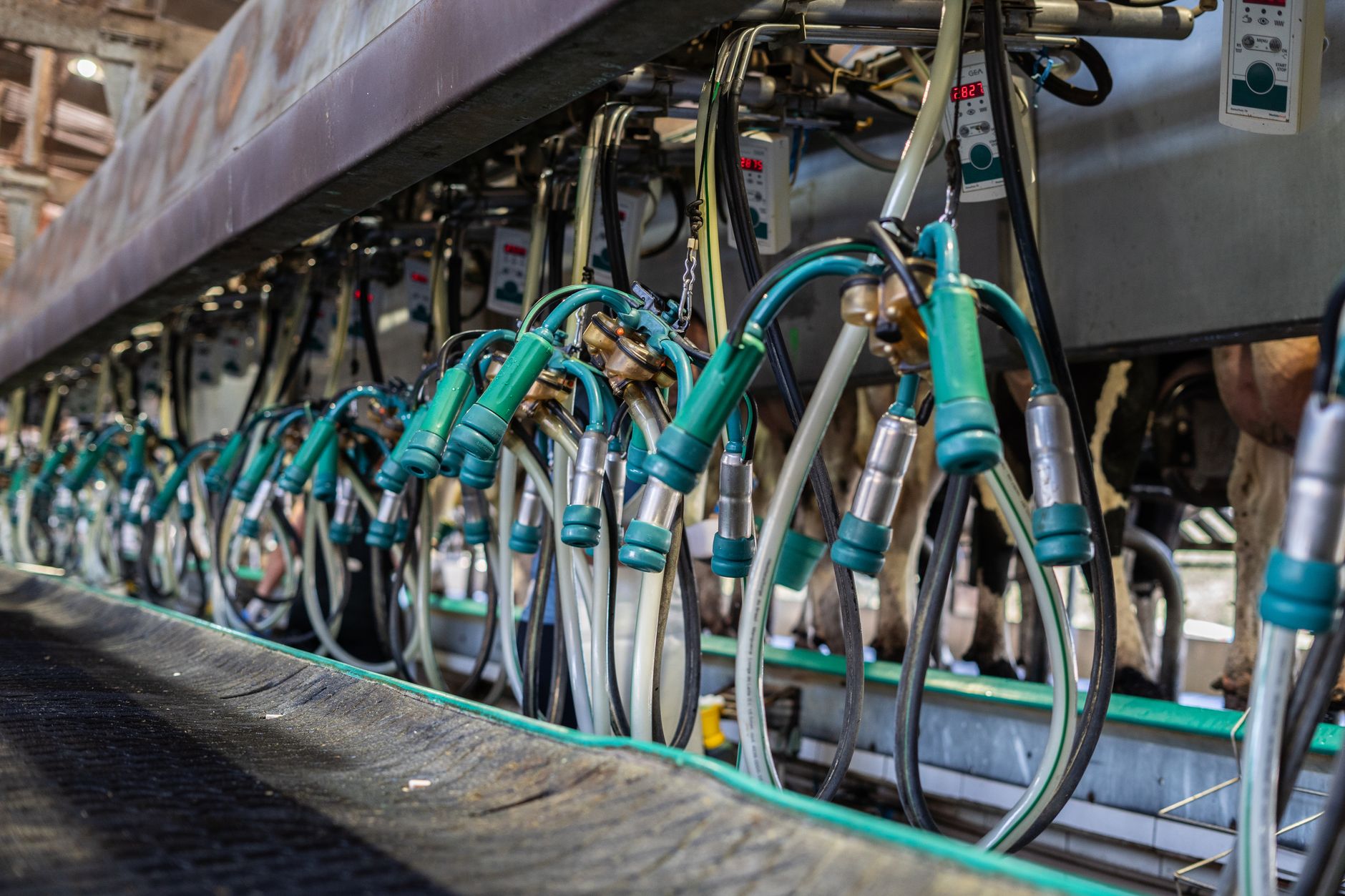
The scale of this embeddedness extends far beyond fast food. Ecolab currently protects thirty-six percent of the world’s packaged food supply and forty-four percent of global milk production. These figures describe not market share in the conventional sense, where a customer might switch brands on price, but something closer to systemic entrenchment. Once Ecolab installs a dishwasher, a water treatment system, or a sanitation protocol in a food processing plant, the equipment becomes indistinguishable from the facility’s own architecture. Removing it requires capital expenditure that rivals the original installation, operational downtime that modern supply chains cannot tolerate, and the dissolution of relationships that often span decades.
The mechanism operates through a hybrid of physical and organizational lock-in. Ecolab maintains a field force of roughly twenty-eight thousand sales and service personnel, more than half its total workforce, who do not merely sell chemicals but embed themselves in customer operations. A technician servicing a brewery in Milwaukee in 2024 might be the same person who installed the heat exchanger in 2014, who knows that Unit Three runs hot in August, and who has the mobile number of the plant manager’s maintenance chief. This is not relationship selling in the abstract; it is operational continuity as a service. Competitors cannot replicate this intimacy without deploying comparable headcount, a prohibitive capital investment, or convincing customers to endure the disruption of ripping out hardware that still functions. In industrial settings where downtime costs millions per hour, the decision to switch becomes economically irrational regardless of the price differential.
The compounding effect arrives through cross-selling. Ecolab typically enters a account through a single entry point, perhaps warewashing chemicals for a quick-serve restaurant chain, then systematically colonizes adjacent processes. Water treatment follows sanitation; pest control follows water treatment; energy management follows pest control. Each new service layer adds hardware that deepens the physical footprint while extending the contractual surface area. By the time a customer considers alternatives, they face not a simple vendor swap but a complex organizational surgery.
The Chemistry of Pricing
In a commodity business, pricing power is usually an illusion sustained only by scarcity or cartel. Ecolab has sustained annual price increases of two to three percent for decades in an industry defined by bulk chemicals and thin margins. The method relies on a deliberate opacity between cost structure and price.
The company sources roughly ten thousand distinct raw materials, with its largest supplier accounting for less than four percent of inputs. This fragmentation is not operational inefficiency but strategic camouflage. When phosphate or petrochemical prices spike, as they did during the 2022–2024 inflationary cycle, Ecolab does not issue surcharges or indexed price adjustments like a trucking company passing along diesel costs. Instead, the inflation disappears into “value-based pricing.” The customer receives a proposal documenting return on investment: twelve percent water savings, eight percent energy reduction, improved operational efficiency. The three percent price increase appears not as a cost recovery mechanism but as the premium for documented efficiency gains. Because Ecolab’s chemistry is bundled with proprietary hardware and service, customers cannot benchmark the chemical costs against commodity indices. They see only the total cost of cleanliness, which remains lower than the operational risk of disruption.
This pricing architecture creates a one-way ratchet. In deflationary periods, Ecolab retains the spreads. In inflationary periods, the fragmented supply chain prevents any single input from blowing out margins, while the value-based narrative justifies increases that outpace raw material costs. The customer pays for water saved, not phosphates purchased. It is a form of regulatory capture at the micro level, colab effectively taxes the efficiency of the production process itself.
The fragility of this mechanism lies in credibility. The ROI must remain defensible. If a customer audits the water savings and finds the calculations aggressive, or if competitors begin offering transparent cost-plus pricing that undercuts Ecolab’s opaque bundles by twenty percent, the spell breaks. For now, the documentation holds, and the pricing power compounds.
>The Nalco Gambit: Culture as Economic Variable<
In 2011, Ecolab spent roughly thirty percent of its market capitalization to acquire Nalco, an industrial water treatment firm founded in the same Illinois town around the same historical moment: “long-lost brother” narrative that served as cultural technology to justify the union. The strategic logic was straightforward: Ecolab had the relationships with food and beverage multinationals; Nalco had the engineering expertise in water treatment. The combined entity could attack a $55 billion cross-sell opportunity within existing customers and an $81 billion untapped market beyond.
But mergers live or die on cultural compatibility, and here the economics become anthropological. Ecolab built its dominance through a sales culture, ransactional, relationship-driven, focused on service contracts and recurring revenue. Nalco operated as an engineering firm, project-based, technically complex, requiring salespeople who could discuss reverse osmosis membrane chemistry with plant engineers. The tension is not merely stylistic. If Ecolab’s sales force cannot speak the technical language of industrial water treatment, the $55 billion cross-sell opportunity stalls. If they force Nalco’s solutions through their existing relationship channels without technical adaptation, they risk damaging credibility in heavy industry where Ecolab previously had little presence.
Bill Gates owns approximately twelve to thirteen percent of Ecolab, accumulated through Cascade Investment and the Gates Foundation, with his position increasing during the 2022 downturn. In the proxy statement, he is listed as the number one beneficiary: signaling mechanism that functions as economic infrastructure. Gates did not accumulate this stake for quarterly dividends. The ownership concentration creates patient capital, allowing management to weather the cultural integration of Nalco over decades rather than quarters. It permits sustained research and development spending on water scarcity solutions, 3D TRASAR monitoring systems, new chemistries, without immediate pressure to monetize. In effect, the governance structure insulates the company from the short-termism that might otherwise force premature abandonment of the water thesis.

The risk remains that the sales culture swallows the engineering culture, that Ecolab treats water treatment as just another chemical contract rather than a systems integration challenge. If the water business remains siloed, the 2011 acquisition becomes a value-destructive overpayment for a commodity chemical portfolio. The economics of the next decade depend on whether the relationship-driven organism can successfully metabolize the engineering-driven one.
The Contract Cycle Trap
Every three to five years, Ecolab’s contracts come up for renewal. This cycle defines the company’s structural constraint. In a stable cost environment, the rhythm is benign: scheduled opportunity to implement the annual two to three percent price increases. But in sustained inflationary periods, the cycle creates a valley of death.
Consider the 2022–2024 scenario. Raw material costs for specialty chemicals and phosphates rose twenty to thirty percent. Ecolab, bound by contracts signed in 2019 or 2020, could not immediately pass these costs through. Instead, they absorbed margin compression for twelve to twenty-four months until renewal windows opened, then attempted to recover the “consumer surplus” through sharper repricing. The company targets twenty percent operating margins by 2027, up from roughly eighteen percent currently. Achieving this requires navigating the contract lag without triggering defection.
The danger is asymmetric. If Ecolab reprices too aggressively to recover commodity inflation, they risk alienating long-term customers who might then endure the switching costs to escape to Diversey or Suez. If they accept margin compression to retain volume, they fail their profitability targets. The three-to-five-year cycle creates a ratchet effect: customers remember the aggressive repricing during renewal, while Ecolab cannot easily retreat from margin commitments to shareholders.
This tension is existential because the entire moat rests on retention. A customer lost during a repricing dispute not only removes future revenue but invalidates the cross-sell thesis. The next contract cycle, currently unfolding in an environment of persistent logistical and chemical cost volatility, will test whether the value-based pricing narrative can stretch to accommodate both input inflation and margin expansion.
When Hardware Becomes a Liability
The deepest fragility in Ecolab’s model is regulatory, not competitive. The company’s switching costs depend entirely on proprietary hardware remaining the industry standard for water treatment and sanitation. If technological or regulatory shifts decouple the chemistry from the hardware, the moat evaporates.
Water stress in the American Southwest provides the catalyst. As California, Arizona, and Nevada confront chronic scarcity, regulators may mandate interoperability standards for water treatment systems, similar to the deregulation of telecommunications networks, requiring that monitoring equipment and chemical injectors meet open standards. If a semiconductor fab in Phoenix can use third-party hardware with generic chemical inputs while maintaining efficiency, Ecolab’s installed base transforms from an asset to a legacy liability. The customer no longer faces the “rip and replace” dilemma; they can simply swap the chemical supplier while retaining the physical infrastructure.
The $81 billion untapped market estimate assumes Ecolab can replicate its hardware-embedded model across industrial sectors currently served by regional competitors or in-house teams. But if the industry moves toward cloud-based monitoring and commodity chemical procurement, if the “Internet of Things” dissolves the physical lock-in, Ecolab reverts to selling bulk chemicals on price. The twenty percent price premium becomes unsustainable when the customer can benchmark against spot markets.
There is a second, quieter threat in the market structure Ecolab has chosen to ignore. The company’s value proposition works for multinationals with complex supply chains and zero-downtime tolerances. It fails for independent restaurants, small breweries, and regional food processors: he “mom-and-pop” operators who cannot absorb a twenty percent premium for documented water savings. Ecolab has effectively ceded this long tail to local distributors. If the total addressable market calculations assume penetration of these smaller operators, the growth math is overstated. The company remains a giant of the global elite, but the elite may be a smaller cohort than the $136 billion TAM suggests.
The Last Drop
Ecolab’s economics run on friction. The model requires that customers find leaving more painful than staying, that the documentation of efficiency gains remains opaque enough to justify premiums, and that regulatory regimes continue to permit proprietary systems in critical infrastructure. It is a machine designed to capture the increasing returns of embeddedness: he longer the equipment stays in place, the more valuable the relationship becomes, the more services can be layered atop the initial installation.
The company has spent a century building this architecture of dependence. In a world of water scarcity, they sell the closest thing to insurance against operational shutdown. But insurance only commands a premium while the risk remains credible and the alternatives remain disruptive. If California mandates open water standards, or if commodity inflation outpaces the contract cycle one too many times, the clean machine could seize. For now, they remain the mandatory vendor: he invisible hand keeping the milk cold and the dishes clean, extracting their three percent annual tribute not through force, but through the simple mathematics of organizational inertia.
The Cultural Fault Line: Nalco in the Field
The tension between Ecolab’s sales culture and Nalco’s engineering heritage manifests most clearly in the budgeting cycles for research and development. Before the acquisition, Nalco operated on project-based economics: a sales engineer would spend eighteen months designing a closed-loop cooling system for a steel mill in Indiana, specifying custom membrane configurations and chemistry protocols that would not generate revenue for two years but, once installed, would be nearly impossible to displace. Ecolab’s institutional metabolism runs faster. A field representative servicing a chain of quick-serve restaurants measures success by weekly chemical consumption rates and contract renewal percentages. The前者 thinks in capital projects; the latter in recurring service agreements.

This divergence creates a subtle but critical capital allocation problem. When Ecolab’s corporate finance team reviews investment proposals, they apply a uniform hurdle rate optimized for the institutional segment, here payback periods are short and customer acquisition costs recover within quarters. The water treatment business, however, requires patient capital. 3D TRASAR, Nalco’s flagship monitoring technology, represents this clash in crystalline form. The system uses fluorescence-based sensors to detect microbiological activity in cooling towers and boilers in real-time, adjusting chemical dosing automatically. It is technically superior to manual testing and periodic adjustment, but it requires substantial upfront engineering to integrate with legacy industrial control systems. An Ecolab sales representative, compensated on quarterly chemical volume and contract signings, may underinvest the time required to properly install and calibrate these sensors, preferring instead to sell conventional timed-dosing systems that generate immediate chemical revenue but lock in less permanent customer dependence. If the sales force treats 3D TRASAR as merely another SKU rather than a systems integration project, the technology fails to deliver its promised efficiency gains, customer ROI calculations become indefensible, and the $55 billion cross-sell opportunity dissolves into a commodity chemical race.
The economic consequence appears not in quarterly earnings, chemical revenue still registers, but in the erosion of the moat’s depth. A customer running 3D TRASAR improperly calibrated may indeed save water, but not the documented twelve percent required to justify Ecolab’s premium. When the three-year contract renewal arrives, the plant engineer, armed with actual utility bills, confronts a gap between promised and delivered savings. Ecolab’s response, that the system requires additional service visits, merely highlights the cultural failure: the sales force sold a product when they should have sold a process. Over time, such gaps accumulate, transforming the “embedded hardware” advantage into a liability of broken promises.
The Semiconductor Gauntlet
To understand the fragility of Ecolab’s water lock-in, consider the semiconductor fabrication facility: customer archetype that now consumes water at a scale that strains municipal infrastructure. A single advanced fab processing three hundred millimeter wafers uses approximately ten million gallons of ultra-pure water daily, equivalent to the domestic consumption of a city of forty thousand people. For these facilities, water is not a utility expense but a production input with zero tolerance for contamination. Ecolab’s Nalco division provides not merely chemicals but the entire water purification and recycling architecture: reverse osmosis membranes, ion exchange resins, and the 3D TRASAR monitoring systems that prevent microbial fouling in the cooling towers that dissipate the immense heat of lithography equipment.
The relationship appears unassailable. The fab cannot operate without this water infrastructure; downtime costs five million dollars per hour; the Ecolab technician who installed the system in 2018 knows the specific silica content of the local aquifer and has optimized the pre-treatment chemistry accordingly. But this very concentration creates regulatory vulnerability. As the American Southwest confronts structural drought, semiconductor manufacturers face increasing pressure to achieve “net water positive” status, eturning more water to the local watershed than they withdraw. California’s Water Board has already signaled interest in mandating “water reuse readiness” standards that would require modular, interchangeable treatment systems. If regulators force fabs to adopt open-standard monitoring protocols, hardware-agnostic sensors that can accept chemistry from multiple suppliers, the proprietary lock-in evaporates. The fab manager, previously captive to Ecolab’s integrated bundle, could purchase commodity isopropyl alcohol and hydrogen peroxide from the lowest bidder, using third-party sensors to verify purity.
The economics of such a shift are compelling for the customer. In a water-constrained environment, the fab’s primary concern is throughput and compliance, not brand loyalty. If open standards reduce chemical costs by fifteen percent while satisfying regulatory mandates, the switching costs, once prohibitive, become merely operational inconveniences. Ecolab’s installed base of 3D TRASAR systems, millions of dollars in hardware sunk into concrete pads across the Phoenix and Austin semiconductor corridors, becomes stranded capital. The company would be forced to compete on the marginal cost of chemicals alone, a race it cannot win against regional distributors with lower overhead and no legacy hardware to amortize.
The Geography of Scarcity
Water stress is not evenly distributed, and neither is Ecolab’s risk. The company’s North American revenue concentrates in the Upper Midwest, Chicago, Milwaukee, the dairy processing belt of Wisconsin and Minnesota, where Great Lakes water remains abundant and cheap. But growth requires penetration of the Southwest and Southeast, where aquifers deplete and regulatory scrutiny intensifies. In these regions, the fundamental assumption of Ecolab’s model, that customers will pay a premium for efficiency gains, meets thermodynamic and political limits.
Consider a meat processing plant in Arizona’s Sonoran Desert. The facility already pays six dollars per thousand gallons for municipal water, triple the cost in the Midwest. Every efficiency gain Ecolab promises, reducing water use by ten percent, saves the customer sixty cents per thousand gallons, a compelling ROI. But as scarcity deepens, the state may impose absolute usage caps regardless of efficiency. If the plant cannot expand production because it has hit its water allocation ceiling, the marginal value of Ecolab’s efficiency improvements drops to zero. The customer has no operational surplus to protect; they face hard constraints. In such an environment, the optimization narrative loses power. The customer does not need to save ten percent; they need to find a new production site in another state. Ecolab’s service contract becomes a fixed cost with declining marginal utility.
This geographic concentration of risk extends to the agricultural processing sector. Forty-four percent of global milk supply passes through Ecolab-sanitized equipment, much of it in California’s Central Valley, where groundwater withdrawals face impending legislative curtailment under the Sustainable Groundwater Management Act. Dairy processors, facing existential threats to their water rights, may prioritize political lobbying over operational efficiency. The three percent annual price increase that Ecolab imposes, previously absorbed as the cost of doing business, becomes a target for cost-cutting in a zero-sum environment. If processors consolidate or relocate to water-rich regions like the upper Midwest, Ecolab gains volume in its strongholds but loses the pricing power that scarcity conferred in constrained markets. The water thesis cuts both ways: scarcity creates demand for efficiency, but absolute scarcity eliminates the customer base entirely.

The Mirage of the Long Tail
Ecolab’s total addressable market calculations assume that the company can eventually penetrate the long tail of independent operators: he regional dairy with three hundred cows, the family-owned restaurant group with eight locations, the craft brewery in Portland. The reality is starker. These operators lack the procurement sophistication to evaluate ROI-based pricing and the capital budgets to install embedded hardware. They buy chemicals by the drum from local distributors, paying cash on delivery, and view dishwashing as a cost center to be minimized rather than optimized.
The economic divergence between multinational and independent operators creates a ceiling on Ecolab’s growth that the $81 billion “untapped market” figure obscures. A McDonald’s franchisee with two hundred locations negotiates global master service agreements; an independent operator with two locations buys bleach at Costco. Ecolab’s cost structure, supporting twenty-eight thousand field service employees with benefits, vehicles, and training, requires account minimums that exclude the bottom sixty percent of the market by volume. The company has effectively conceded this territory to Diversey (now Solesis) and a fragmented network of janitorial supply houses.
This matters for the durability of the moat. The long tail of small operators represents a reservoir of price competition that constrains Ecolab’s pricing power at the margin. If Diversey, unburdened by Ecolab’s legacy hardware infrastructure, aggressively courts mid-market accounts with simple chemical contracts and transparent pricing, they create a reference price that undermines Ecolab’s value-based narrative. A regional restaurant chain, rejected by Ecolab for insufficient scale, might adopt Diversey’s systems and achieve adequate sanitation outcomes. When that chain’s procurement officer later moves to a multinational conglomerate, they bring price expectations formed in the competitive mass market. Ecolab’s twenty percent premium, defensible in isolation, becomes harder to justify when the customer knows that acceptable alternatives exist at half the cost.
The Diversey Lesson
Diversey’s corporate history offers a ghost story for Ecolab’s strategists. Over twenty-five years, the company has changed ownership six or seven times, pun off from Unilever, passed through private equity consortiums, merged with Johnson Wax Professional, acquired by Bain Capital, then merged with Solenis. This instability reveals the structural fragility of the sanitation and hygiene sector when stripped of embedded hardware advantages. Diversey never fully replicated Ecolab’s field service model or its hardware-embedded lock-in. They remained a chemical company, vulnerable to commodity pricing and customer churn.
The comparison illuminates what makes Ecolab’s position potentially durable, nd what could unwind it. Diversey’s successive owners applied financial engineering to a business lacking the switching costs that protect Ecolab. Each leveraged buyout loaded the balance sheet with debt, extracting cash that might have funded service infrastructure, leaving Diversey unable to match Ecolab’s field presence. The result was a slow deterioration of account control: customers stayed for price, not for operational entanglement, and departed when cheaper alternatives emerged.
If Ecolab were to lose its hardware lock-in, through regulatory open-standards mandates or technological disruption, it would revert to Diversey’s condition: a chemical distributor with a famous name but no structural advantages. The thirty-three consecutive years of dividend increases, the ninety percent free cash flow conversion, the ability to fund opportunistic acquisitions, ll depend on the maintenance of switching costs that Diversey never possessed. The comparison suggests that Ecolab’s valuation premium rests on a narrower foundation than the company’s scale implies. Size without embeddedness is merely complexity awaiting unbundling.
The Fragility of Documentation
Beneath the cultural and technological tensions lies a paper fragility: the documentation of ROI itself. Ecolab’s pricing power requires that customers accept the company’s measurement of water savings, energy reduction, and operational efficiency. These metrics are not self-evident; they require calibration, baseline establishment, and ongoing validation. In periods of inflationary pressure, when Ecolab seeks to recover commodity costs through sharper repricing, the documentation becomes contested terrain.
Consider a beverage bottling plant in Georgia. Ecolab installs a water reclamation system promising fifteen percent reduction in withdrawal from the municipal supply. The baseline is established during a period of seasonal high usage; the savings are calculated against this peak. But the following year brings unseasonable rain, reducing the plant’s cooling load naturally. The utility bills show lower water consumption, but the reduction derives from weather, not Ecolab’s chemistry. When contract renewal approaches, Ecolab claims the savings as validation of their value; the plant engineer sees a coincidence. If the customer audits the baseline and finds it inflated, the trust that undergirds the three percent annual increase evaporates.
Such disputes rarely become public; they resolve in private negotiations, volume concessions, or quiet contract extensions at flat rates. But they accumulate in the institutional memory of procurement departments. A plant manager who challenged Ecolab’s savings calculations in 2023 remembers the discrepancy in 2026. When the next renewal cycle arrives, the customer demands fixed-price contracts or shorter terms, xactly the arrangements that eliminate Ecolab’s ability to pass through cost inflation. The documentation that once justified premium pricing becomes evidence in customer skepticism.
The Gates Variable
Bill Gates’s twelve percent ownership functions as a governance technology that alters the time horizon of capital allocation decisions. In most publicly traded industrials, activist investors pressure for margin expansion through cost-cutting, educing field service headcount, delaying R&D projects, extending contract terms to smooth revenue. Gates’s presence insulates Ecolab from these pressures, allowing management to maintain the twenty-eight thousand person field force through downturns and to fund water treatment research with decade-long payback horizons.
But this patient capital also creates a specific risk: the extension of the Nalco integration timeline beyond its economic justification. Because Gates views the water scarcity thesis as a multi-decade structural play, management may continue pouring resources into industrial water cross-selling even when the cultural integration stalls. The “long-lost brother” narrative, useful for justifying the 2011 acquisition, may become a trap, reventing the hard decision to either fully separate the water business or radically restructure its sales compensation to align with project-based engineering cycles. Patient capital permits experimentation, but it also permits the preservation of failing strategies. If the water business requires a fundamentally different organizational form, fewer sales representatives, more application engineers, the Gates ownership structure might delay the necessary restructuring, allowing competitors to capture the industrial market while Ecolab maintains an inefficient hybrid model.
The Commodity Compression Scenario
The ultimate bear case for Ecolab is not technological disruption but commodity compression in a deflationary chemical environment. The company’s value-based pricing works brilliantly when input costs rise; it becomes a liability when they fall. If the global phosphate market collapses due to oversupply or substitution in agricultural applications, Ecolab’s customers, sophisticated procurement departments at multinational food companies, will demand that the company share the savings. The fragmented supply chain that insulates Ecolab from specific inflation shocks also prevents it from capturing specific deflationary benefits. When phosphates get cheap, Ecolab cannot secretly pocket the spread because customers, aware of commodity indices even if not specific to Ecolab’s blends, expect price reductions.
In such an environment, Ecolab’s only defense is to accelerate the layering of service contracts, pest control, energy management, consulting, that obscure the underlying chemical costs. But service revenue carries lower margins than chemistry, and the field force required to deliver it maintains fixed costs. A prolonged period of chemical deflation could force Ecolab into the uncomfortable position of either breaking the three percent pricing rhythm, alienating investors who have come to expect consistent increases, or losing volume to distributors who pass through savings immediately. The contract cycle, three to five years in duration, would turn against the company, locking them into high prices while spot markets for sanitation chemicals plummet.
This scenario remains distant while water scarcity and energy costs dominate industrial concerns. But chemistry remains chemistry. The biological need to sanitize equipment does not require Ecolab’s specific molecules, only sufficiently oxidizing agents at appropriate concentrations. The moat is operational, not molecular. If the operational advantage, embedded hardware, personal relationships, documented ROI, frays under competitive or regulatory pressure, the business reverts to the mean of its industry: a low-margin distributor of industrial supplies, distinguished by history but not by returns.
The mechanics of this reversion would not announce themselves with dramatic defections or product failures. Rather, they would accumulate through the quiet arithmetic of contract renewals in a deflationary chemical market. Consider a regional dairy cooperative in Wisconsin, currently locked into a five-year master service agreement with Ecolab at rates set during the 2022 phosphate spike. When the contract comes due in 2027, assume global phosphate mining capacity has expanded and spot prices for trisodium phosphate, the workhorse cleaning agent in dairy clean-in-place systems, have fallen forty percent from their peak. A local chemical distributor, unburdened by Ecolab’s field service infrastructure or legacy hardware amortization, offers the cooperative a simple supply contract: bulk TSP delivered monthly at spot market prices plus ten percent, with no installation charges, no monitoring fees, and no mandatory service visits.
The cooperative’s procurement officer calculates the delta. Ecolab’s proposal includes the usual three percent increase, justified by “operational optimization” and water reclamation metrics that the dairy no longer requires, ew state regulations now mandate standardized water recycling equipment that renders Ecolab’s proprietary efficiency gains redundant. The local distributor offers chemistry at half the per-gallon cost. The cooperative tolerates a six-month transition period to retrain staff on manual testing protocols, incurring modest downtime that Ecolab’s sales literature warned would be catastrophic. The switch occurs not because Ecolab failed technically, but because the premium for embedded service became economically indefensible once the underlying chemistry cheapened.
In this environment, Ecolab’s twenty-eight thousand field service employees transform from a moat into a millstone. Each technician represents a fixed cost that demands coverage through chemical margins. When those margins compress toward commodity levels, the coverage ratio collapses. The company faces the restructuring dilemma that Diversey endured, utting service staff to match margin reality, which in turn accelerates customer defections, or accepting returns on capital that fail to cover the cost of equity. The century of building embedded infrastructure becomes a sunk cost that the market no longer values, and the clean machine, having lost its friction, simply grinds to a halt.