Atari: When Quality Control Crashed

The Seal and the Crash
In September 1983, the American video game industry died. Atari’s E.T. cartridge, rushed to market in six weeks to catch the Christmas season, proved so unplayable that the company eventually excavated a landfill in Alamogordo, New Mexico, to bury millions of unsold units. The burial served as both funeral and warning: without quality control, the market chokes on its own supply. Retailers, stuck with unsellable inventory, stopped ordering. Consumers, burned by forty-dollar mistakes, stopped buying. For nearly two years, the industry flatlined.
Nintendo, then a 94-year-old Kyoto playing card company that had pivoted through toys into arcade games, watched the collapse from Japan. When it launched the Nintendo Entertainment System in North America in 1985, it did not merely introduce new hardware. It introduced the first app store. The NES shipped with a lockout chip, the 10NES, that prevented unlicensed cartridges from booting. Developers paid a 30% licensing fee and submitted to quality review. The “Nintendo Seal of Quality” was not marketing ornament; it was a contractual filter that rebuilt trust between consumers and an industry that had betrayed them. The model worked because it had to. Without it, there was no industry.
This history matters because it established the central economic covenant that Nintendo has spent four decades defending: the company does not sell hardware to sell games; it sells trust to sell hardware. The Switch, the 11,000-title third-party marketplace, the $500 developer kits, the 30% digital tax, ll of it rests on the premise that a Nintendo device guarantees a minimum viable standard of curation. When Nintendo abandoned this covenant with the Wii U, selling 13.5 million units over five years, a performance so poor it nearly triggered existential crisis, the company relearned what the 1983 crash had taught: without differentiated quality, Nintendo is merely a weaker competitor to Sony and Microsoft. The recovery required more than new hardware. It required a structural transformation of how Nintendo creates value.
From Reset to Compound
The console business has always been cyclical. Every five to six years, manufacturers release new hardware incompatible with old libraries, forcing consumers to choose between maintaining obsolete systems or repurchasing their entertainment. The installed base resets to zero. Revenue follows a sawtooth pattern: spike at launch, plateau, decline, repeat. Nintendo obeyed this rhythm for three decades until the Wii U failure forced a reckoning.
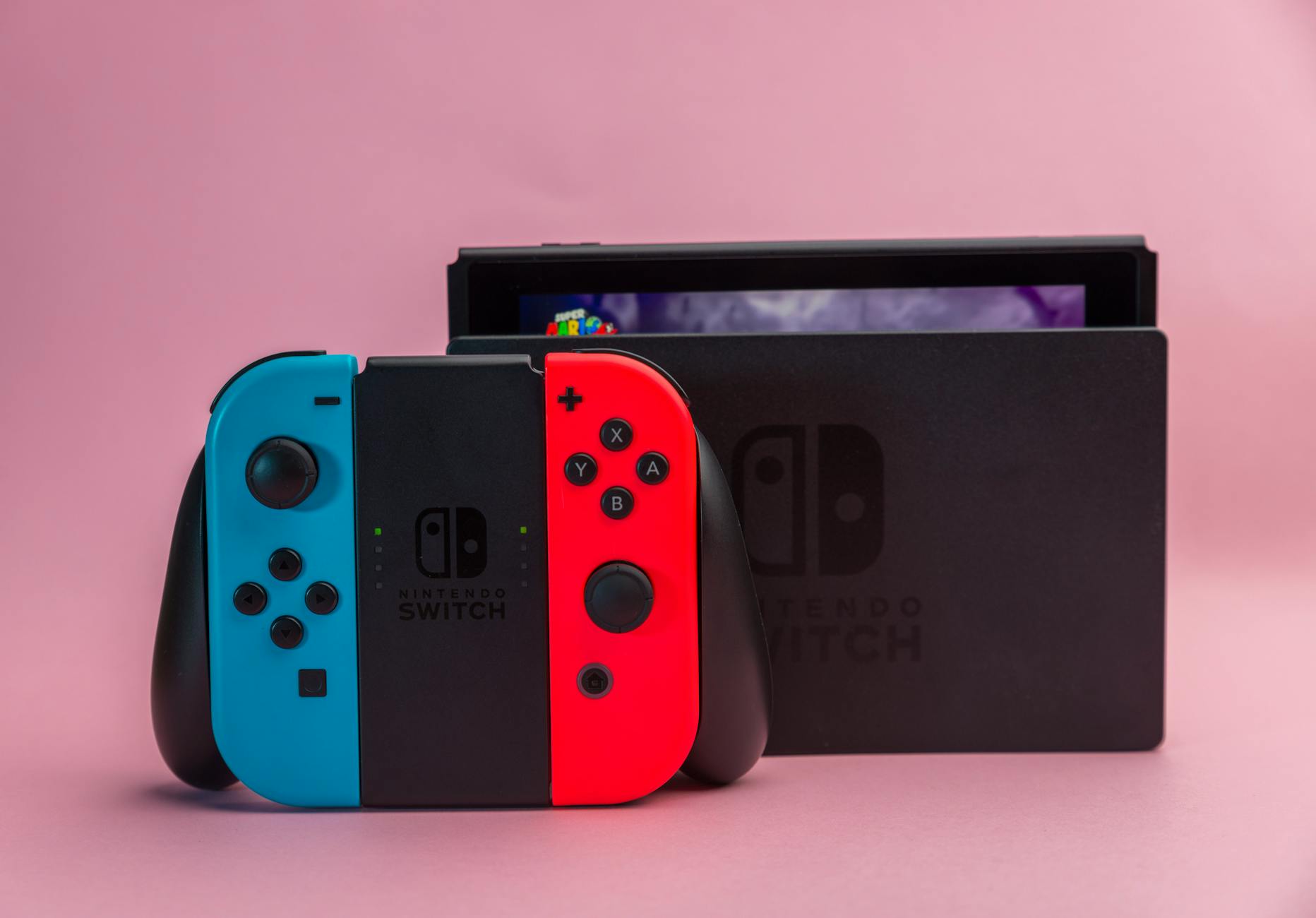
Around 2015, under Satoru Iwata and Shigeru Miyamoto, Nintendo’s leadership studied Apple’s iPhone model. The insight was architectural rather than technological. Apple treated the iPhone as a persistent platform, not a generational product line. Each iteration retained backward compatibility, transferred user libraries, and expanded the installed base without ever resetting it to zero. Nintendo applied this logic to the Switch, launched in 2017. Rather than replacing the Switch every six years with incompatible hardware, Nintendo iterated incrementally, Switch Lite, Switch OLED, eventually Switch 2, preserving software libraries and user accounts across generations.
The economic consequences were structural. Nintendo’s installed base began compounding at 30% annually, reaching a scale where each new software release addresses a larger market than the last without requiring new hardware adoption. Digital distribution, now 50% of software sales and climbing toward 85%, compounds at 50% annually. Nintendo Switch Online subscriptions grow at 25% annually. Third-party titles, 11,000 and counting, compound at 40% annually. The company receives 30% of third-party sales, a tax now standardized across Apple, Microsoft, and Sony stores. Margins expand because the same installed base absorbs new software without requiring proportional capital investment in manufacturing.
This is the core engine: a secular growth model built on a platform that never resets. Unlike the cyclical console business, where earnings evaporate between generations, Nintendo’s revenue now stacks. Each year adds a layer of recurring subscriptions, digital attach rates, and third-party taxes atop the previous layer. The model resembles a software company more than a hardware manufacturer, except the “operating system” is a cultural trust built over forty years.
The Iteration Trap
Yet the physics of this model create a binding constraint. Hardware must improve enough to justify new purchases and attract AAA developers, but not so much that it fragments the installed base or triggers the old reset cycle. If Switch 2 represents a marginal upgrade, better battery, sharper screen, hardware sales stagnate and third-party developers deprioritize Nintendo for PlayStation 6 and the next Xbox. If Switch 2 represents a generational leap, incompatible cartridges, new architecture, no backward compatibility, the installed base resets to zero, the compounding stops, and Nintendo reverts to cyclicality.
The company navigates this narrow passage by treating hardware as infrastructure rather than event. The Switch family expands sideways, handheld, docked, mid-generation refresh, rather than forward into obsolescence. But this approach has limits. Eventually, the silicon gap between Nintendo and its competitors becomes too wide. AAA developers, who now account for a growing share of the 11,000-title library, demand parity with PlayStation and Xbox capabilities. If Nintendo cannot deliver hardware powerful enough for these titles while maintaining backward compatibility, the third-party ecosystem bifurcates: Nintendo becomes a secondary platform for indie and AA games, surrendering the high-margin AAA tax revenue that justifies the model’s capital intensity.
The risk is not theoretical. For twenty years prior to the Switch, Nintendo hardware lagged competitors in processing power, relegating it to a niche for first-party exclusives. The Switch reversed this by offering acceptable parity for ports of AAA titles like The Witcher 3 and DOOM. Maintaining this parity through iterative updates, without breaking the continuity of the installed base, requires engineering precision that grows harder with each semiconductor cycle. The iterative model assumes that hardware improvements can continue indefinitely without requiring a clean break. That assumption is fragile. At some point, the accumulated technical debt of backward compatibility collides with the demands of modern game engines.
Quality at Scale
Even if Nintendo solves the hardware iteration problem, it faces a deeper tension between scale and curation. The Switch marketplace hosts 11,000 titles, up from negligible third-party support a decade ago. This expansion drives the recurring revenue model: more titles mean more digital sales, more subscriptions, more 30% taxes. But quantity threatens the quality covenant established in 1985.
The Nintendo Seal of Quality was originally a lockout mechanism enforced by hardware. Today, it is a bureaucratic process. As the marketplace scales toward 20,000 or 30,000 titles, the review process either becomes prohibitively expensive, requiring thousands of quality assurance employees, or it dilutes, allowing broken, exploitative, or simply mediocre games onto the storefront. Either outcome damages the brand. If curation tightens too aggressively, developers flee to Steam or PlayStation. If it loosens, consumers encounter the 2024 equivalent of E.T., ames that waste money and erode trust.
The structural danger is path-dependent. Nintendo rebuilt the industry by restricting supply. It is now monetizing abundance. The two impulses are fundamentally opposed. The company’s $500-1000 developer kits and streamlined Unreal/Unity support have lowered barriers to entry, creating the 40% annual growth in third-party titles. But low barriers invite low quality. Nintendo must now perform the difficult algebra of maintaining the perception of premium curation while monetizing a volume business.
This tension manifests in specific commercial decisions. Nintendo recently tested Nintendo Play Test, a Roblox-like MMO platform targeting the 4-12 demographic with user-generated content. User-generated content is inherently uncuratable at scale. If Nintendo deploys such platforms broadly, it risks the brand dilution that Atari invited in 1983. If it refrains, it cedes the younger demographic to competitors. The quality constraint is not a soft cultural preference; it is the load-bearing wall of the business model. Remove it, and the 30% tax becomes unenforceable, onsumers will not pay a premium for access to an undifferentiated flood of software.
The 40-Year Moat
Why does this curation have value in the first place? Because Nintendo possesses intellectual property accumulated over four decades that competitors cannot replicate, purchase, or outspend. Mario, Zelda, Donkey Kong, and their associated universes are not merely popular; they are intergenerational constants. Halloween 2024 surveys found 10-15% of children in sampled neighborhoods wearing Nintendo IP costumes. The Super Mario Bros. Movie reached 170 million viewers, introducing the plumbing brothers to preschoolers whose parents grew up on Super Mario 64.
This IP functions as infrastructure. It drives hardware adoption, parents buy Switches so children can inhabit the same worlds they played at age ten. It creates pricing power, first-party Nintendo games rarely discount below $40 even years after release. It licenses to theme parks and merchandise, creating brand immersion that reduces customer acquisition costs for the core gaming business. Most importantly, it attracts third-party developers not merely through installed base size, but through association. Developing for Switch implies adjacency to Mario.
The durability of this advantage is temporal. Sony and Microsoft cannot buy forty years of cultural embedding. They can acquire studios, but they cannot manufacture nostalgia. The IP moat strengthens with each generation as parents transmit preferences to children, creating a self-reinforcing cycle where Nintendo hardware becomes the default first gaming device.
Less visible but equally structural is the lock-in of Nintendo’s third-party relationships. The NES-era two-year non-compete clauses, though no longer explicitly enforced, created industry norms that persist. Developers who invested in Switch-specific toolchains, server infrastructure, and optimization expertise face switching costs when considering rival platforms. The 30% revenue share, identical across all major platforms, prevents price arbitrage. Nintendo further reduces friction through affordable dev kits, $500 versus thousands for traditional console development, creating a path-dependent ecosystem where exit costs rise with tenure.
The Generational Arbitrage
The compounding installed base and IP moat allow Nintendo to pursue a demographic strategy that its competitors have abandoned. While Sony and Microsoft compete for the 18-34 male enthusiast with high-fidelity hardware and mature-rated exclusives, Nintendo has effectively conceded the graphics arms race to pursue two distinct cohorts: high-spending 30-50-year-olds seeking nostalgia, and the 4-12-year-olds who will become tomorrow’s 30-50-year-olds.
This bifurcation creates a strategic tension between near-term revenue and long-term base growth. The 30-50 cohort possesses disposable income and willingness to pay for expansion packs, retro game subscriptions, and $60 remasters of titles they owned in 1998. Maximizing extraction from this group, through aggressive monetization, complex mechanics, and mature-themed spinoffs, would boost margins immediately. But it would sever the intergenerational chain. If Nintendo prioritizes nostalgic adults, it cedes the children’s market to tablets, Roblox, or eventual competitors, breaking the 40-year nostalgia cycle that creates lifetime value.
Conversely, prioritizing the 4-12 cohort requires investment in accessibility, parental controls, and content appropriate for developing cognition, ften at the expense of the depth that older players demand. Nintendo Switch Online’s expansion packs, which add Animal Crossing and Mario Kart DLC, attempt to bridge this divide, but the tension persists. The company must resist the temptation to harvest the adult installed base through predatory monetization, loot boxes, paywalled progression, subscription-gated core content, without alienating the very different economics of family purchasing decisions.
The bet is that intergenerational continuity compounds faster than short-term extraction. A parent who buys a Switch for a six-year-old creates a customer who, at thirty-six, will buy Nintendo hardware for their own children. Breaking this chain, even for a single generation, would require rebuilding the installed base from scratch, something the iterative hardware model is explicitly designed to prevent.
When Digital Becomes Dangerous
The secular growth model depends on shifting software sales from physical to digital, currently at 50% and targeting 85%. Digital distribution offers higher margins, no manufacturing, no retail cut, no inventory risk, and enables the recurring revenue of Nintendo Switch Online. But concentration creates fragility.
At 85% digital mix, Nintendo’s platform resembles Apple’s App Store: a gatekeeper extracting 30% from all commerce on its hardware. Regulators in the EU and FTC have already challenged Apple’s 30% fee as monopolistic. As Nintendo’s digital revenue grows and margins expand, it invites identical scrutiny. If forced to reduce its take rate or open the platform to alternative payment systems, Nintendo’s profitability compresses precisely when its capital intensity should decline.
The regulatory risk intersects with the quality tension. Nintendo justifies its 30% tax partly through curation: he fee funds the review infrastructure that prevents another 1983 crash. If regulators force Nintendo to lower fees while maintaining curation costs, the economics of the third-party marketplace invert. Alternatively, if Nintendo reduces curation to cut costs, it triggers the quality dilution that destroys brand equity. The digital transition assumes that Nintendo can maintain both high margins and high control. Regulatory intervention would force a choice between profitability and the quality covenant.
The Governance Pivot
None of this structural transformation would have occurred without a specific leadership decision that treated corporate culture as a variable to be engineered rather than inherited. After the Wii U disaster, Iwata and Miyamoto did not merely commission new hardware. They commissioned new economics. By studying Apple’s iterative model, they recognized that Nintendo’s cyclicality was not a law of nature but a design choice. The Switch was not simply a better Wii U; it was a rejection of the generational console cycle that Nintendo had helped invent.
This governance pivot transformed Nintendo from a hits-driven toy company into a platform utility. The decision required overcoming internal resistance, Nintendo’s hardware engineers traditionally pursued generational leaps to showcase technical prowess, and external skepticism from investors accustomed to cyclical earnings. That the company maintained this strategy through Iwata’s death in 2015 and the subsequent leadership transition indicates the decision was structural rather than personal.
The economic consequence is visible in the capital allocation. Nintendo now spends less on manufacturing capacity relative to revenue because hardware iterations reuse supply chains and factories. It spends more on content curation and online infrastructure. The balance sheet reflects a company that no longer bets everything on five-year hardware cycles but instead harvests a persistent installed base. This required not merely strategic insight but cultural discipline: he willingness to forego the revenue spike of a generational hardware launch in favor of the smoother, compounding returns of platform persistence.
The model now faces its greatest test. As the Switch 2 approaches, Nintendo must iterate hardware without resetting the base, scale to 20,000 titles without diluting quality, and monetize adults without losing children. The 30% annual growth in installed base, the 50% growth in digital sales, the 40% growth in third-party titles, hese are not independent metrics but interdependent functions of a single variable: the trust established in 1985 when a playing card company promised that its seal meant the game would actually work. If that seal becomes meaningless, the compounding stops. If it retains meaning at scale, Nintendo has built the first truly permanent platform in video games: business that sells not consoles, but continuity.
The Character Counts the Money
Continuity, however, requires more than hardware backward compatibility. It requires that the intellectual property remain culturally legible across mediums and decades. Nintendo has begun testing the elasticity of this legibility through aggressive expansion into film, theme parks, and merchandise, hat the company terms “expanded entertainment.” The Super Mario Bros. Movie generated $1.36 billion in box office revenue, but its strategic value lies elsewhere: it introduced the Mushroom Kingdom to approximately 170 million viewers, many of whom were either too young to hold a controller or old enough to have skipped the Switch generation entirely. The film functions as a customer acquisition tool with negative marginal cost, arents pay to expose their children to Nintendo’s IP, transforming marketing into profit.
This alchemy creates its own fragility. When Nintendo licenses its characters to Illumination Entertainment for film production, or to Universal for Super Nintendo World theme parks, or to countless manufacturers for Halloween costumes, it externalizes creative control. The company’s historical aversion to such licensing, Mario appeared in exactly one live-action film prior to 2023, the notorious 1993 disaster that Nintendo executives still refer to in hushed tones, reflected an understanding that poor execution damages the accumulated trust faster than good execution builds it. A bad Mario movie does not merely waste production costs; it poisons the nostalgia reservoir that drives hardware adoption twenty years later.
The economics of this expansion are asymmetrical. Successful execution, the precise tone of Chris Pratt’s Mario, the architectural fidelity of Bowser’s Castle in Universal Studios, creates flywheel effects where theme park visits drive hardware purchases, and hardware purchases drive merchandise sales, and merchandise sales drive movie attendance. But failure anywhere in the chain propagates everywhere. If the sequel to Super Mario Bros. Movie underperforms critically, or if a theme park ride malfunctions and generates viral footage of crying children, the IP equity that supports the 30% app store tax and the $60 price floor on first-party games erodes. Nintendo has never been a media conglomerate in the Disney mold; its infrastructure for managing external creative partners remains nascent. The assumption that Nintendo can scale its IP across mediums without suffering the quality dilution that afflicts licensed characters from Minions to Paw Patrol is an unproven bet on operational capabilities the company has not historically cultivated.
The Subscription Ceiling
Similar tensions manifest in the digital transformation of Nintendo’s revenue model. Nintendo Switch Online currently generates recurring revenue from approximately 40 million subscribers, growing at 25% annually. The service began as a barebones multiplayer enabler, cloud saves and online play for $20 annually, positioned deliberately below the price points of Sony’s PlayStation Plus and Microsoft’s Game Pass to avoid the perception that core gameplay requires subscription gating. But as digital mix approaches 85%, Nintendo faces pressure to increase the service’s value proposition without crossing the line that separates optional enhancement from mandatory paywall.

The expansion packs illustrate this narrow path. By bundling DLC for Animal Crossing: New Horizons and Mario Kart 8 Deluxe into a higher-tier subscription, Nintendo attempts to convert one-time software purchasers into recurring revenue streams. The strategy risks alienating the family demographic that distinguishes Nintendo from its competitors. Parents who purchased a Switch for Animal Crossing during the pandemic understood the transaction: buy the hardware, buy the game, own the experience indefinitely. Converting this model into a subscription service, where the save file effectively becomes hostage to ongoing payments, transforms Nintendo from a product company into a utility extracting rent from digital assets. If a six-year-old’s island disappears because a parent declines the annual renewal, the trust covenant fractures.
Nintendo Music, the company’s recent Spotify competitor included with subscriptions, represents another attempt to increase perceived value without gating gameplay. Yet each addition, music streaming, retro game libraries, DLC, raises the service’s cost basis while requiring continuous content refreshment. The model approaches asymptotically toward Microsoft’s Game Pass, which offers day-one access to new releases for a monthly fee. But Nintendo cannot adopt the Game Pass model without destroying its first-party pricing power. The Legend of Zelda: Tears of the Kingdom sold ten million copies at $70 each in its first three days precisely because it was not available on a subscription. Including such titles in Switch Online would generate recurring revenue but annihilate the high-margin software sales that currently fund the iterative hardware development. The subscription growth imperative collides with the premium pricing model; resolving this tension requires maintaining two contradictory consumer expectations simultaneously: that Nintendo software is worth purchasing outright at premium prices, and that Nintendo online services are worth subscribing to for access to content.
When the Compounding Stops
The bear case for Nintendo rests not on any single catastrophic failure but on the gradual unraveling of the compounding installed base assumption. Consider the specific mechanics of the Switch 2 transition. If Nintendo releases hardware sufficiently powerful to run Grand Theft Auto VI and the next Call of Duty with technical parity to PlayStation 5, it likely requires a new architecture incompatible with the existing Switch library. If the company maintains strict backward compatibility, it risks shipping hardware that third-party developers find insufficient for their next-generation engines, recreating the Wii U scenario where AAA publishers deprioritize the platform. If it breaks compatibility for technical advancement, the installed base resets to zero, the 11,000-title library becomes legacy software, and Nintendo reverts to the cyclical hits-driven model it spent eight years escaping.
The iterative hardware model assumes that semiconductor efficiency will permit indefinite incremental improvements within fixed thermal and power envelopes. This assumption collides with the slowing of Moore’s Law and the increasing power demands of modern game engines. At some point, likely within the next hardware generation, Nintendo must choose between maintaining the continuity of its installed base and maintaining parity with industry technical standards. The longer the Switch generation extends, the original hardware launched in 2017, an eternity in computing cycles, the more acute this pressure becomes.
If third-party developers begin treating Nintendo as a secondary platform, the economic engine seizes. The 40% annual growth in third-party titles depends on the expectation that Switch versions of multiplatform games will sell sufficiently to justify development costs. Remove AAA parity, and the 11,000-title library bifurcates into Nintendo’s first-party exclusives and indie games too small to sustain the platform’s network effects. The 30% tax on Fortnite microtransactions and Minecraft skin packs generates more recurring revenue than the 30% tax on obscure pixel-art platformers. Without the whales, the massive AAA titles that drive hardware turnover, the digital revenue mix shifts toward low-margin, low-attach-rate content.
The 11,000th Title
Even if Nintendo navigates the hardware transition perfectly, the curation challenge intensifies non-linearly with library size. At 11,000 titles, the Switch eShop has already surpassed the point where human editorial oversight is feasible. Nintendo employs approximately 7,000 people globally; even dedicating one percent of the workforce to quality assurance would provide only seventy reviewers to process thousands of annual submissions. The company has necessarily automated much of the certification process, checking for technical stability rather than creative merit. This creates the conditions for a quality crisis invisible until it metastasizes.
Consider the specific failure mode. A developer releases a technically functional but exploitative game, erhaps a cryptocurrency mining operation disguised as a platformer, or a slot machine targeted at children with Mario-esque aesthetics. It passes automated technical review. It generates negative press. Parents, accustomed to the Nintendo Seal of Quality as a guarantee of child-appropriate content, encounter a game that drains their credit card through predatory microtransactions. The trust covenant, which took four decades to construct, dissolves in a weekend of viral Twitter threads.
Nintendo’s historical response to such crises, recalling the E.T. cartridges, delisting problematic WiiWare titles, relied on physical scarcity and retail gatekeeping. In a digital marketplace with 11,000 titles and 85% digital distribution, recall is impossible. The game has already downloaded to thousands of systems. The damage propagates instantly. As the library scales toward 20,000 or 30,000 titles, the probability of such failures approaches certainty. Nintendo must either increase its curation costs proportionally, hiring thousands of reviewers and slowing release velocity, which angers developers and reduces the 30% tax revenue from rapid-fire indie releases, or accept that quality dilution is an inevitable function of scale.
The company experiments with algorithmic solutions, curated storefronts, “featured” sections, user ratings, but these cannot replicate the absolute guarantee of the lockout chip era. When every title carries the Nintendo Seal, the seal carries no information. This information asymmetry eventually resolves through market correction: consumers, burned by too many $10 disappointments, retreat to first-party titles only, reducing the third-party revenue that justifies the platform’s open marketplace. The Switch becomes a Nintendo-only machine, a return to the Wii U’s fatal isolation.
The Demographic Arbitrage in Practice
The tension between serving the 30-50 nostalgia cohort and the 4-12 acquisition cohort manifests in specific product decisions that reveal the company’s internal calculus. The Legend of Zelda: Tears of the Kingdom shipped with a $70 price point and a construction mechanic of baroque complexity, clearly targeting the adult enthusiast who grew up with Ocarina of Time. Meanwhile, Nintendo Switch Sports and the forthcoming MMO tested in the Nintendo Play Test leak target the Roblox generation with simplified mechanics and social virality. The hardware itself must accommodate both the adult who uses the Pro Controller for competitive Smash Bros. and the child who undocks the unit to play Pokémon in the backseat.
This bifurcation creates R&D inefficiency. Controllers must remain robust enough for adult precision but small enough for child hands. Online infrastructure must satisfy the latency demands of competitive adults while maintaining the safety barriers required for COPPA compliance. Marketing must simultaneously evoke 1985 for parents and 2024 for children. The alternative, picking one demographic, would simplify operations but sacrifice either current revenue (adults) or future installed base (children).
The risk is that Nintendo serves neither cohort perfectly. The adult enthusiast, increasingly served by Steam Deck and high-fidelity PC gaming, drifts away from Nintendo’s iterative hardware limitations. The child, offered Roblox and Fortnite on tablets with superior social graphs, rejects the closed Nintendo ecosystem. The company survives in the middle, but the middle is narrowing as mobile gaming improves and PC gaming becomes more accessible. Nintendo’s response, the expansion into movies and theme parks, attempts to make the IP so ubiquitous that hardware choice becomes irrelevant to brand affinity. But this returns to the externalization risk: if the movie studio falters or the theme park attendance drops, the dual demographic strategy loses its connective tissue.
The assumption that intergenerational nostalgia is a renewable resource depends on each generation actually adopting Nintendo hardware during childhood. If the Switch 2 fails to capture the 4-12 demographic, if tablets and cloud gaming render dedicated handhelds obsolete for children, the nostalgia pipeline empties. The 30-50-year-old of 2040 will have grown up on Minecraft and Fortnite, not Mario. The IP, however venerable, becomes a historical curiosity rather than a living cultural currency. The compounding installed base, rather than growing indefinitely, enters terminal decline as aging users exit faster than young users enter.
The Tax Collector’s Dilemma
Finally, the regulatory threat to Nintendo’s 30% digital tax deserves specific scrutiny because it differs materially from Apple’s App Store defense. Apple argues that its fee funds a secure, curated marketplace that protects users from malware. Nintendo makes an identical claim, but with a crucial distinction: Nintendo also sells its own software in competition with the third parties it taxes. When Nintendo takes 30% of an indie developer’s $15 platformer while simultaneously selling its own $60 Mario game, it functions as both marketplace and competitor. This dual role invites antitrust scrutiny under theories of self-preferencing and monopoly leveraging.
As digital sales exceed 75% of software revenue, Nintendo’s margin expansion becomes visible to regulators. The company has already faced pressure in the European Union regarding eShop pricing restrictions that prevent geographic arbitrage. If forced to open the Switch to alternative app stores or reduce its take rate to 15%, Nintendo’s business model does not merely suffer margin compression; it loses the economic justification for curation. The 30% tax currently funds the quality infrastructure; at 15%, Nintendo must either operate the marketplace at a loss or reduce oversight, accelerating the quality dilution problem.
The bear case converges here: hardware iteration fails, third-party developers depart, regulatory pressure forces margin compression, and the quality covenant dissolves under the weight of 30,000 uncurated titles. The secular growth model reveals itself as a temporary alignment of stars, favorable semiconductor scaling, permissive regulatory environment, generational continuity in media consumption, rather than a permanent structural advantage. The Switch becomes not the first iteration of an eternal platform, but the last successful console of the cyclical era, an unusually long peak before the inevitable valley.
Nintendo’s leadership understands these interdependencies. The iterative hardware strategy, the cautious expansion of Switch Online, the painstakingly slow release of films and theme parks, ll reflect an attempt to manage the contradictions without resolving them. The company must scale without diluting, monetize without paywalling, and iterate without obsolescing. That it has managed these tensions for eight years is remarkable. That it must manage them indefinitely, against technological entropy and regulatory gravity and demographic shift, is the wager upon which the entire enterprise rests. The seal still means something, for now. But seals, like crashes, are made to be broken.