LVMH: The $1 Billion Restoration Paradox
The Cathedral and the Compound
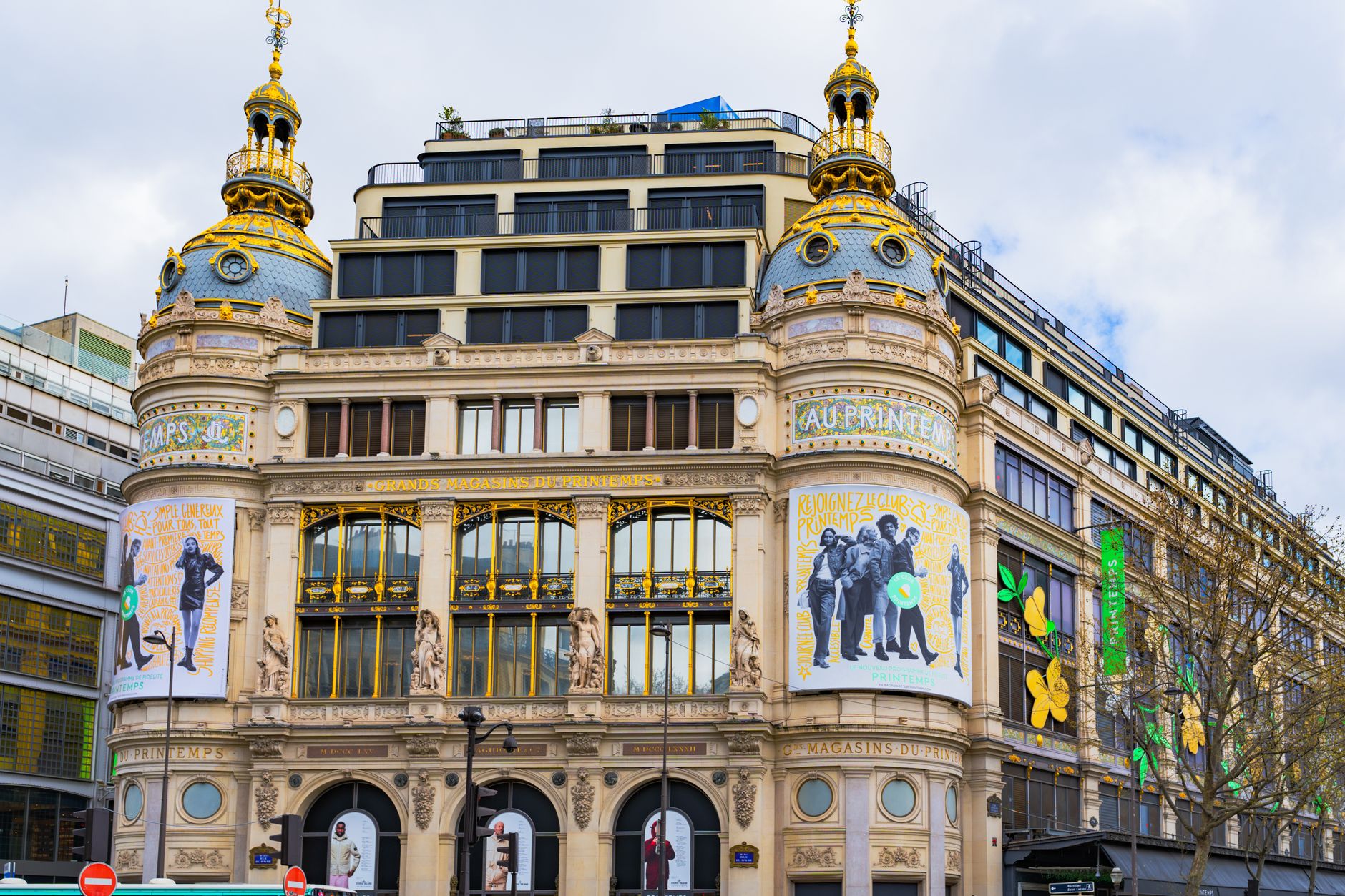
In 2001, Bernard Arnault acquired Samaritaine, the art nouveau department store on the Rue de Rivoli that had anchored Parisian commerce since the belle époque. He closed it four years later. For the next sixteen years, the building sat dormant while LVMH spent roughly $1 billion restoring its stained glass, ironwork, and frescoes. When Samaritaine finally reopened in 2021, it generated no revenue for nearly two decades of capital detention. This is not how public companies are supposed to allocate capital. It is, however, exactly how LVMH built a €350 billion enterprise.
The Samaritaine interlude reveals the underlying mechanics of the world’s largest luxury conglomerate. LVMH is not fundamentally in the business of selling handbags, champagne, or watches. It operates a capital compounding engine that treats heritage brands as a specific asset class: ne characterized by pricing power accumulated over decades, reinvested at twenty-percent-plus returns, and protected by vertical integration that competitors cannot replicate quickly. The group’s seventy-five brands, from Louis Vuitton to Dior to Bulgari, function less as a portfolio in the traditional conglomerate sense and more as a collection of semi-autonomous principalities bound together by Arnault’s personal authority and a disciplined refusal to optimize quarterly margins.
This model has produced one of the most remarkable financial records in modern business. Between 2008 and 2020, Arnault deployed approximately €30 billion in acquisitions and organic expansion, generating returns on incremental capital north of twenty percent. Yet for decades, operating margins remained stubbornly fixed at roughly twenty percent despite organic growth averaging ten percent annually. While most conglomerates expand margins as they scale, LVMH deliberately compressed them, choosing instead to fund new flagships, restore Parisian landmarks, and acquire family-owned maisons like Loro Piana and Tiffany. The business is designed to maximize the present value of future cash flows across generational time horizons, not to harvest earnings for current shareholders. This requires a tolerance for capital intensity that public markets rarely accommodate, nd a controlling shareholder with the voting power to ignore them.
The Margin That Never Rose
The central economic engine of LVMH operates on three interlocking mechanics, but the most misunderstood is the relationship between growth and profitability. Louis Vuitton alone accounts for thirty percent of group revenue and roughly half of group EBIT; Dior contributes another twenty percent of the fashion division’s sales. These two brands constitute the gravitational center of the enterprise. They possess what economists call “durable pricing power”: he ability to raise prices independent of cost inflation because demand is driven by perceived scarcity and cultural positioning rather than utility. This pricing power generates gross margins exceeding sixty percent.
Yet these extraordinary margins do not flow to the bottom line. Instead, they are reinvested into the fixed-cost infrastructure that creates operating leverage: flagship stores on Bond Street and Fifth Avenue, wholly-owned manufacturing facilities in France and Italy, and talent acquisition that poaches designers from competitors at premium salaries. The result is a high-fixed-cost structure that rewards scale but punishes contraction. When demand rises, incremental revenue drops to the bottom line at high rates; when demand falls, the cost base cannot be reduced quickly without damaging brand equity.
This operating leverage explains the twenty-percent margin plateau. Arnault had opportunities to expand margins for decades but chose to reinvest aggressively in brand equity, store networks, and long-term positioning. The flat margin profile is not a failure of efficiency but evidence of strategic discipline. While Kering and Richemont periodically expanded margins to satisfy shareholder demands, LVMH maintained a constant ratio of profit to sales, effectively declaring that any earnings not required to sustain the brands’ cultural relevance belonged in new acquisitions or organic expansion, not in buybacks or dividends.
This capital redeployment function is the true heart of the business. LVMH acquires family-owned heritage brands, Bulgari in 2011, Loro Piana in 2013, Tiffany in 2021, not for operational synergies (there are none; the group explicitly avoids cross-brand integration) but for the opportunity to professionalize them. Arnault installs new management, expands retail footprints, increases advertising intensity, and raises prices, transforming artisanal workshops into global luxury machines. The returns on these investments have consistently exceeded twenty percent, creating a compounding effect that has driven the market capitalization to levels exceeding many European banks and energy majors combined.
The Autonomy of the Detail
The structure that enables this compounding is built on a paradox that would destroy most organizations. LVMH maintains full decentralization at the brand level, each maison operates its own P&L, supply chain, and creative direction with minimal corporate interference, while simultaneously subjecting key decisions to Arnault’s obsessive central control. Brand CEOs possess autonomy over their operations until they don’t; Arnault personally micromanages details at Louis Vuitton and Dior, and directly challenges decisions at smaller brands.
This creates a “strange dynamic,” as insiders describe it: a federation of sovereign states that share only a capital allocator and a chairman. The tension between autonomy and control is not a temporary organizational challenge but a permanent structural feature. If the brands were truly autonomous, they might resist Arnault’s interventions, slowing decision-making and fragmenting strategy. If control were truly centralized, the conglomerate could not scale beyond one man’s capacity to review minutiae.
The economic function of this arrangement is risk distribution without strategic dilution. The portfolio of seventy-five brands reduces dependency on any single label, nlike Kering, which remains dangerously exposed to Gucci’s fluctuations, or Richemont, which depends heavily on Cartier. LVMH’s diversification creates resilience; a downturn in watches can be offset by strength in spirits or leather goods. Yet the diversification does not come at the cost of focus, because Arnault personally adjudicates capital allocation, ensuring that resources flow to the highest-return opportunities regardless of which division generates them.
The fragility of this arrangement is obvious: it depends entirely on Arnault’s presence. He is seventy-three, controls approximately fifty percent of the capital and sixty percent of the voting rights, and has built his deal-making reputation over four decades. Four of his five children hold positions within the empire, with Alexandre overseeing Tiffany’s repositioning, but none possess the authority or tenure to replicate the current equilibrium. The conglomerate’s complexity, seventy-five brands, no synergies, decentralized P&Ls, may exceed the management capacity of a second-generation leader. When Arnault departs, the “strange dynamic” will likely collapse into either pure decentralization (breaking the capital allocation discipline) or centralized bureaucracy (crushing brand creativity).

The Supply Chain as Sanctum
Analysts typically attribute LVMH’s pricing power to marketing expenditure and heritage storytelling, but this understates a structural advantage that underpins the entire edifice: vertical integration at conglomerate scale. LVMH manufactures the majority of its major brand products in France and Europe, controls tanneries and raw material sourcing, and operates fully owned distribution networks with minimal wholesale dependency. This mirrors the Hermès model, famously protective of its supply chain, but extends it across dozens of brands rather than a single maison.
The economic significance of this integration is twofold. First, it insulates gross margins from the cost inflation that erodes competitors who rely on outsourced manufacturing. When labor and material costs rise in Asia, brands dependent on third-party production face margin compression or quality degradation. LVMH’s control of its supply chain allows it to raise retail prices without corresponding cost increases, expanding gross margins even in inflationary environments.
Second, and more critically, vertical integration preserves the scarcity signaling that defines luxury. By controlling production volumes at the factory level, LVMH can maintain artificial constraints on supply that would be impossible if manufacturing were outsourced to third parties maximizing utilization rates. The waiting lists for certain Vuitton bags or limited-edition Tiffany designs are not marketing fictions but mechanical consequences of production caps enforced through owned facilities.
This advantage is durable because it required decades of investment and craftsperson talent that cannot be hired quickly. Competitors cannot replicate LVMH’s supply chain architecture without incurring massive capital expenditures and a generation of apprenticeship training. The vertical integration functions as a moat around the pricing power, ensuring that the sixty-percent-plus gross margins are defensible not by brand narrative alone but by physical control of the means of production.
The Geography of Demand
For all its structural strengths, LVMH’s growth engine depends on a geographic concentration that introduces systemic fragility. Approximately one-third of global personal luxury spending originates with Chinese consumers, both domestically and through tourism. Over the past two decades, LVMH’s ten-percent organic growth has been largely driven by China’s wealth creation. The group has limited geographic diversification to offset a sustained contraction in Chinese consumer spending.
This dependency creates asymmetric risk. If Chinese GDP growth slows significantly, or if regulatory authorities impose restrictions on luxury consumption, as occurred during previous anti-corruption campaigns, LVMH’s organic growth could compress from ten percent to low single digits. Unlike cyclical downturns in Western markets, a structural shift in Chinese consumption patterns would simultaneously affect multiple divisions, from watches to wines to leather goods.
The operating leverage that amplifies returns on the upside would then function in reverse. With high fixed costs in retail leases, manufacturing facilities, and creative talent, LVMH cannot reduce expenses quickly without damaging the brand equity that justifies its pricing. A demand shock lasting twelve months or more would force store closures, inventory write-downs, and margin compression below the twenty-percent floor that has held for decades. The pandemic demonstrated short-term resilience, but a prolonged contraction would test the model’s durability in ways that quarterly earnings reports have not yet captured.
The Succession of Judgment
The most profound risk facing LVMH is neither Chinese macroeconomics nor shifting fashion trends, but the transfer of authority from a founder who embodies the business to heirs who cannot replicate his specific economic function. Arnault’s capital allocation discipline, is willingness to wait sixteen years for Samaritaine, his engineering mindset combined with an artist’s sensibility, his reputation for deal-making that attracts sellers of family businesses, s not systematized into processes. It is personal.
This distinction matters because LVMH is not a management company; it is a judgment company. The decision to acquire Tiffany during a pandemic, to reject margin expansion in favor of reinvestment, to balance decentralization with micromanagement, hese are not outputs of committee governance but of a single authority with forty years of tenure and a controlling stake. When that authority departs, the conglomerate faces an existential choice: break up into independent brands, or attempt to professionalize Arnault’s role.
A breakup would destroy value by eliminating the portfolio’s capital coordination; brands would lose access to the centralized treasury that funds their expansion during downturns. Conversely, professional management by non-family executives would likely lack the credibility to enforce the “strange dynamic” of autonomy-with-control, leading either to empire-building acquisitions that dilute returns or to excessive cost-cutting that damages brand equity.
The implicit assumption underlying LVMH’s valuation is that the founder’s capital allocation skill is either transferable to a successor or can be maintained through institutional processes. There is little evidence for this assumption. The twenty-percent returns on incremental capital, the flat margin profile that signals reinvestment discipline, and the delicate balance between brand sovereignty and group strategy are artifacts of Arnault’s specific authority. The wolf may wear cashmere, but the pack disperses when the alpha is gone.
The contradiction between scarcity and scale sits at the heart of LVMH’s economic model, yet remains insufficiently examined. Luxury depends fundamentally on exclusion, on the mathematical impossibility of universal access, while conglomerate growth demands geometric expansion. Arnault has pursued ten-percent organic growth for decades, adding stores in second-tier Chinese cities, expanding Dior’s ready-to-wear lines, and transforming Tiffany from an American jeweler into a global luxury brand with flagships in Tokyo and Dubai. Each expansion risks diluting the scarcity premium that justifies sixty-percent gross margins.
Consider the mechanics of Louis Vuitton’s pricing strategy. The brand raises prices annually, often by percentages that exceed inflation, not because costs have risen but because the price itself signals exclusivity. This works only if supply remains constrained relative to demand. Yet Vuitton operates over five hundred stores worldwide, compared to Hermès’ approximately three hundred, and continues to open locations in markets like Chengdu and Miami. The “scarcity” becomes manufactured, algorithmic rather than authentic, dependent on deliberate production caps rather than natural limitations.
This creates a fragile equilibrium. If Vuitton opens too many stores, or produces too many Neverfull bags, the waiting lists disappear and the secondary market softens. The brand risks becoming accessible luxury, premium but not precious, occupying the dangerous middle ground where Kering’s Gucci has periodically found itself when growth outpaced discipline. Arnault prevents this through the vertical integration mentioned earlier: by owning the factories, he can enforce production limits that would be impossible if manufacturing were outsourced to third parties maximizing throughput. The tanneries in France, the workshops in Italy, the direct control of distribution, hese are not merely quality controls but scarcity enforcement mechanisms.

Yet the pressure to grow is relentless. Public markets, despite Arnault’s controlling stake, price the stock on growth trajectories. The twenty-percent margin ceiling exists partly because every euro of potential profit is redirected into new square footage, new categories, new geographies. The Samaritaine project exemplifies this: a billion dollars detained for sixteen years represents capital that could have returned to shareholders or expanded margins. Instead, it bought Parisian real estate and cultural credibility, assets that generate no cash flow but reinforce the brand’s authority to charge premium prices elsewhere.
The acquisition of Tiffany in 2021 for $15.8 billion illustrates the tension between integration and autonomy. Unlike traditional conglomerate acquisitions, where synergies justify premiums, LVMH explicitly avoids cross-brand cost-cutting or revenue-sharing. Tiffany remains Tiffany, with its own management, its own supply chain, its own Madison Avenue identity. Yet Arnault immediately replaced the CEO, initiated a $400 million store renovation program, and repositioned the brand upward, eliminating entry-level silver jewelry in favor of higher-margin diamond and gold pieces.
The economic logic is subtle. By keeping brands autonomous, LVMH preserves the founder-family talent and creative integrity that made them attractive acquisition targets. Bulgari’s Italian craftsmanship, Loro Piana’s textile expertise, Tiffany’s American heritage, hese would dissipate under centralized corporate management. Yet by installing new financial discipline and retail expansion, Arnault extracts the “conglomerate discount” in reverse: he pays a premium for control, then professionalizes operations to generate twenty-percent returns that family ownership could not achieve independently.
The risk is that this shallow integration leaves money on the table. Without shared back-office functions, without cross-selling between Vuitton and Tiffany customers, without unified procurement across watches and jewelry, LVMH operates less efficiently than it might. The bear case suggests that Arnault’s preference for autonomy reflects a personal management style, his desire to deal directly with brand CEOs rather than through functional hierarchies, rather than optimal economic structure. If a successor lacks the authority to micromanage seventy-five independent P&Ls, the conglomerate may require deeper integration to survive, potentially destroying the cultural specificity that justified the acquisitions in the first place.
The China dependency requires more granular examination. LVMH’s growth in the Middle Kingdom has followed a specific pattern: first penetration through Hong Kong and Macau tourism, then mainland expansion through tier-one cities (Beijing, Shanghai), and now saturation of tier-two and tier-three cities where rising middle-class consumers purchase entry-level items, osmetics, small leather goods, spirits. This geographic diversification within China creates an illusion of risk distribution, but the underlying driver remains the same: Chinese wealth creation and consumer confidence.
A sustained Chinese economic slowdown would not affect all brands equally. Wines and spirits (Hennessy cognac) face regulatory risk specific to China’s sporadic anti-corruption campaigns, where luxury gifting becomes politically sensitive. Watches and jewelry face wealth-effect elasticity, igh-ticket items purchased during asset booms, deferred during contractions. Fashion and leather goods possess more resilience due to the “affordable luxury” segment (small accessories), but even here, the growth algorithm assumes continued expansion of the Chinese luxury consumer base.
The operating leverage dynamics become critical here. LVMH’s fixed-cost structure includes decade-long retail leases in prime locations, manufacturing facilities with skilled artisans who cannot be laid off without destroying craft continuity, and advertising commitments that maintain brand presence regardless of quarterly sales. In a downturn, revenue could fall ten percent while costs remain static, compressing margins below the twenty-percent floor that has held for two decades. The 2008-2009 financial crisis provided a brief preview: sales declined, inventory piled up, and the group was forced into discounting (through outlet channels) that damaged brand equity for years afterward. A China-specific downturn lasting multiple years would amplify this effect, particularly given the group’s expansion of retail square footage in anticipation of continued Chinese demand.
The succession question extends beyond Arnault’s personal authority to the structural viability of the conglomerate form itself. LVMH represents perhaps the last great European industrial conglomerate, a throwback to the diversified houses of the 1970s that have largely been dismantled by activist investors and focus-oriented management. The persistence of this structure depends on the specific economics of luxury: brand equity is fragile and personal, requiring protection from the short-termism of pure financial ownership, yet capital-intensive enough to require pooled resources.
Alexandre Arnault’s role at Tiffany provides a test case for the second generation. Tasked with repositioning the American jeweler for a younger, global clientele, he has emphasized collaborations (with Nike, with Beyoncé and Jay-Z) and digital marketing that his father’s generation might have considered déclassé. The success or failure of this repositioning will signal whether the Arnault children possess the “engineering and artist mindset” combination that defines the founder’s approach, or whether they represent merely a hereditary rentier class extracting value from assets they did not create.
The deeper fragility lies in the assumption that heritage brands possess timeless pricing power. This assumption, embedded in LVMH’s valuation and strategy, holds that Louis Vuitton and Dior will remain relevant across generational shifts in taste, technological disruption of retail, and potential cultural movements away from conspicuous consumption. Yet history offers cautionary tales. In the 1990s, Burberry nearly destroyed itself through over-licensing and democratization, recovering only through drastic contraction. Gucci’s star has waxed and waned with creative directors and cultural moments. The “timelessness” of these brands is not natural law but continuous managerial achievement, chievements that require the specific judgment Arnault has provided.
If Gen Z and subsequent generations reject logo-centric luxury in favor of experiential consumption, sustainable minimalism, or digital virtual goods, LVMH’s inventory of leather goods and mechanical watches becomes a stranded asset. The group’s attempts to enter digital fashion and NFTs (through Tiffany’s crypto-punk jewelry, through Vuitton’s video games) represent hedges against this possibility, but the core economic engine remains physical scarcity and analog craftsmanship. A secular shift in consumer preferences away from these values would not be cyclical but existential, rendering the vertical integration and retail footprint liabilities rather than assets.
The reinvestment strategy that maintains flat margins also assumes that capital deployment opportunities will continue to generate twenty-percent returns. As the luxury market matures and acquisition targets become scarcer (there are only so many Bulgari and Tiffany families willing to sell), LVMH may face the classic conglomerate problem: cash generation exceeding intelligent deployment opportunities. If Arnault or his successors begin acquiring sub-premium brands or expanding into adjacent categories (mass-market cosmetics, affordable fashion) to maintain growth rates, the returns on incremental capital will decline, breaking the compounding engine that built the enterprise.
The vertical integration moat, while durable, faces inflationary pressure. European labor costs, particularly in France and Italy, rise faster than Asian manufacturing alternatives. Environmental regulations and artisan welfare standards constrain the flexibility that outsourced competitors enjoy. While LVMH’s pricing power currently absorbs these costs, a sustained period of stagflation, rising costs without corresponding demand growth, would test the limits of annual price increases. If Vuitton raises prices ten percent annually while European wages rise five percent and Asian competitors hold prices flat, the gap eventually becomes large enough to invite substitution, particularly among younger consumers less anchored to heritage narratives.
The “wolf in cashmere” persona, Arnault’s reputation as a ruthless acquirer who strips away family control while preserving brand facade, creates reputational risk that may outlive the man himself. The luxury business depends on emotional connection, on the consumer’s belief that they participate in something beautiful and exclusive rather than merely enriching a billionaire’s family. As wealth inequality becomes a central political issue globally, LVMH’s conspicuous concentration of capital in the hands of one family (the Arnaults are now the world’s richest) may trigger regulatory scrutiny, tax regime changes, or consumer backlash that treats the brand as a symbol of excess rather than aspiration.
The mechanical resilience of the model, seventy-five brands, diversified categories, vertical integration, provides genuine protection against idiosyncratic risks. A fire at a tannery, a creative director’s departure, a product recall in one division, these can be absorbed. But the systematic risks, geographic demand concentration, secular taste shifts, succession failure, orrelate across the portfolio. If Chinese consumers stop buying luxury goods, they stop buying Vuitton bags and Hennessy cognac and Tiffany rings simultaneously. If the Arnault family fractures or fails to maintain capital discipline, all seventy-five brands lose their coordinating intelligence.
The investment thesis for LVMH ultimately rests on a bet that the scarcity premium can survive scale, that one man’s judgment can be institutionalized or replicated, and that Chinese wealth creation will continue uninterrupted for another generation. Each of these assumptions is plausible but not inevitable. The conglomerate structure that appears stable, diversified, vertically integrated, cash-rich, contains within it the seeds of its own fragility: complexity that may exceed managerial capacity, fixed costs that amplify downturns, and brand equity that requires continuous reinvestment to prevent decay.
The cathedral that Arnault has built, Samaritaine restored, Vuitton’s workshops humming, Tiffany’s new flagships rising, represents a specific moment in the history of capitalism, where industrial organization married cultural production to create a compounding machine unlike any other. Whether that machine survives its architect depends on whether the next generation understands that LVMH is not a collection of products but a method of capital allocation, a discipline of restraint masquerading as expansion, and a bet that time, properly bought and paid for, appreciates faster than money.
Consider the specific mechanics by which Arnault exercises his “strange dynamic” of control. At Louis Vuitton, he reviews not merely quarterly financials but individual store blueprints, challenging the angle of a display case in the Champs-Élysées flagship or the thread count of a new cashmere offering. At Dior, he famously rejected a complete ready-to-wear collection weeks before its scheduled runway debut, sending the design team back to ateliers with instructions to eliminate a color palette he deemed insufficiently “Dior.” These interventions are not ceremonial. They represent a form of quality control that substitutes for the synergies other conglomerates extract through shared services. When Arnault challenges a brand CEO on the construction cost of a new Tokyo flagship, he is performing the function that, at Procter & Gamble or Unilever, would be handled by a category president and a platoon of McKinsey analysts. The economic variable here is the cost of coordination: by compressing the hierarchy into a single nodal point of authority, LVMH eliminates the bureaucratic drag that typically accompanies multi-brand portfolios, but it introduces a catastrophic single point of failure.
The acquisition of Loro Piana in 2013 for €2.6 billion illustrates the peril and promise of this approach. The Italian textile house represented the apotheosis of family-owned craft, ix generations of wool merchants from Trivero, Piedmont, supplying cashmere and vicuña to Hermès and Savile Row tailors. Arnault purchased not merely a brand but a supply chain: exclusive relationships with Andean communities for vicuña fiber, proprietary “wish” wool from baby cashmere goats in Inner Mongolia, and artisanal mills that could not be replicated for any capital outlay. Yet the integration revealed the limits of the LVMH playbook. The founding family, the Loro Piana brothers, remained as co-CEOs under contractual obligation, but Arnault immediately imposed financial targets that conflicted with the company’s historic rhythms. Where the family had sourced vicuña through sustainable community partnerships built over decades, the new ownership accelerated harvesting to meet growth targets for new accessories lines. The result was a tension between the “autonomy” promised to preserve brand integrity and the “professionalization” required to justify the acquisition multiple. Within three years, the founding family departed, exercising put options that allowed them to exit the business entirely, leaving Arnault with the physical assets but severed from the generational knowledge that had created the scarcity premium in the first place. The episode suggests that the “shallow integration” strategy has a half-life: it works only so long as the founder families remain, and when they depart, the brands risk becoming hollow shells, eautifully maintained machinery without the original cultural combustion that powered them.
The China dependency carries subtler risks than mere GDP contraction. The Chinese luxury consumer is undergoing a generational shift that threatens the very premise of heritage branding. The first wave of Chinese luxury consumption, which powered LVMH’s growth from 2000 to 2020, was driven by status acquisition, urchasing European heritage as a signal of economic arrival. The Louis Vuitton monogram served as a lingua franca of new wealth, instantly legible in Shanghai boardrooms. But the emerging cohort of Chinese consumers, Gen Z and the “lying flat” generation, exhibits different behavioral economics. They demonstrate decreased brand loyalty, increased preference for domestic luxury brands (Li-Ning in fashion, Moutai in spirits), and a digital-native consumption pattern that favors drops, collaborations, and virtual signaling over the timeless permanence of a Vuitton trunk. If this shift represents not a cyclical downturn but a secular transition, if Chinese consumers decide that European heritage is an artifact of colonial aspiration rather than cultural capital, then LVMH’s geographic diversification within China becomes a liability. The group has invested billions in tier-two city flagships based on the assumption that aspiration spreads outward from coastal elites to inland provincials. If the new generation rejects aspiration itself, those stores become expensive monuments to a faded social contract.
The operating leverage that magnifies returns works with equal violence in reverse, a mechanical reality best understood through the specifics of the group’s cost structure. LVMH operates approximately 5,600 stores globally, nearly all of them leased on long-term contracts with minimum rent guarantees averaging fifteen to twenty years. The cost to build out a flagship, marble, brass, climate control for leather goods, security systems, runs between €10,000 and €20,000 per square meter, amortized over the lease term but essentially sunk. Unlike digital businesses, which can reduce server costs or marketing spend with thirty days’ notice, LVMH cannot close a Vuitton store on Fifth Avenue without triggering contractual penalties and, more critically, signaling brand distress to the market. During the 2020 pandemic, when global tourism ceased and Chinese domestic travel confined luxury spending to Hainan Island, the group maintained full staffing and lease payments across its retail network despite revenue falling 17% in the second quarter. The margin compression was absorbed by Arnault’s willingness to burn cash, but a sustained downturn of three to five years, the duration of Japan’s lost decade, for instance, would force a choice between breaching leases (destroying landlord relationships and brand positioning) or operating at cash-flow-negative levels (destroying returns on capital). The fixed-cost base, currently a moat that prevents new entrants from replicating the retail footprint, becomes an anchor.
The financial architecture that enables the acquisition spree remains underappreciated in analyses of the group’s strategy. With net debt-to-EBITDA of 0.4x, LVMH carries less leverage than a mid-sized industrial manufacturer, despite a market capitalization exceeding that of Nestlé or Johnson & Johnson. This conservatism is strategic, not accidental. Arnault maintains a “war chest” capacity of approximately €30–40 billion in immediate liquidity and undrawn credit facilities, allowing him to act as a buyer of last resort during market dislocations. The Tiffany acquisition, negotiated during the pandemic’s darkest months, exploited this capacity: while other potential suitors faced frozen credit markets and shareholder panic, Arnault could offer cash certainty. The economic function of this balance sheet strength is to transform volatility into market share. When recessions hit, independent luxury brands, particularly family-owned watchmakers or jewelers, face liquidity crises that force sale at distressed multiples. Arnault’s ability to close transactions in thirty days with no financing contingency makes him the preferred counterparty, effectively allowing him to arbitrage the luxury cycle. But this strategy requires the continued forbearance of public markets. If succession concerns or China weakness depress the LVMH share price, or if rising interest rates increase the cost of carrying that acquisition capacity, the model’s compounding rate must decline. The twenty-percent returns on incremental capital depend not merely on operational improvements to acquired brands, but on the purchase price paid: function of LVMH’s own cost of capital and strategic flexibility.
The underappreciated structural advantage of LVMH may be precisely this financial patience: the capacity to hold assets through sixteen-year renovation projects or three-year turnaround phases without quarterly earnings pressure. Yet this patience is itself a function of Arnault’s controlling stake. With 60% of voting rights, he can ignore activist investors demanding margin expansion or share buybacks. A successor with diluted control, or a public market environment less tolerant of reinvestment, would face pressure to harvest the brands rather than cultivate them, converting the twenty-percent organic reinvestment rate into dividends and destroying the compounding engine. The wolf’s teeth, in the end, are not the marketing genius or the retail footprint, but the balance sheet and voting structure that allow time to function as the primary input in production. Without Arnault’s specific authority to defend that temporal horizon against the impatience of capital markets, the cashmere becomes mere commodity, and the cathedral becomes real estate.