Oculus VR: From Garage to $2.3B Acquisition
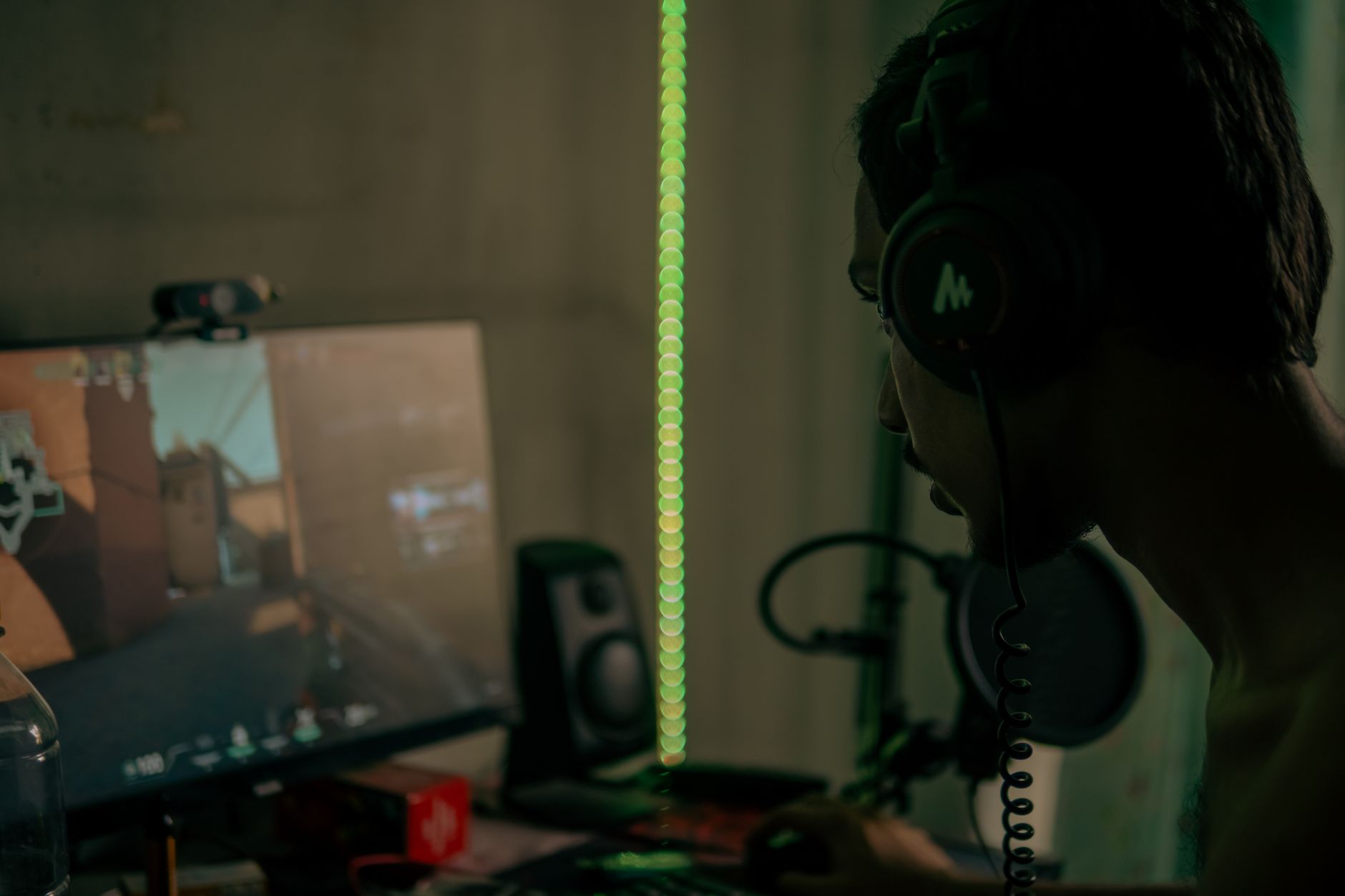
In the summer of 2012, Palmer Luckey was nineteen years old, living in a trailer in Long Beach, California, surrounded by scavenged display panels and duct-taped head-mounted prototypes. By March 2014, he stood on a stage in Silicon Valley watching Mark Zuckerberg announce a $2.3 billion acquisition of his company, Oculus VR. The distance between that garage and that stage spans one of the most peculiar capital journeys in modern hardware: a business that began by selling $300 development kits to hardcore PC gamers, transformed into a platform-control play subsidized by one of the largest balance sheets in technology, and found itself caught in a structural trap between the technical requirements of immersion and the economic requirements of scale.
The Oculus story is not primarily about virtual reality as a technology. It is about the economics of platform bootstrapping when the hardware costs are high, the content is nonexistent, and the incumbent computing paradigm, mobile phones, appears to be eating everything else. The company’s survival depends on whether it can resolve a specific catch-22: the technical fidelity required to avoid the “Virtual Boy” curse demands $4,000 gaming PCs that exclude the mainstream consumer, yet lowering the threshold risks destroying the category entirely. Facebook’s capital allows Oculus to navigate this valley, but only if the ultimate destination justifies the detour.
The Kickstarter Was the Business Model
Oculus did not begin as a consumer electronics company. It began as a coordination mechanism for a two-sided market that did not yet exist. In August 2012, Luckey and his co-founders, Brendan Iribe and Michael Antonov, both alumni of Scaleform and Gaikai, launched a Kickstarter campaign with a $250,000 goal. They raised $2.5 million. More importantly, they began selling Developer Kit 1 (DK1) units at $300 each, moving four to five kits per minute in the initial rush.
This was not merely pre-sales revenue. It was a market-making operation. On one side, the campaign aggregated the scattered high-end PC gamers willing to tolerate duct-taped prototypes. On the other, it aggregated developers who needed a critical mass of hardware owners before they could justify building content. The Kickstarter solved the chicken-and-egg problem inherent to new computing platforms: without hardware, no software; without software, no hardware sales. By converting enthusiasm into $300 commitments, Oculus created an installed base that made development economically rational before a single consumer unit shipped.
The financial structure was equally telling. The company raised no institutional capital during this phase. The $2.5 million in crowdfunding, combined with subsequent DK1 and DK2 sales, funded the iteration from the initial duct-taped prototype to the Crescent Bay demonstration unit in late 2014. This bootstrap approach created unusual equity efficiency, y the time Andreessen Horowitz led a $75 million Series B in December 2013, the company had already validated product-market fit with its core constituency and established a developer ecosystem. Marc Andreessen joined the board, occupying a position that would later prove structurally significant when Facebook’s acquisition emerged.
Carmack as Capital
In June 2013, John Carmack departed id Software to become Oculus’s Chief Technology Officer. The move carried significance beyond the standard narrative of technical recruitment. Carmack’s defection functioned as a specific type of credibility arbitrage that reduced Oculus’s cost of capital, oth financial and human.
The history of virtual reality hardware is littered with failures that treated the problem as optical rather than computational. Nintendo’s Virtual Boy, the canonical cautionary tale, failed because it could not solve latency and persistence, echnical problems that require specific expertise in real-time rendering and low-level graphics optimization. Carmack’s presence signaled to the engineering community that Oculus understood this distinction. His work on adaptive brightness, low-persistence displays, and predictive tracking algorithms demonstrated that the latency problems were solvable with existing silicon, provided one had the right architectural approach.
This credibility translated directly into economic advantage. It justified the $75 million Series B at a valuation that reflected platform potential rather than peripheral sales. It reduced the recruitment cost for the engineering talent required to move from DK1 to DK2 to the eventual consumer version. Most critically, it provided the technical assurance that allowed Facebook to justify a $2.3 billion acquisition price, $400 million in cash, $1.6 billion in stock, and $300 million in earnouts, less than a year later. Without Carmack’s presence, Oculus risked being categorized as another Virtual Boy: an interesting novelty that induced headaches and consumer indifference. With him, it became a bet on the next computing platform.
The Zuckerberg Premium and the Gaming Trap
The Facebook acquisition, finalized in March 2014, introduced a strategic tension that remains unresolved. Palmer Luckey built Oculus as a gaming immersion device. He spoke about presence, the sensation of being inside the game, with the enthusiasm of a hardcore PC gamer. Zuckerberg, however, purchased a social platform. He described virtual reality as the “next major computing platform” after mobile, envisioning virtual classrooms, medical consultations, and social gatherings.
This is not merely a cultural disagreement. It is an economic divergence that determines whether the $2.3 billion price makes sense. If Oculus remains a gaming peripheral, however immersive, it competes in a category with limited total addressable market and hardware margins. High-end PC gaming represents a devoted but finite constituency. If, however, VR transitions to general computing, social interaction, productivity, communication, it captures the platform economics that justify billion-dollar acquisitions.
The tension creates a product roadmap dilemma. The core enthusiasts who purchased DK1 and DK2 units, and who provide the word-of-mouth marketing and user-generated content that sustains early hardware ecosystems, demand technical fidelity above all else. They own $4,000 gaming towers. They measure latency in milliseconds. They are the current market. But Zuckerberg’s “next internet” vision requires accessibility, ower price points, lower hardware requirements, interfaces that function for users who do not know what frame rates mean. Prioritize the enthusiasts, and the mass market never arrives; prioritize the mass market too early, and the technical compromises alienate the developers creating the content that makes the platform valuable.
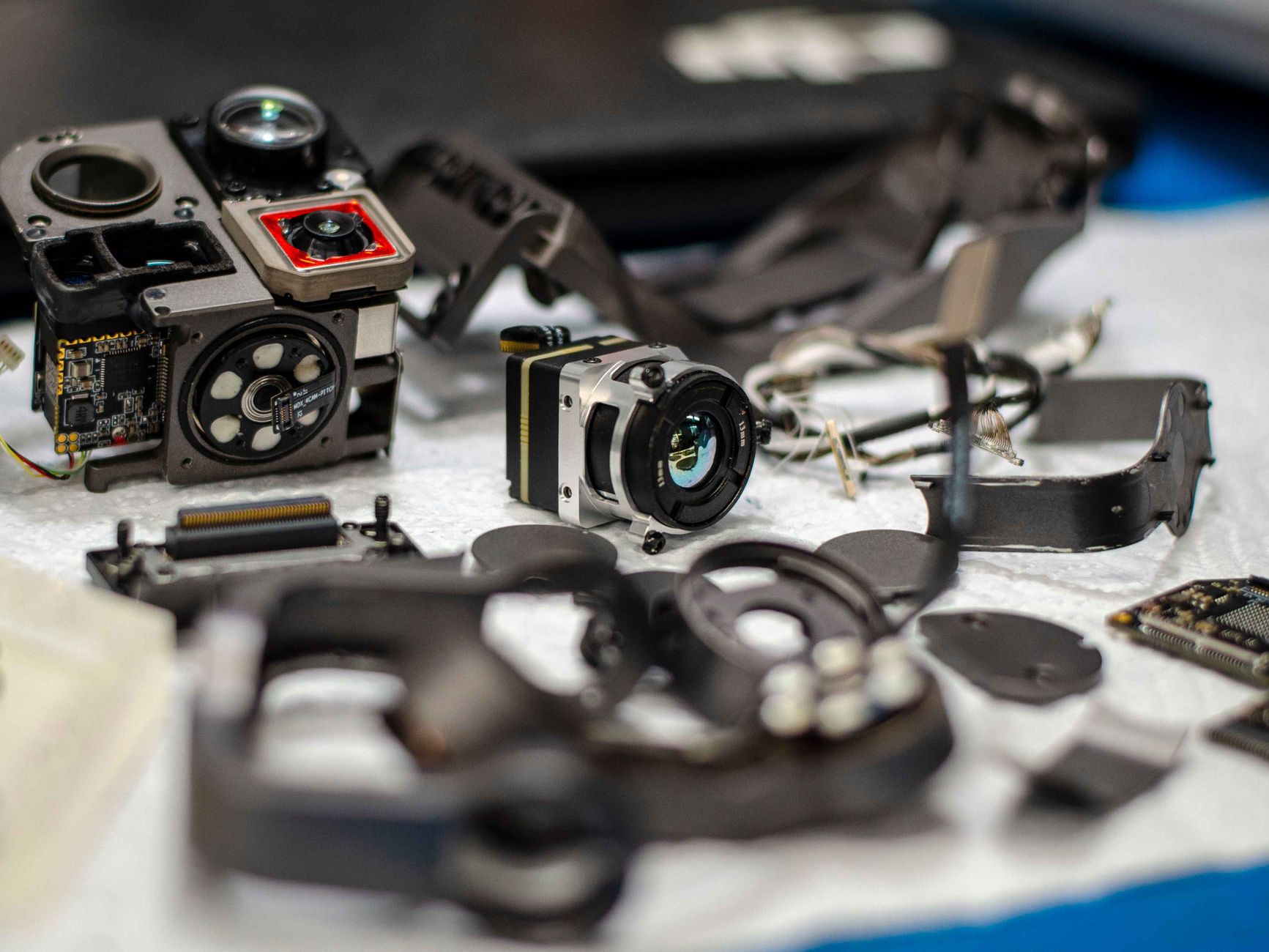
This tension played out in the hardware evolution. DK2, announced at the 2014 Game Developers Conference and shipping that July, remained tethered to high-end PCs. The Crescent Bay prototype demonstrated in late 2014 showed improved resolution and tracking, but retained the desktop dependency. The consumer version, eventually released in 2016, required a “desktop grade gamer PC” costing approximately $4,000. The hardware served Luckey’s gaming immersion. The acquisition price required Zuckerberg’s social platform. The gap between the two is where Oculus bleeds cash.
The Catch-22 of Fidelity
Oculus faces a structural constraint that shapes every engineering decision: the threshold for acceptable virtual reality is binary. Below a certain level of resolution, refresh rate, and tracking precision, the experience induces nausea and disorientation: he Virtual Boy effect. Above that threshold, presence becomes possible. But achieving that threshold requires computational power that, in 2014-2016, exists primarily in high-end gaming desktops.
This creates the central catch-22 of Oculus’s economic model. Mainstream adoption is blocked by the requirement for expensive, specialized hardware. The potential market remains confined to the subset of consumers who already own or will purchase $4,000 gaming towers: demographic that is passionate but small. Yet lowering the specifications to accommodate cheaper hardware or mobile processors risks falling below the nausea threshold, producing a product that confirms VR as a failed category.
Zuckerberg explicitly acknowledged this dynamic when discussing the acquisition. He referenced a “four-year lag” before VR could achieve mass adoption, indicating awareness that the technology required an extended period of subsidy and iteration. Facebook’s balance sheet, capable of absorbing years of R&D expenditure without revenue pressure, provides the capital to survive this gap. Unlike standalone hardware startups, which must achieve unit economics or perish, Oculus can iterate through DK1, DK2, Crescent Bay, and beyond while bleeding cash, sustained by the parent company’s advertising revenue.
However, this subsidy depends on the long-term assumption that the PC tower market remains viable long enough for Oculus to reach consumer scale. If mobile processors improve rapidly enough to achieve VR-capable performance, or if cloud streaming services (Gaikai-style architectures) eliminate the need for local rendering, Oculus’s high-end PC dependency becomes an unnecessary barrier rather than a temporary constraint. The company must establish platform lock-in through network effects, developers committed to the Oculus SDK, users invested in the content library, before the hardware requirements shift.
The ZeniMax Shadow
In February 2017, a Texas jury awarded ZeniMax Media $500 million in damages against Facebook and Oculus, finding that John Carmack had allegedly misappropriated id Software code and that Luckey had violated a 2012 non-disclosure agreement. The judgment exposed a fragility that runs deeper than legal liability.
Oculus’s structural advantages rest on technical credibility and first-mover developer lock-in. The ZeniMax litigation threatens both. If the court imposes a sales injunction on the Rift headset, preventing distribution of the core product, the revenue stream freezes and the developer ecosystem fragments. More insidiously, the judgment undermines the Carmack credibility premium. If his work product is legally contaminated, if the algorithms that distinguish Oculus from competitors are deemed stolen property, the company loses the technical differentiation that justified its valuation.
The litigation also highlights the risk of key-person technical concentration. Oculus’s perceived viability has been intertwined with Carmack’s specific expertise and reputation. His presence reduced the risk premium for investors and developers; his potential departure, or further legal restrictions on his ability to contribute, removes the core engineering credibility that attracted the Series B and the acquisition. The company becomes just another hardware manufacturer attempting to scale a difficult technology: far less defensible position.
Platform Lock-in Before the Shift
The ultimate test for Oculus is whether it can establish sufficient network effects within its closed VR ecosystem before the technical paradigm shifts beneath it. The company captured early developer loyalty through the Kickstarter momentum and the DK1/DK2 sequencing, creating switching costs for developers who learned the Oculus SDK and built content for its specific tracking and rendering architecture. This first-mover advantage is durable only if the content library becomes compelling enough to retain users even when competitors, specifically Valve and HTC with the Vive, achieve technical parity.
Yet the “ecosystem” framing obscures the economic reality. Oculus is not merely trying to build a content library. It is attempting to execute a transition from device sales to distributed software and service revenue: transition that requires the platform to become the default entry point for virtual reality computing. This requires the company to solve the PC dependency problem before mobile or cloud alternatives render the tethered model obsolete.
The Crescent Bay prototype, demonstrated in late 2014 and early 2015 but never sold commercially, represented the technical peak of the PC-tethered approach. It became the basis for the 2016 consumer version, but it also marked the end of that particular architectural road. The future of the platform depends on decoupling from the $4,000 gaming tower, whether through standalone headsets with mobile processors, wireless streaming solutions, or cloud rendering, without sacrificing the fidelity that prevents the Virtual Boy effect.
The Unresolved Bet
Oculus exists in a state of suspended economic animation. It is a hardware business that loses money on every unit, subsidized by a social media conglomerate betting that virtual reality represents a persistent platform shift rather than a cyclical fad. It requires the devotion of hardcore PC gamers to generate the content and credibility necessary to attract mainstream users, even as its parent company’s strategic logic demands that it transcend gaming to become a general computing platform.
The $2.3 billion acquisition price assumes that immersive social experiences will create platform lock-in capable of generating software and service revenues that dwarf hardware margins. But this assumes that consumers will tolerate wearing “goofy-looking goggles” for extended periods without physical discomfort or social stigma, and that interaction in virtual space is fundamentally more compelling than existing two-dimensional video and chat platforms, ssumptions that remain unproven at scale.
If VR remains a gaming peripheral, Oculus fails to justify its acquisition cost. If it becomes the next internet, the early PC-tethered phase represents a necessary, expensive bridge. The company survives on Facebook’s capital, navigating the four-year lag while bleeding cash on R&D, hoping to establish developer lock-in before mobile alternatives or cloud streaming render its high-end architecture obsolete. It is a bet that technical fidelity can be maintained while accessibility expands: bet that the catch-22 can be resolved rather than simply endured.
The duct-taped prototypes in the Long Beach trailer have become Crescent Bay demonstration units and beyond, but the fundamental economic question remains the same as it was in that Kickstarter summer: can you build a platform by selling expensive hardware to a narrow enthusiast base, subsidize the transition long enough to attract mainstream content, and survive the shift when the computing paradigm inevitably changes? Oculus is still running that experiment, one expensive headset at a time.
The economics of that experiment are brutal in their asymmetry. When Oculus sold DK1 units at $300, the price point was not arbitrary. It represented the marginal cost of components, display panels sourced from mobile phone surplus markets, custom lenses, circuit boards, and plastic housings, plus a modest markup to fund the next iteration. But the $300 price tag masked the true cost of research. Each developer kit sold was essentially a subsidized research instrument. The company shipped hardware to developers at roughly break-even or slight loss, treating each unit as a field trial for manufacturing tolerances, thermal management, and optical calibration. The 4-5 kits per minute sales velocity generated cash flow, but not profit. It generated something more valuable: a distributed testing laboratory. Thousands of developers unboxed these devices, documented lens distortion artifacts, reported USB bandwidth issues, and created the bug reports that would inform DK2’s design. This was crowdsourced hardware R&D masquerading as commerce.
The transition from DK2 to the consumer version required a different magnitude of capital. DK2, announced at GDC in March 2014 and shipping that July, incorporated a 1080p OLED display and positional tracking via an external camera. The unit cost likely approached $350-400, yet the company continued selling to developers and enthusiasts at roughly $350. The gap between manufacturing cost and sale price, multiplied across tens of thousands of units, created a burn rate that the Kickstarter proceeds and dev kit revenues could not sustain indefinitely. This is the moment when the bootstrap logic hit its limit. You cannot crowdsource the final industrial design required for mass manufacturing: he injection molding tooling, the supply chain contracts for custom displays, the regulatory compliance testing for CE and FCC certification. These require tens of millions in capital expenditure before a single consumer unit ships. Without Facebook’s $2.3 billion acquisition, Oculus would have faced the classic hardware startup death spiral: forced to raise institutional capital at unfavorable terms, diluting the founders and early community backers, or attempting a premature consumer launch with insufficient polish, triggering the Virtual Boy stigma they had spent two years avoiding.
The acquisition structure itself reveals the strategic desperation behind the deal. The $400 million cash component provided immediate liquidity for R&D and manufacturing scale. The $1.6 billion in Facebook stock aligned incentives for the long platform-building phase, ensuring that Oculus shareholders would benefit only if Facebook’s broader platform strategy succeeded. The $300 million earnout tied to performance milestones created retention handcuffs for key employees. But most telling was the timing: March 2014, just months after the Series B closed in December 2013. Andreessen Horowitz had invested $75 million at a valuation that, while undisclosed, likely valued the company in the hundreds of millions. Four months later, Facebook paid $2.3 billion. Marc Andreessen sat on both boards, Facebook’s and Oculus’s, simultaneously. This dual directorship was not a conflict to be managed but a structural feature of the transaction. Andreessen’s presence on both sides of the table facilitated the introduction between Zuckerberg and Brendan Iribe, accelerating a process that might otherwise have taken years of courtship. The premium paid, roughly 10x the Series B valuation in four months, reflects not just Facebook’s FOMO regarding the next computing platform, but the specific fear that Valve’s competing initiative would capture the high-end PC gaming market before Oculus could secure exclusivity.
Valve’s entry into the VR space represents the most credible threat to Oculus’s platform control. Unlike Oculus, which began as hardware startup seeking content, Valve began as a software platform seeking hardware independence. Steam controlled the distribution layer for PC gaming; Valve had no desire to cede the VR entry point to a Facebook-owned hardware manufacturer. In 2014, Valve partnered with HTC to produce the Vive, a headset with room-scale tracking and motion controllers that technically surpassed the Rift’s initial seated/standing configuration. More critically, Valve positioned SteamVR as an open alternative to Oculus’s closed SDK. Developers could build once for SteamVR and distribute across multiple hardware manufacturers, avoiding the platform tax that Oculus intended to impose on its store.
This competitive dynamic fractures the two-sided market that Oculus carefully constructed. The Kickstarter community that funded the initial $2.5 million and purchased the early dev kits had operated under a specific ethos: open hardware, hacker-friendly, community-driven. Luckey himself was a modder who had scavenged parts from eBay to build his first prototypes. The Facebook acquisition introduced centralized platform control, data collection, curated store policies, and the long-term inevitability of advertising integration, that alienated this core constituency. Valve exploited this ideological fracture. SteamVR offered the promise of an open ecosystem where developers owned their customer relationships and users owned their hardware without Facebook account requirements. For the hardcore PC gamers who comprised Oculus’s initial market, Valve was the trusted incumbent; Facebook was the surveillance capitalist interloper.

The technical differentiation between the Rift and the Vive was, in 2014-2015, marginal compared to the platform philosophy divergence. Both required the same $4,000 gaming towers. Both used similar OLED panels and lens arrays. The Vive’s lighthouse tracking system and room-scale capabilities provided superior spatial freedom, but the fundamental constraint, tethering to a high-end PC, remained identical. The competition thus shifted from hardware specifications to content exclusivity and developer terms. Oculus began funding “made for VR” titles exclusively for the Rift store, attempting to build a proprietary content library that would justify the hardware purchase despite the PC requirement. Valve, leveraging its existing relationships with PC developers, emphasized cross-platform compatibility and hardware agnosticism. The battle became one of closed versus open platform economics, with Oculus betting that early mover advantage and Facebook’s capital depth could overcome Valve’s software distribution dominance.
This competition intensifies the fragility of Oculus’s high-end PC dependency. If the total addressable market for PC-tethered VR is limited to the intersection of hardcore gamers and early adopters, a demographic optimistically estimated at 10-20 million globally, then splitting that market between two incompatible platforms creates a death sentence for both. Neither achieves the critical mass required to justify AAA game development budgets. Neither generates the network effects necessary for platform lock-in. The market remains a niche peripheral category, like flight simulator joysticks or racing wheels, rather than a computing platform. This is the scenario that justifies Zuckerberg’s anxiety about the “four-year lag.” Oculus must survive long enough for the technology to decouple from the gaming tower, either through standalone headsets with sufficient mobile processing power or through wireless streaming architectures that render the PC invisible to the user.
The technical path to that decoupling runs through Carmack’s specific algorithmic contributions, the very IP that ZeniMax claims ownership of. When Carmack joined in June 2013, he brought not just reputation but specific solutions to the latency problem that had plagued VR for decades. The critical innovation was “timewarp”: technique that reprojects the rendered image based on the latest head tracking data immediately before the frame is displayed, reducing perceived motion-to-photon latency to under 20 milliseconds. This requires deep modifications to the graphics pipeline, intercepting frames after the game engine has rendered them but before they reach the display. Carmack’s implementation of asynchronous timewarp, later refined into asynchronous spacewarp, allowed Oculus to maintain presence, the sensation of stable virtual space, even when the underlying game engine failed to hit the 90 frames-per-second target required for comfort. Without these techniques, VR would require computational power so extreme that the $4,000 PC floor would rise to $6,000 or $8,000, further restricting the market.
The ZeniMax litigation, filed in 2014 and culminating in the February 2017 judgment, threatens to invalidate these technical advantages. ZeniMax’s complaint alleged that Carmack, while still employed at id Software (a ZeniMax subsidiary), conducted research for Oculus using id Software resources and proprietary code. Specifically, ZeniMax claimed that Carmack copied thousands of documents from id Software computers before his departure, including code related to VR rendering techniques. Luckey, according to the complaint, had signed a non-disclosure agreement in 2012 when demonstrating early prototypes to Carmack, thereby binding Oculus to confidentiality regarding any technical exchanges. The jury found Oculus liable for breach of contract, copyright infringement, and false designation of origin, awarding $500 million in damages.
Beyond the financial penalty, the judgment creates existential uncertainty. ZeniMax sought, and may yet receive, a permanent injunction prohibiting Oculus from selling the Rift headset. Such an injunction would freeze revenue immediately, but the deeper damage would be to the developer ecosystem. If the core algorithms enabling low-latency VR are deemed stolen property, developers building for the Oculus SDK face potential liability or forced migration to alternative platforms. The network effects that Oculus built through its bootstrap phase, the thousands of developers who learned the Oculus SDK, the content libraries dependent on specific tracking implementations, could unravel as developers flee to SteamVR’s open standards to avoid legal contamination. The judgment also raises the specter of further claims against Facebook’s deeper pockets, potentially extending to subsequent hardware iterations (Gear VR, Go, Quest) that incorporate the disputed code lineage.
The technical concentration risk extends beyond legal liability. Carmack’s expertise in low-level graphics optimization is not fungible. While Oculus employs hundreds of talented engineers, the specific architectural decisions regarding predictive tracking, chromatic aberration correction, and thermal throttling management bear Carmack’s signature. His departure or further legal restriction on his work product removes the technical credibility that reassures developers the platform will not induce nausea or headaches: he Virtual Boy stigma that destroys categories. In hardware platforms, technical credibility functions as a form of capital as real as cash. Its sudden depreciation can trigger a run on the ecosystem.
Meanwhile, the fundamental assumption underlying the $2.3 billion acquisition, that VR represents a persistent platform shift comparable to mobile, remains empirically unverified. The implicit bet is that consumers will accept the social and physical friction of head-mounted displays: the isolation from immediate surroundings, the “goofy-looking goggles” aesthetic that prevents public use, the physiological constraints of eye strain and motion sickness. Each of these represents a tax on user adoption that smartphones, the previous platform, did not levy. Smartphones augmented existing social behaviors; VR replaces them with simulated alternatives. Zuckerberg’s vision of virtual classrooms and medical consultations assumes that the fidelity of remote presence surpasses the convenience of physical or 2D video alternatives. For gaming, the value proposition is clear: immersion justifies the hardware tax. For social interaction, the calculus is less certain. Humans have spent a decade optimizing for asynchronous, multitasked communication, lancing at phones during meetings, texting while walking. VR demands synchronous, immersive attention. It requires the user to disconnect from the physical world entirely. Whether this represents an upgrade or a regression in social computing remains an open question.
The hardware evolution from Crescent Bay to the consumer Rift and beyond attempts to resolve this tension through incremental accessibility improvements. Crescent Bay, the prototype demonstrated in late 2014, achieved 360-degree tracking and improved resolution but remained tethered. The consumer version launched in 2016 added integrated audio and refined ergonomics but maintained the PC dependency. The subsequent release of the Oculus Touch controllers in late 2016 addressed the “hand presence” gap that the Vive had exploited, but added $200 to the total system cost. Each iteration improved the experience while reinforcing the platform’s economic fragility: better hardware required more expensive PCs, shrinking the addressable market even as the company spent marketing dollars attempting to expand it.
The standalone headsets, Oculus Go (2018) and Quest (2019), represent the attempt to escape the PC trap entirely. These devices use mobile processors (Qualcomm Snapdragon chips) to render VR experiences without external computing. But mobile silicon imposes severe constraints on graphical fidelity. The Quest operates at roughly 20% of the rendering power of a high-end gaming PC. To maintain the latency threshold that prevents nausea, the device employs fixed foveated rendering, sharpening only the center of the visual field while blurring the periphery, and aggressive thermal throttling that reduces clock speeds after minutes of intensive use. These compromises solve the accessibility problem, no $4,000 PC required, but risk the Virtual Boy effect. If the visual fidelity falls below the presence threshold, users experience the device as a novelty rather than a platform, using it briefly before abandoning it to gather dust.
This is the final structural trap. Oculus must simultaneously lower the hardware barrier to achieve Zuckerberg’s mass-market social platform, while maintaining the technical fidelity required to satisfy Luckey’s hardcore gaming base that creates the content justifying the hardware purchase. The Quest attempts to split this difference by offering “good enough” VR for casual users while maintaining PC-tethered options (Quest Link) for enthusiasts. But hybrid architectures increase engineering complexity and fragment the developer target. Should developers optimize for the mobile processor constraints of the standalone mode, or the unlimited power of the PC-tethered mode? The answer determines whether the Quest library consists of mobile-quality experiences, essentially 360-degree phone games, or AAA immersive worlds. The former fails to justify the $400 hardware cost; the latter excludes the standalone users who purchased the device specifically to avoid PC costs.
Facebook’s capital allows this balancing act to continue indefinitely, or at least until the next platform shift. The company can subsidize hardware margins, selling Quest headsets at cost or slight loss, to build the installed base necessary for network effects. It can fund exclusive content development to paper over the technical limitations of mobile silicon. But each subsidy deepens the dependence on the ultimate monetization mechanism: the extraction of data and attention within a closed platform. This returns to the tension between the Kickstarter bootstrap ethos and Facebook’s centralized control. The developers who purchased DK1 units in 2012 did so under the assumption of an open, hacker-friendly platform. The users who buy Quest headsets in the 2020s enter a ecosystem requiring Facebook accounts, subject to data collection policies and content moderation regimes that reflect the parent company’s advertising business model.
The experiment continues, but the variables have shifted. No longer is Oculus testing whether VR technology works; Carmack’s algorithms solved that. No longer is it testing whether developers will build content; the Kickstarter proved they would. Now the experiment tests whether platform lock-in can be established before the hardware becomes commoditized, before cloud streaming eliminates the need for local rendering, before mobile processors achieve PC parity, or before the category simply exhausts consumer patience. The $2.3 billion acquisition provided the runway. It did not guarantee the landing.
The $2.3 billion acquisition provided the runway. It did not guarantee the landing.
The irony of this specific runway is easily missed. Brendan Iribe and Michael Antonov, the operational architects of Oculus’s commercial strategy, carried deep DNA from Gaikai: he cloud gaming service acquired by Sony in 2012 for $380 million precisely to eliminate the need for local high-end hardware. Gaikai’s entire economic premise rested on the observation that rendering could be centralized and streamed to thin clients, decoupling the gaming experience from the $4,000 tower requirement. Yet Oculus, under their leadership, pursued the opposite architecture: a headset physically tethered by HDMI and USB cables to the most expensive local computing hardware consumers could purchase. This was not technological ignorance but a calculated bet that network latency, the final millisecond of round-trip delay that cloud streaming cannot eliminate, would prove fatal to presence, rendering Gaikai’s model inadequate for VR’s nausea thresholds.
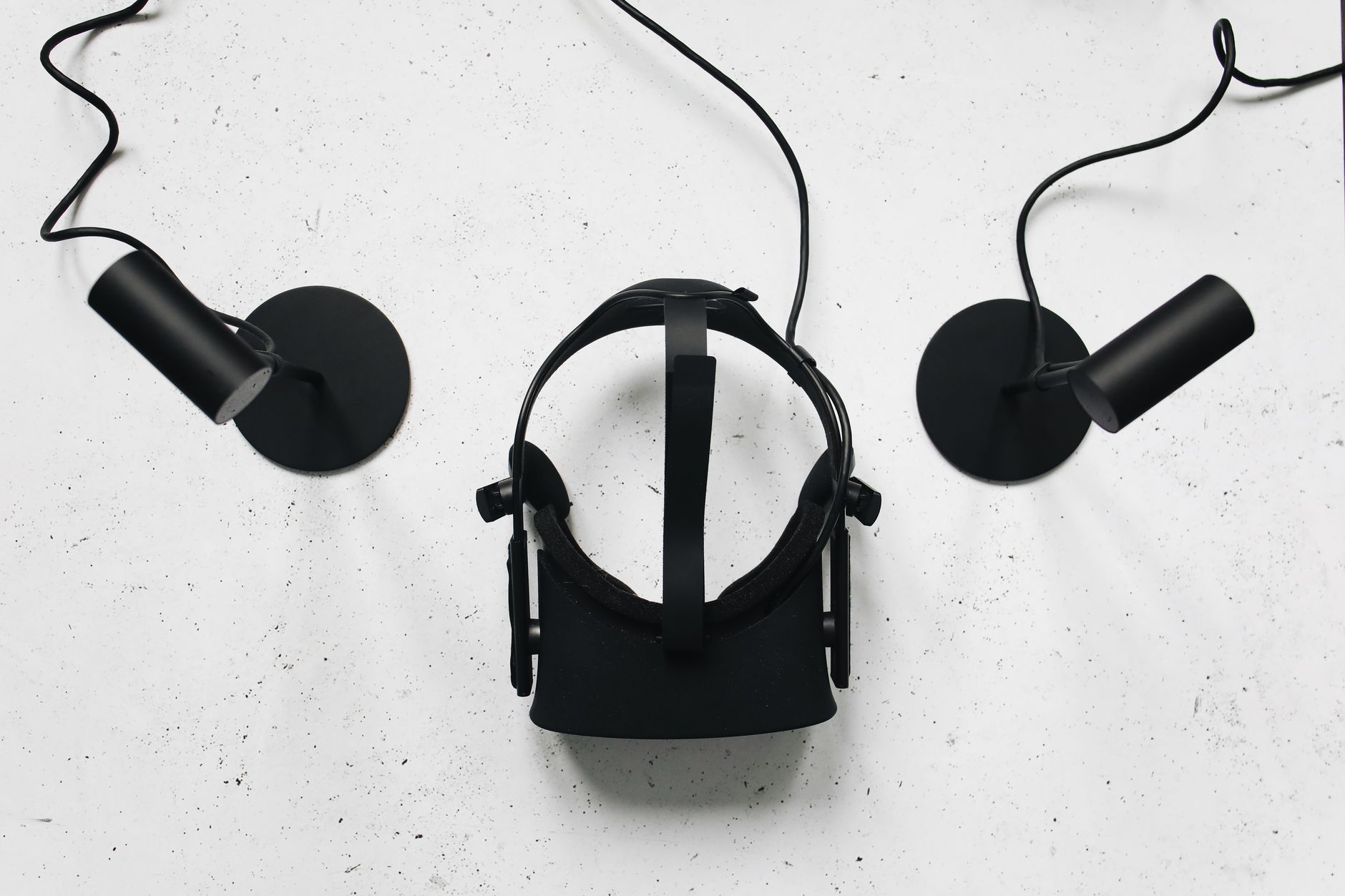
But this creates a specific fragility. If cloud infrastructure or mobile silicon improves to the point where local rendering becomes unnecessary, a scenario the founders’ own previous success suggests is plausible, Oculus’s entire PC-dependent stack becomes not merely a temporary constraint but a strategic anachronism. The Crescent Bay prototype, with its constellation of external cameras and thick umbilical cables running to a desktop tower, represents a physical instantiation of this bet. When that cable finally disappears, replaced by wireless transmission or standalone processing, the specific expertise that built Oculus (low-latency local rendering, Carmack’s timewarp algorithms optimized for GPU direct access) faces obsolescence. The founders’ heritage in cloud streaming then serves as a constant reminder of the platform’s vulnerability: they knew how to eliminate the PC tower, yet built a business that requires it.