Strobed Light, Not Sensor Specs, Freezes Motion
That 100-millisecond deadline breaks down rapidly. A pneumatic rejector needs 40 milliseconds to fire. Network latency consumes another 10. This leaves perhaps 50 milliseconds for image acquisition and analysis. In that window, a bottle moving at two meters per second travels 100 millimeters. Standard industrial cameras running continuous illumination produce motion blur that destroys barcode readability.
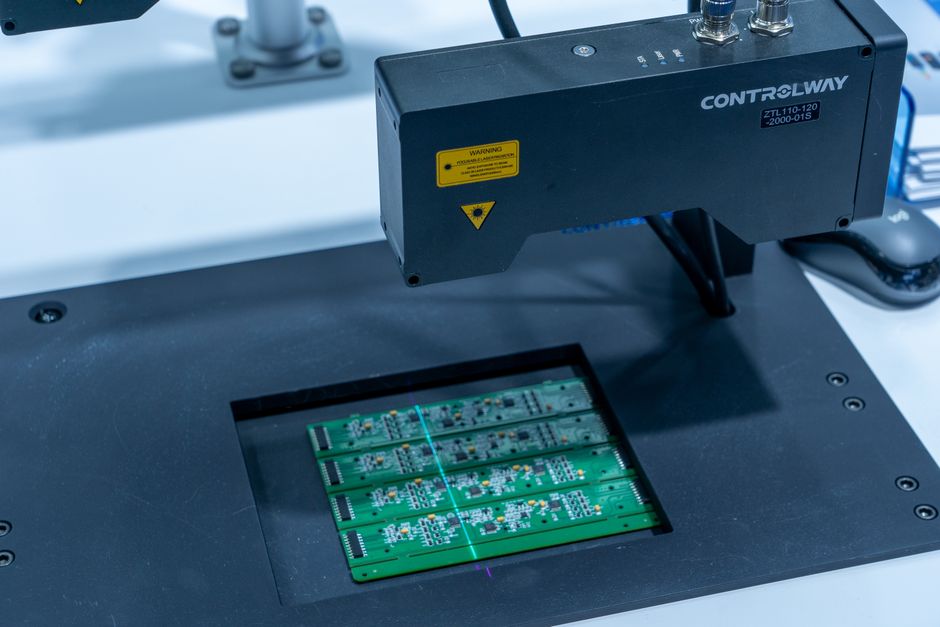
This is why machine vision inspection system architecture begins with strobed LED illumination, not sensor selection. A 50-microsecond light pulse freezes motion as effectively as a mechanical shutter, but only if the driver can deliver precise current pulses without thermal drift. The LED junction temperature affects wavelength stability, which alters color inspection accuracy for label verification. Systems like Cognex In-Sight integrate strobed ring lights but assume standard matte labels; when packaging uses metallized films or holographic security features, standard illumination geometry creates specular hotspots that blind the sensor. Custom packaging inspection device design for premium cosmetics or anti-counterfeit pharma requires optical benches that the enclosure must accommodate. Because a blurred 20-megapixel image contains less usable data than a sharp 2-megapixel capture, the illumination specification effectively sets the system resolution.
The Housing Functions as an Optical Instrument
Freezing motion with synchronized light only works if the housing excludes ambient photons. Washdown environments in dairy or meat processing require IP69K ratings, but high-pressure spray also creates specular reflections that blind barcode inspection hardware. The mechanical enclosure must therefore function as an optical instrument, not merely a protective shell.
Baffles and spectral filters integrated into the stainless steel housing control the photon path. This changes material selection. 316L stainless withstands caustic cycles, yet its thermal expansion must match the internal optical bench to maintain calibration during temperature swings. When production switches from opaque labels to clear film with white printing, reflectance changes by orders of magnitude. The label verification device must maintain contrast without manual adjustment, requiring the housing to position diffusers at precise angles relative to the strobe. The mechanical engineer and optical engineer must share the same CAD constraints rather than exchanging files at project milestones.
Deterministic Processing Replaces Speed Averages
With 40 milliseconds reserved for the physical ejection mechanism, the vision pipeline has 60 milliseconds to return a binary pass-fail decision. Average processing time is irrelevant. A neural network that runs at 10 milliseconds on Tuesday but spikes to 100 milliseconds under thermal load creates more false rejects than a slower deterministic algorithm.
This is why automated visual inspection engineering favors FPGA or deterministic embedded vision processors over GPU acceleration for high-speed lines. The architecture must guarantee worst-case latency, not advertise best-case throughput. When an operator places a package on the line at 600 units per minute, a delayed reject signal hits the correct package but pushes the wrong one into the reject bin, deterministic timing is a mechanical safety requirement, not merely a software performance metric. The compute module must also survive within the same thermal envelope as the lighting, often without active cooling in washdown environments. Systems like Keyence CV-X solve the latency problem with dedicated hardware, but their architectures assume controlled factory environments rather than the thermal cycling of refrigerated dairy lines, creating a gap between processing speed and environmental resilience that defines the current opportunity in high-speed inspection.