Eliminate Biofilm Reservoirs Through Part Consolidation
The eleven-second wipe removes organisms from flat, accessible planes. It misses the 0.2mm gap between the display bezel and housing, the threads of a machined aluminum port, and the tactile switches where the silicone membrane meets plastic. These interfaces function as reservoirs where moisture and organic material accumulate, creating biofilms that standard disinfection protocols never reach.
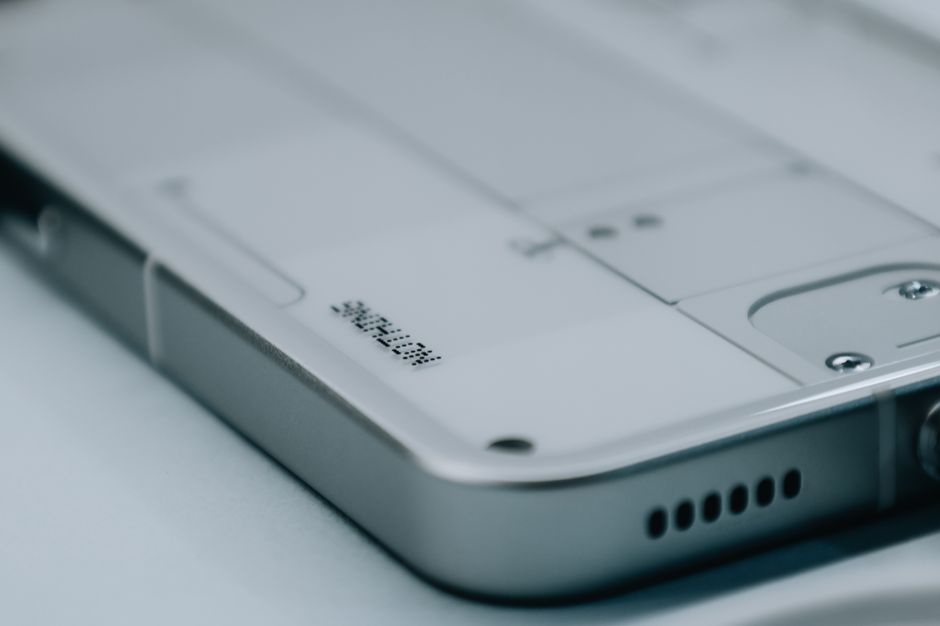
Photo by Prashant Gautam on Pexels
This means antimicrobial device surface design begins with part consolidation, not material specification. Every seam is a potential harbor. GE Healthcare and Philips have moved toward ultrasonic welding and adhesive bonding for portable diagnostics, eliminating screw bosses and snap fits that create dirt traps. The geometry must prioritize planar surfaces that can be wiped completely in a single pass, because any feature that requires targeted cleaning will eventually be missed during shift change.
Design Sealed Ports as Infection Control Barriers
The drive toward seamless surfaces conflicts with the functional requirements of power delivery and data transfer. Charging ports, SD card slots, and physical buttons introduce necessary breaches in the housing. The solution is treating ingress protection as an infection control specification, not merely a durability rating.
An IP65 sealed device surface creates a continuous biological barrier. Gaskets must be molded from liquid silicone rubber (LSR) that survives both isopropyl alcohol wipes and quaternary ammonium compounds without swelling or cracking. More importantly, the seal must be permanent. User-replaceable batteries with rubber access doors fail at the interface; sealed, inductive-charging designs eliminate the entry point entirely. When Eko Health designed the Core 500 digital stethoscope, they integrated a copper-infused polycarbonate housing with a fully sealed, non-removable battery system, recognizing that any opening in a device touching multiple patients per hour becomes a liability vector that compounds across thousands of cycles.
Choose Between Intrinsic Kill and Sterilization Survivability
The choice between active and passive antimicrobial strategies determines the device’s tolerance for the cleaning protocols that keep it in service. Copper antimicrobial coating technologies offer intrinsic bacterial kill rates, eliminating 99.9% of MRSA and VRE within two hours of contact. However, copper alloys oxidize and abrade; a copper-nickel surface that registers 99.9% efficacy in ISO 22196 testing may drop to near-zero after 5,000 abrasion cycles equivalent to one year of hospital use.

Photo by George Shervashidze on Pexels
Alternatively, UV-sterilizable device design relies on high-performance thermoplastics like polyphenylsulfone (PPSU) or polyetherimide (PEI) that withstand gamma and UV-C irradiation without yellowing or embrittlement. These materials offer no active kill mechanism but survive sterilization protocols that would degrade standard ABS or polycarbonate. The trade-off is stark: copper provides continuous protection but requires monitoring for surface degradation, while UV-resistant plastics depend entirely on external sterilization cycles that may be skipped during high-acuity moments. The decision locks in the disinfection workflow for the device’s entire lifecycle.
Test Surfaces After Simulated Wear, Not in Pristine Condition
Standard antimicrobial testing evaluates pristine materials in laboratory conditions. Clinical reality involves abrasions from bed rails, keys in pockets, and the microscopic scratching caused by cellulose fibers in hospital wipes. These defects create micro-crevices that shield bacteria from both chemical disinfectants and UV photons.
Healthcare device disinfection compliance requires validating antimicrobial efficacy after simulated wear. Engineers must subject prototypes to Taber abrasion testing or repetitive wipe cycles with abrasive disinfectant wipes before running ISO 22196 bacterial reduction assays. A copper-infused surface that passes pristine but fails after abrasion indicates a coating adhesion problem, not a material failure. The specification should read “antimicrobial after 5,000 cycles,” not simply “antimicrobial.” This shifts validation from the end of development to an iterative process where surface finish, hardness, and coating thickness are optimized for retention rather than initial performance.