Environmental Instability Requires Sensor Fusion, Not Just Calibration
A turbine or differential pressure sensor that performs beautifully at 22°C and 50% humidity drifts significantly at 35°C with monsoon moisture. This is not a calibration issue; it is a physics problem. Gas density changes with temperature and barometric pressure, directly affecting volumetric accuracy. Laboratory devices simply control the environment. A mobile pulmonary function device must measure the environment.
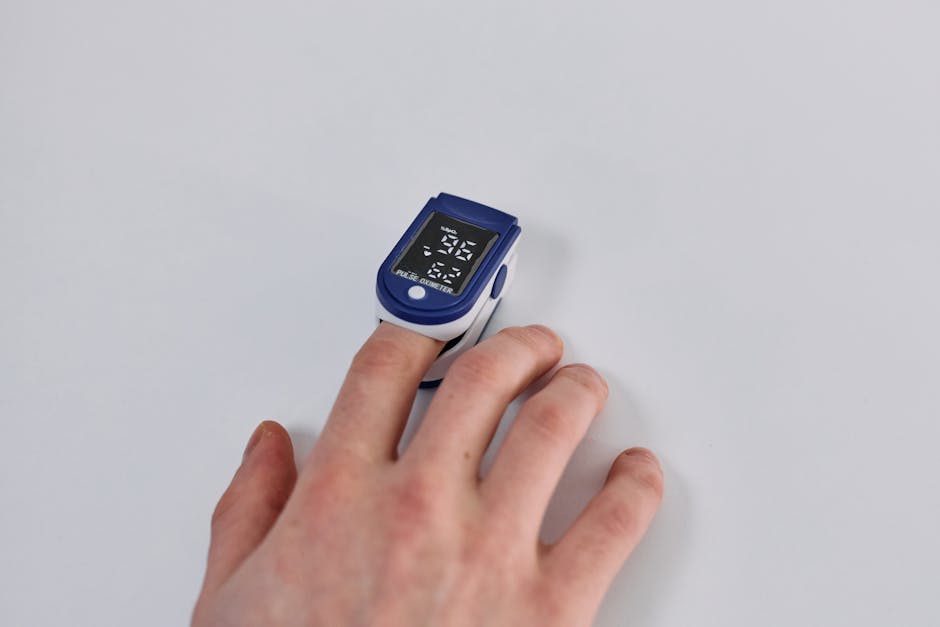
Photo by cottonbro studio on Pexels
Field spirometer engineering must embed multiple environmental sensors, temperature, humidity, and barometric pressure, sampled at the same frequency as the flow sensor. The firmware must apply BTPS (Body Temperature and Pressure, Saturated) correction in real-time, not during later analysis. This shifts the bill of materials: you are building a weather station that happens to measure lung function. Hot-wire anemometers, common in clinical settings, fail in dusty field conditions; ultrasonic sensors or pressure differentials with particulate shields prove more resilient. The housing design must isolate the flow path from direct solar heating while remaining sterilizable between patients. Materials choice becomes a signal integrity decision. White ABS reflects heat but scratches harbor pathogens; certain aluminum alloys conduct heat too readily, creating thermal gradients that affect the pressure baseline.
But environmental stability means nothing if the patient cannot perform the maneuver correctly without a respiratory therapist present.
The Mouthpiece Becomes a Clinical Instrument When the Technician Is Absent
The FEV1/FVC ratio, the primary diagnostic metric for obstructive disease, depends on a maximal effort starting from total lung capacity with a tight mouth seal. In a lab, technicians watch for leaks, hesitation, or submaximal effort and coach corrections immediately. A CHW in a rural village may have twenty patients to screen and no formal training in recognizing a cough during the maneuver.
This transforms the mouthpiece and user interface into clinical accuracy tools. The handheld lung function device needs differential pressure sensors that can detect leak artifacts in real-time, sudden pressure drops that indicate lip seal failure. More importantly, it must provide immediate biofeedback: haptic pulses or visual bars that guide the patient to “blow fast, blow hard, keep going” without the CHW needing to intervene.
Picture a CHW screening patients in a Maharashtra village. The patient speaks Marathi; the CHW speaks the local dialect; the device interface must be iconographic. The screen shows a rising balloon that only fills if flow rate exceeds the ATS minimum for the first second. The CHW does not need to explain physics; the device teaches the patient through constraint. If the effort is unacceptable per ATS criteria, the device rejects it immediately rather than uploading garbage data to the cloud. The industrial design here determines clinical validity. A mouthpiece that fits both a 70-year-old woman and a 25-year-old male laborer without adapters is not a comfort feature. It prevents leaks that invalidate the FVC reading.
ATS Compliance Must Happen at the Edge, Not in the Cloud
ATS/ERS standards specify acceptability and repeatability criteria: three acceptable blows with FEV1 and FVC values within 150mL. Laboratory software applies these criteria during interpretation. An ATS spirometry device deployed in the community must apply them at the point of care to prevent CHWs from wasting time on invalid data or sending poor-quality readings to physicians.

Photo by Cnordic Nordic on Pexels
This requires onboard processing power to calculate predicted values based on the Global Lung Initiative (GLI) reference equations, adjusted for the patient’s ethnicity and height, factors that significantly affect percent-predicted calculations. The device must store the flow-volume loops locally, not just derived metrics, so a pulmonologist can review the curve shape later for restrictive versus obstructive patterns. This pushes you toward a hybrid architecture: sufficient edge computing to validate maneuvers immediately, with cloud sync for epidemiological aggregation.
Existing portable spirometers like the ndd EasyOne Air require temperature stabilization before use or depend on smartphone connectivity for calculations, gaps that matter when your CHW is on a dusty road with intermittent signal. Your design wins by embedding the entire validation stack in hardware that functions offline. The regulatory pathway (FDA Class II, CE MDR) treats this as a diagnostic device, not a wellness tracker. You will need clinical validation studies demonstrating agreement with laboratory spirometry within 3% or 100mL, whichever is greater, in the target environmental conditions, not just bench testing at standard conditions.