Where to Mount the Sensor for Injury Detection Signals
That requirement for tissue-specific measurement means the device cannot float on the wrist or hang from a chest strap. For overuse injury detection hardware targeting stress fractures, the sensor must ride at the distal tibia or calcaneus to capture peak tibial shock before soft tissue dampens the signal. For ACL injury prevention, the device needs to sit proximal to the knee to measure the three-dimensional kinematics of knee abduction moments during cutting maneuvers. This anatomical constraint is why athlete load tracking wearables for runners migrate to the foot or sacrum; those locations maintain the rigid coupling necessary to capture ground reaction forces.
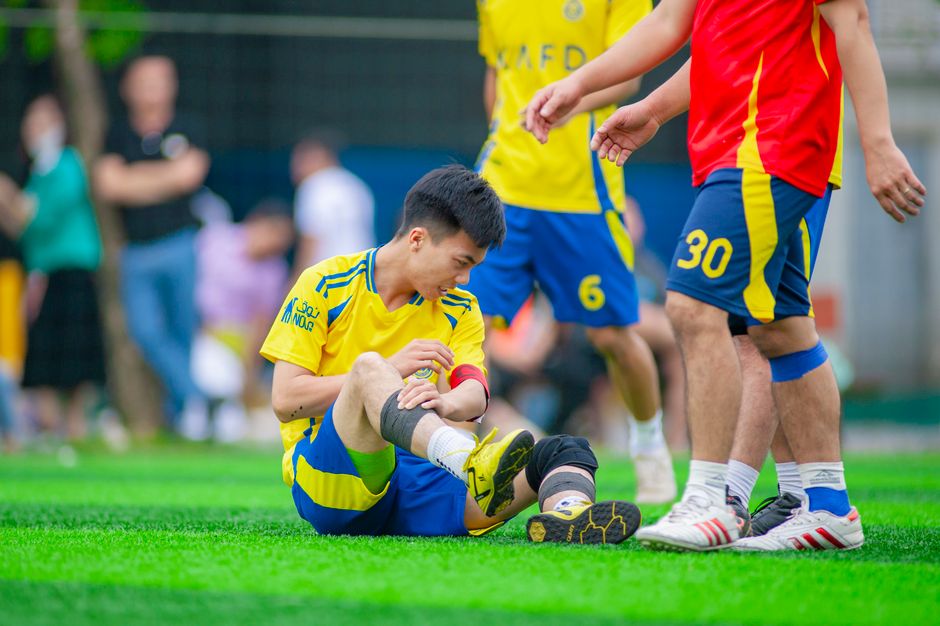
DorsaVi solved this for clinical settings using adhesive IMU arrays, while IMeasureU demonstrated that even temporary tibial mounting yields substantially more actionable data than wrist-based accelerometry for predicting overuse injury. This means your industrial design starts with a mounting problem, not an electronics problem. The housing must lock against bony landmarks or integrate into compression apparel with enough static friction to resist the shear forces generated during a sprint or change of direction. The product design phase must validate mechanical coupling under fatigue before firmware development begins.
Maintaining Signal Quality Through Sweat and Movement
Rigid coupling gets harder once the athlete starts to move. A biomechanics monitoring device must maintain contact pressure through 90 minutes of sweat, collision, and three-dimensional acceleration. A strap that loosens three millimeters during a basketball game introduces motion artifact that algorithms cannot distinguish from biomechanical data. Many motion capture wearable designs fail validation because they optimize for IP67 ratings using rigid housings that lift off the skin during eccentric loading phases.
The solution lies in material science that treats the body as a dynamic substrate. Textile-integrated electronics with selective durometer zones maintain contact without restricting range of motion. Hydrophobic coatings prevent capillary wicking that changes strap elasticity mid-game. Every material specification becomes a signal processing decision. The durometer of your silicone housing affects whether you detect the tibial shock that predicts stress fractures; the weave density of your textile electrode determines whether you capture the muscle activation patterns that precede hamstring failure. These are product engineering choices that happen at the intersection of biology and physics.
Positioning Must Require Zero Expertise
Maintaining signal integrity means nothing if the athlete leaves the device in their bag. Elite athletes might accept inconvenience; recreational athletes, the larger market, will not. If a sports science wearable sensor requires manual positioning, alignment markers, or charging every four hours, adherence drops to zero within two weeks. The device must don like socks or sleeves, not like medical equipment.
Consider the collegiate soccer player taping on a shin guard at 5:45 AM. If your overuse injury detection hardware adds thirty seconds to that ritual, it stays in the locker room. Whoop solved general strain monitoring by optimizing for always-on wear, but injury prevention requires more precise anatomical positioning, creating the gap that Athos attempted to fill with EMG-embedded compression garments. This proved that integration into existing apparel categories drives compliance. Your industrial design must guarantee consistent positioning without user expertise, because longitudinal load tracking becomes meaningless if the sensor migrates two centimeters between sessions.