Haptic Feedback Must Build a Vocabulary, Not Just Alerts
That shift from visual focus to peripheral awareness means that vibration motors can no longer function as dumbed-down ringtones. In a wearable without display, haptics are not alerts; they are the primary information channel. A single buzz tells the user nothing except that something happened somewhere. Meaning requires a syntax. Apple Watch pioneered distinct haptic signatures for navigation turns and heart rate thresholds, but most hardware teams still default to intensity variation, strong for important, weak for less important, which collapses under the reality of motor fatigue. The skin desensitizes to repeated identical stimuli within minutes.
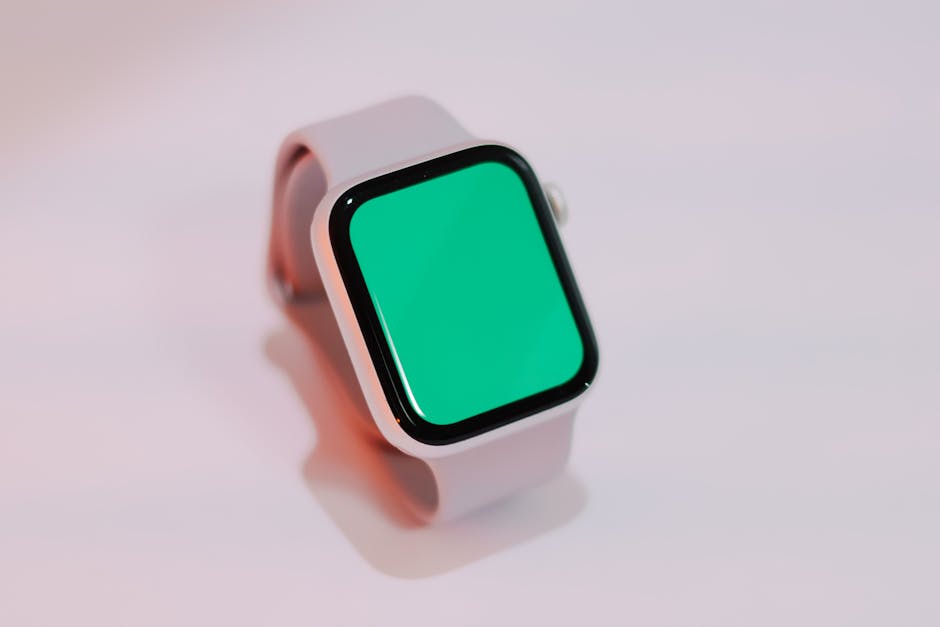
Photo by Deise Elen on Pexels
Designing effective haptic feedback wearables demands mapping information types to distinct waveforms: rhythm for urgency, texture for category, location for source. A navigation wearable might use lateral sweeping motions to indicate left versus right turns, while a health monitor could employ flutter patterns for metabolic states versus cardiac events. The constraint is not the motor; it is the user’s ability to distinguish and remember tactile morse code without visual reinforcement. This requires extensive psychophysical testing that mirrors typography studies in graphic design, establishing a readable haptic vocabulary that functions below the threshold of conscious attention while resisting neural adaptation.
Audio-First Devices Must Occupy Space Without Claiming It
That same imperative to remain in the periphery applies doubly to sound. Audio-first wearables fail when they treat the ear as a replacement screen, pushing notifications with the same interruptive urgency as a phone call. Bone conduction and directional speakers allow sound to exist in the user’s personal auditory space without blocking environmental awareness, but they introduce a design problem: how to convey status without language.
Screenless UX design for audio requires moving from explicit statements to ambient indicators. Instead of “You have 2,000 steps remaining,” a fitness band might modulate the tempo of a barely perceptible rhythmic bed that matches the user’s walking cadence. The absence of visual text forces a shift from symbolic representation to direct physiological entrainment. An audio signal that requires interpretation pulls focus from the environment, defeating the purpose of screenlessness. The designer must architect soundscapes that inform through entrainment rather than announcement, using the body’s natural rhythms as a carrier wave for information.
The Physical Form Becomes the Information Architecture
Without a display to render menus and status icons, the device itself must communicate state through material and mechanics. A ring that warms to indicate stress levels, or a wristband that changes texture through embedded shape-memory alloys, leverages the skin itself as a display surface.
Photo by Deise Elen on Pexels
This shifts the industrial design challenge from enclosure to expression. The ambient display wearable is not a black box with an LED; it is an object whose physical properties, thermal mass, surface texture, rigidity, carry meaning. When the device is the display, every manufacturing tolerance affects UX. A seam that catches fabric becomes a glitch in the interface. Thermal conductivity calculations must account for the delay between internal sensor readings and surface temperature changes perceptible to skin. The material choice is no longer just aesthetic or structural; it is semantic, requiring thermal modeling and surface engineering to become legible to the fingertip.