Impact Protection and the Physics of Point Loading
Screens crack when impact energy concentrates at a single point rather than dissipating across a surface. This explains why a phone survives a face-down fall on gravel but shatters on a corner strike against tile. The engineering challenge in protective case design is managing the impedance mismatch between a rigid device frame and a rigid floor. Effective cases use graduated material systems: a soft bumper to extend impact duration (reducing peak force), a rigid backplate to prevent flex that damages solder joints, and raised lips that create standoff distance between the glass and surface. Advanced designs incorporate non-Newtonian materials like shear-thickening polymers that remain flexible during handling but rigidize under impact acceleration, offering drop protection at half the thickness of traditional TPU. This material science shift allows device protection products to maintain the industrial design intent of slim devices while providing military-grade impact resistance.
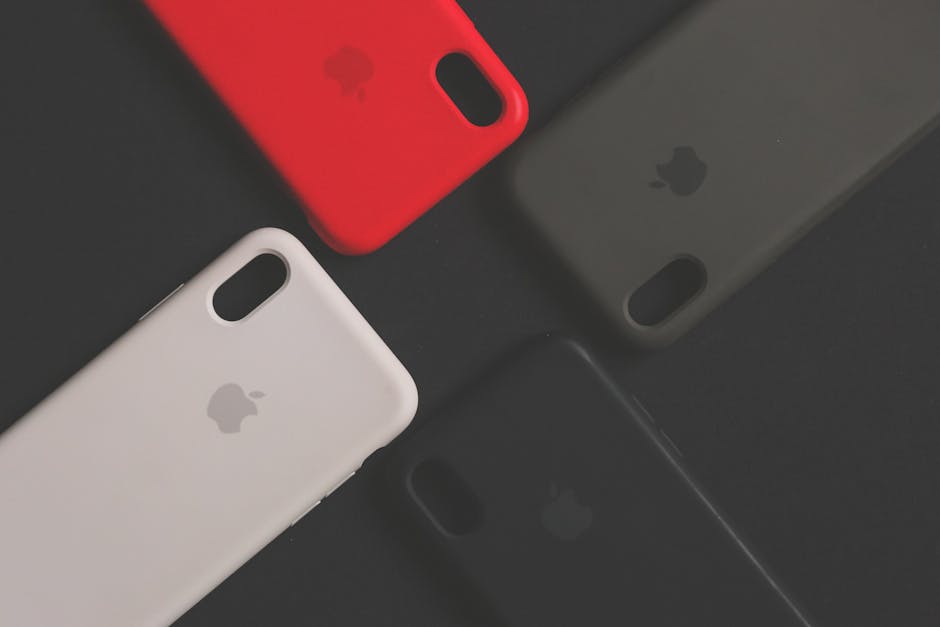
Otterbox built an empire on bulk, but newer designs from Apple and Moment prove that precision-toleranced polycarbonate can achieve similar energy dissipation without the volume—a shift that matters because it shows geometry and constraint determine survival rates more than overall thickness. A thick rubber shell that allows the device to flex within it transmits more damaging energy than a thin, properly constrained system that distributes loads to the case frame.
Thermal Management as Battery Preservation
That impact protection creates a new problem once the device generates heat. Batteries degrade through a combination of cycle depth and thermal stress; a lithium-ion cell kept at 35°C ages twice as fast as one at 25°C. Most protective cases act as thermal insulators, trapping heat from wireless charging or processor load against the battery. Battery-extending accessory design must therefore prioritize thermal impedance. This appears in passive forms—mesh back panels, thermal vias in case materials, or air gaps that allow convective cooling—and in active systems like charging pads that monitor temperature and modulate current.
The critical moment of use occurs during overnight wireless charging, when the phone sits on a pad for eight hours, often in a case, often under a pillow. Heat builds without user awareness, and because a battery replacement often triggers full device replacement due to cost or waterproofing concerns, managing thermal cycles through accessory design directly determines whether the device reaches year four or year two.
Ingress, Abrasion, and the Death of Interfaces
While batteries die from heat, charging ports die from mechanical wear and particulate ingress. Pocket lint compressed into a USB-C port by a charging cable creates resistive heating that damages the port substrate. The user discovers this failure not when the port stops working, but when the cable begins to wobble or the device stops charging intermittently—frustrations that drive premature replacement of otherwise functional hardware. Durable device accessory design addresses the abrasion problem at multiple scales.

Photo by Maria Tyutina on Pexels
At the macro level, port covers prevent debris accumulation, though they introduce their own failure mode (broken flaps). At the system level, accessories that encourage wireless charging eliminate the insertion cycle entirely, extending port life from thousands of cycles to theoretical infinity. At the micro level, case materials must resist the abrasive polishing action of dust particles trapped between case and device. Hard polycarbonate cases without soft liners have been documented to grind anodized aluminum frames to bare metal over two years of pocket carry. The design decision here determines whether the device remains functionally intact or becomes a sealed unit with compromised charging capabilities.