Mechanical Hard Stops Prevent Software Delays
When an ACL reconstruction patient extends their knee against resistance, the difference between therapeutic load and graft strain can be as small as fifteen degrees of terminal extension. A notification on a phone screen cannot arrest motion in time. This means your athlete home rehab equipment design must incorporate variable mechanical end-stops or torque-limiting clutches that physically prevent range-of-motion violations before they occur.

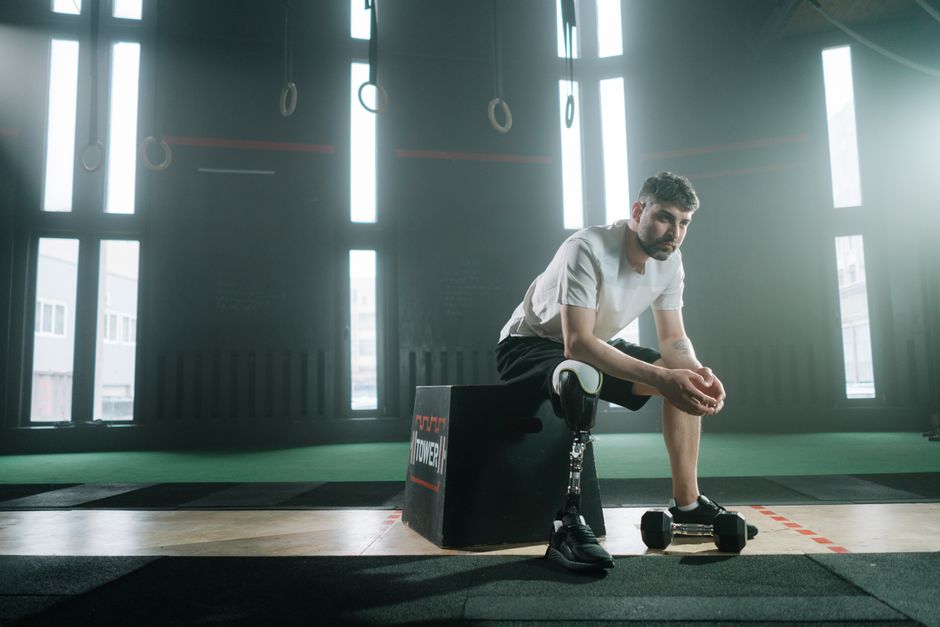
Photo by Kampus Production on Pexels
Therabody’s RecoveryTherm line focuses on thermal modulation of tissue compliance, leaving load management entirely to user discipline and creating liability gaps for high-risk movements. Intelligent recovery training equipment instead uses load cells with immediate mechanical decoupling, not merely data logging. The industrial design implication is significant: your housing must accommodate physical clutch mechanisms or cam-based variable resistance without increasing footprint beyond home gym practicality. These mechanical safety systems represent fixed costs in product engineering, but they eliminate the variable cost of customer support calls and liability exposure that plague app-dependent architectures.
Haptic Feedback Replaces Visual Attention
Range-of-motion limits solve only half the problem. An athlete performing single-leg Romanian deadlifts to rehab a hamstring often rotates their pelvis to compensate for fatigue, migrating load to the lumbar spine. Because they cannot watch a screen while hinged at the waist, visual feedback fails precisely when form degradation accelerates.
This constraint drives rehab exercise device UX toward haptic or auditory guidance embedded in the equipment itself. Tonal’s cable system uses gyroscopic sensing with immediate resistance modulation but requires wall mounting unsuitable for rehab populations with balance deficits. For injury rehab gadget design, the feedback mechanism must reside in the handheld interface or footplate, vibrating asymmetrically when weight distribution shifts across the sagittal plane. The industrial design challenge involves sealing electromagnetic actuators against sweat ingress while maintaining ergonomic surfaces that accommodate swollen post-injury joints. The consequence is that your electrical engineering budget must prioritize high-speed force sensing and local actuator response over cloud connectivity and video content streaming.
The Moment of Trust
Picture a marathoner twelve weeks post-stress fracture, standing on a balance board to rebuild intrinsic foot strength. They feel a sharp twinge in the metatarsal and immediately tense, unloading the device. If the sports injury recovery device wobbles or feels unsteady during this protective reflex, they will abandon the protocol entirely and likely extend their recovery timeline by weeks.
This moment reveals why base geometry and surface friction dominate sports rehab home device adoption more than feature count. The mechanical system must remain stable when the user reacts unpredictably to pain or spasm. Wide polyhedral bases with Shore 70A rubber feet perform better than wheeled platforms here, not merely for safety certification, but because stability enables the psychological risk-taking necessary for tissue remodeling. Your product design choices become behavioral interventions: textured thermoplastic elastomer grips signal security more effectively than polished aluminum, encouraging the sustained eccentric loading that rebuilds collagen alignment. The decision to use a 12-inch versus 18-inch base diameter directly determines whether the athlete progresses to plyometric loading or remains in protective atrophy.