How Seated Geometry Changes Load Modeling
That shift from accommodation to primary input changes how you model the interface. In wheelchair sport equipment design, the seated athlete is not a scaled-down standing user. The center of mass sits lower and often offset. Reach vectors follow radial paths from shoulder pivots that bear no fixed relationship to hip width. When Össur designs running prosthetics, the socket interface must capture the femoral motion of a residual limb, a geometry problem that has no corollary in standard footwear lasts. The CAD workflow moves from symmetrical mirroring to parametric constraint solving, where adjustable linkages replace fixed tube bends. This means your bill of materials inflates early. You are not tooling for one size. You are tooling for adjustment ranges that accommodate limb length discrepancies, asymmetrical muscle development, and seating positions that vary by sport classification.

Photo by Kampus Production on Pexels
Single-Sided Torque Events That Break Symmetrical Design
Those asymmetrical interfaces generate forces that symmetrical testing rigs miss. Disabled athlete device hardware faces single-sided torque events that would tear conventional equipment apart. A handcyclist generates power through asymmetric arm patterns, creating torsional loads on the crank spindle that bilateral pedal systems never encounter. Racing wheelchair casters see side-load impacts during high-speed turns that standard chair casters are not rated to survive. This means material selection becomes a safety calculation, not merely a weight reduction exercise. Carbon fiber layups must orient fibers for multi-axis strain. Aluminum alloys need tempering specifications that account for fatigue cycles from off-center loading. The failure mode is not gradual wear. It is catastrophic separation during competition.
The Transfer From Everyday Chair to Racing Chair
These safety margins matter most during the transition between environments. Consider the para-athlete device UX during the transfer from everyday wheelchair to racing chair. The athlete must align their body with a custom-molded seat while holding position against gravity, often on unstable ground near a track. There is no margin for fumbling with buckles or aligning pins that require visual confirmation. The hardware must provide tactile feedback that confirms engagement before the athlete commits their full weight. Audible clicks, resistance thresholds, and surface textures that work with reduced sensation become functional requirements, not aesthetic refinements. The device validates itself not in static lab testing, but in the milliseconds where the athlete shifts from stable support to competitive vulnerability.
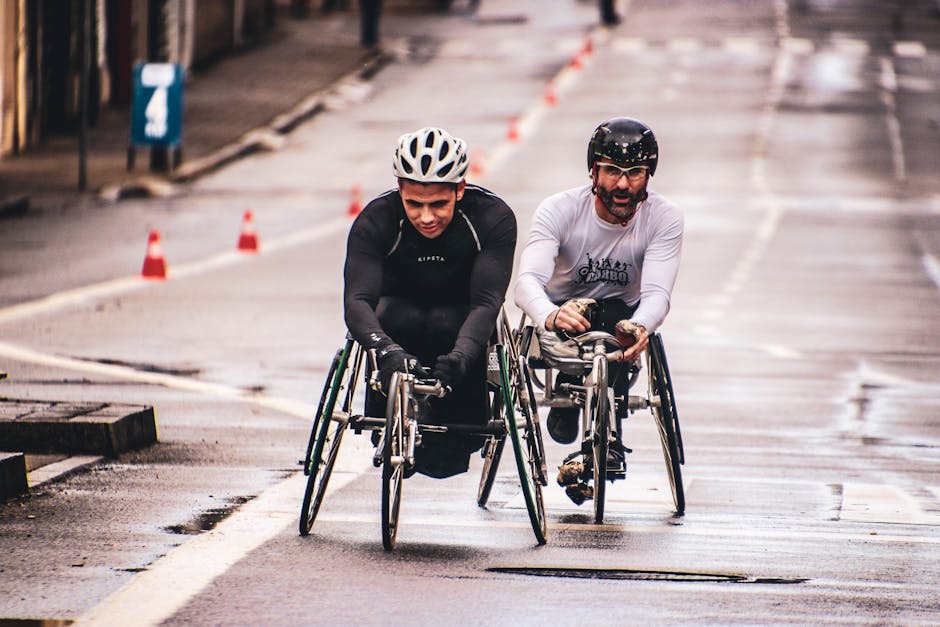
Photo by RUN 4 FFWPU on Pexels
Custom Validation Protocols When Standards Have Gaps
If standard tests cannot replicate those commitment moments, certification becomes a custom protocol. Accessible sports hardware often falls between regulatory cracks. ISO 9999 covers assistive products for persons with disability. Sports equipment standards like EN 957 address fitness devices for general populations. Neither fully captures the duty cycle of a rugby wheelchair absorbing a full-speed collision. This means your validation protocol must synthesize medical device rigor with sports engineering stress testing. You need drop tests that simulate unilateral landing. Fatigue testing must run asymmetric load profiles. Building this validation framework is itself a technical moat. Teams that solve it gain market access that competitors cannot quickly replicate.